Article Highlights:

  • Packing light remains the biggest mistake experienced international travelers continue to make.
  • Practical travel clothing and understanding local dress code expectations help travelers avoid unnecessary problems.
  • Excessive carry-on luggage slows travelers, increases fatigue and can complicate emergencies.
  • Packing light makes moving through airport security and adapting to changing travel conditions easier.
  • Global Rescue helps travelers prepare for the unexpected with expert medical, security and evacuation services.


Experience doesn’t always eliminate bad habits. According to the latest Global Rescue Traveler Sentiment and Safety Survey, experienced international travelers continue to make the same mistake year after year: bringing too much. At the same time, most travelers choose their travel clothing based on practicality rather than trying to blend in with local residents. Together, these findings reveal an important truth about successful international travel. Packing light, selecting appropriate travel clothing and understanding local dress code expectations can make travel easier, safer and more enjoyable.

Today’s international travel environment demands flexibility. Flight disruptions, changing weather, evolving security conditions and unfamiliar transportation systems all require travelers to adapt quickly. Whether navigating crowded train stations, moving through airport security, walking across cobblestone streets or responding to an unexpected emergency, travelers carrying less are almost always in a better position than those burdened by excessive luggage.


Why Is Packing Light Still So Difficult for Experienced International Travelers?

The survey found that 38% of experienced international travelers identify carrying too much luggage as their biggest travel mistake. That figure has risen from 32% in 2025 after remaining at 35% during both 2023 and 2024, demonstrating that even seasoned travelers continue to struggle with packing light. Before the COVID-19 pandemic, nearly three-quarters of travelers admitted overpacking was their biggest mistake, underscoring just how persistent the habit remains.

“Overpacking is the single most consistent preventable mistake we see, year after year,” said Dan Richards, CEO of The Global Rescue Companies and a member of the US Travel and Tourism Advisory Board at the US Department of Commerce. “It’s a habit that adds stress, weight and unnecessary complexity to every stage of a trip, when the real goal of travel should be freedom, flexibility and discovery.”

Many travelers think carrying extra bags is simply an inconvenience. In reality, excessive carry-on luggage and heavy checked bags affect nearly every part of a journey.

Lifting overloaded bags into overhead bins, dragging them through airports and train stations and carrying them over uneven streets increases fatigue and places unnecessary strain on the body. Travelers rushing through airport security or trying to make a tight connection while managing multiple heavy bags are more likely to become stressed, delayed or injured.


Heavy Luggage Can Also Become a Serious Liability During Emergencies

Whether travelers must evacuate because of a wildfire, hurricane, political unrest or another crisis, those carrying multiple bags move more slowly and tire more quickly. In many situations, they may ultimately abandon luggage altogether in order to reach safety.

“Whether evacuating ahead of a wildfire, hurricane or civil unrest, travelers burdened with oversized or multiple bags move more slowly, tire more quickly and may have to abandon their luggage altogether,” Richards said. “In a crisis, the ability to move quickly can be just as important as what you packed.”

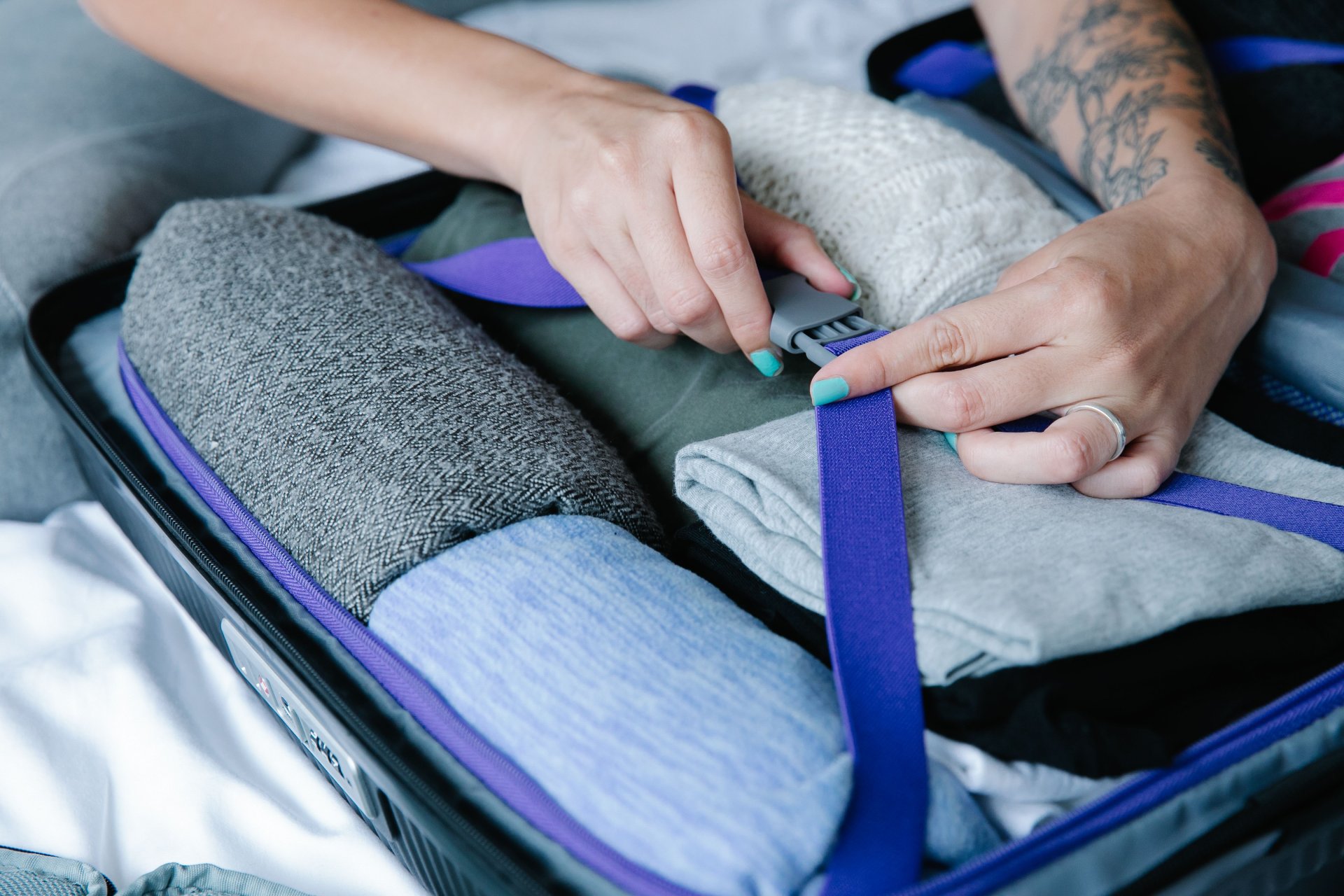
Ironically, experienced travelers already know many of the techniques that support packing light. According to the survey, their favorite travel hacks include placing smart tags in checked luggage, emailing copies of travel documents to themselves, using compression packing cubes and rolling clothes instead of folding them. Yet despite embracing technology and better organization, many still begin every international travel adventure with more luggage than necessary.

The reason is understandable. Many travelers pack for every possible situation instead of the situations they are most likely to encounter. They prepare for dramatic weather changes, formal dinners, unexpected invitations and every imaginable contingency. The result is luggage filled with items that are rarely used.

Packing light requires a different mindset. Instead of asking, “What might I need?” experienced travelers ask, “What will I actually use?” Choosing versatile travel clothing that layers easily, works in multiple settings and dries quickly allows travelers to carry less without sacrificing comfort or appearance.


Does Your Travel Clothing Matter More Than You Think During International Travel?

The survey also revealed more than half (54%) of experienced international travelers said they dress primarily for the practical needs of their trip. Whether sightseeing, attending business meetings, hiking or exploring cities, functionality outweighs fashion. Another 25% intentionally try to avoid attracting attention, while 13% prioritize packing light by minimizing the amount of clothing they bring. Only 5% said they choose clothing primarily to reflect local dress code expectations as a sign of respect. Responses were remarkably similar among both US-based and non-US-based travelers.

Practical travel clothing makes sense. Comfortable shoes, breathable fabrics and lightweight layers help travelers remain comfortable through changing temperatures, long walking days and multiple transportation modes.

But travel clothing also communicates. The objective isn’t to pretend to be a local. Most international visitors are recognizable through language, behavior or other characteristics. Instead, travelers should avoid clothing that unnecessarily attracts attention or creates the wrong impression.

Large luxury logos, expensive jewelry, flashy accessories and clothing displaying political messages or offensive images can make travelers stand out for reasons unrelated to their destination. Simple, understated travel clothing often proves both more versatile and more appropriate in a wider range of settings.

“The goal isn’t to disguise yourself as a local,” Richards said. “It’s to dress appropriately for your destination, your activities and the local culture while avoiding unnecessary attention.”


Dress Code Expectations Also Deserve Careful Attention Before Departure

While casual clothing may be perfectly acceptable in one country, it may be considered disrespectful inside religious sites, government buildings or even certain restaurants in another. Researching dress code expectations before departure helps travelers avoid uncomfortable situations and demonstrates respect for the places they are visiting.

Travel success also extends beyond what travelers wear.

Courtesy, patience and situational awareness influence experiences just as much as clothing. Observing how local residents interact, following posted rules and behaving respectfully often lead to better interactions while reducing unwanted attention.

Ultimately, experienced travelers discover that freedom—not possessions—is one of international travel’s greatest luxuries.

Every unnecessary item left at home makes moving through airport security easier. Every lighter bag simplifies changing flights, boarding trains, climbing hotel stairs and responding when plans unexpectedly change. Packing light creates flexibility, and flexibility creates better travel experiences.


The Global Rescue Connection

Researching a destination’s culture should be as routine as checking the weather forecast or reading the latest travel advisory. Whether you’re planning a vacation, seeking business opportunities or simply wanting confidence that you’re not inadvertently offending the locals by the way you dress. Understanding regional culture distinctions from your home country is essential.

A Global Rescue membership helps travelers make informed decisions through comprehensive Destination Reports that evaluate local culture, vaccination requirements, healthcare systems, emergency medical infrastructure and assess destination-specific health and security risks. When necessary, Global Rescue coordinates field rescue from the point of illness or injury and arranges medical evacuation to the hospital of the member’s choice when medically appropriate, not simply the closest facility. Additionally, Global Rescue provides members 24/7 access to experienced physicians, nurses and paramedics for real-time medical advisory support before and during travel.

Unlike traditional travel insurance, Global Rescue memberships are not insurance. There are no claim forms, deductibles, reimbursement delays or surprise out-of-pocket costs for covered services. Members receive immediate operational support from medical professionals and, when conditions warrant, security specialists who oversee every stage of the response.

The world’s best hospitals can provide exceptional care, but only if travelers can reach them. By combining destination intelligence, medical advisory services, field rescue and medical evacuation, Global Rescue bridges the gap between local healthcare resources and world-class medical treatment. The best international trips are remembered for extraordinary experiences, not medical emergencies. Preparation doesn’t diminish adventure, it gives travelers the confidence to explore the world knowing expert help is always within reach.