Article Highlights:

  • Mount Everest combines extreme altitude, cold, avalanches and limited rescue options, with more than 340 deaths recorded in the Himalayan Database.
  • Famous destinations such as the Grand Canyon, Death Valley and the Cliffs of Moher can become deadly when heat, weather, terrain and visitor behavior converge.
  • Devil’s Pool and Bolivia’s North Yungas Road illustrate how professional guides, equipment and operating rules can substantially change the risk of an extreme experience.
  • Mount Vesuvius remains an active volcano, while Chernobyl demonstrates how the danger surrounding a famous landmark can change dramatically because of geopolitical events.
  • Travelers visiting extreme environments should evaluate local medical capabilities, communications and evacuation options before an emergency occurs.


Some places become famous because they are beautiful. Others become famous because they seem almost impossible: the summit of Mount Everest, a pool perched at the lip of Victoria Falls or a narrow Bolivian road carved into a mountainside above a seemingly bottomless valley. Often, the same geological forces and extreme environments that make these destinations unforgettable are exactly what make them dangerous.

Danger does not necessarily mean a traveler should stay away. Millions of people safely visit deserts, cliffs, mountains, volcanoes and other extreme environments every year, but the margin for error can be much smaller than at a conventional vacation destination. Temperature, altitude, terrain, changing weather, poor communications and distance from advanced medical care can turn a minor mistake or routine illness into an emergency requiring search and rescue or medical evacuation.


Mount Everest, Nepal and China: When Altitude Becomes the Enemy

No landmark better demonstrates the difference between fame and accessibility than Mount Everest. At 8,849 meters, or roughly 29,032 feet, the world’s highest mountain has become increasingly attainable for well-funded climbers with professional expedition support, but technology and logistics have not changed the underlying physiology of extreme altitude.

Above approximately 8,000 meters lies what mountaineers call the Death Zone. The human body cannot adequately acclimatize there, and prolonged exposure can contribute to severe hypoxia, exhaustion, cerebral or pulmonary edema, impaired judgment and ultimately death. Climbers must also contend with avalanches, crevasses, collapsing ice, frostbite, powerful winds and rapidly changing weather.

The Himalayan Database currently records 344 deaths on Mount Everest. Nevertheless, interest has not diminished. Nepal issued a record 495 Everest climbing permits during the spring 2026 season, while the government’s spring royalty for a foreign climber on the normal route is now $15,000, up from $11,000 before September 2025. That fee does not include expedition logistics, guides, equipment or other costs associated with an Everest attempt.

For travelers, the lesson extends well beyond Mount Everest. High altitude can affect trekkers who never intend to reach a summit, and evacuation options diminish as elevation, weather and terrain become more difficult. Fitness does not provide immunity from altitude illness, making acclimatization, medical planning, communications and a predetermined evacuation strategy essential.


Grand Canyon, United States: The Descent Is Only Half the Trip

The Grand Canyon creates a deceptively simple risk. From the rim, hikers begin by traveling downhill, sometimes feeling strong enough to continue much farther than planned, only to discover that the strenuous ascent occurs later when temperatures and fatigue may already be working against them.

The park recorded more than 4.4 million recreational visits in 2025, along with 848 emergency medical service incidents and 232 search-and-rescue incidents. Eleven fatalities were recorded that year, illustrating that one of America’s most developed and heavily visited national parks still demands serious preparation once travelers move beyond its roadside viewpoints.

Heat is among the most serious hazards. During June 2026, the National Park Service warned that Inner Canyon temperatures could reach 109°F in the shade and advised visitors to avoid strenuous hiking between 10 a.m. and 4 p.m. Three apparent heat-related deaths occurred during two incidents that month, demonstrating how quickly environmental exposure can overwhelm even travelers who may not perceive themselves as undertaking an extreme expedition.

The Grand Canyon’s combination of heat, steep elevation change, limited shade, long distances and delayed rescue access makes self-sufficiency important. The farther travelers descend, the more important water, nutrition, pacing, physical conditioning and realistic turnaround decisions become.


Cliffs of Moher, Ireland: Beauty Ends at an Abrupt Edge

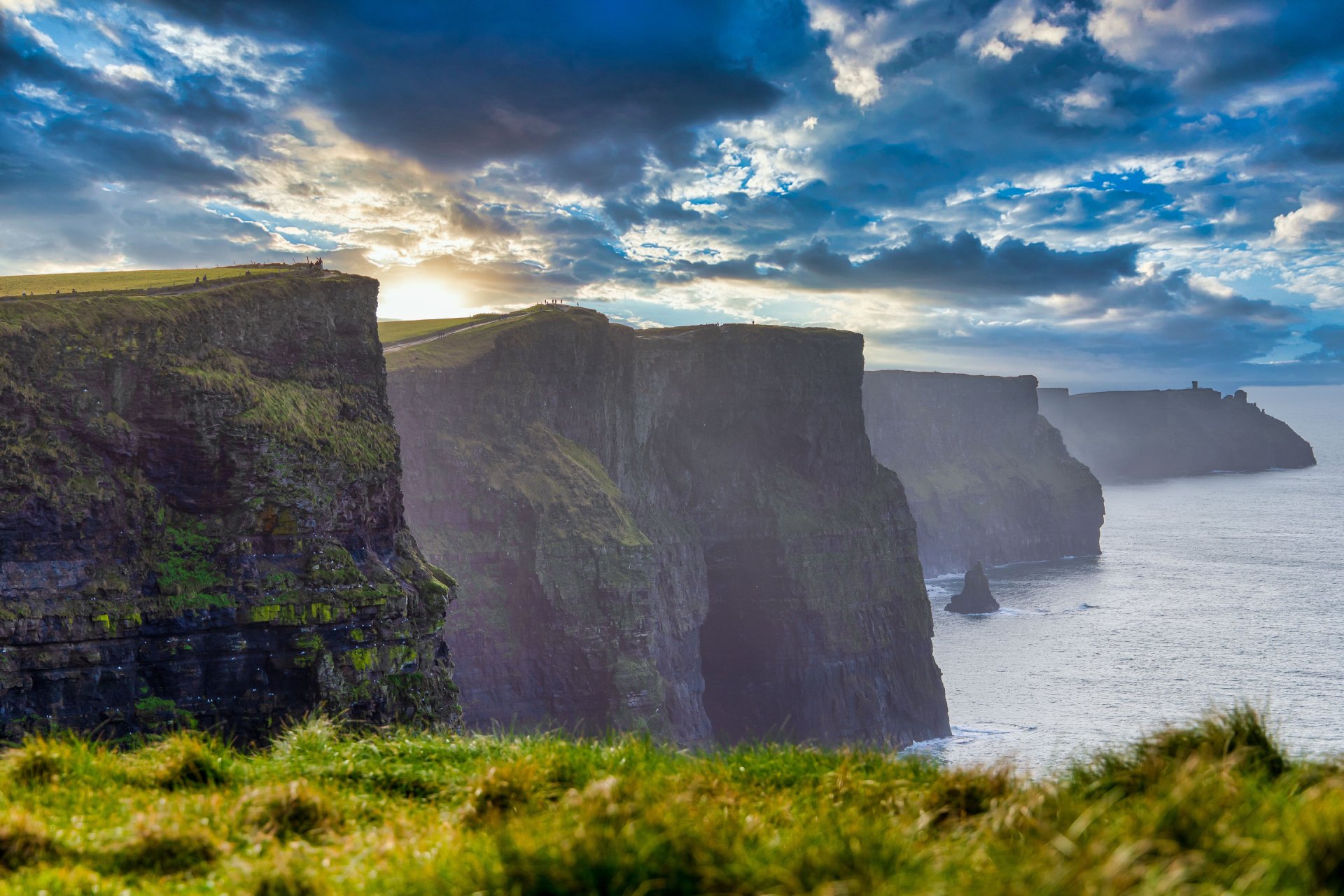
Ireland’s Cliffs of Moher rise more than 700 feet above the Atlantic, providing one of Europe’s most recognizable coastal panoramas. Unlike a distant mountain summit, however, the hazard is only steps away from areas visited by ordinary sightseers, which can make the risk easier to underestimate.

Wind is one of the defining variables. The official Cliffs of Moher visitor operation uses weather warning levels that can escalate from caution during strong winds to closure and evacuation when gusts become dangerous enough to make cliffside areas unsafe. Rain can add another layer by making soil and paths slippery, while erosion means cliff edges should never be assumed to be structurally reliable. Travelers who move beyond designated areas for photographs or unobstructed views may be trading a slightly better vantage point for substantially less protection.

The practical safety strategy is uncomplicated: remain on managed paths, respect barriers and closure notices and give the edge generous clearance. On exposed cliffs, a sudden gust or slip can become unrecoverable almost instantly.


Death Valley National Park, United States: Heat That Changes the Rules

Death Valley does not hide its primary hazard. It is the hottest place on Earth according to the National Park Service, with a record temperature of 134°F recorded at Furnace Creek and modern summer readings reaching approximately 130°F. What makes the park especially dangerous is the interaction between heat and remoteness. Cell service is limited or nonexistent across much of the park, backcountry roads can be demanding and a vehicle malfunction that might be an inconvenience elsewhere can become a medical emergency when temperatures are extreme.

The National Park Service advises visitors to carry substantial water, avoid lower-elevation hiking during extreme heat and match their vehicle to road conditions. It also notes that single-vehicle rollover accidents account for many deaths in the park, meaning the threat is not exclusively heat illness. Travelers should think of a functioning air-conditioned vehicle as part of their safety system rather than simply transportation. Satellite communication, extra water, fuel planning and avoiding unnecessary backcountry travel during the hottest months can provide additional layers of protection.


Mount Vesuvius and Pompeii, Italy: An Active Volcano Beside a Major City

Few attractions combine tourism and catastrophic historical evidence as vividly as Pompeii and Mount Vesuvius. The AD 79 eruption buried Pompeii and neighboring communities, preserving an archaeological record that attracts travelers from around the world while reminding them what the volcano is capable of producing.

Vesuvius remains active, although Italy’s Civil Protection Department currently lists its alert level as basic, or green. Authorities nevertheless maintain extensive volcanic emergency planning because the surrounding area is densely populated, and the designated red zone includes 25 municipalities exposed to threats including fast-moving pyroclastic flows and heavy accumulations of ash and lapilli.

For a modern visitor, an eruption is not the most likely source of injury during an ordinary visit. Heat, uneven volcanic terrain, dehydration, falls and ignoring restricted areas are much more immediate considerations, while the much larger volcanic hazard is managed through scientific monitoring and government evacuation planning. That distinction matters. A destination may carry catastrophic potential while everyday traveler risk is dominated by much more ordinary problems.


Devil’s Pool, Victoria Falls, Zambia: Swimming Beside a 320-Foot Drop

Devil’s Pool appears almost engineered for social media: swimmers sit in a natural rock pool at the lip of Victoria Falls as the Zambezi River disappears over the edge nearby. The experience looks reckless in photographs, but its operation is highly dependent on seasonal water conditions. Zambia Tourism describes the waterfall drop at approximately 100 meters, or 320 feet, and notes that Devil’s Pool is only accessible during suitable low-water conditions, generally during part of the period from roughly August through January. Access must be booked with a guide.

Those restrictions are not formalities. The volume and force of the Zambezi change dramatically with the seasons, and many water-based activities become impossible when river levels are high. The lesson is especially relevant for travelers drawn to famous adventure experiences. A photograph showing someone safely standing or swimming somewhere does not mean the location is safe every day of the year or that an unguided visitor can replicate the experience.


Chernobyl Exclusion Zone, Ukraine: When the Primary Risk Changes

The Chernobyl Exclusion Zone became one of the world’s most unusual dark-tourism destinations decades after the 1986 nuclear disaster. Before the current war, controlled visits focused heavily on radiation management, restricted routes, dosimetry and avoiding contaminated or structurally unstable areas.

Official procedures still exist for authorized visits to the Chernobyl Nuclear Power Plant and Exclusion Zone, including advance applications and dosimetry requirements. But that administrative framework should not be mistaken for an ordinary tourism invitation in 2026. The overriding danger today is geopolitical. As of late August 2026, the US Department of State places Ukraine at Level 4: Do Not Travel because of the continuing Russia-Ukraine war, citing missile and drone attacks, martial-law restrictions, closed airspace and other conflict-related hazards.

Chernobyl therefore demonstrates how destination risk is dynamic. Radiation and deteriorating infrastructure remain part of its hazard profile, but travelers must evaluate current security conditions rather than relying on what was permissible or popular several years earlier.


North Yungas Road, Bolivia: The Road That Became an Adventure Attraction

Bolivia’s North Yungas Road earned the nickname “Death Road” during an era when buses, trucks and cars shared a narrow unpaved mountain route with sheer drop-offs and limited room to pass. The modern experience is different because a paved bypass opened in 2006 and removed most through traffic from the old road.

Today, tourists primarily experience the route by mountain bike. That does not eliminate danger, but it changes its nature: speed, poor braking technique, loose gravel, inadequate equipment, distraction and riding too close to an exposed edge are more relevant to modern visitors than the heavy two-way vehicle traffic responsible for the road’s historical reputation.

The descent also involves dramatic environmental change. Riders begin high in the Andes near La Cumbre at roughly 4,650 meters and descend toward subtropical terrain near 1,200 meters, requiring them to adapt to temperature, weather and altitude while controlling a bicycle for many kilometers.

Choosing a reputable operator matters. A properly maintained full-suspension mountain bike with effective hydraulic brakes, a suitable helmet, protective equipment, experienced guides and a support vehicle creates a much different risk profile than attempting the route with questionable equipment or without organized support.


What Turns an Extreme Attraction Into an Emergency?

The most famous dangerous landmarks rarely share a single type of hazard. Everest threatens climbers through altitude and exposure; Death Valley through extreme heat and remoteness; the Cliffs of Moher through weather and vertical terrain; Devil’s Pool through moving water; Vesuvius through volcanic potential and Chernobyl through a combination of historical environmental hazards and present-day armed conflict.

What they do share is a reduced margin for improvisation. Travelers should understand the destination’s principal hazard before arrival, know what local emergency medical resources can realistically provide and determine whether cellular communication and conventional ambulance access will exist where they are going.

Local rules are another critical safety layer. Seasonal closures, guide requirements, trail restrictions, permits and warnings generally exist because authorities have seen what happens when environmental conditions exceed what visitors can safely manage. Treating those rules as part of the experience rather than obstacles to it is one of the simplest ways to reduce exposure.


The Global Rescue Connection

It doesn’t matter if you are climbing Mount Everest, mountain biking Death Road, or exploring the archaeological record of Pompeii caused by a centuries old volcanic eruption. A membership protects you and your adventure activities with no limitations.

“We’ve rescued injured climbers stuck in a remote Pakistan mountain range, an adventure racer suffering a dangerous infection in Fiji, a group of Middlebury College students caught up in the civil unrest known as Arab Spring, and honeymooners from Nepal following a massive earthquake,” said Dan Richards, CEO of Global Rescue.

Extreme destinations are compelling precisely because they take travelers beyond familiar environments, but those environments can also place travelers beyond familiar emergency-response systems. A broken leg on an isolated trail, severe altitude illness on a mountain, heat stroke in a desert or another medical emergency hours from advanced care can require much more than calling an ambulance.

A Global Rescue membership provides field rescue from the point of illness or injury, medical advisory services and medical evacuation when a member requires a higher level of care. That capability is particularly relevant in remote terrain where reaching the first medical facility can be the most difficult part of the emergency.

Destination Reports can help travelers prepare before departure by providing information about security conditions, destination risks and the capabilities of local medical facilities and emergency healthcare. Traveler advisory services provide another layer of support, helping members understand changing conditions and make informed decisions before a manageable hazard escalates.

For mountaineers and trekkers traveling at extreme altitude, Global Rescue’s High-Altitude Evacuation Package provides field rescue and medical evacuation services for eligible sick or injured mountaineers and trekkers operating above 15,000 feet, or approximately 4,600 meters. That distinction becomes important in places such as the Himalayas, where conventional rescue capabilities become progressively more limited with altitude, terrain and weather.

The objective is not to remove risk from adventure; that is impossible. It is to understand the hazards, reduce avoidable exposure and establish a viable response plan before something goes wrong. At the world’s most extreme landmarks, preparation can be the difference between an unforgettable experience and an emergency with very few good options.