Article Highlights:

  • Jordan combines Petra, Wadi Rum, the Dead Sea, Roman ruins, Red Sea diving and exceptional desert landscapes within relatively short travel distances.
  • Adventure travelers can hike, canyon, dive and camp, but extreme heat, flash floods and limited emergency response in remote areas require careful planning.
  • Leisure travelers gain access to some of the Middle East’s most important archaeological and religious sites along with distinctive Levantine food and hospitality.
  • Business travelers benefit from Amman’s role in diplomacy, humanitarian operations, technology and regional commerce, while geopolitical instability can complicate travel.
  • Global Rescue Destination Reports can help members understand not only security and medical conditions, but also cultural expectations involving modesty, alcohol, LGBTQ+ travelers, photography and religious customs.


Jordan occupies an unusual place on the international travel map. It is geographically compact but extraordinarily dense with archaeology, religious history, desert landscapes and outdoor experiences. Petra alone would be enough to put the country on many travelers’ lifetime lists, yet Jordan also offers the vast sandstone formations of Wadi Rum, Roman ruins at Jerash, Byzantine mosaics in Madaba, the mineral-rich waters of the Dead Sea, Red Sea diving in Aqaba and the modern urban culture of Amman.

Jordan lends itself unusually well to a seven-to-10-day itinerary. A traveler can begin in Amman, explore the Roman city of Jerash, continue south through Madaba and Petra, spend a night beneath the desert sky in Wadi Rum and finish with diving or relaxation in Aqaba. The Dead Sea can be incorporated without requiring a separate flight or lengthy detour.

Jordan highlights diversity from religious and archaeological sites to hiking, desert experiences and wellness travel. Jerash, about 45 kilometers north of Amman, preserves one of the region’s best examples of a Roman provincial city, while Madaba remains known for Byzantine and Umayyad mosaics and its proximity to Mount Nebo. That concentration makes Jordan particularly attractive to travelers who want more than one type of experience. It can function as an adventure destination, archaeological journey, religious pilgrimage, culinary trip and cultural introduction to the Arab world without requiring the geographic scale of a much larger country.


Adventure Travel, From Petra, Wadi Rum and the Red Sea

For outdoor travelers, Jordan delivers significantly more variety than its desert-dominated image suggests. The Jordan Trail is the clearest example. The long-distance route extends more than 650 kilometers from Umm Qais in the north to Aqaba in the south, crossing 52 villages and towns and connecting wooded northern hills, wadis, Petra, Wadi Rum and eventually the Red Sea. Travelers do not have to complete the full route; shorter sections make it possible to incorporate trekking into a conventional sightseeing itinerary.

One of the most memorable sections runs from Dana to Petra, passing through dramatically changing landscapes before approaching the ancient Nabataean city. Dana Biosphere Reserve adds another layer of outdoor appeal, encompassing four different biogeographical zones and supporting hundreds of plant and animal species. Hiking and mountain biking are both available in the reserve.

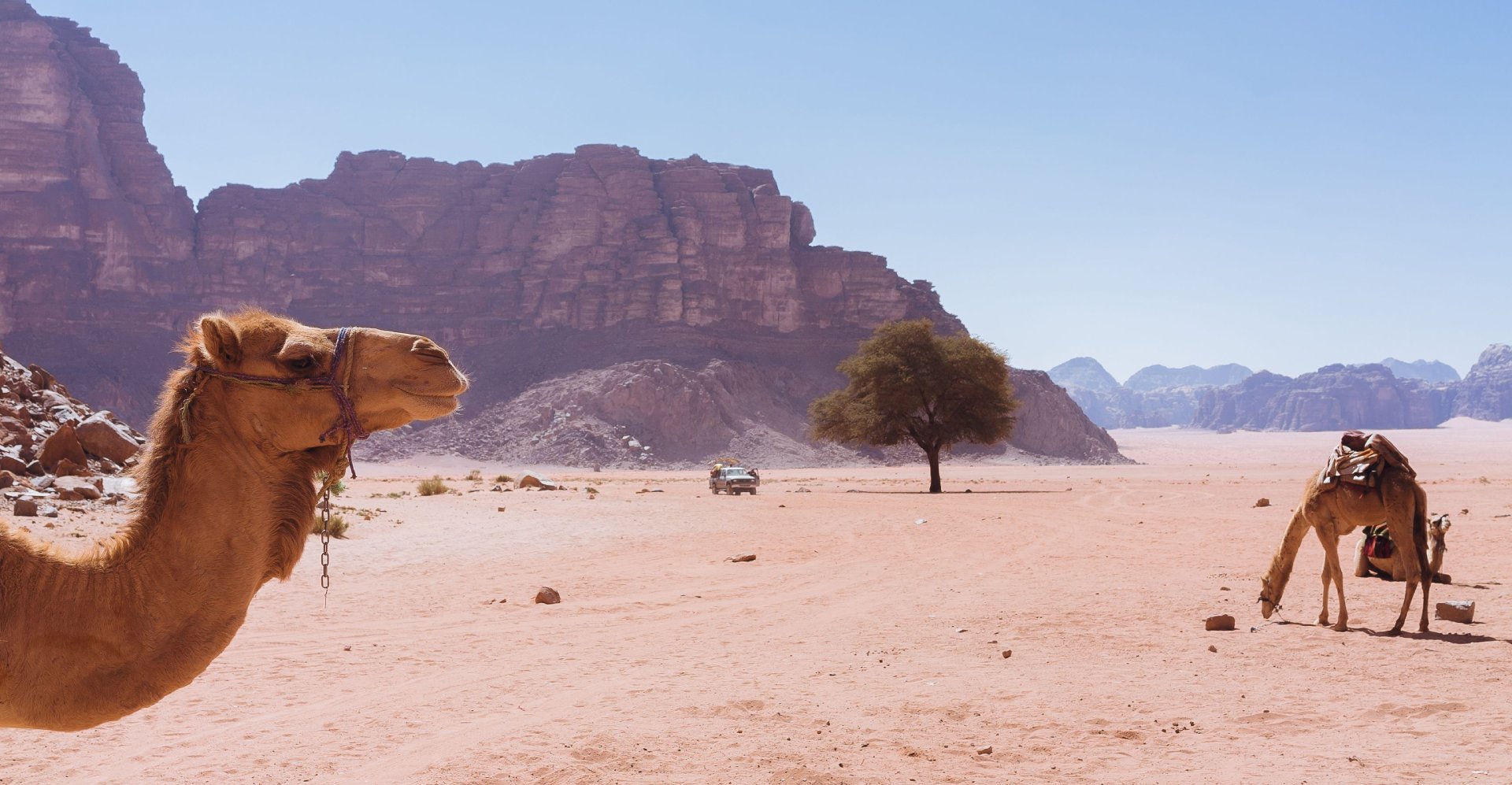
Wadi Rum shifts the experience again. The UNESCO World Heritage site covers roughly 74,000 hectares of sandstone mountains, narrow gorges, natural arches, cliffs and desert valleys, with archaeological evidence documenting thousands of years of human presence. Jeep tours, desert camps, hiking, climbing and stargazing allow visitors to explore a landscape that feels far more remote than its accessibility from Aqaba might suggest. Then there is Wadi Mujib. The reserve descends toward the Dead Sea through steep sandstone canyons and year-round waterways, creating opportunities for hiking and canyoning that contrast sharply with Jordan’s open desert environments. Farther south, Aqaba offers snorkeling and scuba diving in the Red Sea.


Where Adventure Travel Gets More Complicated

Jordan’s outdoor environment demands respect. Summer heat can make strenuous desert hiking difficult or dangerous, particularly during the hottest parts of the day. Travelers considering long-distance trekking, Wadi Rum excursions or exposed desert routes should plan activity around temperature, hydration and access to shade.

Flash flooding creates a very different seasonal hazard. Jordan’s wadis can fill rapidly during the rainy season, generally from November through March. Remote travel creates additional complications because emergency response capability diminishes outside major population centers. Adventure travelers should use established trails, reputable guides and licensed operators, particularly for canyoning, off-road desert travel and diving. Jordan rewards independence, but improvising far from established tourism corridors can dramatically increase the difficulty of getting help when something goes wrong.


Leisure Travel: Archaeology Is Only the Beginning

Petra remains Jordan’s defining attraction and for good reason. The Nabataean city combines architecture, geology and archaeology on a scale that photographs struggle to convey. Approaching the Treasury through the narrow Siq remains one of the Middle East’s iconic travel experiences, but Petra extends far beyond that single monument, rewarding travelers who devote a full day or longer to exploring the broader archaeological park.

Jerash offers a completely different historical period, with colonnaded streets, temples, theaters and public spaces reflecting the city’s Roman-era prosperity. Madaba adds early Christian history and mosaics, while Mount Nebo and the Baptism Site make Jordan especially significant for faith-based travelers.

The Dead Sea shifts the emphasis from archaeology to relaxation. Jordan’s tourism authority describes the shoreline as roughly 427 meters below sea level, where unusually saline water creates the famous floating experience. Resort hotels have turned the area into one of the country’s primary wellness destinations, making it an easy counterpoint to long days walking through archaeological sites.

Amman should not be treated merely as an airport gateway. The capital offers Roman ruins, neighborhoods, cafés, markets and a strong restaurant culture that gives travelers a look at contemporary Jordanian life. The country’s cuisine can be as integral to the experience as the monuments themselves, from mezze, hummus and falafel to grilled meats, fresh breads and dishes such as mansaf.


Business Travel: Amman’s Value Is Regional

Jordan does not compete with Dubai or Riyadh on corporate scale. Its strength lies elsewhere. Amman has long served as a base for diplomacy, international organizations, humanitarian operations, development agencies and companies working across the Levant. Jordan’s geographic position, political relationships and comparatively developed service sector make it an important operating platform for organizations dealing with regional logistics, refugee assistance, development, healthcare and international affairs.

The challenge for business travelers is operational predictability. Regional military activity can affect airline schedules, border crossings and corporate security policies even when meetings in Amman continue normally. A routine visit can therefore require contingency planning that would be unnecessary in a more geographically insulated business center.


Jordan Is Welcoming, but Cultural Expectations Matter

Many international travelers find Jordanians welcoming and accustomed to visitors, particularly in Amman, Petra, Aqaba and other established tourism destinations. That does not mean North American social norms automatically translate. Jordan is predominantly Muslim, and travel guidance recommends conservative dress, discreet behavior and respect for religious and social traditions. Expectations become especially important at mosques, religious sites, traditional communities and during Ramadan. Public displays of affection should also be limited, particularly in conservative areas.

Alcohol illustrates the difference between legal availability and cultural expectations. Drinking is permitted in licensed bars, clubs, hotels and private homes, but drinking alcohol on the street is illegal. Same-sex sexual relations are not illegal in Jordan, but that fact alone does not describe the practical environment for LGBTQ+ travelers. Western guidance notea that homosexuality is not widely socially accepted and that public displays of affection can draw negative attention or potentially lead to problems under other laws involving modesty or public conduct.

The same principle applies more broadly. Jordan can feel relaxed and cosmopolitan in some settings while remaining socially conservative in others. Travelers who recognize those differences usually have a smoother experience than those who assume the standards of a tourism district apply nationwide.


Medical Care Depends Heavily on Where You Are

Jordan has capable medical facilities in Amman and Aqaba, but the picture changes outside those centers. UK travel guidance describes medical facilities outside Amman and Aqaba as basic, but ambulance services are not widely available and emergency responder training and response times may be limited.

That discrepancy is especially important for adventure travelers. A medical emergency in downtown Amman presents a fundamentally different logistical problem from an injury on the Jordan Trail, in Wadi Rum or deep inside a canyon.


The Global Rescue Connection

The US Department of State currently classifies Jordan as Level 3 and recommends visitors should Reconsider Travel, citing potential terrorism and armed conflict. Canadian officials advise travelers to avoid non-essential travel because of the volatile regional security environment.

That distinction is important. Jordan continues to offer extraordinary cultural, outdoor and commercial experiences, but travelers need to evaluate those experiences alongside the realities of regional instability, possible air and border disruptions and changing local security conditions.

Jordan demonstrates why researching attractions is only part of preparing for an international trip. Knowing that Petra is worth seeing or that Wadi Rum offers exceptional desert landscapes is relatively easy. Understanding how to behave at a mosque, what modest dress means in a conservative community, where alcohol can legally be consumed, how LGBTQ+ travelers may be received or what medical resources exist near a remote hiking route requires a different level of destination knowledge.

A Global Rescue Destination Report gives members a more complete picture before departure. Destination-specific intelligence can help travelers understand security conditions, medical capabilities, transportation considerations, local laws and cultural expectations before those differences become problems during the trip.

That cultural context is particularly useful in Jordan because the traveler experience can shift quickly between locations. What feels normal at an international hotel in Amman or a resort in Aqaba may be inappropriate near a religious site, in a traditional community or during Ramadan. Alcohol may be available but subject to clear restrictions. Same-sex relationships are not criminalized, but LGBTQ+ travelers may face social sensitivities that are important to understand. Photography that is routine at Petra can become problematic around military or security infrastructure.

Destination Reports also help members assess practical risk. A traveler planning the Jordan Trail needs different information than someone spending four days attending meetings in Amman. A diver in Aqaba, a family visiting Petra and a traveler entering Wadi Mujib all face different combinations of medical access, transportation, climate and security exposure.

Jordan can deliver one of the Middle East’s richest combinations of adventure, history and culture. A Global Rescue Destination Report helps members understand not only what to see, but how to travel there intelligently—with a clearer picture of the customs, medical capabilities, security environment and local expectations that shape the experience long before an emergency occurs.