Article Highlights:

  • DIY medical evacuation attempts often fail due to logistics, timing and medical complexity.
  • Air ambulance flights can cost $25,000 to over $300,000 depending on distance and care needs.
  • Helicopter rescue access is limited, expensive and rarely available on demand.
  • Commercial flights are not viable for most serious injuries or unstable patients.
  • Professional coordination is the difference between controlled evacuation and escalating crisis.


When travelers imagine worst-case scenarios abroad, they often picture the dramatic moment of rescue — a helicopter rescue cutting through mountain air, or a sleek air ambulance jet rushing a patient to safety. What many fail to consider is everything that happens before that moment — or what happens when there is no coordinated rescue at all.

In reality, many travelers attempt a DIY, or do it yourself, approach to medical evacuation. They rely on local providers, ad hoc logistics or commercial flights to get home. It sounds practical in theory. In practice, it is where situations unravel — medically, logistically and financially.

Self-rescue is not a strategy. It is often a gamble, and one with very high stakes.


The Cost of “Self-Rescue”: Why DIY Evacuation Attempts Often Fail

Travelers are conditioned to solve problems independently. Missed flight? Rebook. Lost luggage? File a claim. But medical emergencies do not operate within that framework.

A spinal injury on a ski slope, a motorcycle crash in a rural town or a severe respiratory issue on a remote coastline introduces variables that cannot be managed through apps, credit cards or quick decisions. These situations require coordinated medical evacuation, not improvisation.

The problem with DIY evacuation is not intent — it is capability. Travelers simply do not have access to the infrastructure required to execute a safe extraction.

Consider the case of a young ski racer in Switzerland who suffered a catastrophic injury. After initial surgery, her condition required highly specialized transport with strict spinal precautions. A properly equipped air ambulance — essentially a flying ICU — transported her across continents without compromising her condition.

Now imagine a DIY version of that scenario.

Without coordinated medical evacuation, the family would have faced impossible decisions:
Which aircraft can safely transport a post-operative spinal patient? How do you arrange in-flight monitoring? What happens if her condition deteriorates mid-flight?

These are not logistical inconveniences. They are life-or-death variables.


What an Air Ambulance Provides

Air ambulances are often misunderstood as simply fast transportation. In reality, they are highly specialized medical platforms.

These aircraft are equipped with ventilators, cardiac monitors, infusion pumps, oxygen systems and advanced medications. Some are configured for neonatal care, trauma stabilization or infectious disease isolation.

Equally important is the medical team onboard. Flight nurses, paramedics and physicians trained in emergency and critical care manage everything from airway control to pain management and in-flight crises.

A DIY evacuation has none of this.

At best, a traveler might secure a commercial seat with basic oxygen. At worst, they attempt transport in conditions that actively worsen their injury.


Why Commercial Flights Fail in Serious Cases

One of the most common DIY assumptions is that a commercial flight can substitute for an emergency medical evacuation. That assumption breaks down quickly.

Commercial airlines cannot accommodate stretchers in standard configurations. Cabin pressure is fixed at levels that can worsen conditions like lung injuries or post-surgical complications. Boarding delays, layovers and limited medical support introduce additional risks.

For stable patients, commercial flights with medical escorts work. But for trauma cases, respiratory distress or neurological injuries, they are not always viable.

A traveler with fractured ribs and a punctured lung, for example, required continuous monitoring and oxygen management during flight — care that simply cannot be replicated on a commercial airline.

DIY evacuation in such cases is not just inadequate. It is dangerous.


The Hidden Constraint: Helicopter Rescue Isn’t Always an Option

Many travelers assume that if things go wrong, a helicopter rescue will be available.

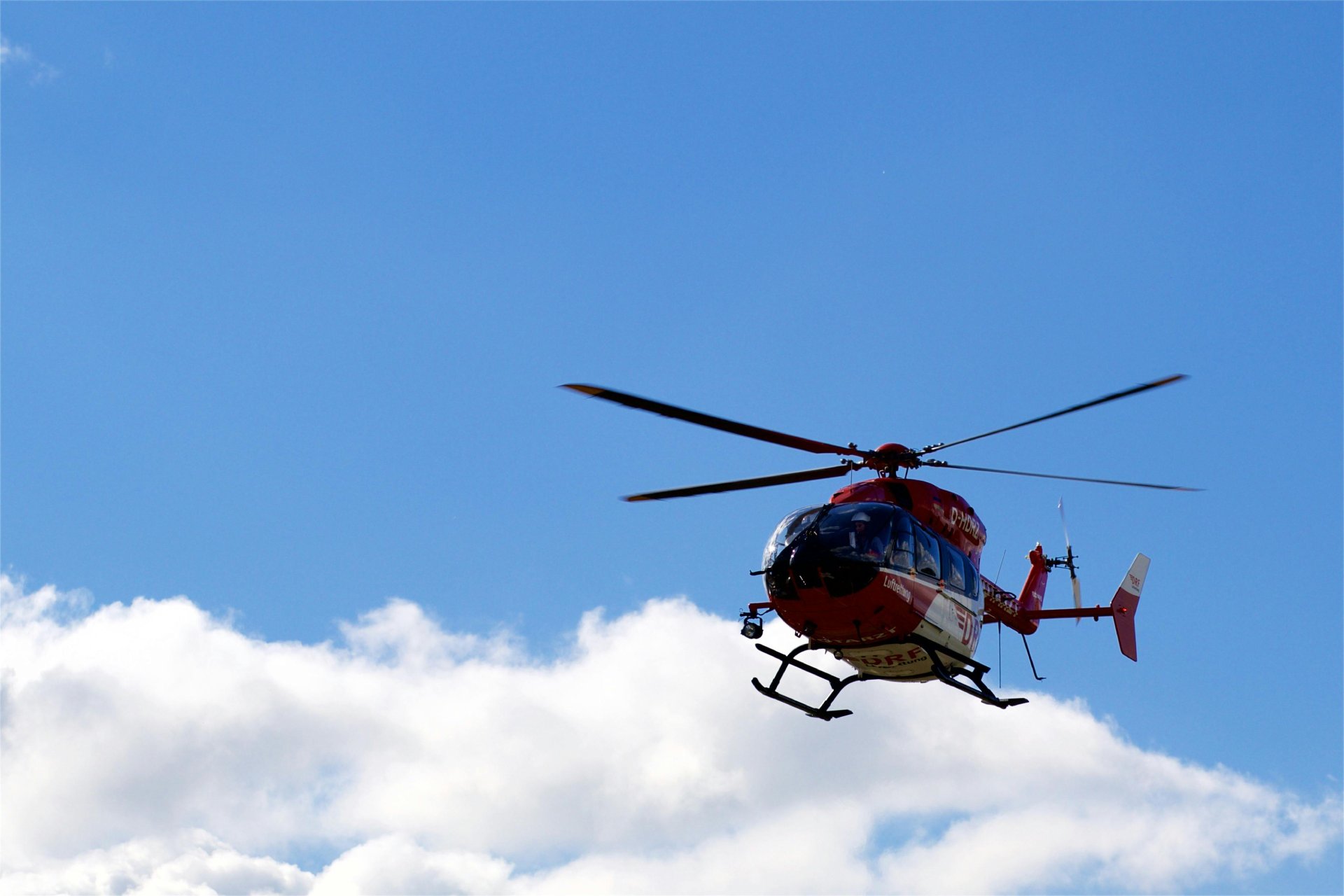
In reality, helicopter rescue operations are limited by geography, weather, daylight and range — typically around 175 miles from a capable base. They are also expensive, often costing tens of thousands of dollars for a single extraction.

More importantly, helicopters do not operate on demand for private individuals without coordination. They require authorization, landing logistics and medical justification. DIY attempts to secure helicopter rescue often fail because travelers lack access to these networks. Even when DIY evacuation is technically possible, the financial consequences can be devastating.

Air ambulance costs vary widely:

Domestic flights can range from $25,000 to $75,000. International medical evacuation can exceed $300,000 depending on distance and complexity. These expenses are typically required upfront.

Travelers relying on standard insurance may discover too late that coverage is limited, delayed or conditional. Many policies reimburse after the fact and require pre-authorization — a process that does not align with medical emergency timelines.

DIY evacuation often means paying first and hoping for reimbursement later.


Medical Complexity Doesn’t Pause for Logistics

One of the most overlooked realities of medical evacuation is that the patient’s condition continues to evolve during transport.

A surfer in Costa Rica who suffered a cervical spine fracture required strict immobilization throughout the journey to prevent permanent damage. A DIY evacuation attempt in that scenario introduces unacceptable risk. Improper handling, delays or inadequate equipment could result in irreversible injury.

Similarly, patients at risk for deep vein thrombosis (DVT) may require low-altitude flights to prevent life-threatening complications. Only specialized air ambulance aircraft can adjust flight profiles accordingly.

These are not details travelers can manage independently.


The Logistics Problem No One Sees Coming

Medical evacuation is not just about the flight. It is an end-to-end operation.

It involves coordinating local medical providers, ground transportation to and from airports, flight permits and international clearances, receiving hospitals and specialists, medical documentation and patient stabilization.

DIY attempts often fail at this stage. Even if a flight is secured, gaps in coordination can delay departure or compromise care. The result is a cascading failure where each delay increases medical risk.

In controlled conditions, planning your own evacuation might seem feasible. But emergencies do not occur under controlled conditions. They happen in unfamiliar environments, under stress, often with language barriers and limited local infrastructure. Decision-making deteriorates. Information is incomplete. Time is critical.

This is where DIY approaches collapse — not because travelers lack intelligence, but because the system required to execute a safe evacuation is far more complex than it appears.

Beyond the financial and medical risks, there is a psychological burden that accompanies DIY evacuation. Travelers and families are forced to make high-stakes decisions without expertise. Every delay or complication increases anxiety. Every unknown introduces doubt. In contrast, professionally coordinated evacuations remove that burden, allowing patients and families to focus on recovery rather than logistics.


The Global Rescue Connection

Medical emergencies during travel expose a critical gap between what travelers think they can handle and the expert requirements needed for appropriate intervention. Air ambulance rescues are a vital part of emergency response, providing rapid and effective assistance in situations where local healthcare is insufficient, time is critical or the patient cannot safely travel by any other means. Cases include spinal trauma, severe head injuries, respiratory distress, broken bones with immobilization, infectious diseases requiring isolation and even complex post-operative repatriation. If you become seriously injured or sick anywhere in the world, an emergency medical evacuation by air ambulance can cost you up to $300,000.

But Global Rescue members pay nothing more than the cost of membership, starting as low as $139.

A Global Rescue membership provides field rescue, medical evacuation and medical advisory services that eliminate the uncertainty and risk of DIY evacuation. With specialized onboard, in-flight medical equipment, air ambulance teams can adapt to diverse challenges, ensuring those in danger receive the help they need as quickly as possible. The success of the ski racer’s repatriation from Switzerland to Canada, or the critical stabilization of the Costa Rica surfer and Mexico motorcyclist prove that time, coordination and airborne expertise save lives.

Additionally, Global Rescue offers medical advisory and telehealth services, providing consultations via phone or video, which can be essential when far from home. From the Alps to the Amazon, from coastlines to deserts, one call activates a network of experts and aircraft that move with urgency and precision.

A Global Rescue membership allows international travelers to focus on the experience, not the risk, knowing that when something goes wrong, they won’t have to rely on do-it-yourself solutions in a situation where self-rescue simply isn’t enough.