Article Highlights:

  • December through February gives anglers access to two dramatically different seasons: hard-water fishing in the north and summer fishing in the Southern Hemisphere.
  • Lake of the Woods, Devils Lake and Lake Simcoe are standout North American destinations for walleye, perch, pike, trout and whitefish.
  • Guatemala and Cabo San Lucas offer strong winter opportunities for sailfish and striped marlin, while the Indian Ocean adds giant trevally and other pelagic species.
  • Low-water conditions in parts of the Amazon can concentrate peacock bass, while Patagonia enters prime trout-fishing season.
  • Remote fishing introduces medical, weather and transportation risks that make local healthcare intelligence and emergency planning especially important.


For anglers in the Northern Hemisphere, December through February might seem like the offseason. Globally, it is anything but. These three months create one of sportfishing’s most interesting geographic splits. Across northern lakes, thickening ice opens access to walleye, jumbo perch, lake trout and northern pike. Head south and the calendar flips: Patagonia is in summer, parts of the Amazon enter favorable low-water periods and tropical destinations draw migrating sailfish, marlin and other pelagic predators.

That makes winter one of the few times of year when an angler can choose between dropping a jig through a frozen lake, throwing a topwater lure at a peacock bass or watching a billfish explode behind a teaser offshore. The best destination depends less on the month than on what you want pulling back.


Lake of the Woods: The Classic North American Ice-Fishing Experience

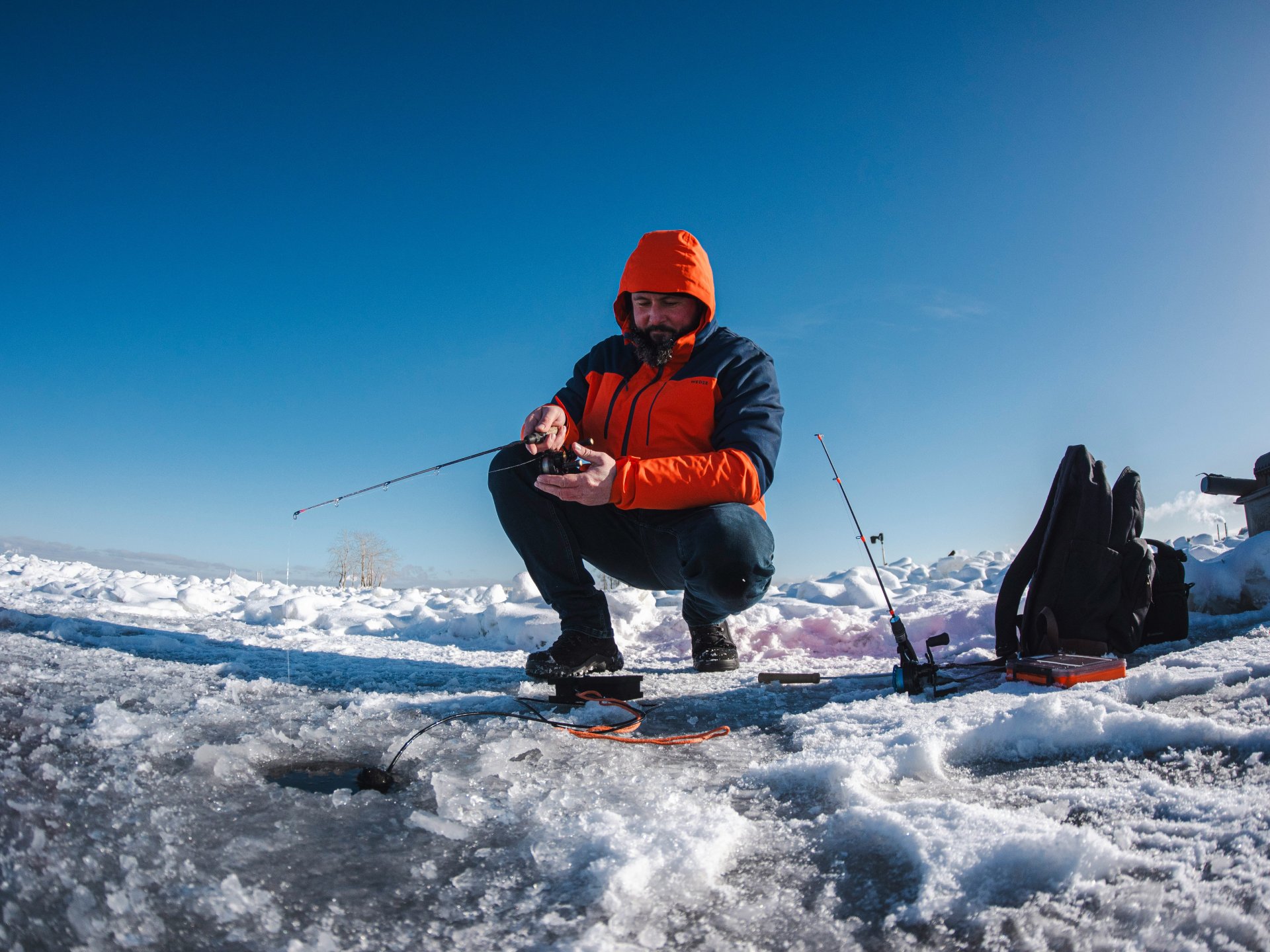
Straddling Minnesota and Ontario, Lake of the Woods has earned its reputation as one of North America’s defining ice-fishing destinations. During winter, heated fish houses, sleeper houses and plowed ice routes can transform sections of the frozen lake into what looks like a temporary town.

Walleye and sauger are the principal attractions, with northern pike and other species adding variety. The main winter pattern involves vertical jigging or dead-sticking beneath the ice rather than the drifting techniques used during open-water months.

The local tourism organization describes December through March as its ice-fishing season, with the heavier midwinter infrastructure developing as the ice thickens. January and February are therefore particularly attractive to anglers who want the full hard-water experience without sacrificing heated shelters and outfitter support.

Even here, however, an ice road is not the same thing as a highway. Conditions can change with temperature, snow, currents and pressure ridges, making current local guidance essential.


Devils Lake: Jumbo Perch and Walleye on the Prairie

Devils Lake, North Dakota, combines enormous acreage with a fishery famous for yellow perch and walleye. Freshwater shrimp provide abundant forage, helping produce the oversized perch that have made the lake a winter destination for traveling anglers.

December can bring fishable ice, but timing varies substantially from year to year. North Dakota tourism notes that the lake has frozen as early as November and as late as January, which makes January and February the more dependable planning window for travelers booking well in advance.

Ice quality, not the date on the calendar, determines whether travel is safe. The North Dakota Game and Fish Department warns that thickness is inconsistent and that snow can conceal cracks, weak ice and open water. Testing conditions as you move and consulting local guides or resorts are basic risk-management steps, not optional precautions.


Lake Simcoe: A Convenient Canadian Hard-Water Fishery

For anglers who want serious ice fishing without an expedition-scale journey, Ontario’s Lake Simcoe is especially appealing. About an hour north of Toronto, it supports yellow perch, lake trout and whitefish and has developed an extensive network of hut operators and guided winter trips.

January and February are the heart of the opportunity, but travelers should avoid assuming that a particular date guarantees safe ice. Ontario does not declare a separate official “ice-fishing season”; fishing depends on species regulations and actual local ice conditions. The province emphasizes that ice does not freeze uniformly and recommends checking conditions with local operators before traveling onto it.

That distinction is increasingly important during winters marked by freeze-thaw cycles.


East Greenland: Fishing at the Edge of the Arctic

For something far removed from drive-to ice houses, East Greenland offers a different proposition entirely: ice fishing surrounded by fjords, steep mountains and Arctic isolation.

Visit Greenland specifically identifies East Greenland as a destination where anglers can experience ice fishing amid dramatic mountain terrain. Arctic char is an important target, while Greenland halibut can be encountered in suitable coastal fisheries depending on the location and outfitter.

This is not simply fishing in colder weather. Extreme temperatures, limited transportation, changing sea ice and long distances from advanced healthcare make professional local support especially important. A mechanical problem or cold-weather injury that would be inconvenient near a North American town can become a much more serious problem in an Arctic fjord.


Guatemala: Winter Sailfish Country

Swap an ice auger for offshore tackle and Guatemala becomes one of the most compelling December-to-February choices in the tropics.

The Pacific coast around Puerto San José and Iztapa is internationally known for sailfish. Winter brings a particularly productive combination of bait concentrations, blue water and relatively favorable offshore conditions, with January and February squarely within the principal sailfish window. Dorado, yellowfin tuna and occasional marlin can provide additional opportunities.

The appeal is intensity. Sailfish fishing here often revolves around locating fish, raising them behind teasers and then switching to bait, conventional tackle or fly gear. For anglers whose winter goal is billfish rather than frozen fingers, Guatemala presents the opposite end of the seasonal spectrum.


Cabo San Lucas: Striped Marlin in the Winter Sun

At the southern tip of Mexico’s Baja California Peninsula, Cabo San Lucas benefits from the meeting of Pacific and Sea of Cortez ecosystems. That geography makes it a year-round fishing destination, but winter strongly favors one of Cabo’s signature species: striped marlin.

January and February can deliver concentrated striped-marlin action as cooler water and bait schools draw fish around offshore banks. Yellowtail, snapper, grouper and occasional dorado or wahoo can broaden the catch depending on water conditions. Recent seasonal guidance continues to identify winter as an important striped-marlin period.

Winter seas are not automatically calm, however. Wind and Pacific swell can affect offshore comfort and operating conditions, making a reputable captain and flexible itinerary valuable.


Seychelles and Pemba Island: Indian Ocean Big Game

The Indian Ocean offers yet another winter alternative. In the Seychelles, December through February can produce giant trevally, sailfish, wahoo, dogtooth tuna and other powerful species, particularly around remote outer-island and atoll fisheries. Specialist operations identify January and February as strong months for several of those targets.

Farther west, waters around Pemba Island and the Pemba Channel provide another serious billfish option. The main striped-marlin season generally runs through the Northern Hemisphere winter, with sailfish particularly productive around December and January.

Both destinations reward anglers with dramatic offshore environments, but they also demand respect for distance, weather and marine logistics. A medical emergency on a remote island or many miles offshore is fundamentally different from one near a large coastal city.


The Amazon Basin: Peacock Bass in Low Water

The Brazilian Amazon offers one of fishing’s most dramatic seasonal transformations. During higher water, fish can spread through flooded forest. As levels fall, peacock bass become more concentrated around channels, lagoons and structure, improving an angler’s chances of locating aggressive fish.

In portions of the Rio Negro system, the December-to-February period overlaps with productive low-water fishing, making topwater presentations especially appealing. Specialist operations commonly run through February and describe the dry or falling-water period as the prime peacock-bass season.

The attraction is unmistakable: explosive strikes from powerful tucunaré in one of the world’s great wilderness environments. But remoteness, heat, insects, boat travel and limited nearby medical infrastructure make preparation as important as tackle selection.


Patagonia: Summer Fly Fishing While the North Freezes

When northern lakes are buried under snow, Patagonia is enjoying long summer days.

The rivers and lakes of southern Argentina and Chile draw fly anglers for wild brown and rainbow trout, with some waters also supporting salmon. December through February generally provides favorable weather, active insects and access to rivers that may be difficult during colder months.

Seasonal timing varies by watershed. Chile’s tourism authority, for example, identifies November and December as particularly good for trout in parts of Patagonia, while salmon opportunities strengthen later in the summer.

For the traveler, Patagonia combines world-class fishing with a sense of scale: long gravel roads, remote lodges, wind, rapidly changing weather and substantial distances between communities. That wilderness character is part of the attraction, but it also raises the consequences of an injury or sudden illness.


Fishing Far From Home Changes the Risk Equation

The common thread connecting all these destinations is not a particular species. It is distance.

An angler can fall through lake ice, suffer hypothermia, be injured by a hook, experience a medical emergency aboard a charter boat or sustain a fracture along a remote riverbank. Even relatively routine conditions become more complicated when the nearest clinic has limited imaging, surgical capability, specialist care or emergency transportation.

Before an international fishing trip, anglers should evaluate more than weather and fishing reports. They should know where the nearest capable medical facility is, what emergency transportation exists and whether the destination’s healthcare system can manage a serious injury. That information matters most when the fishing itself takes travelers far beyond major cities.


The Global Rescue Connection

The world’s best winter fisheries frequently exist precisely because they are remote, wild or seasonally extreme. Those characteristics produce extraordinary fishing, but they also increase the importance of knowing what happens after an accident or medical emergency.

A Global Rescue membership gives travelers access to field rescue, medical evacuation when medically necessary, including transport to a hospital of choice under applicable membership terms, and 24/7 medical advisory support. Destination Reports provide another important layer of preparation by helping anglers understand the capability of local hospitals, emergency healthcare resources, transportation limitations, security conditions and other destination-specific risks before departure.

For travelers with applicable security services, advisory support can also help during natural disasters, civil disruptions or other events that affect movement and safety. Global Rescue memberships are not insurance. Members do not file claim forms, pay deductibles or incur additional charges for covered membership services. Instead, Global Rescue coordinates response directly when assistance is required.

That distinction matters whether an angler is fishing through the ice on Lake of the Woods, chasing sailfish off Guatemala, casting for peacock bass in the Amazon or floating a Patagonian trout river. Great fishing often begins where everyday infrastructure ends. Knowing who can help when something goes wrong lets the focus stay where it belongs: on the water.