
Categories:
NewsOctober 26, 2020
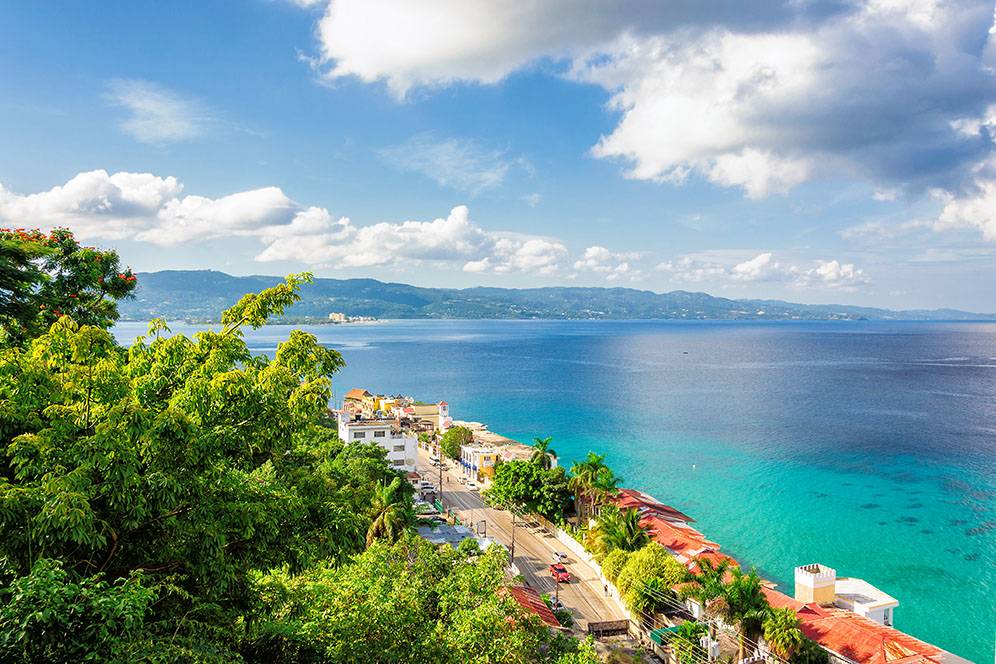
KINGSTON, JAMAICA, October 26, 2020 –Jamaica Cares is a ground-breaking traveler protection and emergency services program set to launch next month. Jamaica Cares provides visitors access to first-of-its kind traveler protection and emergency medical and crisis response services for events up to and including natural disasters. The traveler protection and services program is a partnership coordinated and administered by the Global Tourism Resilience Crisis Management Centre, with support from the Global Travel and Tourism Resilience Council, Global Rescue, and leading international and national insurance companies.
For $40 USD, Jamaica Cares provides visitors access to compulsory traveler protection and emergency medical services, including:
- Case management, transport logistics, field rescue, evacuation, and repatriation for medical emergencies, including COVID-19 and other crises up to and including natural disasters
- International health coverage up to $100,000 USD for visitors traveling to and from Jamaica
- On-island health coverage up to $50,000 USD
“Jamaica Cares delivers an unmet need in the travel industry by providing primary medical coverage and medical evacuation services. Jamaica Cares is a comprehensive, mandatory program to increase traveler protection from the time they leave home until returning. The traveler knows they’re protected, and they know other travelers are, too. That’s what’s needed to give confidence to travelers when they are ready to travel,” said Hon. Edmund Bartlett, Co-chairman, Global Tourism Resilience and Crisis Management Centre.
“Jamaica is the first country to facilitate a partnership for a comprehensive pandemic safety response program. Visitors to Jamaica are better prepared and protected because of the cooperative arrangement coordinated via the Global Tourism Resilience Crisis Management Centre with a leading travel crisis management provider and two travel health insurance firms,” said Dr. Taleb Rifai, Former Secretary General of the UNWTO and Co-Chair of the Centre and the Global Travel and Tourism Resilience Council.
“We have to protect both our visitors and the people of Jamaica,” said Professor Lloyd Waller, the Executive Director of the Global Tourism Resilience and Crisis Management Centre.
The compulsory fee will be included as part of the Travel Authorization application, triggering automatic participation in the Jamaica Cares program. Participation is mandatory for all non-Jamaican passport holders.
Traveler attitudes consistently show a powerful willingness to pay for increased safety protections during travel. An international traveler sentiment survey, conducted by Price Waterhouse Coopers, revealed safety is paramount in making travel decisions for which consumers are willing to pay. A Global Rescue survey of more than 2,200 frequent travelers found they agreed by wide margins (90+%) they would feel safer if they – and all travelers – had services and protections for medical emergencies, including COVID-19, and door-to-door emergent coverage.
“If an emergency medical situation arises, including COVID-19, Global Rescue will support Jamaican authorities in executing established emergency action plans including: access to case management, transport logistics, evacuation and repatriation for any medical emergency, including COVID-19, and monitoring from diagnosis through repatriation,” said Dan Richards, CEO Global Rescue.
Gloria Guevara, WTTC President & CEO, said: “I would like to congratulate all those involved in the implementation of the Jamaica Cares program, which will no doubt help to restore traveler confidence and aid the recovery of the Travel & Tourism sector.”
About Global Tourism Resilience Crisis Management Centre
The Global Tourism Resilience Crisis Management Centre serves the worldwide travel industry, facilitating planning and preparation for crisis response, recovery and resilience issues. The Resilience Council is a network and forum for governments and businesses, bringing the public and private sectors together for the development of sustainable frameworks to enable business growth. For more information click here.
Contact: Prof. Lloyd Waller, Executive Director, lloyd.waller@gmail.com.
About the Global Travel and Tourism Resilience Council
The Global Travel and Tourism Resilience Council serves the worldwide travel industry, facilitating planning and preparation for crisis response, recovery and resilience issues. For more information click here.
Contact: Laurie Myers +1 949.742.9648 or email: info@resiliencecouncil.com.
About Global Rescue
Global Rescue is the world’s leading provider of medical, security, evacuation and travel risk management services. Founded in 2004, Global Rescue has exclusive relationships with the Johns Hopkins Emergency Medicine Division of Special Operations and Elite Medical Group. Global Rescue provides best-in-class services that identify, monitor and respond to client medical and security crises. For more information, click here.
Contact: Bill McIntyre at bmcintyre@globalrescue.com or +1 202.560.1195.
Categories:
Health & SafetyTravelOctober 16, 2020
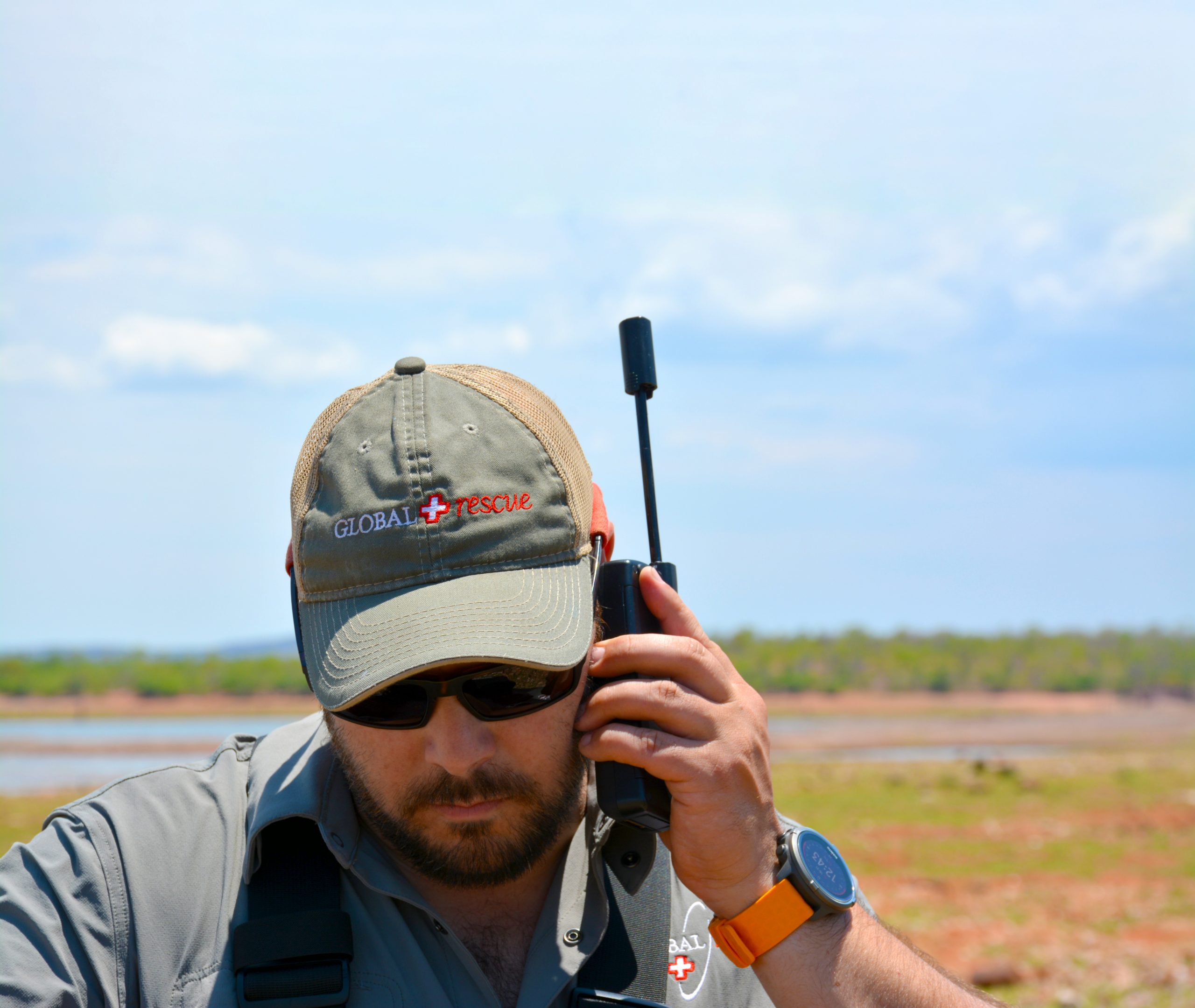
Traveling near or far? Going with friends, family or solo? Heading into the backcountry? Regardless of your trip destination, duration or travel companions, you should always have the ability to stay in touch, especially in case of an emergency.
One-way vs. Two-way Communication
Before mobile phones, WiFi and emergency satellite phones, staying safe in the wilderness or even on a short hike in the state park meant letting someone know where you were going, who you were going with, when you would return and what to do if you didn’t return at the expected time.
Today, the most reliable way to get help after becoming ill or suffering an injury in the backcountry, or any other remote locations, is through two-way communication. Ensuring this capability requires planning.
Ask yourself the following questions before any trip:
- Is there reliable cell service where I am going?
- What emergency resources are available and how will I contact them?
- What would a rescue entail if I became injured where I plan to go?
No Cell Service
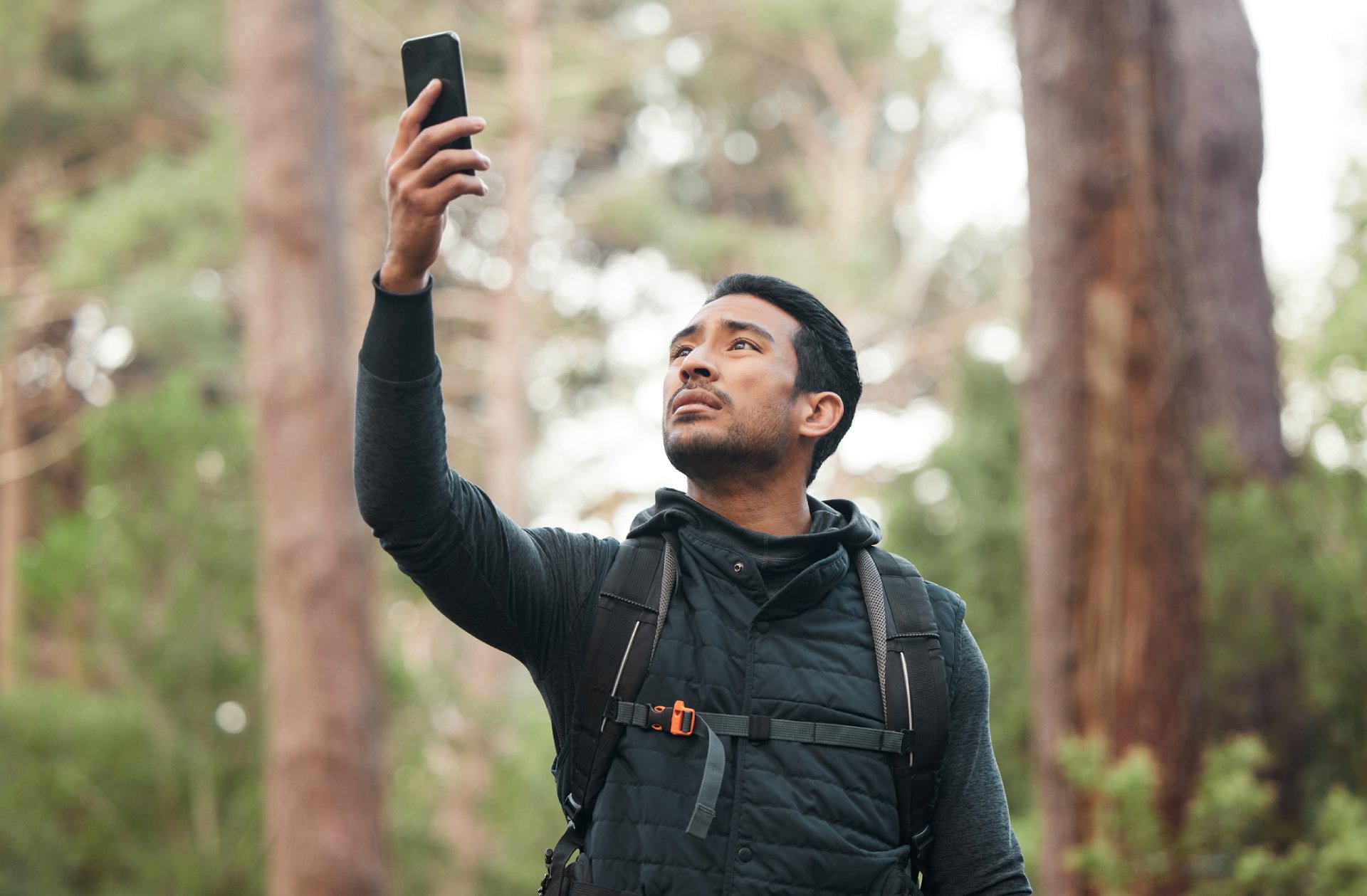
What should you do if you have an emergency and do not have a working two-way communication device? What will you do if you have phone service, but your battery died because you were busy snapping selfies, live streaming your hike on social media and running a GPS navigational-based trail map application, instead of using a real map?
Maybe you brought an extra power pack and you have the right cables – but perhaps not.
What if your phone fell out of your pocket and you heard a splash when you were filling your water bottle at the stream?
When you do not have two-way communication capability or your devices have failed, you must resort to more primitive, but often effective, emergency and one-way communication methods.
These emergency signals can include:
- Yelling for help
- Sending someone in your group or a passerby for help
- Blowing a whistle
- Firing off an emergency flare
- Safely building a signal fire
- Using a signal mirror
There are alternatives. If cell service is not available, there are various satellite communications devices available that don’t rely on cell tech. These include satellite tracking and messaging devices where you can send a 160-character text messages or emails to anyone. You can also activate an SOS feature notifying an emergency coordination center of your location and emergency.
There are also several personal locator beacons (PLB) for personal use available. A PLB is a one-way emergency signaling device that only sends a distress signal, like a whistle or a flare.
With two-way satellite communication devices, you can provide additional important information for rescue services. Two-way satellite communication allows the rescue service to ask you specific questions to help them assemble the right resources to get to you.
Smartphones in the Backcountry
Ensure your phone works where you are going. Make sure you have an extra power pack, batteries or charging capability. Keep it as fully charged as possible.
If you choose to use navigation, fitness, weather or communication apps, be aware of your battery life. A navigation app does not replace the need to know how to use a map and compass. Protect your phone and all other electronics from moisture and impact.
Satellite Messaging and Tracking Devices
When you need two-way communication capability and your cell phone will not work, a satellite messaging device is your next best choice.
These devices use communication satellites to send an email, SMS or SOS message. They also usually have a tracking feature, where the recipient back home – or rescue service – can track your trip progress on the interfacing device web page.
Satellite Communication Devices
There are several available devices. The Garmin InReach and the SPOT X devices have been around the longest, followed by the Bivy Stick and Zoleo devices. These devices are easier to use, manage and carry than a satellite phone. They are also significantly less expensive, between $300 and $500 versus $1,500 and up for a satellite phone.
Standalone or Paired
Some satellite messaging devices have internal keyboards or messaging capability and some devices must pair with a smart phone to maintain two-way communications.
For the more extreme adventures, the devices with standalone messaging capability are best because you won’t have your messaging device and your smartphone running simultaneously.
The Garmin InReach Explorer and SE have standalone messaging capability, as does the SPOT X device.
The Bivy Stick and Zoleo devices must be paired through Bluetooth with a smartphone for two-way satellite communications capability. The smartphone does not require cell service for this – it is working via the satellites through the messaging device.
It is important to understand that you cannot communicate with your phone when paired with these devices. The phone is just the keyboard and information screen – the device is doing the communicating.
SMS and Email
When you send a message, SMS or email, the recipient receives a text or email and a link. When opened, a map graphic shows your location on the map, coordinates and a message of up to 160 characters. The recipient can answer directly to the text message or respond through the linked website.
Harding Bush, Global Rescue security operations manager, prefers messages from these devices rather than voice communication on a satellite phone since much of the potential for human error is eliminated.
“If somebody calls with a satellite phone and cannot provide coordinates, it’s difficult to get an accurate location. There could also be voice quality issues. We often have to share the information with various rescue services and when it’s in an email message, the original content is guaranteed to remain consistent,” he said.
Tracking Feature
These devices also have a tracking feature where you can send a message and the recipient will receive a link that can track the progress of your trip. Many corporate users of these devices use this feature to track the location of remote workers.
Everywhere Communications is a company that has taken this to the next level. They provide corporations and organizations with specially adapted Garmin InReach devices that can be tracked and communicated to through an organizational web-based hub. The devices and the hub maintain sophisticated encryption and users can jump between mobile and satellite coverage as available or required.
SOS
The satellite communication devices also have SOS activation buttons. When the SOS button is activated on the InReach, Zoleo and SPOT X devices, an emergency service coordination center receives the message. The coordination center will notify the appropriate emergency resources. Global Rescue members often reconfigure their devices to contact Global Rescue directly.
It is important to remember that Global Rescue must have two-way communication with members to active rescue services.
When the SOS button is activated on a Bivy Stick device, Global Rescue receives the emergency notification directly.
Just as you store essential contact information in your smartphone, the same information should be stored in the satellite messaging devices – especially for the models with standalone messaging capability.
In addition to the cost of the device, there are various service subscription plans. Plans are usually monthly and vary in price according to expected message and tracking feature use.
Satellite Phones
Satellite phones are the next level up in communication capabilities. Just like the messaging devices, satellite phones require a clear view of the sky.
Satellite phones are more practical for a user who needs voice communications in remote areas.
Tour operators and guides, remote workers, non-government organizations, scientists or other researchers may have a communications requirement beyond just a 160-character text or email. A larger group of travelers may have one or two satellite phones and several messaging devices.
Many satellite phones also have SMS, email and SOS capability. They don’t, however, always provide recipient location coordinates during voice communications.
The most important aspect of using a satellite phone (or even the devices) is understanding the dialing instructions. There are specific steps:
- Extend and rotate the antenna
- Wait for the connection and dial
“An emergency is not the time to learn how to use a satellite phone,” Bush said.
If you are using a satellite phone in an emergency, there is a good chance you may be scared or injured. This may affect the quality of your message.
It is always a good idea to think about what you need to say before you make the call and write down the most important information. Also, always be prepared to write down any information you receive from the recipient.
Several companies rent satellite phones. If you have a trip where you may have requirements to make voice communications, renting a satellite phone may be a less costly answer.
Where Are Satellite Phones Illegal?
In some countries, satellite communication devices and phones are illegal because satellite communications circumvent the national communications system and they cannot be monitored.
If you are found having a satellite phone or messaging device in these countries, you may be arrested and put in jail. These countries include India, China, Iran, Cuba, Nigeria, Bangladesh, Myanmar, Chad, Sudan and North Korea.
There are other countries where permitting is required. Some countries only ban foreigners from having satellite communications. Be sure to check before you travel.
“We always recommend that if you’re traveling, especially to remote locations where cellular service is not absolutely guaranteed, to pack a satellite phone or messaging device and extra batteries,” Bush said. “If you’re concerned enough about your travel communications to buy one of these devices, then you also need a Global Rescue membership.”
Categories:
Health & SafetyTravelOctober 14, 2020
It’s been more than six months of coronavirus education, adjustments, precautions and a rollercoaster of emotions. What we thought “then” and what we think “now” has shifted, too, especially among business and leisure travelers.
By comparing the results of three Global Rescue member surveys, conducted in February, April and September, we uncovered how traveler’s perceptions and plans have changed and how they have stayed the same.
What’s Different
Expect more travel in 2021, not 2020.
The big change in traveler sentiment came from respondent’s expectations about when they plan to make their first trip of more than 100 miles from home.
In April, 85% of survey respondents said they would travel more than 100 miles from home by the end of 2020. Only 13% said their next expected trip wouldn’t be until 2021.
Several months later, the September survey — released a few days before worldwide COVID-19-related deaths surpassed one million — revealed a dip. Specifically, only 60% of respondents planned to travel more than 100 miles from home by the end of the calendar year and 40% didn’t expect to travel that far until 2021.
As the pandemic matured, traveler expectations for upcoming trips diminished as international border closings were extended and news outlets reported COVID-19 case spikes.
What’s The Same
Travelers are willing to take ground-breaking measures to hit the road again.
Traveler willingness to take unprecedented steps to travel and feel safe stayed strong.
In April, more than 90% of survey respondents made it clear they were willing to be screened, tested and have their travel history tracked in order to travel.
In September, traveler support for ground-breaking pandemic protections and services persisted. For example, 88% of respondents said they want governments or organizations to systematize COVID-19 health and safety programs that include testing, quarantine accommodations, repatriation and trip insurance.
More than 90% of survey-takers want mandatory medical/security safeguards for themselves and all travelers, too. More than 60% of them are willing to pay $50 to $100 or more for that kind of protection.
Family visits will be first.
In April and September, initial trips once survey participants start traveling again will be family vacations, leisure trips to visit friends or destination getaways.
Travel concerns, threats and worries are unchanged.
According to the survey completed in February — more than a month before coronavirus was declared a pandemic — respondents ranked “health/medical issues” as the greatest threat while traveling, followed by crime and terrorism. Respondents to the September survey listed identical concerns and ranked them in the same order.
Travelers cancelled their travel plans.
In April, more than 42% of respondents reported they were forced to cancel their travel plans; 16% said they voluntarily abandoned trips while 27% postponed their trips.
In September, travelers were more specific about the personal and professional opportunities they lost due to the pandemic:
- 64% gave up a bucket list/adventure trip
- 53% missed out on a family vacation
- 32% relinquished a business trip
- 28% surrendered a couples getaway
- 21% skipped an anniversary, wedding, honeymoon or birthday trip
Travelers will travel again.
Even at the beginning of the pandemic, travelers were making plans. According to the April survey, 41% expected to make their next trip by July or earlier, 36% planned their initial trip sometime between August and October and 77% expected to make a trip by the end of October.
In September, survey respondents were specifically planning their 2021 travel: 52% were looking at international locations, 35% were considering remote destinations and 40% were planning longer trips or considering an extra trip.
“Travel is part of a human’s genetic makeup. From pilgrimages to grand tours to solo travels, we’ve been exploring, seeing, experiencing, and learning new things since the dawn of time,” said Michael Holmes, director of marketing at Global Rescue. “Coronavirus temporarily slowed adventure, leisure and business travel, but it will return when people feel safe and secure.”
About the Global Rescue Traveler Survey
Global Rescue is the world’s leading provider of medical, security, evacuation and travel risk management services to enterprises, governments and individuals. The February survey was based on 2,400 responses collected from Global Rescue members between January 22-28, 2020. The April survey is based on 1,300 responses collected from Global Rescue members on April 23-24, 2020. The September survey is based on 2,210 responses collected from Global Rescue members between Sept. 15-19, 2020.
Categories:
Health & SafetyTravelOctober 9, 2020
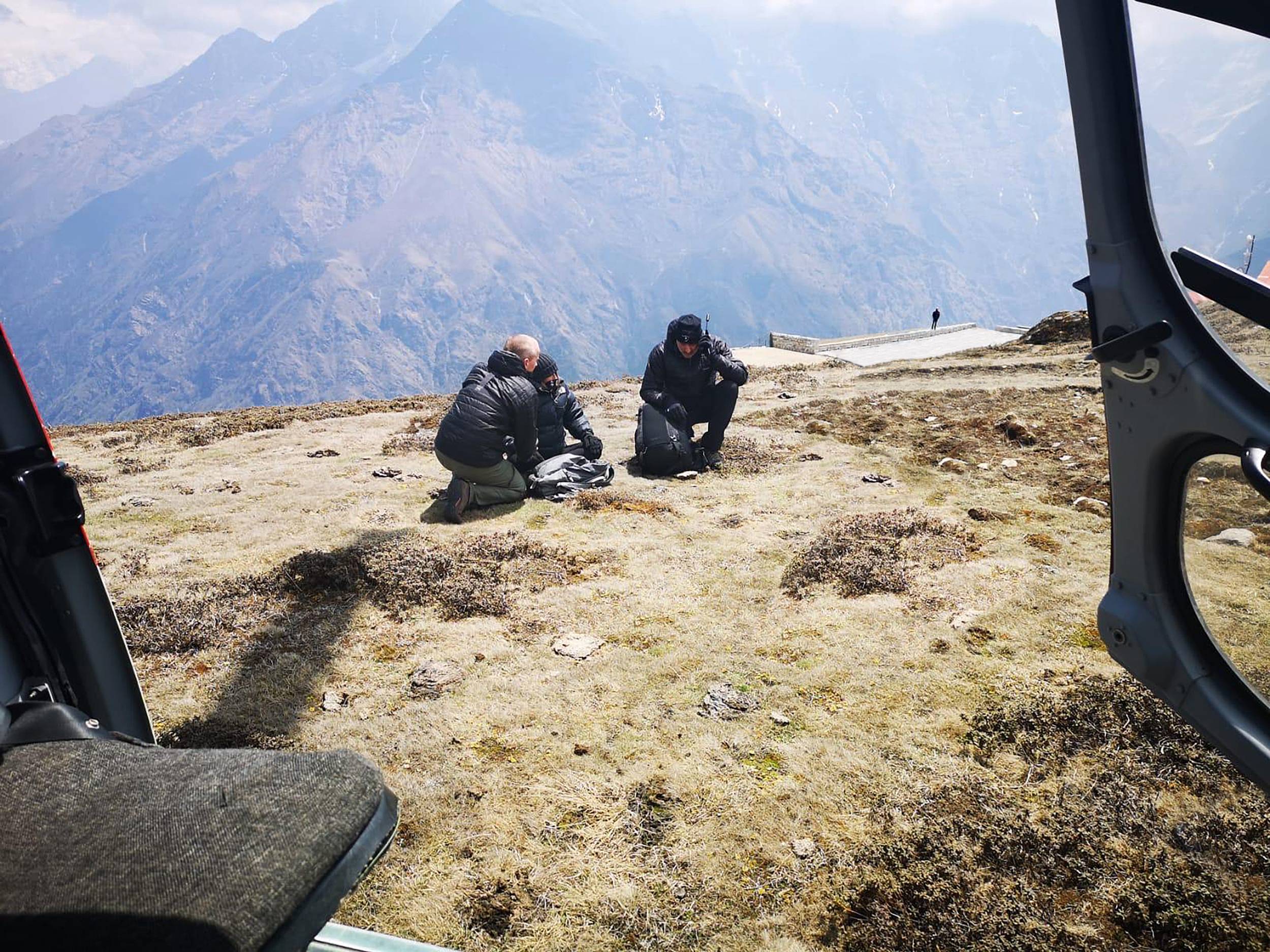
In today’s fast-paced world, cellular phones have become a primary means of communication. According to GSMA, a mobile operator association, 66.5% of the world’s population owns a mobile device. The technology has advanced rapidly and now 5 billion people carry smartphones full of apps you did not even know you needed.
But a cell phone isn’t the same as a satellite phone, which is recommended for travel to off-the-grid and remote locations. If you’re planning an adventure to any place with questionable cell phone coverage, Global Rescue offers a primer on satellite phones — and why you might need one.
How do cell phones work?
Cell phones operate off of cellular towers. Your cell phone bounces its signal to the closest tower, which then relays the signal onward. As you travel away from urban areas or into hilly or mountainous terrain, there are fewer and fewer towers and the cellular signal disappears.
How do you communicate when you are in an area with no cellular towers or where the terrain inhibits your connection to these towers? Satellite phones.
How do satellite phones work?
Satellite phones, or sat phones, are mobile two-way communication devices using satellites orbiting the Earth to receive and transmit data. Satellite constellations — a group of communication satellites working together as a system — are either configured as High Earth Orbit or Low Earth Orbit (LEO).
High Earth Orbit satellites are large satellites that maintain a high altitude (around 22,000 miles) orbit and follow the Earth as it spins. This means they are always centered along the Equator and generally remain in a constant location in the sky.
Satellite constellations in LEO form an intersecting web of satellites orbiting around the poles and the equator, allowing for constant communication across the globe. LEO satellites offer a significantly lower orbit, around 900 miles. They are much smaller and lighter when compared to their High Earth Orbit counterparts, and there are more of them in orbit. This means that at any one time you will have line-of-sight to at least two or three satellites, giving you more reliable coverage if you are in a polar or mountainous region.
It’s more difficult to maintain a connection with a High Earth Orbit satellite because the user has to locate the satellite. In a LEO system, the satellites locate the user.
But, because of their size, High Earth Orbit satellites can handle more data and are better suited to sending documents and e-mails.
What is a satellite messenger?
Satellite messengers are devices able to send text messages using the same satellite constellation as satellite phones. There are several types on the market including purpose-built messengers with mapping software and other essential features, like an SOS function, SMS capability, breadcrumb tracking and social media connectivity.
How much does a satellite phone cost?
You can expect to spend in the range of $1,500 to $2,000 on a sat phone, depending on your particular needs. Pricing structure for airtime varies with each manufacturer, but a safe estimate is around $2 per minute, plus a monthly service fee. This is significantly lower than roaming charges offered through some cellular networks.
If you don’t travel often, many vendors rent sat phones for about $75 per week plus airtime. We recommend using a satellite phone retailer since the provider is the company with the satellite system: Iridium, Globalstar and Inmarsat. They will help you choose a device and plan suitable to your communications needs.
Where are satellite phones illegal?
Satellite phone use is restricted and in some cases illegal, in a number of countries. Do your own research regarding the legality of satellite communication devices in your destination country. This includes phones and messaging devices.
Who needs a satellite phone?
These days almost anyone can benefit from owning a sat phone. Are you a mountain climber or trekker who routinely travels far up in the mountains in small groups? Do you fish in exotic locales, such as isolated beaches or clear high-mountain lakes? Does the thrill of an African safari stir something deep and primal within you?
Even for those who do not typically travel abroad, our own backyards are ripe with places where there is little to no cellular coverage. Anyone who likes to be prepared should know that cellular networks will be the first to crash or become overloaded in an emergency or disaster situation while satellite networks will be much more reliable. No matter your pleasure or purpose, satellite phones are a reliable communication alternative.
And, if you ever need a medical or security evacuation, you will need a sat phone for two-way communication, which Global Rescue strongly recommends to members. Click here to learn more about Global Rescue travel memberships.
Categories:
Missions & Member TestimonialsOctober 7, 2020
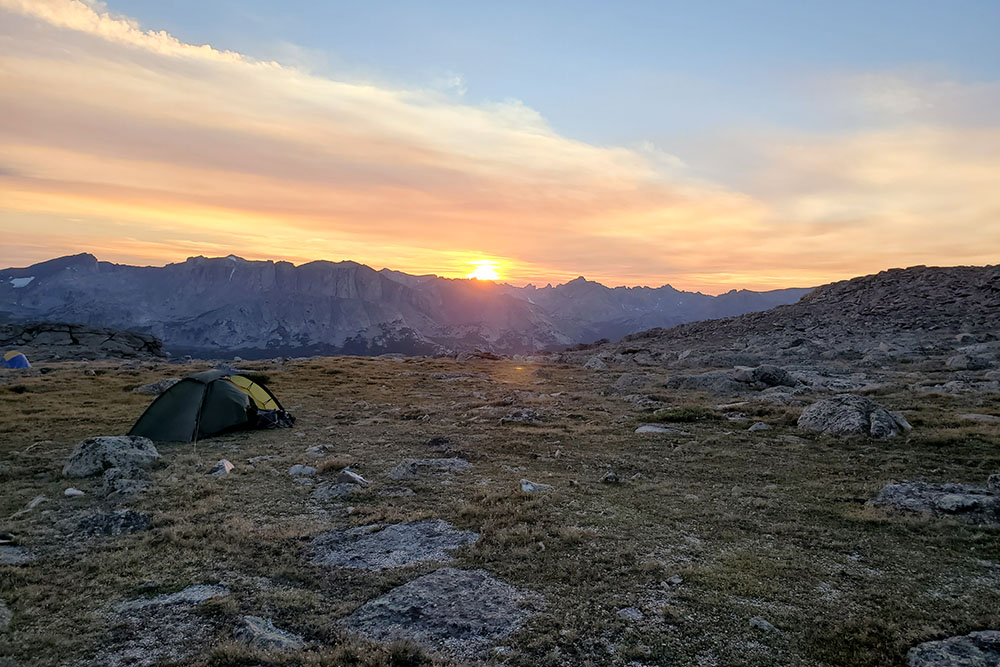
The Wind River Range in Wyoming is a popular destination, attracting trekkers to the remote wilderness and its beautiful exposed granite in the higher elevations. Mary Kelly, who splits her time between Austin, Texas and Boulder, Colorado, recently embarked on a seven-day backpacking trip in the Wind River Range and ended up doing two things she hadn’t done before.
The first novelty was using llamas during the trek.
“A friend of ours suggested we use llamas to carry the loads. I’ve never had any experience with llamas before. We were each responsible for our llama during the trek,” she said.
Kelly and her group covered 10 miles the first day and about the same mileage on the second day.
That’s when the second thing she’d never done before happened.
It was the end of the day and Kelly’s group was within 200 yards of the campsite. There were tight stony paths leading to the campsite. Kelly was walking with her llama behind her. Unfortunately, that llama was one of the unruly ones.
“There were a couple of rock steps on the trail, which was narrow and didn’t have any room on the sides to step off. I started up the steps, leading the llama. That’s when the 400-pound llama carrying another 75 pounds of gear jumped up the rocks and hit me full force, knocking me over. I landed on my wrist,” she said.
Kelly knew her injury was serious.
“I pretty much knew I wasn’t fine but I was hoping it was just a sprain. We climbed up to the camp without any problem.”
She wasn’t too worried about her injury since the group had been preparing well in advance.
“We were serious about the trip. Our group had been working on our list of what to take and how to prepare for some time.”
There was an ENT doctor with the group and he was certain Kelly’s wrist was broken.
“I’d never had a broken bone before. He put a rubber splint on my arm and we made a sling out of t-shirt. Then our trip leader used a satellite-connected two-way communication device to contact Global Rescue and they responded immediately.”
Help was coming.
“My husband thought they would send out a ranger with a horse to ride out. I told him, ‘There’s no way I’m riding a horse. I don’t ride horses. It’s going to hurt. I’m going to walk.’”
Nightfall was coming quickly with the skies darkening.
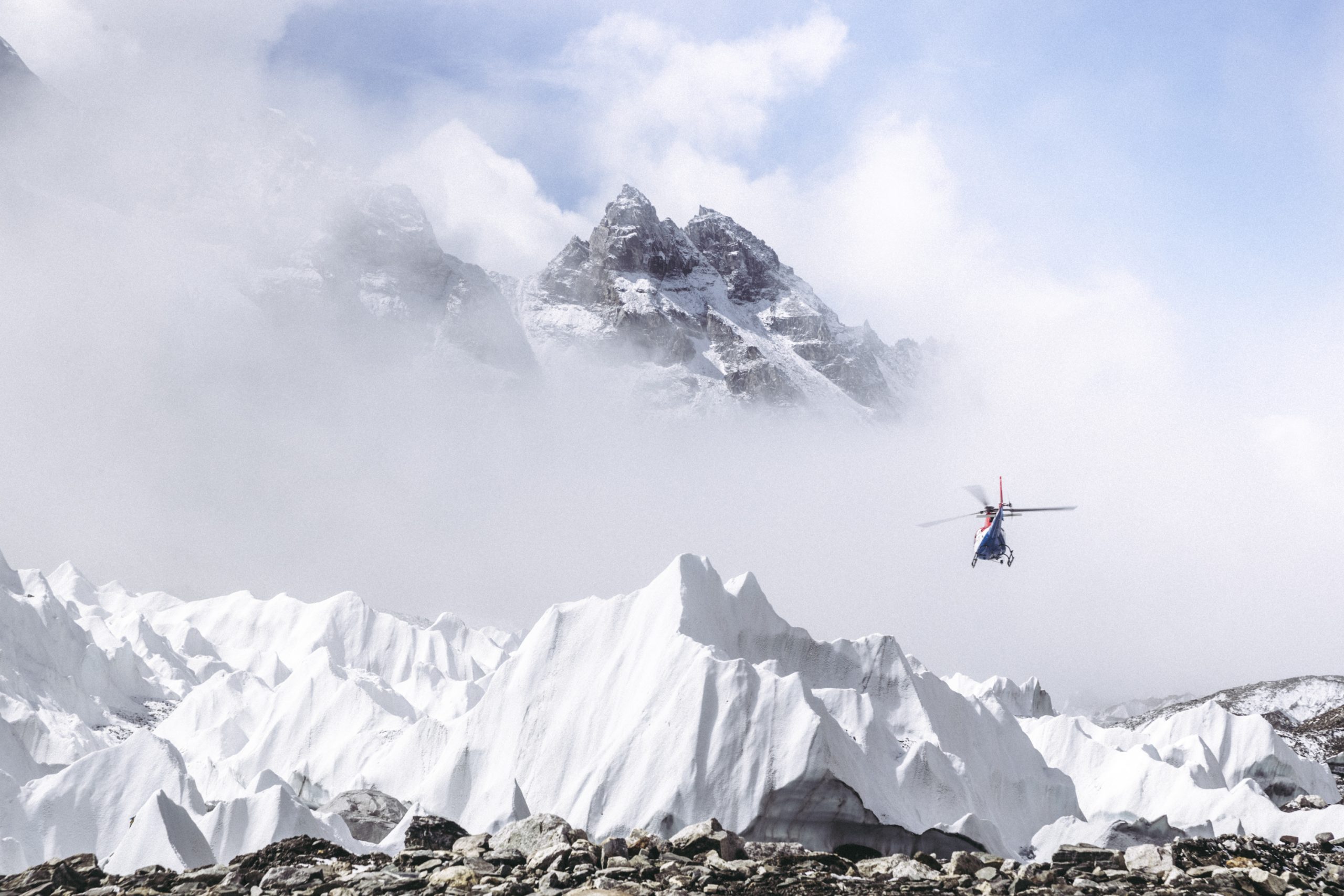
“About 30 to 45 minutes later we heard a helicopter circling overhead. We wondered out loud, “Who’s that for?”
It was for Kelly.
“The helicopter was a pleasant surprise.”
The helicopter pilot identified a landing site about a mile away from the camp and two rescue workers hiked to Kelly and the group.
“They were fantastic. They asked if I could walk and I said ‘Yes.’ I didn’t actually feel that bad, probably because of the adrenaline. We made our way to the helicopter to fly out.”
When she arrived at the Lander hospital it wasn’t too crowded and she saw all the extra precautions due to the pandemic.
“I was quickly taken into an examination room where I was assessed. The ER doc reset the wrist and gave me some pain blockers. I ended up staying the night in the hospital and left the next day.”
Reflecting on her experience, Kelly felt incredibly lucky but also glad she and her group were prepared with the InReach, the splint and the Global Rescue protection.
“I’m glad I purchased the protection. Wind River Range is pretty remote. There’s not an easy out. It would have been a 20-mile walk out which would have been risky since I could have fallen again and had a more serious injury.”
She was impressed at how seamlessly everything worked.
“I feel like everything functioned so well. Everyone was so responsive. I know [Global Rescue medical operations experts] called often during the hospital stay and followed up afterward. It was much appreciated.”
Kelly’s experience convinced her to include Global Rescue membership for trips and recommend it to others.
“Do not hesitate to do it. It’s completely worth the price of purchase. You might not need it but for peace of mind it’s worth it. And, if you do need it, it works! So, it’s an easy decision — don’t even debate it.”
Kelly’s other “lesson learned” is to skip the llama trauma in future trips.
“I think I’ll go back to carrying my own load next time.”
Categories:
NewsOctober 7, 2020
Categories:
NewsOctober 7, 2020
Categories:
Health & SafetyTravelOctober 5, 2020
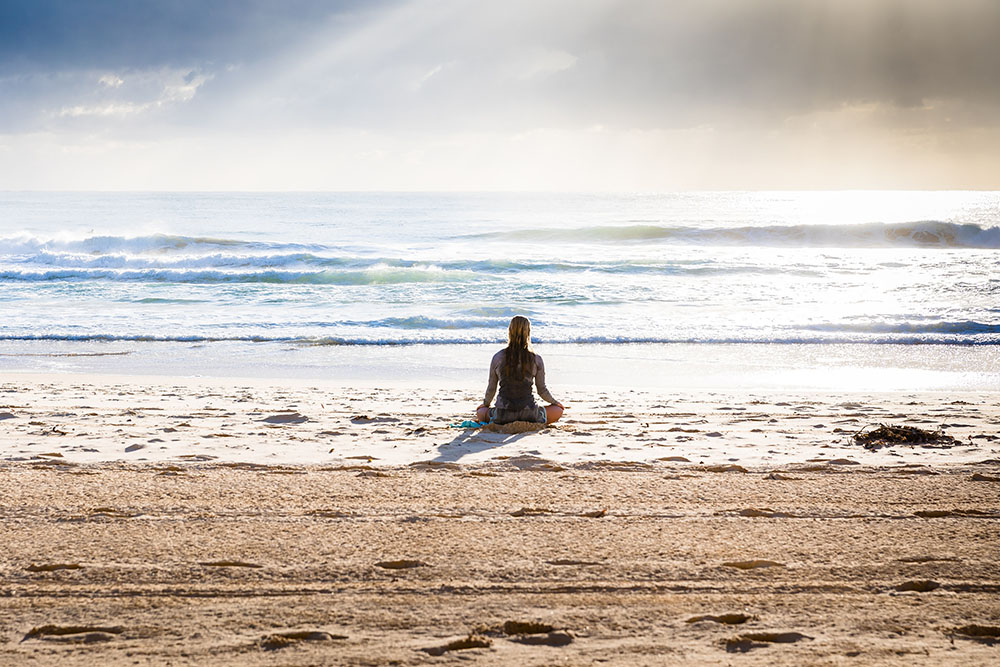
Did you know planning a trip is good for your mental health?
Researchers at the University of Cornwall found feelings of anticipation and excitement or having something to look forward to, like a trip or a vacation, can offer a mental health boost.
If health, safety and happiness have been on your mind during the pandemic, perhaps your first trip should be a wellness retreat.
What Is Wellness Travel?
Wellness tourism is defined by the Caribbean Tourism Organization as trips taken by travelers with the principal purpose of improving health or well-being.
It’s a broad concept with wellness meaning different things in each country: seaside and slower living in Southern Europe and exercise and outdoor activities in Scandanavia.
The term “wellness” was first used by American doctor Halbert Louis Dunn (1896-1975) who studied the trends affecting the health of populations. He used the word to encompass physical as well as spiritual health.
Early wellness retreats included mainly eating habits and exercise routines, but later expanded to relaxation techniques, alternative therapies and spa treatments.
Today’s wellness vacations support both goals, enhancing the mind-body connection by reducing stress and anxiety. How you do that — from hiking the Appalachian Trail to participating in an immersive sound bath — depends on the type of traveler you are.
The Perfect Pandemic Option
Wellness travel was a growing trend before the coronavirus pandemic. According to the Global Wellness Institute, the wellness travel market was already growing at a rate of 6.5% year, which was more than twice the growth rate of tourism overall with an expected reach of $919 billion by 2022. In Europe alone, the reach is predicted to $275 billion in 2022.
The coronavirus pandemic has given people time to reevaluate their priorities and take a closer look at their health. Wellness is a new priority for all areas of life — work, home and travel.
“Once … we have made the decision to leave our homes for leisure excursions, our personal health and safety will top our list of priorities,” Wellness Tourism Association President Anne Dimon told online travel magazine Travel to Wellness. “If there are any silver linings to COVID-19, it’s served as a reminder not to take health and happiness for granted.”
The wellness industry has also adapted to customer needs and coronavirus protocols with limited class size, touchless treatments, secluded cabins and a rejuvenated focus on nutrition and exercise instead of appearance.
Five Wellness Trips for 2020-21
Global Rescue medical and security experts balanced several considerations — the health or wellness benefit of the trip, the country’s safety levels, COVID-19 travel restrictions and quarantine requirements — to compile a list of five options for a 2020-21 wellness retreat.
Sleep Retreat in Switzerland
Sleep is important. Even one bad night can wreak havoc on your day and your health, according to the CDC. The quality of your sleep is important, too. Who wouldn’t be interested in a sleep retreat that includes yoga, massage, healthy meals and a luxurious room in Le Grand Bellevue?
The hotel, located in Gstaad village in Switzerland, also offers 3,000 square meters of wellness facilities. Global Rescue currently has a low travel risk rating for Switzerland due to low levels of crime and COVID-19 cases. In fact, Switzerland has been ranked the safest country in the world right now for COVID-19 in a 200-country study by Deep Knowledge Group.
COVID-19 advice: Entry restrictions are in place for United States and foreign travelers.
Biking Tour in Canada
Historical, scenic and ocean views: Canada offers a variety of biking options for mountain bikers, road bikers and trail riders.
The International Mountain Bicycling Association recommends Mountain Hero in the Yukon Territory, a 5-mile route following the path of a 1905 mule trail. Bike it in one day or make it a weekend trip by camping along the oldest road in the Yukon. Newfoundland’s biking trails allow riders a view of the coastline as well as some rocky terrain to test your skills. The Viking Trail is a seven- to 10-day route taking bikers through quaint villages and rugged coastlines.
COVID-19 advice: Your health will be assessed upon arrival in Canada. Then you must have a 14-day quarantine plan which includes travel to your destination and access to food/groceries and health care. The plan is mandatory — even if you have no symptoms.
“Canada has high quality and readily available medical facilities in urban areas,” said Jacqueline Sioson, operations supervisor at Global Rescue.
Geothermal Spas in Iceland
Iceland’s death rate from COVID-19 is one out of every 180 confirmed cases, or 0.56%, making it one of the lowest in the world, according to The New Yorker. In July, Iceland eased its travel ban to allow entry for citizens of some countries, but the U.S. is not included. Iceland is participating in the EU travel ban along with other Schengen states.
Natural springs are one of the many attractions in Iceland. The Blue Lagoon’s waters come from a geothermal sea and the seawater is rich in silica, algae and minerals — a combination that strengthens and nourishes the skin.
The water is filtered through volcanic lava and cooled by the fresh meltwater of the glaciers. The use of natural springs goes back to the Greek and Roman empires where baths were a place for cleansing, healing and socializing.
COVID-19 advice: Beginning in mid-August, all passengers arriving in Iceland must choose a 14-day quarantine or a double COVID-testing procedure, first upon arrival and the second by primary health care services five to six days later. In between the two tests, visitors must go into quarantine.
Forest Bathing in Vermont
Vermont is one of the best states for seniors during the COVID-19 pandemic, according to a new analysis by Caring.com. With 68 people per square mile, there’s natural social distancing and plenty of forested landscape in Vermont for everyone to enjoy.
Forest bathing is a Japanese term for “being in nature.” Not exercising in nature, but connecting with the great outdoors through all your five senses. The Strong House Spa in Quechee, Vermont offers an opportunity for nature immersion, which begins with instruction on Nordic walking and then combines aromatherapy and meditation with nature trails.
COVID-19 advice: If you’re traveling to Vermont by car, you’re required to complete a 14-day quarantine or a 7-day quarantine followed by a negative coronavirus test. Some travelers may have the option to quarantine in their home state and you can enter Vermont without further restrictions. If you’re taking public transportation to Vermont, the requirements are the same, but you must quarantine in Vermont.
Boosting the Immune System in Alaska
Alaska’s per capita hospitalization rate remains lower than most other states and just 10% of harder-hit states like California and Texas, according to The Covid Tracking Project. Villages locked down early in the pandemic to reduce the strain on the state’s health care system.
If you’re looking for immune-boosting treatments in a socially distanced location, check out Within the Wild’s two lodges in the backcountry of southcentral Alaska. Wellness programming includes sound therapy sessions, Ayurvedic self-massages and naturalist guided nature walks. Each lodge has only six cabins, ensuring minimal crowds and maximum privacy.
COVID-19 advice: Travelers are welcome in Alaska. With printed proof of a recent negative COVID-19 test, you don’t have to quarantine after arrival.
More Outdoor Options
- Looking for other opportunities to connect with nature? Whether you are hiking, camping or RVing, this list of links will help you research your destination.
- The European Union (EU) offers a map of which countries are open and who is welcome.
- The CDC lists which international travelers are allowed into the United States.
- The U.S. National Park Service provides a searchable map of parks open to the public.
- Recreation.gov offers a database of 3,600 facilities and activities and more than 103,000 individual reservation sites across the country.
- Tour operators, national publications and television shows all offer lists of the healthiest places to vacation or top spas worldwide. Start with one of these lists as the basis for your research. Two examples are America’s Top 20 Healthiest Cities by Travel Channel or 10 Life-Changing Wellness Trips by Travel + Leisure.
Also consider a Global Rescue travel membership. If you have questions about anything coronavirus related, Global Rescue’s operations team can help you navigate restrictions and quarantines. You can even sign up to receive the Global Rescue Coronavirus Report in your inbox or real-time event alerts right from your phone so you have access to the latest hotspot information.
Categories:
Health & SafetyTravelOctober 2, 2020
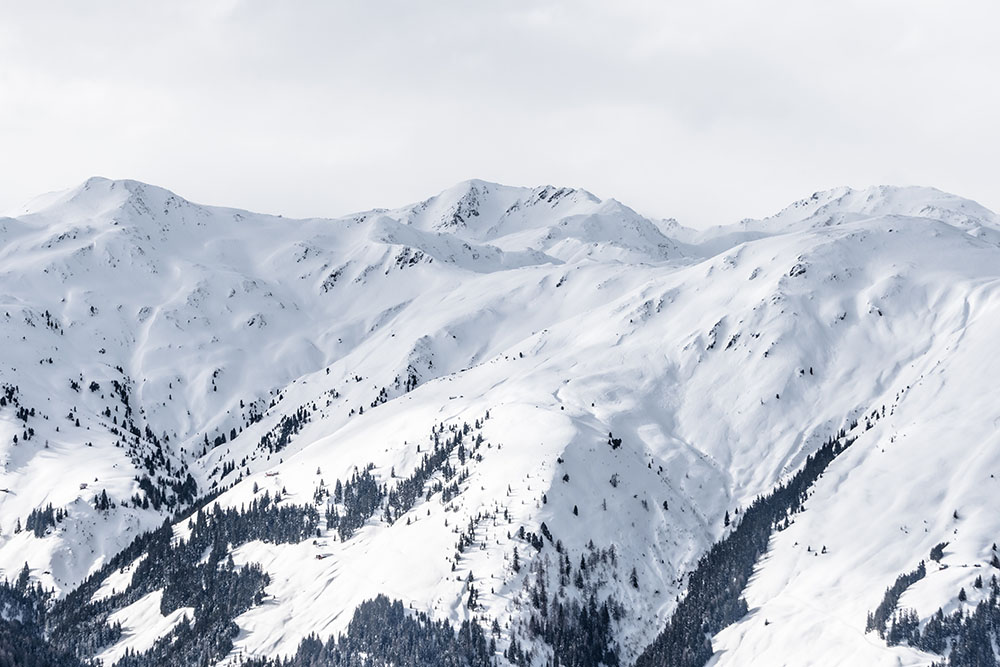
Avalanche statistics are scary — most people can’t survive under snow for more than 30 minutes and there’s only a 30% chance of survival when buried by an avalanche.
But the reality is even more frightening.
“If you are not killed or severely injured during the event and your airway is not packed with snow, you could survive up to 25 to 30 minutes,” said David Keaveny, operations specialist at Global Rescue.
This is the reason avalanche training is so important for any backcountry skier, snowshoer and snowmobiler.
“Anyone going into avalanche prone terrain should complete a certified avalanche safety awareness course appropriate for their destination,” said Harding Bush, associate manager of operations at Global Rescue. “Anything less is wrong.”
By The Numbers
During the 2019-2020 season 25 people died as a result of an avalanche in the United States. On average, 20 to 40 people die every year in the U.S. Colorado is the state with the most avalanche-related deaths.
Worldwide avalanche deaths, tracked by the European Avalanche Warning Services, average 150 people annually. Each year in the Alps, between 90 and 110 people are killed by avalanches, according to the Institute for Snow and Avalanche Research. Most of these accidents occur in France, Switzerland, Italy and Austria.
Avalanches are most common during the winter, but they do occur year-round, according to National Geographic. In the United States, 100,000 natural avalanches occur each year.
Avalanche training could reduce the number of fatalities. The American Institute for Avalanche Research and Education and the American Avalanche Association offer recreational avalanche courses to individual backcountry travelers as well as professional avalanche training to individuals employed at ski areas, transportation and industry, guiding, outdoor education and public forecasting centers.
There’s no substitute for training, advises Bush and Global Rescue personnel recommend you take a course before setting out on any backcountry adventure.
“Just because you weren’t able to book reservations at a resort this season, it doesn’t mean you’re ready to ski back country mountains without lifts, service amenities or safety patrols,” Bush said.
Advice From The Experts
For those of you who have taken a course, here are some additional considerations before your next winter excursion.
Know when to go — and when to stay home.
Most states and countries have their own avalanche resources. New Hampshire has the Mount Washington Avalanche Center, Switzerland has the WSL Institute for Snow and Avalanche Research and Avalanche Canada issues daily avalanche forecasts throughout the winter for much of the mountainous regions of western Canada.
“Each area is a tiny micro-climate,” Keaveny said. “Check the local weather and the local conditions of your destination, then continually make your own observations and risk assessment from the time you leave the trailhead until you return. Assess the snowpack and talk with others you encounter to share observations of the snowpack and weather.”
You may hear statements like “snow avalanche risk is at its greatest 24 hours following a snowfall of 12 inches or more.”
Keaveny warns there are more factors at play than just snowfall.
“There is so much more that goes into the creation of an avalanche: wind loading, slope aspect, faceted layers and solar gain, to name a few. Human triggered avalanches increase every year with people not being careful and starting an avalanche,” he said. “You may think it is safe days after a storm, when in fact it can be more dangerous due to combined factors.”
Do Not Go Alone
If you’re planning winter recreation in a remote or unfamiliar area, go with someone who knows the terrain: a guide, a tour operator or an experienced local.
Training Is Essential
An avalanche is made up of an underlying bed of snow, a weaker layer (such as fresh powder) and an overlaying snow slab. Add a stressor, usually additional snow or a falling rock, and the weight can collapse the weaker layer and send the slab sliding.
Add the weight of a human, or a group of humans, and the same thing can happen. In fact, 90% of deaths are from slides triggered by the victim or members of the victim’s group. Can loud sounds really set off an avalanche? According to Avalanche.org, it is a myth that noise can start an avalanche.
Everyone in your group should be trained in the use of avalanche safety equipment, because by the time search and rescue arrives, it may be too late.
“Four of us are going to Tuckerman’s Ravine but only one person has taken certified avalanche training,” said Keaveny, who is also a professional ski patroller and advanced wilderness EMT. “That’s not acceptable. Everyone needs to be on the same page to be able to back each other up.”
Equipment Is Important
Your equipment is important but it’s not the only thing you should focus on.
“People in the back country need to understand that all the beacons, probes and shovels will not reduce the risk of an avalanche — they just help with finding their dead or severely injured body,” Bush said. “Often there is too much avalanche safety gear and people forget common sense items like extra glove liners, a basic first aid kit or a binding repair kit.”
“Technology is a double-edged sword,” agreed Keaveny. “It’s safer than it’s ever been in the backcountry, but the technology is useless if you can’t implement it properly. The average person has access to top-of-the-line equipment and how-to videos on the internet. This false sense of security is not a substitute for a credentialed avalanche awareness course, or the experience and skill needed to travel in the back or side country safely.”
Global Rescue Travel Services Membership
Global Rescue, the pioneer of worldwide field rescue, has years of experience rescuing members with injuries in snowy backcountry situations, such as falling through a snow bridge in Pakistan, crashing into a tree while heli-skiing in Canada, and encountering bad weather while on expedition in Greenland.
Whether you’re seeking outdoor advice, like safety tips for a blizzard, or immediate medical or security assistance, Global Rescue operations centers are staffed 24/7/365 to assist members. Click here to learn more.
Categories:
Missions & Member TestimonialsSeptember 30, 2020
When you’re feeling unwell, the last thing you want to think about is the logistics of getting to the doctor.
Multiply that anxiety tenfold when you are feeling unwell while traveling abroad.
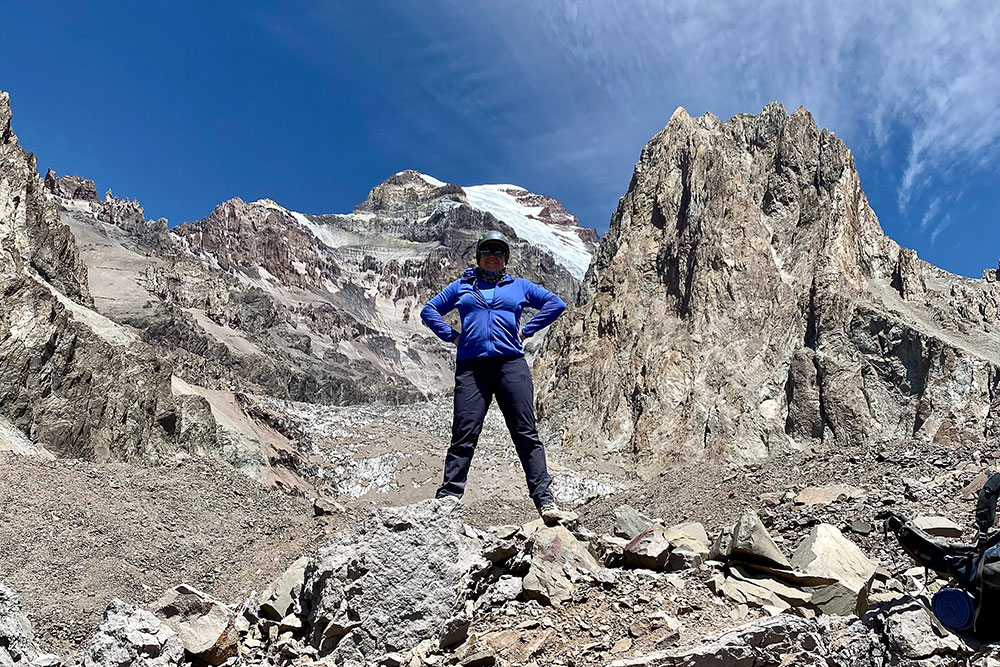
Sophie Turner, a nurse and coach, recently went on an expedition to climb Aconcagua, the highest mountain in the Americas at 6,961 meters (22,837 feet). She had been training for her first high-altitude experience for six months.
“At 5,500 meters (18,044 feet), my chest deteriorated overnight,” the Global Rescue member said. “I was struggling to breathe. By the morning, I was very unwell with all the signs of high-altitude pulmonary edema.”
High altitude pulmonary edema (HAPE), is when the vessels in the lungs constrict in response to the low-oxygen environment. Fluid leaks from the blood vessels into the lung tissues and accumulates, causing a life-threatening situation for otherwise healthy people. Symptoms are a productive cough, rattling breaths and extreme fatigue.
“As soon as I woke up that night not breathing, I knew what was happening,” Turner said. “I just couldn’t do much in the middle of the night so I opted to stay calm. In the morning, the first thing I did was to tell the guides I needed to go down ASAP.”
Turner descended to base camp — a trek to Plaza Argentina at 4,200 meters (13,799 feet) which took most of the day — and was assessed by a doctor.
“My symptoms had not sufficiently resolved/improved at a lower altitude so I needed to get off the mountain as soon as possible,” she said. “The team phoned Global Rescue.”
Turner, who traveled to Argentina from Australia, was pleased at the quick response. Global Rescue worked with the tour operator to arrange transport from Plaza Argentina to Hospital Espanol in Mendoza.
“Everything happened seamlessly in the background,” Turner said. “All I needed to do was focus on my breathing and collect my things for the flight out. I was impressed with the efficiency at which all parties coordinated my rescue from base camp. I did not need to provide further information — they had it all at the start.”
Turner was also impressed with Global Rescue’s follow up.
“Global Rescue continued to monitor my well-being and ensure any medical advice I received in a non-English speaking country was appropriate. This took all the stress out of being in a foreign country and health system,” she said.
Could Turner have made the arrangements on her own?
“The coordination efforts required would have taken more time and caused unnecessary stress,” Turner said. “With Global Rescue, I was relieved, safe and in good hands.”
As she trains for her next climb, she’ll be sure to keep her Global Rescue travel membership handy.
“I’ll happily stay with Global Rescue throughout my planned adventures,” Turner said.