Categories:
Health & SafetyAugust 6, 2024
Article Summary
- Heat Wave Hazards: Dehydration risks are high in hot, arid, and humid environments.
- Symptoms and Dangers: From mild discomfort to medical emergencies like heat stroke.
- Prevention Basics: Stay hydrated with water and electrolytes, avoid alcohol and caffeine.
- Environmental Considerations: Adjust cooling methods based on humidity and altitude.
- Emergency Response: Seek medical help for severe symptoms; Global Rescue provides evacuation and medical advisory services.
Dehydration can happen everywhere and at any time. It occurs when you use or lose more fluid than you take in, and your body doesn’t have enough water and other fluids to perform normal functions. It can be cold, hot, dry or humid. How you prepare to prevent dehydration and respond to its symptom, can save you from moderate, recoverable discomfort to a severe medical emergency, even death.
Heat Wave? It Can Happen Anywhere

Hot, arid places are obvious places where dehydration is a risk. Dry, hot environments are common dehydration conditions due to the body’s natural response to sweat to cool down.
Sweating leads to significant fluid loss, quickly depleting the body’s water reserves if not adequately replenished. In arid environments with low humidity, sweat evaporates more rapidly from the skin, making it harder for the body to cool down efficiently. This can lead to increased sweating and further fluid loss.
Case in point, a member traveling to Melfi, Chad, started to exhibit signs and symptoms of worsening dehydration with altered levels of consciousness when he contacted Global Rescue and ended up needing a medical evacuation.
Hot and Humid Environments
Hot and humid places are likely regions for dehydration, too. High temperatures and humidity can lead to excessive sweating and fluid loss, increasing the risk of dehydration.
The challenge in a humid environment is that the air is already full of water. “People mistakenly spray water to cool themselves, and many use a fan, too,” said Jeff Weinstein, a medical operations manager at Global Rescue. “Unfortunately, spraying and fanning prevents the water from evaporating as easily from one’s skin. Additionally, the heavy humid air makes it harder to move air. Fanning is more difficult and slower due to the density of that air. In arid environments the air is dry, has more room to pick up water, and is easily moved by fanning,” he said.
Dehydration at High Altitudes
High altitudes are a risk for dehydration, too, even when it’s cold. Dehydration can occur more rapidly at higher altitudes due to increased respiratory rate and the potential for increased fluid loss. This happened to a Global Rescue member who needed a long-line rescue from Mount Everest due to shortness of breath, severe dehydration, an inability to speak, general body weakness and dizziness as he approached Mount Everest Camp 3 (23,950 feet/7,300 meters).
Other Heat Wave Causes, Risks To Know

It’s a common misconception that you are only at risk for heat emergencies in hot environments during the hottest time of day. The fact is that any time you are out and about in hot regions, you’re at risk if you don’t properly mitigate the dangers.
Beyond dehydration, there are other heat-related injuries, such as heat cramps, heat exhaustion, heat stroke and sunburn. “All of these conditions can turn into an emergency if immediate corrective action and treatment isn’t rendered, especially in remote environments,” Weinstein said.
The top 10 causes of dehydration beyond hot temperatures, high altitudes and arid or humid air – things people cannot control – are activities and behaviors individuals can control:
- Not drinking enough water throughout the day
- Excessive sweating during physical activity
- Diarrhea and vomiting
- Alcohol consumption
- High caffeine intake
- Certain medications that can lead to increased urination
- Diabetes
- Fever
- Aging, as the sensation of thirst may decrease
- Inadequate intake of fruits and vegetables with high water content
3 Ways to Prevent Dehydration During a Heat Wave
Water is the most important for hydration, but it’s not the only thing. Replenishing electrolytes is also crucial when in extreme heat or during physical activity, but water is the priority.
“You don’t just need to drink water when you are dehydrated; you need to replace your electrolytes,” Weinstein said.
Consuming electrolyte powders or tablets as part of your rehydration practices is ideal. Harding Bush, associate director of operations at Global Rescue, recommends packing electrolyte powder. “The powder is lighter than bringing an electrolyte beverage and easy to add to your filtered water,” he said. Choose an electrolyte solution that is not extremely high in sugar content.
Additional prevention methods include:
- Consuming water-rich fruits and vegetables: Foods like watermelon, cucumbers, and oranges can help replenish fluids and electrolytes.
- Avoiding alcohol and caffeine: These beverages can exacerbate dehydration, so it’s best to avoid them until you are properly hydrated.
- Tone down the physical activity based on conditions: Rest and cool down if dehydration is due to physical exertion, rest in a cool environment to help the body recover.
[Related Reading: How To Stay Hydrated]
Important Tips for Traveling During a Heat Wave
Travelers should ensure they bring enough water to hydrate effectively and account for delays in their itinerary. “Remember to hydrate before embarking into the heat,” Weinstein said.
Travelers need to understand their environment and tailor cooling methods accordingly. There are two types of cooling methods: convection and conduction. Individuals should base their cooling method on the density and the concentration of water in the air of humid or arid environments.
“Two factors are at play here. When you spray someone with water and fan them you are essentially recreating how sweat works, and trying to expedite the process,” Weinstein explained. “In humid conditions, cooling through convection — spraying water and fanning — is less effective than conduction — placing cool objects or water directly on the skin, typically at arterial points or joints,” he said. “The opposite applies to arid environments.”

How Should You Cool Yourself Down?
The objects to cool off can be anything cooler than the environment. Ice is ideal, but not readily available in the outdoors or austere environments. Ice packs are another option, but not something many people will have with them, either.
“Putting cold water on a towel or shirt and placing it over the forehead or back of the neck is the most realistic option,” Weinstein said. “When applying ice, individuals should place a barrier between the ice and their skin, such as a thin washcloth or shirt. Ice can be applied in staggered increments and locations.”
Call Global Rescue
Remember, severe dehydration may require medical attention, so it’s essential to seek help if symptoms are severe or persistent. “If you show any signs of possible heat injury or illness, start cooling and rehydration procedures and remove yourself from that environment ASAP,” Weinstein advised.
Ensure you are protecting yourself from the sun. Sunscreen, shelter, and appropriate clothing all play a factor here. Travel with sunscreen and electrolyte tabs.
“If going remote consider bringing extra equipment such as a satellite phone or SOS device, water collection bags, means to purify water, emergency shelter and navigation equipment,” he said.
Remember, a Global Rescue travel protection membership evacuates members from the point of illness or injury to the nearest appropriate hospital, clinic or medical provider. Sometimes you have a question about symptoms, like dehydration, a heat injury or sun exposure. Medical advisory services are included with every Global Rescue travel protection services membership.
Medical advisory services provide medical advice to travelers to decrease environmental risks and increase injury prevention during travel. Global Rescue’s medical advisory service is available to answer questions and provide guidance for members’ concerns.
“Our team of medical professionals includes paramedics, nurses and doctors. We handle calls for cuts and stomach upsets to more severe illnesses and injuries, like chest pains and serious trauma,” said Michael Lovely, operations supervisor at Global Rescue.
Categories:
NewsAugust 4, 2024
Categories:
Press ReleaseAugust 2, 2024
For Immediate Release:
(Lebanon, N.H. – August 2, 2024) A survey of the world’s most experienced travelers revealed that women value travel experiences over material possessions at nearly twice the rate as men. Three out of four women (77%) surveyed indicated that travel experiences hold greater importance than acquiring material goods, a 40% higher rate than 55% of men who feel the same way.
“While women and men both cherish travel, women are more likely to embrace the YOLO mindset, prioritizing experiences that enrich their lives over tangible possessions,” said Dan Richards, CEO of The Global Rescue Companies and a member of the U.S. Travel and Tourism Advisory Board at the U.S. Department of Commerce.
The gender distinction is consistent with increased travel marketing to women.
“Studies suggest that women may prioritize work-life balance more than men. Additionally, Nielsen projects that women will control 75% of all household discretionary spending by 2028 which is leading to a higher prioritization of travel experiences,” said Stephanie Diamond, VP of Human Capital Management for Global Rescue.
Men and women have distinct preferences when choosing a travel destination, according to the survey.
More than a third of women (37%) prioritize landscapes when choosing a travel locale including, mountains, jungles, savannahs, deserts, canyons, volcanoes or glaciers. Men (37%) revealed that access to adventure activities like scuba diving, skiing, mountaineering, trekking, fishing and safari is most important.
More than half of men (53%) have used a satellite phone or messaging device during a trip, of those nearly have used the device for emergency, urgent or important communications. Women (32%) were much less likely than men to use a SATCOM device during travel, but they were 21% more likely to use the device for emergency, urgent or important communications.
The genders are aligned on what characteristics are most important in a travel companion. Men and women report that “a compatible travel style” is the most important positive characteristic to have and “a negative attitude” is the most alarming.
The survey findings illustrate a steady shift towards valuing experiences and adventures to seize opportunities for exploration and personal growth. “Travelers are increasingly focused on making memories rather than accumulating things, reinforcing the attitude that life is best measured by the adventures we undertake and the connections we create along the way,” Richards said.
Contact
Bill McIntyre at bmcintyre@globalrescue.com or +1 (202) 560-1195 (phone/text) for more information.
About the Global Rescue Traveler Sentiment and Safety Survey
Global Rescue, the leading travel risk and crisis response provider, surveyed more than 1,100 current and former members between July 9-13, 2024. The respondents revealed a variety of behaviors, attitudes and preferences regarding current and future travel.
About Global Rescue
The Global Rescue Companies are the world’s leading provider of medical, security, evacuation and travel risk management services to enterprises, governments and individuals. Founded in 2004, Global Rescue has exclusive relationships with the Johns Hopkins Emergency Medicine Division of Special Operations and Elite Medical Group. Global Rescue provides best-in-class services that identify, monitor and respond to client medical and security crises. Global Rescue has provided medical and security support to its clients, including Fortune 500 companies, governments and academic institutions, during every globally significant crisis of the last two decades. For more information, visit www.globalrescue.com.
Categories:
Missions & Member TestimonialsJuly 31, 2024
Article Highlights:
- Global Rescue’s GRID System: Provides immediate emergency contact with medical and military experts via an app.
- Successful Medical Evacuations: Recent operations include evacuations from Nepal, Tanzania, Pakistan, Tibet, and Mongolia for various medical emergencies.
- Comprehensive Traveler Support: Two decades of ensuring traveler safety and timely medical interventions worldwide.
Travel is increasing globally. Unfortunately, so are travel disruptions from illness, injury, extreme weather and transportation delays, not to mention threats of international violent conflicts, terrorism and civil unrest. Most travelers lack immediate access to travel intelligence information, communication or operations capabilities that may be lifesaving in the event of a medical or security emergency.
“Global Rescue’s GRID (Global Rescue Intelligence Delivery system) changes that,” said Harding Bush, associate director for Global Rescue security operations. “In an emergency, the GRID app puts its users in immediate contact with the medical teams and military special operations veterans who staff Global Rescue’s Global Operations Centers.”
[Related Reading: GRID 2.0 – The Most Advanced Travel Risk Intelligence Delivery System to Date]
“GRID is a one-of-a-kind system that includes innovative traveler safety features, advanced traveler-tracking capabilities, and an enhanced user interface to keep travelers safe, informed and connected on any journey,” said Dave Leopold, Global Rescue director of enterprise sales. “It works so well that it received FAST Company’s Most Innovative Award.”
Global Rescue has responded to the needs of travelers at home and abroad for two decades. In a typical month, Global Rescue performs hundreds of operations in dozens of countries. Below are highlights from some of our most recent operations in various locations.
Kidney Stones In Nepal

A member from the United States sent Global Rescue an SOS alert via a satellite messaging device requesting a field rescue from Nepal due to pain in his left side. After a medical examination and undergoing diagnostic tests, he began treatment for a left kidney stone. Despite some improvement, his pain persisted, raising concerns of infection. To enhance his care, Global Rescue medical operations recommended a medical evacuation to a hospital in Kathmandu for urology consultation and treatment. The member was successfully evacuated to the alternate hospital where he was treated and underwent a procedure without complications. Within days, he reported significant improvement and confirmed he no longer required Global Rescue’s assistance.
Hernia in Tanzania

Another member from the United States needed medical evacuation from Gilman’s Point, Tanzania, after suffering inguinal (hernia) pain while trekking in the country. Expedition leaders contacted Global Rescue, and our medical operations team initiated a helicopter evacuation due to concerns of hernia strangulation.
Despite logistical challenges, the team completed the evacuation in the morning and the member was safely transported to a medical center for evaluation where they diagnosed an uncomplicated hernia. After successful treatment, treating physicians advised the member to seek follow-up care upon returning to his Texas home.
Altitude Sickness in Pakistan

A U.S. member suffering from symptoms of altitude sickness needed field rescue from the Baltoro Glacier in Pakistan. Another person on the expedition contacted Global Rescue, reporting that our member showed symptoms of high-altitude pulmonary edema (HAPE) and potential signs of high-altitude cerebral edema (HACE), including low oxygen levels and neurological issues. He was unable to descend and lacked access to supplemental oxygen. Global Rescue medical operations initiated an immediate airborne field rescue and medical evacuation from the Concordia Campsite to a hospital in Skardu.
Following a successful transport, he was examined, received blood tests and chest X-rays before being treated with IV fluids. Quickly thereafter, he reported improvement and treating physicians discharged him following positive progress. He declined further Global Rescue check-ins and planned to return home the next day.
Trekker Needs Rescue in Tibet

Global Rescue received a contact via GRID from a U.S. member reporting that his oxygen levels were dropping, and his breathing had become difficult while trekking in the region of Gang Rinpoche and Mt. Kailash in Tibet. Expedition leaders noted continued headache, cough, cold, and abdominal discomfort symptoms, prompting the team leader to turn and descend using a 4-wheel drive vehicle to reach a lodge for further assessment.
Global Rescue medical operations assessed our member’s condition and initiated an urgent medical transport by ground and air to a hospital in Kathmandu. He was successfully transported and examined by medical staff, provided with supplemental oxygen and diagnosed with resolved acute mountain sickness. His oxygen levels stabilized and tests showed improvements. The hospital discharged him and he opted to return home earlier than planned. He declined further assistance from Global Rescue with no additional requests.
Motorcycle Accident in Mongolia

Global Rescue medical operations responded to an alert from an Australian member injured in a remote area of Mongolia following a motorcycle collision with an automobile. He was conscious but experiencing hip pain and immobility and needed a field rescue. Due to the absence of nearby landing strips for fixed-wing aircraft and the unavailability of helicopters, we initiated a ground ambulance transport to get him to a hospital capable of appropriate care.
The member was immobilized and medicated for pain relief. He arrived safely at a medical center in Ulaanbaatar where he received a diagnosis of stable pelvic and sacrum fractures. Global Rescue medical professionals reviewed his treatment and found no issues. After a day of observation, the member requested discharge with the intention of resting for six weeks before flying with his wife to France where his son lives for further care and consultation with an orthopedic specialist. He declined additional assistance from Global Rescue and expressed gratitude for the support.
Categories:
Health & SafetyPlaces & PartnersTravelJuly 24, 2024
Article Highlights:
- Respect Local Customs and Laws: When visiting clothing-optional or nude beaches, it’s crucial to understand and respect local laws and cultural attitudes regarding nudity, as these can vary significantly from one place to another.
- Sun Protection and Health Precautions: Increased skin exposure at nude beaches heightens the risk of sunburn and dehydration. Travelers should use adequate sun protection and stay hydrated to prevent dermatologic issues, which are common complaints among international tourists.
- Privacy and Comfort Considerations: Emotional comfort is important; some individuals might feel uncomfortable in a clothing-optional environment. Additionally, the potential for privacy violations, such as unauthorized photography, is a risk that visitors should be aware of and prepared to manage.
If you’re ready to bare it all and let the sun shine where it usually doesn’t on your next international trip, clothing-optional or nude beaches are probably a part of your travel itinerary already. More likely, they’re an important reason you’re heading to a specific region in the first place.
[Related Reading: Shirts On, Heels Off: Unique Laws International Travelers Should Know]
But don’t uncap that sunscreen just yet because while you might be ready to let it all hang out, your destination’s local laws and customs – as well as the rules of Mother Nature – might want you to keep your parts private.
Read these quick health and safety tips before you embark on your in-the-buff beach journey and learn about some of the most well-known destinations to don your birthday suit, and where it’s a party foul.
Legal? Yes. Acceptable? Maybe.

Understanding the nuance of a new culture and any of its customs, let alone nudity at beaches, can be tricky. Just because nudity might be technically legal at your destination’s beaches, doesn’t necessarily mean it’s socially acceptable. Before dropping the trunks, ask your accommodation’s staff or other local officials about the area’s cultural attitudes toward beach nudity. These attitudes vary greatly around the world, and tourists may unintentionally offend locals or other beachgoers by not adhering to local customs and norms.
Privacy Pirates

You may think you’re ready for the full monty experience, but it might leave you feeling more exposed than you like. And this can lead to some serious emotional distress. Especially if there are individuals milling about with cameras who think your bare body is their photo op. Snapping pics without permission is of course a big no-no and a major boundary breach. If this becomes a problem, it’s best to keep your bathing suit on, or avoid those places altogether.
Wear Sunscreen, Protect Your Assets

By being nude on a beach, you’re giving all your skin a chance to shine – and burn. Sunburn and dehydration can ruin any trip. In fact, it’s among Global Rescue members’ top-five common travel injuries and the number one traveler complaint, according to the Centers for Disease Control and Prevention.
Keep your skin happy by slathering on the sunscreen like it’s your job. But if you do end up looking like a boiled lobster, Global Rescue’s got your back (and front). Members can call the operations center for tips on taming that sunburn, advice on the best over-the-counter remedies, and directions to the nearest place for a professional once-over if needed.
Hot Spots
Still interested in hitting the beach au natural? Here are some of the best-known clothing-optional or nude beaches in the world:
- Hedonism II. Located in Negril, Jamaica, Hedonism II is a well-known clothing-optional resort with a private nude beach and a lively atmosphere.
- Cap d’Agde. Situated in the south of France, this famous naturist resort has a designated nude beach and a nudist village where clothing is optional.
- Black’s Beach. Set near San Diego, Black’s Beach is a popular clothing-optional beach known for its stunning cliffs and relaxed atmosphere.
- Island of Sylt. This German Isle in the northern part of the country has several nude beaches, including the popular Wenningstedt beach, where nudity is accepted and common.
- Playa Zipolite. Positioned on the Pacific coast of Mexico, Playa Zipolite is known for its clothing-optional policy and laid-back vibe.
- Bella Vista Beach. Located in Benidorm, Spain, Bella Vista Beach is a popular nudist beach with beautiful views of the Mediterranean Sea.
- Little Beach. Based on the Hawaiian island of Maui, Little Beach is a clothing-optional beach known for its stunning sunsets and vibrant drum circles.
- Vritomartis Beach. Found on the island of Crete in Greece, Vritomartis Beach is a nudist-friendly beach offering a tranquil setting and crystal-clear waters.
- Maslin Beach. Known for its annual Nude Olympics event and its clothing-optional section, Maslin Beach in South Australia is a popular destination for naturists.
- Paradise Beach. On the Greek island of Mykonos, visitors will find Paradise Beach where the party scene is well-known, the waters are crystal-clear, and clothing-optional sunbathing areas abound.
Categories:
TravelJuly 17, 2024
Article Highlights
- Translation Apps Benefits: They help travelers overcome language barriers, facilitating communication and cultural exchange, enhancing the travel experience.
- Practical Uses: These apps are useful for navigation, transportation, shopping, dining, exploring sites, and handling emergencies, making travel easier and more enjoyable.
- Risks and Limitations: Despite their benefits, translation apps can misinterpret colloquialisms and context, leading to misunderstandings. Additionally, they pose technical, privacy and security risks, and can hinder language learning if travelers over-rely on them.
Using translation apps while traveling internationally can be incredibly helpful, especially to overcome language barriers. Talking in the local language makes it easier to connect with people and enjoy the culture more.
But there are plenty more reasons why translation apps are useful, including:
- Navigation – To understand signs, menus, and directions in a foreign language.
- Transportation – To communicate with drivers, conductors, or staff in public transportation.
- Shopping & Dining – To negotiate prices, order food, or ask questions while shopping or dining.
- Exploring – To understand historical sites, museums, and attractions with foreign language descriptions.
- Emergency Situations – To seek help or communicate in case of emergencies.
However, there are risks and dangers associated with the use of this technology.
For example, if you’re an English-speaking lawyer on vacation traveling in France and want to let a local person know what your profession is you could ask Google Translate to provide the French version of “I am a lawyer.”
Google Translate will suggest you say, “Je suis un avocat.” Unfortunately – and perhaps amusingly –, you just told your French friend that you are an avocado. The word “avocat” means lawyer and avocado in French. The key distinction is the use of the French word “un” before the word “avocat.” With the word “un” before “avocat” it means avocado, without it the meaning is “lawyer.”
If, however, you used Microsoft Translator then it would recommend you say, “Je suis avocat” – without the French word “un” – and that means you are, in fact, a lawyer.
[Related Reading: The Next Big Thing in Travel Safety]
What Apps Are Available?

There are several translation apps available that can assist with language translation, text recognition, voice translation and offline capabilities. The following are 10 of the best translation apps for travelers to consider:
- Waygo specializes in visual translation and is particularly useful for translating text in images and menus in Asian languages.
- Papago is a popular translation app in Asia, offering text and voice translation in multiple languages, including Asian languages like Korean, Japanese and Chinese.
- TripLingo is designed specifically for travelers and has language guides, cultural information and voice translation in multiple languages.
- Google Translate is one of the most popular and widely used translation apps. It offers text, speech and camera translation in many languages, as well as offline capabilities for some features.
- Microsoft Translator provides text and voice translation in multiple languages, as well as the ability to translate conversations in real-time with several participants.
- ITranslate offers text and voice translation, a dictionary, offline mode and the ability to save favorite translations for quick access.
- SayHi provides voice translation in multiple languages and allows users to have multilingual conversations with real-time translation.
- Translate Now offers text and voice translation in numerous languages, as well as the ability to save and organize translations for future reference.
- Babylon Translator has text and voice translation in multiple languages, as well as a dictionary and language learning tools.
- Easy Language Translator provides text and voice translation in various languages, with a simple and user-friendly interface.
Risks and Dangers of Using Translation Apps

The earlier anecdote about the lawyer who dubbed himself an avocado illustrates the risk that lurks within language translation apps. These tools, though often helpful, don’t always account for cultural nuances or context, and can stumble, sometimes disastrously, over colloquialisms, leading to bewildering misunderstandings and unintended comedy—or worse—when communicating with locals.
There are several other translation app risks, too, including:
- Technical Issues – Apps that rely on internet connectivity can be unreliable or costly.
- Privacy Concerns – Some translation apps require access to personal data, raising privacy issues.
- Security Risks – Using public Wi-Fi networks to access translation apps can expose sensitive information to potential hackers.
- Dependency – Relying too heavily on translation apps may hinder language learning and cultural immersion.
- Communication Breakdown – In complex or nuanced conversations, translation apps may not be able to accurately convey tone or context, leading to misunderstandings.
Before traveling, it’s wise to download and familiarize yourself with one or more of these translation apps to help facilitate communication and enhance your travel experience. It’s also helpful to have a basic understanding of common phrases or greetings in the local language of the country you are visiting to show respect and courtesy to the locals.
[Related Reading: Satcom Devices: Essential for Business, Adventure and Leisure Travelers]
How a Global Rescue Membership Helps
Is there a local language barrier you need to overcome? Your Global Rescue membership provides services beyond emergency field rescue from the point of illness or injury and medical evacuation. You’re just one call away from help from travel advice experts who will keep you safe and prepared, whether that means finding translation services, identifying where you can refill a prescription, changing your destination to avoid a natural disaster threat, or getting emergency help if you become sick or injured. It’s all part of your membership.
Categories:
NewsJuly 16, 2024
Categories:
Press ReleaseJuly 16, 2024
(Lebanon, N.H. – July 16, 2024) Tourists are easy targets for scammers, pickpockets and thieves. However, the latest survey of the world’s most experienced travelers revealed expert tips to protect your money, credit cards, and passport when traveling internationally. Most travelers reported splitting their valuables was one of the leading methods to prevent losing everything at once due to loss or theft, according to the Summer 2024 Global Rescue Traveler Sentiment and Safety Survey.
“Separating and securing your valuables ensures that if a thief nabs a shoulder bag or a pickpocket steals your wallet you still have access to some of your money, credit cards and duplicates of other important documents,” said Harding Bush, associate director of Security Operations at Global Rescue, the world’s leading provider of medical, security, evacuation and travel risk management services.
The survey revealed some distinctions between how male and female travelers protect their valuables. While 26% of male travelers said splitting their valuables to prevent losing everything was their top choice, slightly more female respondents (30%) used the same method – but it was not their leading option.
Women responding to the survey favored different protection methods compared to men. Nearly a third (31%) of female travelers chose a crossbody purse or bag as their number one method to protect valuables from loss or theft. Only 5% of men identified a crossbody bag as their preferred anti-theft method.
A fifth of male respondents (22%) revealed that using zippered pockets was their runner-up way to keep valuables safe during travel. “Travelers wearing clothing with zippered pockets or pockets on the inside, like a vest or a sport coat, make it difficult to snatch a wallet,” Bush said.
Strikingly, more than twice the percentage of men surveyed said they don’t use any method to protect their valuables compared to their female counterparts. One out of four male survey respondents (25%) don’t have a method to preserve their valuables compared to less than 10% of women who do.
Other methods used by the world’s most experienced travelers include money belts (10%), travel wallets (5%), fanny packs or waist packs (3%), backpack locks (2%), undercover leg or wrist wallets (1%) and dummy wallets (<1%). No one opted for shoes with hidden compartments.
About the Global Rescue Traveler Sentiment and Safety Survey
Global Rescue, the leading travel risk and crisis response provider, surveyed more than 1,100 of its current and former members between July 9-13, 2024. The respondents revealed a variety of behaviors, attitudes and preferences regarding current and future travel.
About Global Rescue
The Global Rescue Companies are the world’s leading provider of medical, security, evacuation and travel risk management services to enterprises, governments and individuals. Founded in 2004, Global Rescue has exclusive relationships with the Johns Hopkins Emergency Medicine Division of Special Operations and Elite Medical Group. Global Rescue provides best-in-class services that identify, monitor and respond to client medical and security crises. Global Rescue has provided medical and security support to its clients, including Fortune 500 companies, governments and academic institutions, during every globally significant crisis of the last two decades. For more information, visit www.globalrescue.com.
Categories:
Business TravelHealth & SafetyTravelJuly 10, 2024
Article Highlights:
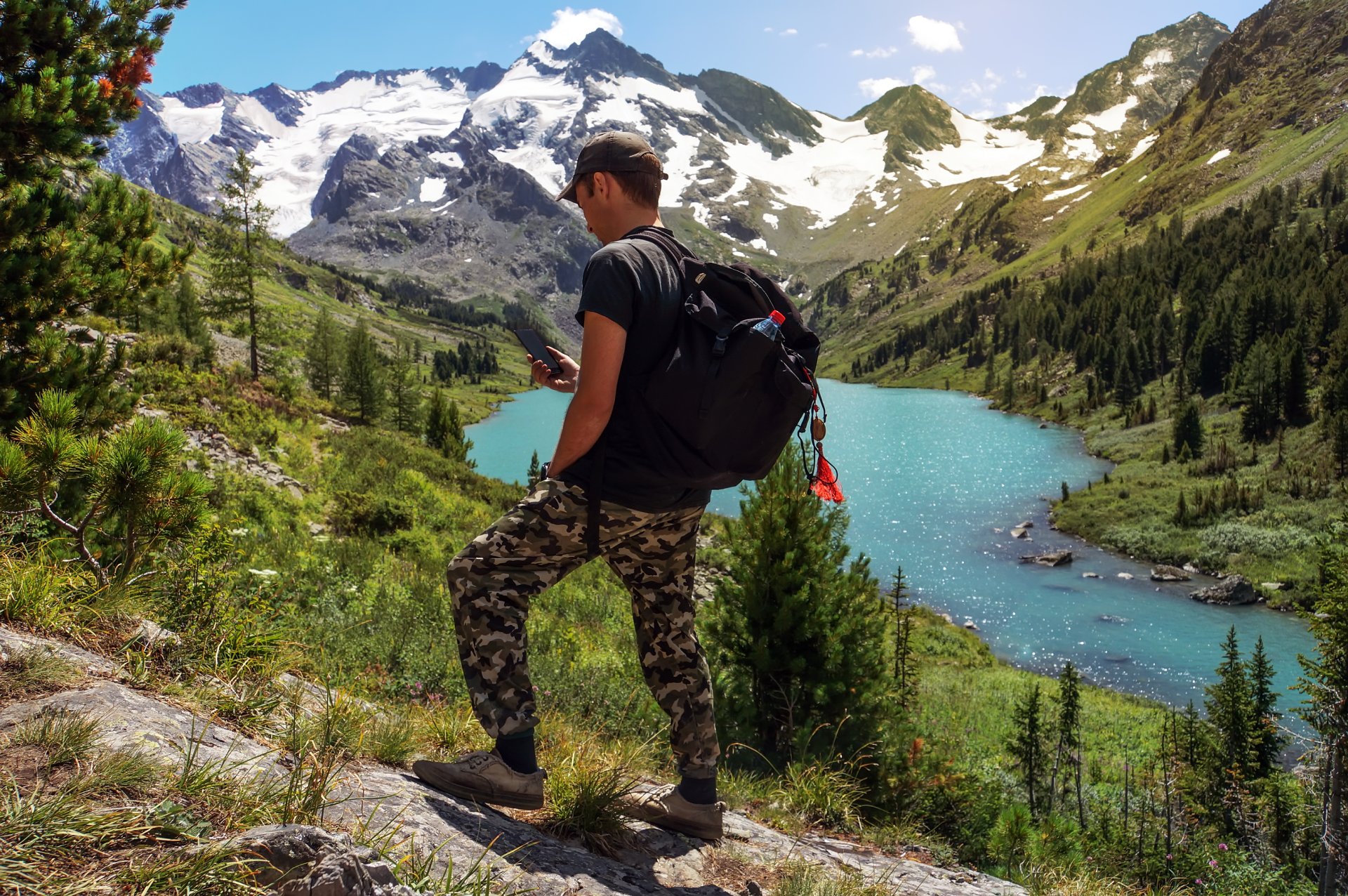
- Modern satcom devices are now more compact, affordable, and user-friendly.
- Features like SOS alerts, GPS navigation and secure communication make satellite phones crucial for ensuring safety in emergencies, even in the most remote areas.
- Companies like Apple, SpaceX, and Verizon are expanding satellite-to-cell services, making satellite communication accessible to business travelers and adventurers alike.
Satellite communications is no longer a niche market for governments, military and organizations operating in remote areas. First launched by Motorola in 1989, the devices were bulky, expensive and primarily used by government agencies, military personnel and organizations operating in remote areas.
Since then, technological advancements have led to the development of more compact, affordable, and user-friendly satellite phones, tracking and messaging devices making them accessible to a broader consumer and business marketplace.
Satellite phone networks have expanded their coverage areas and improved connectivity, allowing users to stay connected in remote regions, at sea, and in areas with limited or no cellular coverage. Expanded global coverage makes satellite phones and other devices a valuable tool for adventurers, business and leisure travelers, and individuals living or working in remote locations.
Advancements in technology have led to integrating satellite communication technology with smartphones, GPS capabilities, and data services, enhancing the functionality and versatility of satellite devices. Users can now access email, internet services, and location-tracking features on satellite phones and messaging devices.

New Satcom Technology Developments
Apple is expanding the capabilities of its satellite messaging on the new iOS 18. The update will broaden the availability beyond emergency messaging, and messages via satellite will be an option when cellular and Wi-Fi connections are unavailable.
And It’s not just Apple. There have been several updates in the satellite-to-cell market. SpaceX is testing for direct-to-cell Starlink satellites with partner T-Mobile.
There are reports that T-Mobile customers using the Android 15 beta see their eligibility for satellite messaging. Verizon recently announced a $100 million deal with AST SpaceMobile for satellite direct-to-cellular service for its customers.
Now, Verizon and AT&T are both working with AST SpaceMobile, but the company has not yet launched its satellites that will operate the service.
“The race among wireless service companies and smartphone manufacturers to provide satellite communications capabilities for users provides business, leisure and adventure travelers a bigger safety net to travel more boldly in the future,” said Dan Richards, CEO of The Global Rescue Companies, the world’s leading provider of medical, security, evacuation and travel risk management services, and a member of the U.S. Travel and Tourism Advisory Board at the U.S. Department of Commerce.
Business Traveler Satcom Needs
A business traveler may need a satellite phone or satellite messaging device for various reasons that are distinct from those of a tourist on leisure travel.
They often travel internationally to various destinations where local networks may not be compatible with their phones. Many workforce travelers frequently visit international destinations, like Bolivia and Madagascar, where local cellular networks may not provide reliable coverage. Satellite phones offer global coverage, allowing seamless communication across borders without the need for multiple SIM cards or roaming charges.
Business travelers may need to communicate sensitive or confidential information that requires secure and private channels. In some regions, using local networks may pose a risk to data security. Satellite communication devices provide a secure means of communication for business-related calls, messages and emergencies.
Satcoms: Tools for Survival
Communication in remote areas is one of the primary reasons for using satellite phones or satellite messaging devices since they work in areas where there is no cellular coverage, allowing people to stay connected when they’re in isolated locations.
In emergencies such as accidents, getting lost, natural disasters, or medical or security events, a satellite device can be a lifesaver by enabling communication with rescue services. Here are some examples:
A satellite tracking and messaging device was instrumental in saving a helicopter pilot following a crash on a frozen lake in Canada. “When Global Rescue received the SOS alert, emergency rescue coordinators in our operations center immediately notified the appropriate first responders,” said Jeff Weinstein, a paramedic and a medical operations manager at Global Rescue. “Without Global Rescue’s swift action and coordination with Canadian first responders, triggered by the satellite SOS alert, the pilot’s extraction to safety might not have been possible.”
Global Rescue operations received a satellite SOS emergency notification from a user in Scotland to report his wife fell and severely injured her back. The Global Rescue medical operations team notified Scotland’s first responders and coordinated the location of the injured woman. She was successfully airlifted to a hospital for treatment.
A teenage hiker was separated from his family during an unforeseen wildfire in the Lake Chelan National Recreation Area of Washington. Global Rescue received a satellite SOS emergency alert with the location of the endangered hiker and two others. Global Rescue notified first responders who rescued the group from a nearby shoreline using the local marine patrol boats.


Sir Richard Branson, the British billionaire and founder of the Virgin Group, is known to use satellite phones and communication devices during his various expeditions and record-setting adventures. While not a traditional celebrity, Bear Grylls, a well-known adventurer and television personality, often uses satellite phones and communication devices during his survival expeditions in remote locations.
[Related Reading: How To Send an SOS]
The reliability and global coverage of satellite technology make it a valuable tool for anyone to improve their safety and connectivity in remote or challenging environments like hiking in remote areas, stranded at sea, lost in the wilderness, or experiencing an emergency in any place where cell coverage is non-existent or unreliable.
Benefits of Satellite Comms
Having a reliable means of communication provides additional security for people traveling domestically or internationally, especially in unfamiliar or risky locations. Many satellite devices have an SOS button that can be activated in emergencies, sending a distress signal and location coordinates to emergency services.
GPS navigation features are also featured on satellite communications devices, helping leisure, business and adventure travelers navigate unfamiliar terrain and find their way back to safety. Satellite devices can receive weather updates that help users plan activities accordingly and stay safe during extreme weather conditions or threats of predictable natural disasters.
Peace of mind is a significant benefit of satellite communications device use. Eight out of 10 respondents (82%) would feel safer with a smartphone enabled with satellite connection abilities, according to the world’s most experienced travelers responding to the Global Rescue Spring 2024 Travel Safety and Sentiment Survey.
“Nearly half (49%) said they like knowing they can always call for help if needed while more than a third (37%) reported that having satellite communications capabilities if cell coverage is unavailable gives their family, friends or colleagues peace of mind,” Richards said.
One out of 10 (12%) said they had lost cell coverage during travel, and it concerned them that they were unable to communicate with others, especially in an emergency. Staying connected with family, friends and colleagues gives people peace of mind during their travels, reducing anxiety and stress by providing updates on their whereabouts and well-being.
Satcoms? No Guarantees of Emergency or Travel Communications
Satellite phones and satellite messaging devices are reliable for communication in many circumstances, but they can fail.
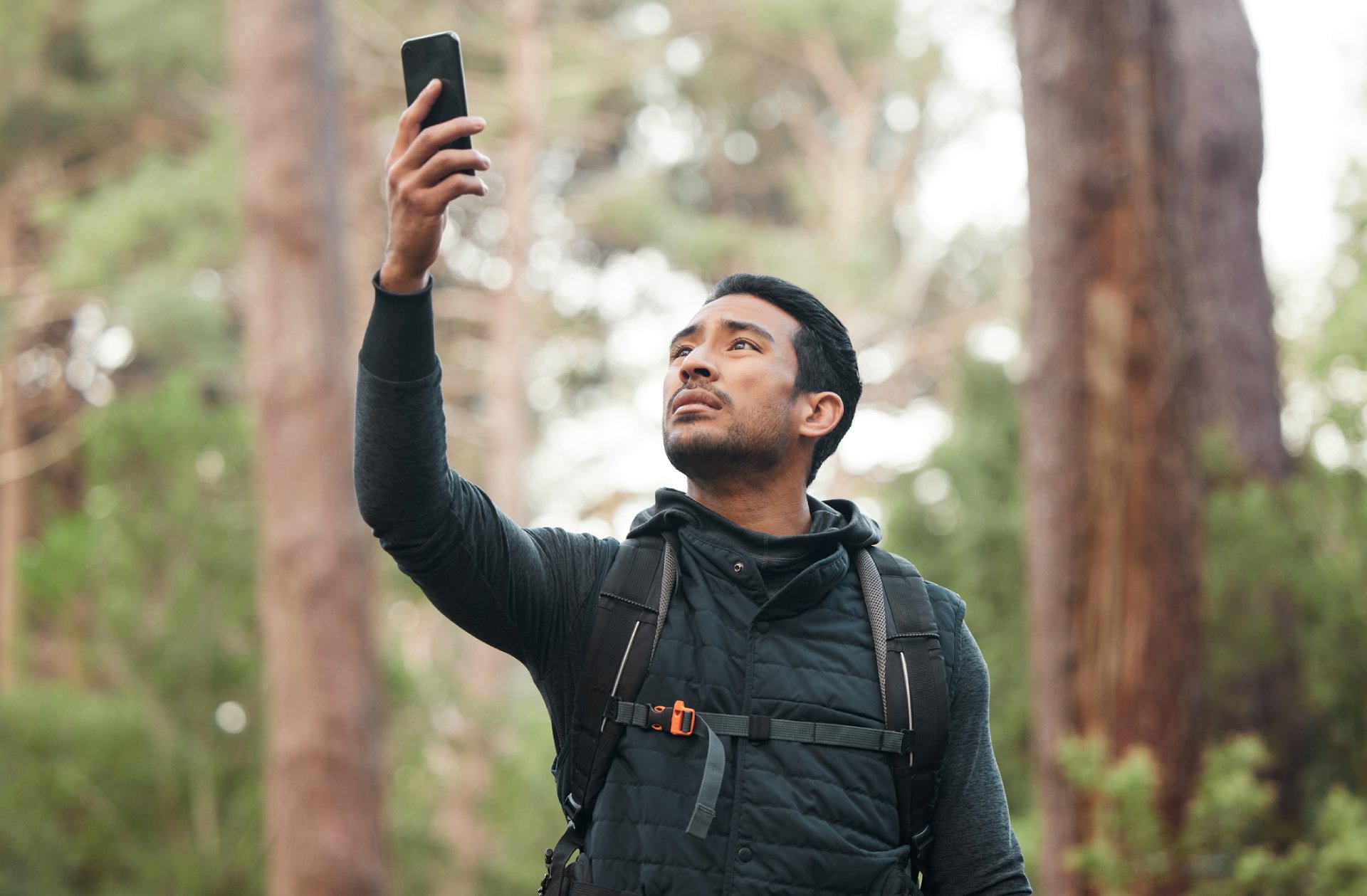
Satellite phones and devices require a clear line of sight to communicate with satellites in orbit.
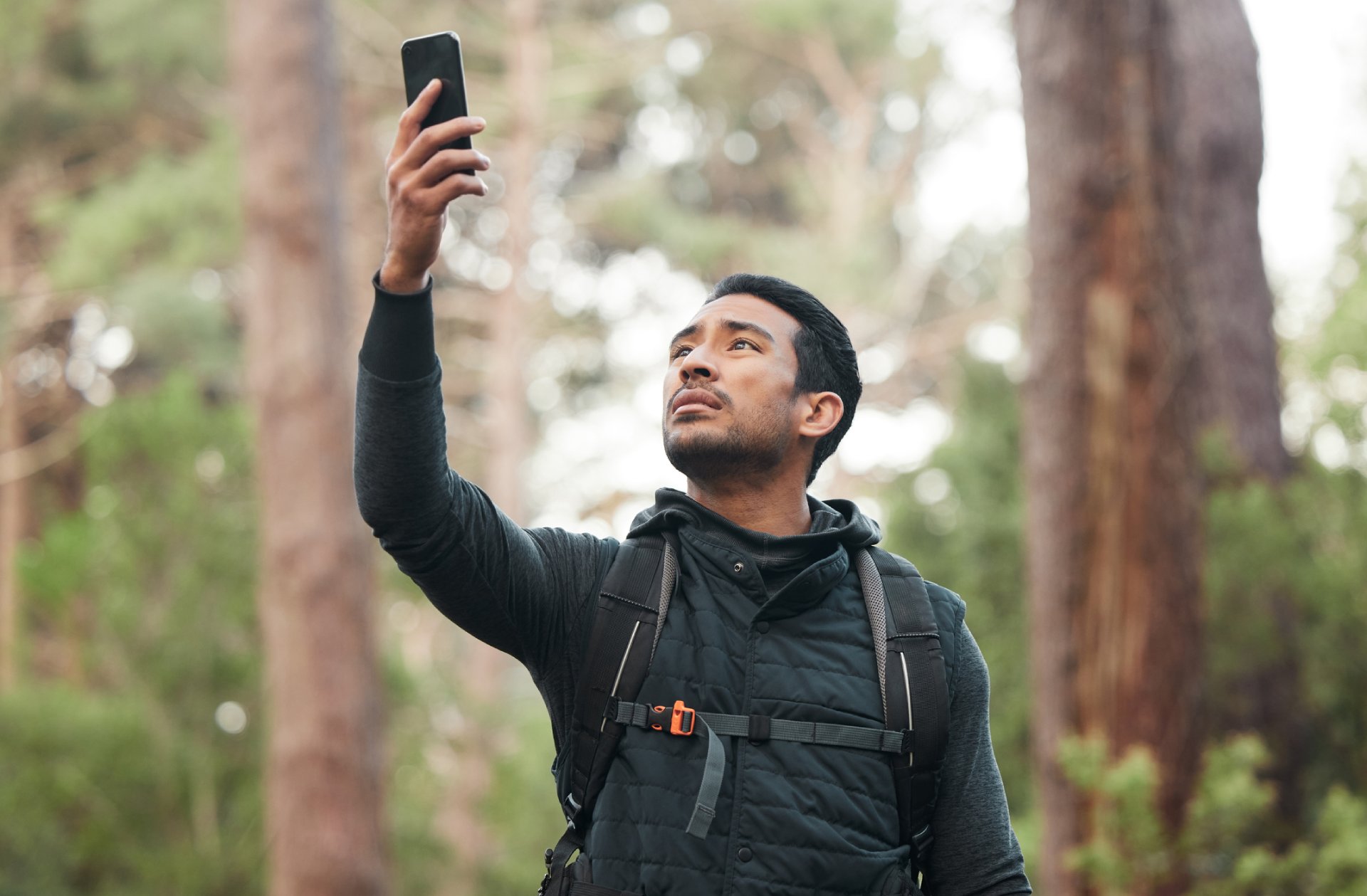
“Topography does affect satellite communication; a clear view of the sky is necessary. It may be challenging to connect with satellites in thick forests or where there are steep slopes above you. The same is true in urban areas with tall buildings. You may be able to send a signal indoors if you are standing next to a window,” said Harding Bush, a former Navy SEAL and associate director for security operations at Global Rescue.
The position of the satellite constellation in relation to the user’s location can affect signal strength and connectivity. Users in certain regions may experience intermittent or weak signals if the satellites are not positioned optimally.
Harsh environmental conditions such as extreme cold or heat, high altitudes, or exposure to water can impact the performance of satellite devices and lead to failures. During peak usage times or in areas with high demand, users may experience satellite network congestion leading to slower data speeds or difficulty establishing connections.
Countries with Satellite Communications Device Restrictions
Satellite communications devices, like phones or messaging devices, are highly restricted or regulated in some countries.
It has been illegal for foreigners to bring satellite phones and devices into India for many years under the Indian Telegraph Act. After the Mumbai terror attack in 2008, which was coordinated with satellite phones, stricter regulations around these devices were put into place.
Bringing an unauthorized and unregistered satellite phone into India can lead to significant legal complications, including arrest and detention. If traveling to remote regions in the country, however, satellite phones can be e-registered and licensed with the Department of Telecommunications.
North Korea – The use of satellite phones is highly restricted. While it is illegal to travel to North Korea with an American passport, tourists who are permitted to visit are not allowed to bring in or use satellite communication devices without special permission.
China – In China the use of satellite phones is regulated and may require visitors to obtain a permit before using such devices within the country.
Myanmar – Myanmar officials restrict the use of satellite phones, and travelers must declare and register their devices upon entry into the country.
Cuba – In Cuba, visitors are required to obtain a permit from the government to use such devices.
[Related Reading: Where Are Satellite Phones Illegal?]
Satellite phones and devices are also illegal or strictly regulated in Bangladesh, Nigeria, Chad, Russia, Sri Lanka, Sudan and Pakistan.
User Error
The biggest mistakes individuals make when using a satellite messaging device or phone are relying solely on the device for communication and not having a backup plan. While satellite devices are reliable in remote areas, they can still encounter technical issues or run out of battery.
5 Satellite Phone/Satcom Device User Mistakes:
- Failure to familiarize themselves with the device. Users should practice using their satellite phone or messaging device before a trip, including making calls, sending texts, and using the SOS feature. Users should understand how the SOS feature works, who receives the message and what they will do. It is best to coordinate a test message.
- Loss of battery power. Staying charged is essential. Forgetting to keep the satellite device powered up and not bringing extra batteries or a power bank can be a critical mistake. In remote areas, access to power sources may be limited, so it’s important to always keep the device charged.
- Forgetting to keep subscriptions current. Satellite communication devices often require a subscription for service. Forgetting to renew the subscription or failing to check the expiration date can leave users without access to communication when needed.
- Overestimating coverage. While satellite devices provide coverage in remote areas, limitations exist, especially in certain terrains, locations or conditions. Users should be aware of the device’s coverage limitations and plan accordingly.
- Neglecting to add key contacts to the device. Users should preload essential contacts into the device for easy access in emergencies, including names, numbers and email addresses for family, friends, colleagues, embassies, personal physicians and more. Key contacts must know how to get in touch on the satellite phone or device. Have them complete practice calls or messages.
Do You Still Need a Travel Protection Membership?
“We always recommend that if you’re traveling, especially to remote locations where cellular service is not guaranteed, pack a satellite phone or messaging device and extra batteries,” Bush said. “If you’re concerned enough about your travel communications to buy one of these devices, then you also need a Global Rescue membership.”
Remember: Global Rescue services are not just for emergencies and rescues. Medical and security professionals are on hand 24/7 to answer any concerns regarding your travel plans, activities or health and safety questions.
Categories:
Missions & Member TestimonialsJuly 3, 2024
Article Highlights:
Real-Life SOS Rescue Stories: A mountain climbing incident in New York, a snowstorm in Canada, a bike crash in Tennessee, and heat exhaustion in Arizona – all because a satellite communication device was used to contact Global Rescue for help.
Essential SOS Procedures: It’s critical to understand your device’s SOS features and procedures, and to provide contact information for Global Rescue to ensure timely and effective emergency assistance.
Importance of Preparation: Being prepared is essential and knowing how to use satellite communication devices in emergencies can be the difference between life and death during remote adventures.
Contacting Global Rescue Through a Satellite Device
You have planned an adventure. Perhaps you’re going to a destination where cell service is unreliable or embarking on a wilderness trip to a remote location. You have a two-way communication device, such as a satellite phone or satellite messaging and tracking device, just in case. But knowing how to use it in an emergency is essential – and could be the difference between life and death.
Global Rescue handles hundreds of emergencies and SOS calls for medical or security help every month. The following are a few highlights from recent emergency events from around the world.

A Medical Scare in the Mountains of New York
Global Rescue operations received an SOS alert from a user but was unable to establish contact. Operations experts continued to try to establish contact with the sender. At the same time, operations personnel successfully contacted the user’s primary emergency contact who relayed that her husband went mountain climbing in the Lake Placid, NY, region and that the last message she received was that he had summited. The operations team notified local authorities and continued to reach out to the SOS sender. Minutes later, the operations team connected with the SOS sender and learned that his climbing partner suffered a medical emergency on the trail and that he was currently administering CPR. At that point, multiple emergency first responders were actively responding to assist and recover the climbers.
Trapped by Snowstorm in Canada
An extreme snowstorm threatened three hikers in Canada who sent an SOS for help since they couldn’t maintain shelter for the long term and would require assistance to get to safety. Fortunately, there were no medical emergencies reported and they confirmed that they had an ample supply of water, food and warm clothing for the immediate future. Following advice to shelter in place for the evening due to ongoing storms, the threesome waited out the storm while first responders prepared resources to rescue the trio. Search and rescue operations were stymied by the severe weather, but the trapped threesome were successfully rescued.
Bike Crash in Tennessee
Biking in parts of Tennessee’s Great Smoky Mountains is both popular and remote enough that cell service is unreliable, and sometimes non-existent. Fortunately, when a biker crashed on a slippery section of the road her husband was equipped with an SOS device, which he quickly activated. He reported to Global Rescue medical operations that his wife had severely injured her knee, was unable to walk and was in extreme pain. The couple suspected she had dislocated or fractured the leg. Operations personnel contacted local emergency first responders and relayed the coordinates of the injured biker and her husband. Shortly after, the SOS sender confirmed that the emergency medical services had arrived and that an ambulance was coming.
Airlifted to Safety in Scotland
Global Rescue operations received an SOS from a user to report his wife fell and severely injured her back. While providing basic medical advisory, the Global Rescue medical operations team notified Scotland’s first responders and coordinated the location of the injured woman. She was successfully airlifted to a hospital for treatment.
Lost on a New Mexico Trail?
A hiker sent Global Rescue an SOS after his friend went missing for several hours after going to a water source to wash up. He reported last seeing his friend at mile marker 23.1 of the Gila River Alternate. Global Rescue operations notified area emergency services and advised the SOS sender to remain at his current location and to shelter in place. Early the next afternoon, emergency services reported finding the missing hiker safe and well who informed rescue teams that he had been searching for his friend, the SOS sender, believing him to be lost.
Heat Exhaustion in Arizona
Global Rescue received SOS alerts from two separate people who were suffering from symptoms that could lead to heat exhaustion while in Arizona. In one case, Global Rescue notified emergency responders who dispatched a helicopter to the SOS sender’s location. Unfortunately, the chopper was unable to retrieve the couple but did drop an aid package for the couple who were later guided to safety by local authorities.
In another case, a trekker in the Grand Canyon sent an SOS to Global Rescue reporting that his friends were in bad shape due to heat exhaustion. One friend was experiencing nausea, low energy, cramps and overall weakness. The other friend showed similar symptoms, but less severe. Global Rescue notified Grand Canyon National Park emergency responders and provided coordinates to rescue the trekkers. While waiting for the rescue, Global Rescue operations provided medical advisory. The trekkers moved a few miles to be near water and rested overnight in hopes of recovering. Unfortunately, the two individuals did not improve, and local emergency responders successfully recovered them and brought them to safety.

How To Send an SOS to Global Rescue
SOS device users should review the instructions regarding their device’s SOS features and procedures. Understand who receives the SOS message signal when it’s sent and what services the SOS monitoring provider offers. Contacting Global Rescue directly at +1 (617) 459-4200 or through a messaging device at ops@globalrescue.com or operations@globalrescue.com is the most straightforward way of obtaining service. Read How To Send an SOS: Two-way Communication Success for details about satellite device communications.
Categories:
Press ReleaseJuly 1, 2024
(Lebanon, N.H. – July 1, 2024) Millions of international visitors are expected to travel to Paris to experience the 2024 Summer Olympics, running from July 26 to August 11. But many experienced travelers are opting out to sidestep the masses, bypass potential civil unrest, or simply explore new destinations.
“Nearly nine-out-of-10 travelers surveyed are avoiding Paris altogether in 2024 due to a combination of traveler safety concerns due to the possibility of protests and civil unrest, a desire to avoid the crowds expected at the summer Olympic Games host city, or simply a preference to travel elsewhere,” according to Dan Richards, CEO of The Global Rescue Companies and a member of the U.S. Travel and Tourism Advisory Board at the U.S. Department of Commerce.
But among the world’s most experienced travelers making the trip to France to join the quadrennial international sports competition spectacle revealed they expect massive traffic issues, dread encountering bedbugs, and worry over the prospects of petty crime, labor strikes and terrorism.
“Civil unrest and terrorism have surpassed injury or illness as the biggest fear about international travel for the first time in years. It is understandably contributing to traveler preferences for safer destinations,” Richards said.
Criminals will take advantage of the influx of tourists during the Olympics to engage in fraudulent activities such as fake ticket sales, pickpocketing, or identity theft. “Blending in will be difficult for Olympic spectators from other countries, but they can tone down the typical tourist look and reduce the risk of scam artists targeting them for fraudulent schemes or petty crimes,” said Harding Bush, a former Navy SEAL and associate director for security operations at Global Rescue.
Travelers attending the Olympics will likely experience additional potential challenges due to labor strikes, bedbugs, and getting to and from event venues, hotels and restaurants.
Protests, demonstrations, or worker walk-outs can disrupt transportation services and public safety. Bedbug infestations occur in places where there is a high turnover of people and frequent travel, such as hotels and accommodations popular with tourists. Travelers can take precautions, like inspecting bedding and surrounding areas, to reduce the risk of encountering parasitic insects.
The famous Paris metro and bus systems are expected to face challenges during peaks in demand as fans enter and leave stadiums. Driving around Paris will be dicey due to planned road closures, especially near famous landmarks. Authorized taxis are available, but an increase in fakes with drivers looking to take advantage of travelers has been reported.
About Global Rescue
The Global Rescue Companies are the world’s leading provider of medical, security, evacuation and travel risk management services to enterprises, governments and individuals. Founded in 2004, Global Rescue has exclusive relationships with the Johns Hopkins Emergency Medicine Division of Special Operations and Elite Medical Group. Global Rescue provides best-in-class services that identify, monitor and respond to client medical and security crises. Global Rescue has provided medical and security support to its clients, including Fortune 500 companies, governments and academic institutions, during every globally significant crisis of the last two decades. For more information, visit www.globalrescue.com.