
January 25, 2023
Article Highlights
- Proactive Protection: Executive protection focuses on avoiding crises through advanced planning, unlike reactive bodyguards.
- Beyond Wealth: It’s crucial for anyone in high-risk environments, not just the wealthy, with a focus on safety and productivity.
- Comprehensive Planning: Includes pre-travel prep, vetted local drivers, and tailored procedures for seamless, secure trips.
It Can Be a Dangerous World
The world can feel like a dangerous place. Whether it’s a deadly kidnapping in Nigeria, an abduction in Mexico, or a hostage-taking in Brazil, the political unrest and high-profile kidnappings that occupy front page news make it easy to feel vulnerable when traveling. It’s also compelling many business leaders to consider executive protection.
The Importance of Executive Protection
When planning an international business trip, having an extra level of security is an appropriate standard to meet your duty of care obligation,” said Harding Bush, a former Navy SEAL and senior manager for security operations at Global Rescue. “But what we think might keep us safe could put business travelers at higher risk unless you separate the myths from the facts about executive protection security details and bodyguards.”
MYTH: Bodyguards are the same thing as executive protection
FACT: Bodyguards are reactive to emergencies, and executive protection is proactive to emergencies. A bodyguard provides a deterrent to threat through its physical presence. Bodyguards may not be aware of impending threats or their clients’ vulnerability and cannot effectively avoid danger – defeating the very purpose of security. Responding at the time of an emergency is too late; all business objectives will be lost as the crisis becomes the immediate priority.
“Executive Protection security details prepare and plan extensively before accompanying clients during travel,” said Bush who, while on active duty with the Navy SEALS, was a leader for the security detail for the Iraqi Interim Prime Minister and has provided private executive protection throughout the world.
The Structure of an Executive Protection Detail
The executive protection detail consists of two elements; an advance element and the close protection element-or main body. The advance element travel ahead of the main body that travels with the client being protected.
The advance provides risk mitigation to everything from the planned primary and alternate routes to the physical safety of the visited locations and facilities; they prepare for the safe arrival of the client and main element of the executive protection detail – this efficiency increases overall safety by boosting the level of awareness, giving the security detail and the client the capability to avoid any escalating security situation.
The close protection element’s main role is to directly accompany and transport the protected persons in order to recognize and avoid any direct threats – and keeping those protected from harm by quickly evacuating from a sudden crisis.

MYTH: The purpose of a security detail is to keep you safe should a crisis occur.
FACT: The purpose of a security detail is to avoid crises. “A security detail is inherently proactive, meaning that it travels ahead of your team to evaluate the level of security of your destination and, if necessary, change plans. Of course, they can also respond to crises, but avoidance is the top goal,” said Bush, an expert in high-risk travel, cultural awareness, crisis preparedness, leadership and operational planning.
MYTH: Only very wealthy people need executive protection.
FACT: While high net-worth individuals are inherently vulnerable to various criminal threats, additional factors other than wealth may require support through executive protection. Some of these factors include the geopolitical environment at the travel location, the reliability of local infrastructure and law enforcement capabilities. “Employees of large wealthy organizations may be targeted during travel to exploit or leverage the organization. Persons who are citizens of specific countries may also find themselves more vulnerable while traveling abroad,” Bush said.
MYTH: Having an executive protection security detail makes it safe to travel to unsafe places.
FACT: Even with an expert security detail, safety cannot be guaranteed. If the risk level of a destination requires a security detail, the traveler or their organization should consider if there are alternative options for reaching the same business objectives. This requires pre-travel planning, where the level of risk is analyzed and matched with the organization’s or travelers’ tolerance level for risk. While planning, the traveler should closely consider the balance between productivity and safety. “Executive protection can make you safer, but it never eliminates all risks,” Bush said. If the trip is imperative, however, having an executive protection security detail can significantly alleviate stress for a traveling executive, allowing them to focus on the business task at hand.
MYTH: An armed security detail is safer than an unarmed detail.
FACT: Firearms are just one of the many tools used by an executive protection detail to mitigate risk, and they are not always a requirement. An armed security detail provides an enhanced level of deterrence and can save lives in an emergency. The crime level of a location is usually the determining factor in whether firearms are required. “If weapons are used, then all business objectives are immediately lost,” Bush said.
MYTH: Clients do not need training to use executive protection; they just need to follow instructions.
FACT: You must prepare your client, whether an executive, a scientist, an engineer, or anyone else. CSO Online states, “Teaching the executive how to remain safe, emergency procedures, expectations from the security detail, and familiarization with protocols can be a tremendous asset in an emergency.”
The executives and their staff should communicate closely and often with the security detail leadership. Executive protection professionals understand that plans and requirements can suddenly change and have the ability to adapt a safe plan with contingencies “on the fly.” The more information about the executives’ intentions, the more the executive protection professional can reduce the level of risk.
Depending on the level of risk, traveling with a security detail can feel constraining, but it’s important for everyone’s safety that your team is ready to follow the procedures set in place by the security provider. These procedures will increase safety and productivity, allowing business objectives to be met in a challenging, remote and austere location.
Additional Tips for Executive Protection
Security details are not cheap, but pricing will vary depending on your destination. According to DMAC Security, you could pay around $1000 per 8-hour day per executive protection professional and about the same for each required vehicle and driver.
Armored vehicles provide additional protection should you encounter local instability while on the road, like a riot, which can happen suddenly. Armored vehicles can also reduce the risk of injuries during a vehicle accident. Armored vehicles are regularly provided through the executive protection details.
Driving a vehicle in a foreign country is a high-risk activity. Always hire a local driver who knows the area. Being unaware or confused by directions can bring you to a vulnerable location or make you an obvious target for attack. Make sure your driver is well-vetted and trained in security driving techniques. The driver should always remain on-site or very close by to provide the ability to separate from the consequences of an escalating incident. The driver’s responsibility is driving. A separate professional should provide the executive protection that accompanies the executive.
The Success of a Security Detail
“As a veteran of hundreds of security details that include dropping into a country ahead of time, assessing area security, establishing relationships on the ground, and executing the entire operation, I know the best security detail will avoid crises and, if necessary, respond if something happens,” Bush said. “But the real success is in a smooth, safe trip, where all threats have been avoided, so business proceeds uninterrupted,” he added.
Ready To Set Up Your Security Detail?
With Global Rescue, you will have an unbeatable security partner to help you prepare before your trip and guide you on the ground once you arrive. We drop into the country ahead of time, assess the security of the area and establish relationships on the ground to ensure your detail is ready for your arrival. Our security partnerships all over the world make for seamless preparation that extends upon your arrival, when we can be the liaison between you and the local security company. That way, safety is not a concern for your executives, and they can focus on their work.
“Remember, the purpose of a security detail is to avoid crises,” Bush said. “Of course, it’s helpful to have security in case something happens, but the real success is in a smooth, safe trip, where all threats have been avoided.”
Get a price estimate
Estimate
$0.00
Please answer all questions for estimate.
Categories:
Press ReleaseJanuary 25, 2023
LEBANON, N.H. (Jan. 24, 2023) – U.S. Alpine Ski Team athlete Mikaela Shiffrin secured her 83rd FIS World Cup win in Italy to become the winningest female skier of all time.
“Congratulations to the Greatest Of All Time, Mikaela Shiffrin. She is an incredibly talented, mentally resilient athlete in a highly competitive global sport. Winning her 83rd World Cup race is a spectacular achievement,” said Dan Richards, the CEO of Global Rescue, the company providing emergency and crisis support since 2006 for the U.S. Ski & Snowboard team in the event of illness or injury among any of the team members.
Shiffrin’s win elevates her past the previous record holder, American skier Lindsey Vonn, and moves her within three victories of Ingemar Stenmark’s record of 86 World Cup wins.
“Mikaela Shiffrin is now not only the best woman alpine skier of all time, but she is also a great person, teammate and role model for the sport of alpine skiing,” said Sophie Goldschmidt, CEO of U.S. Ski & Snowboard. “As an organization, we are so proud of her accomplishments and cannot wait to see how she further transforms the sport and the history books next.”
Shiffrin admitted she was nervous before her run, but her anxiety washed away once it was time to go. “Everything went quiet and I just pushed as hard as I could at every turn. It’s still hard for me to believe that I have the mental focus again to be strong on the second run. It’s something I don’t take for granted.”
###
For more information contact Bill McIntyre at bmcintyre@globalrescue.com or +1 (202) 560.1195.
About Global Rescue
Global Rescue is the world’s leading provider of medical, security, evacuation and travel risk management services to enterprises, governments and individuals. Founded in 2004, Global Rescue has exclusive relationships with the Johns Hopkins Emergency Medicine Division of Special Operations and Elite Medical Group. Global Rescue provides best-in-class services that identify, monitor and respond to client medical and security crises. Global Rescue has provided medical and security support to its clients, including Fortune 500 companies, governments and academic institutions, during every globally significant crisis of the last two decades. For more information, visit www.globalrescue.com.
Categories:
Health & SafetyTravelJanuary 19, 2023
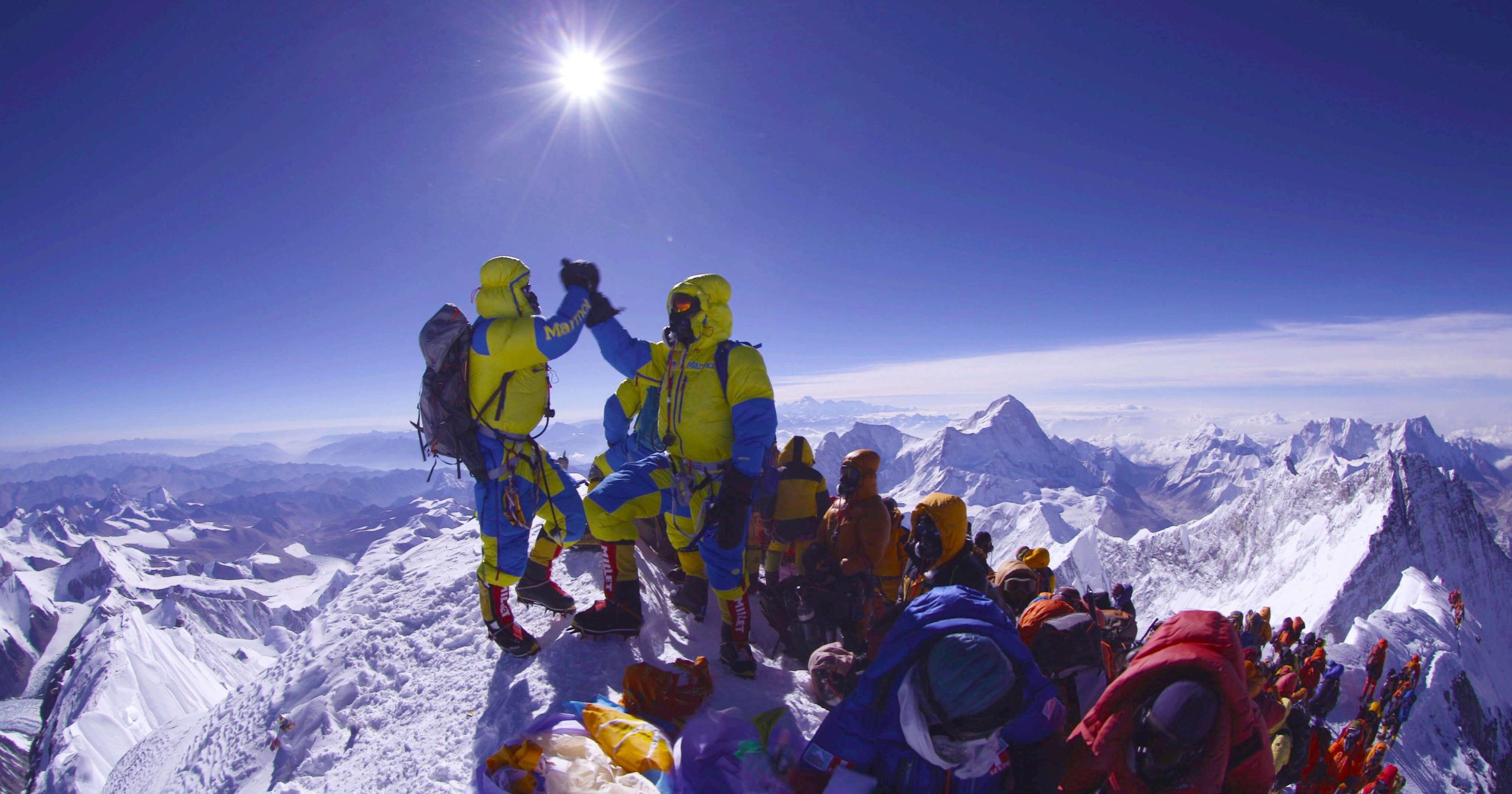
A mountaineering doctor from Utah pleaded guilty to calling in a false report of hypothermia after attempting and failing to summit Denali so he could be “rescued” by helicopter instead of descending on his own, according to a criminal complaint filed in Fairbanks, Alaska federal court. The doctor has been banned from Denali (20,310 ft/6,190 m), the tallest peak in North America, for five Years and ordered to pay a $10,000 penalty.
The issue of some mountaineers, perhaps with less experience or training, becoming more reliant on chopper rescues was noted as early as 2012 by Nick Heil who wrote that mountaineers worry that the presence of the [rescue helicopters] alters expedition decision making and encourages climbers to push beyond their limits.
There has been some chatter during some recent climbing seasons in the Himalayan, Karakorum and Hindu Kush mountain ranges about climbers calling for a helicopter rescue when they are struggling. Climbing legend Ed Viesturs said there have been numerous cases recently where climbers fake an illness or demand to be flown off just to get home sooner.

“It seems that being able to talk about your summit is more important than embracing the process,” he said.
Climbing expert Alan Arnette says the mountaineering situation is changing, and not necessarily for the best. “High-altitude mountaineering has always had risks. Climbers can mitigate these risks by arriving at their expedition well prepared and self-sufficient as possible,” he said. But, he adds, in today’s environment, climbers are often told if they get in trouble, their rescue insurance will cover an evacuation off the mountain.
“This false sense of security is dangerous. Telling someone what they want to hear is never acceptable,” said Arnette, a mountaineer who summited Mount Everest in 2011 and became the oldest American to summit K2 in 2014. He is one of the world’s most respected chroniclers of mountaineering according to Outside Magazine.
Viesturs, a member of the Global Rescue Mountain Advisory Council and the only American to have climbed all 14 of the world’s 8,000+ meter peaks, and the fifth person to do so without using supplemental oxygen, concurs.
“I’ve always believed climbing a mountain has to be a round trip. The second half of any climb, the descent, is the most important part of the actual event. If you don’t have the strength, endurance, desire or motivation to descend the entire way from the summit, back to basecamp, then perhaps you should rethink your reasons for climbing, or your system of training for such an endurance event,” Viesturs said.
Conrad Anker, who summited Mount Everest twice, said “The old-school thing was, you were self-sufficient. If an accident did happen, you would have the wherewithal to extract yourself and your teammates.”

Other climbers are concerned the climbing process is being diluted. Global Rescue’s Mountain Advisory Council member and world-famous high-altitude climber Nirmal “Nims” Purja broke more records during the 2022 Himalayas spring climbing season. The Nepali mountaineer has a firm belief about summit etiquette.
“When I do a summit push, it is from Base Camp to the summit and then from the summit back to Base Camp,” Purja said. “For me that’s the only way to do it. It has to be authentic – no helicopter lifts back to Base Camp – unless the summit is void or there’s an emergency situation or rescue and someone needs a helicopter.”

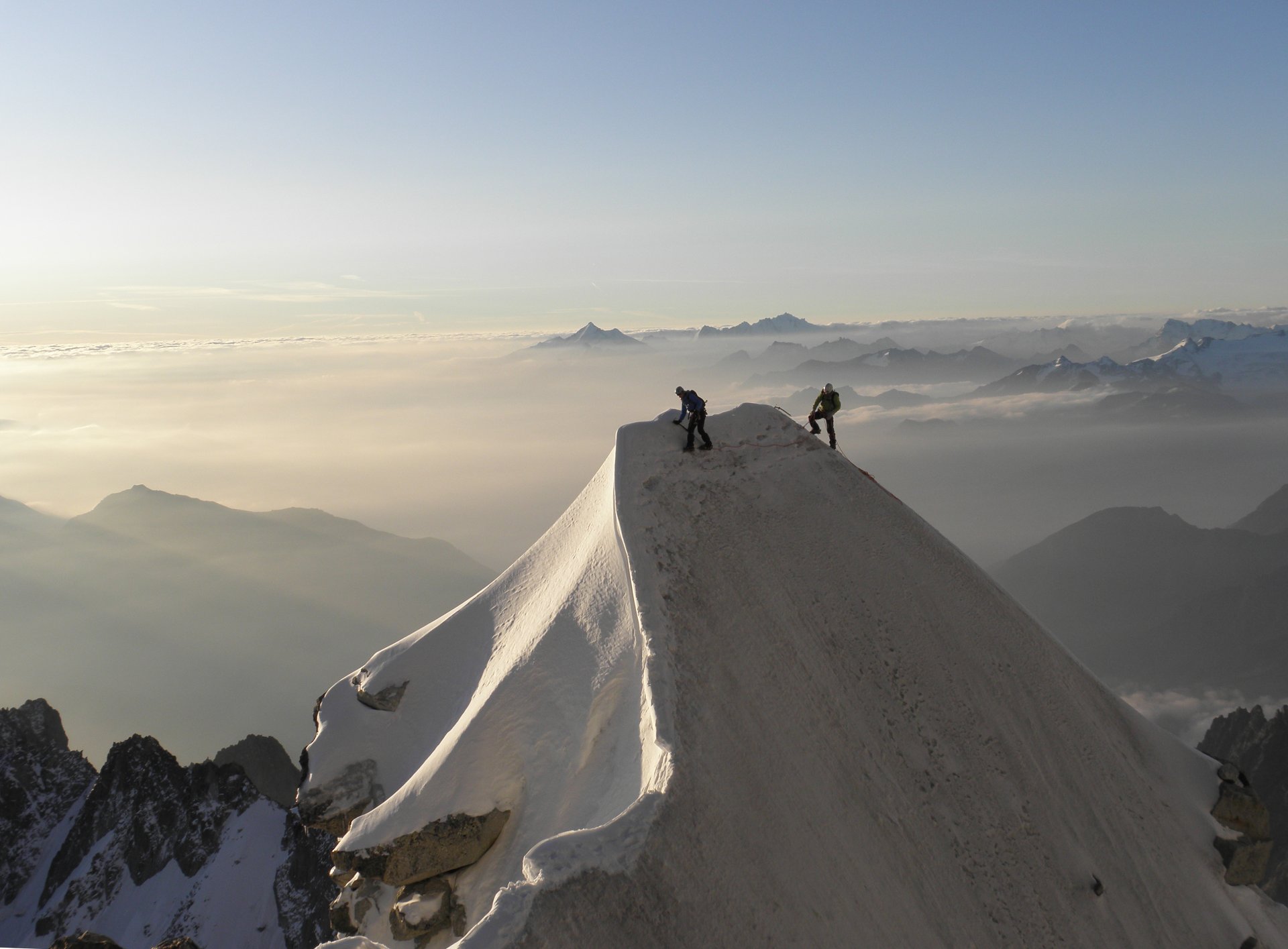
So, when does a summit count? The summit of a mountain is its topmost level attainable, the peak, the highest point. Simple, right?
Not so fast.
Getting to the top is optional, getting down is mandatory. “Climbers must plan their descent whether it’s their return or their exit strategy, even before planning the ascent. The latter depends on the former. Prioritize safety over success. Prepare yourself physically before a climb for a long-term, demanding event, and you’ll be faster and stronger and therefore safer,” Viesturs said.
“At the end of the day, it’s kind of lame to call in a chopper halfway down a mountain when you’re not seriously injured or ill, simply to avoid the last part of the descent,” he said.
Gordon Janow, who has led expeditions to each of the highest mountains on the seven traditional continents and is the director of programs for Alpine Ascents, said “turning around early, before a medical emergency arises, is just smart mountaineering.”
Tom Livingstone, an acclaimed outdoor writer and climber, said his journeys in the mountains start and end at Base Camp.

“I climb with the intention of staying safe and not needing a helicopter rescue. I don’t believe an ascent is valid if a helicopter is used whilst in the mountains – and an ascent must finish with the whole team safely back at Base Camp,” he said.
Categories:
Press ReleaseJanuary 17, 2023
Biden Administration pushes court to restore traveler mask mandate.
Lebanon, NH – January 17, 2023 – Travel industry leaders strongly oppose the Biden Administration’s decision to fight to keep a mask mandate in place. The 11th Circuit Court of Appeals will hear arguments on Tuesday from the Biden Justice Department on behalf of the Centers for Disease Control (CDC) to reinstate a mask mandate for air travel, after a federal judge in Florida struck down the mandate last April, according to news reports.
“The decision by the Department of Justice to fight to reinstate the mask mandate is not medically indicated and it contradicts President Biden’s declaration in September that the pandemic is over,” said Dan Richards, CEO of Global Rescue, the world’s leading provider of medical, security, evacuation and travel risk management services and a member of the U.S. Travel and Tourism Advisory Board at the U.S. Department of Commerce.
“It is a reckless, unnecessary action that will spread traveler fear and uncertainty further damaging an industry badly ravaged by the pandemic,” Richards said.
The fight to keep mask mandates is not a popular one among travel industry groups. The U.S. Travel Association, for example, praised the elimination of the mask mandate. “The current decision to halt enforcement of the federal mask mandate effectively returns the choice of mask usage on planes and other forms of public transportation to travelers and travel industry workers, a further step toward endemic management of COVID,” Tori Emerson Barnes, the association’s executive vice president, said at the time.
###
About Global Rescue
Global Rescue is the world’s leading provider of medical, security, evacuation and travel risk management services to enterprises, governments and individuals. Founded in 2004, Global Rescue has exclusive relationships with the Johns Hopkins Emergency Medicine Division of Special Operations and Elite Medical Group. Global Rescue provides best-in-class services that identify, monitor and respond to client medical and security crises. Global Rescue has provided medical and security support to its clients, including Fortune 500 companies, governments and academic institutions, during every globally significant crisis of the last two decades. For more information, visit www.globalrescue.com
Categories:
Press ReleaseJanuary 14, 2023
The World’s Most Experienced Travelers Name the Top 25 Travel Songs
Lebanon, N.H. – January 14, 2023 – As travelers shrug off inflation and emerge from holiday travel disruptions, people are searching international trips in droves, according to a recent report. Global Rescue conducted a survey of the world’s most experienced travelers to identify a collection of the best travel songs to inspire trip-takers.
“Travel confidence is exploding in a positive direction. TSA data reflects traveler volumes pushing past pre-pandemic levels for the first time in more than two years. Call it revenge travel or make-up travel, the comeback to international travel is surging,” said Dan Richards, CEO of Global Rescue, the world’s leading provider of medical, security, evacuation and travel risk management services and a member of the U.S. Travel and Tourism Advisory Board at the U.S. Department of Commerce.
“People are gearing up for a return to travel after the pandemic pause. They are driving a significant rebound in travel activity and the Global Rescue survey revealed the Top 25 travel songs that inspire adventure, encourage exploration, and re-connect us with loved ones,” Richards said.
Eddie Money’s “Two Tickets to Paradise” was identified as the favorite travel song followed by:
- Dancing Queen by ABBA
- Ain’t No Sunshine by Bill Withers
- Caribbean Queen by Billie Ocean
- Three Little Birds by Bob Marley
- Saturday in the Park by Chicago
- Teach Your Children by CSNY
- Wagon Wheel by Darius Rucker
- Already Gone by Eagles
- Rocket Man by Elton John
- Lose Yourself by Eminem
- Autumn Leaves by Eric Clapton
- Fly Me to the Moon by Frank Sinatra
- I Got Your (I Feel Good) by James Brown
- Don’t Stop Believin’ by Journey
- Free Bird by Lynyrd Skynyrd
- Nothing Else Matters by Metallica
- Burn it to the Ground by Nickelback
- I’m Leavin’ on a Jet Plane by Peter, Paul and Mary
- Timber by Pitbull
- Bohemian Rapsody by Queen
- Born to Be Wild by Steppenwolf
- Don’t You Worry About a Thing by Stevie Wonder
- Burning Down the House by Talking Heads
- Brown Eyed Girl by Van Morrison
The complete collection of The Global Rescue Top Travel Songs is available on Spotify.
About the Global Rescue Traveler Sentiment and Safety Survey
Global Rescue, the leading travel risk and crisis response provider, conducted a survey of more than 1,000 of its current and former members between October 25 and 31, 2022. The respondents exposed a range of behaviors, attitudes and preferences regarding international and domestic travel.
Contact Bill McIntyre at bmcintyre@globalrescue.com or 202.560.1195 (phone/text) for more information.
About Global Rescue
Global Rescue is the world’s leading provider of medical, security, evacuation and travel risk management services to enterprises, governments and individuals. Founded in 2004, Global Rescue has exclusive relationships with the Johns Hopkins Emergency Medicine Division of Special Operations and Elite Medical Group. Global Rescue provides best-in-class services that identify, monitor and respond to client medical and security crises. Global Rescue has provided medical and security support to its clients, including Fortune 500 companies, governments and academic institutions, during every globally significant crisis of the last two decades. For more information, visit www.globalrescue.com.
January 12, 2023
At Global Rescue, one of the best parts of our work is getting to know our inspiring members. Many go to the ends of the earth, to its highest peaks and greatest depths to feed their insatiable hunger for adventure.
The following female trio, a mother, a veteran and a missionary, epitomize the growing force of how women travel, which is especially important since women are the fastest-rising demographic in the travel industry. “Consider tourism and travel, where experts agree that women are fueling an explosive growth, making 80% of decisions and expected to spend more than $125 billion this year,” according to Forbes.
Dianette Wells: mother, extreme adventure athlete, house flipper
Dianette Wells was 16 years old when she first saw Mount Whitney. She was driving north from Los Angeles on California’s scenic Highway 395 and looked to the left. There it was: California’s highest peak.

“I was immediately drawn to it,” she said.
Seventeen years later, she climbed the mountain for the first time. And it changed her life forever.
That was 1998. Since then, she has been unstoppable: summiting Mount Whitney 10 times, the Grand Tetons four times, reaching the peaks of the Seven Summits of the world, including seven climbs of Mount Kilimanjaro. She has completed several adventure races and international ultramarathons.
This practice of adventure sports helped her through one of the hardest periods of her life: the death of her 23-year-old son Johnny who was wingsuiting in Switzerland.
Wells is 56 years old and still scaling mountains and making a difference in the world along the way. Every time she summits, she takes a picture of Johnny’s name, which is tattooed on her wrist. She often holds up the same signs he held when he summited mountains, to raise awareness around issues like Parkinson’s disease.
Wells is a longtime Global Rescue member, often purchasing memberships for family members as gifts.
She relied on Global Rescue services after contracting a serious infection in Fiji that required medical evacuation to New Zealand for treatment during her hospitalization before returning home to the U.S. You can read her harrowing story here.
Amanda Burrill: global storyteller, outdoor adventurist, chef, traumatic brain injury advocate, Navy veteran
When it comes to women’s adventure travel, Amanda Burrill forges new paths. When she gets above a tree line, emotion overcomes her. The peace, the beauty, the solitude.

“I am more free than ever at that moment,” she said. “It’s the only place I have an escape from the things in the world that burden my mind and exhaust me.”
Burrill lives every day in the aftermath of two traumatic brain injuries—the first sustained while serving with the military in Iraq, the second after losing her balance and falling down a flight of stairs, across a landing and into a wall.
Outwardly, it’s hard to tell she is struggling at all. She’s a passionate adventure climber, chef and journalist. But inwardly, she has been on a nearly 20-year journey to diagnose and understand how her injuries have impacted her brain and her everyday life.
For Burrill, new experiences have become the path toward healing her brain, and she relies on Global Rescue the whole way to come to her aid if necessary.
“Though I haven’t had to use them yet, there have been many times I’ve been extremely grateful to know that Global Rescue is there,” she said.
Cassidy Cann: wife, mother, missionary in remote Papua New Guinea
Cassidy Cann’s life is quite different from the “American Dream.” She’s given it up for something she believes is greater and more rewarding.
In 2014 she and her husband, Zach, moved from Phoenix, Arizona, to a remote, jungle village in Papua New Guinea with their two young boys.
Cann and her husband spent two years preparing for their move to Papua New Guinea. Preparation was rigorous and meant learning a foreign language, studying cross-cultural living and learning Greek and Hebrew languages to help them better understand, and teach, the texts of their Christian faith.
When they left their home, Cann knew that they would be trading the comforts of life in America for what she calls a “difficult but beautiful” life in Papua New Guinea. Her experience there over the past eight years has proven this to be true over and over again.
“It’s humbling because we get to see the impact we’re having on the people in the village,” she said. “Those who are born here have little access to education, especially the women. In our time since moving here, we have created a literacy program to teach any willing person to read and write in their local dialect.”
Having a membership with Global Rescue has not just given them peace of mind while living in a remote location, but became a great help to them when their son broke his jaw <video as well?> after a bicycle accident.
“We felt inadequate to handle it on our own,” Cann said. “It was a comfort to have Global Rescue handle all the logistics of getting us to a safe place.”
The perfect gift for the intrepid female traveler
Are the women in your life also inspiring, intrepid travelers? Consider giving your mother, sister, wife, daughter or friend a membership with Global Rescue this holiday season.

“Global rescue is embedded in our travel,” Wells said. “I think people are taking a huge risk without it. You could be shopping in Spain and trip and fall and hurt yourself. If you don’t have Global Rescue, getting home is just abhorrently expensive.”
Categories:
Press ReleaseJanuary 12, 2023
Lebanon, NH – January 12, 2023 – U.S. Secretary of Commerce Gina Raimondo announced the re-appointment of Dan Richards, CEO of Global Rescue, the leading provider of medical, security, evacuation and travel risk management services to an additional two-year term on the U.S. Travel and Tourism Advisory Board (TTAB).
“[Richards’] experience will be important as the Board provides me with advice and counsel on issues and concerns that affect the U.S. travel and tourism industry. I appreciate your willingness to devote your time and efforts to the Board,” said Secretary Raimondo.
“I look forward to sharing my knowledge and recommendations with Secretary Raimondo and the Board to help the travel and tourism industry recover from the devastating impacts of the pandemic and work to shield the industry from future threats,” Richards said.
The board is comprised of 32 leaders from businesses and organizations in the domestic travel and tourism industry. Participating leadership includes Brian Chesky, the CEO of Airbnb, Bill Hornbuckle, the CEO of MGM Resorts and Matt Goldberg, the CEO of Trip Advisor, among others. Members advise the Secretary of Commerce on how government policies and programs affect the travel and tourism industry and offer counsel on current and emerging issues to support sustainable growth of the travel and tourism industry as our nation’s economic engine.
“Travel and tourism returned with force in 2022 as we opened up our country once again to visitors from around the globe,” said Secretary Raimondo. “The U.S. Travel and Tourism Advisory Board plays a vital role in providing expert recommendations and industry insight to optimize the American travel experience,” she said.
###
Contact Bill McIntyre at bmcintyre@globalrescue.com or 202.560.1195 (phone/text) for more information.
About Global Rescue
Global Rescue is the world’s leading provider of medical, security, evacuation and travel risk management services to enterprises, governments and individuals. Founded in 2004, Global Rescue has exclusive relationships with the Johns Hopkins Emergency Medicine Division of Special Operations and Elite Medical Group. Global Rescue provides best-in-class services that identify, monitor and respond to client medical and security crises. Global Rescue has provided medical and security support to its clients, including Fortune 500 companies, governments and academic institutions, during every globally significant crisis of the last two decades. For more information, visit www.globalrescue.com.
Categories:
NewsJanuary 10, 2023
January 9, 2023
When was the last time you used all your paid time off? Have you always used all your paid vacation days and paid holidays? If you are an American, chances are 50/50 it was far too long ago, if ever.
Americans’ vacations have drawn a lot of attention in the past few years for one simple reason: Americans are not taking vacations.
The “No-Vacation Nation”
Back in 2019, before the pandemic, The Center for Economic Policy and Research (CEPR) analyzed paid vacations in America compared to many countries in the rest of the world. Their conclusion?
There was “a significant disparity between the United States and the rest of the world’s rich countries. The United States is the only advanced economy that does not mandate any paid vacation time for workers, and it is one of the only countries that does not require employers to offer at least some paid holidays.”
As a result, one in four working Americans does not receive any time off, the study reported.
Yet even when Americans do receive vacation, they find it difficult to take all the time off. According to a study by the U.S. Travel Association, more than half of Americans did not use all their time off in 2019, resulting in 768 million days left unused—236 million of those days could not be rolled over to the next year.
Why?
Why would Americans leave vacation unused? A study by the Journal of Occupational Health Psychology showed that Americans who struggle to take time off, often do so because they have trouble disconnecting from work, don’t think the vacation will go well and anticipate being stressed from things like finances.
According to the USTA’s study, 80 percent of Americans thought it was important to travel during their time off but don’t for similar reasons: too hard to get away from work, financial stress and frustrations around air travel.
Has the Pandemic Changed Anything?
A lot has happened in the world since CEPR’s study in 2019. Most notably, the pandemic changed the way many in the world work: offline to online, in the office to working from home.

Has this improved our ability to take a vacation?
“In many ways, yes,” says Global Rescue’s Stephanie Diamond, vice president of human capital management. “All of a sudden, people were spending more time with their families and being reminded of what is most important in life. And with the increase of remote work, people felt they could travel more often.”
Indeed, since the pandemic, there has been a significant rise in bleisure travel, and many employers offer it as a benefit to attract new hires.
Yet, for some, the rise of remote work has blurred the lines between work and time off more than ever.
Ed Zitron shared in The Atlantic about his struggles detaching from work, before and during the pandemic. As the CEO of the technology public relations firm, EZPR and the author of the tech and culture newsletter, Where’s Your Ed At, the responsibilities felt too overwhelming to escape. Yet, his experience contracting COVID-19 showed him that working from home had become a “productivity trap” that he needed to address, for himself and his employees.
“I’m slowly learning that a few hours, or a day, or even a week away won’t bring the world to an end and that those emails will be waiting for me when I’m done relaxing,” he writes.
Diamond agrees that the practice of taking time off is something that must be learned in American culture.
“Because it’s not in our country’s culture, it is certainly a shift for employers and employees,” Diamond says. “Leaders almost have to tell people how to unplug, and then employees have to take responsibility for doing so.”
Global Rescue Membership Helps
Global Rescue gives thousands of people the peace of mind they need to travel every year. Our members know they can travel domestically or internationally—even going completely off the grid. If something goes awry, we’ll be there to help them with our field rescue, medical evacuation and advisory services.
It’s not surprising that current and former Global Rescue members are more likely than the average American to take all of their vacation time. According to the Global Rescue Traveler Safety and Sentiment Survey [LINK TO SURVEY], most travelers (68%) have taken all their available paid time off from work. Of the 32% who have not, fear of falling behind and coming back to a mountain of work and the inability to disconnect from work are the leading reasons for relinquishing paid leave time.
“At Global Rescue, we offer a service that will help you thrive,” Diamond said. “You’ll have the confidence to take that vacation. To get out and enjoy life.”
Categories:
NewsJanuary 8, 2023
Categories:
Press ReleaseJanuary 5, 2023
Rescue and medical evacuation teams are standing by
to assist travelers who may need field rescue, medical evacuation or medical advisory.
Lebanon, NH – January 6, 2023 – Global Rescue operations experts are standing by to assist travelers who may need field rescue, medical evacuation or medical advisory due to the volcanic activity reported within Halemaʻumaʻu crater in Kīlauea’s summit caldera within Hawaii Volcanoes National Park.
According to the U.S. Geological Service Volcano Notification Service (USGS VNS), the Kīlauea volcano began erupting at approximately 4:34 p.m. HST on January 5, 2023, when the USGS Hawaiian Volcano Observatory detected a glow in Kīlauea summit webcam images indicating that the eruption had resumed.
“Global Rescue’s intelligence and operations teams are monitoring the event and will report unsafe sulfur dioxide levels in the area in case air quality decreases,” said Dan Richards, CEO of Global Rescue, the leading provider of medical, security, evacuation and travel risk management services. “Travelers are advised to monitor developments as conditions can change rapidly and with little notice.”
The opening phases of eruptions are dynamic, according to information from USGS. “Webcam imagery shows fissures at the base of Halemaʻumaʻu crater generating lava flows on the surface of the crater floor.”
The USGS Hawaiian Volcano Observatory elevate Kīlauea’s volcano alert level to WARNING and its aviation color code to RED as this eruption and associated hazards are evaluated.
“Flight disruptions or evacuations may be ordered if the situation escalates. Travelers should be prepared to utilize any means necessary to exit the affected region, including air, sea and land travel. Monitor local media, government alerts and airport notices to stay informed as the situation develops,” said Harding Bush, a former Navy SEAL and senior manager of security for Global Rescue.
“Travelers should check with the airlines and see if they are still able to fly to their destinations. Volcanic ash is a dangerous element of a volcanic eruption. The ash can damage aviation equipment, it’s very fine and can damage jet engines. Ground vehicle transportation may be affected, too, for the same reasons,” Bush said.
Volcanic ash near a flight path shuts down all aviation. In 2010 a volcano eruption in Iceland shut down air travel in Europe for a significant time.
“Travelers have learned that anything can happen during a trip, especially since the pandemic. Their mindset has made a tectonic shift, moving travel protection for emergency evacuation from ‘optional’ to ‘obligatory’. Travelers learned that emergency rescue and evacuation services are often essential, whether it’s due to COVID-19, a natural disaster, civil unrest or simply needing emergency help when you’re traveling,” Richards said.
###
Contact Bill McIntyre at bmcintyre@globalrescue.com or 202.560.1195 (phone/text) for more information.
About Global Rescue
Global Rescue is the world’s leading provider of medical, security, evacuation and travel risk management services to enterprises, governments and individuals. Founded in 2004, Global Rescue has exclusive relationships with the Johns Hopkins Emergency Medicine Division of Special Operations and Elite Medical Group. Global Rescue provides best-in-class services that identify, monitor and respond to client medical and security crises. Global Rescue has provided medical and security support to its clients, including Fortune 500 companies, governments and academic institutions, during every globally significant crisis of the last two decades. For more information, visit www.globalrescue.com.