
Loading...

Share This:

Birding for Beginners (Plus the Best Birding Destinations in the World)

Birding has experienced quite the boom in the last few years, taking flight among those who wish to seek out rare and unusual species in remote corners of the globe. A couple of our Safe…

The pandemic prompted the partaking in many new hobbies to pass the time during lockdown. One of the many to take wing: birdwatching — the passive act of watching birds as they come to you, usually in your own backyard. So much so, businesses that sell birdfeed and backyard feeders reported sales increases up to 50% and a great deal of birding apps saw increased downloads (the popular Cornell-produced bird identification app, Merlin ID, shot up 102% in 2020 over 2019).

Now, as travel continues to return, those same birdwatchers are becoming birders — people traveling to locations to pursue the sighting of a particular bird. And it brings them to some of the most remote corners of the world — the rainforests of Belize; the Congo basin in west-central Africa; the long, thin spine of mountains on the Antarctic Peninsula; to name a few.

“Birds are plentiful, colorful, social and easy to interact with,” said Jim Kimball, owner of Tranquilo Bay, an eco-adventure lodge based on the Caribbean side of northern Panama and a Safe Travel Partner. “And with 10,000 bird species in the world, you could spend your lifetime pursuing them.”

And there’s something undeniably thrilling about the opportunity to spy a rare or uncommonly seen species.

“I am not necessarily what is known in birding terms as a ‘twitcher’ — someone who chases a rarity or specific species or is driven by growing my personal numbers of birds seen,” said Richard Anderson of Anderson Expeditions, a Safe Travel Partner and travel company arranging tailor-made, private safaris and expeditions throughout Africa and South America. “Having said that, it is always great to see a new bird or a rarity.”

Here’s are six essential tips from Kimball and Anderson on how to become a better birder, plus some of their favorite international bird-spotting locations and bird types.

1. Walk This Way

Obviously, the key is to stay still and quiet as sudden movements and sounds can startle a bird, causing it to take flight. “The first thing you need to do is slow down: Walk half the speed you would when going on a normal hike,” said Kimball, whose family-owned lodge boasts a range of outdoor adventures with 40% of business coming directly from birding excursions. “Then, instead of walking heel to toe, try to walk more on the balls of your feet. Humans have a tendency to roll their feet when they walk, which, on a forest floor, causes leaves and twigs to pop and crackle.”

Not only does it spook birds, but it doesn’t allow you the opportunity to hear the surrounding bird species. “The best birders listen harder than they’re looking,” Kimball said.

“Bird calls are a brilliant way to be alerted to the presence of a bird, and can obviously help with identification,” Anderson added.

owl

2. Spot Something? Stop, Observe, Then Edge Closer

“One thing many people get wrong is to immediately try and get closer or a better view after spotting a bird,” Anderson said. “First, get your binoculars onto the bird and get as much detail and appreciation before trying to get closer. Then, edge closer while stopping whenever you have a different or improved view to get another look in the binoculars, trying to get more detail on the bird in the process.”

If you’re in a group, make sure everyone gets a chance to scope out the bird before edging closer. “It’s considered poor etiquette to jump out and try to move closer if everyone hasn’t had a chance to look yet,” Kimball said.

3. Study Up and Try the Sit-and-Wait Technique

“Like with many animals, the best scenario is always for the bird to come closer to you — often sitting and waiting at a bird’s preferred habitat (i.e., a waterhole), which will get you the best and closest views,” Anderson said.

That means you need to know your habitats for families of birds, of course. “For example, lanceolated monklets like swampy forested habitat, wood warblers like oak, pine siskin like pine,” Kimball said. “You’ll need to know these habitats if these are your targeted birds.”

4. Get a Good Pair of Binoculars

What are the best binoculars for bird watching? Birders all have their preferred brands, but one thing they agree upon: Just any old, standard binoculars are not going to cut it; you should try to get the best binoculars you can afford from brands like Swarovski, Leica, Zeiss or Kowa.

Kowa binoculars are my favorite because they are high quality (made just for bird spotting), plus they’re a great price point, starting at as low as $500,” said Kimball.

Anderson is partial to his 20-year-old 10×42 Swarovskis purchased with the money saved as a young safari guide. “Those binoculars have been dropped in Amazon rivers, covered in dust in the Namib, Sahara and Atacama deserts, banged about on rough safari roads, lathered in insect repellent, sunscreen, coffee and beer — and yet they remain crystal clear, perfect. They are the best example I have of buying something high quality and lasting a long time.”

5. The Benefit of Birding Apps

“Nothing beats a bird book for identification,” Anderson said. “But, in tandem with a book, I also love using apps for the region I am birding. It covers me when I am out and about without the book and it also offers cool functionality like allowing you to actually listen to calls.”

While there are dozens of birding apps out there, Kimball suggests Merlin Bird ID, created and managed by Cornell Lab of Ornithology. Available on six continents, the app asks you five questions about the bird you saw, then draws upon more than 750 million observations to show you the most likely species at your location and time of year. He also suggests Xeno-canto.org, an online database providing access to sound recordings of wild birds from around the world uploaded by a growing community of thousands of amateur and professional birders alike.

6. Go with a Local Guide

Kimball and Anderson underscore the importance of going with someone with local knowledge.

“A birder or guide who is leading you in their backyard is a priceless companion,” Anderson said.

“Birding is like a chess game,” Kimball said. “You have to make certain moves at certain times. It’s the local guides who know these habitats and what times birds arrive and when they move on.”

birder taking notes

4 Best Birding Destinations in the World

  • Peru. “Peru is one of the world’s premier birding destinations,” Anderson said. “It has around 1,800 species, which, for a single country, is phenomenal. The diversity is extraordinary and numerous standout families and species include hummingbirds, tanagers, trogons and Andean Condors. Birding in the rainforest can be very challenging though.”
  • South Africa. “For the most part, birding is accessible and also takes you into excellent areas for mammals, so you can spot elephants, lions, leopards and giraffes at the same time while birding a river system,” Anderson said. “Also, this region has a high level of endemism, so you’re likely to see a number of species that occur nowhere else.”
  • Panama. “The closer you get to the equator, the diversity increases,” Kimball said. “Here, in Panama, we have every life zone known to the tropics, resulting in birds that are flashy — meaning they’re colorful and like to be seen. Two of my favorites: the golden collared manakin, for the way they snap their wings behind their back, and the three-wattled bellbird, with males that have three wattles hanging off their bill and their unique metallic-sounding call.”
  • The Congo Basin. “Birdwatching here is one of the major drawcards (along with tracking gorillas, forest elephants and chimpanzees),” Anderson said. “Gabon and Republic of Congo are the prime spots where you can view birds in savannah, rainforest, lagoons and estuaries and along the Atlantic coast. The bee-eater family of brightly colored species is one of the standouts as are the African river martin, fishing owls like Pel’s and Vermiculated, diverse hornbills and birds of prey.”

[Related Reading: A Bad Bump while Birdwatching]

Birding Takes You Off-The-Beaten Path

“Sure, back in my younger years, I would go birding by myself into the deep, deep forest,” Kimball said. “I’ve gotten lost. I almost had an accident. That’s another reason why it’s good to go with a guide and group.”

It’s also good to go with Global Rescue, especially when you travel to hard-to-reach locations. With a long history of successful mountain, wilderness and backcountry rescues, our ability to perform a field rescue — no matter how remote — and evacuate a member to safety is unmatched. Help is no more than a (bird) call away.

Categories:

Press Release
Share This:

CDC Relaxes COVID Recommendations; Experts Predict Increased Confidence Among Travelers 

Lebanon, NH – August 16, 2022 – The Centers for Disease Control and Prevention (CDC) relaxed COVID-19 recommendations saying there is significantly less risk of severe illness, hospitalization and death compared to earlier in the…

Lebanon, NH – August 16, 2022 – The Centers for Disease Control and Prevention (CDC) relaxed COVID-19 recommendations saying there is significantly less risk of severe illness, hospitalization and death compared to earlier in the pandemic. “The current conditions of this pandemic are very different from those of the last two years,” said the CDC’s Greta Massetti.

“The decision by the CDC to ease its COVID-19 guidelines is a welcome step toward recognizing the decreasing severity of the disease, the urgent need to restore confidence for travelers, and support for an industry badly damaged by the pandemic,” said Dan Richards, CEO of Global Rescue and a member of the U.S. Travel and Tourism Advisory Board at the U.S. Department of Commerce.  

The CDC’s updated guidelines include ending quarantine recommendations after exposure to COVID-19 and replacing it with a recommendation to mask for 10 days and get tested on the fifth day. The announcement also reduces the isolation period for people who test positive for COVID-19 but are asymptomatic or have quickly improved symptoms.

Richards said the changes will mean more confidence among travelers pointing to Global Rescue’s latest survey of the world’s most experienced travelers who revealed their biggest international travel fear is testing positive for COVID and being stranded away from home.

“The CDC announcement is a much-needed improvement and will contribute further to travelers’ peace of mind when planning trips and vacations. Traveler confidence has been increasing markedly since the beginning of the year and this will help the trend to continue,” Richards said.  


Contact Bill McIntyre at bmcIntyre@globalrescue.com or 202.560.1195 (phone/text) for more information. 


About Global Rescue  

Global Rescue is the world’s leading provider of medical, security, evacuation and travel risk management services to enterprises, governments and individuals. Founded in 2004, Global Rescue has exclusive relationships with the Johns Hopkins Emergency Medicine Division of Special Operations and Elite Medical Group. Global Rescue provides best-in-class services that identify, monitor and respond to client medical and security crises. Global Rescue has provided medical and security support to its clients, including Fortune 500 companies, governments and academic institutions, during every globally significant crisis of the last two decades. For more information, visit www.globalrescue.com . 

Categories:

News
Share This:

New COVID Variants not likely to back track travellers, 80 per cent refuse to cancel…

Categories:

Press Release
Share This:

Travelers Brush Off the Threat of New COVID Variants 80% Won’t Cancel or Postpone International…

Lebanon, NH – August 15, 2022 – Despite reports of the latest COVID-19 variant, BA5, generating waves of reinfections and single-digit increases in U.S. hospitalizations, trip takers are sticking with plans to go abroad. Nearly…

Lebanon, NH – August 15, 2022 – Despite reports of the latest COVID-19 variant, BA5, generating waves of reinfections and single-digit increases in U.S. hospitalizations, trip takers are sticking with plans to go abroad. Nearly 80% of the world’s most experienced travelers say the threat of a new COVID variant is unlikely to make them cancel or postpone international travel this year, according to the Summer 2022 Global Rescue Traveler Safety and Sentiment Survey.

“Whether it’s revenge travel or responsible travel following vaccination – or a combination of both – 7-out-of-10 travelers are much less concerned about travel compared to the beginning of the pandemic. They feel safe enough to plan trips and vacations because they’re vaccinated, borders are open and they have confidence they’ll be able to get home if the worst happens,” said Dan Richards, CEO of Global Rescue and a member of the U.S. Travel and Tourism Advisory Board at the U.S. Department of Commerce. 

Sixty-eight percent of survey respondents have already traveled internationally since the pandemic. The balance expects to travel abroad by the end of the year (16%) or in the first three months of 2023 (9%).

More international travel is likely due to the recent U.S. policy change. Nearly half of travelers (49%) say they are more likely to travel internationally in the next 12 months now that U.S. officials no longer require passengers flying to the U.S. to show a negative COVID viral test or documentation of recovery from COVID before they board their flight.

“The decision to end the requirement for a negative COVID test to enter the United States is a welcome step toward recognizing the decreasing severity of the disease, the urgent need to restore confidence for travelers, and support for an industry badly damaged by the pandemic,” Richards said.

Traveler hesitancy is unchanged since early 2022. After two years of pandemic-related travel restrictions, a third of survey respondents continue to experience “re-entry” to travel anxiety with worries about where to go, or when to get back to travel.

The biggest international travel fear among trip-takers is testing positive for COVID and being stranded away from home (33%), a 37% decrease from early 2022. Having an accident (24%), trip cancellation (21%) and civil unrest/terrorism (8%) were the next biggest concerns. Being robbed, war, natural disasters, and difficulty finding a COVID-19 testing facility each accounted for less than 2% of responses.

“The pandemic has generated a tectonic shift in the traveler mindset. Travelers learned emergency rescue and evacuation services are essential, whether it’s due to COVID, a natural disaster, civil unrest or simply needing emergency help when you’re traveling. The majority of travelers (64%) say medical evacuation services are more important than Cancel For Any Reason (18%) insurance or traditional travel insurance (15%). Traveler preferences have moved travel protection for emergency medical services and evacuation from ‘optional’ to ‘obligatory’,” Richards said.  


Contact Bill McIntyre at bmcintyre@globalrescue.com or 202.560.1195 (phone/text) for more information. 


About the Global Rescue Traveler Sentiment and Safety Survey 

Global Rescue, the leading travel risk and crisis response provider, conducted a survey of more than 2,100 of its current and former members between July 12 and 16, 2022. The respondents exposed a range of behaviors, attitudes and preferences regarding international and domestic travel.

About Global Rescue  

Global Rescue is the world’s leading provider of medical, security, evacuation and travel risk management services to enterprises, governments and individuals. Founded in 2004, Global Rescue has exclusive relationships with the Johns Hopkins Emergency Medicine Division of Special Operations and Elite Medical Group. Global Rescue provides best-in-class services that identify, monitor and respond to client medical and security crises. Global Rescue has provided medical and security support to its clients, including Fortune 500 companies, governments and academic institutions, during every globally significant crisis of the last two decades. For more information, visit www.globalrescue.com . 


Share This:

Members Who Amaze: Darnell Clayton

Travel isn’t just about discovering a place but discovering yourself. And, according to Darnell Clayton, there’s no better means of self-discovery than journeying to the place (or places) of his ancestral roots. Here’s his travel…

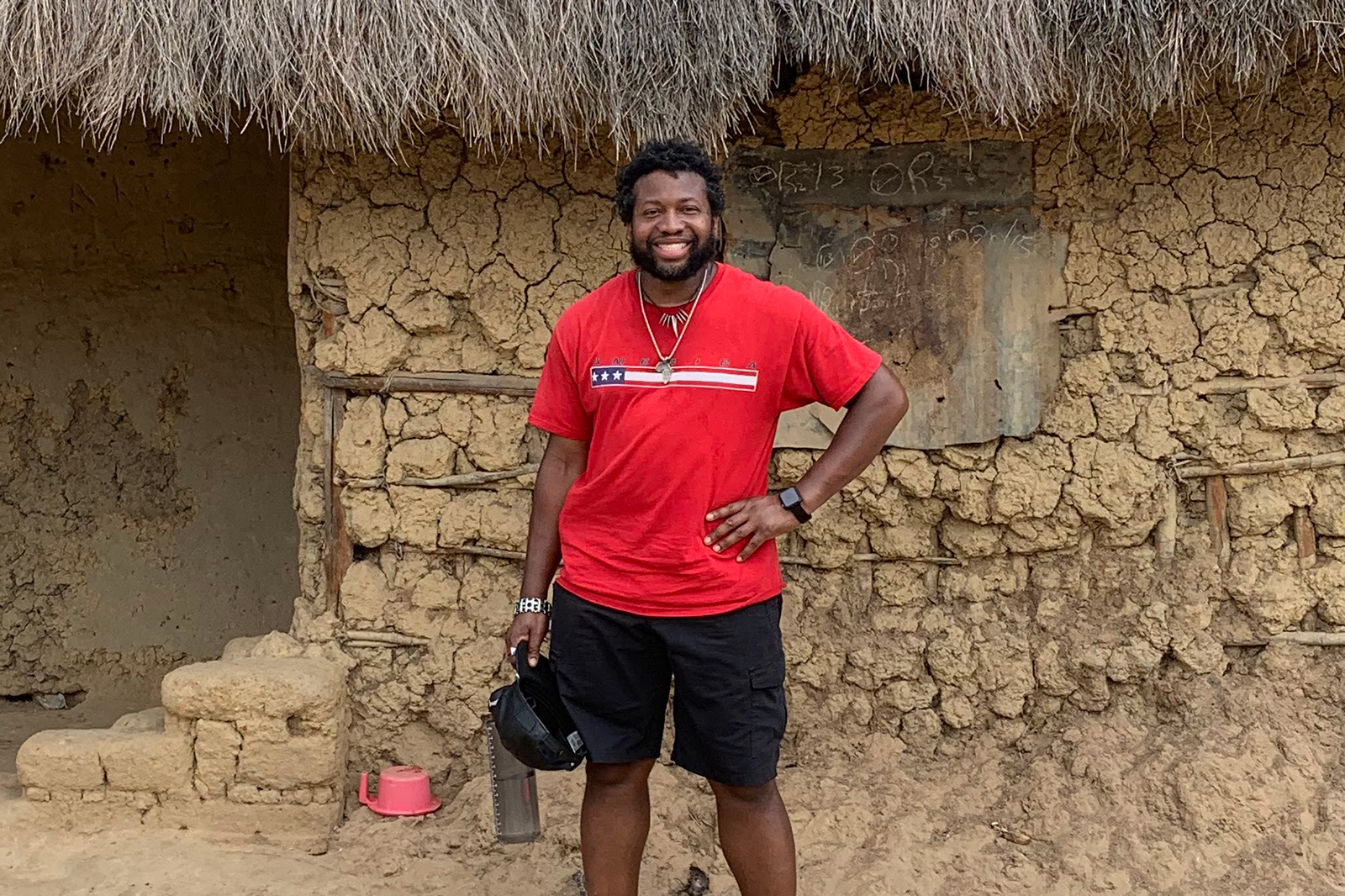
Darnell Clayton isn’t summiting Everest. He’s not circumnavigating the globe by sailboat. Nor is he kayaking first descents in South America. But he is attempting a big task when he travels: catching up on 1,000 years of ancestral history.

“I always wondered where I was from,” said the 38-year-old Global Rescue member from South Carolina. “I knew my African ancestors came over four centuries ago on a boat as slaves but nothing else before that.”

So, in 2018, after taking a DNA test through African Ancestry — which not only identifies the African country of descent but the exact tribe — Clayton set out on a mission: To find out everything he could about where he came from.

In this case, on his paternal side, his results showed Yoruba from Nigeria; on his maternal side, a mixture of Mandinka from Senegal, Fula from Guinea-Bissau, Temne and Mende from Sierra Leone and Kpelle from Liberia.

“I went on Instagram and posted my results with a picture of my certificate of ancestry and a couple of hashtags,” he said. “In less than a day, people — particularly, those of the Yoruba tribe in Nigeria — started reaching out to me, encouraging me to learn more and visit.”

Jumping on the Heritage Travel Trend

Flash forward to summer of 2019 and Clayton was boarding a flight to Nigeria to connect with the dozens of Yoruba friends he had forged relationships with after a year of video calls and WhatsApp texting. In 2020, even amidst the global pandemic, he returned to Nigeria and again in 2021, where he also visited Sierra Leone, getting his dual-citizenship (thanks to his Temne and Mende descent).

In total, he’s traveled to Nigeria three times, most recently in May of 2022 to visit his now-fiancée — one of the many Yoruba friends he first connected with online after discovering his ancestry. “If I had more vacation time and a bigger travel budget, I’d be going back every couple of weeks,” he laughed.

Currently, Clayton’s making big travel plans for 2023, of course including visits back to Nigeria and Sierra Leone, as well as Guinea Bissau, Tanzania, Liberia and maybe Ghana. To say he’s a fan of heritage travel — a trending type of travel to places of your ancestral roots — would be an understatement. And for anyone else looking to take the plunge, he says go for it — particularly African Americans.

“It’s no secret our ancestors didn’t come here with papers, like so many other cultures,” Clayton said. “But thanks to DNA testing, we can learn precisely where we came from and we can connect with it in a way our grandparents and their parents (and so on) could never before.”

Here are a handful of heritage travel tips from the now-seasoned pro.

The Benefits of Heritage Travel

  • Better Sense of Self. “Growing up, I never really felt like I had a culture to claim as my own because I didn’t know much about African culture overall. But when I traveled there, I got a personal crash course in the history of the Yoruba people from the Yoruba people. Knowing who you are gives you more confidence in life, and confidence to navigate through the future.”
  • Break Down Stereotypes. “I always had this idea that Nigeria, in particular, was a dangerous and underdeveloped place. My family and colleagues thought that, too. They’d make jokes while I was planning my trip, like ‘How are you going to get around out there? A zebra?’ But Nigeria — particularly the city of Lagos — has all the same amenities as the U.S., technology and infrastructure: the internet (it’s faster than what I have in South Carolina!), movie theaters, VR arcades, a music and entertainment industry. Not to mention, Nigeria is also Africa’s biggest economy.”
  • Better the Country (or Countries). “When travelers establish meaningful connections with a place, they’re all the more eager to see those countries thrive. When I visited Sierra Leone, I fell in love with Rogbonko, a little village of my Temne descent in the countryside. To benefit the local school, the villagers make hats and book bags from dried grass to sell, but they really only relied on donations and people buying the products while they were there. I helped them find a payment processer online (things like Venmo or PayPal don’t work there), so they could expand their business and sell further.”
  • Form Bonds. “I formed some of the most valuable friendships of my life with those I’ve met through heritage travel. My fiancée is just one — but, of course, the most important — example. I had communicated with her for a year over FaceTime before traveling there, then, once there, we became very good friends right away. She’s extremely intelligent and beautiful; I asked her out several times before she finally agreed to dating a ‘crazy American.’ I proposed to her on a trip together in Dubai in 2020.”

Darnell-in-Rogbonko,-Sierra-Leone_2

How to Heritage Travel

  • Connect with the Community. “Leading up to my first trip to Nigeria in 2019, I learned as much as I could about traveling throughout the country. Because, to be honest, I was nervous about traveling there. And my best source for research: The Yoruba friends I formed friendships with online. They were able to debunk many travel myths, as well as verify places that do, in fact, have high crime that I should avoid. I can’t understate the importance of connecting with those from the country you plan to visit to gain authentic, valuable insights.”
  • Embrace Traditions. “You should respect cultural traditions no matter where you travel — after all, you’re a guest there. But, in a community you’re hoping to be welcomed and embraced, it’s essential. That means learning a little of the language and customs to adapt to the rules of tradition. For example, in Nigeria, in the presence of a Yoruba elder or someone of great importance, you always prostrate yourself (kind of like bowing your head). If you don’t, it can cause a lot of commotion. Not to mention, you stick out as a foreigner like a sore thumb.”
  • Consider Dual-Citizenship. “The process of getting citizenship can be more difficult in some countries than others, but, if you plan to return often (like me), you can avoid Visa application fees and skip the wait time.”
  • Get Global Rescue. “I first heard of Global Rescue in 2019, while I was working on getting all the appropriate travel vaccines through Passport Health. They were the first organization to explain to me that, if something happens while traveling, the U.S. government is not obligated to rescue their citizens…and, if they manage to get you out and back home, it comes with a huge bill. They told me ‘Go with Global Rescue. These guys are legit, have a good reputation and can get you out of any country.’ It’s something you definitely need in this day and age with things like COVID-19, monkeypox and the war in Europe. I’ve never had to use it, but I’m glad I have it.”

Share This:

Over-the-counter Medicine for Travelers

You packed your over-the-counter and prescription medications for your international travel. But are they legal in your destination? Global Rescue experts suggest checking the regulations before your trip. 

You packed your over-the-counter and prescription medications for your international travel. But are they legal in your destination? Global Rescue experts suggest checking the regulations before your trip. 


As travelers head back to the airports, rail stations and cruise ships for international travel, many likely will forget to pack their over-the-counter and prescription medicines. Many more will forget to check the international rules and regulations for common medicines easily obtained in their home country — but possibly not allowed overseas.

Trip takers consistently list “forgetting to pack prescription and over-the-counter medicine” as one of the top 10 travel mistakes, according to the Global Rescue Traveler Sentiment and Safety Survey. In fact, the survey found 9% of travelers have forgotten to pack prescription medicines before a trip despite it being one of the last items we pack, and one of the most important.

In addition to packing the medications you use daily, you should be prepared to treat minor ailments long before they turn into an emergency.

“Travelers should be well-stocked to treat colds, pain, swelling, diarrhea, constipation, cuts and dehydration, to name a few ailments to carry remedies for,” said Jeff Weinstein, a medical operations supervisor at Global Rescue with 18 years of combined experience in emergency and disaster response, critical care paramedicine and emergency management.

Are They Legal?

Remembering to pack your medicine is important when you take a trip. Equally essential is checking to see whether your medicines, prescribed or over-the-counter, are regulated in the countries you plan to visit.

Many countries require medicines to be transported in original packaging. Prescription and over-the-counter medications without packaging run a greater risk of being confiscated. The U.S. Department of State suggests checking with the foreign embassy of the country you are visiting or transiting to make sure your medications are permitted.

[Related Reading: 6 Examples of Illegal Items and Actions Abroad]

For example, the active ingredient in Benadryl, diphenhydramine, is banned in Zambia in over-the-counter products. In Japan, it is allowed only if the amount in a tablet or injection is limited. However, a typical 25-milligram tablet of Tylenol PM in the U.S. exceeds the 10-milligram maximum amount in a tablet you can bring into Japan. Some countries restrict the overall total amount of an active ingredient an individual traveler can legally import, which may impact longer stays, according to The New York Times.

Over-the-counter medicine for traveler’s diarrhea is regulated, too. Pepto-Bismol is not sold in France due to a health scare in the 1970s. Imodium is only sold in France with a prescription.

If you think you might need these products on your vacation, bring some with you from the U.S. The documentation you carry should also indicate the generic and chemical names of the active ingredients. Product brand names do not determine permissibility, rather it’s the ingredients list.

Check Your Destination

Travelers should check their destination rules on over-the-counter medicine, such as cough syrups and some allergy medication because some require a prescription, are strictly regulated, or banned overseas.

Decongestants: Over-the-counter decongestant medication containing pseudoephedrine — found in Sudafed and Vicks — is banned in Japan.

Anxiety Medications: Prescription medicines for anxiety or pain — such as ConZip, Ultram, Diastat AcuDial, Diazepam Intensol, Diastat and Valium — contain Tramadol or Diazepam, which are commonly prescribed medicines in the U.S. but are strictly regulated in Greece and U.A.E. Anti-anxiety pills require a license in Singapore. Failing to comply with destination requirements for bringing these prescribed medicines into the country may result in arrest, a fine or imprisonment.

Sleep Aids and Pain Relievers: Over-the-counter sleep aids, over-the-counter pain relievers and strong painkillers all require a license in Singapore. In Indonesia, many prescription medicines such as codeine and sleeping pills are illegal. Nigeria and Saudi Arabia both prohibit Ambien, Intermezzo and other sleeping medications that contain zolpidem. In Singapore, you’ll need a license to legally bring Ambien into the country, according to Reader’s Digest.

Cough and Cold Medicines: In Qatar, over-the-counter allergy medicines such as cold and cough remedies are controlled substances and must be accompanied by a prescription. Prescription codeine for cough control is illegal in Indonesia.

Attention Deficit Medicines: If you rely on medications for attention deficit disorder, like Adderall and Ritalin – then you’ll have to leave Saudi Arabia and Japan off your list of destinations. Both countries have a zero-tolerance policy for methamphetamines and amphetamines — the active ingredients in many ADD/ADHD drugs — even if you have your prescription or a note from your doctor. In Indonesia, many prescription treatments for ADHD are illegal.

[Related Reading: 5 Precautions for Traveling with Medication]

Members Just Ask Global Rescue

It’s a lot to remember. Fortunately, medical advisory services included with every Global Rescue travel protection membership can help. Our operations centers are staffed by experienced nurses, paramedics and military special operations veterans who will keep you safe and prepared by locating a local physician or identifying where you can refill your prescription.

“Global Rescue’s medical operations team recently helped a member locate over-the-counter medication at a Tunisian pharmacy,” said Garret Dejong, senior specialist in medical operations at Global Rescue. “Another member studying abroad in London required a last-minute vaccine before starting the academic term. Global Rescue located a private physician who administered the vaccine, enabling our member to continue their studies.”

“When you are ill and alone in a foreign country, finding yourself in need of medical care can be a daunting and stressful experience,” said Eliah English, a graduate student who became ill in Northern India. “Global Rescue alleviated all of my worries, and provided the best possible support that one could ever ask for.”

Categories:

News
Share This:

Travellers Keep Calm, Carry On

Share This:

What You Need to Know about Traveler’s Diarrhea

There’s nothing worse than researching, planning and purchasing your dream trip — then spending most of your time in the bathroom with traveler’s diarrhea. It’s not uncommon. After all, traveler’s diarrhea is the number one…

There’s nothing worse than researching, planning and purchasing your dream trip — then spending most of your time in the bathroom with traveler’s diarrhea. It’s not uncommon. After all, traveler’s diarrhea is the number one trip killer worldwide.


While in Nepal, Jeff Weinstein was invited to a colleague’s house for dinner. “I was never so sick in my life,” Weinstein said. “The meal was cooked with their hands — no utensils — and eaten with our hands. I knew what was coming.”

It can also happen when you are hiking, trekking, climbing, camping — well, just about any time. A Global Rescue member battled altitude sickness and acute bacterial dysentery while at Mount Everest Base Camp and had to be evacuated by helicopter to the hospital and admitted for care. Another member called our medical operations team for advice — and the location of the nearest pharmacy — after five days of diarrhea in London.

Unfortunately, traveler’s diarrhea (TD) strikes 30 to 70% of travelers, according to the Centers for Disease Control and Prevention.

“When you travel to a place that’s remote to you, there’s a lot of germs your body is not used to. Something like traveler’s diarrhea and or a really bad case of food poisoning can become an emergency,” said Weinstein, medical operations supervisor at Global Rescue.

There’s a difference between a case of food poisoning you might experience at home and a bout of traveler’s diarrhea during a trip.

“Food poisoning usually happens because you ate something that wasn’t stored or cooked well. It feels like the flu, but the symptoms resolve on their own,” Weinstein said.

Traveler’s diarrhea hits harder because you don’t have immunity to the germs in the country you are visiting. The climate and the sanitary systems might be different, allowing bacterial pathogens, intestinal viruses and protozoal pathogens easier access to your water, food — and gastrointestinal system.

Poor hygiene practice in local restaurants is likely the largest contributor to the risk for TD, according to John Hopkins Medicine. This is especially true in the developing countries of Africa, the Middle East, Latin America and Asia. There’s lesser risk in Eastern Europe, South African and the Caribbean, and low risk in Northern and Western Europe, Japan, Canada, Australia, New Zealand and the United States.

[Related Reading: How to Stay Hydrated]

What Causes Traveler’s Diarrhea

In most cases, TD isn’t usually that serious — it’s just unpleasant, according to the Mayo Clinic.

To make sure a simple illness doesn’t ruin your trip, send you to the hospital, or require medical rescue, here are some ways to prevent traveler’s diarrhea:

  • Drinking tap water is a major source of traveler’s diarrhea. If you have to drink tap water, make sure you purify it first. Global Rescue offers information about filtering and purifying water.
  • Moist food at room temperature is also suspect. Skip the buffet and the condiments on the table. If you want to try street food, make sure it is well cooked and cooked in front of you.
  • Stick to factory-sealed bottled water in hotels in restaurants. Decline the ice in your drink as well.
  • Avoid leafy vegetables and sliced fruit — they may have been washed with water that hasn’t been boiled or chemically disinfected.
  • Make sure hot beverages, like coffee or tea, are steaming hot.
  • Drink canned or bottled drinks in their original containers — and break the seal yourself. Wipe off rim before pouring or drinking.
  • No clean water to wash your hands? Use alcohol-based hand sanitizer containing at least 60 percent alcohol.

Treatment for Traveler’s Diarrhea

How long does traveler’s diarrhea last? According to the American Society for Microbiology, traveler’s diarrhea usually begins during the first week of travel and, without treatment, will last three to five days. You can have multiple episodes during one trip.

Global Rescue medical experts offer these suggestions for treatment:

  • Drink fluids — boiled water, factory-sealed bottled water, broth or an oral hydration solution like Pedialyte — to replace the body fluid that has been lost. Hydration is your best line of defense.
  • Avoid caffeine, as it tends to dehydrate. Eat a bland, easy-to-digest diet of complex carbohydrates: crackers, dry toast, plain noodles.
  • Wipe down surfaces in your hotel room. Traveler’s diarrhea is contagious; pathogens can live for days on doorknobs and light switches.
  • Over-the-counter remedies, like bismuth subsalicylate (Pepto-Bismol), can help. Hopefully a few doses are packed in your first aid kit, because purchasing Pepto may not be so easy overseas. It’s banned in France, and unavailable in Germany and Chile.
  • If symptoms last longer than a week or you have a fever, see a doctor. You may need antibiotics.

[Related Reading: Things that are Illegal Overseas]

24/7 Medical Advisory Services

Global Rescue members always have medical assistance when traveling 100 miles away from home. Global Rescue’s 24/7/365 medical advisory service can help travelers find Pepto-Bismol, Imodium or a local alternative, or find a doctor that speaks your language and a local pharmacy to fill a prescription for you.

Categories:

News
Share This:

Brittney Griner Story | An Important Lesson for International Travelers

Categories:

Press Release
Share This:

Travelers Press On Despite Inflation; Airline Disruptions 21% Plan to Spend More Money or Time…

Lebanon, NH – August 8, 2022 – Inflation is having a minimal impact on travel: 79% of the world’s most experienced travelers report inflation won’t cause them to cancel their travel plans. More than a…

Lebanon, NH – August 8, 2022 – Inflation is having a minimal impact on travel: 79% of the world’s most experienced travelers report inflation won’t cause them to cancel their travel plans. More than a fifth of travelers (21%) plan to spend more time and money on trips to make up for curtailed travel due to the pandemic, according to the Global Rescue Summer 2022 Traveler Safety and Sentiment Survey.

Incidents of staff shortages among pilots, flight attendants, gate agents and ground crews are affecting travel schedules but the majority of travelers (58%) have not been touched by it, according to the survey results. Despite the news headlines, the world’s most experienced travelers are making their intentions clear: they are going to travel no matter what.

“Travelers are sending a clear message. They are eager to regain their family vacations, adventure travels and business trips. By overwhelming margins, they are pressing forward with international and domestic travel despite rising costs and airline staff shortages. They are confident they’ll be able to travel and return home,” said Dan Richards, CEO of Global Rescue and a member of the U.S. Travel and Tourism Advisory Board at the U.S. Department of Commerce.  

Travelers are adjusting to inflation and higher travel costs in a variety of ways. A fifth (20%) of respondents reported they changed an international trip and replaced it with a less expensive trip. Among domestic travelers, more than a quarter (28%) changed a domestic trip and replaced it with a less expensive one.

Twenty-one percent say they will travel for fewer days and 19% plan to fly on less expensive tickets. Fifteen percent report they will stay at less costly lodging while 12% will eat out less or at less expensive restaurants. Six percent are greatly reducing or not buying souvenirs or gifts during their trip and 3% will skip buying travel insurance.


Contact Bill McIntyre at bmcintyre@globalrescue.com or 202.560.1195 (phone/text) for more information.  


About the Global Rescue Traveler Sentiment and Safety Survey   

Global Rescue, the leading travel risk and crisis response provider, conducted a survey of more than 2,100 of its current and former members between July 12 and 16, 2022. The respondents exposed a range of behaviors, attitudes and preferences regarding international and domestic travel. 


About Global Rescue   

Global Rescue is the world’s leading provider of medical, security, evacuation and travel risk management services to enterprises, governments and individuals. Founded in 2004, Global Rescue has exclusive relationships with the Johns Hopkins Emergency Medicine Division of Special Operations and Elite Medical Group. Global Rescue provides best-in-class services that identify, monitor and respond to client medical and security crises. Global Rescue has provided medical and security support to its clients, including Fortune 500 companies, governments and academic institutions, during every globally significant crisis of the last two decades. For more information, visit www.globalrescue.com. 

Categories:

Press Release
Share This:

The Brittney Griner Story Teaches An Important Lesson for All International Travelers

Lebanon, NH – August 8, 2022 – Brittney Griner’s arrest and conviction in Russia for possession of medical cannabis oil is a critical lesson for all international travelers to learn. “The laws of your home…

Lebanon, NH – August 8, 2022 – Brittney Griner’s arrest and conviction in Russia for possession of medical cannabis oil is a critical lesson for all international travelers to learn. “The laws of your home country don’t travel with you — that’s why knowing the local laws of the destination(s) is critical before traveling,” said Dan Richards, CEO of Global Rescue, the world’s leading provider of medical, security, evacuation and travel risk management services and a member of the U.S. Travel and Tourism Advisory Board at the U.S. Department of Commerce.

According to her attorney, Griner had legally obtained the two vape cartridges containing hashish oil that were found in her luggage at a Moscow airport in February. “The attending physician gave Brittney recommendations for the use of medical cannabis,” said her lawyer, Maria Blagovolina. “The permission was issued on behalf of the Arizona Department of Health.”

But medical marijuana is not legal in Russia. “There are several unusual things that are legal in the U.S. but illegal in other parts of the world, like camouflage attire in the Caribbean, importing and selling chewing gum in Singapore, swearing in public in the U.A.E. All are banned in the aforementioned countries and some violations are punishable with jail time,” Richards said.

At best, international travelers may receive a stern warning or the item could be confiscated. At worst, officials can fine you, arrest you, expel you and even jail you, as is the case for WNBA star Griner.

“The U.S. Department of State’s travel information web page for overseas travel advice explains you are subject to local laws while abroad,” Richards said. “Whether it’s satellite phones in India, Walkie-Talkies in Japan, prescription drugs like Ambien in Singapore, or over-the-counter medications like Sudafed in Greece – they are all illegal. You are bound by those laws. You can’t just say ‘Oops, I didn’t know.’ Ignorance is not an excuse,” Richards said.

Travelers should carefully research the laws around their required medicine in countries they plan to visit and consult medical guidance on substitute medications. Even if a medicine is legal, travelers should always keep it in the original container and have a copy of a prescription.

Contact Bill McIntyre at bmcintyre@globalrescue.com or +1 (202) 560-1195 to arrange an interview.

About Global Rescue    

Global Rescue is the world’s leading provider of medical, security, evacuation and travel risk management services to enterprises, governments and individuals. Founded in 2004, Global Rescue has exclusive relationships with the Johns Hopkins Emergency Medicine Division of Special Operations and Elite Medical Group. Global Rescue provides best-in-class services that identify, monitor and respond to client medical and security crises. Global Rescue has provided medical and security support to its clients, including Fortune 500 companies, governments and academic institutions, during every globally significant crisis of the last two decades. For more information, visit www.globalrescue.com

Categories:

Health & SafetyTravel
Share This:

How to Stay Hydrated

Dehydration can happen at high altitudes, in cold weather climates and during travel. It can also lead to heat exhaustion and heat stroke, a life-threatening condition. If you are a traveler or an adventurer, it’s…

Dehydration can happen at high altitudes, in cold weather climates and during travel. It can also lead to heat exhaustion and heat stroke, a life-threatening condition. If you are a traveler or an adventurer, it’s important to know how to stay hydrated and how to recognize dehydration symptoms.


Dehydration doesn’t just happen when you are exercising in hot weather (77 degrees Fahrenheit or higher). It can also happen at high altitudes, in cold weather climates, while traveling, and during short periods of physical activity.

Dehydration is defined as an excessive loss of body water. When this happens, according to the Mayo Clinic, your body doesn’t have enough fluid to carry out normal body functions. Dehydration can occur when you don’t drink enough, have a fever, sweat excessively or if you are ill (vomiting and diarrhea cause a large water loss in a short amount of time).

[Related Reading: The Heat Is On: Get Ready For Summer Travel]

What Are the Signs of Dehydration?

Dehydration symptoms may be immediate — or they can sneak up on you.

“The most obvious symptoms are urinating less frequently and, when you urinate, it may be less volume and dark in color,” said Dave Keaveny, a paramedic and senior specialist in the Medical Operations Department at Global Rescue. “‘Clear and copious’ is the phrase used by many outdoor schools to identify the target sign of adequate hydration.”

The signs of dehydration in adults include:

  • Thirst
  • Headache
  • Dizziness
  • Tiredness
  • Confusion
  • Irritability
  • Dry mouth/nose/skin
  • Increased heart rate
  • Increased respiratory rate
  • Decreased blood pressure
  • Sunken eyes, pale skin
  • Loss of skin elasticity
  • Fainting
  • Muscle cramps

Symptoms will be more profound in younger children, especially infants. Watch out for no tears when crying, no wet diapers for three hours, and increased irritability or tiredness, to name a few.

“Seniors are more susceptible to dehydration and most are dehydrated due to lifestyle, certain medical conditions and polypharmacy, the use of multiple drugs,” Keaveny said.

What Should You Do If You Are Dehydrated?

  • Halt physical activity
  • Seek shade and cool (or warmth/shelter if winter)
  • Sip water, the best drink for hydration
  • Eat some light snacks

When Should You Get Medical Help?

“When your body is in a state of volume depletion, your cardiac system has to work harder to maintain cardiac output and homeostasis, or optimal functioning,” Keaveny said. “This can cause a variety of issues and symptoms.”

Get medical help if you are experiencing:

  • Weakness
  • Dizziness
  • Confusion
  • Fainting
  • Chest pain/pressure/palpitations
  • Shortness of breath
  • Elevated body temperature
  • Altered mental status

In fact, just a couple of hours of vigorous activity in the heat without drinking fluids or eating can greatly affect concentration, according to the Georgia Institute of Technology in Atlanta. The study showed when the participants lost more water, they increasingly made more errors during attention-related tasks.

Does Altitude Affect Hydration?

“Yes. Your kidneys are working harder to help your body compensate for the altitude, and you are likely exerting yourself. This increases urine production,” Keaveny said.

In addition, you’ll also be losing water from your body through respiration and sweat. The relative humidity is generally lower at altitude and the solar exposure is more intense.

It happened to one Global Rescue member on his ascent of Makalu, the fifth highest mountain in the world (27,838 feet/8,485 meters). He was experiencing fever, mild headache and diarrhea, and called Global Rescue for a field rescue. At the hospital, he was given oral and IV fluids for his diagnosis: acute diarrhea with dehydration.

Does Travel Affect Hydration?

The air on aircraft has extremely low humidity levels. The air at high altitudes is almost completely devoid of moisture and about 50% of the air circulating the cabin is pulled from the outside.

This dry air is only part of the problem. Most people don’t drink enough water when they are at home, let alone on travel days.

“They never give you enough water on planes. The small bottles of water or 4-ounce cups of water are not enough for the average person,” Keaveny said. “When you get up and stretch, ask for extra water. The airline will usually provide one if you ask.”

In addition, you could be drinking alcohol and caffeine, which are dehydrating. They are considered to be diuretics, meaning they cause fluids to pass through your body more quickly.

how-to-stay-hydrated-outdoors

Hydration Tips from Travel Experts

Before you set out on any adventure, a travel health consultation is always a good idea.

“Certain medical conditions or medications can contribute to dehydration and heat illness,” Keaveny said. “Consult your doctor prior to travel or certain activities.”

  • Anticipate by staying hydrated the day before. Start your day with two cups of water and end your day with another two cups.
  • During the activity, drink to thirst, avoiding excessive hydration.
  • Eat sweet or salty snacks every 45 minutes for an electrolyte boost. Electrolytes are important for body function, and dehydration creates an imbalance of electrolytes. “Replacing and maintaining electrolytes is just as important as replacing and maintaining hydration,” Keaveny said. “Make sure you are not overhydrating and washing out important electrolytes.”
  • When traveling, bring a collapsible water bottle to fill after going through security. During the flight, drink at least 8 ounces of water per hour. Research shows the conditions of an airplane can lead to 1.5 to 2 liters (6 to 8 cups) of water loss in a 10-hour flight, despite water intake.
  • Wear glasses instead of contacts on the plane to help prevent discomfort to the eyes. Pack small bottles of lotion, eye drops or nasal spray if you’re worried about drying out.
  • After the sport or activity, replace fluids and calories lost. Oral rehydration salts or sports drinks may not be safe for all patients, especially the elderly. Consult your doctor prior to travel.

Is Dehydration Fatal?

Heat exhaustion — a result of dehydration and heat stress — includes (but is not limited to) the following symptoms: headache, fatigue, dizziness, nausea/vomiting, abdominal cramps, pale or clammy skin, increased heart and/or respiratory rate. Keaveny recommends immediately removing the person from the hot environment; providing fluids, oral rehydration salts or sports drinks; and offering salty-sweet snacks as tolerated.

Without prompt treatment, heat exhaustion can lead to heatstroke, a life-threatening condition that happens when the body’s temperature rises rapidly, the sweating mechanism fails, and the body is unable to cool down. According to the CDC, the body temperature can rise to 106°F or higher within 10 to 15 minutes.

Heatstroke has all the symptoms of heat exhaustion plus these hallmark signs:

  • Change in behavior/mental status
  • Nervous system disturbance, such as tremors
  • Elevated temperature
  • Skin can either be red, warm and dry — or pale, cool and clammy

“Heat exhaustion leads to heat stroke, which is a true medical emergency,” Keaveny said. “Call local EMS immediately, remove the person from the hot environment, and provide oral fluids as tolerated.”