Categories:
Health & SafetyPlaces & PartnersTravelOctober 11, 2021
Best Cave Diving Trips and Safety Tips is part of the Global Rescue “No Restrictions” series, where we take a look at extreme sports and activities that many of our members have taken part in, or plan to. Unlike other providers, Global Rescue memberships do not exclude or restrict adventure activities, whether cave diving, sky diving, heli-skiing, BASE jumping and beyond.
Submerged iceberg caves in Antarctica. Underwater lava tubes in Hawaii. Bone-filled subaquatic tunnels of limestone in Zimbabwe. Accessing these, and many other, undersea treasures requires the adventurously curious to go cave diving — or underwater diving in water-filled caves and tunnels.
Long-time Global Rescue member John A. Kerechek dove a few of Hawaii’s lava tubes in the past. “I was interested in becoming cave diver certified,” he said. A lava tube forms when lava flow cools and hardens on the surface the while inside the lava keeps flowing at 2,192°F/1,200°C. When the volcano eruption stops so does the lava flow, leaving a hardened, underwater tube. Lava tubes can be seen on land and underwater in the Hawaiian Islands.
Popular lava tube dives — like Black Point, Frog Rock and Lava Dome — are on the northwest tip of the big island of Hawaii along the Kohala Coast.
“The west coast provides all the dive action you need for a wide variety of experiences, from colorful swim-throughs to fascinating lava tubes. The lava formations are, for the most part, blanketed in brilliant red and orange encrusting sponges,” said Kathryn Curzon, a freelance dive travel writer and award-winning author.
Hollywood consultant, documentary producer and author Jill Heinerth is one of the world’s most famous subsurface cave explorers. Her deep-water cave diving includes going below Antarctic icebergs, under the Sahara Desert and reaching the deepest subaquatic caves in Bermuda. She has recorded dive depths of 459 feet/140 meters, more than three times the depth limits for recreational divers.
Heinerth’s motivation goes beyond recreational enjoyment, rather she seeks to explore something meaningful to humankind. “I often work with scientists on important projects looking at issues such as climate change or evolution or survival of uniquely adapted animal species,” she said.
Whether you’re looking to combine an extreme sport with travel, or discover nature few others have seen, or connecting with scientific investigation, cave diving is an exciting option with lots of opportunities — if you’re willing to prepare and plan for it.
Skill Sets Needed

“It takes much more than an adventurous spirit and curiosity to go cave diving, even if you are an experienced open-water scuba diver. A specific pathway of necessary skills and demonstrated experience requirements must be met before scuba diving in a cave,” said Harding Bush, a former Navy SEAL and associate manager operations for Global Rescue, the leading provider of medical, security, evacuation and travel risk management services.
Bush says these qualifications include advanced open water diver, night diver and cavern diver. “The cavern diving certification is a stepping stone to cave diving. The cavern diver certification allows divers to enter a cave with an overhead environment but only within sight of the cave entrance and unobstructed access to the surface,” he said.
To become a cavern diver, the diver must demonstrate cave diving skills in an open environment over several dives supervised by a qualified instructor. The cavern diver qualification is available from conventional diving education certifying organizations such as the National Association of Underwater Instructors (NAUI) and the Professional Association of Diving Instructors (PADI).
[Related Reading: Are You Rescue Ready?]
“Cave diving is classified as technical diving as opposed to recreational or sport diving and requires certification through specific cave diving organizations. Cave diving also requires different and specific equipment from conventional sport diving equipment,” Bush added.
As many popular cave diving areas are in freshwater lakes, there may be additional decompression requirements due to the elevation of the lake that requires the diver to use altitude diving decompression tables for an elevation above 300 meters.
The unique procedures of cave diving mainly emphasize navigation, gas (air supply) management, and performing in restricted areas. Underwater caves and tunnels physically hold divers back from direct ascent to the surface during much of the dive, making exiting a dive more challenging and dangerous.
Most open-water diving skills — like the ability to use a Self-Contained Underwater Breathing Apparatus (a scuba set) — are needed for cave diving. Additional skills, like buoyancy, navigating in darkness, and using guidelines are essential. Cave divers also need emergency competencies for recovering from air supply (gas) problems while in tight spaces with limited visibility.
Special Equipment & Gear for the Cave Diver

Cave diving equipment includes standard recreational scuba configurations but may also require specialized gear.
Side-mount harnesses are scuba sets mounted alongside the diver, instead of on their back, to permit greater movement. Rebreathers recycle exhaled air and help extend dive duration. Scooters, or diver propulsion vehicles, can extend the dive range by easing the workload on the diver, allowing speedier travel in open sections of the cave or tunnel.
The Good Divers Always Live — a Motto for Survival
Cave divers follow five rules.
- Training. Cave diving is taught in successively complex stages with each reinforced with cave diving experience to hone skills and avoid panic.
- Guideline Proficiency. Using a continuous line (also called a distance line, penetration line or cave line) made of nylon or polypropylene is used by divers as a means to return to safety, especially when conditions include low visibility, water currents or difficult navigation.
- Dive Depth. The depth any diver can dive to is limited by decompression requirements. Cave divers also need to manage time for an emergency contingency more so than sport divers, this further limits the total time of the dive. Other considerations such as gas consumption and the effects of nitrogen narcosis must also be considered as the depth of a dive increases. Divers should also always consider the proximity of a recompression chamber and the quality of local emergency services while planning a dive.
- Air or Breathing Gas Management. The most common protocol is the “rule of thirds” in which one-third of the initial gas supply is used for going in, one-third for coming back, and one-third in the case of an emergency. The purpose of gas planning is to ensure the diver has sufficient breathing gas to return safely to a place where more breathing gas is available, usually the surface.
- Light. Each cave diver carries three light sources. A primary light for exploration with enough power to last at least as long as the planned dive. The other two are backup lights for emergencies.
Divers remember the five rules using the prompt: “The Good Divers Always Live” with the initial letter of each word stands for Training, Guide, Depth, Air and Light.
Cave Diving Destinations Near and Far

Cave diving opportunities are all over the world. Here are a few to consider as you think about and prepare for a cave diving adventure.
- Cenote Angelita — Tulum, Mexico — One of the thousands of cenotes — a natural sinkhole resulting from the collapse of limestone bedrock that exposes groundwater — associated with the Yucatán Peninsula of Mexico. Cenotes were commonly used for water supplies by the ancient Maya, and occasionally for sacrificial offerings. Cenote Angelita mystifies cave divers with its layer of hydrogen sulfate, a cloudy substance that separates incredibly clear freshwater from the saltwater below at approximately 100 feet (30 meters). Required Certification: Advanced Open Water. When to Go: May to September
- Wes Skiles Peacock Springs State Park, Florida, USA — It’s been more than half a century since the first divers entered the water and began mapping more than 30,000 feet of the cave system, limestone passages, and rooms. There are several major landmarks. A water-filled cave passage 20 feet below the ground is called The Breakdown Room because of the large rocks that have broken off the ceiling to form a pile on the floor. An area of collapsed tunnel named the Crypt for the skeletal remains of a large turtle found there. Divers love the Olsen Sink for the karst window that formed when a sinkhole collapsed and light streams through from the surface.
- Ben’s Cave — Lucayan National Park, Grand Bahama — Lucayan National Park near Freeport, Grand Bahama is home to the longest freshwater cave system in the world. Measuring at 6 miles (9.5 kilometers), the system is home to mosquitofish, shrimp, freshwater eels and an endemic species of crustacean. Although several caves exist, only Ben’s Cave is open to scuba diving. In addition to the fascinating mix of fresh and saltwater, you’ll also see stalactites, stalagmites and fossilized conch shells in the cave. Ben’s Cave is ideal for novice divers wanting to try out the world of cave diving.
- Nereo Cave — Alghero, Sardinia — Known as the largest underwater cave in the Mediterranean Sea, Nereo Cave sits between 50 and 100 feet (15 and 30 meters) off the coast of Alghero. Its sheer size as well as its arches and tunnels attract cave divers from around the world. This Sardinian dive site makes a fantastic introduction to cave diving.
- Emergence du Russel — Dordogne Region, France — France’s Lot and Dordogne regions are considered to have the best cave diving in Europe. One of the most celebrated Fis the Emergence du Russel with passages wide enough to accommodate back-mounted rigs and diver propulsion vehicles. The cave system is a 2.5-mile/4-kilometer loop. One of the passages is 30 feet (9 meters) deep and the other descends to 60 feet (18 meters). While most divers will never complete the loop, the challenge attracts cave diving experts from around the world.
- Anhumas Abyss — Bonito, Brazil — The Anhumas Abyss is an exhilarating experience. Each day up to 25 people are permitted to rappel than 236 feet/72 meters through a tiny opening at the top of the Anhumas Abyss to an underground lake below. Sunlight only penetrates this lake for a short period each day, yet the water is filled with huge schools of fish. The crystal clear water invites divers to explore the most beautiful portion of the lake, found between 50 and 80 feet (15 and 25 meters).
- El Cenote — Playa Giron, Cuba — Located in the Zapata Marshes near Playa Giron, El Cenote is a limestone formation connected to the sea with a big lake. El Cenote has not yet been thoroughly explored, but it is known that its side fissures travel down to at least 230 feet (70 meters). The entrance itself is at 66 feet (20 meters), but the dive is limited to 100 feet (30 meters) with a passage through a 2600-foot (800-meter) tunnel. There are lots of coral reef fish living in the cave as well as interesting rock formations to view.
- Chinhoyi Caves — Mashonaland West Province, Zimbabwe — The system of limestone tunnels and caves is filled with unusually clear water. The most popular entrance to the system is the Sleeping Pool with its 65-foot (20-meter) vertical walls and several windows that allow sunlight. One of the cave rooms is littered with bones while the other contains coins tossed in for good luck.
Whether you’re cave diving, open water scuba diving, snorkeling or free diving remember to plan, prepare and get a Global Rescue membership for peace of mind. Unlike other providers, Global Rescue memberships do not exclude or restrict adventure activities — like cave diving, open water scuba diving, snorkeling or free diving — from membership. We don’t exclude any activity whether it’s skydiving, BASE jumping, heli-skiing or anything else. It’s part of our No Restrictions approach to travel, and that includes COVID-19, too.
Get a price estimate
Estimate
$0.00
Please answer all questions for estimate.
Categories:
NewsOctober 11, 2021
Categories:
Places & PartnersTravelOctober 7, 2021
Women make up more than half of the U.S. population and control or influence 85% of consumer spending, according to Forbes. From household purchases to home improvements to vacation decisions, women wield the purchasing power.
The travel and tourism industry has seen a corresponding growth in solo female travel and women-only tour operators. According to 2020–21 data by Condor Ferries, travel companies dedicated to woman-only customers have increased by 230% over the past few years.
[Related Reading: 5 Safety Tips for Solo Women Travelers]
Many of these companies are Global Rescue Safe Travel Partners. Sisterhood of the Outdoors, founded in 2010, has guided hunting and fishing trips to women who love the outdoors. WHOA Travel, a boutique adventure company for women by women, started offering adventures on four continents in 2013 (you can join a group of like-minded females to climb Mount Kilimanjaro on International Women’s Day in 2022). Women’s Hiking Crew started building a hiking community for women in 2019. Finatical Flyfishing, founded in 2021, provides women-only fly fishing trips, complete with female guides, around the globe.
Today 56% of leisure travelers are women, according to AFAR Magazine. So what travel experiences are women looking for today? Here are a few ideas from our Safe Travel Partners.
Reconnect with Friends and Family

You’re looking for a worry-free, one-of-a-kind vacation to reconnect with friends or sisters.
Mimi Lichtenstein, owner/founder of Truvay Travel, will combine your dreams with her knowledge and connections to create a customized trip.
“Miami is a great spot for fun, sun and luxury,” Lichtenstein said. “1 Hotels is my favorite for multiple girlfriends — they have really big rooms, some with two kings, and my clients get VIP treatment. I love their seating area, with a Tulum-type feel, down by the beach.”
Truvay Travel will also recommend restaurants, such as Bazaar by José Andrés for delicious food in a restaurant ambiance or Bâoli for a lively atmosphere and more of a show. If you’re looking for activities, Lichtenstein can add requests to your itinerary: Charter a yacht for half a day, a trip to view graffiti art at Wynwood Walls, or a local beach yoga or spin class.
Another female favorite is a getaway to wine country.
“I’d suggest a stay at Montage Healdsburg, a new, beautiful location and property with miles of hiking trails, outdoor yoga classes, ebikes, 11,000-square-foot spa and pickle ball,” Lichtenstein said. “If you are going with a group, the largest suite has three separate bedrooms (each with a separate entrance), a beautiful patio, a fire pit and an outdoor hot tub.”
The trip could include a “Paris on the Terrace” lunch at nearby Jordan Vineyard, a coveted reservation at SingleThread Farm (which offers an 11-course tasting menu with a Japanese touch) or a visit to Quail and Condor for decadent baked goods.
Make New Friends with Like-Minded Women
Just because you may be a solo female traveler doesn’t mean you always exclusively travel as a party of one. In fact, 60% of female travelers who sign up for WHOA Travel’s classic adventures — group travel adventure tour with pre-set dates — come solo, meaning they arrive knowing no one. But by the time the program ends, they leave with a new set of friends – and totally new sense of competence.
“When you face a challenge, like summiting Africa’s Kilimanjaro or trekking Iceland’s glacial terrain, and have these other women to lift you up along the way, it forms a really incredible bond that lasts,” said Allison Fleece, who co-founded the woman-geared adventure travel company in 2015 with fellow adventure enthusiast Danielle Thornton.
So much so, most of these women stay in touch after, even becoming travel companions for future adventure endeavors — whether that’s with WHOA Travel or not (however, one in four women do become repeat customers).
To encourage more and more women to reap the benefits of this type of solo-turned-group travel, WHOA Travel also offers those same adventures catered to specific types of women, including WHOA Plus (for plus-size trekkers) and Wise and Wondrous Women (for trekkers ages 50 and up).
“It can be intimidating to take the plunge and sign up for these kinds of activities,” said Fleece. “But when you know you’re doing it with like-bodied or similar-in-age women, you’re all the more encouraged and empowered.”
Learn a New Sport

“Women now make up between 20 to 30% of surfers, and that number continues to grow,” writes professional surfer Lauren Hill in the foreword to her book, She Surf.
Viewers were able to witness the strength and determination of female surfers during their debut at the 2021 Olympic summer games, especially when Carissa Moore landed one of the biggest air reverses in women’s surfing history. She was the first woman to demonstrate this technique, and the first woman to ever win a gold medal in her sport at the Olympics.
If her moves inspired you to try a new sport, you’re not alone. It is what 60% of the guests do at Costa Rica’s Kalon Surf, a luxury resort meets surf camp.
“We have built an experience that helps our guests to relax and recharge by learning (or improving) to surf in a beautiful, paradise-like setting full of comfort,” said Kjeld Schigt, founder of Kalon. “You spend every day in the ocean while having fun, having a smile on all the time and connecting with yourself and others again.”
Although some guests attend to brush up on their skills, you do not need experience for a surf vacation. The coaches at Kalon are passionate and patient with a 3:1 guest-to-surf coach ratio, and a daily post-surf video helps surfers build confidence.
“We have developed a method that works and built a week-long experience around it to make it one of the best vacations you will ever take,” Schigt said. Women looking for a group experience can book a trip with three friends and share an ocean-view room or a secluded bungalow in the jungle.
Focus on Their Breathing

Imagine staying at a retreat hidden in a 22-acre jungle oasis in Costa Rica. You’re 10 minutes from the beach, steps away from nature paths and a private waterfall and treated to meals crafted by a five-star vegan chef. Then pair it with your favorite activity: yoga.
This is what you’ll find at the Imiloa Institute, another Global Rescue Safe Travel Partner.
Yoga, a discipline which includes breathing, mediation, and simple postures, isn’t for women only, but its practitioners (82%) and teachers (72%) tend to skew primarily female. And the practice is on the rise. More people needed the mental health benefits of yoga during the pandemic, and the practice grew to 28.75 million participants in 2018 to 55 million in 2020. Worldwide, 300 million people practice yoga.
“Imiloa is located in the jungle, at the top of a mountain, overlooking the Pacific Ocean. Our lush retreat center is located adjacent to the second most biodiverse land on the planet,” said Founder and CEO Jake Sasseville. “It is the perfect setting to experience deep healing, embraced by nature, yet completely luxurious.”
At the six-day Essential Yoga Retreat at Imiloa, “we will progress through a highly accessible breathing program to pacify the nerves and quiet the mind. You will feel more connected to your authentic self,” said Geoffrey Roniger, yoga practitioner and retreat instructor.
Imiloa Institute also offers women-only experiences, such as a four-day retreat for entrepreneurial women and a six-day mother-daughter retreat.
Get Back to Nature
There’s a popular screensaver of the typical dream vacation: a lush, green tropical island with a turquoise blue lagoon surrounded by white sandy beaches and blue skies.
“It’s actually a picture of our favorite new destination, Saint Brandon,” said Christophe Desmarais, founder of Catamaran Cruises and a Global Rescue Safe Travel Partner. “This atoll is a little paradise on earth for anglers, free divers, kite surfers and nature lovers.”
Located to the northeast of Mauritius, an island country in the Indian Ocean off the southeastern coast of Africa, Saint Brandon is the ideal place for a digital detox.
“The 250-nautical-miles journey takes roughly 36 hours sailing in the blue waters of the Indian Ocean to reach the atoll, where only 200 foreigners are allowed each year,” Desmarais said.
It’s one of the adventure experiences offered by Catamaran Cruises. Activities range from crayfish hunting in the shallow waters on the reef to fly fishing for bonefish with your own guide. Even if you are new to fly fishing — it is estimated 30% of fly fishers are female — your guide will help you choose how and what you want to fish every session, every day.
Women get the best of both worlds: back-to-nature excursions on the island and private, luxury accommodations aboard a catamaran.
“Catamarans offer the best live-aboard option to make the most of the beauty of the atoll and the lagoons,” Desmarais said. “The four cabins below deck are spacious and comfortable with huge hull windows for lots of light. The white oak joinery interior woodwork and elm flooring gives the catamaran a feeling of comfort and coziness. There is nothing that can rival the feeling of being alone miles away from civilization whilst having all the comfort one would expect in the middle of nowhere.”
Bring Your Protection Team
No matter who you are (male or female, young or old) or how you are traveling (solo or with family), you should travel prepared with a Global Rescue membership. Global Rescue is the world’s leading provider of medical, security, evacuation, travel risk and crisis management services.
Categories:
TravelOctober 1, 2021
It has been quite a year and a half, where your mettle has been tried, tested and maybe a little too tapped out at moments. That’s why the theme of the Global Rescue 2021 Photo Contest — accepting submissions now until October 31 — is resilience. Think of it as a tip of our hat to you for your admirable adaptability and tenacity during this unprecedented time.
In addition to rounding up a plethora of prizes (including a free Global Rescue membership) for the top travel-inspired image submissions, we’ve also rallied an expert panel of pro photographers to serve as contest judges. No matter how raw or how refined your own talent may be, these visual artists know how to spot a sensational snap.
Mark Edward Harris: From Talk Show to Travel Documentarian

Remember the Merv Griffin Show? Los Angeles-based Mark Edward Harris certainly does: He started his professional photography career doing stills for the iconic talk show, as well as other television and movie companies.
But it wasn’t until the show ended in 1986 that he pursued his true love – travel and documentary photography – setting off on a four-month trek across the Pacific and throughout Southeast Asia, China and Japan. The images he captured on that trip kick-started a new career path – one that has garnered dozens of awards for his stunning documentary photography style.
Harris’s assignments have sent him globetrotting to more than 100 countries across six continents, with his editorial work appearing in all the top travel magazines, from Condé Nast Traveler and National Geographic Traveler to AFAR and The London Sunday Times Travel Magazine.

- Why Photography? “I’m fascinated by the concept that a still camera can freeze a moment in time. That magical concept has never left me. It ties in well with my love of history.” (Harris’s master’s degree is in Pictorial/Documentary History, a special major he created.)
- Favorite Destination Captured? “I have so many favorite places for different reasons. My new book, The People of the Forest, about orangutans brought me deep into the forests of Borneo, which is an incredible place to experience. I’ve also done three editions of a book on onsen (which translates to “hot springs” in Japanese) and always find new ones to add every time I’m in Japan. It’s hard to beat the meditative beauty of a Japanese hot spring.”
- Next Destination Traveling To? “I came to Japan to cover the Olympics and Paralympics and am going back up to the Tōhoku region to document the tsunami recovery efforts along its eastern coast. It’s an ongoing project I’ve covered since the disaster in 2011.”
markedwardharris.com | @markedwardharrisphoto
Lydia Schrandt: The All-Around Content Creator

Like many, Lydia Schrandt’s love of photography started young. In fact, when it came to family vacations, she doesn’t remember a time when she didn’t have some sort of camera in her hand.
“When I was in college, I picked up my dad’s old Minolta SLR and started pursuing photography more seriously,” said the Houston-based photographer, writer and editor, who, now, has traveled to more than 40 countries in Europe, Asia and North and South America. “That passion only accelerated when I moved abroad in 2008 and began to travel more frequently.”
Today, she’s a regular contributor for USA TODAY 10Best and serves as the first chair of the Editors Council of the Society of American Travel Writers. Her work has appeared in Draft, Time Out Beijing, Travel+, USA TODAY, San Francisco Chronicle, among many others.
- Why Photography? “I love that multiple photographers can shoot the same thing, and each will capture something different and bring a bit of themselves to the image.”
- Favorite Destination Captured? “The Northwest Passage in Arctic Canada. The landscapes in this part of the world are unbelievably gorgeous, and since the sun never gets very high in the sky, the light is almost always good. Golden hour seems to last for three to four hours.”
- Next Destination Traveling To? “I had a self-guided walking tour of the Kumano Kodo Trail in Japan planned that got cancelled due to Covid. When I finally get to do it, I’m looking forward to capturing the redwood landscapes and small cultural details of this lesser-known region.”
lydiaschrandt.com | @lydia_schrandt
Paul Shoul: The Off-The-Beaten-Path Explorer

A road trip with his girlfriend from Boston to Baja, Mexico was all it took to point a then-19-year-old Paul Shoul down the career path of travel photography.
“I brought my father’s old camera and 10 rolls of film, and I photographed the desert and people we met along the way,” said the Northampton, Massachusetts-based photographer. He loved the process of making images so much, once back home, he enrolled in a photography class at the University of Massachusetts. “The professor thought ‘I had something’ and took me under her wing. I never looked back.”
Thirty years later, Shoul still continues to travel – just now it’s on a global scale as a photographer and staff writer for GoNomad.com, featuring off-the-beaten-path travel articles from around the world. His work has also been published in hundreds of major newspapers and magazines, including The New York Times, Boston Globe, USA Today, The Washington Post, Popular Science and National Geographic Traveler, to name just a few.
- Why Photography? “Photography makes me more aware of the world. In my lectures about travel photography, I often say that ‘it does not matter what camera you are looking through, it matters what you are looking at.’ To make great images, you have to be a student of life: how people interact with each other and the environment, what it feels and sounds like and how the light moves through it.”
- Favorite Destination Captured? “Overall, I’d have to say my favorite place to photograph was Greenland. It is so different and challenging. There is a stark beauty to the landscape, and the Inuit people are some of the toughest and warmest people I have ever met.”
- Next Destination Traveling To? “Asturias in northwest Spain, an under-the-radar destination known for its rugged hidden beaches, colorful fishing villages, green landscapes and high mountain peaks. It will be my first trip in the year and a half since the pandemic grounded me. I can’t wait to get back on the road again.”
paulshoulphotography.com/ | @paul.shoul
Chelsea Bakos-Kallgren: The Graphic Designer with a Photographer’s Eye

While photography may be more of a side hobby for Chelsea Bakos-Kallgren, as Global Rescue’s head of design, she certainly knows a thing or two about the visual arts. In fact, prior to her work at Global Rescue, her design talents have contributed to the brands of Simon Pearce, CBRE Group, The National Park Service and many others.
Now, when she’s not sourcing imagery for social content, designing a landing page or various collateral that fuel our company’s marketing machine, you can usually find her hiking up a mountainside – either locally near her home in Sharon, Vermont or beyond, having trekked through the Grand Canyon, Arches National Park, the U.K.’s Brecon Beacons National Park and more.
“When we travel, I always take my FM2 film camera with me,” said Bakos-Kallgren. “Having a finite number of exposures makes me slow down and be more thoughtful of each composition.”

- Why Graphic Design? “I love the way design has a defined goal. At times, I’ve felt directionless with my art and the process of design gives me that direction. Throughout entire process, I need to be conscious of who I’m speaking to and what I want them to take away, then balance that with visual interest and innovation. It’s that intersection of art and psychology I never stop being fascinated by.”
- Favorite Design Project Ever Worked On? “I really used to love working on a series of illustrations for a property in the Boston Seaport called Fan Pier. Each month, to advertise the venue’s regular events, I would make posters and screen displays in the style of French illustrator, Malika Favre. It was a wonderful opportunity to be creative and spend time drawing.”
- Next Destination Traveling To? “In January 2020, my wife and I had a grand plan to visit friends in London and then hop over to Italy and stay at a villa in the countryside, shopping at local markets and taking cooking classes during our stay. Obviously, the pandemic threw a wrench into that, but we’re definitely going to resurrect this plan – it’s just a matter of when.”
About the Global Rescue Photo Contest
The Global Rescue photo contest began in 2013. Photo entries spotlight some of the amazing expeditions and journeys Global Rescue members undertake each year.
“Serving as the world’s leading rescue and evacuation provider for mountaineers, explorers, researchers, adventure, business and leisure travelers since 2004, Global Rescue provides peace of mind as they travel the world,” said Dan Richards, CEO at Global Rescue.
Learn more about Global Rescue’s 2021 Photo Contest
Categories:
Press ReleaseOctober 1, 2021
Contest Celebrates Resilient Spirit and Enduring Strength Through Travel Images Since the Pandemic.
Lebanon, N.H. – October 1, 2021 – After more than a year of extraordinary travel due to the COVID-19 pandemic, Global Rescue’s 2021 Photo Contest celebrates the resilient spirit and enduring strength of travelers who have ventured near and far through images of their travels.
“Everyone was impacted by the pandemic, some more severely than others. Travelers were, and are, eager to fight back to regain their family vacations, adventure travels and business trips. The flexibility and toughness demonstrated by travelers and the travel and tourism industry can only be defined as resilient. That’s why we selected ‘resilience’ — a word meaning strength, spirit, courage, character, flexibility, hutzpah or determination – as the theme for the 2021 Global Rescue Photo Contest,” said Dan Richards, CEO of Global Rescue, the world’s leading provider of medical, security, evacuation and travel risk management services.
Complete information is available here.
The Global Rescue 2021 Photo Contest begins October 1 and is open to all. There are four photo categories:
- Togetherness (socializing with family and friends once again)
- Landscape (tropical, metro, nature, architectural, seasonal, etc.)
- Outdoor activity (in-action shot of a high-altitude climb, road trip, hike, etc.)
- Animal travel companion (furry, feathered or reptilian)
Entries will be accepted until 11:59 PM (EST) October 31, 2021. Winners will be announced in November. The grand prize winner will receive a fishing rod from Orvis (value $1,400), a Bivy two-way satellite communication device (value $360), and an annual Global Rescue membership (value $329).
Category winners and runners-up will also be selected and will receive a 7-day or 14-day Global Rescue travel protection membership and an Osprey backpack filled with Global Rescue Safe Travel partner travel gear from our contest sponsors: The Fly Shop, U.S. Ski & Snowboard, Wilderness Medical Society, Bonefish & Tarpon Trust, Luggage Forward and PolarExplorers.
Global Rescue 2021 Photo Contest Judges include:
- Mark Edward Harris, a photographer who has visited and photographed in more than 100 countries. His work has appeared in Vanity Fair, LIFE, Time, Newsweek, Conde Nast Traveler, National Geographic Traveler, Forbes, AFAR, Vogue Brazil, Elle Canada, Esquire Japan, Harper’s Bazaar, Italian GQ, Marie Claire, The New York Times, The Washington Post, The London Times Travel Magazine and The Los Angeles Times Sunday Magazine.
- Lydia Schrandt, the senior photo editor and Readers’ Choice production manager for USA TODAY 10Best and serves as the first chair of the Editors Council of the Society of American Travel Writers. Her work has appeared in Travel+, USA Today, San Francisco Chronicle, Huffington Post and others.
- Paul Shoul, photographer for GoNomad.com. His work has been published in hundreds of newspapers and magazines around the globe, including The New York Times, Boston Globe, USA Today, The Washington Post, Popular Science and National Geographic Traveler, to name just a few.
- Chelsea Bakos-Kallgren, Global Rescue’s graphic designer. Previous to her work at Global Rescue, her design talents shaped the brands of Simon Pearce, CBRE Group, National Park Service, Shire Digital and Cloudbank Inc. She’s won numerous awards for design: print, digital and best in show.
Contact Bill McIntyre at bmcintyre@globalrescue.com or 202.560.1195 (phone/text) for more information.
About Global Rescue
Global Rescue is the world’s leading provider of medical, security, evacuation, and travel risk management services to enterprises, governments, and individuals. Founded in 2004, Global Rescue has exclusive relationships with the Johns Hopkins Emergency Medicine Division of Special Operations and Elite Medical Group. Global Rescue provides best-in-class services that identify, monitor, and respond to client medical and security crises. Global Rescue has provided medical and security support to its clients, including Fortune 500 companies, governments, and academic institutions, during every globally significant crisis of the last decade. For more information, visit www.globalrescue.com.
September 30, 2021
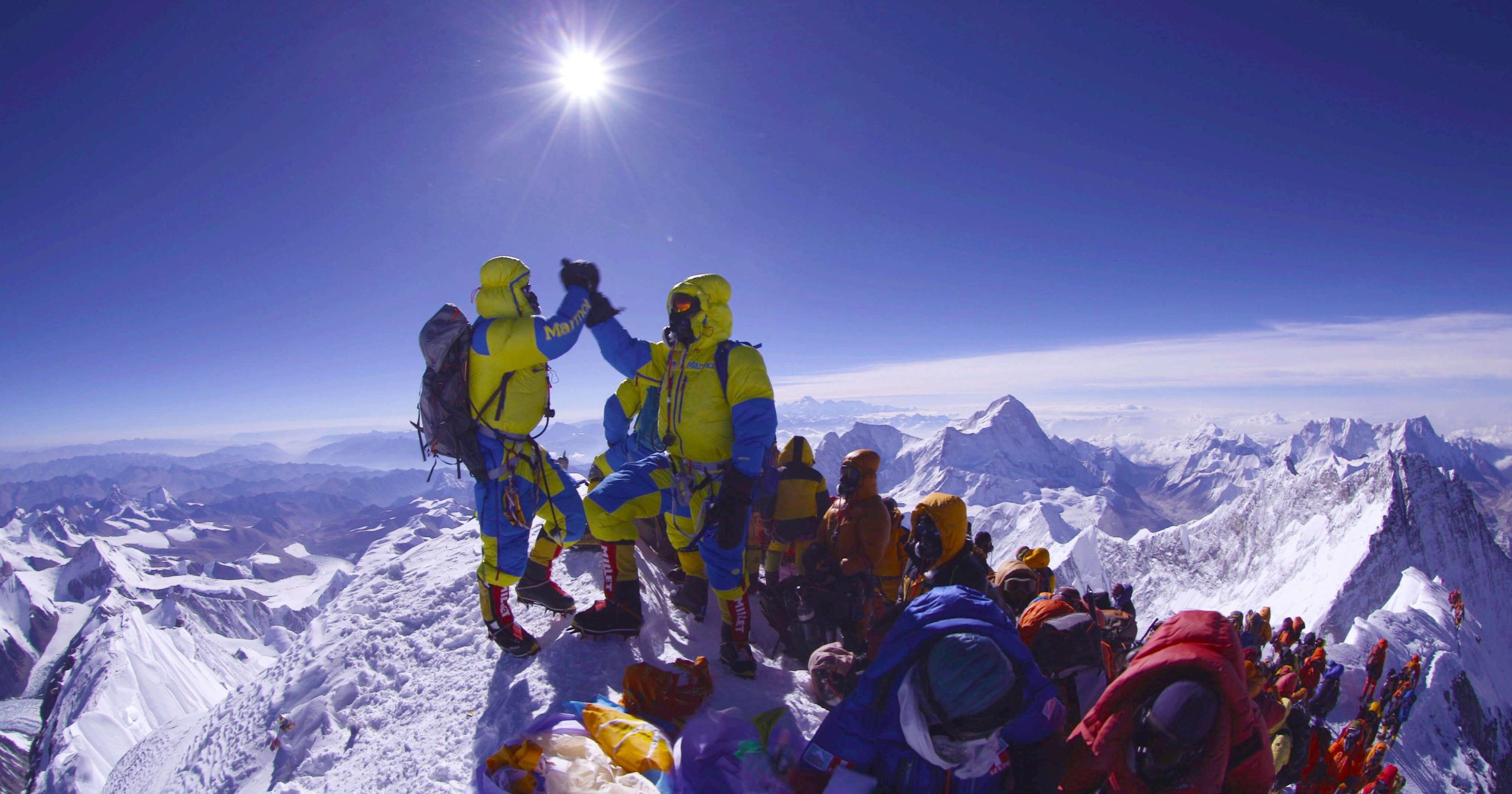
For more than a year and a half, the coronavirus pandemic has disrupted international mountaineering. Several months ago, five of the seven mountains making up the Seven Summits were open. But, pandemic-related border restrictions in the countries where those high peaks are located made many of those climbs off-limits to international climbers.
Summiting all seven of those peaks is a remarkable accomplishment. A climber must reach the top of Aconcagua in South America, Denali in North America, Mount Kilimanjaro in Africa, Mount Elbrus in Europe, Mount Vinson in Antarctica, Mount Carstenz in Indonesia (or Mount Kosciuszko in Australia) and finally Mount Everest for Asia.
In 1985, Pat Morrow, a Canadian mountaineer, was the first to achieve this feat. In the same year, Richard Bass and his climbing partner Frank Wells successfully followed suit. Two decades later, 20-year-old Danielle Fisher became the youngest person ever to scale all of the Seven Summits.
It’s unclear what COVID-19 or its variants will mean for the upcoming fall and winter climbing seasons, or for climbers in general, especially those looking to bag another peak in their Seven Summit quest. We checked with experts and here’s where things stand now.
Mount Everest

Photo © Mark Aiston, a Global Rescue member
Climbing expert Alan Arnette characterized the spring 2021 season on Mount Everest as “perhaps the most complicated in history” due to the pandemic, conflicting accounts from health officials in the region, and inconsistent reports from a few tour guides. Nevertheless, Arnette expects next year to be a record year on Mount Everest.
For the upcoming fall climbing window, about 160 mountaineers have received permits to climb two Himalayan mountains inside Nepal, according to reports. But none for Mount Everest.
“So many mountaineers receiving climbing permits for the autumn season suggest there is a massive lure of Nepal’s Himalayan mountains among the climbers despite the risk of being infected with the coronavirus,” said Bhisma Raj Bhattarai, section officer at the Nepal Department of Tourism.
“[European mountaineers] are now coming to Nepal without fear as they have been vaccinated against COVID-19,” said Subash Kumar Shrestha, director of Himalaya Vision Treks Expedition, a Nepali company.
[Related Reading: How to Choose a Climbing Guide]
“It was the proudest day of my life,” she said.
Experts concur Mount Everest will be open for the fall and winter 2021-2022 climbing season.
“There are some normal requirements to enter Nepal including a negative COVID-19 PCR test result and a quarantine period on arrival. It will be easier if climbers have received vaccination as it may reduce their quarantine period,” said Dan Stretch, operations manager for Global Rescue Operations who is based in Nepal during the Himalaya climbing seasons.
The Mount Everest fall climbing season is short and difficult. “It’s generally for the ultra-elite climbers who have done everything else. There has not been a successful Everest winter summit since 1993,” said Stretch.
Mount Kilimanjaro

Africa’s Mt. Kilimanjaro is open. Tanzania President John Magufuli lifted international flight bans in November and removed the 14-day quarantine for foreigners. Three Wisconsin sisters summited the tallest mountain in Africa recently without any barriers to entry into Tanzania.
“The best time to climb Mount Kilimanjaro are the months of January through early-March and June through October. The clear skies, great views, and the sunshine makes it the best comfortable hiking conditions,” according to expedition guides.
One caution, international flights into the Kilimanjaro airport may be cancelled due to lack of passengers.
Mount Aconcagua
“Aconcagua National Park will be open for a short window January 1st to February 15th only,” said Lukas Furtenbach, owner at Furtenbach Adventures in Austria. “But Argentina is still closed to most international visitors including U.S. citizens and there’s no estimated end to the travel ban.”
But a border opening could be coming since the Argentine officials opened up advance sale of climbing permits at a 25% discount to promote local employment and tourism through the commercialization of tourist activities, according to a report.
“Given the current conditions in the local economy due to the pandemic, it is necessary to promote actions that allow the development of tourist activities in the Protected Natural Areas of the Province [Aconcagua]. Always bearing in mind, of course, that authorized activities must comply with the protocols regarding COVID-19,” said Sebastián Melchor, the director of Renewable Natural Resources.
The news encouraged the larger expedition providers to take reservations for Aconcagua’s main season which runs December – March.
“Currently entry into Argentina is heavily restricted with no entry permitted if you’re coming from the U.S. or the U.K. Unless that changes soon, Aconcagua will be off the radar for most climbers since it takes a minimum of a few months planning to commit and prepare for an expedition,” said Stretch.
Denali and Mount Elbrus

The ideal Denali climbing season is from late April until July, with the best conditions in May and June. Climbers wrap up by early summer to avoid the dangers associated with softening snow and increased glacier travel that can frequently open up crevasses.
“There were 1,018 registered climbers on Denali this season and 533 successful summits. The 53% summit success rate is almost exactly the modern average for the peak,” according to freelance writer Martin Walsh.
“The 2021 Denali mountaineering season is over. The last climbers were off Denali by mid-July. We have not heard of anyone interested in attempting a winter climb at this point, but technically that could still happen before the 2021 calendar year end,” said Maureen Gualtieri, the mountaineering public information officer for Denali National Park and Preserve.
“I’m happy to say we did not encounter any COVID-19 cases during the 2021 season, and none were reported to us. I suspect that is due to the availability of vaccinations at that point, the outdoor nature of climbing, our COVID mitigations, and the fact that the Delta variant did not really get rolling in Alaska until after the last climbers were off Denali,” she said.
Only American climbers could make the Denali attempt since there was no international travel to the U.S. during the pandemic.
Russia’s Mount Elbrus is open but the high-climbing season runs from April to September and has ended for 2021. Like Denali, travel entry requirements to the country blocked opportunities for international climbers.
“I have not seen any action there and all the main providers aren’t offering trips,” said Stretch.
Mount Vinson
The highest mountain in Antarctica is Mount Vinson, rising 16,500 feet/4,892 meters above sea level.
“Expedition providers are taking bookings but they are waiting for the national officials to open up the borders. If they don’t, then trips will have to cancel or postpone,” said Stretch.
Furtenbach agrees. “Vinson and the whole of Antarctica is still uncertain. Trips are all sold out but I give it a 50% chance.”
Mount Carstenz and Mount Kosciuszko

Mount Carstensz (also called Mount Jayawijaya or The Carstensz Pyramid) is the highest mountain in Indonesia, on the island of New Guinea, with an elevation of 16,024 feet/4,884 meters. Locally, the mountain is called Puncak Jaya (Glorious Peak) and is the tallest peak in Oceania. Mountaineers living outside of Indonesia won’t have an opportunity to climb it since the county is closed to international visitors.
“I didn’t see large numbers of climbers there pre-COVID. Currently, some operators are booking expeditions but since the country is closed to foreigners, I don’t expect any climbers to be there until border restrictions change,” Stretch said.
Mount Kosciuszko is open, provided you can get to Australia. Access to the mountain is relatively easy since it is an operational ski resort.
“It’s a drive, a ski lift and a hike for a few hours and you’re there,” said Gordon Janow, who has led expeditions to all seven summits and is the director of programs for Alpine Ascents. He points out there are no permits required for ascents up the continent’s highest peak but guide services may have specific requirements for climbers.
Lessons Learned
After more than a year of pandemic protocols, border restrictions, infections, treatment therapies, vaccines and variants many experts in the high-climbing community have learned a few things.
“You have to be ready to cancel trips, pivot, make adjustments and recognize where you can add layers of safety and where you can’t,” said Gordon Janow, director of programs for Alpine Ascents. “I see a shift toward clients taking responsibility for the decision to go or postpone. We can’t make individual decisions. We all have the same information.”
Furtenbach said the road back to business is testing and vaccination. “We shouldn`t have run Mount Everest this spring when no one was vaccinated. If all staff and clients are vaccinated then I have fewer concerns.”
Precautions are imperative, but they are not always enough. “Expedition providers can take all the necessary precautions but then become exposed by an outside party. You have to remain in the team bubble when possible. Do not share space with other climbers or locals if it can be avoided,” said Stretch.
Finally, pressing the expedition organizer to share what precautions are in place, and what happens if they have a suspected case, are essential.
“Making sure the expedition organizer has tests available could save you an unnecessary canceled expedition,” said Stretch.
Categories:
Health & SafetyMissions & Member TestimonialsSeptember 28, 2021
Bicycle accidents peaked in the U.S. since the pandemic started, but, in Europe, the accident rate has remained steady. So, when New Hampshire residents Craig and Jeri Cohen set out on a tandem for a cycling tour in Upper Bavaria, Germany, they expected to gently roll along river valleys and challenge themselves with hilly routes while enjoying the scenic lakes, forested mountain ranges and panoramic views of the Alps.
Unfortunately, things went differently.
“We were on the first hour of the first day of our bike-riding trip. It was pouring rain but we decided ‘what the hell,’ we’ll go slowly,” said Craig Cohen, a retired maxillofacial surgeon.
The downpour made it tough to see. “The visibility was not good,” said Jeri Cohen, who was the CFO for her husband’s office before retiring herself.
The duo was making a transition on their tandem bike from the road to a bike path. But unbeknownst to the Cohens, the cycle path had a one-inch mini-curb.
“We’ve done a lot of cycling across Europe but we’d never come across this,” Craig said, referring to the tiny barrier.
As they made the transition from the road to the path, the front bike wheel hit the curb at an oblique angle and, combined with the wet road, toppled the tandem bike and sent the Cohens crashing headlong to the ground.
“We hit the pavement hard.”
A More Serious Accident than Originally Believed

Craig was lucky to receive only a small scrape on his knee and a bruise on his hip. Jeri got the worst of it sustaining a fractured pelvis, cuts and bruises on her face.
“Her riding glasses were smashed into her left eyebrow and left a huge bruise. Over the next couple of days, the bruise spread across her brow and down the side of her cheek to her neck.”
Both riders were wearing helmets, which protected them from more serious injuries but were damaged by the crash. “Our helmets were scuffed up and had sizeable dents in them. I guess we’ll have to buy new ones, now,” he said.
Initially, Jeri didn’t think she needed an ambulance. When the touring group’s chase van pulled up moments after the accident, she rode it back to the hotel. Soon after her arrival, however, Jeri realized she couldn’t put weight on her feet. That’s when she and her husband called Global Rescue and an ambulance.
Overcoming More than Just a Fractured Pelvis
Medical staff admitted Jeri to the hospital and imaging technicians took X-rays. Thankfully, there were no signs of a concussion or head injury, but she could not stand or walk. Jeri quickly learned she had a fractured pelvis, but her diagnosis for recovery was unclear. Medical practices can vary from one country to the next.
“In the U.S., this kind of pelvic fracture would not necessarily require hospitalization. The doctors in the Bavarian hospital had already admitted Jeri. She was there for three days and they wanted to keep her longer,” Craig said. “I was thankful for Global Rescue. Ultimately, having another set of eyes from Global Rescue’s medical team reviewing what was going on really helped.”
Global Rescue operations got all the medical information and immediately started reviewing the X-rays, medical records, and related documents. “It was very comforting to know that there was some oversight of what was going on,” he said.
Global Rescue also provided a bridge to overcome the language barriers.
“Jeri and I have studied some German so we have a rudimentary knowledge of the language but once you’re stressed with something like this plus having to deal with medical terms we were really out of our element,” Craig said.
Although some of the hospital staff spoke passable English, not everyone did. “Sometimes you didn’t quite know if they were telling you the correct story due to the language barriers,” he said.
Global Rescue Manages Their Logistics To Get Them Back Home

Following multiple consultations, Jeri was discharged from the hospital. She spent a few extra days healing before departing for home. That’s when a new set of non-medical challenges popped up.
“Having Global Rescue as our advocate and liaison working with the hospital physicians and our airline really smoothed things out for us,” Jeri said. “We had no clue whatsoever that we had to get authorization from our airline to fly back home. That was something else that Global Rescue took care of for us,” she said.
The Cohens didn’t know there was anything special that had to be done in advance of their return trip to the U.S. “Originally, the German doctor overseeing my care wanted me to fly on a stretcher, which you can’t do on a commercial airline. That was another thing Global Rescue ironed out for us by working with the airline officials who ultimately okayed the flight for me without needing a stretcher. I was okay sitting in a seat,” she said.
Global Rescue additionally provided ground transport for the couple from the hotel in Munich to the airport and then another ground transport leg from Boston Logan airport back to their home in New Hampshire.
“As the husband of the person who is injured, there were so many things going on that Global Rescue took off our plate, it was merciful. I didn’t have to arrange drivers, transports, fit to fly requirements or anything like that. Global Rescue took care of it all,” he said.
Jeri is well on the road to recovery and eager to get back to cycling. “We’re going to get up and get traveling again, and I’m going to get on that bike again, too,” she said.
Craig is eager, too, but also grateful for the support. “Just knowing I can pick up the phone and speak with someone immediately was very reassuring and helped a lot. I didn’t feel like I was hanging out there on a wire without a net,” he said.
Jeri agreed. “We’ve been talking to all our friends and telling them what a lifesaver Global Rescue is.”
Categories:
Health & SafetyTravelSeptember 27, 2021
TL;DR
- Off-the-grid travel offers a digital detox but requires thorough preparation.
- Essential preparations include researching location, assessing amenities, and planning activities.
- Pack a first-aid kit, get a communication device, and create a contingency plan.
- Consider a Global Rescue membership for added safety.
Craving a digital detox? You’re certainly not the only one…especially after the last year-and-a-half where we have been more tied to our devices than ever. It’s also precisely why remote, off-the-grid vacations are more attractive than ever.
“Anyone can say ‘I’m taking a break for the weekend, and I’m not going to check my phone or work email.’ But how many times do you suddenly find yourself on your phone, tapping or scrolling away? The temptation is constant,” says Allison Fleece, co-founder of WHOA Travel, a female-focused, boutique adventure travel company and Safe Travel Partner.
“When you travel to an off-the-grid, remote location where there’s no internet or cell service, it forces you to take that much-needed break, which is essential to our mental health,” Fleece said.
Some proof: According to a recent survey conducted by VacationRenter, of those who stayed off–the-grid during their remote travels, 81% said they felt noticeably more relaxed and at ease without access to internet or cell service.
How to Go Off-the-Grid with Careful Planning

As much as remote travel and digitally disconnecting can be life-improving, it’s equally imperative to do it right.
“The sad majority of the population is woefully unprepared to deal with an emergency in a place where they are inaccessible,” said Jeff Weinstein, a paramedic and a medical operations supervisor for Global Rescue.
“We live in a world where resources are always at our fingertips,” said Adam Bardwell, a former U.S. Army Green Beret, Special Operations Combat Medic, and current Global Rescue medical operations supervisor. “But in a remote setting, the everyday problem is suddenly amplified. Something that is just a minor incident in everyday life can become catastrophic when you’re unreachable.”
And the intentional lack of internet and cell service adds to the risk.
If you’re one of the many considering retreating to an off-the-grid remote destination — whether one hour away from your home or 10, nationally or internationally, for a few days or a few weeks — here are the most essential safety precautions and preparations Global Rescue experts recommend prior to travel.
Research the Location & Consider Your Limitations
“Anytime I’m considering going to a remote area, the first thing I’m doing is a weather and terrain analysis of the location,” Weinstein said. “Can you bring a vehicle right up to the site? Do you have to hike in and what is that hike like? What is the closest city? Closest hospital? What are the roads like?”
Weinstein will use Google maps to pull up satellite images of the location and Gaia GPS Maps to pull up topographic maps of the area, but, if you’re renting a secluded cabin through AirBnB or another travel booking platform, this is all info you should be able to find in the listing or the host should be able to easily answer.
Then, once you’ve gathered that essential info, you need to ask yourself, are you confident and capable that you could handle a worst-case scenario if you were to get stuck there?
“You might find out that it’s going to be heavy rain season in that location. What happens if your vehicle gets stuck at some point?” Weinstein said. “Do you have a winch and do you know how to use it? If not, are you physically fit enough to hike out of there on your own? You need to think of the ‘what ifs’ posed by the particular location and determine if you can handle them.”
Assess the Amenities & Prepare Appropriately

Let’s say you’re heading to a remote cabin in the woods. What is the water source (a well, nearby body of water, collected rainwater) and where is it? A heat source (wood-burning stove, propane gas, solar heating)? Solar lights, kerosene lamps or nothing at all for the evening? What about cookware?
“Take a robust inventory of what the site has and doesn’t have,” Bardwell said. “Then, start making a list of the essentials you need to bring…and what you won’t.”
For example, you wouldn’t want to show up with packages of bottled water, only to find out there’s a perfectly good hand-operated pump for the well on-site. That bottled water just took up space for something else, like more non-perishable food or additional backcountry equipment.
Consider the Activities You’re Going to Be Doing
If you’re ditching your phone and internet, chances are, you’re also looking to spend some time in nature — hiking, swimming, maybe some fishing. If you don’t know the area well, this can be where you run into trouble, so research the local trails (level of difficulty, type of flora and fauna you could run into) as well as bodies of water, so you know what to expect.
“Googling the general area is good, but you should also try to learn from people who have been there already,” Bardwell said. “This is where forums and social media comes in handy. You can raise questions about spots they frequented and what they wish they had known or done to prepare ahead of time.”
Always Pack a First-Aid Kit
While it is impractical to pack for every single situation you could encounter, it is possible to create a small, packable remote travel first aid kit full of highly useful items that takes up little space.
An easy starting point is to purchase an off-the-shelf product. A commercial first aid kit will contain the items you need to treat minor travel illnesses and injuries. Blisters, minor soft tissue injuries (scrapes and cuts), orthopedic injuries (ankle sprains) and stomach ailments are the more frequently encountered issues. Global Rescue has customized its own list of must-have items over the years for packing an everyday, travel-friendly first aid kit.
Get a Satcom When You Are Going Off-Grid
We understand that one of the reasons you may be going off-the-grid is to get away from the constant urge to connect. But as a leading provider of medical and security advisory and evacuation services for travelers, we know that unexpected incidents can crop up, from simple slips and falls to sudden snakebites.
If something happens and you’re out of cell range to call for help, you will need a satellite alternative communication device. There is a variety of options available — from personal locator beacons (PLB) and standalone satellite phones to messaging devices and gadgets that pair with your smartphone to establish satellite communication. Global Rescue strongly recommends opting for a two-way communications device. A one-way emergency signaling device only sends a distress signal, like a whistle or a flare — nothing more.
“While that’s certainly better than nothing, with two-way communication, you can provide additional information, so rescue can organize the most appropriate resources to get to you,” Weinstein said.
Make a Contingency Plan and Share It

It isn’t enough to make others aware that you’re going remote — to a cabin in the forest, a campground in the mountains, or any other remote destination. You need to provide details and put action steps into place — specifically the kind laid out in a five-point contingency plan — in order to speed up rescue response should you not return or get in touch within the appropriate time frame.
Guided by the acronym GOTWA, it’s a brief you create outlining these details: going where (G), others going with you (O), time span you will be gone (T), what to do if you do not return in that timely manner (W) and final actions to take if you do not return (A).
“I type up all these details, then disperse it to my friends and family,” Weinstein said, who in addition to his medical background is also a wilderness expert. “I’ll even stick an abbreviated version on the windshield of my car if I’m going to be hiking out a distance from a remote trailhead.”
If someone comes by, sees an abandoned car and the date specified in the contingency plan has since passed, then you will have another person potentially alerting search and rescue response on your behalf.
Get a Global Rescue Membership
If you’re ever traveling anywhere remote, whether close to home or far away, a Global Rescue travel protection membership is a must. Not only can we pluck you from whatever precarious situation you find yourself unable to get out of on your own — and do so fast — but because, without us, a medical evacuation for illness or injury could cost you a pretty penny. Under our membership, you never see a bill.
Categories:
NewsSeptember 24, 2021
Categories:
Health & SafetySecurity & IntelligenceTravelSeptember 22, 2021
If you need rescue, then you need a way to communicate your emergency. Whether you’re by yourself or with a group, nearby or far away, rescues begin with a distress call. That means you must have the ability to make an emergency outreach.
Rescue begins with knowing your location and conditions.
“The ability to communicate with the rescue service allows them to ask you specific questions to help them assemble the most capable or efficient resources to get to you including your location, your physical state, weather conditions and more,” said Harding Bush, a former Navy SEAL and associate manager of operations for Global Rescue.
The more details rescue operation professionals have related to your situation, the better they can facilitate the most appropriate supporting rescue assets for you. Without the details then your rescue can take much longer or be more complicated, or both.
For example, identifying the physical state of the individual is vital. Knowing whether you’re alone or with someone who can assist, determining if you can walk, or if you have food, water, suitable clothing or shelter are helpful details. Similarly, sharing the on-the-ground weather and terrain conditions helps tremendously. Our rescue operations team has access to global weather monitoring information and topography maps but gleaning the additional perspective from the individual on the ground is abundantly useful.
“The most reliable way to get help after becoming ill or suffering an injury is through two-way communication. Cell phones do not always have dependable service, and they are often used for many things that could risk its usefulness,” said Bush.
For example, what would you do if your cell phone battery died because you were busy snapping selfies, live streaming your hike on social media and running a GPS navigational-based trail map application? What if your phone fell out of your pocket and you heard a splash when you were filling your water bottle at the stream?
It happens.
When you need two-way communication capability and your cell phone will not work, a satellite messaging device is your next best choice.

Global Rescue recommends using a satellite messaging device capable of communication via satellites to send an email, SMS or SOS message. There are several available devices like the Bivy Stick and Zoleo devices. These devices are easier to use, manage and carry than a satellite phone. They are also significantly less expensive: between $300 and $500 versus $1,500 and up for a satellite phone.
Several companies rent satellite phones. If you have a trip where you may have requirements to make voice communications, renting a satellite phone may be a less costly answer.
“In an emergency, we advise our members to send an e-mail from their communication device to Global Rescue at operations@globalrescue.com,” said Bush.
When Global Rescue receives that email message, it automatically includes a map with the member’s name and their geographic coordinates.
“The message also includes a dialog box permitting direct exchanges between the member and the Global Rescue operations team,” he said. “Since we already have a map with your location, you do not need to include it in the body of your email, which is useful since some devices only allow for 160 characters.”
The most important aspect of using any communications tool, whether it’s a cell phone or satellite device, is understanding how to operate the equipment. During an emergency, there is a good chance you may be scared or injured. This may affect your ability to operate the device efficiently. It is wise to make certain everyone in your group knows how to use the device.
“An emergency is not the time to learn how to use a satellite phone,” Bush said.
If you’re traveling internationally, keep in mind satellite communication devices are illegal in some countries because satellite communications circumvent the national communications system and they cannot be monitored. These countries include India, China, Iran, Cuba, Nigeria, Bangladesh, Myanmar, Chad, Sudan and North Korea. There are other countries where permitting is required. If you are discovered with a satellite phone or messaging device in these countries, you may be arrested and put in jail. Some countries only ban foreigners from having satellite communication. Be sure to check before you travel.