Categories:
Health & SafetyMissions & Member TestimonialsMay 3, 2022

Post-grad travel? Summer internship? Revenge travel is kicking in for students of all ages, and they are including international trips in their summer plans.
This year’s group of approximately two million U.S. college graduates have spent the last two years pursuing their academic and professional ambitions despite campus closures, online classes and remote internships.
Now, revenge travel is kicking in for students of all ages: high school, college and newly graduated. Whether it is a chance to see the world before the 9 to 5 starts or an internship to add market value to classroom education, students are including international travel in their summer plans.
Travel Protection Across the Globe

What makes the best gift for a student planning to travel? A Global Rescue membership, which provides 24/7 travel advisory services and emergency medical evacuation services. It certainly came in handy when Jordan Glovsky, a rising sophomore at the University of Arizona, was in Africa on a summer internship.
“Jordan was living in Cape Coast, Ghana and working in a hospital,” said Eileen Glovsky, his mother and a change management consultant. “He had met a number of gap-year students and traveled to Togo for a weekend with this multi-lingual group of young men and women.”
At some point during his trip, he started to experience severe pain while breathing.
“Local shoppers noticed his discomfort and immediately stepped in to assist. Initially Jordan went to a local clinic, but the services were less than adequate,” Glovsky Eileen said.
Jordan went to the U.S. Embassy for assistance. The helpful staff directed him to a local private hospital and called Eileen. Jordan also called Global Rescue.
“The embassy was really happy that we had Global Rescue to assist us,” Eileen said.
Glad to Have Global Rescue

Eileen and Jordan were also happy to have Global Rescue.
“Global Rescue reached out to me to let me know they were working with Jordan and would assist him while in the hospital,” Eileen said. “This was extremely helpful since he was in a French-speaking country. One of his traveling companions who spoke French did stay with him, but having someone to translate medical information was very helpful.”
Multiple tests were run in an attempt to identify the issue, but nothing specific was ever identified. Global Rescue kept the family in the loop the entire time.
“Results and medical history questions were posed to me (with Jordan’s permission) so I could be an active participant in decisions about his care and the decision to travel back to the U.S. for further diagnostic testing,” Eileen said. “I was pleased with how communicative Global Rescue was through the whole process. I never felt the need to jump on a plane to join Jordan. I knew he was in good hands as I got about three calls a day to keep me posted.”
While Jordan was able to take a commercial flight home, the last-minute scheduling would’ve been cost prohibitive for Eileen. She estimates his flight home on a commercial airliner after his hospital discharge would have cost more than $5,000 without a Global Rescue membership.
“Global Rescue offered to meet him at the airport in Boston. They even called a few days after he arrived back to check in on him,” Eileen said. “I can’t tell you how much it meant to have Global Rescue as a partner.”
Jordan, now a certified AEMT, hasn’t done much traveling in the past two years, but the Glovsky family will continue to purchase Global Rescue for lengthy or adventure-specific trips or destinations with insufficient medical care or security.
“Even if you think you have coverage from a travel program (business, school, Peace Corps) invest the money in Global Rescue,” Eileen said. “You won’t be dealing with a third party to figure out what services you have. The program that Jordan was a participant in allegedly had coverage, but I never heard from them until he had been transported back to the U.S.”
Graduation Gift Idea

A Global Rescue membership may have saved the life of Lily Goodman, whose parents called Global Rescue when she started vomiting blood on a school trip to China. Global Rescue’s medical experts translated records and correspondence between Lily’s family and the Chinese doctors, providing a detailed review of all medical reports.
It was essential for Maredith Richardson, who lost her passport in Paris the day the pandemic lockdown ended. Global Rescue streamlined the replacement process for her. Tenn Hildebrand, studying abroad during a gap year, was bitten by a wild dog shortly after he arrived in India. Global Rescue provided translation services, reviewed medical records, and helped him obtain and administer the medication he needed.
Global Rescue student travel memberships are annual memberships available to full-time students under the age of 35. Students will have access to updates on restrictions, quarantines and hotspots; experts who can provide immediate information regarding appropriate nearby health care facilities all over the world, and emergency medical evacuation services to a hospital of choice. An annual student membership starts at $289.
Digital Nomadism, Location-Independent Work Here to Stay
Lebanon, N.H. May 3, 2022 – The next several years of business travel and an office-bound workforce will be a bit like the Wild West as business managers and employees pioneer a new balance for productivity as the world emerges from the worst of the pandemic, according to travel risk expert Dan Richards, CEO of Global Rescue. National Travel and Tourism Week (May 1-7) celebrates the value of business travel, especially in a year when the business road warrior community and the travel industry recover from the worst of the pandemic that effectively grounded international business travel.
“The future of business travel will be structured around more digital nomadism and location-independent work. Both of which are not going away,” Richards said.
A third of business travelers now have a remote work schedule and many of them will travel more and longer as a result.
“Virtual substitution for in-person meetings is here to stay. The pandemic has demonstrated productive work can be done from almost anywhere, leading to people taking advantage of that circumstance,” he said.
The prospect of working from anywhere under more flexible attendance policies is going to give many staffers the ability to live and work in places they couldn’t before. The biggest management challenge in this evolving environment will be the ability to supervise a location-independent workforce.
“Managing the remote workforce will be a new challenge as unprecedented numbers of employees log in from the beach, mountains and other places where they’ve chosen to live. Management and employees need to consider how duty of care plays a role,” Richards said.
Contact Bill McIntyre at bmcintyre@globalrescue.com or 202.560.1195 (phone/text) for more information.
About Global Rescue
Global Rescue is the world’s leading provider of medical, security, evacuation and travel risk management services to enterprises, governments and individuals. Founded in 2004, Global Rescue has exclusive relationships with the Johns Hopkins Emergency Medicine Division of Special Operations and Elite Medical Group. Global Rescue provides best-in-class services that identify, monitor and respond to client medical and security crises. Global Rescue has provided medical and security support to its clients, including Fortune 500 companies, governments and academic institutions, during every globally significant crisis of the last two decades. For more information, visit www.globalrescue.com.
Lebanon, N.H. – May 2, 2022 – Despite international borders opening and COVID severity diminishing, one–out–of three travelers are experiencing travel hesitancy due to the war in Ukraine, the possibility of new coronavirus variants or lingering fears following two years of pandemic-related restrictions, according to the Global Rescue Spring 2022 Traveler Safety and Sentiment Survey.
Seven–out–of 10 (71%) of survey takers are somewhat concerned, concerned or much more concerned, about international travel since the beginning of the war in Ukraine. The rest (29%) report they are not concerned at all.
Traveler hesitancy is also coming from anxiety about where to go, or when to get back to travel after two years of pandemic-related travel restrictions. “In January 2021, 55% of respondents said they were more or much more concerned about travel. Today, 45% fewer travelers are expressing travel hesitancy. The recent survey reveals less than a third (30%) of travelers are experiencing re-entry to travel anxiety,” said Dan Richards, CEO of Global Rescue, the world’s leading provider of medical, security, evacuation and travel risk management services and a member of the U.S. Travel and Tourism Advisory Board at the U.S. Department of Commerce.
Conversely, the survey revealed 89% of respondents say the war in Ukraine has not changed their travel plans and the overwhelming majority (70%) of travelers are not experiencing any re-entry to travel anxiety. An even larger majority (84%) of survey takers report they are less or much less concerned about travel today compared to the beginning of the pandemic.
“Most travelers (78%) do not consider the threat of future COVID-19 variants significant enough to make them cancel or postpone international travel this year,” Richards said. “More than half of respondents (56%) already have traveled internationally since the pandemic with 35% expecting to travel abroad before the end of the year.”
COVID-19 remains a concern with international travelers, less so for the potential threat of a severe illness and more so due to the possibility of being stranded in a foreign country. According to the survey, 59% of respondents say testing positive for COVID-19 and being stranded away from home is their biggest fear about international travel. Fifteen percent of travelers say producing a negative COVID-19 test to meet U.S. re-entry requirements is their main concern.
About the Global Rescue Traveler Sentiment and Safety Survey
Global Rescue, the leading travel risk and crisis response provider, conducted a survey of more than 1,200 of its current and former members between April 5 and 9, 2022. The respondents exposed a significant range in travel confidence and international travel activity as well as preferences for international travel policies.
Contact Bill McIntyre at bmcintyre@globalrescue.com or 202.560.1195 (phone/text) for more information.
About Global Rescue
Global Rescue is the world’s leading provider of medical, security, evacuation and travel risk management services to enterprises, governments and individuals. Founded in 2004, Global Rescue has exclusive relationships with the Johns Hopkins Emergency Medicine Division of Special Operations and Elite Medical Group. Global Rescue provides best-in-class services that identify, monitor and respond to client medical and security crises. Global Rescue has provided medical and security support to its clients, including Fortune 500 companies, governments and academic institutions, during every globally significant crisis of the last two decades. For more information, visit www.globalrescue.com.
Categories:
Health & SafetyMissions & Member TestimonialsApril 29, 2022
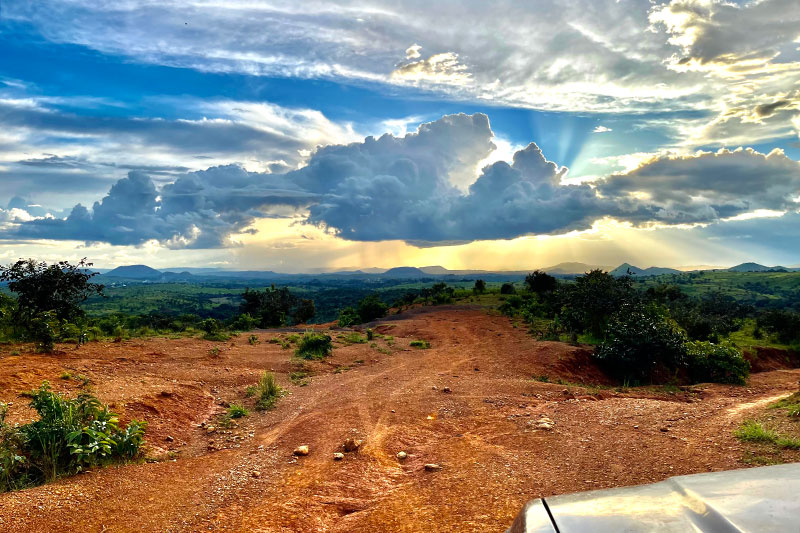
Photo © Daniel Needham, a Global Rescue 2021 Photo Contest submission
Experts have spent the last two years searching for signals that travel recovery is imminent. Now, the signals are clear: recovery is happening despite some hesitation brought on by pandemic hesitancy, higher fuel prices and the war in Ukraine.
Traveler activity in and out of U.S. airports reached past 90% of pre-pandemic levels. Nearly half of travelers have already taken an international trip since the start of the pandemic. COVID-19 cases are falling in every state. Nine out of ten travelers are less concerned about travel since the pandemic started.
At the same time, travelers are responsive to the war in Ukraine. Initially, searches for international travel plummeted following Russia’s invasion of Ukraine. But interest quickly returned during the next few weeks, according to online metasearch engine and travel portal Kayak. Many travelers added security services to their travel protection portfolio to increase peace of mind. Since the war started, there has been a higher demand for Global Rescue’s non-medical emergency security service plans that provide evacuation capabilities when travelers are in danger from insurgent attacks, terrorism, civil unrest and natural disasters.
In a typical month, Global Rescue performs hundreds of operations in dozens of countries. Below are highlights from some of our most recent operations in various locations.
Motorcycle Accident in Uganda

Global Rescue medical operations received an emergency notification from a U.S. member who suffered injuries to his hand and upper body following a motorcycle accident in Kitagata, Uganda. The member’s thumb was severely damaged and there were possible injuries to his shoulder and back. The member received initial treatment at a nearby hospital but the treating physician recommended the member be transferred to a hospital capable of a higher level of care due to the extensive injuries to his thumb and potential injuries to his back, ribs and shoulder. The Global Rescue medical operations team immediately approved a ground medical evacuation to a hospital in Kampala, Uganda where the doctors performed pinning and reconstruction of the member’s left thumb. He was discharged and deemed fit to fly home where he will receive follow-up treatment for his injuries.
Altitude Sickness on Mount Everest
Climbing Mount Everest is a tremendous challenge, even for those who are veterans of high-altitude activities. A U.S. member was at Mount Everest Base Camp (17,598 feet/5,364 meters) was not feeling well due to shortness of breath, chest pain and nausea. She was carried by one of the Sherpas to a lower altitude where her symptoms continued. Global Rescue was contacted and the medical operations team initiated a helicopter field rescue. The member was transported and admitted to a hospital in Kathmandu. The treating physician provided a diagnosis of Acute Mountain Sickness with mild High Altitude Cerebral Edema, and chest tightness at altitude. Following treatment and overnight rest, the member was discharged with instructions to rest and continue her recovery in her hotel until her flight home.
Nepal High Altitude Rescue

Trekking at higher altitudes can lead to headaches, dizziness, fatigue and shortness of breath. That’s what happened to a member from Fort Erie, Canada while trekking in Gorakshep, Nepal. The member’s Sherpa contacted Global Rescue operations and reported the member had an unsteady gait, dizziness, generalized weakness and vomiting. Global Rescue’s medical operations team immediately confirmed the situation and initiated an airborne field rescue. The member was successfully transported by helicopter to a hospital in Kathmandu where he was admitted and treated for High Altitude Cerebral Edema. He recovered for a few days before being discharged and declared fit to fly home.
Potential Skull Fracture After a Fall in Central African Republic
A member from Dubai accidentally fell while traveling in the Central African Republic. The next day Global Rescue received a message that the member was experiencing a clear, yellow discharge from his ears. Global Rescue medical operations physicians reviewed the case and determined that the member needed immediate evacuation to a hospital with CT imaging, neurosurgical assessment and surgical capabilities due to the possibility of a skull fracture and neurosurgical complications. Since no facilities meeting those criteria exist within the Central African Republic, the Global Rescue medical operations team initiated an airborne and ground medical evacuation to an appropriate medical facility in Nairobi. The member underwent a surgical assessment and multiple diagnostic and radiographic procedures. The neurosurgeon in charge of his care ruled out internal bleeding, fractures, intracranial injuries and other significant issues. The member was discharged from the hospital and returned to his home safely where he planned to follow up with his physician.
Safari Field Rescue in Chad

Travelers to remote, international regions can experience extreme weather, challenging environments and unusual dangers. Sometimes those conditions can cause anything from mild discomforts to severe reactions. A U.S. member traveling to Melfi, Chad started to exhibit signs and symptoms of worsening dehydration with altered levels of consciousness. The Global Rescue medical operations knew the member had an underlying condition characterized by progressive anemia, low blood pressure, weakness and skin discoloration. The added condition of dehydration could lead to electrolyte problems. Global Rescue initiated an airborne field rescue to a medical facility in N’Djamena where the member was treated with intravenous fluids. The member was discharged and recovered well.
Heli-Skiing Accident in Canada
Skiing accidents are not uncommon. But when you’re heli-skiing in remote areas and have an accident it’s essential to have an emergency plan. Thankfully, a heli-skier from Milan, Italy who was enjoying the mountains of Kitimat-Stikine in Canada had such a plan as a Global Rescue member. She injured her right knee while heli-skiing. She was unable to bear any weight on her leg and, following a medical evaluation, Global Rescue arranged for helicopter transport back to the lodge. The member recovered sufficiently to arrange for her flights back home to Italy.
Paragliding Crash in the Himalayas

A Global Rescue member and paragliding enthusiast from Hereford, U.K. needed field rescue from Burtibang, Nepal after he was involved in a paragliding crash, injuring his wrist. Global Rescue operations were notified, gathered critical information and launched an airborne field rescue. The member was transported to a hospital in Pokhara where treating physicians evaluated his injuries and determined he had suffered a fracture to his radial/ulnar (broken forearm) and would require surgery once he returned to his home. He was discharged from the medical center and deemed fit to fly for his return flight home where he will arrange for surgical management of his injury.
Bivy Stick Rescue in B.C.
Bivy Stick users understand the lifesaving importance of having two-way satellite communications capability, just in case they get sick or injured when they’re skiing, trekking, hiking, climbing or simply traveling. That’s what one Bivy Stick user discovered firsthand while skiing in the Eldorado Basin in Squamish-Lillooet, British Columbia, Canada. Global Rescue medical operations received a notification about a Bivy Stick user who suffered an injured leg and would need airborne evacuation. The skier was stabilized, medicated and comfortable before an evacuation to an appropriate medical facility for treatment.
Skiing Accident in Austria

Traveling in an airplane or being at high altitudes can be dangerous for people at risk for blood clots, also known as thrombosis. That was the case for a U.S. member who suffered a broken leg skiing in Saint Anton am Arlberg region of Austria. He was admitted to a nearby hospital where he underwent surgical repair to his leg and was cleared to fly home. Global Rescue reviewed the medical diagnosis and treatment and, since the member will be carrying heparin for thrombus prevention, recommended a medical escort. The member and the Global Rescue medical escort successfully flew from Zurich, Switzerland back to the member’s home in the U.S.
Get a price estimate
Estimate
$0.00
Please answer all questions for estimate.
Categories:
NewsApril 29, 2022
Travel protection is no longer an option; local getaway gems are rediscovered.
Lebanon, N.H. April 29, 2022 – Obtaining travel protection and using local getaways are the two biggest lessons learned since the pandemic started, according to travel risk expert Dan Richards, CEO of Global Rescue. National Travel and Tourism Week (May 1-7) celebrates the value of travel, especially in a year when the U.S and the rest of the world are emerging from the worst of the pandemic that virtually shut down international travel.
The first important lesson learned is the need for travel protection beyond lost luggage or delayed flights. The pandemic raised awareness of the limitations of traditional travel insurance and the value of stand-alone medical assistance and evacuation safety net.
“The traveler mindset has made a tectonic shift, moving travel protection for emergency medical services and evacuation from ‘optional’ to ‘obligatory’. Travelers learned that emergency rescue and evacuation services are often essential, whether it’s due to COVID-19, a natural disaster, civil unrest or simply needing emergency help when you’re traveling,” Richards said.
The second important lesson realized is the beauty of local travel.
“COVID-19 opened the door for people to explore and appreciate the great outdoors nearby, and people flooded through the doorway,” Richards said.
Outdoor activity worldwide is reaching unprecedented heights of curiosity and participation among beginners, experts and everyone in between.
“Whether or not destination travel is disrupted in the future, travelers learned to take advantage of local, outdoor activities. We learned, too. That’s why we eliminated our 100+ miles-from-home requirement to access our rescue services,” Richards said.
Global Rescue is the first and only travel risk and crisis management company to make this change. Now whether you’re near home or abroad and you get ill or injured and you’re unable to get to safety on your own, Global Rescue members are protected.
Contact Bill McIntyre at bmcintyre@globalrescue.com or 202.560.1195 (phone/text) for more information.
About Global Rescue
Global Rescue is the world’s leading provider of medical, security, evacuation and travel risk management services to enterprises, governments and individuals. Founded in 2004, Global Rescue has exclusive relationships with the Johns Hopkins Emergency Medicine Division of Special Operations and Elite Medical Group. Global Rescue provides best-in-class services that identify, monitor and respond to client medical and security crises. Global Rescue has provided medical and security support to its clients, including Fortune 500 companies, governments and academic institutions, during every globally significant crisis of the last two decades. For more information, visit www.globalrescue.com.
Will security technology minimize global threats?
Are environmental policies a key to protecting destinations at risk?
Lebanon, N.H. April 28, 2022 – The next decade of travel will face new and familiar threats, but security advances may stem global impacts if leaders act together worldwide, according to travel risk expert Dan Richards, CEO of Global Rescue. National Travel and Tourism Week (May 1-7) is an important time to commit brainpower and resources to recognize probable threats and moderate their impact as the travel industry recovers from the worst of a pandemic.
The biggest threats to the future of travel in the next decade include things like war, pandemics, terrorism and natural disaster.
“Some leaders might think the COVID-19 pandemic is over and there’s no need to spend money to protect against a potential pandemic, but infectious disease outbreaks remain an existential threat in the future,” Richards said. Health security measures deployed in transportation hubs like airports and railway terminals are essential. “Adding pathogen scanners to the current array of metal detectors, backscatter x-ray machines, millimeter-wave scanners, and cabinet x-ray machines must be a top priority,” Richards said.
Technology exists today to identify pathogens that spread through the air. “We can use technology in transportation hubs to identify infectious disease outbreaks and take immediate action. That technology can be deployed in a way so the protocols don’t increase friction in travel,” he added.
Richards expects an increasing number of environmental restoration policies to surface that will improve access to key biodiversity areas in a sustainable way. “Implementing effective conservation refurbishment programs will take time, money and effort,” he said.
The rising cost of fuel, lodging and travel are silent threats that could make travel to some destinations unaffordable for many.
“These are all potential threats that could be mitigated if we put our minds and our resources into it,” he said.
Contact Bill McIntyre at bmcintyre@globalrescue.com or 202.560.1195 (phone/text) for more information.
About Global Rescue
Global Rescue is the world’s leading provider of medical, security, evacuation and travel risk management services to enterprises, governments and individuals. Founded in 2004, Global Rescue has exclusive relationships with the Johns Hopkins Emergency Medicine Division of Special Operations and Elite Medical Group. Global Rescue provides best-in-class services that identify, monitor and respond to client medical and security crises. Global Rescue has provided medical and security support to its clients, including Fortune 500 companies, governments and academic institutions, during every globally significant crisis of the last two decades. For more information, visit www.globalrescue.com.
Advancing technology brings travelers closer to inner, outer space and mixed reality.
Lebanon, N.H. April 27, 2022 – The future of travel will include distinct destinations, including space travel, undersea expeditions and virtual reality trips, according to travel risk expert Dan Richards, CEO of Global Rescue. National Travel and Tourism Week (May 1-7) commemorates travel history and projects the future of travel – more important than ever as travelers worldwide emerge from the worst of a pandemic that effectively eliminated travel abroad.
Virtual reality, augmented reality and mixed reality are opportunities that could supplement physical travel.
“The argument goes that the material world may lose its allure as virtual reality technology advances. In the movie, The Matrix, reality is defined simply as electrical signals interpreted by your brain. I disagree. Virtual reality and its derivatives are ‘pseudo travel’ and, ultimately, we’re going to want to go see the places we’ve visited virtually. Humans are born to travel, explore and experience and no computer-generated experience will ever replace it,” Richards said.
There are fewer places to explore on Earth’s surface.
“Undersea and the cosmos are the next long-term destination priorities,” Richards said.
Based on advances in technology, it appears the human race is destined to explore inner and outer space. The International Space Station and Biosphere 2 Ocean are programs designed to explore and understand those environments. Space tourism is already available, although at present a 90-minute tour costs nearly half a million dollars per person for a few minutes of weightlessness.
“It’s only a matter of time before opportunity increases, excursions mature, and costs decrease for space travel. The tide of undersea tourism is rising, too,” Richards said.
The world’s first underwater hotel opened in 2018, the world’s largest underwater restaurant cut the ribbon a year later, and underwater art galleries are spreading like Ngaro Underwater Sculpture Trail in Australia’s Whitsunday Islands – each brings marine tourism to greater depths.
Contact Bill McIntyre at bmcintyre@globalrescue.com or 202.560.1195 (phone/text) for more information.
About Global Rescue
Global Rescue is the world’s leading provider of medical, security, evacuation and travel risk management services to enterprises, governments and individuals. Founded in 2004, Global Rescue has exclusive relationships with the Johns Hopkins Emergency Medicine Division of Special Operations and Elite Medical Group. Global Rescue provides best-in-class services that identify, monitor and respond to client medical and security crises. Global Rescue has provided medical and security support to its clients, including Fortune 500 companies, governments and academic institutions, during every globally significant crisis of the last two decades. For more information, visit www.globalrescue.com.
Lebanon, NH – April 26, 2022 – Titan Business Awards, a New York City-based program recognizing innovative business excellence, named Global Rescue winner of the 2022 Titan Gold Award for “Local Field Rescue Service” in the Travel Product and Services category.
“The award honors the far-reaching efforts of entrepreneurs and organizations around the world, whose contributions are far beyond the norm, and proudly celebrates your arrival on the global stage of innovation and ingenuity,” said Thomas Brandt, Titan Awards spokesperson. More than 800 award nominees were submitted from nearly 50 countries including, the United States, the United Kingdom, Australia, India, Ireland, New Zealand, Netherlands, and Canada.
Global Rescue announced Local Field Rescue emergency services in response to the pandemic and the increase in traveler time outdoors both near and far away from home. Global Rescue is the first and only travel risk and crisis management company providing Local Field Rescue.
“COVID-19 opened the door for people to explore and appreciate the great outdoors nearby, and people flooded through the doorway. But with an increase in local, outdoor activities there is a parallel expectation of the need for rescue services,” said Global Rescue CEO Dan Richards and a member of the U.S. Department of Commerce U.S. Travel and Tourism Advisory Board.
“Improvise, adapt, overcome. Global Rescue’s Local Field Rescue perfectly captures the essence of what it takes to survive in turbulent times,” Brandt said.
“Global Rescue is the world’s leading provider of medical, security, evacuation and travel risk management services to enterprises, governments and individuals. We supply unparalleled resources to address the increasingly challenging and complex world in which we live,” Richards said.
Global Rescue’s pioneering methods and model have secured its reputation as the most forward-thinking service of its kind.
About International Awards Associate (IAA)
The International Awards Associate (IAA) is the organizer of the Titan Business Awards. IAA’s mission is to honor, promote and encourage professional excellence, from industry to industry, internationally and domestically, through award platforms that are industry appropriate. IAA assembled the TITAN Business Awards to bring attention to the international business industry and promote their strategies, cultures, and teamwork to the world.
About Global Rescue
Global Rescue is the world’s leading provider of medical, security, evacuation and travel risk management services to enterprises, governments and individuals. Founded in 2004, Global Rescue has exclusive relationships with the Johns Hopkins Emergency Medicine Division of Special Operations and Elite Medical Group. Global Rescue provides best-in-class services that identify, monitor and respond to client medical and security crises, including COVID-19. Global Rescue has provided medical and security support to its clients, including Fortune 500 companies, governments and academic institutions, during every globally significant crisis of the last two decades. For more information, visit www.globalrescue.com.
Categories:
NewsApril 25, 2022
Categories:
Health & SafetyMissions & Member TestimonialsApril 25, 2022

The Himalayan climbing season is here. And so is Global Rescue, having again deployed its medical operations personnel to the region to support emergency rescue operations for our mountaineering and trekking members.
High-altitude mountain climbers are in the Himalaya range preparing for the 2022 spring climbing season. Whether it’s Mera Peak (21,247 feet/6,476 meters), Annapurna (26,545 feet/8,091 meters), Mount Everest (29,035 feet/8,848) or one of the many others, whenever high-altitude trekkers and mountaineers convene for high-risk, life-changing ascents, Global Rescue medical operations experts deploy to the region to help save lives.
“We have boots on the ground to support medical operations, logistical and emotional support. People traveling to the Himalaya region to climb and trek are in unfamiliar circumstances, and we can help,” said David Koo, a former combat medic, emergency nurse, associate director of operations for Global Rescue, and a member of Global Rescue’s Mountain Advisory Council. “We deploy anytime it’s a primary activity area, where we have a lot of members taking part in extreme activities. We have a lot of medical support wherever we deploy.”

For more than two years, the coronavirus pandemic disrupted international mountaineering, closing or limiting access to popular, challenging mountains worldwide. It’s unclear what COVID-19 or its variants will mean for the 2022 spring climbing season. But experts are making predictions based on their experience and observations.
Legendary high-climber and a member of the Global Rescue Mountain Advisory Council, Ed Viesturs, says it’ll be interesting to see what countries like Nepal and Pakistan require for entry. “There won’t be any climbing access from the China side. Outfitters will instigate their own protocols to protect their clients as well as their business operations,” he said.
“Last year, Mount Everest hit record permit numbers but it happened very late,” said Dan Stretch, operations manager for Global Rescue, a veteran of deployments to Nepal during the climbing seasons and a member of Global Rescue’s Mountain Advisory Council. “This year, like most things, high-climbs in the Himalayas are still unclear.”
Providing nonstop, 24/7 medical emergency support for a massive number of people taking part in extreme, high-altitude activities is not for the faint of heart. Koo says you need to be flexible and physically fit to be efficient on the ground.

Photo © David Koo, Global Rescue’s Associate Director of Operations
“Nothing will be spoon-fed to you. Thankfully, over the number of years of having boots on the ground, we have developed close relationships with our partners, both helicopter and hospital providers. They have always been a strong support for the team on the ground. We constantly research the area and the resources available. We stay close to the airport to coordinate and be part of airborne transports. Unexpected weather plays a big role. We make certain to have a plan B that includes a sleeping bag, portable oxygen canisters and more when we pack — in case we have to overnight on the mountain at Mount Everest Base Camp (17,598 feet/5,364 meters) to support emergency rescue operations,” he said.
The Global Rescue deployment team remains on-site for the duration of the two-month climbing season. The days are long, often lasting up to 16 hours.
“We are active from sunrise to sundown. If there are no ongoing rescues, that’s when we follow-up with rescued members, check on their care, complete administrative requirements and rest up. Each deployed team member has at least one day a week to chill out, get a massage, go sightseeing, do anything to rest, recuperate and prepare for the next few days,” Koo said.

This year will be a little different due to the pandemic. The challenge with operating during a pandemic is that the enemy – a disease – is invisible. “We have to protect ourselves and be vigilant to protect others. We’ll be wearing masks, avoiding crowds when possible, and we’re all vaccinated,” he said.
Global Rescue is the leading emergency rescue resource for mountaineers, climbers and those who love the mountains. The Global Rescue Mountain Advisory Council helps keep services at peak level. The Mountain Advisory Council is led by Viesturs, world-famous high-altitude climber Nirmal “Nims” Purja, outdoor adventure safety expert and longtime mountaineering author Jed Williamson, Koo and Stretch.
Additional Mountain Advisory Council members include:
- Wilderness and altitude sickness expert Dr. Eric Johnson is a Global Rescue associate medical director, past president of the Wilderness Medical Society and member of the Board of Directors of the Himalaya Rescue Association. Johnson is also one of the founders of Everest ER.
- Special operations and critical planning authority Scott Hume is Global Rescue’s vice president operations and the former Chief Operations Officer of the 3rd Brigade 25th Infantry Division.
- Former Navy SEAL and manager of Global Rescue Security Operations Harding Bush has extensive mountain and cold weather operations expertise. He has developed multiple training programs for ski mountaineering and cold weather survival. He is a graduate of several U.S. and NATO Mountaineering courses including the Slovenian Mountain Warfare School.

Stretch predicts that 2022 will be wide open on Mount Everest. “If 2021 is anything to go by, there won’t be any limitations on group size. Expect record permits distributed with no enforced rules. Climbers should go with expedition organizers who take COVID-19 precautions seriously,” he said.
Koo and his deployment team are taking it all in stride. “We are comfortable in Nepal. Our partners are super nice. It’s like a second home.”