Article Highlights:

  • Ed Viesturs explains why judgment, not strength, is the most important survival skill in the world’s highest mountains.
  • Commercial expeditions have made major peaks more accessible but have reduced opportunities for climbers to develop essential mountain skills.
  • Climate change is rapidly altering classic climbing routes, shortening seasons and increasing objective hazards.
  • Overcrowding, summit fever and poor decision-making remain among the greatest dangers above 8,000 meters.
  • Respect for Indigenous guides, teamwork and humility are central to the future of responsible mountaineering.


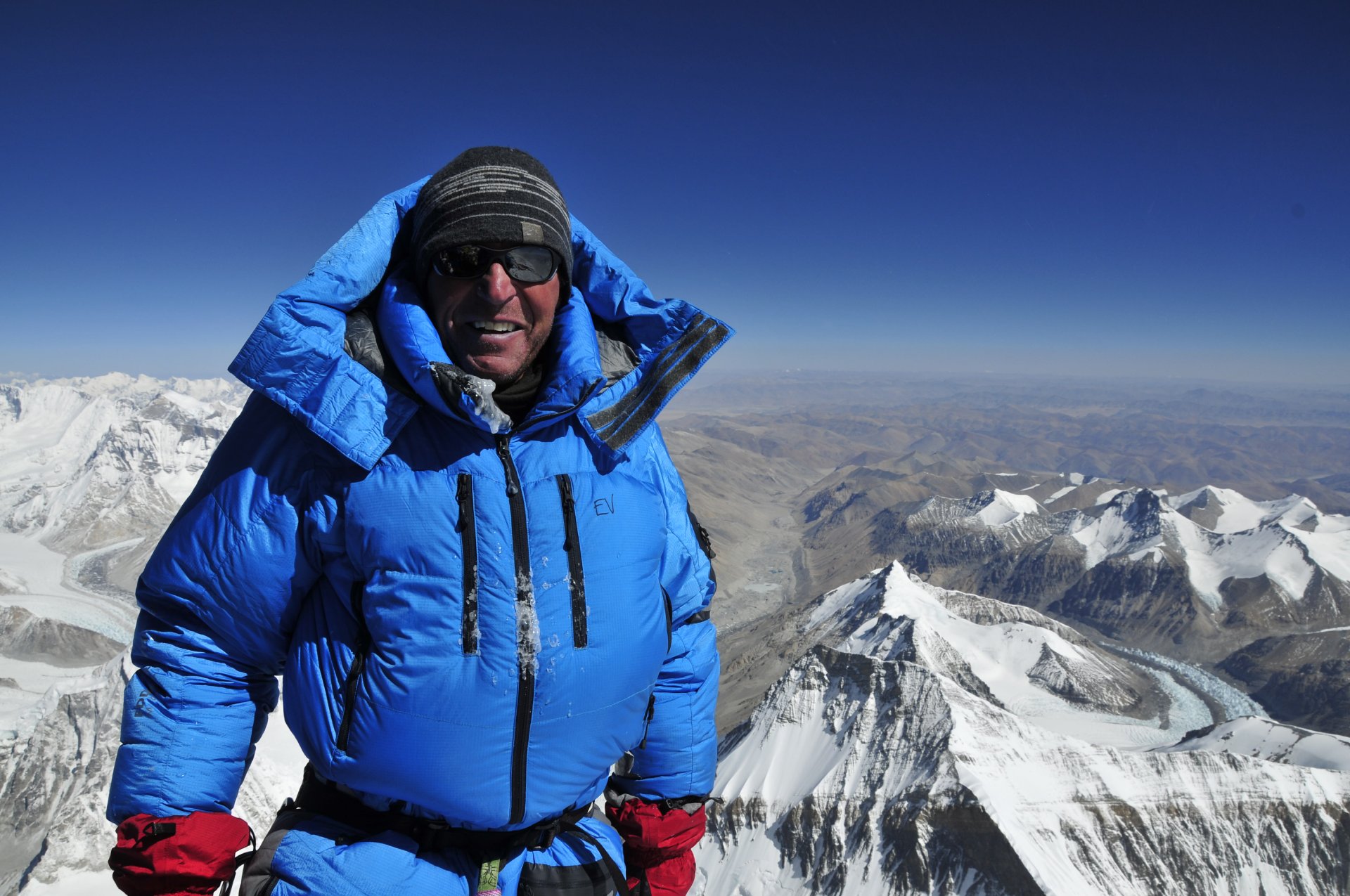
Few names command greater respect in mountaineering than Ed Viesturs. Widely regarded as one of the greatest high-altitude climbers of his generation, Viesturs became the first American to summit all 14 of the world’s 8,000-meter peaks without supplemental oxygen. His career spans decades of expeditions across the Himalaya, Karakoram and other legendary mountain ranges, earning him a reputation for disciplined decision-making, exceptional judgment and an unwavering commitment to returning home safely.

Today, Viesturs serves on the Global Rescue Mountain Advisory Council, an elite group of internationally recognized climbers and mountain professionals who advise Global Rescue on emerging trends, expedition safety, rescue operations and the unique challenges facing mountaineers worldwide. Their expertise helps ensure Global Rescue’s medical and rescue capabilities continue to meet the evolving demands of modern alpinism, whether supporting climbers on Everest, trekkers in Nepal or expedition teams operating in some of the world’s most remote environments.

Global Rescue recently sat down with Viesturs to discuss the evolution of mountaineering, leadership under pressure and what today’s climbers should understand before stepping into the high mountains.


A headshot of Ed Viesturs

Legendary Mountaineer Ed Viesturs Reflects on a Lifetime Above the World’s Highest Peaks

GLOBAL RESCUE: When pushing the absolute boundaries of human ability, how do you distinguish between your peak physical capacity and the point of no return?

VIESTURS: That’s one of the hardest questions to answer because there isn’t a simple measurement that tells you when you’ve crossed the line. As you climb higher and spend long periods at extreme altitude, fatigue gradually becomes cumulative. On summit day especially, you’re constantly evaluating your strength, endurance and mental clarity.

Experience becomes your greatest asset. If you’re climbing independently, you’re relying on everything you’ve learned over years in the mountains. If you’re with partners or guides, they may recognize subtle signs of exhaustion before you do.

Too often climbers push beyond their endurance simply because they’re determined to reach the summit. They spend everything getting to the top and then collapse during the descent. In my opinion, that’s one of the biggest contributors to serious accidents and fatalities in high-altitude mountaineering.


GLOBAL RESCUE: How do you view the shift from traditional, self-reliant alpine climbing to modern, highly commercialized expeditions?

VIESTURS: Commercial expeditions have made the world’s highest mountains accessible to far more people, but they’ve fundamentally changed the climbing experience.

Today, outfitting companies deploy enormous teams weeks before clients arrive. Loads are carried, camps are established, ropes are fixed from base camp to the summit and much of the infrastructure is already in place before climbers begin their ascent.

Clients often spend their time acclimatizing, but they may never participate in carrying loads, establishing camps, fixing rope or preparing meals. In many cases, they’re simply clipping into fixed lines and climbing.

The unfortunate consequence is that many climbers never fully learn what it takes to safely organize and execute a major Himalayan expedition. Those experiences build judgment, confidence and self-reliance, qualities that become invaluable when conditions inevitably deteriorate.


GLOBAL RESCUE: How has climate change and the rapid melting of historic routes shifted your approach to expedition planning and safety?

VIESTURS: Climate is changing the mountains in ways we’re already seeing every season.

Warmer temperatures are arriving earlier, which means snow and ice begin melting sooner. Routes that were once relatively stable now become exposed much earlier, increasing rockfall, icefall and other objective hazards.

I believe expeditions will increasingly have to adjust their calendars. Instead of beginning an Everest expedition in April and finishing in early June, teams may need to start in March and hope to finish by late April before conditions deteriorate.

The mountains are constantly changing. Successful climbers adapt rather than assume last year’s route will still be safe this year.


GLOBAL RESCUE: What concrete steps must the international climbing community take to solve overcrowding and bottlenecks in high-altitude “death zones”?

VIESTURS: Much of that responsibility falls on expedition operators.

When favorable weather finally arrives, nearly everyone wants to capitalize on what they believe may be the only summit window. That’s where summit fever and groupthink become dangerous.

No guide wants to tell clients they’re waiting while everyone else heads upward. That creates enormous pressure to follow the crowd.

Some of the most experienced guides have enough confidence to do exactly the opposite. They let the initial rush pass, watch how conditions develop and make their summit attempt later. They often encounter far fewer climbers and have a safer experience because they exercised patience instead of urgency.


GLOBAL RESCUE: Can you take us inside your mindset during a moment of imminent danger and explain how you compartmentalize fear to make life-saving decisions?

VIESTURS: The first priority is not to panic.

Panic leads to irrational decisions, and irrational decisions usually make a bad situation worse.

Instead, you calmly evaluate everything available to you. How strong is the team? What equipment remains? How much daylight do you have? What are the weather conditions? What options still exist?

You either make a collective decision or defer to the most experienced member of the team. Good decisions made deliberately are almost always better than rushed decisions driven by emotion.


GLOBAL RESCUE: Given the recent reckoning regarding high-altitude safety and harassment, what must change to ensure a safer and more equitable environment for women on expeditions?

VIESTURS: It’s an unfortunate issue that deserves serious attention.

Women should feel safe on every guided expedition and in every professional mountain environment. Complaints should be encouraged, investigated thoroughly and taken seriously.

If allegations are substantiated, those responsible should not continue guiding.

Too often these situations are minimized or ignored. That has to change if we expect people to trust the climbing community.


GLOBAL RESCUE: Beyond the six-figure price tags of modern commercial summits, what do you believe is the unmeasured human or ethical cost of today’s mountaineering industry?

VIESTURS: For decades, lowland porters and high-altitude Sherpa have formed the backbone of successful Himalayan expeditions.

Sometimes they’re viewed simply as labor instead of people.

They aren’t anonymous workers. They’re individuals with names, families and responsibilities. During emergencies they deserve the same respect and consideration as anyone else on the mountain.

The climbing industry depends upon them, and that contribution should never be overlooked.


GLOBAL RESCUE: How should the relationship between international climbers and Indigenous guides evolve to ensure fair compensation, safety and recognition?

VIESTURS: Fortunately, I believe we’re moving in the right direction.

Guides in Nepal, Pakistan and elsewhere have developed technical abilities and leadership skills equal to anyone in the world. They’re increasingly becoming true partners in decision-making rather than simply supporting Western expeditions.

Commercial climbing generates tremendous revenue. Indigenous guides, high-altitude workers and porters deserve fair compensation, professional respect and opportunities to advance throughout the industry.


GLOBAL RESCUE: With indoor climbing booming in popularity, what critical outdoor ethics and survival skills are missing from the education of this new generation of climbers?

VIESTURS: Indoor climbing is a fantastic place to begin.

It allows people to develop movement, strength and technical skills in a controlled environment.

The important lesson comes when climbers transition outdoors. Nature doesn’t have padded floors, controlled temperatures or predictable conditions.

Hopefully, new climbers recognize that the consequences become much greater once they’re operating in an uncontrolled mountain environment. Respect for weather, objective hazards, route finding and decision-making must become just as important as climbing ability.


GLOBAL RESCUE: Looking back at your legendary career, what do you want your lasting legacy to be, the peaks you stood on or the paths you paved for others?

VIESTURS: I never climbed to create a legacy.

I wanted to feel good about what I accomplished and, just as importantly, how I accomplished it.

The mountains taught me lessons that reached far beyond climbing: teamwork, patience, humility, risk management and thoughtful decision-making.

If anything endures, I hope it’s that I quietly led by example and demonstrated that success isn’t measured only by reaching the summit. It’s measured by making good decisions and coming home safely.


The Global Rescue Connection

For more than two decades, Global Rescue has helped mountaineers, trekkers and adventure travelers safely explore the world’s most demanding environments. Since its founding in 2004, Global Rescue has pioneered field rescue from the point of illness or injury, established a nearly two-decade affiliation with the Johns Hopkins Department of Emergency Medicine Division of Special Operations and Partners HealthCare, and remains the only organization with deployed personnel and operating capability in key mountain regions, including the Himalaya, Karakoram and Andes.

Whether planning an expedition to Mount Everest, trekking to Annapurna Base Camp or climbing in Patagonia, preparation begins long before stepping onto the trail. A Global Rescue membership is not insurance, so there are no claim forms, deductibles or surprise costs. Instead, members receive direct operational support when emergencies occur, including field rescue from the point of illness or injury, medical evacuation to the hospital of their choice when medically appropriate, 24/7 medical advisory services and security advisory support during natural disasters, political unrest or other disruptions.

Global Rescue’s Destination Reports provide detailed intelligence on local medical capabilities, emergency medical services, rescue infrastructure, environmental hazards and the strengths and limitations of destination healthcare systems. These reports help climbers understand not only where risks exist, but also where the highest-performing hospitals and emergency resources are available should an incident occur.

For serious mountaineers, informed decisions save lives. Combined with the experience of advisors like Ed Viesturs and Global Rescue’s worldwide operational capability, that preparation allows climbers to pursue ambitious objectives with greater confidence, knowing that if the unexpected happens, experienced professionals are ready to respond.