Article Highlights:

  • Terrain in the Pyrenees is far steeper and more physically demanding than most European hunters expect.
  • Day hunts offer flexibility and reduced logistical burden compared to high-altitude expeditions.
  • Superior optics — especially sporting scopes and binoculars — are critical to locating well-camouflaged Ibex.
  • Long-range shooting at steep angles is the defining technical challenge of the hunt.
  • Preparation for unpredictable terrain and weather is essential for both success and safety.


Hunting in the Pyrenees is one of Europe’s most technically demanding and visually stunning pursuits.For experienced hunters, the appeal lies in the combination of accessibility and challenge. This is not a casual European outing. The Pyrenees demand physical conditioning, technical shooting proficiency and a disciplined approach to glassing. The Ibex, perfectly adapted to this harsh terrain, rewards patience and punishes complacency.

As Kelli Poole, Global Rescue sales manager and an avid world traveler and hunter, explains, “People often underestimate European mountain hunts. The Pyrenees, in particular, can be physically demanding.”


Pyrenean Terrain Can be Rougher Than You Think

One of the most consistent surprises for first-time hunters in the Pyrenees is the terrain itself. Europe carries a perception of refinement and accessibility, but the chamois and ibex habitats can tell a different story.

The mountains here are steep, broken and can be unforgiving. Sharp ridgelines, loose scree slopes and vertical rock faces define much of the landscape. Elevation gains are often abrupt rather than gradual and footing can shift under every step.

“The terrain hits you fast,” says Poole. “You’re not easing into altitude or terrain, you’re in it immediately. It’s rougher than most hunters expect for Europe.”

This unpredictability requires preparation. Physical conditioning should emphasize not just endurance, but balance and stability. Hiking poles, proper mountain boots and layered clothing are foundational.

Weather adds another variable. Conditions can shift rapidly, with clear mornings giving way to fog, wind or rain within hours. Hunters must be prepared for changing visibility and temperature swings throughout the day.


The Nature of the Hunt: Strategic Day Hunts

Unlike remote expeditions in Central Asia or Africa, ibex hunting in the Pyrnees is typically conducted as a series of day hunts. This structure offers a distinct advantage: flexibility.

Hunters often return to a base lodge or accessible accommodation each evening, allowing for recovery, reassessment and adjustments to strategy. This reduces logistical complexity while maintaining the intensity of the hunt itself.

“Day hunts give you breathing room,” Poole notes. “You can push hard during the day and still recover properly. That balance helps you stay sharp over multiple days.”

This does not make the hunt easy, however. Each day can involve significant elevation gain, long stalks and extended glassing sessions. The benefit is not reduced difficulty but improved sustainability over the course of the hunt.


Spotting the Ibex and Chamois: Optics Are Everything

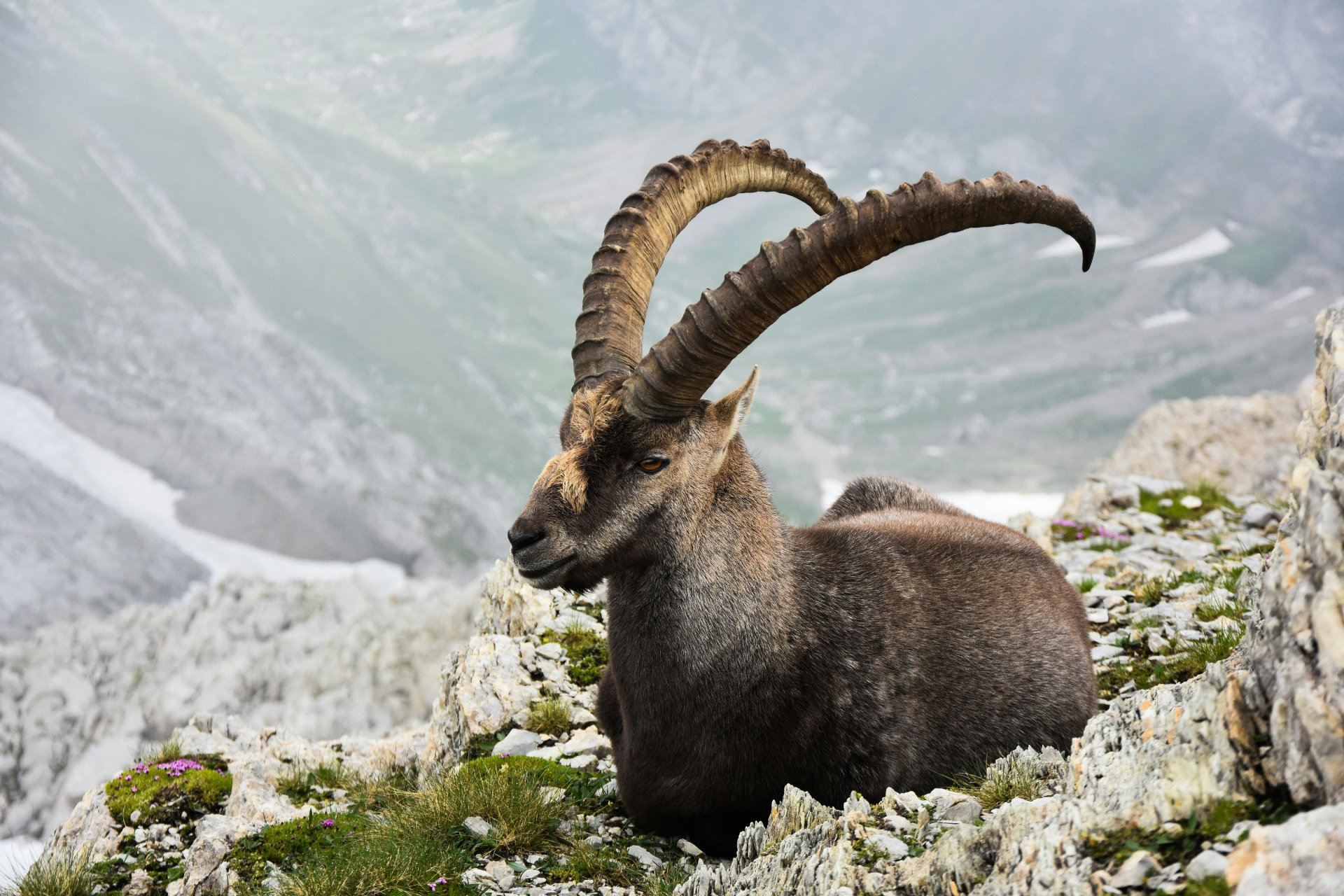
Ibex and chamois are masters of concealment. Their coloration blends seamlessly with the rocky terrain, making them extraordinarily difficult to detect, even at relatively close distances.

This is where optics become decisive.

High-quality spoting scopes and binoculars are essential tools, not accessories. Hunters spend a significant portion of the day glassing distant slopes, scanning for subtle movement or the faint outline of horns against rock.

“You’re looking for something that doesn’t want to be seen,” Poole explains. “Without top-tier binoculars and a good spotting scope, you’re at a serious disadvantage.”

Time behind the glass allows hunters to identify mature animals, assess trophy quality and plan a viable approach route before committing to a stalk. Poor optics lead to missed opportunities and wasted effort.

In this environment, clarity, magnification, and eye relief are critical. Early morning and late afternoon — prime movement periods — often coincide with challenging lighting conditions. Inferior optics simply won’t perform when it really matters.


Long Shots and Steep Angles

Once an ibex or chamois is located and a stalk is executed, the final challenge begins: the shot.

Shots in the Pyrenees are rarely straightforward. Distances are often extended, and angles are steep — either uphill or downhill. These conditions introduce ballistic complexities that require preparation and experience.

Gravity affects bullet trajectory differently on angled shots, effectively shortening the horizontal distance. Hunters must adjust accordingly, often relying on rangefinders with angle compensation or prior training in mountain shooting.

“Make sure to take the time to build a good base when shooting,” says Poole. “You’re dealing with elevation, wind and sometimes unstable terrain and vegetation”

Wind is another factor. Mountain environments create unpredictable air currents that can shift direction and intensity quickly. Reading these conditions accurately is essential for ethical, effective shooting.

Practicing long-range shooting before the hunt is critical. Familiarity with your rifle, ammunition and ballistic performance under varied conditions can make the difference between success and a missed opportunity.


Expect the Unexpected

Preparation for an ibex hunt in the Pyrenees requires a comprehensive approach to uncertainty.

Terrain can change rapidly. Weather can shift without warning. Visibility can disappear in minutes. Hunters must be ready to adapt.

Key preparation considerations include:

  • Training for steep ascents and descents.
  • Practicing shooting from unconventional positions.
  • Testing gear under real-world conditions.
  • Building endurance for consecutive days of effort.

“Preparation is what keeps a hunt from turning into a struggle,” Poole emphasizes. “The more variables you can be prepared for ahead of time, the more you can focus on the hunt itself.”

Mental preparation is equally important. Patience, discipline and the ability to remain focused under pressure define successful hunters in this environment.


Why the Pyrenees Stand Out

The Pyrenees are unique because of their accessibility and intensity. Hunters can experience a true mountain hunt without the extreme remoteness of other global destinations, though the challenge remains authentic.

The ibex itself embodies this balance. Agile, resilient and perfectly adapted to its environment, it represents one of Europe’s most iconic game species.

For hunters seeking a test of skill rather than convenience, the mountains deliver.

“It’s one of those hunts that stays with you,” Poole reflects. “Not just because of the animal, but because of everything it takes to get there.”


The Global Rescue Connection

Lieutenant Colonel Rick Steiner, a retired US Army Special Forces commander with nearly two decades of operational experience, has spent years hunting in some of the most remote regions in the world. His perspective is direct and unambiguous:

“I’ve been to Afghanistan, Somalia, Uganda, Cameroon, Tanzania and British Columbia, so having a rescue organization standing behind me that has the capability to come get me anywhere I might be is an absolute necessity.”

Steiner’s hunts in southeastern Cameroon — deep within triple canopy jungle, surrounded by dangerous wildlife, extreme humidity and virtually nonexistent infrastructure — highlight a core truth that applies equally in the Pyrenees: risk is not always predictable, and it rarely presents itself the way you expect. Even experienced hunters, operating with discipline and awareness, encounter situations beyond their control.

In one case, a Global Rescue member hunting in similar remote conditions suffered a serious eye injury from something as mundane as a snapped elastic band. What began as a momentary accident quickly escalated into a potential loss of vision. From deep in the forest, Global Rescue coordinated an evacuation, guiding the hunting party to an airstrip, securing aircraft access and arranging onward transport to a specialized ophthalmology center in Belgium where treatment was immediately available.

In other incidents, Global Rescue has coordinated evacuations for hunters facing life-threatening illness in Mozambique and severe injuries following a leopard attack in Botswana, ensuring access to higher-level care when local medical infrastructure was insufficient.

These are not edge cases but are instead representative of what can happen when hunting in environments where terrain, wildlife and isolation intersect.

Even in the Pyrenees, where infrastructure is closer, the combination of steep angles, long-range shooting positions and remote ridgelines can delay traditional emergency response. A fall, a misstep on loose rock or a medical event at elevation can quickly turn into a logistical problem.

A Global Rescue membership bridges that gap.

Members gain access to field rescue from the point of injury, medical evacuation to the most appropriate facility — not just the nearest one — and 24/7 advisory support from experienced medical professionals. As Steiner experienced firsthand, that support extends beyond emergencies. When he fell ill during a trip, Global Rescue provided real-time medical guidance with a level of engagement comparable to a trusted physician.

“Global Rescue is the only service provider of its type that has earned my confidence,” Steiner said. “I simply won’t go on a hunting or fishing expedition without the peace of mind that comes from having a Global Rescue membership.”