Categories:
Health & SafetyOctober 10, 2023
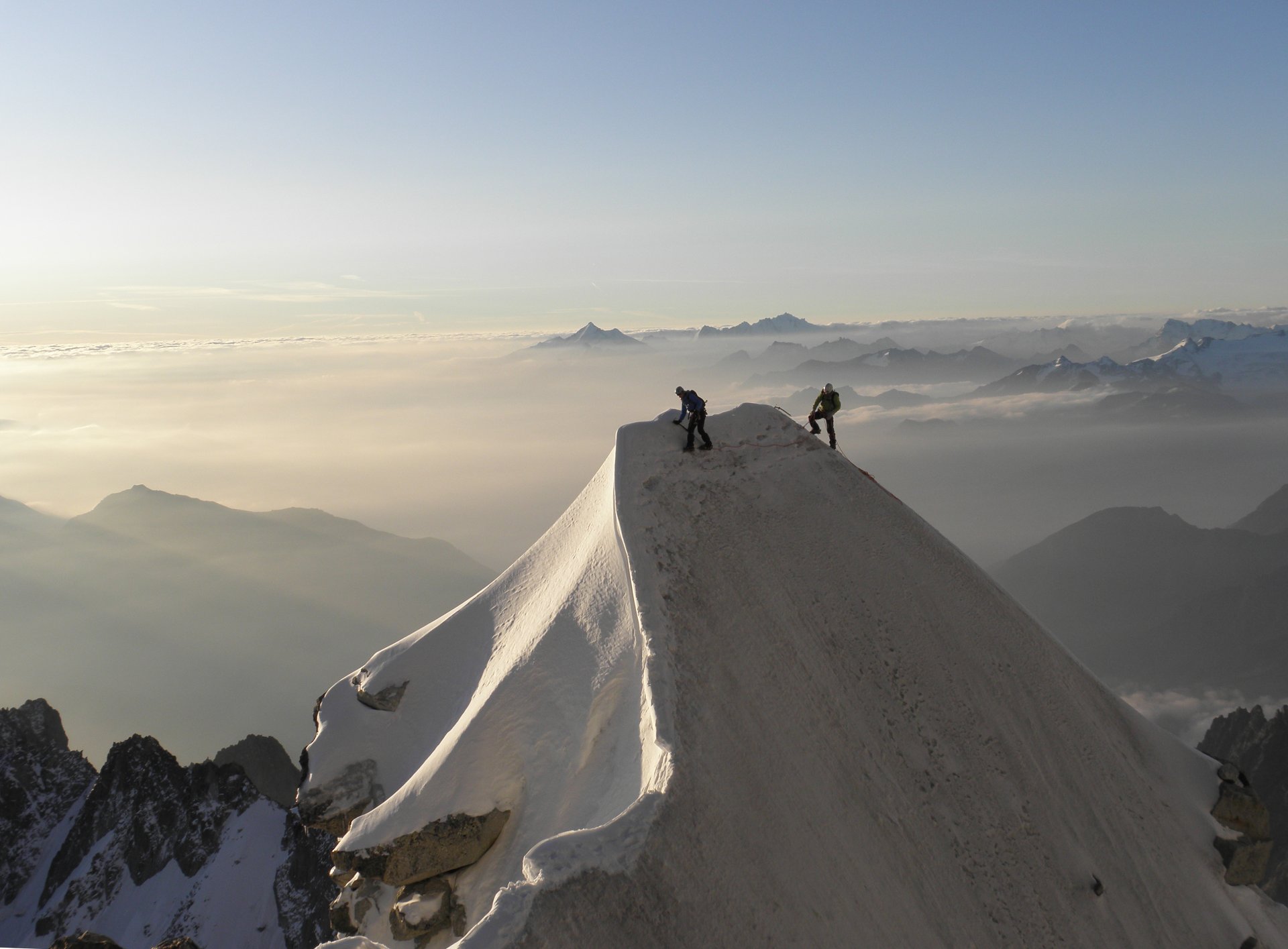
“There’s only one way to eat an elephant: one bite at a time.”
Desmond Tutu probably wasn’t thinking about peak-bagging lists when he shared this bit of wisdom. But it holds true for hikers, trekkers and climbers who want to travel the world by summiting its most famous peaks. How do you complete your massive peak-bagging list? One peak at a time.
And it can take a long time.
Ed Viesturs needed 18 years to become the first American, and 12th climber in history, to summit all 14 mountains over 8,000 meters (collectively known as the eight-thousanders). That was in 2005. Eighteen years later Chris Warner became the second American to accomplish this same challenge. It took him 24 years.
If, however, spending a quarter of a lifetime climbing to the highest points on earth sounds a bit too lofty a goal, there are plenty of other summiting challenges out there waiting for you to scale. Here’s a list that’s sure to inspire peak baggers of every variety from the cautious newbie to the seasoned pro.

The Seven Summits
Make it to the top of the highest point on each of the seven continents, and you’ll have bagged some of the most challenging peaks in the world, packing in some serious sites and cultural experiences as you do.

The Scottish Munros
In September of 1891, mountaineer Sir Hugh Monro, “changed hiking in Scotland forever,” Stuart Kenny wrote for Much Better Adventures. He published his “Tables giving all the Scottish mountains exceeding 3,000 feet in height,” which now (with subsequent revisions) amount to 282 mountains rising 3,000+ feet above sea level. Why not plan a trip to Scotland next fall? Lonely Planet calls it “an excellent time of year for outdoor pursuits,” due to the “dry and mild” weather. Plus, there’s tons of great attractions to enjoy in Scotland as a reward for bagging these legendary summits.
[Related Reading: Are You Prepared To Summit?]
The New Hampshire 48
With each peak conquest, hikers reach new status, exclusive to those with the stamina and grit to summit. According to New Hampshire Way, if you climb all of the New Hampshire 48 (each over 4,000 feet), you can be recognized by the Appalachian Mountain Club, get an achievement patch and be invited to an awards dinner. Climb it in the winter—an especially treacherous time, even on the “easy” hikes—and you can earn another patch.

The Colorado 14ers
The 53 summits rising above 14,000 feet in Colorado, known as the Colorado 14ers include “peaks easily accessed by urban visitors, as well as, remote backcountry peaks that provide a wilderness experience,” according to the Forest Service of the U.S. Department of Agriculture. Colorado.com writes that the peaks are ranked 1 to 4 by difficulty. The easiest are still challenging, Colorado.com says, but have “straightforward, clearly marked trails.” The difficulty increases with unmarked trails, steep climbs, scrambling, and in category 4, “Steep and dangerous terrain necessitating hand- and footholds to reach the top, plus ropes and climbing.”

Everest by the Bay
Not quite ready for Mount Everest’s 29,032 feet in one go? Climb “it” in installments via the nine peaks of Everest by the Bay in San Francisco. According to Public Lands, the summits are “all between 2,000 and 3,000 feet, surrounding San Francisco Bay. If you summit them all, you’ll have climbed roughly 32,000 feet in elevation—the same as climbing Mount Everest from sea level, and then some. The catch: they all require between a 10- and 20-mile hike, making this list a tough one for novices.”
The Adirondack 46ers
This bundle of peaks was first identified in 1927 in a book called “Peaks and People of the Adirondacks” by Russell M.W. Carson, according to Adirondack.net. Originally, all the mountains were recorded to have elevations of at least 4,000 feet. More recent studies have revealed some fall short of that, and one summit that meets that number was not included. “Nevertheless, the original 46 are still grouped together and recognized as the ones to overcome. If you climb them all, then you are eligible to become an official Adirondack 46er,” Adirondack.net reports.
South Beyond 6000
There are more than 60 summits in the southern Appalachian Mountains, according to The Carolina Mountain Club, but only 40 meet the criteria for the South Beyond 6000: the summit elevation is more than 6,000 feet above sea level, and there is a drop of 200 or more feet to a saddle between one peak and another qualifying peak or, there is a distance between the peaks of .75 miles. The Carolina Mountain Club notes that the terrain has changed significantly over the years, making the hike more difficult.
[Related Reading: How To Get into Mountaineering]
MLK’s “I Have a Dream” Peaks
In Martin Luther King Jr.’s famous “I Have a Dream” speech, he calls for freedom to ring out from the peaks of mountains across the United States. The eight peaks he references are now a peak-bagging list, which hikers can summit in solidarity and remembrance of his powerful message.
King declared, “Let freedom ring from the prodigious hilltops of New Hampshire. Let freedom ring from the mighty mountains of New York. Let freedom ring from the heightening Alleghenies of Pennsylvania! Let freedom ring from the snowcapped Rockies of Colorado! Let freedom ring from the curvaceous slopes of California! But not only that; let freedom ring from Stone Mountain of Georgia! Let freedom ring from Lookout Mountain of Tennessee. Let freedom ring from every hill and mole hill of Mississippi. From every mountainside, let freedom ring!”
While King referred to, but did not call out, specific peaks, his references have been narrowed down to this list from peakbagger.com and range from elevations of 800 feet to more than 14,000 feet.

Montana 53
Peakbagger.com outlines the 53 peaks of the Montana 53, first established in Cedron Jones’ 2011 guidebook Peakbagging Montana. Peakbagger.com notes that although the list is not as daunting as some other Montana peak bagging lists, “there are still many stiff challenges…only skilled scramblers comfortable on Montana’s notoriously crumbly rock will be able to complete it. Under ideal weather and route conditions, no peak on this list will require a rope for peakbaggers comfortable with class 3 terrain with occasional bits of class 4. Still, many peaks require multi-day expeditions and solid wilderness skills. The peaks in Glacier National Park and the Beartooths in particular can be difficult.”
Arizona 20-20 Challenge
The Arizona 20-20 is unique to the lists here because it includes 20 of Arizona’s deepest canyon hikes, in addition to its 20 highest peaks. You can see a map of the list and learn more about hiking it on The Arizona’s 20-20 Challenge website, which shares that “Arizona has a diverse landscape. In addition to deeply incised canyons, for which Arizona is famous, we also have snowy summits above tree line. The statewide distribution of the hikes in Arizona’s 20-20 Challenge allows you to experience the physiographic, biotic, geologic, and climatic diversity of Arizona.” As far as difficulty goes, the site says the hikes are challenging for different reasons. “Some hikes are steep (Humphreys Peak), some are long (Paria Canyon), and some are in extremely remote areas (Jumpup Canyon).”

Ready To Bag Some Peaks?
Don’t set off without a Global Rescue membership. If you’re planning to go above 15,000 feet or 4,600 meters at any point during your peak-bagging excursion, include Global Rescue’s High-Altitude Evacuation Package. We’re here for you in even the most extreme circumstances—like when you’re standing atop the world’s highest peaks. Our medical and evacuation services provide the protection you need to fearlessly hike, climb and scramble your way around the world.
Get a price estimate
Estimate
$0.00
Please answer all questions for estimate.
Categories:
NewsOctober 10, 2023
(Lebanon, NH – October 7, 2023) The deadly attack by Hamas on Israel has surprised officials, residents, religious pilgrims and tourists, trapping many in a violent conflict that has already escalated.
Global Rescue, the world’s leading medical and security evacuation and travel risk company, is orchestrating operations to bring member tourists and others to safety.
“We’re doing everything we can in a tough and evolving situation,” said Dan Richards, CEO of The Global Rescue Companies. “Our security operations teams are working to secure the safety of our members but the situation remains fluid.”
Contact Michael Holmes at mholmes@globalrescue.com or +1 (603) 783-6268 to schedule an interview with Global Rescue CEO Dan Richards.
Categories:
NewsOctober 6, 2023
Categories:
NewsSeptember 29, 2023
Categories:
Health & SafetySeptember 28, 2023
If you’re an avid birder, you probably have a bucket list of rare birds you dream of seeing one day. But like any bucket list, the distance between dreaming and doing can feel greater than the distance a Bar-tailed Godwit travels while migrating, especially when there is an element of risk involved.
The following destinations, though home to some of the rarest, most breathtaking birds on earth, might give even the most daring birder pause, especially given their travel advisory status from GRID – the Global Rescue Intelligence Delivery system, which is informed by the most recent and relevant resources, including the U.S. Department of State.
And yet these trips are not impossible. With smart research and planning, an abundance of persistent awareness, a Global Rescue membership with a security add-on and a lot of courage, you have the best chance to realize those birder bucket list dreams.

1. Australia
It’s no surprise that Australia is very safe for traveling and has a low-risk rating (exercise normal precautions) by GRID. But you would need to embark on some daring adventures to spot the Night Parrot, only found in the Outback once the sun sets.

2. Bhutan
Bird Spot lists Bhutan as one of the top birding destinations in the world.
“Unlike many other countries in the Himalayas, which have undergone massive deforestation programs, the kingdom of Bhutan has protected large areas of forest which means many species of birds thrive here that do not elsewhere,” according to Bird Spot.
Although GRID gives Bhutan a low-risk rating as well, we strongly advise that travelers have evacuation services for their trip due to the mountainous, remote nature of the country. In general, medical resources are scarce, especially outside populated areas. But if you’re willing to take the risk, you will be richly rewarded with the opportunity to see a wide variety of birds, including several endangered species like the Baer’s pochard, the Black-necked Stork, or the Beautiful Nuthatch.

3. Peru
Rated as having a moderate risk (exercise increased caution) by GRID, travel to Peru gets more dangerous the more remote you are. And you will need to get remote to see the more than 1,800 birds native to this South American birding paradise, said Nicholas Lund, expert birder and writer.
“Peru has one of the largest species lists of any country on Earth,” he said. “But to see them, you will need to travel to every region of the country, traversing the Humboldt Current, the Andes Mountains and the Amazon Basin.”

4. Indonesia
“This tropical nation is one of the most storied birding destinations in the world, with hundreds of islands to explore and thousands of species to discover,” Lund said.
An increased level of caution is advised due to terrorism and natural disasters. But if you’re willing to take the trip, you may be lucky enough to see:
The Sunset Lorikeet, found on the islands neighboring Indonesia.
The Bronze Parotia of the Foya Mountains, which lives in West Papua, Indonesia.
The Dulit Frogmouth of Borneo, a mountainous island in the Indonesian archipelago.

5. Brazil
GRID also rates Brazil as a moderate risk country. There’s heightened risk as you travel through forests and encounter tropical birds, but it may be worth it to see:
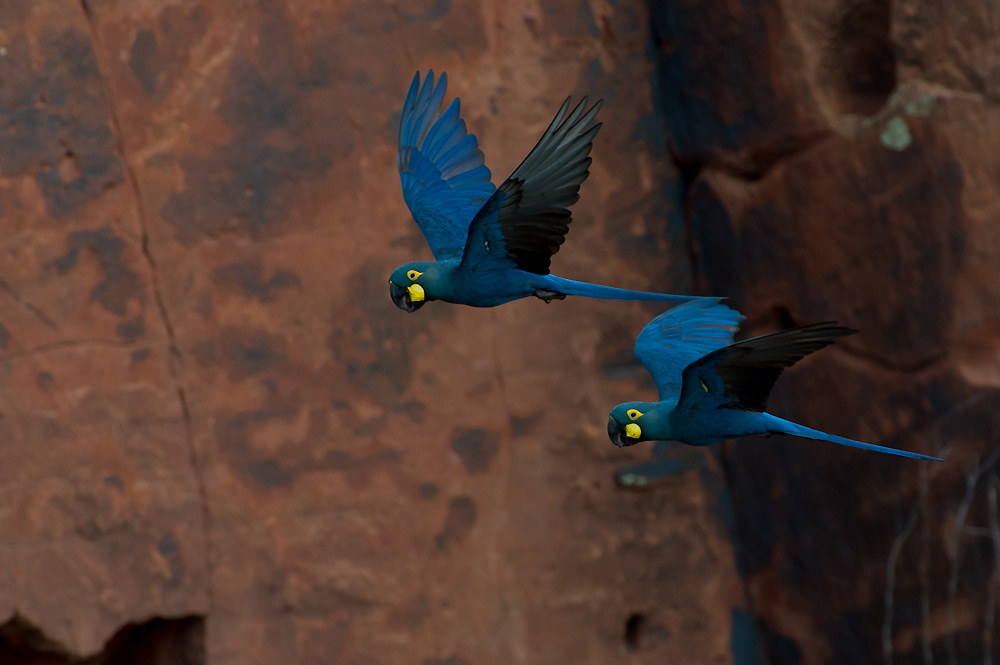
The Lear’s Macaw. Although endangered, this bird, also known as the Indigo Macaw, can still be found in northeastern Brazil, especially at a reserve called the Canudos Biological Station. There you can find guided tours through the sandstone cliff habitat where they live.
The Scaled Ground-Cuckoo, which lives in the lower Amazon in northern Brazil. The Matador Network reports the bird is very hard to spot, and you must be prepared to “access some very inhospitable terrain and endure the stinging bites of the army ant swarms the species habitually follow.” reports the bird is very hard to spot, and you must be prepared to “access some very inhospitable terrain and endure the stinging bites of the army ant swarms the species habitually follow.”

6. Papua New Guinea
GRID rates Papua New Guinea as high risk because of civil unrest, crime and piracy. Medical care is spotty, and birding adventures will take you to remote, hard-to-reach places. A trip here would require serious consideration and planning, and a Global Rescue membership with a security add-on would certainly provide the additional protection needed as you attempt to see:
The Raggiana Bird-of-Paradise, which is native to Papua New Guinea.
The Dwarf Cassowary—one of the world’s most elusive birds.
The Greater Bird-of-Paradise, which lives in inaccessible, dense rainforest habitats in Papua New Guinea and surrounding islands.
The Vogelkop Superb Bird-of-Paradise, which is found only in the Bird’s Head Peninsula in the far west. According to Nature Anywhere, this is a brand-new species!

7. Guatemala
The Resplendent Quetzal lives in the mountainous tropical forests of Central America and is the national bird of Guatemala. Bella Falk for BBC’s Discover Wildlife reports that the quetzal is extremely elusive, and to see it in Guatemala, “you have to go to one of just four protected cloud forest reserves, which means getting up before dawn and hiking for several hours into the jungle.”
Crime levels are high in Guatemala and although medical services are available in Guatemala City, emergency medical care would be spotty on a remote trip to find this bird. For these reasons, we urge travelers to reconsider their trip to Guatemala (GRID rates it as a high-risk country).

8. China
The Golden Pheasant is native to the mountainous areas of western China. Due to political instability, GRID gives China a high-risk rating, and we urge people to reconsider travel. Medical care in China is also unpredictable, which is a critical emergency care gap especially since many China birding adventures would be in higher altitudes where the likelihood of Acute Mountain Sickness, HAPE or HACE is a serious threat.
9. The Democratic Republic of Congo
A trip to find the Congo Bay Owl is extremely dangerous, not to mention extremely rare. The last one seen was in 1996, the Matador Network reports. Could you be the next to lay eyes on one? Only if you’re willing to travel to the Itombwe Mountains in a high risk-ranked country fraught with politically motivated, violent conflicts, civil unrest, terrorism and kidnapping.

10. Senegal
This is the only non-extreme risk (“do not travel”) country where you may be able to spot the Shoebill Stork, White-crested Turaco and the Blue-bellied Roller.
Should You Stay or Should You Go?
As with any travel, we strongly advise our members always to abide by Global Rescue’s GRID-informed guidance. As you plan your next birding trip, always consider the risks involved. The best place to start is by reaching out to our team of experts who will help you identify and understand the potential dangers of a trip anywhere, and help you prepare to minimize the risks involved.
(Lebanon, N.H. – September 26, 2023) Global Rescue, the world’s leading provider of medical, security, evacuation and travel risk management services, announced the release of GRIDSM 2.0, The Global Rescue Intelligence Delivery System. “GRID 2.0 is revolutionizing business travel safety,” said Dave Leopold, Global Rescue director of enterprise sales.
GRID 2.0 is the only integrated travel risk, asset tracking, intelligence delivery and crisis response platform available in the world today. It is designed to minimize traveler risk when the unexpected happens and get business travelers to safety.
During a preliminary launch in recent months, the GRID 2.0 system was used to coordinate evacuations of travelers from war-torn Ukraine and Sudan’s violent conflict, help students and faculty get out of Russia, and provide security advisory for foreign news correspondents working for several major U.S. news outlets.
“GRID 2.0 helps keep track of people. It makes the needle bigger and the haystack smaller,” said Harding Bush, former Navy SEAL and Global Rescue security operations manager.
“I rely on GRID to keep our worldwide workforce safe. With real-time tracking and emergency alerts, GRID gives me the visibility and response capabilities to protect our travelers anytime, anywhere. This innovative platform is essential for globally minded organizations like ours,” said Eric Cioè-Peña, MD, MPH, FACEP, vice president of global health center for Northwell Health.
GRID 2.0 features five specific traveler safety attributes that make it a ‘must-have’ app for the health and safety of business travelers.
- Instant Communication: The updated traveler-tracking feature allows users to share links directly from the portal with colleagues to enhance safety and peace of mind.
- Smart Alerts: An augmented algorithm computes travel data visualization and determines which travelers are impacted by events at destinations and informs them through alert notifications.
- Visualize the World: state-of-the-art integrated map functionality enables users to visualize real-time traveler data dynamically and interactively.
- Enhanced Experience: Enhanced user experience (UX) and user interface (UI) upgrades improve seamless dissemination of information.
- Global Insights: The redesigned control center provides near-to-real-time global event updates customized to the needs of travelers who potentially may be impacted.
“Beyond all its capabilities, we built GRID 2.0 as an extension of our best-in-class medical, security, evacuation and travel risk management services. GRID 2.0 isn’t just software; it’s an indispensable companion app to everything Global Rescue offers in worldwide travel protection services,” Leopold said.
“This one-of-a-kind system includes innovative traveler safety features, advanced traveler-tracking capabilities, and an enhanced user interface to keep business travelers safe, informed and connected,” Leopold said. “GRID 2.0 provides travelers with real-time background, analysis, and advice about what to do in the event of an emergency in the country they are visiting.”
Most business travelers lack immediate access to travel intelligence information or communication capabilities that may be lifesaving in the event of a medical or security emergency.
GRID 2.0 changes that.
The GRID 2.0 system distributes Event Notifications and Alerts for civil unrest, disease-related developments, safety issues, transportation disruptions, communications blackouts, and natural disasters including floods, hurricanes, earthquakes, and volcanic activity.
In an emergency, the GRID 2.0 app puts its members in immediate contact with the medical teams and military special operations veterans who staff Global Rescue’s Global Operations Centers.
GRID 2.0 Connects Users With Business Chief Security Administrators
The GRID 2.0 system is comprised of two parts to reduce traveler risk. The Individual Traveler Mobile App and the Desktop Administrator Control Center work together to help individuals, organizations, companies and universities protect, track and communicate with remote travelers, employees and students.
Travelers using the GRID 2.0 Individual Traveler Mobile App can research medical and security risks by destination, obtain automatic Destination Reports, receive active security alerts including analysis and advice, connect for GPS “check-ins” with real-time location tracking, and stay in touch with in-app communications both internally and with Global Rescue.
Administrators managing the GRID 2.0 Desktop Administrator Control Center receive comprehensive situational awareness of global risks 24/7/365, monitor real-time global threats and analysis with Event Alerts, audit a dynamic global risk map to identify regions of increased risk, manage communications using the in-app messaging that allows direct contact with individual or group GRID 2.0 Mobile App users.
“The GRID mobile app places critical medical, security and other essential travel intelligence at fingertips of my traveling workforce, and the GRID Administrator Control Center gives us access to global risks 24/7/365 so we can monitor and respond for the safety of our business travelers,” said Sherri Hersh, senior manager, International Accreditation, ABET.
GRID 2.0 mobile application is designed for ease of use and includes six essential user functions:
- Emergency Function: During an emergency, tap and hold the Emergency button at the top of the landing page for three seconds. This will automatically send a message to the Global Rescue’s Operations Center, which will start working on your case immediately. You can choose to add details if appropriate.
- Alerts Function: The Alerts Function allows you to view Event Alerts that meet the specific criteria you’ve selected via the online GRID 2.0 platform for unique Alert Profiles.
- Check-In: If you choose to check in, tap the “check-in” button on the landing page, and then the “check-in” button on the next page. You can include a message if you would like. By checking in, you are sending your GPS coordinates to Global Rescue and your company.
- Events: The Events Function shows all Event Alerts that Global Rescue’s in-house Intelligence team publishes. The titles of the Event Alerts are visible on the first page, along with the risk rating of the country affected. You can select any of the Event Alerts that interest you and read a summary and analysis of the situation and advice on what actions to take if affected.
- Destination Reports: The Destination reports cover everything from currency and common scams to travel health and personal security advice in 215 countries and principalities worldwide.
- Contact Global Rescue: Global Rescue is available 24/7/365 for questions or concerns. Get real-time access to doctors, paramedics, nurses and intelligence experts.
###
Contact Bill McIntyre at bmcintyre@globalrescue.com or 202.560.1195 (phone/text) for more information.
About Global Rescue
The Global Rescue Companies are the world’s leading provider of medical, security, evacuation and travel risk management services to enterprises, governments and individuals. Founded in 2004, Global Rescue has exclusive relationships with the Johns Hopkins Emergency Medicine Division of Special Operations and Elite Medical Group. Global Rescue provides best-in-class services that identify, monitor and respond to client medical and security crises. Global Rescue has provided medical and security support to its clients, including Fortune 500 companies, governments and academic institutions, during every globally significant crisis of the last two decades. For more information, visit www.globalrescue.com.
Categories:
Business TravelSecurity & IntelligenceSeptember 26, 2023
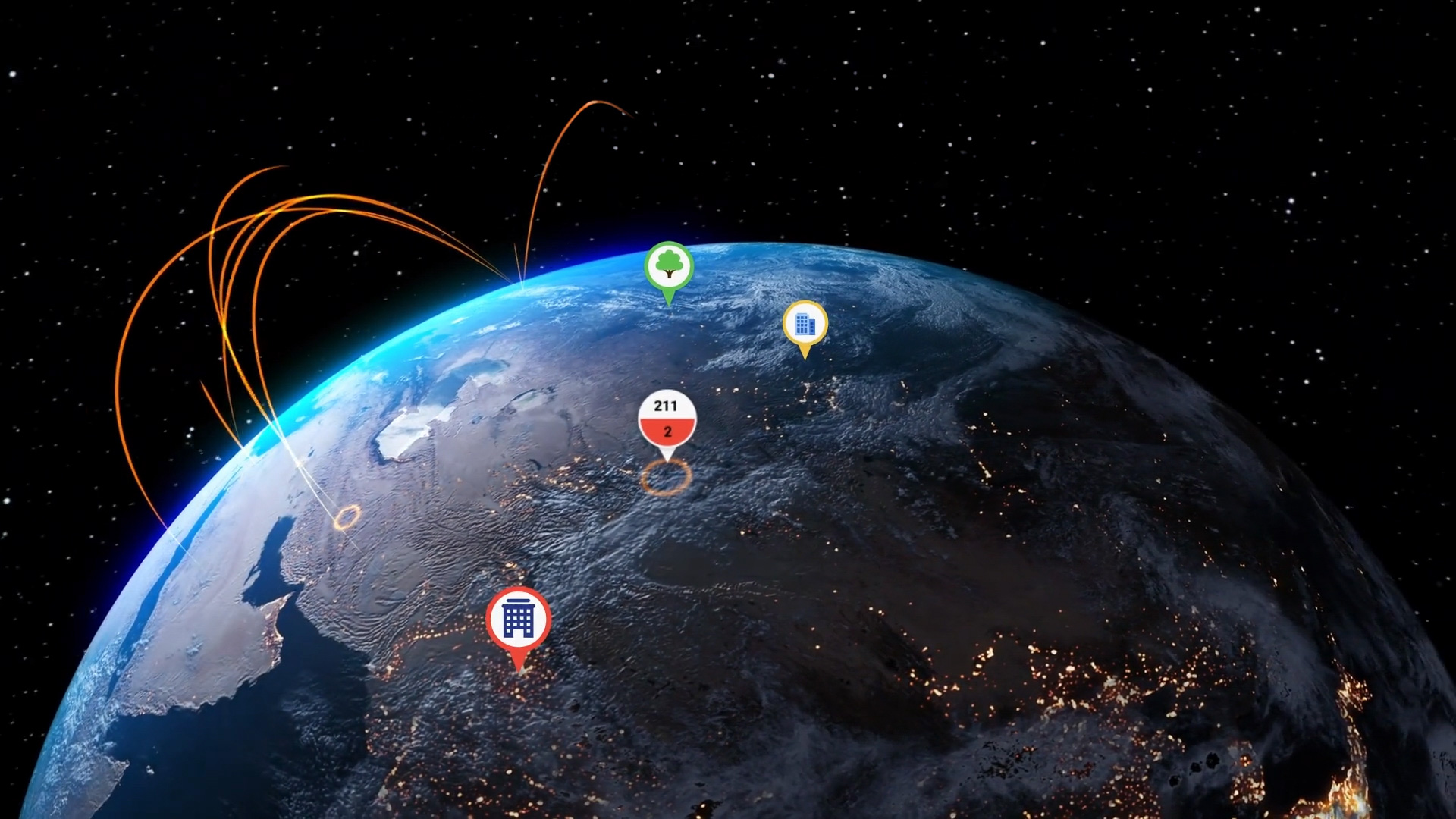
The new and improved Global Rescue Intelligence Delivery system (GRID 2.0) isn’t just the world’s only integrated travel risk, asset tracking, intelligence delivery and crisis response management platform. It’s an indispensable companion app to our best-in-class medical, security, evacuation and travel risk management services.
Our team of medical, security, operations and tech experts optimized this one-of-a-kind system with new, innovative traveler safety features, advanced traveler-tracking capabilities, and an enhanced user interface to keep travelers safe, informed and connected.
What’s New
GRID 2.0 features five specific upgrades that make it a ‘must-have’ tool for the health and safety of business travelers.
- The updated traveler-tracking feature allows users to share links directly from the portal with colleagues, friends and family to enhance safety and peace of mind.
- An augmented algorithm computes travel data visualization and determines which travelers are impacted by events at destinations and informs them through alert notifications.
- A state-of-the-art integrated map functionality enables users to visualize real-time traveler data dynamically and interactively.
- Enhanced user experience (UX) and user interface (UI) upgrades improve seamless dissemination of information.
- The redesigned control center provides near-to-real-time global event updates customized to the needs of travelers who may be impacted.
The GRID System Improves Travel Industry Health and Safety
Most travelers lack immediate access to travel intelligence information or communication capabilities that may be lifesaving in the event of a medical or security emergency.
Global Rescue’s GRID 2.0 changes that.
The GRID 2.0 system distributes event notifications and alerts for civil unrest, disease-related developments, safety issues, transportation disruptions, communications blackouts and natural disasters including floods, hurricanes, earthquakes, and volcanic activity.
In an emergency, the GRID 2.0 app puts its members in immediate contact with the medical teams and military special operations veterans who staff Global Rescue’s global operations centers.
The GRID mobile app places critical medical, security and other essential travel intelligence at fingertips of my traveling workforce, and the GRID Administrator Control Center gives us access to global risks 24/7/365 so we can monitor and respond for the safety of our business travelers. – Sherri HershSenior Manager, International Accreditation, ABET
How It Works
The GRID 2.0 platform comprises two parts to reduce traveler risk: the Individual Traveler Mobile App and the Desktop Administrator Control Center. These tools work together to help individuals, organizations, companies and universities protect, track and communicate with remote travelers, employees and students.
Travelers using the GRID 2.0 Individual Traveler Mobile App can research medical and security risks by destination, obtain automatic destination reports, receive active security alerts including analysis and advice, connect for GPS “check-ins” with real-time location tracking, and stay in touch with in-app communications both internally and with Global Rescue.
Administrators managing the GRID 2.0 Desktop Administrator Control Center receive comprehensive situational awareness of global risks 24/7/365, monitor real-time global threats and analysis with event alerts, audit a dynamic global risk map to identify regions of increased risk, and manage communications using the in-app messaging that allows direct contact with individual or group GRID 2.0 Mobile App users.

Global Rescue’s GRID 2.0 mobile app is designed for ease of use and includes six essential user functions:
- Emergency function – During an emergency, tap and hold the Emergency button at the top of the app’s landing page for three seconds. This will automatically send a message to the Global Rescue Operations Center, which will start working on your case immediately. You can choose to add details if appropriate.
- Alerts function – View event alerts that meet the specific criteria you’ve selected via the online GRID 2.0 platform for unique alert profiles.
- Check-In – If you choose to check in, tap the “check-in” button on the landing page, and then the “check-in” button on the next page. You can include a message if you would like. By checking in, you are sending your GPS coordinates to Global Rescue and your company.
- Events – See all event alerts published by Global Rescue’s in-house intelligence team. The titles of the event alerts are visible on the first page, along with the risk rating of the country affected. You can select any of the event alerts that interest you and read a summary and analysis of the situation, and advice on what actions to take if affected.
- Destination Reports – Comprehensive reports that cover everything from currency and common scams to travel health and personal security advice in 215 countries and territories worldwide.
- Contact Global Rescue – Global Rescue is available 24/7/365 for medical or security questions. Get real-time access to doctors, paramedics, nurses and intelligence experts.

GRID 2.0 by the Numbers
More than 150 companies have used Global Rescue’s GRID 2.0 system. In the past 18 months, the system has distributed nearly two million alerts to member company staff and their contractors, as well as journalists, business travelers, faculty and students. GRID 2.0 provides travelers with real-time background, analysis and advice about what to do in the event of an emergency in the country they are visiting.
In recent months, the Global Rescue GRID 2.0 platform was used to coordinate evacuations from war-torn Ukraine and civil unrest in Sudan, help students and faculty get out of Russia, and provide security advisory for foreign news correspondents working for several major U.S. news outlets.
GRID 2.0 helps keep track of people. It makes the needle bigger and the haystack smaller. – Harding BushFormer Navy SEAL and Global Rescue Security Operations Manager
GRID 2.0 places critical medical, security and other essential travel intelligence in the hands of leisure and business workforce travelers from Fortune 500 companies, colleges and universities, NGOs, government agencies and organizations.
In the first half of 2023, there were a total of 5,564 global events reported:
- 2 were categorized as Extremely Severe
- 52 were rated as Highly Severe
- 2,880 were classified as Medium Severity
- 2,630 were ranked as Low Severity
Event Alerts Sent Q1 2023 to business and leisure travelers:
- 193,247 total event alerts distributed
- 58,747 low severity event alerts distributed
- 127, 925 medium severity event alerts distributed
- 6,575 high severity event alerts distributed
Event Alerts Sent Q2 2023 to business and leisure travelers:
- 175,941 total event alerts distributed
- 64,345 low severity event alerts distributed
- 108,421 medium severity event alerts distributed
- 2,987 high severity event alerts distributed
- 188 extreme severity event alerts distributed
Our mission at Global Rescue is to minimize traveler risk and to be there when the unexpected happens and get you to safety. Since 2004 we’ve been providing the world’s leading medical, security, evacuation, travel risk and crisis management services. Whether you’re traveling for business or combining work and leisure on a trip, we will rescue you from the point of injury, illness or threat and get you to a safe place or medical care facility capable of providing the care you need.
(Lebanon, N.H. – September 22, 2023) – Global Rescue, the world’s leading provider of medical, security, evacuation and travel risk management services, welcomes the posthumous awarding of the Congressional Gold Medal to its former team member, Glen Doherty. H.R. 310 honors all four Americans who were killed in the attack on the U.S. Consulate in Benghazi, Libya in September 2012.
Glen Doherty, a former Global Rescue Operations Specialist and U.S. Navy SEAL, was killed in the Benghazi terror attacks while working for the U.S. Department of State.
“Prior to his death, Glen was an outstanding member of the Global Rescue team for several years and a joy to work with. We are privileged to keep his lasting memory alive,” said Dan Richards, CEO of the The Global Rescue Companies. “We will continue to honor his memory by supporting the Glen Doherty Memorial Foundation (GDMF) and the important work being done for veterans” Richards added.
“It is an honor and a privilege to salute the Doherty family for Glen’s deserved and overdue recognition for his service and sacrifice, especially on the eve of the GDMF Road Race taking place September 24, 2023 at Winchester Town Hall, Winchester, MA. The Annual Glen Doherty Memorial 5K/10K Road Race is a fundraising event to help U.S. special operations veterans transition to civilian life.
The GDMF provides scholarships for current or former special operation professionals and their families to be used for traditional education, vocational and non-traditional training. “Our mission helps special operations professionals transition out of the military and back into civilian life by means of education and vocational scholarships,” said Kate Quigley, Glen’s sister and GDMF President.
The Congressional Gold Medal is the highest civilian award in the United States. Posthumous recipients include Doherty, Tyrone Woods, J. Christopher Stevens, and Sean Smith, in recognition of their contributions to the Nation.
“Doherty and Woods were former Navy SEALs who served as security personnel in Libya. As the attack in Benghazi unfolded, they bravely attempted to defend American property and protect United States diplomatic personnel. In so doing, they selflessly sacrificed their own lives,” according to the text of the law. Stevens was the U.S. Ambassador to Libya at the time, Smith was an officer in the Foreign Service.
About Global Rescue
Global Rescue is the world’s leading provider of medical, security, evacuation and travel risk management services to enterprises, governments and individuals. Global Rescue has provided medical and security support to its clients, including Fortune 500 companies, governments and academic institutions, during every globally significant crisis since 2004.
About the Glen Doherty Memorial Foundation
The Glen Doherty Memorial Foundation mission is to ease the transition from military life and work to that of a civilian by helping fund educational costs for Special Operation individuals and their children. GDMF is a 501(c)(3) charity organization dedicated to honoring and preserving the memory of Glen Doherty and all those who have paid the ultimate sacrifice in defending our nation in the Global War on Terror.
Contact Bill McIntyre at bmcintyre@globalrescue.com or 202.560.1195 (phone/text).
Categories:
Missions & Member TestimonialsSeptember 19, 2023

As the travel rebound continues, traveler worries are shifting dramatically, and their appetite for exploring the world is increasing. Before the pandemic, people were more content with traditional tourist attractions. Viewing the Mona Lisa in the Louvre and taking a River Seine cruise in Paris, visiting India’s Taj Mahal, or soaking up the sun on the Guanabara Bay, Rio de Janeiro, during Carnival, were historically go-to vacation activities.
Today’s travelers, however, are increasingly seeking out less touristy destinations, thanks in large part to a mindset shift of avoiding crowds, triggered by the post-pandemic travel rebound. Now, places that are less accessible and a little riskier are gaining interest.
Which is why Global Rescue membership is more important today than ever. A membership isn’t only for emergencies off the beaten path (or on). There might come a time when you have a question about a symptom like a twisted ankle that’s getting worse, an upset stomach from potentially bad food or even a bug bite from a strange insect. Members call us to get real-time access to doctors, paramedics and nurses who help sort out the do’s and don’ts based on your unique situation and symptoms.
“Our team of medical professionals includes paramedics, nurses and doctors,” said Michael Lovely, operations supervisor at Global Rescue. “We handle calls for cuts and stomach upsets to more severe illnesses and injuries, like chest pains and serious trauma.”
In a typical 30-day period, Global Rescue performs hundreds of operations in dozens of countries and territories. Following are highlights of a few rescue operations completed in August.

Sailboat Slip in The Bahamas
During a sailing excursion in The Bahamas, a U.S. member slipped and fell. His nephew contacted us and reported that his uncle was feverish, confused, weak, unable to walk or stand and had watery diarrhea. Our medical operations physician provided input and agreed this member required immediate further evaluation at an appropriate medical facility. Our operations leaders initiated an airborne medical evacuation. He was successfully transported from the Norman Cay Airstrip to a hospital in Nassau where treating physicians evaluated and diagnosed him with COVID and viral pneumonia. His condition improved significantly following a course of treatment.

Paragliding Crash in Switzerland
A U.S. member paragliding in Switzerland crashed and suffered severe injuries to his hip and shoulder. His friend contacted us and reported the member was being transported to a hospital for evaluation and treatment. He was diagnosed with hip and shoulder fractures, but no surgery was recommended. Our medical operations staff reviewed the medical report and provided business class seating for him with luggage and wheelchair assistance for his return flight from Geneva, Switzerland, to his home in Arizona. He arrived home safely following a successful transport.
[Related Reading: Cross Country Paragliding: What Is It and Is It Safe?]

Malaria While Trekking in the Rwenzori Mountains
A member from Zimbabwe became ill while trekking in the Rwenzori Mountains in the Democratic Republic of the Congo. Trekking company personnel contacted our medical operations reporting that the member showed signs of fatigue and flu-like symptoms. Unable to walk, he was carried by stretcher to base camp before a successful ground transport to a medical facility in Kasese, Uganda, where he was diagnosed and treated for malaria before he was discharged with medication to continue his recovery and rejoin his trekking group.
[Related Reading: How To Use a Global Rescue Membership]

Bad Fall in Bolivia
A U.S. member was trekking in Bolivia when he suffered several injuries after a fall. His trekking group leaders contacted us and reported the member had sustained multiple injuries, including an open fracture on his right ankle, a broken finger and a bleeding head laceration. Due to the remote location, challenging terrain and lack of helicopters, an airborne rescue wasn’t available. Global Rescue coordinated with a search and rescue team and members of the trekking company who carried him to basecamp before transporting him by ground ambulance to a medical facility where he was treated and stabilized. Due to the severity of his condition and the need for a medical facility capable of a higher level of care, our medical operations experts concurred with treating physicians to transport the member via air ambulance to a hospital in Philadelphia. He successfully arrived at the hospital for ongoing treatment.

Abdominal Distress in Switzerland
A U.S. member contacted us to report his wife was vomiting with abdominal cramps and chills while traveling in Switzerland. Our medical operations personnel determined the severity of the pain and possible abdominal or gynecological conditions indicated emergency response. Paramedics connected with her at her hotel and evaluated her condition. Medics provided her with primary care treatment and advised her on self-care measures.