
(Lebanon, N.H – February 9, 2026) – International travelers express heightened concern about potential travel disruptions to FIFA World Cup host countries, according to the Global Rescue Winter 2026 Traveler Sentiment and Safety Survey, though other travelers say they are not significantly altering their travel plans because of the tournament,
Overall, 34% of respondents say they are not avoiding travel to any of the host countries — the US, Canada and Mexico — during the World Cup period. An additional 41% report they have no plans to travel to any of the host countries regardless of the event. Only 12% say they are undecided.
Avoidance varies notably by geography. Among non-US respondents, 45% say they are avoiding travel to the US during the World Cup, compared to just 2% of US-based travelers. Similarly, 13% of non-US travelers say they are avoiding Mexico, versus 6% of US respondents. Avoidance of Canada remains comparatively low overall at 4%, though non-US travelers are more than three times as likely as US travelers to avoid Canada (10% vs 3%).
Gender differences also emerge. Men are slightly more likely than women to say they are not avoiding travel to any host country (33% vs 35%), while women are more likely to report having no plans to travel to the host countries at all (47% vs 40%). Men show higher avoidance of the US during the World Cup period (11% vs 9%), while women are marginally more likely to avoid Canada (5% vs 3%).
“Mega-events like the World Cup create perceptions of congestion and complexity, even for travelers with no intention of attending matches,” said Dan Richards, CEO of The Global Rescue Companies and a member of the US Travel and Tourism Advisory Board at the US Department of Commerce. “The data shows that while most travelers are not overly concerned, non-US travelers are far more sensitive to the potential impacts on entry, mobility and crowding.”
Concerns about border delays and enhanced screening remain limited overall. More than half of all respondents (54%) say they are not at all concerned about delays, additional screening or entry issues when entering Canada, Mexico or the US during the World Cup. Another 24% say they are slightly concerned.
Non-US travelers, however, report higher levels of concern. While 56% of US respondents say they are not at all concerned, that figure drops to 45% among non-US travelers. Nearly 35% of non-US respondents describe themselves as moderately or very concerned, compared to 19% of US travelers. Men and women report similar concern levels overall, though women are more likely to say they are slightly concerned (28% vs 23%), while men are marginally more likely to say they are very concerned (8% vs 4%).
Despite the scale of the event, interest in attending matches is limited. Fully 84% of travelers say they are not planning to attend any World Cup matches. Only 4% plan to attend matches in a single host country and none report plans to attend matches in multiple countries. Non-US travelers are even less likely to attend, with 92% saying they do not plan to go to any matches, compared to 82% of US respondents.
“The World Cup’s impact extends well beyond ticket holders,” Richards said. “Even travelers with no interest in the games are factoring the event into their decisions, particularly when it comes to border crossings and destination choice.”
About the Global Rescue Traveler Sentiment and Safety Survey
Global Rescue, the leading travel risk and crisis response provider, surveyed more than 1,400 current and former members between January 13 – 17, 2026. Respondents shared their attitudes, behaviors and preferences related to travel safety, technology and global mobility.
About Global Rescue
Global Rescue is the world’s leading provider of medical, security, evacuation and travel risk management services to enterprises, governments and individuals. Founded in 2004, Global Rescue maintains exclusive relationships with the Johns Hopkins Emergency Medicine Division of Special Operations and Elite Medical Group. The company has provided medical and security support during every major global crisis over the past two decades.
Categories:
TravelFebruary 6, 2026
Article Highlights:
- The Bahamas offers far more than Nassau resorts, with Exuma and other islands delivering safer, quieter and more immersive travel.
- US citizens need a valid passport, proof of onward travel and completed customs forms to enter the Bahamas by air.
- The Bahamas and Exuma are generally safe, but medical infrastructure varies widely by island.
- Traditional travel insurance often fails where evacuation memberships excel.
- Global Rescue is especially valuable for older travelers, families and those leaving resort environments.
For US travelers, the Bahamas often feels familiar, close, English-speaking and visually iconic. Yet beneath the postcard imagery lies a diverse archipelago of more than 700 islands and cays, each offering a distinct experience. From the energy of Nassau to the serenity of Exuma, travel to the Bahamas rewards those who look beyond cruise ports and all-inclusive assumptions.
The Bahamas also occupies a unique place in international travel planning. While it’s geographically close to the US, often just a two- to three-hour flight from Florida, it is still a foreign country with different medical systems, infrastructure realities and emergency-response limitations once you leave major population centers. For serious international travelers, that distinction matters.
What Do You Need To Go to the Bahamas?
A common question is simply, what do you need to go to the Bahamas? For US citizens traveling by air, the requirements are straightforward but non-negotiable. You must have a valid US passport book that remains valid for the duration of your stay. You’ll also need proof of onward or return travel, such as a round-trip airline ticket.
Travelers must complete the Bahamas C17 customs form, which is now typically handled electronically prior to arrival. While visa-free entry is standard for tourism stays, immigration officials may ask about accommodations and length of stay. Nassau passport requirements follow these national rules and they apply equally whether you’re staying in a resort, visiting family or island-hopping through the Out Islands.
Cruise travelers should note that closed-loop cruises from Florida sometimes allow alternative documents, but air travel from the US to the Bahamas requires a passport. For travelers planning side trips or unexpected returns, especially due to weather or medical needs, a passport book is essential.
Is the Bahamas Safe?
Another frequent concern is safety. Broadly speaking, the answer to is the Bahamas safe is yes, for tourists who take standard precautions. Major resort areas, including Nassau and Paradise Island, maintain a strong security presence. Violent crime involving visitors is uncommon and most incidents are localized and avoidable with situational awareness.
That said, the Bahamas is not monolithic. New Providence (home to Nassau) is more urban and busy, while the Family Islands are quieter and more community-oriented. Travelers venturing outside resort zones should exercise the same awareness they would in any international destination.
Is Exuma Safe?
Travelers asking is Exuma safe are usually reassured to learn that Exuma is considered one of the safest areas in the country. With a low crime rate, welcoming local communities and limited urban congestion, the Exumas appeal to travelers seeking tranquility, boating, diving and pristine beaches. Safety concerns here are far more likely to involve boating mishaps, weather exposure or medical emergencies than crime.
Choosing the Best Islands in the Bahamas
There is no single answer to the best Bahama island to visit or even the best islands in the Bahamas, because the right choice depends on your travel style.
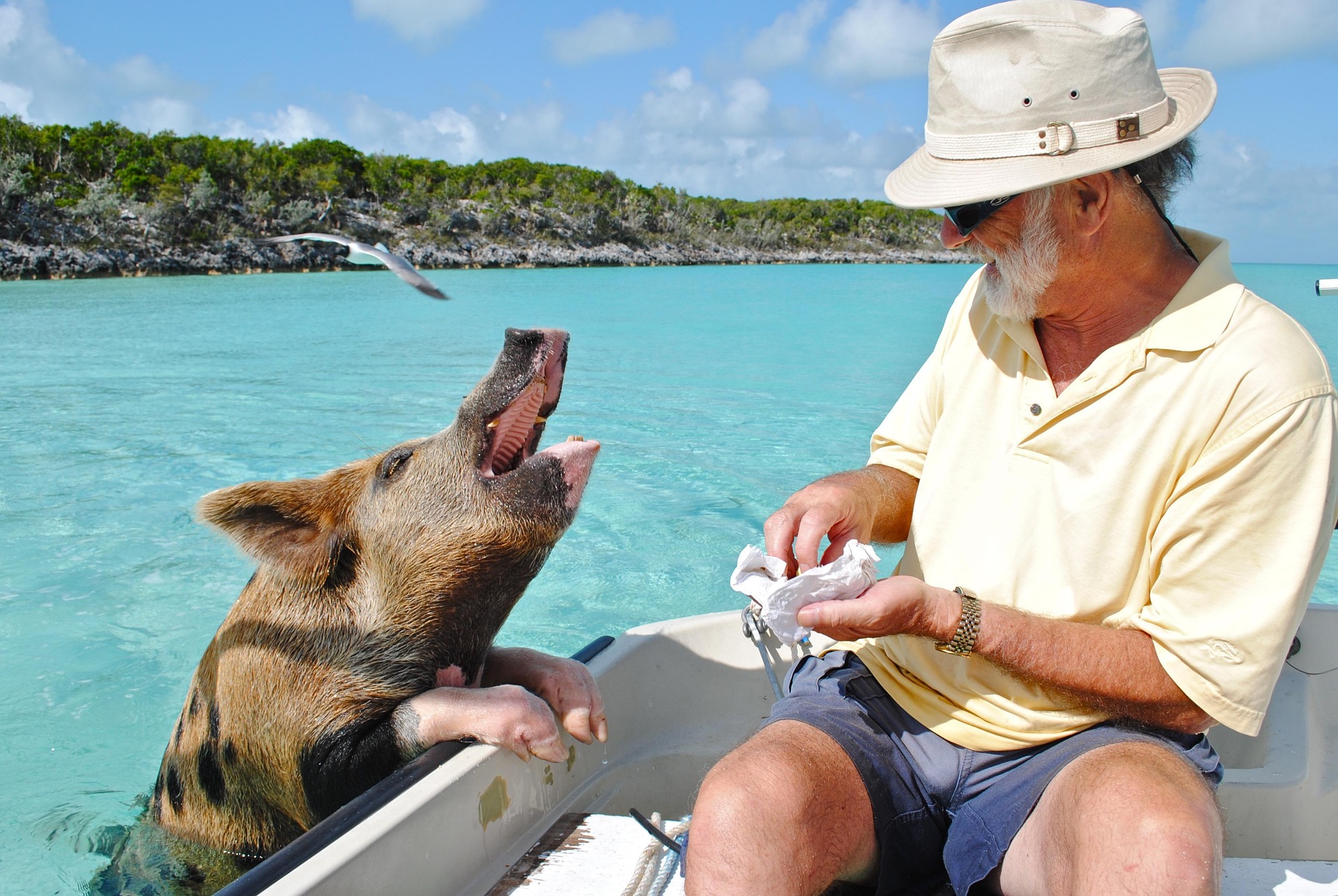
Nassau and Paradise Island suit travelers who want dining, nightlife, casinos and easy logistics. The Exumas are famous for crystal-clear water, uninhabited cays and experiences like swimming pigs, making them ideal for nature-focused travelers. Eleuthera and Harbour Island attract those seeking pink-sand beaches and boutique elegance, while islands like Andros appeal to divers and anglers.
The best places to visit in the Bahamas often involve combining one major hub with a quieter island, balancing convenience with immersion.
Travel Protection: Insurance vs. Evacuation Memberships
For serious international travelers, especially those leaving resort zones, traditional travel insurance often falls short. Insurance typically reimburses expenses after the fact and may exclude or delay approvals for medical evacuation. A dedicated medical and security evacuation membership, by contrast, focuses on extraction and transport, moving you to appropriate care quickly rather than reimbursing later.
Many US travelers ask whether Global Rescue is worth the money if they only take one or two major international trips annually. The answer depends on risk tolerance, destination profile and personal circumstances. For travelers visiting remote islands, engaging in boating or adventure activities or traveling during hurricane season, the value proposition is strong. One serious incident can outweigh years of membership costs.
Is Global Rescue a Good Fit for Older Travelers or Teens?
For US travelers aged 65+, concerns about age limits and medical restrictions are common. Global Rescue does not impose upper age limits and evaluates cases based on medical necessity rather than age alone. Older travelers often benefit the most, as they are statistically more likely to require medical transport and continuity of care back home.
Travelers who most often regret choosing standard insurance over Global Rescue include those who suffer orthopedic injuries, cardiac events or complications in destinations with limited medical infrastructure. Families, boaters, divers and travelers assuming resorts equate to US-level care frequently reassess after a single serious incident.
Parents sending teens on international study or exchange programs should insist on evacuation protection that includes medical, security and crisis-response coordination, not just insurance reimbursement. Programs should demonstrate clear protocols for extraction, communication and parental involvement during emergencies.
The Global Rescue Connection
The Bahamas may feel close to home, but medical realities can change quickly once an incident occurs, especially outside Nassau or Paradise Island.
While visiting Marsh Harbour, Bahamas, a Global Rescue member tripped, fell and suffered a severe knee injury. She contacted Global Rescue immediately while her friends arranged a taxi to a local medical center. An X-ray revealed a broken kneecap and the treating physician strongly recommended further evaluation and treatment in the United States.
Global Rescue medical operations reviewed the case and agreed that immediate treatment was necessary. With no further travel plans and a preference to receive care near her home in Miami, Global Rescue arranged two business-class seats for the member and her non-medical escort on a flight from the Bahamas to Miami. The team coordinated her hospital admission upon arrival and provided wheelchair and luggage assistance throughout the journey.
The member expressed her gratitude and confirmed no further assistance was required, but the outcome underscored a critical lesson echoed across Global Rescue’s case history: even in destinations as familiar and welcoming as the Bahamas, having a dedicated medical evacuation and support membership can make the difference between uncertainty and decisive care.
Categories:
TravelFebruary 5, 2026
Article Highlights:
- Visiting new destinations is the top 2026 travel resolution, despite growing uncertainty.
- Shoulder season travel is rising as travelers seek value and fewer crowds.
- More than half of travelers prefer lesser-known destinations over traditional hotspots.
- Most travelers believe international travel is more dangerous or unpredictable.
- Risk awareness is driving smarter planning, not less travel.
In 2026, travelers are asking a more pointed question than ever before: is it safe to travel? The answer, increasingly, is not a simple yes or no. Instead, travelers are weighing opportunity against uncertainty and choosing exploration, often to lesser-known destinations, even as they anticipate greater danger and unpredictability in international travel.
According to the Global Rescue Winter 2026 Traveler Sentiment and Safety Survey, visiting a new country, destination or continent is the top travel resolution for the year ahead. Overall, 41% of respondents say their most important 2026 travel resolution is to visit someplace new, signaling a sustained appetite for global mobility despite persistent security concerns, geopolitical instability and uneven access to medical care in many regions.
Rather than pulling back, travelers are recalibrating. They are traveling differently, selecting shoulder seasons, avoiding crowds and prioritizing destinations that feel undiscovered. The result is a travel environment where curiosity remains strong, but preparedness has become non-negotiable.
“Travelers are clearly prioritizing discovery in 2026,” said Dan Richards, CEO of The Global Rescue Companies and a member of the US Travel and Tourism Advisory Board at the US Department of Commerce. “Whether it’s a first-time destination or an entirely new region, that sense of exploration comes with added complexity, and it reinforces why medical, security and evacuation preparedness remain essential.”
New Destinations Top 2026 Traveler Resolutions
The desire to explore new destinations defines the 2026 traveler mindset. While 41% of all respondents rank visiting someplace new as their top resolution, the motivation is especially pronounced among women. Nearly half (46%) say new destinations are their top priority, compared to 40% of men.
Geographic differences are even more striking. Fifty-four percent of non-US travelers prioritize visiting new destinations, versus just 38% of US travelers. US respondents, instead, are more focused on traveling more often. Twenty-one percent cite increasing travel frequency as their top resolution, compared to 15% of non-US travelers.
This distinction suggests that while American travelers may favor repeat destinations or familiar regions, international travelers are more inclined to expand their geographic footprint, often into areas with fewer established tourism services and limited emergency response infrastructure.
Shoulder Season Travel
As travelers seek fewer crowds and better value, shoulder season travel, also known as hidden-season travel, is becoming the new normal. While 57% of travelers say they expect to travel internationally during off-peak periods about the same as before, 34% say they are more likely to do so in 2026.
Women again lead this trend, with 39% saying they are more inclined toward shoulder season travel, compared to 33% of men. US travelers remain more cautious, with 10% saying they are less likely to travel off-peak, compared to just 1% of non-US travelers.
“Hidden-season travel offers fewer crowds and often better value, but it can also mean limited infrastructure and reduced local services,” Richards said. “Travelers need to balance opportunity with risk awareness.”
Reduced airline schedules, weather volatility and limited access to hospitals or emergency transport can turn minor incidents into serious emergencies during shoulder seasons, particularly in remote destinations.
Lesser-Known Destinations Strongly Preferred
Destination choice further reinforces the shift toward exploration. More than half of travelers surveyed, 52%, say they prefer lesser-known international destinations with fewer crowds in 2026. Only 12% favor well-known destinations with established tourism infrastructure, while 27% report no strong preference.
Women overwhelmingly favor lesser-known destinations, with 63% selecting this option compared to 49% of men. Non-US travelers also demonstrate a stronger preference for emerging or less crowded destinations, at 55%, compared to 52% of US travelers.
“Travelers are pushing beyond traditional hotspots,” Richards said. “That trend increases the importance of having rapid access to medical care, evacuation services and real-time security intelligence, especially in destinations where resources may be limited.”
In many of these destinations, access to advanced trauma care, reliable emergency transport or timely medevac services can be limited or nonexistent, raising the stakes when something goes wrong.
Travelers Expect Greater Danger and Unpredictability
While exploration remains a priority, travelers are under no illusion about the risks. A majority believe international travel in 2026 will be either more dangerous or increasingly unpredictable compared to pre-2020 travel.
Overall, 38% of travelers say international travel danger will be unpredictable, while 36% believe it will be more dangerous. Only 1% believe travel will be less dangerous and 21% say it will be neither more nor less dangerous than before.
Men are more likely to describe travel as more dangerous, while women are significantly more likely to label it unpredictable. Non-US travelers express heightened concern overall, with 49% saying danger will be unpredictable compared to 34% of US travelers.
“Unpredictability is now viewed as the defining feature of international travel,” Richards said. “That has serious implications for preparedness and resilience.”
Concerns about kidnapping, extortion and violent crime are widespread. Eighty-two percent of travelers report some level of concern and women consistently report higher levels of anxiety than men. These concerns are shaping destination choices, timing decisions and the demand for professional support.
Selective Travel in High-Risk Regions
Expert warnings about ongoing conflict, organized crime and political instability are strongly influencing traveler behavior. Nearly 67% of travelers say they would avoid travel to Israel and neighboring states entirely or do not plan to travel there regardless of conditions.
Mexico and Colombia present more nuanced pictures. Many travelers say they would only visit specific areas with added precautions, while others have no plans to travel there at all. Very few say they would travel as normal and simply accept the risk.
“These regional responses reinforce why travelers view the global risk environment as unstable,” Richards said. “People are not disengaging from international travel, but they are far more selective, informed and risk-aware.”
When asked to rate their overall international travel safety confidence on a scale of 1 to 10, travelers clustered around 3 to 3.5, indicating moderate unease rather than fear-driven avoidance.
Medevac and The Global Rescue Connection
Travel safety depends on preparation, research, real-time intelligence and access to professional support, like medical evacuation, when conditions change suddenly due to illness, injury, unpredictable natural disaster or security.
As travelers venture into lesser-known destinations and shoulder seasons, the margin for error narrows. Limited medical facilities, delayed emergency response and logistical challenges can quickly escalate routine incidents into crises requiring medevac or security evacuation.
Global Rescue exists for precisely this environment. With integrated medical, security, medevac and intelligence services, Global Rescue provides travelers with the confidence to explore boldly while remaining prepared for the unexpected. In an era defined by unpredictability, the most resilient travelers are those who plan not just for the journey, but for what happens when plans change.
Categories:
Mission BriefsResourcesFebruary 4, 2026
A Canadian member crashed while snowmobiling and used his emergency satellite communications device to signal for help after striking a fallen tree hidden in the snow. Due to difficult terrain, rescue coordination involved air transport rather than ground access. He was evacuated by helicopter to an area where ambulance transfer was possible and taken to a hospital for evaluation.
Categories:
Mission BriefsResourcesFebruary 4, 2026
A US member was in Switzerland for a ski race where she sustained a complex pelvic fracture following a high-speed crash. Imaging confirmed the fracture without additional injuries, and she underwent pelvic stabilization surgery. A subsequent procedure was required to address retained fragments, which was completed successfully. After recovery and medical clearance, she traveled home with accommodations for her condition and arrived safely without complications.
Categories:
Mission BriefsResourcesFebruary 4, 2026
A US member was in Turks and Caicos when he developed severe pain in his right-side in addition to nausea, vomiting and blood in the urine. The symptoms were consistent with the member’s history of kidney stones. Due to persistent symptoms and inability to tolerate fluids, he was transported to a hospital for evaluation. Imaging identified a small kidney stone expected to pass without intervention. He was treated with pain medication and discharged with instructions for symptom monitoring.
Categories:
Mission BriefsResourcesFebruary 4, 2026
A teenage US member was visiting Jordan when he awoke with sudden, sharp pain in his right testicle. He was taken to a local clinic where testicular torsion was suspected. He was transported by ambulance to a medical center for urgent imaging, which confirmed the diagnosis. Emergency surgery was performed successfully, and he was discharged the following day.
Categories:
Mission BriefsResourcesFebruary 4, 2026
A UK member experienced sudden loss of vision in her right eye, accompanied by severe eye pain, headache and dizziness while ascending Mount Kilimanjaro. Due to concern for a serious neurological or ocular event, she was evacuated by helicopter to a hospital for evaluation. She was diagnosed with high altitude retinopathy and treated medically. Her condition improved, and she was advised to avoid further high-altitude exposure.
Categories:
Mission BriefsResourcesFebruary 4, 2026
An Ecuadorian member attempting to summit Aconcagua but developed severe bilateral toe pain after prolonged cold exposure at approximately 14,400 feet/4,390 meters. A field assessment determined second-degree frostbite affecting all toes, with blistering, numbness and significant pain that prevented walking. She received rewarming measures and medication at a local clinic before being evacuated by air and then ground transport to a hospital. There, the diagnosis of second-degree frostbite was confirmed, and she was observed for continued rewarming and circulation monitoring. She was discharged after stabilization.
Categories:
Mission BriefsResourcesFebruary 4, 2026
A US member was diving in the Maldives to depths of 100 feet/30 meters with appropriate safety stops. After a dive, she developed blotchy skin, limb soreness, transient weakness and visual narrowing upon surfacing. She was placed on supplemental oxygen but later experienced a severe headache. Medical consultation was arranged and hyperbaric capability was confirmed locally. Although her initial symptoms resolved, they later recurred, prompting ambulance transport to a medical center. She underwent hyperbaric oxygen therapy and recovered fully following treatment. She subsequently resumed travel without further reported issues.
Categories:
Mission BriefsResourcesFebruary 4, 2026
A 21-year-old US member was in Panglao, Philippines, free diving to approximately 100 feet/30 meters. She reported crackling sounds in her left ear and tenderness near her left temple. She was initially managed with first-aid advice and evaluated in person by a nurse. As symptoms persisted, she was transported to a medical center where she was assessed by an ear, nose and throat specialist and prescribed oral antibiotics. Ongoing concern for pressure-related injury led to further evaluation at another medical center, where she was diagnosed with decompression sickness type 1 and treated with daily hyperbaric oxygen therapy for three days. Following treatment, she was cleared to fly and completed onward travel without complications. She was advised to arrange follow-up care after returning home.