
Categories:
Places & PartnersTravelJuly 15, 2022
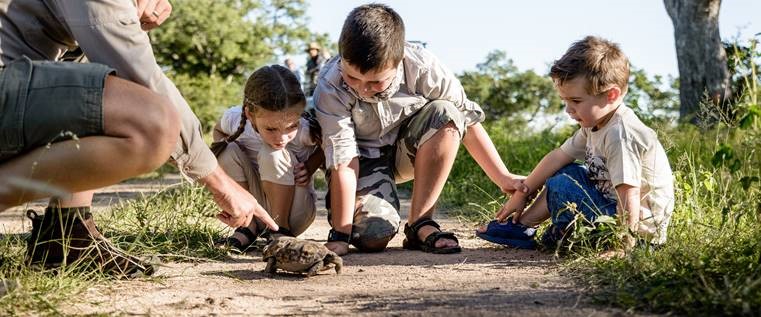
What type of family vacation is trending this year? The edu-vacation: travel experiences with an educational bent. We asked our Safe Travel Partners for destination ideas for the ultimate educational vacation.
Every family is unique — and so are their vacation choices. A beach vacation may be a delight for some and not-so-relaxing for others. Then there are the families who like a jam-packed itinerary to see and do everything at their destination of choice, and others who might want more flexibility with an excursion in the morning and no plans in the afternoon.
One thing is for sure: families are going to travel in 2022. Some statistics:
- According to a study by American Express, 76% plan to travel more with their family in 2022 than they did in 2021.
- Six in 10 Americans are planning at least one summer trip and, despite higher gas prices, 35% expect to travel more this summer than last summer.
- A whopping 70% are planning to take their first international trip with their children since the pandemic.
- The number of families taking time away together is expected to rise by nearly 25% to 376 million trips annually by 2022.
What type of family vacation is trending this year? The edu-vacation: travel experiences with an educational bent, according to The New York Times. Families are looking for luxury resorts with educational camps or courses for kids, family-learning itineraries with tour operators, and hotels offering local educational opportunities, such as counting bird species or learning textile looming.
“What is the best educational travel for families? Everywhere when planned well,” said Mimi Lichtenstein, owner and custom travel advisor at Truvay Travel. “There are so many possibilities, depending on the area of the world and the ages of the kids, for learning: environment/science, history, art, marine/wildlife, language, culinary, culture, politics/world affairs, astronomy or new skills — scuba diving, rock climbing, kite surfing, surfing and sailing.”
After postponing or downsizing family vacations during the pandemic, experts predict 2022 as the year of the GOAT: Greatest Of All Trips. This means no-holds-barred on trip expenses. Almost one-third of families spend between $2,000 and $5,000 per vacation.
We asked our Safe Travel Partners for some destination ideas for the ultimate educational vacation.
[Related Reading: Planning a Family Vacation? 10+ Safety Travel Tips to Consider]
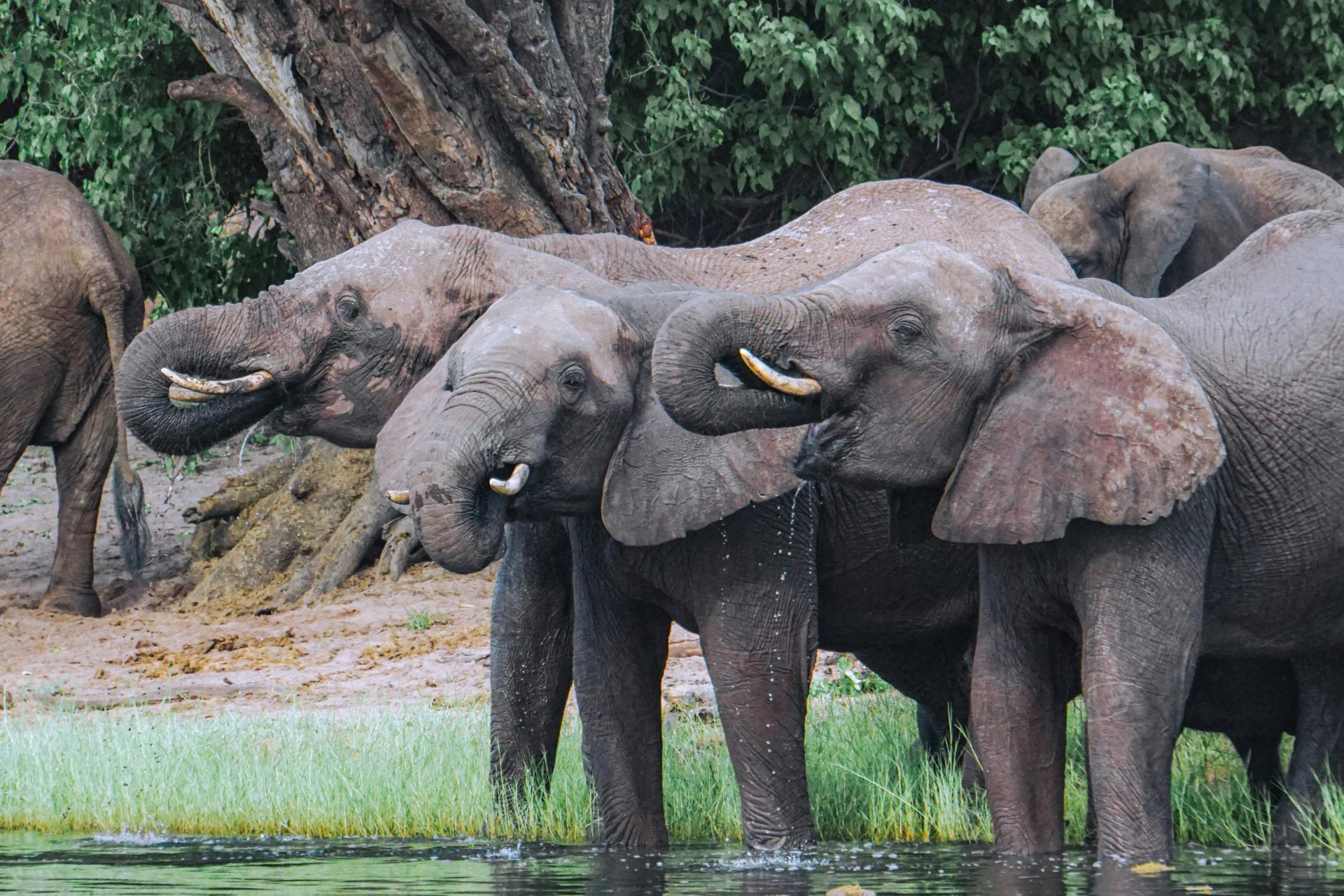
South Africa’s Safaris
There’s almost no end to the list of educational benefits of a safari.
“Kids will learn about the animals, big and small, from predators to prey, birds, bugs and snakes; track and poop identification; and the history of the land and local people,” said Andre Botha, business relations director at Trans African Safaris, a family-owned company that creates luxury travel itineraries in Southern and East Africa.
“If they are interested, kids can learn life skills, such as making a fire with limited resources, how to find your way home if lost, or making a bow and arrow. There’s the opportunity to learn from the local people — lodge staff, trackers and guides — and learn about their lives, which is often an eye-opener for foreign travelers and great for children to get an appreciation of others’ way of life.”

Some safari lodges and camps have age restrictions, while others will accept children of any age. Child minders are typically available, and lodges are well equipped to provide fun and educational activities for children.
“Around 10 years of age is good starting age for a safari, but many children are well-travelled and mature in this respect and we often have children much younger joining their parents and/or extended family,” Botha said. “They are always blown away by the experience. Children are like sponges and a safari will leave the sponge dripping wet!”
Global Rescue Risk Assessment: Moderate
Violent crime is a major concern for visitors to South Africa. Muggings, carjackings and robberies are common. Civil unrest is also a problem, as demonstrations can occur without warning and turn violent quickly. Rates of vector-borne and communicable diseases are high. Medical facilities in major cities and near game parks are of good quality.
Mexico’s All-inclusive Resorts
Just the website description of Playa Viva, an all-inclusive resort in Mexico, hits all the wants and needs of a GOAT family edu-vacation: “Our property is situated on a mile of pristine private beach surrounded by lush green palms. You’ll fall asleep to the lullaby of the Pacific Ocean and wake to the warm breeze on your skin. Tour our on-site farm where we grow some of our food, including coconuts, mangos, cashews, tamarind, tomatoes, lettuces and many other delights. Visit our baby sea turtle sanctuary and explore our diverse coastal ecosystem. With each passing moment at Playa Viva, you’ll feel more connected to the natural world around you.”
The family package includes opportunities for children to engage in the local community and learn how children live in another culture, such as a visit to a family that lives off-grid in the mountains growing all they need. There’s also snorkeling, releasing baby turtles into the ocean, and learning how to bait a hook and cast a line from shore.

Global Rescue Risk Assessment: Moderate
There are high rates of gang- and drug-related violence in Mexico. Demonstrations are common, may involve roadblocks, and have the potential to turn violent. The hurricane season runs from June to November. The quality of health care is acceptable within Mexico City but medical facilities and service providers are substandard outside the urban areas.
Europe’s Big Cities
London, Rome, Paris. These European destinations remain the top choices for family travel because of the wealth of educational activities. A trip to London can check all the family requirement boxes: iconic landmarks (Big Ben), history (museums galore), art (the National Gallery with art from the 13th to 19th centuries), cuisine (fish and chips, anyone?), pop culture (there’s even a Harry Potter hotel and a Sherlock Holmes Museum). Paris has similar offerings and, if you ask, you’ll find special programs for kids at the Louvre, a French pastry class for families, and opportunities for early morning tours to avoid the crowds. When in Rome, check out really old buildings like the Coliseum and see where lions ate slaves, visit a vomitorium, and learn about Caesar’s assassination.
Global Rescue Risk Assessment: Low to Moderate
France is beset by protests and strikes, many of which have turned violent and affected transportation networks. In London, civil unrest, race-related crimes, riots in response to domestic events and hooliganism surrounding sporting events are common. Italy is subject to seismic and volcanic activity. Petty crime, including pickpocketing, is common in large European cities. Medical facilities and services are of high quality in the U.K., France and Italy.
Costa Rica’s Conservation
Costa Rica, a Central America destination known for its wildlife, is also a great educational spot for learning about sustainability.
“As a country, Costa Rica is focused on sustainability and renewable energies,” Lichtenstein said. “They are pioneers in eco-tourism, with an 86.80% of dependency on green energy, the fourth highest in the world. In addition, Costa Rica has a Blue Zone in Nicoya; this community has one of the highest rates of longevity in the world.”
Lichtenstein, who most recently traveled to Costa Rica in May 2022, offers a laundry list of reasons families should take an educational trip to Costa Rica.
“Practicing the Spanish language and learning new culinary methods through cooking classes with locals. New skill ideas — surfing, rappelling, kiteboarding. The diverse environment with 12 climate zones — volcanoes, hot springs, rain forests and cloud forests,” Lichtenstein said. “And the turtles! Conservation, hatchings and nestings on the Caribbean and Pacific coast. You might also see whale migrations, spinner dolphins, monkeys, more than 900 species of birds, sloths and many more.”
Global Rescue Risk Assessment: Low
Costa Rica is generally peaceful, with low levels of civil unrest and a low threat from terrorism. In recent years, street crime, rape, homicides and robberies have increased. Natural disasters are common. Vector-borne diseases are a concern. Medical care is available in San José, but is often limited outside urban areas.
Categories:
Health & SafetyMissions & Member TestimonialsJuly 13, 2022
Reliability. Trustworthiness.
These are the two things every traveler wants and expects when they sign up for travel protection services. They may never have an injury or illness requiring emergency assistance but they always want the peace of mind that should come with promised services.
Unfortunately, not all travel risk management providers are the same. Some are more expensive. Others provide limited services. Still, others have a variety of restrictions. Worst of all, some delay or deny services under a muddle of tedious paperwork or bureaucratic double-talk.
Not All Protection Services Are Equal
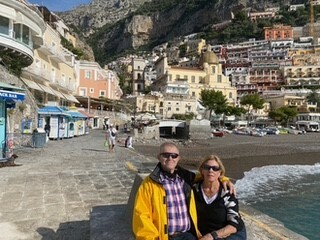
When Nan and Gary Stone decided to vacation in Italy, they thought they had solid, emergency medical evacuation travel protection with an Arizona-based company promising 24-hour locator service to quickly find a doctor wherever you are, emergency medical monitoring by a medical expert to make sure you get the appropriate care in a medical emergency, a medical specialist sent to you, and emergency medical evacuation to get you to a more appropriate hospital if needed.
They were wrong.
“After spending ten days on the Amalfi Coast, my husband and I planned to spend several days in Naples before heading home to North Carolina. We’re fairly active for our age and have travelled to more than 26 countries on our own. One morning, Gary started having heart trouble,” said Nan Stone.
The couple was in their hotel in Italy and Gary Stone, a veteran anesthetist with a good working knowledge of medical symptoms and what they mean, started feeling ill. “He was losing color in his face. His heart rate was very high. After talking about it for a while he wasn’t getting any better so he said he needed medical help,” she said.
Nan contacted the hotel front desk and alerted them to what was happening. They summoned emergency services. When the paramedics arrived, their conduct was unlike anything the Stones had ever seen.
“They were pushing and shoving furniture and equipment around the room, yelling at each other. It was crazy,” she said.
[Related Reading: Drone Attack in Abu Dhabi]
That’s when the Stones decided to call their emergency medical services provider based in Arizona and explain the situation.
It was November 2021 and Italy was open to international travelers who were fully vaccinated and had a negative entry test. “If you cannot show proof of immunization or a recent recovery, you will need to self-isolate for five days and get a follow-up diagnostic test to exit quarantine,” according to Forbes. The Stones were fully vaccinated and met the requirements.
It was a surprise for the Stones when the emergency assistance company call center representative said they couldn’t send a physician to the hotel because of the COVID situation. Nan Stone contacted hotel management for help and they identified two doctors to come to the hotel and assist with her husband’s medical evaluation.
“Those two physicians determined my husband had to go to the hospital,” she said.
No Help During a Pandemic
While her husband was at the hospital, she made more calls to the emergency assistance company pleading for help with the medical emergency her husband was suffering.
“They said I had to fill out all sorts of paperwork first, which I did. Then they told me they couldn’t send a doctor to the hospital because of the COVID situation. I let them know I was able to get two doctors to come to the hotel. I pressed them to explain why they couldn’t get a doctor to the hospital to help my husband. They said they would have to get back to me. Then they sent me more paperwork to complete. I felt like I filled out paperwork for days. But I did it.”
After a little more than a day, the hospital doctors notified her that Gary was ready to be released. She notified her emergency assistance company. They said her husband can’t leave the hospital until they send a doctor to evaluate him.
“I reminded the emergency assistance company they had twice denied sending a doctor for my husband due to COVID. I was fed up. I went to the hospital myself with the hotel concierge and arranged to have my husband discharged and brought him back to the hotel,” she said.
The nightmare wasn’t over. Gary Stone had a relapse soon after in the Naples hotel. His heart condition triggered and it caused him to fall. Local emergency medical services returned to the hotel and Nan’s husband was taken to a different hospital that morning.
He was released later that night.
Nan Stone doggedly tried to get the emergency assistance company to help, placing numerous calls to them.
“I must have had at least a dozen phone conversations with that company during this time. They were absolutely no help. It was very frustrating because I do not speak Italian and really needed guidance and support during this time,” she said.
Thankfully, the hotel workforce was supportive. “If it wasn’t for the hotel staff, I don’t know what I would have done. They were so helpful in getting me to and from the hospitals and sending food to my room. They did everything possible to help me. They were great,” she said.
[Related Reading: How to Manage a Medical Emergency Abroad]
Vicious Cycle
Fearful her husband could have more incidents she told her husband they needed to go home. He agreed.
“I felt he had serious cardiac issues that needed to be handled,” she said.
She called the emergency assistance company, again.
“They told me we couldn’t leave until they had someone check him from their list of doctors and they didn’t know how many days it would be before they could get someone to come see him. Of course, none of the doctors would come because of COVID. It was ridiculous,” she said.
They sat for a day and a half waiting, hoping the emergency assistance company would sort it out.
Nothing happened.
Finally, Nan took matters into her own hands, called the airline and booked return flight tickets costing more than $6,000. On her own, she had to arrange for wheelchair assistance to make certain her husband had wheelchair support to guide him through the terminal, security and to their gate.
They made it home successfully. Ironically, the emergency assistance company called the Stones this time. But by then, they had enough.
“I was so angry. I told them I cannot talk to you. They made that situation more than twice as bad as it could have been. Aside from all the denial of services, they were patronizing, telling me I didn’t understand there was a pandemic, I didn’t understand the time difference, and paperwork is necessary. It was beyond horrible.”
The Stones relied on an emergency assistance company promising services and they didn’t deliver.

After seeing a cardiologist immediately upon his return home, Gary is in good health.
“He needed a cardiac ablation (a procedure that scars tissue in your heart to block irregular electrical signals as a treatment for heart rhythm problems). He has a heart monitor and some prescribed medicines. For a 76-year-old man, he’s good now, really good, he’s great,” Nan said.
A Switch to Global Rescue
The Stones are now Worldwide LifelineTM members and will receive services provided by Global Rescue, the world’s leading provider of medical, security, evacuation and travel risk management services with 18 years of experience and more than 20,000 operations spanning every range of injury and illness across the globe.
“After signing up for Worldwide Lifeline, I’m so happy that AAA has researched, identified and made available a superior option for emergency medical evacuation for injury or illness, including COVID,” Nan Stone said.
Worldwide Lifeline members receive services including: emergency field rescue from the point of illness or injury, transport home after hospital discharge, medical advisory services 24/7/365 from nurses and paramedics trained for any medical situation any time you’re more than 100 miles from home, direct traveler assistance to help with local health care systems, and telehealth access 24/7/365 for real-time consultations and treatment if they choose.
Categories:
Health & SafetySecurity & IntelligenceTravelJuly 11, 2022

What’s the most dangerous activity for any traveler? Driving. If you plan to rent a car, the risk could multiply if you aren’t familiar with the vehicle, the local roads or the traffic laws. Here are some driving safety tips from Global Rescue travel expert, Harding Bush.
No matter where you are in the world, driving is one of the most dangerous activities for a traveler.
Globally, more than 3,500 people die every day on the roads, which amounts to nearly 1.3 million preventable deaths and an estimated 50 million injuries each year – making it the leading killer of children and young people worldwide. According to the CDC, injuries related to vehicle accidents are rated as the world’s eighth leading cause of death. The U.S. Department of State notes traffic accidents are the leading cause of non-natural death for Americans traveling or living overseas.
“Travelers will contact Global Rescue for advice on avoiding a kidnapping, what to do if caught in a natural disaster, or avoiding armed conflict and terrorism. They should be much more concerned about driving — or even getting into a car — overseas,” said Harding Bush, operations manager at Global Rescue.
[Related Reading: Driving Safety Abroad]
The Decision to Drive Abroad
Driving overseas is a serious decision.
“Travelers should carefully research their transportation choices while abroad. The safest option likely may not be the most convenient or cheapest,” Bush said.
For example, driving in even the most modern country can be difficult for foreigners unfamiliar with the local traffic laws, customs and driver etiquette.
“Traffic patterns and road signs may be different or misunderstood. U.S. drivers may be accustomed to cars in a traffic circle having the right of way. In many places overseas, it’s the vehicle approaching the circle that has the right of way, and cars in the circle must yield to them,” Bush said. “During heavy congestion, the car with the most forward front bumper has the right of way in some countries. It may be illegal to use the horn for anything but safety in one country, but, in another country, horn use is considered a courtesy to other drivers.”
Then there are the other motor vehicles on the road. Travelers may be sharing the road with a mix of traffic, including cars, buses, taxis, bicycles, rickshaws, large trucks and even animals. This increases the risk of crashes and injuries.
A combination of other factors could also contribute to a crash: unsafe vehicles (vehicles sold in 80% of all countries worldwide fail to meet basic safety standards promoted by the United Nations World Forum for Harmonization of Vehicle Regulations), driving above the posted speed limit, the influence of drugs and alcohol, travel fatigue, poor road surfaces without shoulders, unprotected curves and cliffs, and poor visibility.
“Most travelers understand the associated risks with public transportation in countries with limited road infrastructure. The buses or taxis may be poorly maintained, unlicensed, overcrowded or located in areas of rampant crime,” Bush said. “That’s when many travelers choose to rent a car and drive themselves.”

Rental Car Considerations
Having a rental car puts you in control of your schedule. “There are no bus or train schedules to determine when you come and go, and you can adjust the trip along the way, stop if you see something interesting, or leave if a spot is overrated and overcrowded,” Bush said.
There are several factors to consider before you rent a car abroad:
- Most rental cars in Europe have manual transmissions; if you can’t drive a stick shift, renting a car with an automatic transmission can cost nearly twice as much. “Rush hour traffic in Barcelona, Spain is not the place to learn to drive a manual transmission,” Bush said.
- You may be required to have an International Driving Permit (IDP), a multi-page booklet translating your driver’s license into many different languages. The International Driving Permit is helpful if you are pulled over by police and they don’t speak English. International Drivers Permits are available at AAA branches and require a passport-type photo. “Ignore the advice from friends who have rented cars overseas and said they were never asked to show an IDP,” Bush said. “The rental car company does not enforce this law. The police enforce it.”
- If you’re hoping to tour Europe by car, check with the rental car company first. “Just because you rent a car in one country doesn’t mean you can drive it to other countries. Ask the rental car company about restrictions,” Bush said.
Rental Car Safety Checklist
Inspect the vehicle with a rental agent prior to taking possession of the rental. Make sure all safety equipment is present: spare tire and tire changing equipment. Ensure all the seat belts work, and there is plenty of window washer fluid. Some rental cars have the hood latch disabled to deter part theft; know if this is the case.
Familiarize yourself with the vehicle before driving away. Know how the lights, directionals, locks, windows and climate controls work. Learn how to adjust the seats and the mirrors. Not knowing these things can distract and add stress while driving and lead to an accident.
Check the fuel level and know what type of fuel the car uses. See how to open the gas cap cover. Never let the tank get below half full. On your way out of the rental parking lot, identify a gas station nearby to fill up when you return.
[Related Reading: Road Trip Safety Tips]
Insurance Considerations
- Understand what kind of insurance your credit card provides while renting a car. Investigate whether your insurance on your personal vehicle covers rental cars — and does it cover renting a car overseas?
- Have proof of your insurance and know how to contact them if you are involved in an accident.
- Consider getting the Loss and Damage Waiver from the rental car agency. This is not insurance, but it will prevent you from having to pay for damages immediately upon returning the car. A loss damage waiver is usually between $15 to $50 per day, and allows you to drop the rental car and leave regardless of damages. Even if your insurance covers this, you may have to pay upon return and then make a claim to your insurance provider.
Research Your Route
- You should research your intended driving route before you rent a car, get local maps to understand the basic layout of the city, and preprogram destinations in your GPS or mobile phone navigation app.
- Ensure you have a way to secure the phone so you can keep your hands on the wheel. If you have a passenger in the other front seat, have them assist with the navigation.
- Drive cautiously and stay alert. Get an idea of how much time or distance between signs and exits, and be aware of the typical traffic courtesies, like lane changing procedures.
- Break your trip into phases for easier navigation, such as airport to the southbound highway, cross the river, then turn west at an exit. “This will also help you from getting lost,” Bush said. “There aren’t always easy on- and off-ramps for every interchange. In many countries, missing an on-ramp or taking the wrong exit means many extra miles.”
- Are there tolls along the route and are they paid? Some countries require a vignette or a toll sticker, usually available at the airport, highway rest stops and near border crossings.
What If You Have an Accident?
- Know the emergency services numbers for the countries you will visit. Many countries have dedicated emergency numbers with other language capabilities.
- Ensure you know how to contact roadside assistance for the rental car company.
- Know the accident reporting procedure for the area/country you are visiting. The rental car company usually provides this information with the rental documents.
- Confirm you have appropriate insurance for the rental car, such as the daily damage waiver. Be sure you understand your credit card’s car rental insurance policies, many are not as comprehensive as you think.
- In general, your U.S. auto insurance policy does not cover you abroad. However, it may when you drive to Canada and Mexico. Check with your insurance company.
Rental Car Alternatives
Do you still really want to rent a car?
“Renting a car while traveling abroad can offer many conveniences. Still, it should only be taken on by experienced drivers who have researched the driving and safety conditions in that country and understand all the local peculiarities of renting and driving a car in a foreign country,” Bush said.
There are other options:
- A car service with a local driver is nearly always safer and more efficient. You know you’ll get where you need to, and you don’t have to worry about parking or the car being stolen. Discuss safety considerations with the driver and have a point of contact at the car service company.
- Legal and registered taxis are the next best thing to a car service, and you can likely arrange these through your hotel for the safest and most reliable options.
- Choose your accommodation so you do not need to drive. A centrally located hotel, rental property or inn may be steps away from activities, entertainment and restaurants.
No matter what you decide, arm yourself with a Global Rescue travel protection membership. It was a lifesaver for Barb Allan when the Unimog — the off-road vehicle transporting the group to the birdwatching site — veered out of control while traveling up and over an embankment. She was thrown against the cab, banged her head, and her teeth went through her upper lip. Allan needed internal stitches to her lip — something that could not be done at the lodge — so Global Rescue arranged for a medical evacuation to a hospital with a higher level of care.
Categories:
Health & SafetyPlaces & PartnersTravelJuly 7, 2022

All-inclusive resorts have all the amenities you need — except, perhaps, health care. It’s important to ask before your book. Medical emergencies can happen anywhere, anytime, even at the immaculate sandy beach or on the award-winning golf course.
You’ve booked your stay at an all-inclusive resort where all the essentials — food, drinks, activities and entertainment — are included in the booking price. With amenities like a golf course, a water park, sandy beaches and a fitness center with yoga classes, you don’t even have to leave the immaculately structured resort grounds.
Except if you have a medical emergency.
“All-inclusive resorts are sometimes located in remote areas, or regions with extreme poverty,” said Dan Stretch, operations manager at Global Rescue. “Before you book, you may want to ask if there is medical care on site or nearby, and the quality of the nearest medical care facility. This could be vital information if you are traveling with children or are trying a new sport, like deep sea fishing or horseback riding.”
[Related Reading: What Are Medical Advisory Services?]
Travelers Demand Health Care Access
The pandemic raised awareness of many things related to health care: how to access health care during a lockdown, the importance of mental health and researching the capabilities of medical facilities overseas. And those factors influenced purchasing decisions. Hotels, inns and resorts stepped up to the plate with COVID-19 safety amenities and doctors on demand for travelers looking for health and safety services.
But these conveniences will go away by the end of 2022. Club Med’s Emergency Assistance program offers guests coverage for emergency medical expenses during their stay, including medical costs related to COVID-19, until December 31, 2022.

Sandals’ “Insurance Is On Us” program, valid for reservations made between June 30, 2022 and December 31, 2022, covers up to $100,000 per person for any medical expenses in the Caribbean islands due to treatment for illness (including COVID) or accident; medical expenses in the nearest facility for the treatment for a sickness or injury incurred during the resort stay; and transportation to and from a hospital by a professional ambulance company.
After the programs end, you’ll be on the hook for medical advisory services. Only some of Club Med’s all-inclusive resorts, such as the Punta Cana resort in the Dominican Republic, have an onsite infirmary staffed by doctors and nurses to provide medical care for guests and staff.
Sandals all-inclusive resorts typically have a resident nurse onsite offering complimentary medical assistance services, but there is a charge if a doctor’s consultation is necessary.
Another Punta Cana resort, Sanctuary Cap Cana all-inclusive resort, offers doctor and nurse services on call at an additional cost. They note first-aid assistance is offered in emergency situations, but what type of situations — a simple beach sunburn or a more severe cardiac arrest — should be confirmed.
Reader’s Digest Canada warns of overcharging by in-house physicians, so make sure to ask about fees before the doctor visits. After-hour visits can also be expensive; an average consultation from a hotel doctor ranges between $100 to $150 USD. The price can climb from there depending on the type of treatment you require.
You also could be advised to go to a local facility when you may not need to. The Canadian government notes aggressive sales tactics by Dominican Republic in-house doctors trying to encourage admission to a local facility.

[Related Reading: How to Manage a Medical Emergency Abroad]
All-inclusive Travel with Peace of Mind
It’s great to have free meals and unlimited beverages, but a medical emergency can cost you hundreds of thousands of dollars out of pocket. Here are three areas you should research before signing up for all-inclusive vacation packages:
ONE: Check the surrounding area for health care facilities (and what level)
Hospitals in larger cities may offer trauma care services similar to a U.S. Level 1 hospital — 24-hour ED, trauma and surgical services — and Joint Commission International (JCI) accreditation. Medical facilities in rural communities may not have the equipment, training, staff or capacity for your illness or injury. In addition, the terrain in rural mountainous areas may make providing timely trauma care challenging.
Global Rescue’s medical advisory service can direct you to the medical resources in your destination so you are not left guessing about how to best address your health concern. We will also help members find testing facilities and coronavirus-capable hospitals.
“For example, health care in Mexico is generally excellent, and the majority of Mexican doctors and dentists have received their training in the United States, Canada, or Europe,” Stretch said. “Aruba has four modern medical centers on the island: the Dr. Horacio Oduber hospital in Oranjestad, the private Urgent Care Clinic in Noord, the Centro Medico Rudy Engelbrecht in San Nicolas, and the MedCare Clinic in Noord.”
TWO: Make sure a natural disaster doesn’t change your access to health care
Travelling at off-peak times to get a lower rate? Make sure there isn’t a reason for the discount, such as hurricane season. It could already be difficult to access health care resources in your destination when the sun is shining — imagine the limited access during a natural disaster.
For a complete safety net, purchase a security add-on to a travel protection membership. For example, Global Rescue’s teams of military special operations veterans are available to provide advisory, consultation and evacuation services for events like natural disasters, terror attacks and civil unrest when you are in danger. If you’re ill or injured, you’ll be able to access field rescue services (transport from the point of illness or injury) and medical evacuation services (transport from hospital to hospital).
“I did tons of research about the best option should a disaster occur,” said Jacob Hendrickson, a Global Rescue member from Australia. “I simply couldn’t find anyone with better services than Global Rescue.”
THREE: Telehealth services for doctor access
Sometimes the free health care offered at an all-inclusive resort won’t be enough. You can avoid skyrocketing fees with a telehealth membership. Right from your room, you’ll have immediate access to a team of medical experts for real-time video consultations and treatment. Doctors have the ability to prescribe medications, order labs or diagnostic imaging, or direct you to a facility if needed.
“Perhaps the biggest mistake a traveler can make is ignoring telehealth options,” said Dan Richards, CEO of Global Rescue. “Medical consultations with paramedics, nurses and physicians by phone and video are a critically important resource for travelers, who are able to receive diagnosis and treatment recommendations on the fly in places that may lack the adequate resources to provide these services.”
“When you are off grid, in a site that is only accessible by boat or air, TotalCare provides peace of mind, knowing services are available,” said Anna Christensen, a TotalCare member from British Columbia, Canada.
July 5, 2022
When a member received an emergency pacemaker during a deep sea fishing trip in Costa Rica Global Rescue deployed a paramedic to provide a medical escort from hospital bedside to the member’s home country hospital of choice.
An international trip combining tropical adventures at sea as well as rest and relaxation in a paradise setting is an infrequent occurrence, especially if you’re the father and son of a Texas-based, family-run energy business. When Johnnie Odum and his adult son Bryce finally boarded an international flight from Texas to Central America, they knew their deep sea fishing in Costa Rica was going to be a special one.
“My son and I try to hunt and fish as often as we can, but running a business together doesn’t allow much time. This was a special trip for both of us,” said Odum.
The twosome was bound for the Zancudo, a Global Rescue Safe Travel Partner located in Golfito on the Pavon Bay on the western coast of Costa Rica. The region is surrounded by idyllic jungle foliage, pristine beaches and great fishing. Zanduco is renowned for its inshore and offshore sportfishing and has set more than 70 International Game Fish Association (IGFA) records.
“We were planning to go deep-sea fishing for four days, some inshore casting for bluefin, amberjack and rooster fish for a few days, and finally do some sightseeing for a day or so. We were fishing for whatever we could catch, hopefully, sailfish and – if we got lucky – a tuna,” Odum said.

It Felt Like a Blackout
During the international flight from the U.S. to Costa Rica, Johnnie Odum experienced three heart-related incidents on the plane.
“It felt like a blackout. I didn’t know what was going on. Neither did my son or the flight attendants. I learned later my heart was stopping for a few seconds and then re-starting periodically,” he said.
The duo landed in San Jose, the capital of Costa Rica. They were scheduled to take a short flight to Golfito the next day, but they were uncertain about the severity of the incidents. The Odums went directly to a hotel, which turned out to be fortuitous.
“As soon as we got to the hotel in San Jose, I asked my son to go to the front desk and call an ambulance. I knew I needed to go to the hospital,” he said.
What’s emergency care in Costa Rica like? Fortunately, the country has one of the best health care systems in Central America. Odum was taken to a local hospital with a good reputation. The medical staff immediately took him to the emergency room after he explained his symptoms.
[Related Reading: Cardiac Concerns in Costa Rica]
“They hooked me up to an EKG. The doctors confirmed my heart was not behaving properly. I even had another incident while I was on the EKG monitor,” he said.
A palpitation — like a skipped, extra or irregular heartbeat — is a type of abnormal heart rhythm or arrhythmia. It occurs when an electrical signal fires from the wrong place at the wrong time, causing the heart to beat out of rhythm.
Glad to Have Global Rescue
It was quickly determined that Odum would need to have a pacemaker implanted immediately. The procedure was successful and he stayed in the hospital for 10 days to recover and receive treatment to stabilize his elevated blood pressure.
“While I was hospitalized, Bryce contacted my wife and she called Global Rescue. The next thing I knew, a Global Rescue paramedic showed up at my bedside to monitor my condition, confer with the hospital medical team, and ultimately be my medical escort back to my home hospital of choice in Texas,” he said.
After a few days, Odum was cleared fit to fly and the Global Rescue paramedic and operations team arranged the return trip home.
“The paramedic stayed with me the entire time: from my bedside through the flight home and the ground transport from the airport to the Texas hospital. He monitored my blood pressure and other vitals regularly to make certain I wasn’t in distress,” Odum said.
Once Odum arrived at his home hospital of choice, a Global Rescue medical escort remained on site throughout the hospital admitting process and made certain to brief the receiving medical staff, especially regarding the blood pressure issues.
“I was relieved to have a paramedic with me. I needed one and was glad to have him. He sat right next to me the whole way and checked my blood pressure to make sure I was still stable. That was a great reassurance. He was making decisions and I didn’t have to worry about anything. It was terrific,” Odum said.
He stayed at the cardiac care facility for three days to stabilize his blood pressure before being discharged.
“I’ve been a Global Rescue member for many years, ever since my first trip to Africa. The travel protection and medical evacuation services Global Rescue provides make sense. I never thought I would need it but it was a relief to have it,” he said. “I tell all my friends and family they should become Global Rescue members because they take good care of you and you never know what’s ahead.”
Categories:
NewsJuly 1, 2022
July 1, 2022
The weather provided one of the safest and busiest spring Himalayan climbing seasons on record. Global Rescue climbing experts and our Safe Travel partners provide a roundup of records and rescues for 2022.
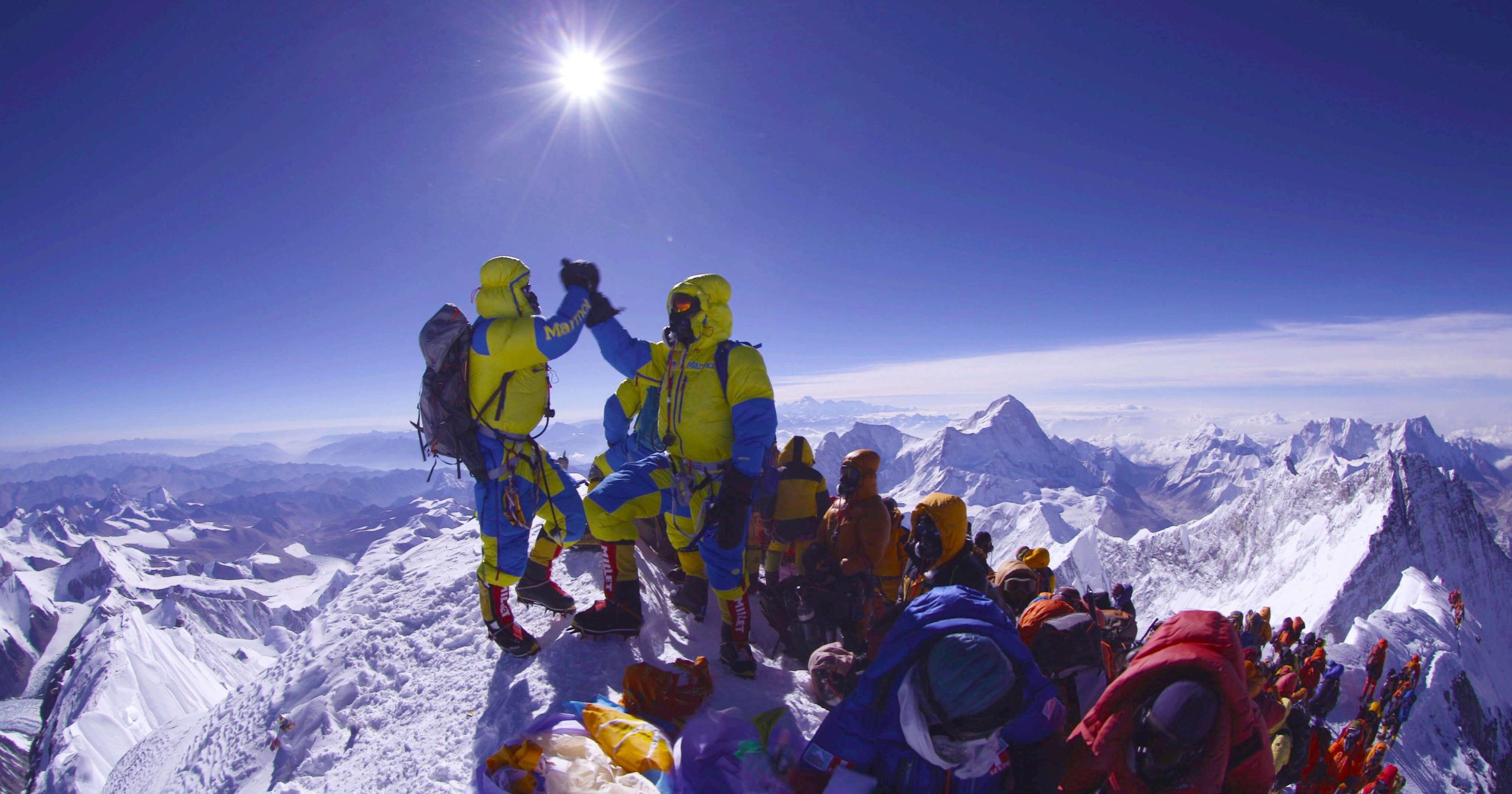
Mountaineers and high-altitude trekkers returned to Mount Everest and the Himalayas following two years of COVID-related travel restrictions. The weather cooperated and was more stable than anticipated, making for one of the safest and busiest spring seasons on record.
“A stalled high-pressure system made for horrendous temperatures in Northern India while paradoxically creating nearly ideal climbing conditions across much, but not all, of the Himalayas,” said climbing expert Alan Arnette.
The missing jet stream was a welcome shocker for expedition leader, Lukas Furtenbach, owner of Furtenbach Adventures based in Innsbruck, Austria and a Global Rescue Safe Travel Partner.
“The biggest surprise this year on Mount Everest was the weather. It was very warm. Melting water puddles at the South Col at 8,000 meters (26,246 feet). We have never seen that before. And no jet stream for the whole season. I think this is unique since the beginning of weather records for the Himalayas,” he said.
The longer-lasting favorable weather window created conditions to help avert traffic jams on Mount Everest.
“The unusual 14-plus day summit period helped teams to spread out over several days and, therefore, there were no crowds or traffic jams,” Furtenbach said.
[Related reading: Mission Briefs: The Himalayas Special Edition]
Dan Richards, CEO of Global Rescue, agreed. “When there’s a short weather window, everyone tries to scramble up the mountain and take advantage of that weather window and get their summit. But if the weather is good and stable — and if expedition groups stagger their summit attempts — then overcrowding will be minimized or prevented.”
Weather tracking in the future will likely improve for the region. While China closed Tibet to foreigners for the third year citing COVID, government officials permitted a science team to climb and place seven weather stations on Mount Everest, including one set up on May 4 at 28,871 feet/8,800 meters, making it the world’s highest of its kind.
That record lasted only five days when a team from National Geographic installed another weather monitoring station 98 feet/10 meters higher (28,969 feet/8,830 meters) on the Nepal side at a point above the Hillary Slope called Bishop’s ledge.
Records and Rescues
There were nearly 700 permits issued throughout the Himalayas. While the number of Mount Everest climbing permits was lower than last year, the overall number of permits in the Himalayas was one of the highest ever. But with an increase in mountaineering activities, there is a parallel need for rescue services.
“We’ve seen a record number of rescues this year throughout the Himalayas,” Richards said. “The higher number of rescue operations may be the result of the two-year shut-out from climbs above 20,000 feet/6,000 meters that may have left people less prepared or as fit as they might otherwise have been before coming to the Himalayas to climb. When you have greater populations who may not be as well-conditioned as usual, especially in these high-altitude environments, you are going to have more rescues.”
As in past years, Global Rescue deployed its medical operations team to support our mountaineering and trekking members in the event of a medical emergency.
“Anytime you are exerting yourself at high altitudes, especially above 18,000 feet/5,500 meters, you are at risk for acute mountain sickness, high-altitude pulmonary edema, high-altitude cerebral edema, frostbite, injuries due to trips and falls and avalanches,” Richards said.
[Related Reading: Rescue-Ready on Mount Everest]
“Providing nonstop, 24/7 medical emergency support for a large number of people taking part in extreme, high-altitude activities is not for the faint of heart. You need to be flexible and physically fit to be efficient on the ground,” said David Koo, associate director of operations for Global Rescue, a former combat medic and emergency nurse, and a member of Global Rescue’s Mountain Advisory Council.
Rescue operations are complicated and dangerous. The operating ceiling for most helicopters is about 22,000 feet/6,705 meters, which is roughly Camp 2 on Mount Everest.
“Anything above that altitude requires a ground rescue and because of the altitude and the limited oxygen, rescue teams have to acclimatize before going. You cannot simply drop a crew that isn’t acclimatized into this part of the mountain. That’s why we have acclimatized teams already there. Even then, a rescue is dicey,” Richards said.
More Women on the Mountain
Nepal officials issued 74 permits to female climbers, more than 20% of the total number of mountaineers. Women high-climbers are the fast-growing segment of Mount Everest and 8,000-plus meter mountain climbers.
Notable female mountaineers this season included Global Rescue member Kristin Harila from Norway, who summited six 8,000-plus meter peaks in 29 days, breaking the speed record set three years ago by Nimral “Nims” Purja, also a member of the Global Rescue Mountain Advisory Council. Nims was alongside Sheikha Asma Al Thani in early May when she became Qatari’s first female to summit Mount Everest.
Global Rescue member Manal Rostom’s summit is the first among Egyptian woman. “It was the hardest thing I’ve ever done in my whole entire life,” she said.
Nguyên Thi Thanh Nhā is the first Vietnamese woman to reach the summit of the world’s highest peak. Nayla Nasir A Albaloushi stood atop the tallest mountain on Earth before any other Emirati woman. Vanessa Estol set a record as the first woman from Uruguay to scale Mount Everest. Eighteen-year-old Lucy Westlake became the youngest American woman to summit Mount Everest.
Al Thani’s mountaineering campaigns are “part of her drive to inspire women and young people in the region to challenge stereotypes and fulfill their dreams,” according to reports.
Harila agrees. “I do not care that much about beating a record – I care about inspiring young women. This is not about making the impossible possible, but proving that women can do it, too. That they can do it even better.”
Furtenbach was thrilled to see more women high-climbers. But he worries that not enough new people are taking part.
“I don’t see an increase in newbies who would benefit from the availability of more oxygen. The use of oxygen — including the number of cylinders provided and the higher flow rates — is definitely increasing. That’s good because it increases safety,” Furtenbach said.
Global Rescue’s Mountain Advisory Council
Global Rescue is the leading emergency rescue resource for mountaineers, climbers, trekkers and those who love the mountains. The Mountain Advisory Council is led by mountaineering legend Ed Viesturs, world-famous high-altitude climber Nirmal “Nims” Purja, and outdoor adventure safety expert and longtime mountaineering author Jed Williamson.
Additional Mountain Advisory Council members include:
- Wilderness and altitude sickness expert Dr. Eric Johnson, Global Rescue associate medical director, past president of the Wilderness Medical Society and member of the Board of Directors of the Himalaya Rescue Association. Johnson is also one of the founders of EVEREST ER.
- Special operations and critical planning authority Scott Hume, Global Rescue vice president of operations and former Chief Operations Officer of the 3rd Brigade 25th Infantry Division.
- Former combat medic with the Singapore Armed Forces David Koo, Global Rescue senior manager of operations and past operations manager of the Khoo Teck Puat Hospital in Singapore.
- Global Rescue Operations Manager Dan Stretch is based in Nepal during the Mount Everest climbing seasons. He has coordinated hundreds of evacuations and crisis response operations.
- Former Navy SEAL and associate manager of Global Rescue Security Operations Harding Bush has extensive mountain and cold weather operations expertise. He has developed multiple training programs for ski mountaineering and cold weather survival. He is a graduate of several U.S. and NATO Mountaineering courses including the Slovenian Mountain Warfare School.
Categories:
NewsJune 30, 2022
Categories:
Health & SafetyTravelJune 30, 2022
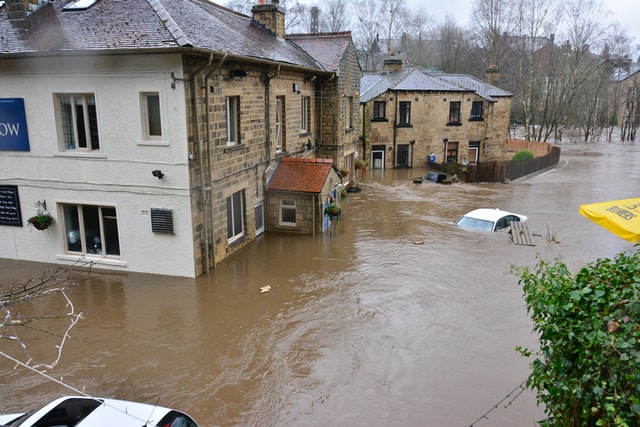
Natural catastrophes resulted in total global economic losses of $270 billion, according to Swiss Re Institute. What was the number one natural disaster? Floods.
“Floods affect nearly a third of the world population, more than any other peril,” said Martin Bertogg, head of catastrophe perils at Swiss Re. “In 2021 alone, we witnessed more than 50 severe flood events across the world.”
Floodlist details some of the floods occuring so far in 2022. Severe flooding and landslides caused by heavy rainfall completely destroyed more than 12,000 houses and damaged roads, health centers and schools in South Africa. At least 16 people lost their lives after record rainfall of more than 800 mm/31 inches in 48 hours, which triggered flash floods and landslides in Rio de Janeiro, Brazil. Yellowstone National Park’s June flooding shocked the nation when heavy flooding created rockslides and extremely dangerous conditions, closing all park entrances.
Floods already rank as the most destructive natural hazard in Northern Europe. In the U.S., floods kill more people each year than tornadoes, hurricanes or lightning — and 75% of all presidential disaster declarations are associated with flooding.
“We’ve been involved in every major natural disaster that occurred in the last 17 years,” said Dan Richards, CEO of Global Rescue told Bloomberg. “And certainly the frequency and severity of events is increasing. You don’t have to be a scientist to know the arrow is going up and to the right.”
Severe Weather Alerts
Floods are an equal-opportunity natural disaster, meaning they can occur at any time of the year. Some countries have rainy seasons, which could result in flash floods — heavy rainfall that doesn’t soak into the ground and creates runoff onto land. Storm surges — a rise above normal seawater level along a shore — occur with tropical cyclones and tsunamis.
You may think, “I’m not located near the coast, or even a major river.” Even tributaries can flood and sometimes they are the hardest hit by slow-moving storms. In New Hampshire, the Sugar River, a tributary of New England’s Connecticut River, often floods out roads in the region and causes damage on a large scale.
In an effort to provide a warning to national and regional authorities with flood risk management duties, the European Flood Awareness Systems is the first operational pan-European flood forecasting and monitoring system. The notifications are paired with local research in order to make a decision of warning (move to higher ground) or watch (be prepared).
In the United States, the National Weather Service provides flash flood and other warnings — typically for broad, city-wide or regional, weather patterns or large river systems — via text message and local media.
But not everyone knows what to do when they receive a flood warning. When the Helmholtz Centre Potsdam of the German Research Centre for Geosciences surveyed German residents, one-third of the people who received flood warnings reported having “no clue” what to do next.
[Related Reading: Four Ways to Survive a Hurricane]
Safety Tips for Floods
Never underestimate the power of water. Global Rescue experts provide some boots-on-the-ground advice for anyone comes face to face with more water than they expect.
“Floods affect nearly a third of the world population, more than any other peril,” said Martin Bertogg, head of catastrophe perils at Swiss Re. “In 2021 alone, we witnessed more than 50 severe flood events across the world.”
- Research to see if you are living or traveling to a flood plain area. After you create a free account, the International Disaster Database has a searchable database with country profiles with natural and technological disasters. Risk Factor is another free online tool showing a location’s risk from environmental threats such as flooding and wildfires.
- Tune in to the local news or NOAA Weather Radio for updated information and instructions.
- Download a weather app to your phone. Most are free, and provide hourly and daily forecasts as well as government information about severe weather events.
- Listen to the hotel staff, your tour operator or the local authorities. They will likely have an emergency plan in place, which will include moving toward higher ground. If you are in your accommodation, stay away from windows. It is safest in an interior room or a stairwell without windows.
- Keep your suitcase packed, as you may have to leave quickly. If you live in a flood zone, have a go-bag on hand. Have cash on hand in case you are not able to use your credit card or ATMs. The Red Cross offers a flood safety checklist.
- If you do have to evacuate, turn around if you encounter a flooded road. According to the National Weather Service, most flood deaths occur in vehicles. It is important to know where you are relative to streams, rivers or creeks — which can become killers in heavy rains — before you get in the car.
- Conserve water. When Yellowstone flooded, Billings, Montana was forced to close its water treatment plant. Billings’ officials estimated the city only had a 24- to 36-hour supply of water.
- The spread of disease is a major concern. Avoid contact with flood water. Floodwater may spread bacteria, viruses, protozoa and other microbial contaminants causing illnesses ranging from mild stomach upset to serious diseases such as dysentery, infectious hepatitis and severe gastroenteritis.
- Be prepared and know how to purify tap water; boil water directives may be in place for weeks after a flood. If you live in flood or hurricane areas, ensure you have plenty of bottled water.
- Prepare to extend your trip. Bad weather could close the airport and, when it reopens, flights will book up immediately. Prepare to stay where you are longer than expected.
Why You Need Global Rescue
“Earthquakes, hurricanes, tsunamis, wildfires. The frequency and magnitude of natural disasters and crises around the world in the last couple of decades has been increasing and, with that increase, more and more organizations and people are impacted,” Richards said in an interview with Cheddar News. “Having a resource like Global Rescue is becoming increasingly important as these events occur more frequently and with greater struck force.”
Case in point: Although an international team of scientists and engineers carefully planned a research trip to Bangladesh and set up contingency plans for cyclones in mind, a storm with high winds and heavy rainfall was en route to their area. The expedition team called Global Rescue, initiating the first step of their disaster response plan before cyclonic storm Bulbul hit the Khulna region.
These services are included in the security membership. A qualifying security event can be a government declaration — issued by the foreign country you are visiting or the U.S. State Department — that you should evacuate the country for non-medical reasons, such as an unpredicted natural disaster, civil unrest or an act of terrorism. The event need not be countrywide. With the Global Rescue security add-on, we transport you from the point of illness or injury to the nearest medical facility.
Categories:
NewsJune 29, 2022
Categories:
Missions & Member TestimonialsJune 27, 2022
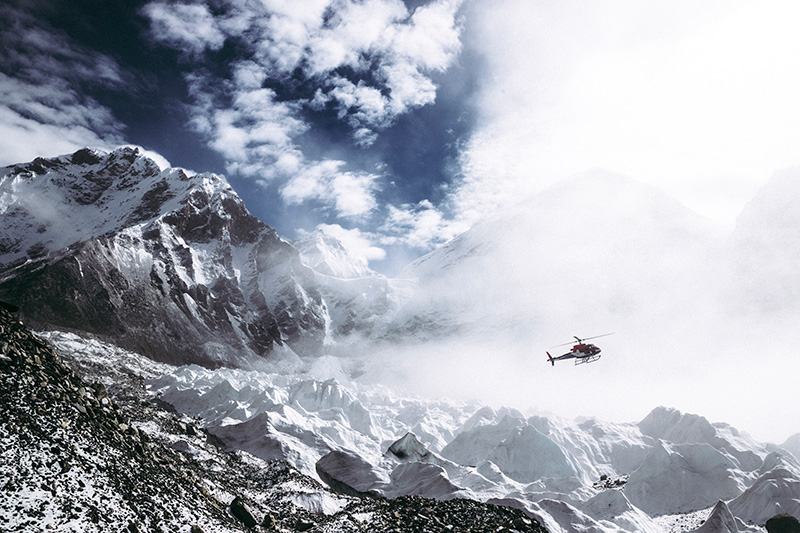
Every day, Global Rescue personnel are involved in medical, security and travel operations worldwide. Here are highlights from some of our May operations in various locations.
Long-line Rescue in Canada
Mount Logan is the highest mountain in Canada and the second-highest peak in North America after Denali. At more than 19,500 feet/6,000 meters above sea level, it’s a tough climb. A member from British Columbia was showing symptoms of HAPE for three days. He was unable to descend due to inclement weather and medications did not relieve his symptoms. That’s when his climbing team leader called Global Rescue for help. Due to the challenging terrain, a long-line recovery was needed to rescue the member who was medevaced to a medical facility at the base of the mountain. He was diagnosed with HAPE and advised to continue resting as his descent had improved his condition greatly. The member continued to improve and made his way home.
COVID or a Cold in Denmark?
A Florida member traveling on a ship near Denmark was experiencing congestion, coughs, runny nose, ear ache, headache, pain under her eyes and aching teeth. She took a COVID-19 test and it was negative. She called Global Rescue for a consultation after learning that her insurance company would not be able to help her. Medical operations experts provided her with prescription options for her cough and runny nose as well as options for an in-person physician consultation in Denmark when her cruise ship docked.
[Related Reading: Not All Symptoms Lead to Coronavirus]
COVID Couple in Dingboche, Nepal
Dingboche is a Sherpa village in the Khumbu region of northeastern Nepal in the Chukhung Valley. It rises more than 14,000 feet/4,410 meters above sea level and is a popular stop for trekkers and climbers headed to Mount Everest, Ama Dablam or Imja Tse. Two members, a husband and wife, contacted Global Rescue following four days of isolation due to ongoing illnesses. The wife was experiencing fever, shortness of breath, dry cough, fatigue, loss of appetite and headache. The husband suffered shortness of breath and overall body weakness. She had also tested positive for COVID-19. An airborne rescue was ordered for the pair. They were evacuated to a hospital in Kathmandu where a further test revealed the husband was positive for COVID, too. They were admitted to the hospital and received remdesivir treatment. After a few days, the couple was released from the hospital to continue their treatment and required isolation at their hotel before returning home.
Cycling Accident in Switzerland
Switzerland is well known for its challenging cycling routes and big climbs. Unfortunately, accidents occur and can cause injuries from road rash to broken bones, and worse. A Global Rescue member from the U.S. suffered an accident while cycling in the Buchs region. He injured his right hand and knee and needed to be hospitalized. He sustained three broken metacarpals and two dislocated joints in his right hand and required a screw and two external fixators to be placed surgically. His injured knee needed surgery and debridement. His treating physicians advised him to return home for further surgical management of his injuries. Following nearly a week of recovery, Global Rescue provided upgraded seating to business class with gate-to-gate wheelchair and luggage assistance due to his injuries. He arrived safely at his home hospital of choice.
Broken Ribs on Mount Everest
A Brazilian member fell on his side near Camp 3 on Mount Everest, and his oxygen tank hit his chest. He was brought down to Camp 2 suffering from chest pain and difficulty breathing. He suspected he may have fractured a rib. Global Rescue was contacted and a helicopter rescue was ordered. He was evacuated to a hospital in Kathmandu where imaging revealed a fracture of the right ninth and tenth ribs. He was treated and later released from the hospital with medications and orders to rest for a few days before his scheduled flight back to his home in Hungary.
Frostbite After Summiting Mount Everest
A Norwegian member successfully summited Mount Everest but, soon after, developed a cough, snow blindness and frostbite. He complained of eye pain and loss of vision in both eyes. A member of his climbing team contacted Global Rescue and a helicopter evacuation was initiated. The member was transported to a medical facility, where he was evaluated and diagnosed with snow blindness and second-degree frostbite on his left pinky finger. He was prescribed medications for his eyes and affected finger. He was later discharged and advised to follow up with an ophthalmologist at his home to monitor his recovery from snow blindness. He was further advised to inquire about the possible need for hyperbaric treatment for his finger.
Head Injury in Norway
A skiing accident in Norway resulted in a serious head injury for a member. He was unconscious after the incident and taken to a nearby hospital where he was diagnosed with a subdural hematoma. The member was sent for a CT scan, given medications and observed overnight in the hospital. He was discharged the next day and given instructions to seek consultation with a neurosurgeon to do a controlled CT scan before his flight home to Boston. Global Rescue medical operations arranged for the member’s mother to travel with him as a non-medical escort to attend to his needs during the long flight. The member and his mother arrived home safely.
Unresponsive in Kangchenjunga, Nepal
A member from India was found unresponsive in his camp tent on Kangchenjunga, the third highest mountain in the world. He was given oxygen and carried by two Sherpas to Camp 2 where he regained consciousness and remained on oxygen with symptoms of Acute Mountain Sickness (AMS). Further descent with his Sherpa’s assistance was ruled out since the route is quite technical and the member was too weak to walk. Global Rescue was contacted and a medical evacuation by helicopter was ordered. The member was rescued and taken to a hospital in Kathmandu where he was treated for AMS. Following sufficient recovery, he was discharged and advised to rest further before returning home.
Snow Blind on Mount Everest
A member from Budapest was experiencing vision problems while descending to Mount Everest Camp 2. A Sherpa contacted Global Rescue and a helicopter medical evacuation was arranged due to the inability of the member to descend any further safely. The member was transported to a hospital in Kathmandu, where he was assessed, treated and discharged with a diagnosis of snow blindness.
[Related Reading: Protecting Your Eyes from Snow Blindness]
Long-line Rescue from Mount Everest, Nepal
A Global Rescue member from the U.S. was suffering from shortness of breath, severe dehydration, an inability to speak, general body weakness and dizziness as he approached Mount Everest Camp 3 (23,950 feet/7,300 meters). When he arrived, he collapsed and was unable to walk. The expedition leader reported seven Sherpa guides were required to assist the member to Camp 3, where he was unable to move. It was clear that continued descent was unsafe due to the nature of the terrain and the depleted physical condition of the guides. The expedition leader contacted Global Rescue and a long-line helicopter rescue was initiated. The member was successfully evacuated and transported to a medical facility in Pheriche for initial treatment and then transported to a hospital in Kathmandu. The member was diagnosed with Acute Mountain Sickness, treated and discharged following his recovery.