Article Highlights:

  • The world’s premier backcountry skiing regions range from Rogers Pass and the Tetons to Chamonix, Hokkaido, the Andes and Norway’s Lyngen Alps.
  • Skinning gives skiers human-powered access to remote terrain far beyond lifts, groomed trails and conventional rescue services.
  • Avalanches are the defining backcountry threat, but trauma, tree wells, weather, cornices, crevasses and equipment failure can be equally serious.
  • Backcountry travel requires avalanche education, rescue equipment, route planning, reliable communications and partners trained to respond.
  • Field rescue and medical evacuation become especially important when an injury occurs miles from roads, ski patrol or advanced medical care.


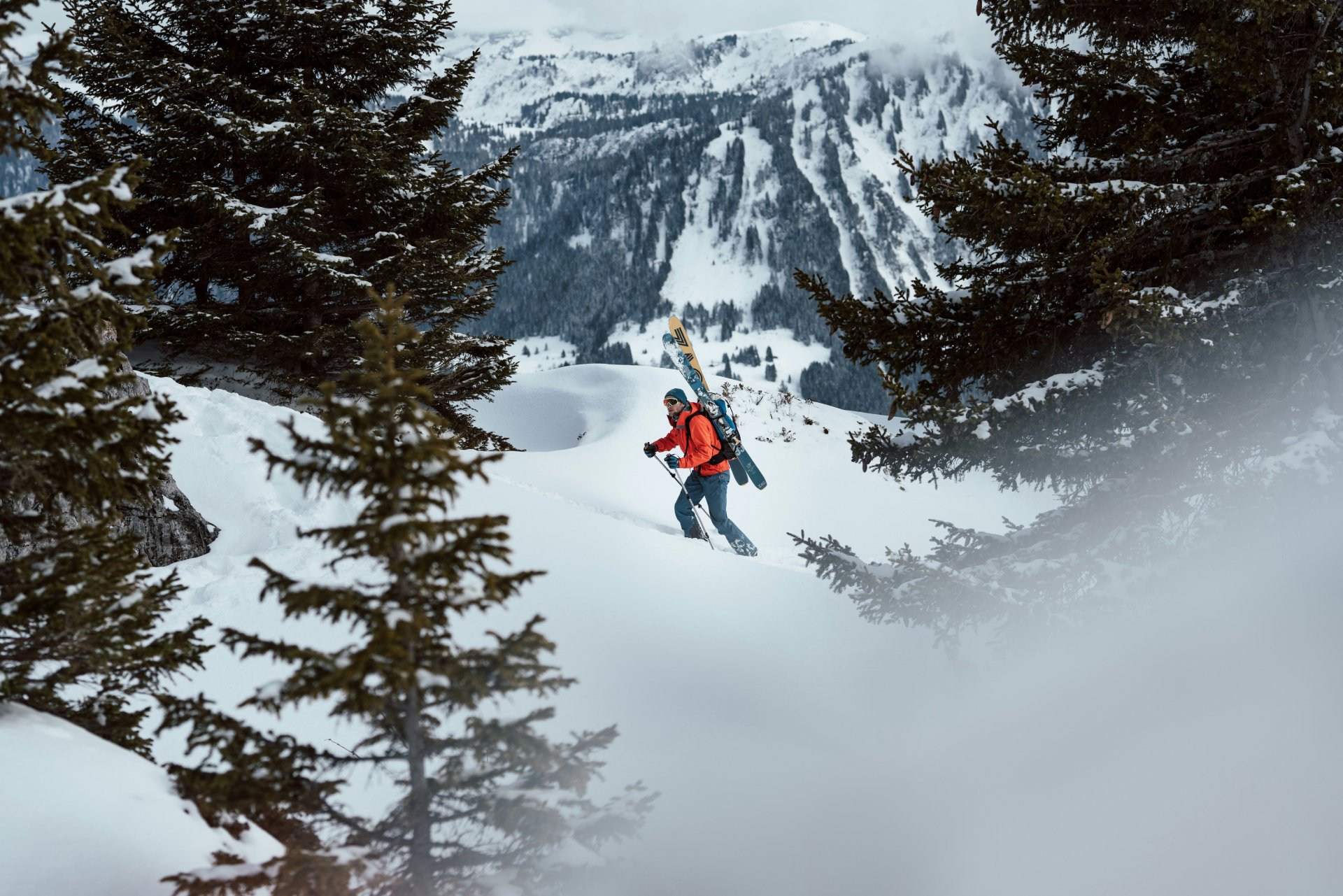
For experienced skiers, the allure of the backcountry is easy to understand. Instead of following groomed trails beneath chairlifts, skiers can climb into remote mountains, cross high alpine passes and descend powder fields where another person’s tracks may be nowhere in sight. The terrain can be extraordinary. So can the consequences when something goes wrong.

Backcountry skiing takes place outside managed ski-area boundaries in uncontrolled, generally unpatrolled terrain, with skiers often relying on skinning or bootpacking to reach their objective. It is this combination of remote terrain, human-powered access and limited external support that defines the backcountry experience.

What makes backcountry skiing so compelling is that the experience changes dramatically from one mountain range to another. In North America, skiers can find deep Canadian powder, steep Rocky Mountain couloirs, high-elevation Colorado tours, Alaskan glaciers and long Cascade volcano routes. Beyond North America, the terrain becomes even more varied, from the glaciated Alps and powder of Hokkaido to the Southern Alps, the Andes and Norway’s Arctic fjords. Each region offers a different style of adventure, but the same core reality follows skiers everywhere: once they leave managed terrain, avalanches, weather, injury, exposure, crevasses and limited access to medical care become part of the equation.


Rogers Pass and the Canadian Rockies

For serious ski tourers, British Columbia’s Rogers Pass occupies an almost legendary position. Situated in Glacier National Park in the Selkirk Mountains, the region combines extraordinary snowfall with steep alpine faces, forests, glaciers and seemingly endless touring possibilities.

Its reputation comes with significant responsibility. Avalanche terrain is extensive and winter access is carefully managed because avalanche-control operations protect the Trans-Canada Highway and railway corridor below. Skiers must understand local closures, permitting requirements and avalanche conditions before starting a tour.

Elsewhere in the Canadian Rockies, long approaches, cold temperatures and complicated terrain make self-sufficiency essential. The same characteristics that create outstanding powder can make a rescue difficult when weather deteriorates.


Chamonix, the European Alps and Norway’s Lyngen Alps

If there is a global capital of ski mountaineering, Chamonix has a strong claim to the title. The French Alps provide access to enormous glaciers, steep couloirs, high mountain passes and an extensive system of huts linking alpine routes. The legendary Haute Route from Chamonix toward Zermatt is among the world’s most famous multi-day ski traverses.

Europe also illustrates why the boundary between lift access and true backcountry responsibility can become blurred. Cable cars may carry skiers quickly to extraordinary elevations, but stepping away from the developed ski area can place them immediately in crevassed, avalanche-prone high alpine terrain. Access may be easy. The environment is not.

The Lyngen Alps offer one of backcountry skiing’s most unusual experiences: climbing directly from coastal fjords and skiing back toward the sea. This Arctic environment combines mountains and ocean in a landscape unlike traditional resort regions. Depending on the timing of the trip, skiers may experience long spring daylight, while the broader Arctic winter is associated with opportunities to see the Northern Lights. The landscape is spectacular, but coastal mountains can experience wind, rapid weather changes and avalanche conditions influenced by complex snowpacks.


The Tetons and Jackson Hole, Wyoming

Few North American destinations combine world-class resort skiing and immediate access to serious backcountry terrain as dramatically as Jackson Hole and the Tetons. Skinning routes around Teton Pass provide access to steep bowls, glades, ridges and couloirs, while experienced skiers can leave designated resort boundaries through backcountry gates at Jackson Hole Mountain Resort.

But crossing a gate changes the equation. Terrain outside the resort boundary is not simply another difficult ski run. Avalanche mitigation and ski patrol services available inside the resort cannot be assumed outside it. The Tetons are particularly attractive to ski mountaineers because of their steep couloirs and dramatic vertical relief, but those same characteristics introduce exposure to avalanches, cliffs, rapidly changing weather and complicated evacuations after injuries.


Hokkaido, Japan

Hokkaido is synonymous with powder. Cold air moving across the Sea of Japan can produce extraordinary snowfall with famously light, low-density snow. Areas including Niseko and Furano provide access to tree skiing, touring terrain and volcanic objectives such as Mount Yotei.

Deep powder brings its own hazards. Tree wells and deep snow immersion can trap skiers, while heavy snowfall can quickly increase avalanche danger. Foreign visitors also need to understand local access rules. Backcountry gates, closures and prohibited areas should never be treated casually simply because powder lies beyond them.


Colorado’s San Juan Mountains

The San Juan Mountains of southwestern Colorado offer some of the most striking ski touring in the continental United States. High elevations, jagged peaks and substantial snowfall create terrain suited to everything from day tours to multi-day hut trips. The region around Silverton, Telluride and Ouray attracts experienced backcountry travelers seeking steep lines, high alpine objectives and ski mountaineering.

Colorado is also famous for its hut culture. Systems including the 10th Mountain Division huts and independent operations such as the Opus Hut allow skiers to travel deeper into mountain terrain while using remote huts as bases. A hut, however, should not be confused with a safety net. Severe weather, avalanche conditions or injury can still isolate travelers miles from a road or hospital.


New Zealand’s Southern Alps and the Andes of Chile and Argentina

New Zealand’s Southern Alps deliver dramatic backcountry terrain during the Northern Hemisphere summer. Areas surrounding Aoraki/Mount Cook and Wanaka offer ski touring, glacier travel and extensive heli-skiing. The mountains rise sharply and weather coming off the Southern Ocean can change quickly. The combination of remote valleys, glaciers and relatively limited road access means even moderate injuries can create significant logistical challenges.

For skiers unwilling to stop when the Northern Hemisphere winter ends, the Andes provide another season. Chile and Argentina offer touring from approximately July through September, including volcano skiing in Chile and steep alpine terrain surrounding destinations such as Portillo and Bariloche. Altitude becomes an additional factor. Skinning at high elevation increases physical demands while headaches, dehydration and altitude illness can diminish strength and judgment.


Alaska’s Chugach Range, the Haines and Washington’s Cascades

Alaska represents the large end of the backcountry spectrum. The Chugach Range and mountains surrounding Haines are famous for enormous vertical relief, glaciers, steep faces and deep snow. They are major destinations for ski mountaineering and heli-assisted backcountry skiing. Helicopters can eliminate hours of skinning, but they do not eliminate mountain hazards. Skiers may be dropped into complex avalanche terrain where weather, visibility and snow stability can change rapidly. Glacier travel adds the possibility of hidden crevasses and snow bridges. The scale of Alaska also magnifies emergencies. A badly injured skier may be separated from definitive medical care by mountains, weather and enormous distances.

Washington’s Cascade Range offers a different style of backcountry skiing, defined by huge snowfall and glacier-covered volcanoes. Mount Baker is renowned for abundant snow, while Mount Rainier offers ambitious spring ski mountaineering routes on one of North America’s most heavily glaciated peaks. Spring can produce long touring seasons as snow remains high in the mountains after lower elevations thaw. But volcano skiing demands awareness of changing snow conditions, glacier hazards, weather and route-finding. A cloud layer moving across a glacier can quickly transform an obvious descent into a navigation problem.


What Are the Biggest Backcountry Skiing Dangers?

Avalanches remain the defining backcountry hazard. Slab avalanches can fracture across large sections of terrain and bury, crush or carry skiers into trees, rocks or cliffs. Wind slabs, storm slabs, persistent weak layers and wet avalanches create different problems depending on the weather and snowpack.

Tree wells and deep powder immersion present another potentially fatal risk. Uncompacted snow around evergreen trees can form hidden cavities. A skier falling headfirst may become trapped and unable to free themselves. Traumatic injury may be more common than dramatic avalanche accidents. Hidden rocks, trees, cliffs and variable snow can cause fractures, ligament injuries, head trauma and dislocations. In the backcountry, the medical problem is compounded by geography: an injury that might require an ambulance at a resort may require hours of evacuation from remote terrain.

Extreme weather can turn inconvenience into emergency. Sudden snowfall, high winds or a whiteout can eliminate visibility, bury a skin track and make navigation difficult. Prolonged exposure increases the risk of hypothermia and frostbite. Cornices create another deceptive hazard. Wind can build large overhanging masses of snow beyond the actual edge of a ridge. They may collapse beneath a skier’s weight, resulting in a fall or triggering an avalanche on the slope below.

Glacier travel introduces crevasses, some hidden beneath thin snow bridges. A fall into a crevasse can require specialized rope rescue skills that ordinary resort skiing never demands. Snow blindness, caused by intense ultraviolet radiation reflected off the snow, can severely impair vision. Proper sunglasses or goggles with adequate UV protection are essential. Equipment failure also matters. A snapped ski, broken binding, damaged boot or climbing skin that loses adhesion can turn a routine tour into a difficult survival problem when the skier is miles from the trailhead.

Dehydration and altitude illness may develop more subtly. Skinning is physically demanding and cold, dry air encourages fluid loss. At higher elevations, fatigue, headache, nausea and deteriorating judgment can complicate an already demanding environment.


Preparation Is Part of Backcountry Skiing

Backcountry preparation starts before anyone steps into their bindings. Skiers should check avalanche and weather forecasts, understand the terrain they intend to enter and be willing to select a safer route or turn around when conditions deteriorate. An avalanche transceiver, probe and shovel are standard rescue equipment, but possessing them is not enough. Skiers must know how to use them under pressure. Formal avalanche education and regular companion-rescue practice are fundamental parts of responsible backcountry travel.

Route planning, extra insulation, food, hydration, first-aid supplies and emergency equipment are equally important. A communication device capable of operating without cellular service can be particularly valuable because mobile coverage frequently disappears in remote mountain areas.

Perhaps the most important backcountry skill is judgment. A summit, couloir or untracked powder field will still exist another day. Conditions do not care how far someone traveled, how expensive the trip was or how close the group is to its objective.


The Global Rescue Connection

Backcountry skiing creates a challenge that resort skiers rarely face: when someone is injured, reaching medical care may be as difficult as treating the injury itself. A fractured leg, head injury or dislocated shoulder several miles from a road can require a field rescue before an ambulance, clinic or hospital ever becomes part of the response.

A Global Rescue membership provides field rescue from the point of illness or injury, an especially important capability for skiers traveling beyond roads, resorts and conventional emergency medical services. Once a member is reached, Global Rescue can coordinate transportation to an appropriate medical facility and, when medically necessary, arrange medical evacuation to the member’s hospital of choice.

Members also have access to 24/7 medical advisory services. Global Rescue’s medical operations teams can provide guidance, communicate with local providers, assess available treatment options and help determine whether a higher level of care or evacuation is necessary.

Destination Reports can be equally valuable before an international backcountry trip begins. Skiers heading to Canada, Japan, France, Norway, Chile or other mountain destinations can review information about local medical facilities, emergency healthcare capabilities, security conditions and other destination-specific risks. For travelers planning to ski hours from a major city, knowing what level of trauma care is available nearby can influence both route planning and emergency decisions.

Global Rescue memberships are not insurance: there are no claim forms, deductibles or extra costs for covered membership services. Members have access to field rescue, medical evacuation, medical advisory support and security advisory services during natural disasters or disruptions.

Backcountry skiing will always involve uncertainty. Snow conditions shift, weather closes in, equipment fails and injuries can happen far from help. The objective is not to remove every risk from the mountains — that is impossible. It is to make sure that when conditions change or something goes wrong, you still have options. In the backcountry, good decisions create margin. Avalanche training, rescue skills, dependable communications, sound route selection and a plan for getting an injured skier to advanced medical care can preserve that margin when the mountains become unforgiving.