Article Highlights:

  • Cherry blossom trips are worthwhile when travelers choose destinations they would enjoy even without perfect blooms.
  • Peak bloom can shift quickly because of temperature, frost, rain, wind and other weather conditions.
  • Tokyo, Kyoto, Washington, Seoul and Jinhae offer iconic displays but also some of the heaviest congestion.
  • Vancouver, Paris, Stockholm and Bonn provide attractive alternatives within broader spring city itineraries.
  • Early reservations, flexible arrangements and multiple viewing locations reduce the risk of disappointment.


Cherry blossom season is one of travel’s most photogenic rituals, and one of its hardest trips to plan well. For a few days each spring, city parks, temple paths, riversides and residential streets turn pink and white. The experience can feel extraordinary. It can also involve packed trains, sold-out hotels, congested walkways, weather delays and the possibility that the blossoms will peak before or after your selected dates.

So, is cherry blossom season worth the crowds? Usually, yes, but only when the trip is built around a destination rather than a single predicted bloom date. Travelers who would enjoy Tokyo, Kyoto, Washington, Seoul, Paris or Vancouver even without perfect flowers are less likely to be disappointed. Those who treat peak bloom as a guaranteed appointment with nature are taking a bigger gamble.

Cherry Blossom Destinations and Timing

Cherry trees do not follow tourism calendars. Their development depends heavily on temperatures before and during spring, while frost, heat, rain and wind can accelerate, delay or shorten the display. The National Park Service says forecasting Washington’s peak bloom is nearly impossible more than 10 days ahead. Cool, calm conditions can extend the blossoms; a windy rainstorm can end the best viewing quickly. Japan’s season also moves geographically, generally progressing from warmer southern areas toward colder northern regions over several weeks.

That variability makes early reservations both necessary and risky. Waiting for a precise forecast may mean losing reasonable hotel rates, preferred flights and convenient train reservations. Booking months ahead secures the trip, but not the flowers. Reserve early, favor changeable arrangements and avoid tying every day to one park or neighborhood.


Japan

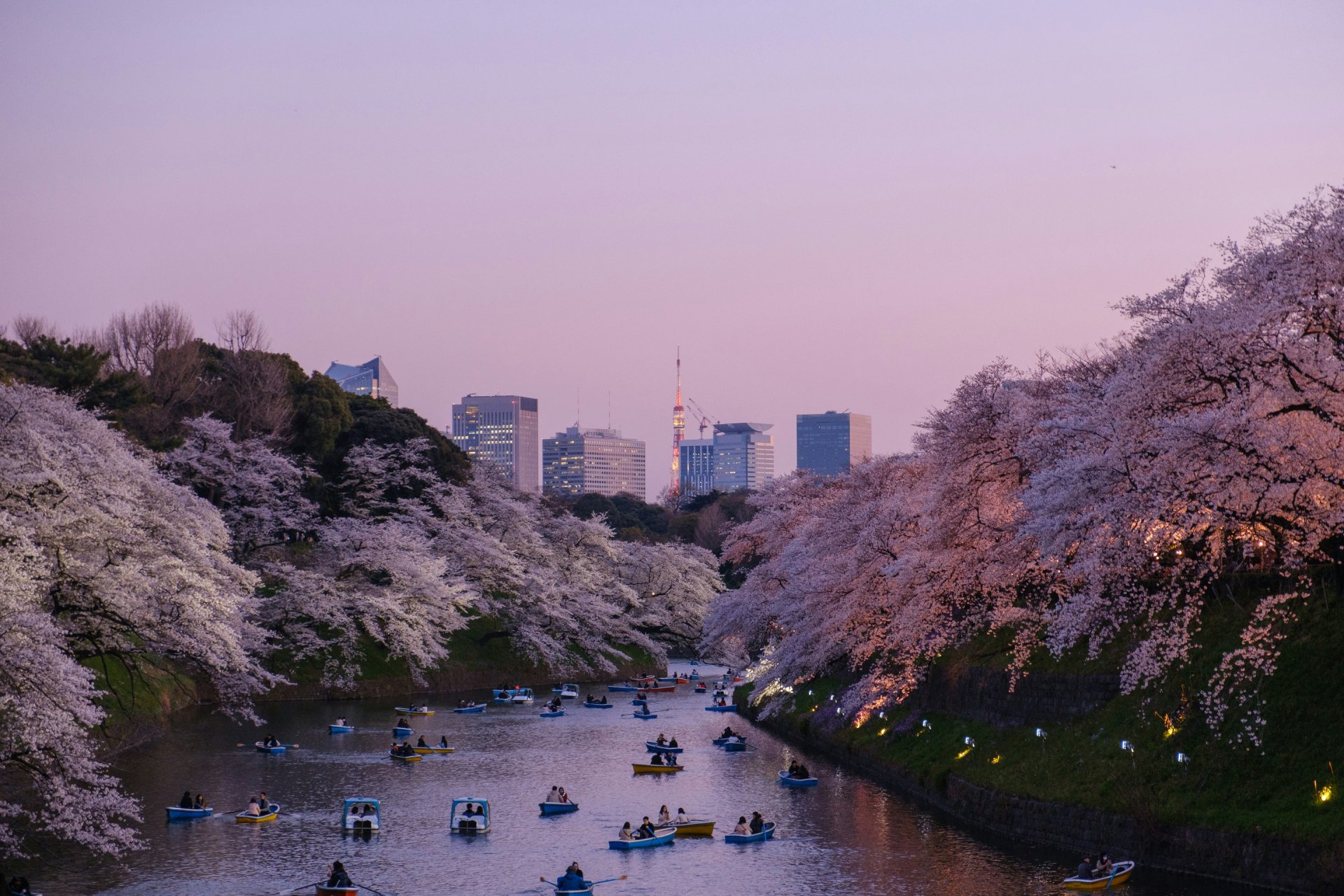
Japan remains the defining destination because sakura are inseparable from the country’s history, identity and tradition of hanami, or flower viewing. Tokyo offers Ueno Park, Shinjuku Gyoen, Chidorigafuchi and the Meguro River. Kyoto combines blossoms with temples, shrines and historic streets, including Maruyama Park, the Philosopher’s Path and the wider Kyoto–Nara region. Travelers can also extend the season by moving north or visiting higher-elevation areas as conditions change.

The drawback is scale. Ueno’s celebration is among Japan’s largest and most crowded, while Kyoto’s famous sites can become intensely congested. Sidewalks narrow around photography bottlenecks, transit stations fill quickly and buses may be difficult for travelers who cannot stand for long periods. Hotel inventory tightens early, so travelers with mobility limitations should stay near rail stations and schedule marquee locations early in the morning.


Washington, DC

Washington’s Tidal Basin offers one of the world’s most recognizable spring scenes: blossoms framing the Jefferson Memorial and Washington Monument. The trees originated with Japan’s 1912 gift to the United States, and the annual festival combines bloom viewing with cultural programs and citywide events.

The central viewing loop can become extremely crowded. Parking is limited, road restrictions affect circulation, and pedestrian congestion can be uncomfortable for young children, older travelers and anyone using a mobility aid. Public transportation is usually the practical choice, although trains may also be crowded. Consider alternate blossom sites, visit on weekdays or at sunrise and avoid expecting a leisurely walk at peak afternoon hours.


South Korea

Seoul provides blossoms within a major city itinerary, including Yeouido, Seokchon Lake, palace grounds, Anyangcheon Stream and neighborhood parks. Its transit network makes it possible to adjust plans as blooms and weather change, while museums, markets and historic sites provide alternatives when rain interrupts viewing.

Jinhae offers a more concentrated spectacle. Its festival is associated with blossom tunnels, Yeojwacheon Stream and Gyeonghwa Station, attracting large numbers of visitors to a compact area. That intensity creates long waits, traffic restrictions and limited last-minute lodging. Travelers should decide whether they want an urban spring trip in Seoul or a festival-focused journey in Jinhae; trying to do both on a rigid schedule can create unnecessary transit pressure.


Vancouver

Vancouver’s flowering trees are distributed across neighborhoods rather than concentrated in a single monumental site. The city’s festival spans several weeks and includes cultural programming, guided experiences and blossom maps. That geographic spread reduces the sense that one location or one day determines the trip’s success.

Vancouver suits travelers who want a spring city break with food, parks, coastal scenery and day trips as backup activities. Rain is an obvious possibility, and different tree varieties bloom at different times, but those differences can extend viewing opportunities. Reserve early around festival weekends, then use neighborhood-level planning rather than repeatedly joining the largest crowds.


Paris, Stockholm and Bonn

European blossom trips work best as an enhancement to a broader city vacation. In Paris, visitors may find blossoms near Notre-Dame and in parks, while the Domaine de Sceaux outside central Paris hosts a hanami celebration with Japanese cultural programming. Paris offers enough museums, architecture and dining that imperfect timing need not undermine the trip.

Stockholm’s best-known display is in Kungsträdgården, where central location and easy access draw large numbers of visitors, usually around mid-April. Bonn’s old-town streets are known for a short-lived canopy of Japanese flowering cherries, generally around early April. Both are beautiful but compact, so photogenic areas can become congested quickly. Treat these displays as seasonal highlights rather than the sole reason for crossing the Atlantic.


The Risks Are Often Ordinary

Cherry blossom travel is not generally dangerous, but peak-season conditions amplify familiar risks. Dense pedestrian traffic increases fall and separation risks. Crowded trains and festivals create opportunities for pickpocketing and phone theft. Long periods of standing can aggravate joint, back or cardiovascular problems, while cold rain or sudden warmth can affect travelers who packed for an idealized spring day.

Mobility planning matters. Identify elevators, accessible station exits, rest areas and alternate viewing sites before arrival. Families and groups should choose a meeting point in case networks slow or members become separated. Keep bags zipped and in front of the body in dense areas. Comfortable footwear, water, medications and a power bank are more useful than elaborate photography gear if the day becomes long.


The Global Rescue Connection

The strongest itineraries use flexibility as a design principle. Reserve flights and hotels early, but choose accommodations and fares with reasonable change terms. Build several viewing locations into each city. Follow official bloom watches and weather forecasts during the final days before arrival, then adjust the daily order rather than rebuilding the entire trip.

Schedule famous sites for dawn, early morning or a weekday. Pair outdoor viewing with nearby indoor options. Allow extra time for transit and do not assume taxis can bypass road closures or festival traffic. Most importantly, select a destination you would still value in rain, after petal fall or before full bloom. The blossoms should elevate the journey, not hold it hostage.

Cherry blossom season rewards travelers who accept uncertainty without ignoring risk. A Global Rescue membership adds practical support before and during the trip. Destination Reports help travelers evaluate local medical capabilities, security conditions, transportation considerations and destination-specific risks. Medical advisory services provide access to experienced professionals when illness or injury raises questions abroad, while security intelligence and emergency assistance help members respond when disruptions become serious.

For this type of travel, Destination Reports may be the most relevant starting point. They help travelers compare more than bloom calendars by examining the systems that matter when a crowded, weather-dependent itinerary changes unexpectedly. Cherry blossom season is worth the crowds when the destination, timing and contingency plan are chosen with equal care.