Article Highlights:

  • Clothing often signals nationality, travel experience and cultural awareness before a traveler speaks.
  • Many common clothing choices immediately identify tourists regardless of their nationality.
  • Dressing appropriately for local customs and dress codes can reduce unwanted attention and improve interactions.
  • Experienced international travelers favor understated, versatile clothing that respects local expectations.
  • Behavior and cultural awareness ultimately matter more than clothing, but first impressions still count.


One of the first decisions many international travelers make is whether to try blending in at all.

Some travelers make a deliberate effort to avoid looking like tourists. They want to reduce attention from pickpockets, avoid tourist traps, show respect for local customs or simply experience a destination without immediately announcing they’re visitors. Others take the opposite view. They figure that speaking English with an American, Canadian or Australian accent, stopping to photograph famous landmarks or consulting maps on their phones already makes them obvious tourists, so why bother changing their wardrobe?

Most travelers fall somewhere between those extremes. They prioritize comfort and practicality while avoiding clothing that screams “vacation.” They may leave the oversized logo T-shirts at home, choose neutral-colored clothing instead of bright athletic wear and wear comfortable but understated walking shoes rather than bulky running shoes.


One Style Does Not Fit All

For travelers who intentionally try to blend in, the effort extends well beyond clothing. They research local dress codes before departure, understanding that gym clothes may be perfectly acceptable in one country but look out of place in another. They know that covering shoulders and knees is expected when visiting religious sites in much of the Middle East, Southern Europe and parts of Asia. They observe how residents behave, speaking quietly on public transportation, avoiding loud conversations in public squares and following local customs that visitors often overlook.

Situational awareness also matters. Experienced travelers avoid stopping in the middle of busy sidewalks to study maps, waving guidebooks in the air or loudly announcing plans in crowded tourist districts. Many also make an effort to learn a few simple words in the local language. A sincere “hello,” “please” and “thank you” often earns more goodwill than perfectly matching the local fashion.

The goal isn’t to fool anyone into believing you’re a local. That’s rarely possible. Instead, experienced international travelers understand that dressing appropriately and respecting local customs helps them avoid unnecessary attention while demonstrating that they’re guests who appreciate the culture they’re visiting.

What travelers wear abroad often communicates far more than personal style. Clothing can signal nationality, wealth, cultural awareness, travel experience, political attitudes or whether someone is likely a first-time visitor. While these are stereotypes, not reliable indicators, they are commonly held perceptions that can influence how travelers are treated by hotel staff, shopkeepers, restaurant employees, taxi drivers and even criminals looking for easy targets.

Before you say a single word, your clothing has already started the conversation.


North American Dress Styles

American travelers are perhaps the easiest nationality to identify abroad, especially in Europe. Athletic clothing, baseball caps, logo T-shirts, running shoes, cargo shorts and athleisure dominate many American wardrobes. The style emphasizes comfort, practicality and function over fashion.

To many locals, this projects an image of friendliness and confidence. Americans are often perceived as approachable and affluent. At the same time, the casual appearance sometimes reinforces stereotypes that Americans are less concerned with local customs or dress expectations.

That perception may be unfair, but it exists.

A family walking through Florence wearing matching vacation T-shirts, white athletic socks and baseball caps immediately signals “tourist,” regardless of whether they’re actually from Boston, Brisbane or Birmingham.

Canadians often dress similarly to Americans, although generally with fewer prominent logos and greater use of outdoor brands. Internationally, Canadians are commonly viewed as outdoorsy, polite and low-key. Although maple leaf patches on backpacks once became a common way to distinguish themselves from Americans, many Canadians today avoid displaying obvious national symbols.

Overall, Canadian travelers often blend into crowds more easily because their clothing tends to be understated.


Europeans: Tailored Without Trying Too Hard

Travelers from many European countries typically place greater emphasis on fit than on brand names. French travelers often wear tailored jackets, scarves, neutral colors and stylish footwear. Athletic clothing is generally reserved for exercise rather than sightseeing. Italian travelers are similarly appearance-conscious. Well-fitted clothing, quality shoes and tasteful accessories communicate confidence without appearing flashy. Italians frequently dress more formally than visitors, even for casual activities like shopping or dining. British travelers often favor smart casual clothing with darker colors and practical but fashionable shoes. Younger travelers, in particular, frequently blend into other European cities because their clothing closely matches local urban fashion.

These differences are subtle, but they contribute to the common perception that European travelers are experienced, sophisticated and culturally aware.

Practicality takes a different form in northern Europe. German travelers are frequently associated with technical outdoor clothing, hiking brands and practical footwear. Waterproof jackets, fleece layers and multifunctional clothing appear everywhere—even in cities where sunshine is abundant. Scandinavian travelers generally embrace minimalist fashion built around muted colors, simple designs and high-quality basics. To many observers, these travelers appear organized, prepared, environmentally conscious and understated.


Australia and Asia Travel Dress Styles

Australians are known for carrying their relaxed coastal lifestyle almost everywhere they travel. Shorts, sandals and lightweight outdoor clothing remain common even in destinations where locals dress more formally. The style projects confidence, adventure and an easygoing personality. Like Americans, Australians sometimes stand out because they remain comfortable in casual clothing even in upscale settings.

Travelers from Japan often dress neatly, conservatively and with remarkable attention to detail. Clean lines, coordinated outfits and modest presentation are common. Clothing rarely appears wrinkled or overly casual. South Korean travelers frequently embrace contemporary street fashion with coordinated outfits and current trends. Internationally, both groups are often perceived as respectful, detail-oriented and fashion-conscious.


Clothing That Instantly Identifies Tourists

Nationality isn’t always the easiest thing to spot. Being a tourist is. Experienced locals often recognize visitors within seconds regardless of where they come from.

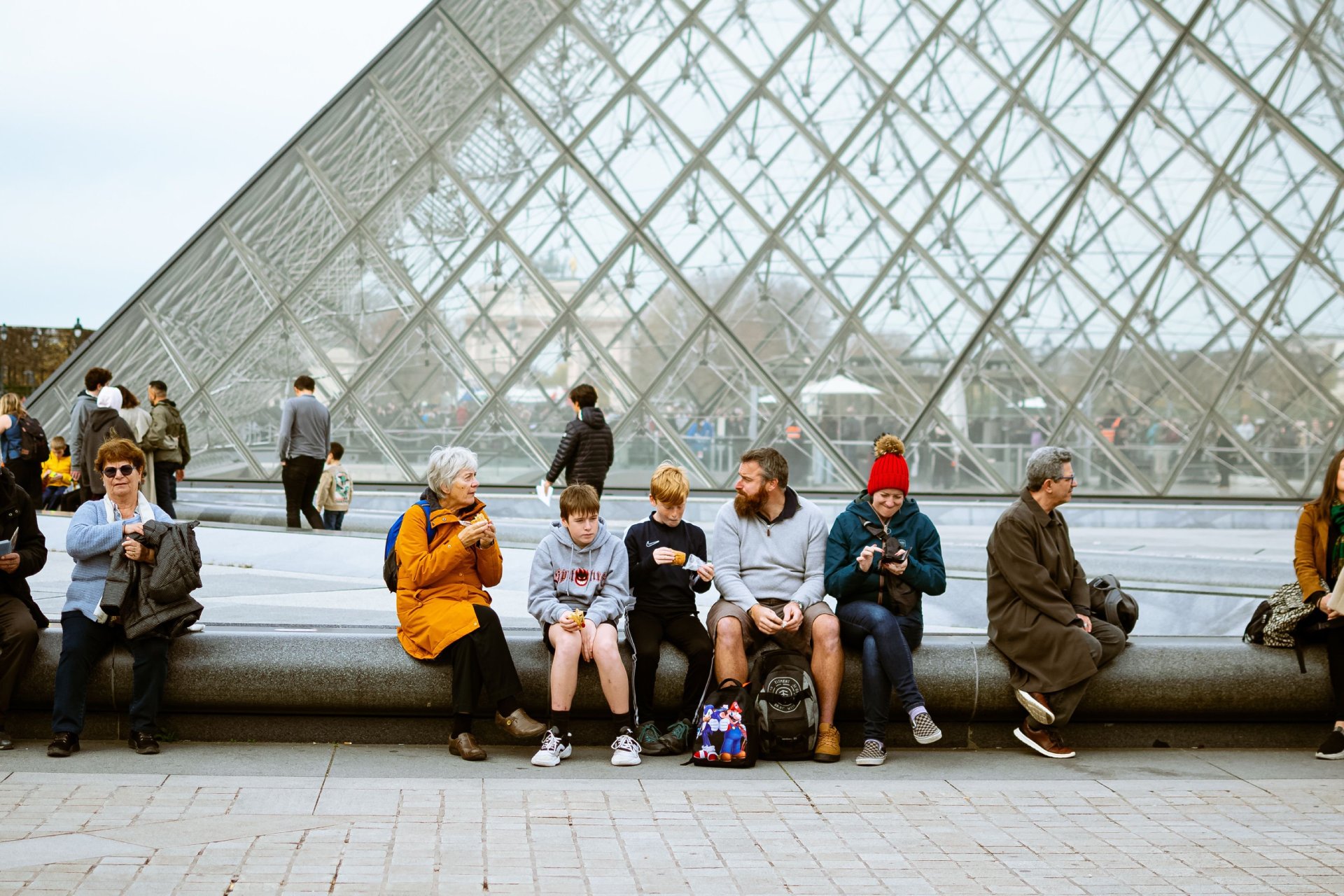
Hiking boots in major cities rarely indicate someone preparing for a mountain expedition. Convertible zip-off pants, oversized cameras hanging around the neck and money belts worn outside clothing immediately suggest sightseeing rather than daily life.

Cruise ship lanyards, matching family T-shirts and excessive destination merchandise, like “I ♥ Paris,” “Rome” or “Santorini” emblazoned across clothing, announce visitor status just as clearly. Large daypacks carried everywhere also stand out in many cities where residents typically use smaller bags or briefcases.

These items aren’t inherently bad. They simply make travelers easier to identify.


What Clothing Communicates

Clothing choices often trigger predictable assumptions. Athletic wear suggests practicality and comfort and is commonly associated with American or Australian travelers who prioritize function over appearance. Luxury designer brands often communicate wealth. While stylish, conspicuous luxury accessories may also attract unwanted attention from pickpockets and scammers looking for affluent targets.

Muted, tailored clothing often suggests business travel or extensive international experience. Neutral colors rarely attract attention and tend to blend naturally into urban environments. Outdoor technical gear implies preparedness and adventure travel. While perfectly appropriate in mountainous regions or unpredictable climates, full hiking gear can appear out of place in city centers. Bright vacation clothing often signals a leisure traveler staying at a resort or taking a first international trip.

Again, these are stereotypes rather than facts, but they influence first impressions around the world.


Dressing Like an Experienced International Traveler

Frequent international travelers rarely try to look like locals. Instead, they try to avoid looking conspicuously out of place.

Their wardrobes typically rely on neutral colors such as black, navy, gray and olive that work across a variety of destinations. Clothing is comfortable but well-fitted rather than oversized or overly athletic. Logos are kept to a minimum, and versatile layers replace bulky jackets that quickly become cumbersome during long travel days.

Footwear is another giveaway. Experienced travelers often choose understated walking shoes or comfortable leather sneakers instead of brightly colored running shoes. Crossbody bags and anti-theft backpacks are favored over oversized daypacks that immediately identify someone as sightseeing.

Perhaps most importantly, seasoned travelers understand that every destination has its own dress code, whether formal or informal. They know that beachwear belongs at the beach, athletic clothing belongs in the gym and modest attire is expected in many religious, cultural and government settings around the world. Rather than packing for home, they pack for the expectations of the places they’re visiting.

The objective isn’t to disguise their nationality. It’s to appear respectful, practical and culturally aware while remaining comfortable enough to enjoy the journey.


Regional Expectations Matter

Some destinations place greater importance on dress codes than others. In Southern Europe, people generally dress more formally than many North Americans. Athletic wear is less common away from beaches and gyms, especially during the evening.

Across much of the Middle East, modest clothing is more than a cultural preference, it’s often an expected dress code, particularly at religious sites and government buildings. Covering shoulders, knees and, in some locations, hair demonstrates respect and may reduce unwanted attention.

Throughout East Asia, neat, clean and coordinated clothing is widely appreciated. Extremely casual attire may appear sloppy rather than relaxed. In many urban areas across Latin America, residents often dress more stylishly than visitors. Flip-flops and beachwear generally belong at the beach rather than restaurants, shopping districts or city streets.

Across much of sub-Saharan Africa, lightweight, practical and modest clothing suited to the climate is appropriate. Travelers should also know that military-style clothing and camouflage are prohibited for civilians in some countries.

Researching local dress codes before departure is one of the easiest ways to show respect, avoid unintentionally drawing attention and prevent awkward situations at museums, religious sites and government buildings.


Behavior Always Matters More

Clothing creates first impressions. Behavior creates lasting ones. Speaking quietly, respecting local dress codes, observing local customs, asking permission before photographing people and making an effort to learn a few words of the local language will almost always matter more than the brand of shoes you’re wearing.

A traveler dressed impeccably who behaves disrespectfully will leave a poor impression. Conversely, someone wearing comfortable, practical clothing who demonstrates humility, curiosity and cultural awareness is likely to be welcomed warmly.

For international travelers, the best approach is to dress appropriately for the destination, climate and local dress code. Doing so not only shows respect but can also help travelers blend in, avoid unwanted attention and enjoy a more comfortable experience abroad.


The Global Rescue Connection

Packing the right clothing is only one part of preparing for an international trip. Understanding local dress codes, cultural customs, medical capabilities and security conditions is equally important.

Before departure, Global Rescue Destination Reports help travelers understand local expectations, including appropriate attire for religious sites, cultural events and government buildings, as well as country-specific security concerns, healthcare resources and other practical information that can make travel safer and more enjoyable.

Even the most experienced travelers can’t prevent every emergency. An accident while sightseeing, an unexpected illness or a security incident can quickly change the course of an otherwise well-planned trip. Global Rescue members have access to 24/7 medical advisory services from experienced medical professionals who can provide guidance before and during travel.

When emergencies become serious, Global Rescue goes far beyond traditional travel insurance. Members receive field rescue from the point of illness or injury, medical evacuation to the most appropriate medical facility and security extraction when conditions warrant. Whether you’re exploring a bustling European capital, hiking in a remote national park or visiting a developing country with limited medical infrastructure, Global Rescue provides the expertise and operational support to help you travel with confidence.

Looking like a respectful traveler begins with what you wear. Traveling confidently, however, comes from being informed, prepared and knowing expert assistance is available wherever your journey takes you.