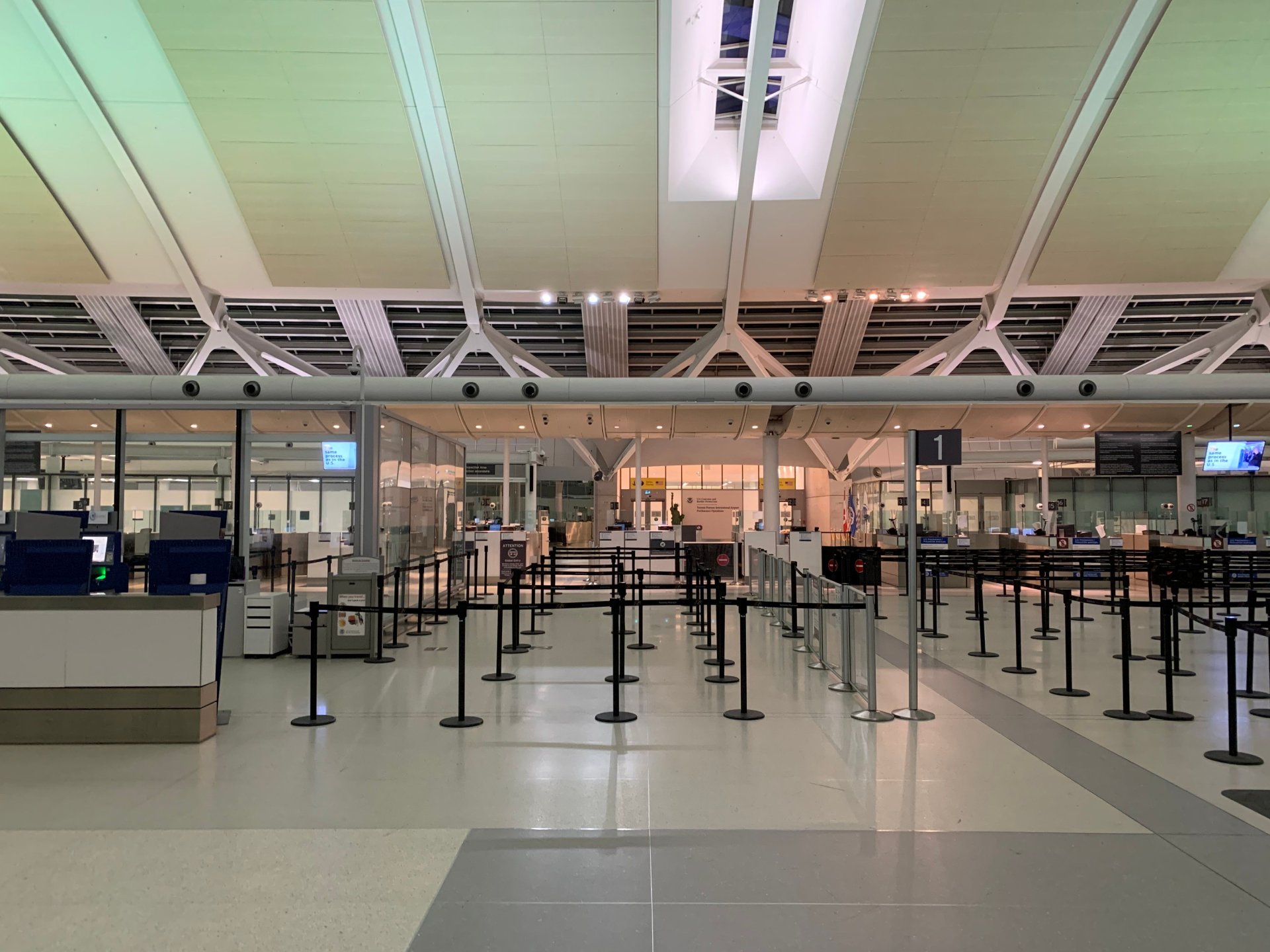
Article Highlights:

  • Gateside by TSA PreCheck allows eligible non-flyers to pass through security at participating airports without an airline ticket
  • TSA PreCheck Touchless ID is expanding through Google Wallet, making facial identity verification easier for eligible travelers
  • State-issued mobile driver’s licenses are being accepted at a growing number of TSA checkpoints
  • A new CBP Trusted Traveler app will replace separate Global Entry and Trusted Traveler Programs apps beginning September 15, 2026
  • Faster airport processing does not eliminate the need to understand destination-specific medical capabilities and emergency resources


For decades, the basic airport routine hardly changed: arrive with a ticket, show identification, pass through security and keep your documents handy until you reach the gate. In 2026, that model is changing quickly.

New programs from the Transportation Security Administration (TSA) and US Customs and Border Protection (CBP) are expanding who can go beyond airport security, how travelers prove their identity and how members manage Trusted Traveler services. The common theme is clear: less dependence on physical documents and more reliance on digital credentials, biometrics and integrated mobile technology.

For US travelers, several of the most significant changes are happening almost simultaneously.


Can You Go Through TSA Security Without a Plane Ticket?

As of September 1, TSA has begun rolling out Gateside by TSA PreCheck, a program designed to bring back something largely lost after 9/11: the ability for non-ticketed visitors to accompany friends or relatives beyond the security checkpoint. Eligible TSA PreCheck members and others who qualify for TSA PreCheck screening through a Known Traveler Number can apply for a Gateside pass and, if approved, enter the secure side of participating airports even though they are not flying.

That could mean walking a family member to a gate, greeting someone arriving from a trip, having lunch with a friend during a long layover or simply visiting airport restaurants and shops located beyond security. TSA launched the program at 14 airports (see list below), with availability subject to capacity and local operating conditions.

AZA (Mesa), CMH (Columbus), DFW (Dallas-Fort Worth), DTW (Detroit), ICT (Wichita), IND (Indianapolis), LAS (Las Vegas), LAX (Los Angeles), LIT (Little Rock), MDW (Chicago), OKC (Oklahoma City), OMA (Omaha), SAN (San Diego), SLC (Salt Lake City).

TSA says this is the initial rollout and additional airports will be added in phases. Availability may also be limited during peak travel periods. The concept effectively turns TSA PreCheck from strictly an expedited passenger-screening program into something broader: a trusted-access credential.

Visitors still undergo security screening and airport security rules remain fully in force. Gateside users generally enter through TSA PreCheck lanes, but TSA specifically notes that Gateside passes cannot be used in TSA PreCheck Touchless ID lanes. That distinction matters because the two programs solve different problems: Gateside determines whether a non-passenger may enter the terminal while Touchless ID streamlines identity verification for actual travelers. (


TSA PreCheck Touchless ID Is Getting Easier To Use

The second major change may be more consequential for frequent flyers. TSA PreCheck Touchless ID uses facial comparison technology to verify an eligible traveler’s identity without requiring the traveler to routinely hand a physical driver’s license or passport to the TSA officer. The traveler opts into the program and, at participating checkpoints, a camera verifies identity through facial comparison.

The technology itself is not brand new. What is changing is accessibility. In June, TSA and Google announced that Google Wallet would become the first digital wallet integrated with TSA PreCheck Touchless ID. Eligible travelers can save their boarding pass in Google Wallet, follow the Touchless ID enrollment process and authorize their digital identity and boarding-pass information to be shared with TSA for that trip. Once approved, a Touchless ID indicator appears with the boarding pass. Google says TSA PreCheck Touchless ID is available at more than 65 major airports, although actual availability still depends on the checkpoint and participating infrastructure.


Are Physical Driver’s Licenses Becoming Optional?

Mobile driver’s licenses, or mDLs, represent another piece of that transition. Unlike a photograph of a driver’s license stored on a phone, an mDL is a digitally issued credential designed to securely transmit verified identity information. TSA’s newer Credential Authentication Technology, particularly CAT-2 equipment, incorporates digital ID readers and cameras that can compare a live image of the traveler with the credential presented.

The number of usable state credentials continues to grow. Colorado, for example, recently introduced its myColorado mDL for TSA use. Colorado says the credential can be presented at Denver International Airport and more than 250 participating airports outside the state where mDLs are accepted.

That does not mean travelers should leave their physical identification at home. Digital ID acceptance varies by location and TSA continues to advise travelers to be prepared to present physical identification when requested. Traditional acceptable documents, including REAL ID-compliant licenses, passports and DHS Trusted Traveler cards, remain part of the identification system.

For now, think of digital identification as an expanding convenience rather than a universal replacement.


What Is Changing for Global Entry Members?

International travelers have another change coming almost immediately. Beginning September 15, 2026, CBP will replace both its current Global Entry mobile app and Trusted Traveler Programs mobile app with a single Trusted Traveler mobile app. Existing memberships are not being replaced. Global Entry, NEXUS, SENTRI and FAST remain separate Trusted Traveler Programs with their existing purposes and benefits. The change consolidates the mobile experience used to interact with those programs.

Current users will be able to sign into the new application using existing credentials, with profile and membership information transferring to the replacement app. CBP says the existing Global Entry and Trusted Traveler Programs mobile applications will stop functioning September 15. Current mobile capabilities will move into the new platform, although specific services will continue to depend on eligibility and location.

For Global Entry users in particular, mobile processing has already changed the international arrival experience. At supported airports, eligible members can use their phone to submit a photograph and travel information rather than relying exclusively on a Global Entry portal or kiosk. The unified app should make that ecosystem easier to understand.


What Do These Changes Mean for Travelers?

Taken together, Gateside, Touchless ID, mDL acceptance and the consolidated Trusted Traveler app point toward a different airport experience. The boarding pass, plastic driver’s license and airport kiosk are no longer the only gateways to travel. Identity is increasingly becoming digital, portable and biometric.

That can produce real benefits. Travelers may spend less time retrieving documents, interaction at identity checkpoints can become faster and Trusted Traveler members can manage more functions from one device. But convenience also creates a new planning requirement: know what actually works at your airport before you arrive.

A mobile driver’s license accepted at one checkpoint may not work everywhere. Touchless ID requires an eligible traveler and participating location. Gateside access is currently limited to selected airports and approval is not the same as possessing a flight reservation. The new Trusted Traveler app does not change the underlying rules of Global Entry, NEXUS or SENTRI.

Technology is simplifying travel, but it has not made travel uniform.


Airport Convenience Is Only One Part of Travel Preparedness

There is another important distinction for international travelers. These innovations primarily make the airport portion of the trip easier. They do not change what happens after arrival.

A traveler may move through a US checkpoint using facial verification, clear immigration rapidly through Global Entry and manage credentials from a smartphone, then arrive somewhere where ambulance response is limited, the nearest hospital lacks advanced trauma care or specialized medical treatment requires transport to another city or country. That makes destination knowledge increasingly important.

The more frictionless the journey becomes, the easier it can be to overlook the fact that emergency healthcare capabilities vary dramatically around the world. Knowing where the nearest hospital is tells only part of the story. Travelers should also understand whether that facility has emergency medicine specialists, advanced imaging, surgical capabilities, intensive care, blood products and the ability to manage a serious illness or injury.


The Global Rescue Connection

The newest TSA and Trusted Traveler innovations can make getting through an airport easier. Global Rescue addresses a different question: what happens when something goes wrong after you get there? A Global Rescue membership provides field rescue from the point of illness or injury, medical evacuation to the hospital of the member’s choice when medically necessary, 24/7 medical advisory support and security advisory services during natural disasters or significant disruptions.

Especially valuable for international travelers are Global Rescue Destination Reports, which provide advance intelligence about local conditions, including the capabilities of destination medical facilities and emergency healthcare systems. Knowing that a hospital exists is useful. Knowing whether it can competently treat a serious trauma, cardiac emergency or complicated illness can be far more important.

That distinction becomes critical when travelers venture beyond major cities or into destinations where advanced care is concentrated in only a few facilities. Global Rescue memberships are not insurance. There are no claim forms, deductibles or extra costs for covered services. Whether a member requires field rescue after an injury, medical evacuation when local care is inadequate or medical advice from abroad, Global Rescue provides operational support rather than simply reimbursing expenses afterward.

TSA and CBP are making the journey more digital, streamlined and convenient. Travelers should use those advantages. But faster checkpoints and smarter apps should be paired with equally smart preparation for the destination itself. Getting through the airport is becoming easier. Knowing what happens when the unexpected strikes after you leave it remains just as important.