Categories:

Travel
Share This:

Is Space Tourism the Next Mount Everest or Just a Dream for the Few?

Explore the risks and costs of space travel, and why most still prefer Earth-based adventures.

Article Highlights:

  • Cost and catastrophic risk perception are the biggest barriers to space tourism adoption.
  • Extreme Earth-based adventures still attract more interest than space travel.
  • Younger travelers show more openness to futuristic travel experiences.
  • Most travelers remain firmly committed to Earth-based exploration.


For decades, space travel has represented the ultimate frontier, a realm reserved for astronauts, scientists and the exceptionally wealthy. Today, that boundary might be beginning to blur. With successful missions like Artemis II signaling a renewed era of lunar exploration, the concept of civilian space tourism is moving away from theoretical. Low Earth orbit flight is operational, evolving and increasingly visible.

Yet despite these technological breakthroughs, traveler sentiment tells a very different story. The reality is that while space tourism captures global imagination, it has not yet captured widespread demand.

NASA’s Artemis II mission marked a major milestone in human space exploration, successfully demonstrating the capability to return humans to lunar orbit and laying the groundwork for future moon walks. From a technological standpoint, the mission represents a leap forward in safety systems, propulsion and mission architecture.

But for travelers, technological capability does not automatically translate into willingness.

According to the Global Rescue Spring 2026 Traveler Sentiment and Safety Survey, only 24% of travelers express interest in traveling to the Moon, while 74% report little or no interest. More revealing, 57% say they are not interested at all.

This gap between possibility and demand highlights a critical truth: the possibility of space tourism may be advancing faster than traveler psychology.


Space Tourism vs. Climbing Mount Everest or Running With the Bulls

Cost remains one of the most immediate and tangible barriers. Even at the lower end of projected pricing, roughly $250,000 per seat, only about 10% of travelers express willingness to pay. At higher price points approaching $750,000 or more, interest drops to near zero.

This pricing structure positions space tourism far beyond even the most exclusive terrestrial experiences. Climbing Mount Everest, often considered one of the world’s most expensive adventure pursuits, typically costs between $40,000 and $100,000. Running with the bulls in Pamplona costs a fraction of that. Even high-risk activities like BASE jumping, while dangerous, remain accessible in comparison.

In economic terms, space tourism is a fundamentally different category of consumption, one that most travelers cannot justify, regardless of interest.

If cost is the first barrier, risk is the most decisive.

Unlike traditional adventure travel, where risk is managed, mitigated and often incremental, space travel introduces what many travelers perceive as absolute risk. According to the survey, 56% of respondents cite catastrophic mission failure as their primary concern.

This is a fundamentally different risk profile than climbing Mount Everest or participating in extreme sports. Those activities carry danger, but they also offer perceived control, the ability to turn back, adapt or rely on incremental decision-making.

Space travel removes that flexibility. Once the mission begins, the traveler is entirely dependent on systems, engineering and mission control. That lack of agency significantly amplifies perceived risk.

Secondary concerns reinforce this dynamic. Being stranded in space ranks as the second most cited fear, while concerns about illness or injury are comparatively low. This suggests that travelers are less worried about conventional medical risks and more concerned about existential ones.


Earth-Based Extremes Still Dominate

Even as space tourism gains attention, interest in extreme travel experiences remains largely grounded on Earth. Among currently available experiences, Antarctic expedition trekking leads with 20% interest, followed by Arctic wildlife experiences and, to a lesser extent, Mount Everest climbing. Yet even here, reluctance dominates, with nearly half of travelers expressing no interest in any extreme activity.

Activities like BASE jumping, swimming with great white sharks and the running of the bulls continue to attract niche audiences, but they do not approach mainstream appeal. This context is critical. If travelers remain hesitant about Earth-based risks they can see and understand, it is not surprising that space tourism struggles to gain traction.


The Generational Divide

Younger travelers show greater openness to extreme and future-oriented travel experiences, including space tourism. Among those under 44, interest in lunar travel nearly doubles compared to the broader population.

This suggests that generational shifts may gradually expand the market. Younger travelers are more accustomed to technological integration, rapid innovation and evolving definitions of experience-based travel.

Even within this group, however, enthusiasm has limits. A significant percentage still express no interest in extreme or space-based experiences, reinforcing that curiosity does not equal commitment.


The Psychology of Exploration

To understand the hesitation around space tourism, it helps to examine how travelers define value.

Traditional travel offers layered rewards: culture, cuisine, landscapes, human connection and personal growth. Whether exploring Spain’s historic cities, trekking through remote national parks or navigating emerging destinations, travelers engage with environments that feel dynamic and meaningful.

Space travel, by contrast, is currently more abstract. While the experience of viewing Earth from orbit or walking on the Moon is extraordinary, it lacks the multi-dimensional engagement that defines most travel experiences.

In essence, space tourism today is closer to a technological achievement than a fully realized travel product.

The data reinforces a consistent conclusion: space tourism is not poised for mass adoption in the near term. It is a niche market driven by a small subset of highly motivated, high-net-worth individuals.

Even among future extreme travel concepts, lunar tourism leads interest at just over 9%, followed by other emerging experiences like orbital hotels and deep-sea expeditions, each attracting similarly modest levels of interest.

Meanwhile, nearly two-thirds of travelers say they are not interested in any currently unavailable extreme travel experiences. This indicates that the challenge facing space tourism is not just technological or economic, it is fundamentally behavioral.


The Global Rescue Connection

Space tourism may represent the future of extreme travel, but for now, most travelers remain firmly Earthbound. Whether exploring remote wilderness, conducting international business or enjoying leisure travel, the majority of trips still take place in environments where risks are real, but manageable.

A Global Rescue membership is designed for travelers navigating the complexities of global travel. Members have access to field rescue from the point of illness or injury, ensuring extraction even in remote or difficult environments. Medical evacuation services transport travelers to the hospital of their choice, not simply the nearest facility. Around-the-clock medical advisory support provides real-time guidance from experienced professionals, while Destination Reports deliver critical intelligence on local risks, healthcare systems and infrastructure.

For travelers facing security threats, the Global Rescue Security Add-On adds another layer of protection. It enables physical extraction in situations involving civil unrest, natural disasters, government evacuation orders or imminent danger of bodily harm. Staffed by experienced security professionals, this service ensures that travelers are not left to navigate high-risk situations alone.

Space travel may still be out of reach for most, but risk is not. A Global Rescue membership ensures that wherever you travel, across continents, oceans or remote landscapes, you have the expertise, coordination and support needed to go with confidence.

Share This:

What Is ETIAS and Will It Change Travel To Europe?

Learn how new EU entry requirements and fees impact travelers.

Article Highlights:

  • Most travelers are not deterred by new travel fees, even as costs rise globally
  • Awareness gaps around the EU ETIAS entry requirement could disrupt trips
  • Administrative requirements now pose a greater risk than travel costs
  • Destination fees are increasing, but travelers remain flexible and resilient
  • Preparation and awareness are becoming the most critical aspects of international travel


International travel is entering a new phase, one defined not just by rising costs but by increasing complexity. Fees that once felt incidental are becoming more common, more visible and in some cases more structured. From entry charges to overnight taxes, governments and destinations are recalibrating how tourism is funded and managed.

Yet, despite the growing number of fees, most travelers are not changing their behavior. According to the latest Global Rescue Winter 2026 Traveler Sentiment and Safety Survey, travelers remain largely unfazed by these added costs. What is far more concerning is not the financial impact, but a lack of awareness around new administrative requirements, particularly the European Union’s upcoming ETIAS system. This distinction, between cost tolerance and preparedness, is shaping the future of international travel.


Travelers Accept Fees, But Overlook Requirements

The data tells a clear story. Travelers are willing to absorb modest increases in travel costs. Entry fees, tourism taxes and overnight charges are viewed as manageable, even expected. For example, Thailand’s planned entry fee of roughly $10 USD is unlikely to deter travel, with more than 90% of travelers saying it would not impact their plans.

Similarly, proposed overnight stay fees in cities like Barcelona, London and Kyoto are not seen as major obstacles. Nearly half of travelers say these fees would not prevent them from visiting, while many others indicate that their decision may depend on the final daily amount but would still likely lean toward travel.

This reflects a broader mindset: travelers are resilient. They understand that global travel involves costs and are willing to pay for access to desirable destinations. But that resilience has a blind spot. While fees are widely accepted, awareness of new entry requirements is uneven, and that gap carries far greater consequences.


Understanding ETIAS: A New Entry Requirement for Europe

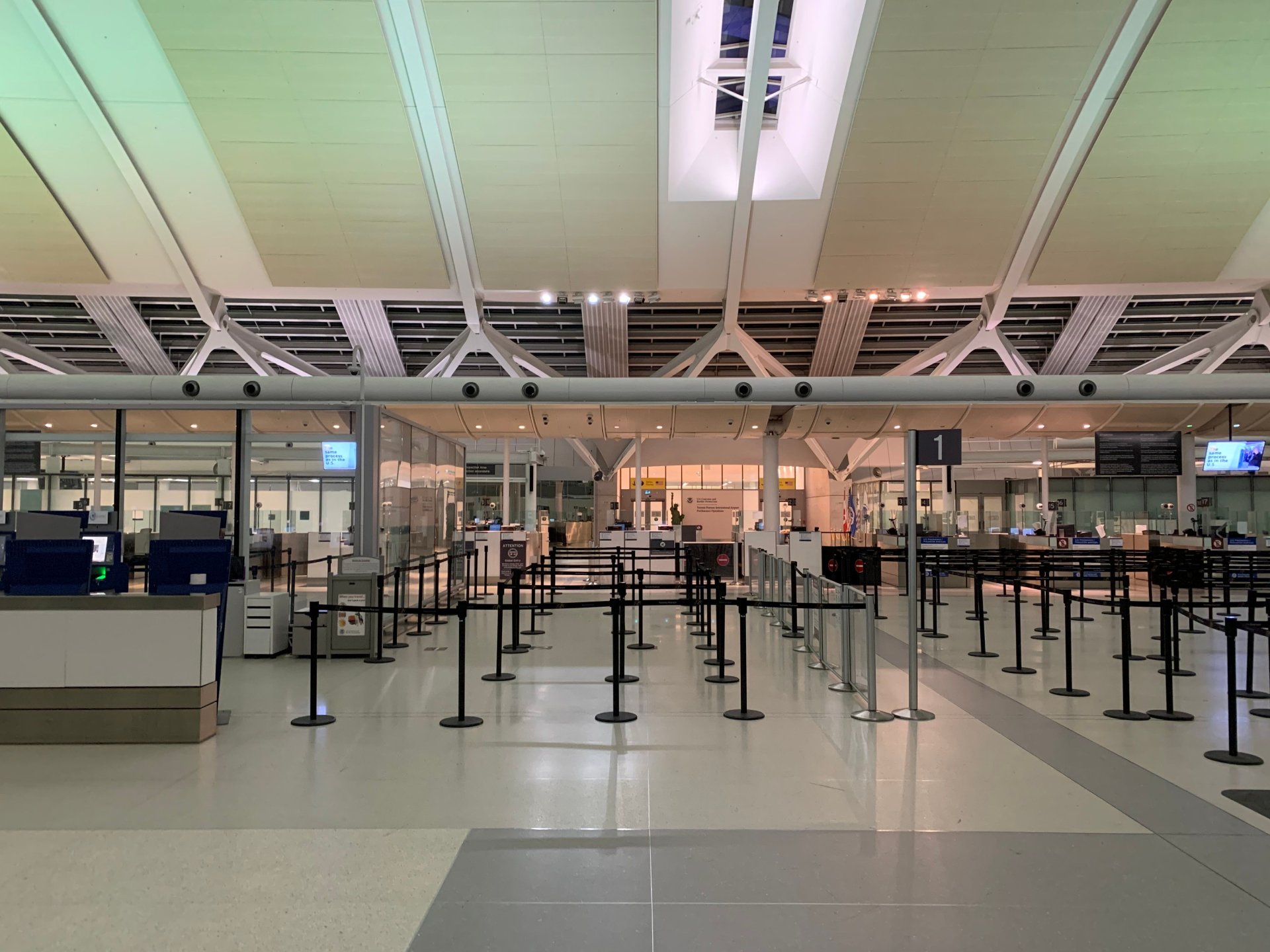
The EU ETIAS (European Travel Information and Authorisation System) represents a fundamental shift in how visa-exempt travelers enter Europe. Beginning in late 2026, travelers from countries like the United States, Canada, the United Kingdom and Australia will need to complete an online application before traveling to the Schengen Area. This is not a visa, but it is a mandatory entry requirement.

Travelers will need to complete an online application before departure, pay a €20 fee, and receive authorization prior to boarding their flight. Unlike traditional visas, the process is expected to be faster and largely automated, but it still requires proactive completion before travel begins. Failure to complete this process could result in denied boarding or entry delays at the border.

That’s where the real risk emerges. Unlike a fee that can be paid on arrival or absorbed into a travel budget, ETIAS is procedural. If it is not completed in advance, the trip may not happen at all.


The Awareness Gap That Could Disrupt Travel

Despite the importance of ETIAS, awareness remains inconsistent. Nearly 29% of travelers report having no awareness of the requirement at all, while another 17% say they are only slightly aware. Just over half report moderate or strong awareness, leaving a significant portion of travelers vulnerable to being unprepared.

The data also reveals notable differences across demographics. Women report higher awareness levels than men, while non-US travelers are generally more informed than their US counterparts. Among US travelers, awareness gaps are particularly pronounced, increasing the likelihood of last-minute complications or denied boarding scenarios.

This is not a minor issue. It represents a structural shift in travel planning. In the past, travelers could often rely on passports alone for visa-free destinations. Now, even those “easy” destinations require pre-approval steps that must be completed before departure.


Fees vs. Friction: What Actually Impacts Travel

The contrast between fees and requirements highlights a key concept: friction matters more than cost. A modest fee rarely changes a traveler’s decision. It may be inconvenient, but it is predictable and manageable within the overall cost of a trip. Administrative friction, however, introduces uncertainty and risk into the travel process.

This friction takes the form of additional applications, pre-travel approvals, documentation requirements, processing timelines and the possibility of denial or delay. Each of these elements increases the complexity of travel planning and introduces potential points of failure.

A traveler who forgets to budget for a fee can still proceed with their trip. A traveler who overlooks an entry requirement may not even board the plane. That is why ETIAS represents a more significant shift than any individual fee.

While ETIAS is the most notable upcoming entry requirement, it exists within a broader global trend. Governments are increasingly implementing tourism-related fees to manage visitor volume, fund infrastructure and mitigate environmental impact.

These fees are evolving in several directions. Some destinations are introducing entry fees as a gateway control mechanism, while others are implementing nightly taxes tied to accommodations. Environmental levies are becoming more common in fragile ecosystems, and infrastructure-related charges are being used to offset the strain tourism places on local systems.

For destinations, these fees are strategic tools designed to balance economic benefit with sustainability. For travelers, they are becoming a standard part of the international travel equation. Despite this, the data shows that travelers are adapting without significant resistance.


Why Administrative Preparedness Is Now Essential

The evolution of travel fees and entry requirements signals a broader transformation. International travel is becoming more regulated, more digitized and more dependent on pre-trip preparation.

Travelers must now think beyond passports and itineraries. Preparation includes understanding destination-specific entry requirements, completing digital authorizations in advance, monitoring regulatory updates and accounting for both financial and administrative obligations.

This shift is unlikely to remain isolated to Europe. As ETIAS rolls out, similar systems are expected to expand globally, creating a new baseline for international mobility. Travelers who fail to adapt to this reality risk avoidable disruptions that can derail entire trips.

The overall message is not that travel is becoming inaccessible. Demand remains strong, and travelers continue to explore the world with enthusiasm. The margin for error, however, is narrowing. In the past, a missed detail might result in inconvenience. Today, it can lead to denied boarding, missed connections or canceled itineraries. The difference is not just procedural, it is consequential. Travel remains open, but it is less forgiving than before. That makes awareness, preparation and access to accurate information more critical than ever.


The Global Rescue Connection

As travel requirements evolve, access to reliable, real-time information becomes a decisive advantage.

A Global Rescue membership provides far more than emergency response. While services include field rescue, medical evacuation to the hospital of your choice and 24/7 medical advisory support, one of the most valuable tools for modern travelers is access to detailed Destination Reports. These reports provide up-to-date intelligence on entry requirements such as ETIAS, along with information on fees, vaccinations, infrastructure and local conditions. In a travel environment where missing a single requirement can disrupt an entire trip, having access to accurate and current information is essential.

Beyond preparation, Global Rescue delivers operational support when conditions deteriorate. Whether facing a medical emergency, natural disaster or unexpected disruption, members have a single point of contact for coordinated response.

For travelers concerned about security risks, the Global Rescue Security Add-On adds another layer of protection. It provides physical extraction services in situations involving civil unrest, natural disasters, government evacuation orders or other threats involving bodily harm.

New travel fees may be an inconvenience. Entry requirements like ETIAS are a responsibility. A Global Rescue membership ensures travelers are prepared for both.

Categories:

ArticlesResources
Share This:

He Sent His Son to the Summit, Then Fought for His Life: Inside a Kilimanjaro…

Read how Global Rescue helped save a member's life on Kilimanjaro.

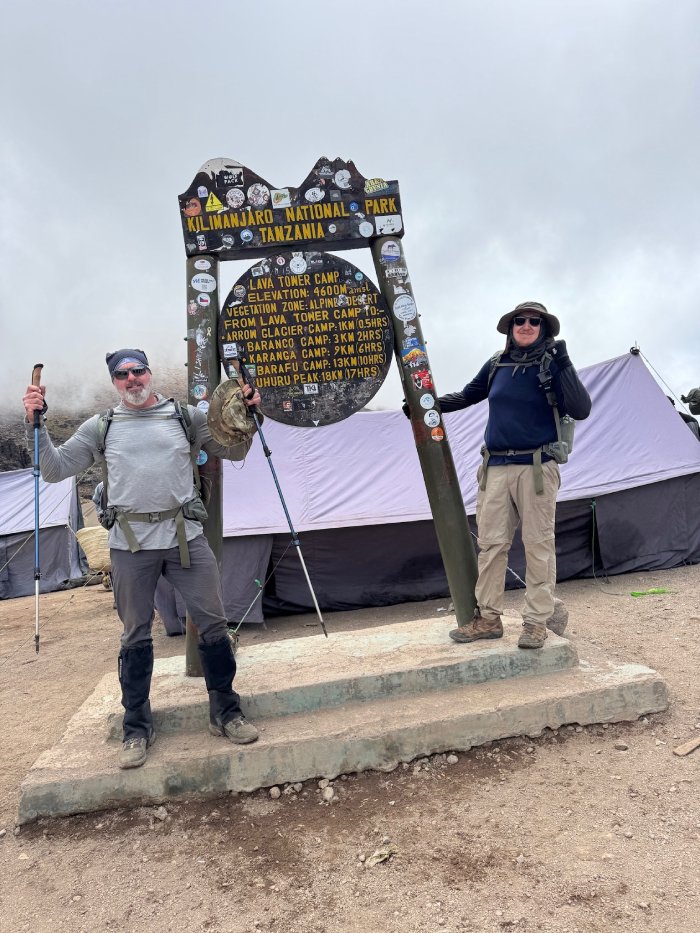
Mike D. from Georgia set out to climb Mount Kilimanjaro with a clear purpose: to share a meaningful, once-in-a-lifetime experience with his son. It wasn’t just about standing on the summit. It was about the journey they would take together. “This adventure… I went on was with my son,” Mike explained, underscoring that the climb was as much about connection as it was about challenge.

Coming from near sea level, Mike understood the risks. Kilimanjaro’s altitude — rising well above 19,000 feet/5,895 meters — can affect even the strongest climbers. While he had experience with demanding environments, this would be his first time at such elevation. He prepared carefully, including becoming a Global Rescue member. “I knew I needed a company that I can rely on,” he said.


A Strong Start, Then a Sudden Turn

The climb began smoothly. For days, Mike felt strong and acclimatized. Even the afternoon before everything changed, there were no warning signs. “I was doing fine that afternoon,” he recalled.

Then, almost instantly, the situation shifted. “The symptoms came on quite rapidly,” Mike said. “Difficulty breathing… and then I developed a lot of pain in my abdomen.”

What started as mild discomfort escalated into something far more serious. Every step became exhausting. Even minimal movement required effort. “Taking very short steps brought on very labored breathing,” he said.

Mike quickly recognized this wasn’t mild altitude fatigue. “I thought I probably have some type of altitude sickness, something a little bit more serious that needed medical care.”

That realization triggered a critical decision. Instead of pushing forward, he alerted the lead guide, choosing safety over summit.


Calling for Help

The guide contacted Global Rescue via satellite phone, connecting Mike directly with a medical professional. From there, things moved quickly. “They started to diagnose me and agreed that getting to lower altitude as fast as we can with supplemental oxygen was the best course of action,” he said.

Mike was immediately placed on oxygen, but his condition continued to deteriorate. “I went through about five bottles (of oxygen). I was burning through them pretty quickly,” he said.

Complicating matters, it was already nighttime and through Mike’s aviation experience he knew rescue helicopters don’t fly in the dark on Kilimanjaro since conditions at altitude can change rapidly. He knew he would have to wait until morning.

Those hours were agonizing. “It was a couple hours but seemed like 10 times that,” he said. “Just sitting up in my tent was laborious.”

Remaining at altitude meant his symptoms could worsen, and likely would. Walking down the mountain wasn’t an option. When it came time to move just a short distance to the landing area, he couldn’t do it on his own. “I had to be carried. I didn’t have a good, stable platform as I was walking,” Mike said.


The Rescue

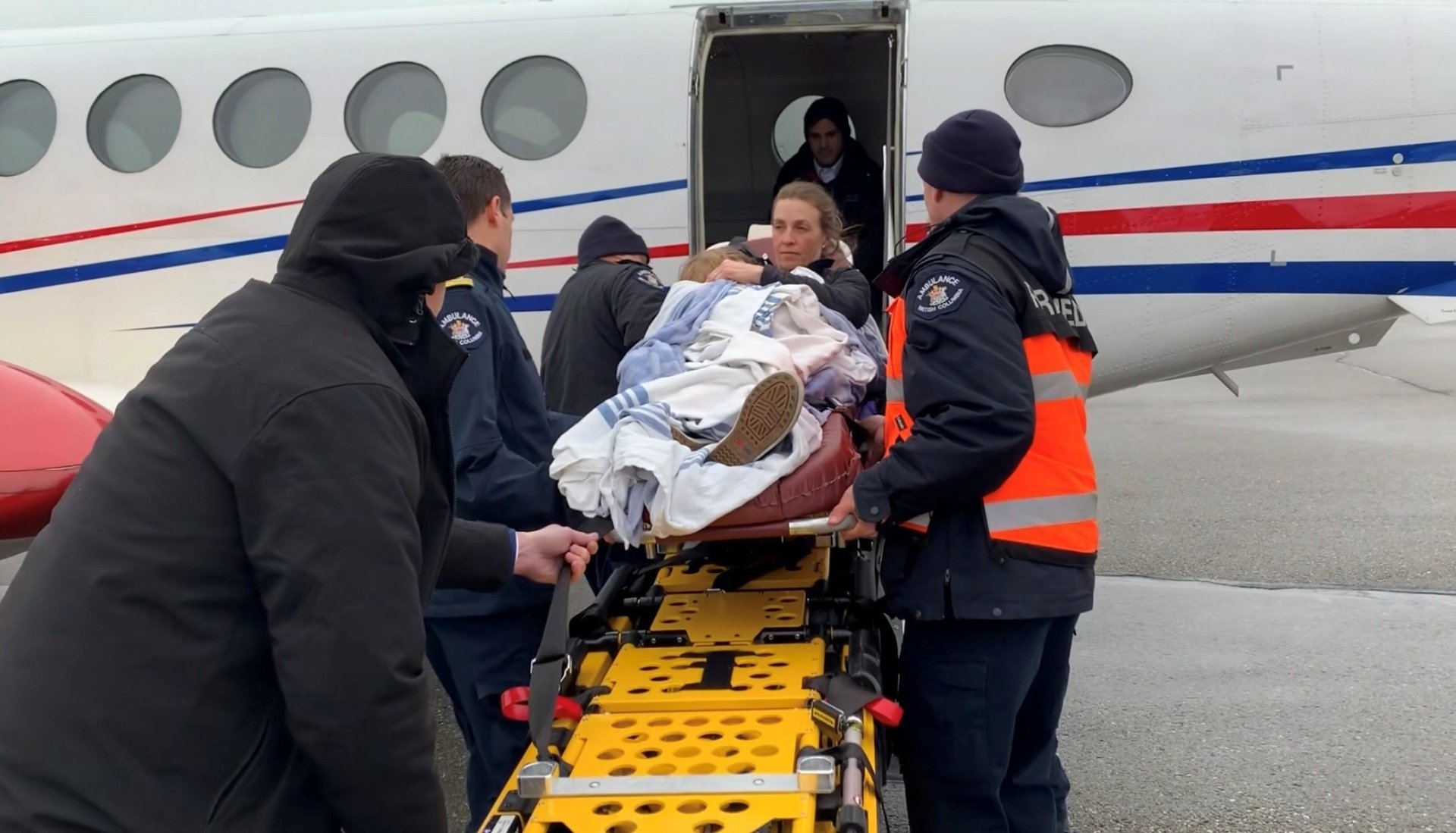
At first light, the sound of a helicopter broke through the silence. “I heard the helicopter coming from quite a distance,” Mike recalled. It was immediate confirmation: help had arrived. The team moved him to the landing zone, propping him up because he couldn’t stand. Once onboard, the pilot acted quickly.

The descent was rapid and surreal. After days of climbing, gaining elevation step by step, Mike was suddenly dropping thousands of feet in minutes. “It was a little surreal, to spend as many days to get up and just like that, I’m down,” he said.

As they descended, the environment changed dramatically, from freezing alpine air to warm temperatures below. But while the altitude drop was critical, the medical emergency was far from over. At the base, an ambulance transported Mike to a local hospital. There, the severity of his condition became clear.


Hospitalization and Diagnosis

X-rays confirmed high altitude pulmonary edema (HAPE). “My lungs should be black on an X-ray but they were all white and smoky,” he explained. When lungs fill with fluid, called pleural effusion, a chest X-ray typically shows a white, opaque or hazy area. But it wasn’t just his lungs. The impact on his body was widespread.

“All my organs started to swell, my bladder, my prostate and my kidneys,” Mike said. The abdominal pain he had felt on the mountain intensified. “I was in excruciating pain,” he said.

Even after descending, recovery wasn’t immediate. Fluid remained in his lungs and his body needed time to stabilize. For hours, he underwent testing — X-rays, ultrasounds and blood work — while doctors monitored his condition.

Throughout the entire ordeal, Global Rescue remained continuously engaged. “Global Rescue immediately contacted me, and remained in contact with me nonstop,” Mike said. Even with spotty service, communication continued through WhatsApp — coordinating care, checking in and ensuring nothing was missed. They also reached out to his wife back home. “They immediately informed her what was going on,” he said. And critically, they helped maintain communication with his son on the mountain.


A Father’s Decision

Before his evacuation off the mountain, Mike made one of the most difficult decisions of the trip. “I told my son to continue on. I wanted him to summit Kilimanjaro,” he said. Through coordination between Global Rescue and the guiding team, updates were relayed up the mountain,  giving his son the reassurance he needed to keep going.

“That provided my son some sense of relief. He knew his dad’s okay and that he could continue,” Mike explained.

And he did. “He did summit and took some pictures,” Mike said.

Later, after Mike stabilized and the team descended, they reunited bringing the experience full circle in a way neither had planned, but both would never forget.


Recovery and Reflection

Mike’s recovery was gradual. Even after leaving the hospital, he continued to feel the effects. “Just walking a short distance, I would have to stop. I was winded,” he said.

The journey home was long and physically demanding, but eventually, follow-up care confirmed his lungs had cleared and his body had recovered. Looking back, the experience was profound.

“It was a life-changing event,” Mike said. “I’ve never done something like that. It was definitely life changing.”


The Global Rescue Connection

For Mike, one defining factor stood out: communication. “Communication is very, very important to me,” he said. From the moment he became a member, Global Rescue established that trust.

“They immediately got in touch… ‘Do you have any questions? We’re here for you,’” he recalled. When the emergency happened, that promise was fulfilled, comprehensively.

“They were covering all the bases,” Mike said. From coordinating the helicopter evacuation to communicating with his family and guiding team, Global Rescue operated as a fully integrated support system.

Despite everything, Mike isn’t done with Kilimanjaro. “I have to complete what I did not finish,” he said. He’s already planning his return, and there’s no question about who will be part of that trip. “I will be using Global Rescue again, without a doubt.”

Share This:

Flight Cancellations Match Geopolitical Instability as Top Concern for International Travelers

(Lebanon, NH – May 11, 2026) — Flight cancelations and geopolitical instability have reached near parity as the two most important factors shaping international travel decisions in 2026, according to new Global Rescue survey data.…

(Lebanon, NH – May 11, 2026) — Flight cancelations and geopolitical instability have reached near parity as the two most important factors shaping international travel decisions in 2026, according to new Global Rescue survey data. The findings show that travelers are weighing air travel reliability and global risk almost equally, while rising travel costs play a more segmented role depending on the traveler.

According to the Spring 2026 Global Rescue Traveler Sentiment and Safety Survey, 79% of travelers rate flight cancellations and airline reliability as important or very important, compared to 77% for geopolitical instability, a narrow gap that underscores how closely aligned these concerns have become.

“Travelers are telling us that what disrupts their trip is just as important as what threatens it,” said Dan Richards, CEO of The Global Rescue Companies. “Airline reliability has narrowly overtaken geopolitical instability as the top concern for most travelers, signaling a shift toward practical, experience-driven risk assessment. At the same time, geopolitical instability remains nearly as influential, which shows travelers are balancing both disruption and danger in their decision-making.”

This convergence holds across all segments, with only marginal differences between groups. Among women, 85% rate geopolitical instability as important or very important, nearly identical to the 84% who say the same about flight cancellations. Among men, airline reliability holds a modest edge, with 75% prioritizing it compared to 70% for geopolitical instability, but both factors remain clearly top-tier concerns.

A similar pattern appears geographically, where differences are also minimal. Among US-based respondents, 79% rate airline reliability as important or very important compared to 75% for geopolitical instability. Among non-US-based respondents, the ranking is essentially reversed, with 76% prioritizing geopolitical instability and 75% flight cancellations—effectively demonstrating that both issues carry nearly equal weight regardless of location.

Beyond these two leading concerns, the survey reveals a second tier of factors that influence travel decisions differently depending on the audience. Cost pressures remain significant but clearly secondary, with 57% of travelers overall rating rising airfare as important or very important. That figure climbs to 61% among non-US-based respondents, compared to 52% among US-based respondents, indicating stronger economic sensitivity outside the United States.

Anti-American sentiment abroad falls into a more polarized category. Overall, 50% of travelers rate it as important or very important, but this masks a sharp geographic divide. Among US-based respondents, 58% consider it important or very important, reflecting heightened awareness of how Americans may be perceived overseas. In contrast, just 28% of non-US-based respondents assign it the same level of importance, with a majority placing it in lower-importance categories.

Gender differences also emerge on this issue, though less dramatically than with geopolitical risk. 56% of women rate anti-American sentiment as important or very important compared to 49% of men, suggesting women again exhibit greater sensitivity to perception-based and situational risks.

Taken together, the data shows that international travel planning in 2026 is no longer driven by a single dominant concern but by a combination of equally weighted risks. Operational reliability and geopolitical instability form the core of this framework, while cost and perception-based factors exert more targeted influence depending on who the traveler is.

“The modern traveler is balancing multiple variables simultaneously,” Richards said. “What’s changed is not just what they worry about, but how much weight they assign to each factor—and that balance varies significantly across different groups.”

###

About the Global Rescue Traveler Sentiment and Safety Survey

Global Rescue, the leading travel risk and crisis response provider, surveyed more than 1,200 current and former members between April 7 – 13, 2026. Respondents shared their attitudes, behaviors and preferences related to travel safety, technology and global mobility.

About Global Rescue

Global Rescue is the world’s leading provider of medical, security, evacuation and travel risk management services to enterprises, governments and individuals. Founded in 2004, Global Rescue maintains exclusive relationships with the Johns Hopkins Emergency Medicine Division of Special Operations and Elite Medical Group. The company has provided medical and security support during every major global crisis over the past two decades.

Categories:

News
Share This:

“MV Hondius hantavirus outbreak: A luxury expedition cruise boom and new world of remote travel…

Categories:

Health & SafetyTravel
Share This:

What Can Obi-Wan Kenobi Teach Travelers About Situational Awareness Abroad?

Situational awareness is the most critical travel skill. Learn how international travelers stay safe beyond GPS and smartphones.

Article Highlights:

  • Situational awareness is the most critical skill for modern international travelers navigating unpredictable environments.
  • Technology like GPS and smartphones enhances travel but cannot replace human observation and judgment.
  • Early recognition of subtle risk indicators gives travelers more time, options and control.
  • Crowd behavior, environmental shifts and local tension are often the first signs of emerging risk.
  • Global Rescue emphasizes awareness, preparation and real-time intelligence as essential to safe, confident travel.


Obi-Wan Kenobi rarely rushed into danger blindly. Whether navigating the streets of Mos Eisley or sensing the presence of Imperial forces before they appeared, he operated with a quiet, disciplined awareness of his surroundings. He wasn’t paranoid. He was prepared.

That same mindset defines one of the most important behaviors in modern international travel: situational awareness.

In a world where GPS routes, smartphones and real-time apps guide nearly every step of a journey, it’s easy to assume technology has replaced instinct. It hasn’t. If anything, the stakes have increased. Today’s international travelers are moving through environments that are more dynamic, less predictable and often more fragile than they appear on the surface.

Situational awareness is the difference between reacting to a problem and avoiding it altogether.


Luke Skywalker vs. the GPS: The Technology You’re Looking For

There’s a defining moment in Star Wars when Luke Skywalker turns off his targeting computer and trusts the Force. It’s not a rejection of technology, it’s a recognition of its limits.

Modern travelers face a similar choice, though far less dramatic.

GPS, smartphones and travel apps have become the default navigation system for international travel. They tell you where to go, how long it will take and what’s nearby. They create efficiency and reduce uncertainty. But they also create dependence.

And that dependence can be misleading.

Connectivity is not guaranteed. Signals drop in tunnels, airports and dense urban corridors. Remote destinations often have limited or no coverage. Infrastructure failures, power outages or network disruptions can render even the most advanced devices useless at the exact moment you need them.

More importantly, technology cannot interpret context.

A GPS will guide you down a street. It will not tell you that the street feels unusually empty. Your smartphone will show you the fastest route. It will not warn you that a crowd ahead is behaving unpredictably. No app will explain why a checkpoint has suddenly appeared where none existed earlier.

These are human signals. They require human judgment.

Situational awareness is what bridges that gap. It allows travelers to validate, question or override what technology suggests based on real-world observation.

The most effective international travelers do not abandon technology, but they don’t blindly follow it either. They use GPS and smartphones as tools, not as decision-makers. They stay aware of their surroundings, notice subtle changes and adjust accordingly.

Like Luke, they know when to trust the system and when to trust themselves. Because in international travel, the technology you’re looking for isn’t just in your hand. It’s in how you see what’s happening around you.


The Jedi Skill Travelers Actually Need: Situational Awareness

Situational awareness is not about constant vigilance or anxiety. It is about calmly observing your environment and recognizing patterns. This aligns with how experienced travelers already behave. In fact, 93% of travelers say maintaining awareness is their top safety priority, reinforcing that awareness is not optional, it is foundational.

At its core, situational awareness involves three disciplines: observation, interpretation and anticipation. It starts with noticing what is happening around you. It continues with identifying what feels unusual or out of place. And it culminates in asking a simple but powerful question: what might happen next?

Obi-Wan didn’t wait for danger to announce itself. He sensed it early. Travelers must do the same.

Risk rarely appears without warning. It builds. In crowded environments, those signals are often subtle but visible to anyone paying attention.


Crowd Awareness: Where Most Travelers Get It Wrong

As you enter a busy space, whether it’s a stadium, transportation hub or city center, begin with simple observations. Pay attention to how crowds are being managed. Note where security personnel are positioned and how emergency services are staged. Observe density and flow through corridors, ramps and stairways. Identify choke points where movement slows. These details matter because they define your options.

Throughout your time in that environment, reassess. If the energy shifts abruptly, if a section becomes unusually agitated or if movement patterns change without explanation, those are signals worth acknowledging. Early recognition gives you more time, more flexibility and more control. Security risk today is rarely static. It is continuous and often invisible until it escalates.

Crowds are one of the most underestimated risks in international travel. They feel safe because they are common. But density changes behavior. Pressure builds quickly in confined spaces such as railings, barriers, stairways and narrow passageways. Travelers who position themselves without awareness of flow and volume can quickly find themselves with limited mobility and fewer options.

Situational awareness in these environments is practical. Avoid clustering near constrained areas during peak movement. Stay aware of how people are moving around you. If you are traveling with others, move with intention. Clear communication prevents confusion. Vague plans create unnecessary search behavior in stressful situations.

This is not about fear. It is about maintaining control.


The Solo Traveler Parallel: Awareness as Protection

For solo travelers, situational awareness becomes even more critical. Without a companion to validate decisions or assist in uncertain situations, awareness becomes the primary layer of protection. It shapes how travelers move, where they go and how they respond to emerging conditions. This is why safety-conscious travelers consistently prioritize awareness behaviors, from staying alert in public spaces to recognizing environmental cues early. The lesson is clear: awareness scales with vulnerability.

Situational awareness is often framed as a safety tactic. In reality, it is a performance skill.

When travelers understand their environment, they move with confidence. Decisions become faster. Stress decreases. Opportunities expand. This is especially relevant in today’s travel environment, where unpredictability defines the experience. Global mobility has returned, but the conditions surrounding it have fundamentally changed. Risks are layered, dynamic and often require real-time interpretation rather than static planning. Preparation and awareness consistently outperform reaction.


The Obi-Wan Principle: Calm, Aware, Prepared

Obi-Wan Kenobi’s strength was not just his skill; it was his composure. He observed, interpreted and acted with clarity. That is the model for modern travel.

Situational awareness does not require specialized equipment. It requires discipline, attention and presence. It requires travelers to look up, engage with their surroundings and trust what they observe. In a world full of distractions, that alone creates an advantage.

Situational awareness is the first line of defense in international travel, but even the most prepared traveler cannot anticipate every outcome. When conditions escalate beyond observation and decision-making, response capability becomes critical.

A Global Rescue membership bridges the gap between awareness and action.

Members gain access to real-time intelligence, medical advisory services and security guidance that help interpret evolving situations on the ground. When travelers notice early indicators such as crowd shifts, unexpected checkpoints or rising tension, Global Rescue provides expert direction on how to respond, reroute or avoid emerging threats.

If a situation escalates due to civil unrest, natural disaster or medical emergency, Global Rescue coordinates field rescue and evacuation from the point of need. Members are transported to the most appropriate medical facility, not simply the nearest one, ensuring continuity of care and better outcomes.

The Security Add-On extends these capabilities further, offering access to experienced security professionals, continuous monitoring of global threats and coordinated extraction when environments become unsafe.

Situational awareness helps you see risk early. Global Rescue ensures you’re never alone if it finds you anyway. Together, they transform uncertainty into confidence, allowing travelers to move through the world with clarity, control and the preparedness to handle whatever comes next.

Categories:

News
Share This:

The Ultimate Guide to Travel Insurance for Complex Times

Share This:

Travelers Redefine Luxury and Adventure Travel as Both Surge

Luxury and adventure travel are surging in popularity and new findings from the Global Rescue Winter 2026 Traveler Sentiment and Safety Survey show how travelers are redefining what those experiences mean today.

(Lebanon, NH – May 6, 2026) Luxury and adventure travel are surging in popularity and new findings from the Global Rescue Winter 2026 Traveler Sentiment and Safety Survey show how travelers are redefining what those experiences mean today. The survey data reveal how travelers themselves define luxury and adventure travel and what they believe would meaningfully improve business travel, against the backdrop of a rapidly evolving global travel landscape.

Luxury travel is one of the fastest-growing segments of the travel industry, driven by affluent consumers prioritizing personalized, experiential journeys over traditional displays of opulence. That shift is clearly reflected in the survey data. Nearly 40% of respondents define luxury travel as upgrading every aspect of the journey, making it the most common interpretation by a wide margin. About 20% say luxury means traveling less often but exceptionally well, reinforcing a deliberate, quality-first approach to travel.

Privacy and discretion rank next at roughly 14%, while about 10% associate luxury with replacing sightseeing with exclusive access or integrating wellness without sacrificing indulgence. These findings align with broader industry trends toward deeper, more meaningful experiences, as well as growing interest in premium rail, private aviation and highly curated itineraries.

“Luxury travel is no longer about excess for its own sake,” said Dan Richards, CEO of The Global Rescue Companies and a member of the US Travel and Tourism Advisory Board at the US Department of Commerce. “Today’s luxury traveler expects seamless execution, personalization and confidence that every detail, from transportation to medical and security support, has been accounted for.”

Adventure travel is also trending upward, with strong revenue growth and continued market expansion as demand stabilizes at pre-2020 levels. About 35% of respondents say adventure travel means going somewhere truly remote, making it the leading definition overall. Roughly 17% define adventure as pushing a personal physical or mental limit, while about 16% associate it with upgrading to semi-independent adventure travel.

Men are more likely than women to define adventure in terms of remoteness, while women more often associate it with personal challenge. Travelers outside of the US (24%) are significantly more likely to define adventure as pushing personal limits, compared with roughly 16% of US-based respondents. US travelers place greater emphasis on remote destinations supported by professional infrastructure.

“Modern adventure travelers want meaningful challenge and access to extraordinary places, but not unnecessary risk,” Richards said. “They are choosing capability, preparation and contingency over bravado.”

Business travel remains in a state of transition, while generally trending upward and surpassing pre-pandemic spending levels in nominal terms. Nearly 30% of respondents say combining business travel with personal time would be the most meaningful improvement, underscoring the continued rise of bleisure travel. About a fifth of respondents (20%) want business travel optimized for productivity and efficiency. The majority (33%) say no changes in business travel are needed, suggesting a broad acceptance of current practices or travel fatigue after years of disruption.

“Business travel is still recovering, but it is also evolving,” Richards said. “Travelers want trips to be purposeful, efficient and flexible with the option to add personal value when appropriate. The emphasis is on intention, not volume.”

Taken together, the findings suggest that across luxury, adventure and business travel, travelers are prioritizing optimization, reliability and meaningful experiences. As travel markets continue to grow and normalize, expectations for preparedness, support and seamless execution are becoming central to how travelers define value.

###

About the Global Rescue Traveler Sentiment and Safety Survey

Global Rescue, the leading travel risk and crisis response provider, surveyed more than 1,400 current and former members between January 13 – 17, 2026. Respondents shared their attitudes, behaviors and preferences related to travel safety, technology and global mobility.

About Global Rescue

Global Rescue is the world’s leading provider of medical, security, evacuation and travel risk management services to enterprises, governments and individuals. Founded in 2004, Global Rescue maintains exclusive relationships with the Johns Hopkins Emergency Medicine Division of Special Operations and Elite Medical Group. The company has provided medical and security support during every major global crisis over the past two decades.

Share This:

What Can Star Wars’ Tatooine Teach Global Travelers About Remote Destinations on Earth?

Exploring remote destinations like Patagonia or Antarctica? Learn how “Outer Rim” travel mirrors Star Wars — and why preparation matters.

Article Highlights:

  • Remote “Outer Rim” destinations are growing in popularity as travelers seek new and lesser-known experiences.
  • Limited infrastructure in places like Patagonia, Mongolia and Antarctica increases risk and self-reliance.
  • Technology like GPS and smartphones enhances travel — but cannot replace preparation.
  • Medical emergencies in remote regions involve complex evacuations and delayed response times.
  • Global Rescue provides field rescue, evacuation and advisory services where traditional systems fall short.


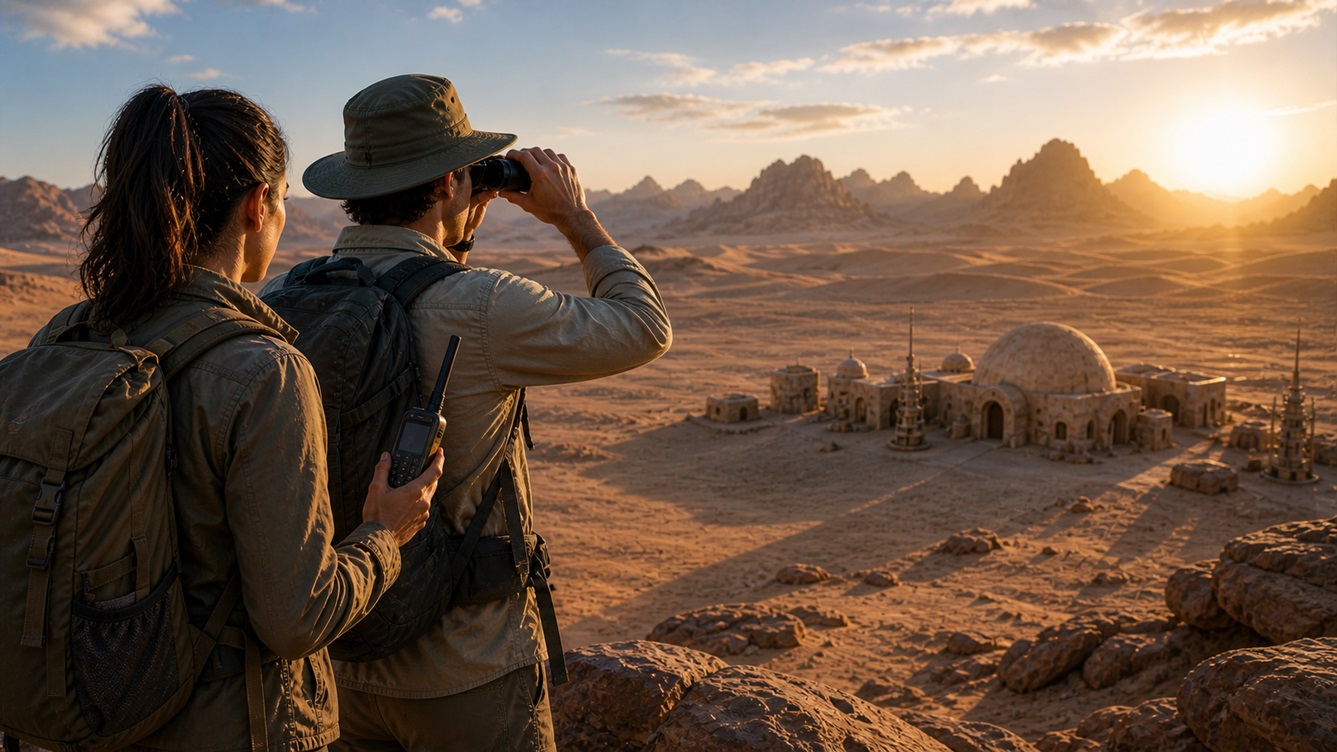
In Return of the Jedi, Luke Skywalker doesn’t hesitate when the mission takes him to Tatooine. He understands the environment, the risks and the stakes. When he walks into Jabba the Hutt’s palace to rescue Han Solo, there is no illusion of safety. It’s remote, unpredictable and unforgiving.

That cinematic moment mirrors a growing trend in modern international travel. Increasingly, international travelers are choosing destinations that feel less like Coruscant and more like the Outer Rim — remote, raw and far from the safety net of developed infrastructure.

According to the Global Rescue Winter 2026 Traveler Sentiment and Safety Survey, 41% of travelers say visiting somewhere new is their top priority, while 44% are actively seeking more remote destinations. This shift reflects a deeper cultural change. Travelers are no longer satisfied with familiar routes. They want Patagonia’s windswept isolation, Mongolia’s vast steppe and Antarctica’s extreme remoteness. They want adventure.

But like Luke on Tatooine, they are stepping into environments where preparation — not optimism — determines outcomes.


The Allure of the Outer Rim

There is a reason the Outer Rim exists in Star Wars storytelling. It represents the edge of control, where systems break down and self-reliance becomes essential.

Modern travel has its own version of this frontier. Patagonia’s terrain is defined by violent winds, glacial fields and unpredictable weather that can shift in minutes. Mongolia offers immense distances, sparse infrastructure and exposure to extreme seasonal temperatures that swing from searing heat to subzero cold. Antarctica presents the ultimate isolation — no permanent population, limited access points and conditions that can ground aircraft or ships for days.

But the Outer Rim isn’t limited to the Southern Hemisphere. Iceland’s Hornstrandir Nature Reserve is one of Europe’s most isolated wilderness areas, a 220-square-mile expanse of cliffs and fjords with no permanent residents and minimal access. Weather conditions shift rapidly, evacuation routes are limited and wildlife thrives precisely because human infrastructure does not.

In Tanzania, Mahale Mountains National Park offers a different kind of remoteness. With no roads and access limited to small aircraft or long boat transfers across Lake Tanganyika, every movement is deliberate. Dense jungle terrain, heat and isolation mean that even minor incidents can escalate quickly.

The Outer Hebrides off Scotland’s western coast present yet another variation. These islands are exposed to the full force of the Atlantic, where wind, rain and cold conditions can change rapidly. The landscape is beautiful but unforgiving, and the environment demands respect and preparation.

These destinations offer something increasingly rare: true disconnection. No crowds. No overbuilt tourism systems. No predictable safety net. That appeal is reflected in traveler preferences. More than half of travelers (52%) now favor lesser-known destinations with fewer crowds. But the tradeoff is clear. The farther you move from established tourism hubs, the more you enter an environment where local systems may not support you when something goes wrong.


Limited Infrastructure: The Reality Behind the Adventure

On Tatooine, there is no centralized authority managing safety. No emergency response system. No advanced medical facilities. Remote destinations on Earth operate in similar ways, just with fewer sandcrawlers.

Infrastructure gaps show up in multiple forms. Medical facilities may be basic or nonexistent. Transportation networks can be unreliable or weather-dependent. Communication systems are often inconsistent, especially outside major settlements. Even timing matters. The rise of off-peak and “hidden season” travel means more travelers are visiting destinations when services are reduced.

That combination — remote location plus limited infrastructure — creates a narrow margin for error. A twisted ankle in a city is an inconvenience. The same injury in the Hornstrandir cliffs, the Mahale jungle or the Antarctic ice becomes a logistical problem that may take hours — or days — to resolve.


Self-Reliance: The Core Skill of Outer Rim Travel

Remote travel requires a different mindset. It is not about efficiency or convenience. It is about resilience. Travelers entering remote environments must assume responsibility for their own safety in ways that are unnecessary in developed destinations.

That includes understanding terrain, weather patterns and transportation options. It means carrying backup plans for navigation, communication and documentation. It means preparing for delays, disruptions and the possibility that help may not arrive quickly. This level of preparation is not excessive. It is appropriate for the environment.

In Star Wars terms, this is the difference between a casual visitor and someone who understands how to operate in the Outer Rim.


When Things Go Wrong: Evacuation Complexity

The most significant difference between urban travel and remote travel is what happens when something goes wrong. In developed destinations, emergency response systems are structured and relatively fast. In remote regions, response times are longer, coordination is more complex and outcomes depend heavily on logistics.

Evacuations in these environments are rarely straightforward. A field rescue may involve improvised transport, local teams or delayed aerial extraction due to terrain or weather. From there, a traveler may need to be moved to a regional facility, then transferred again to a major hospital — sometimes across borders. Every step introduces time, risk and dependency on conditions outside the traveler’s control.

A real-world example underscores how quickly this complexity unfolds. While trekking Indonesia’s remote Mt. Tambora, experienced hiker Cheryl Gilbert suffered a severe leg injury after falling on a steep descent. With the dense jungle preventing helicopter access, a team arrived and carried her five kilometers by a makeshift stretcher to base camp, where ground transport could begin. From there, she was ultimately moved across the country — spanning thousands of miles and multiple islands — to reach appropriate medical care in Jakarta.

This type of multi-stage evacuation is not unusual in remote environments. It illustrates a critical reality: extraction is rarely immediate, rarely simple and often requires coordination across terrain, transportation modes and medical systems.

Traditional travel insurance typically does not address this operational complexity. It focuses on reimbursement rather than response, often activating only after a traveler reaches a medical facility. In remote destinations, that gap matters. Because when help is not nearby, the challenge is not just treatment — it is getting there.


The Modern Traveler: Bold, But Not Always Prepared

One of the most striking insights from recent travel data is not just where people are going, but how they are thinking about risk. Travelers are increasingly willing to embrace uncertainty. Nearly one-third are pursuing longer trips, and 27% are actively seeking riskier destinations.

This reflects confidence, but it also introduces exposure.

The modern traveler is more adventurous than ever. But adventure without preparation is not exploration — it is vulnerability. The lesson from Return of the Jedi is not just that Luke succeeds. It’s that he succeeds because he understands the environment he’s entering.

Traveling to remote destinations is not inherently dangerous. But it is fundamentally different. It requires a shift in mindset from consumption to participation. From convenience to capability. From assumption to awareness.

In these environments, the rules change. Infrastructure is limited. Technology is imperfect. Response times are longer. But the reward is equally significant. These destinations offer experiences that cannot be replicated in traditional tourism corridors. They provide perspective, scale and a sense of discovery that defines why people travel in the first place.

The key is aligning ambition with preparation. Because in the Outer Rim — whether it’s Tatooine or Antarctica — conditions don’t adjust to you. You adjust to them.


The Global Rescue Connection

Remote travel offers extraordinary rewards, but it also introduces variables that travelers cannot control. When medical emergencies, injuries or security situations occur in isolated environments, local resources may be limited, delayed or insufficient.

A Global Rescue membership addresses this gap directly.

Members have access to field rescue from the point of illness or injury, even in remote and hard-to-reach locations. Whether trekking in Patagonia, navigating the fjords of Iceland, exploring Tanzania’s remote parks or traveling in Antarctica, Global Rescue coordinates extraction using the appropriate assets — helicopters, aircraft or ground teams — based on the situation.

Medical evacuation ensures transport not just to the nearest facility, but to the most appropriate hospital capable of providing necessary care. If required, members can be repatriated to their home hospital for continuity of treatment.

Equally important are medical advisory and telehealth services, which allow travelers to consult with experienced professionals in real time, regardless of location.

For travelers venturing into the modern equivalent of the Outer Rim, this level of support transforms uncertainty into capability. Because the goal of travel is not just to explore boldly. It is to return safely.

Categories:

News
Share This:

What to do if you get sick or injured while traveling

Share This:

Is International Travel in 2026 More Like Revenge of the Sith Than a Vacation?

Would you travel during a galactic conflict? A real-world guide to political risk, security threats and smarter international travel decisions.

Article Highlights:

  • Political instability is reshaping international travel, forcing travelers to think like strategists, not tourists.
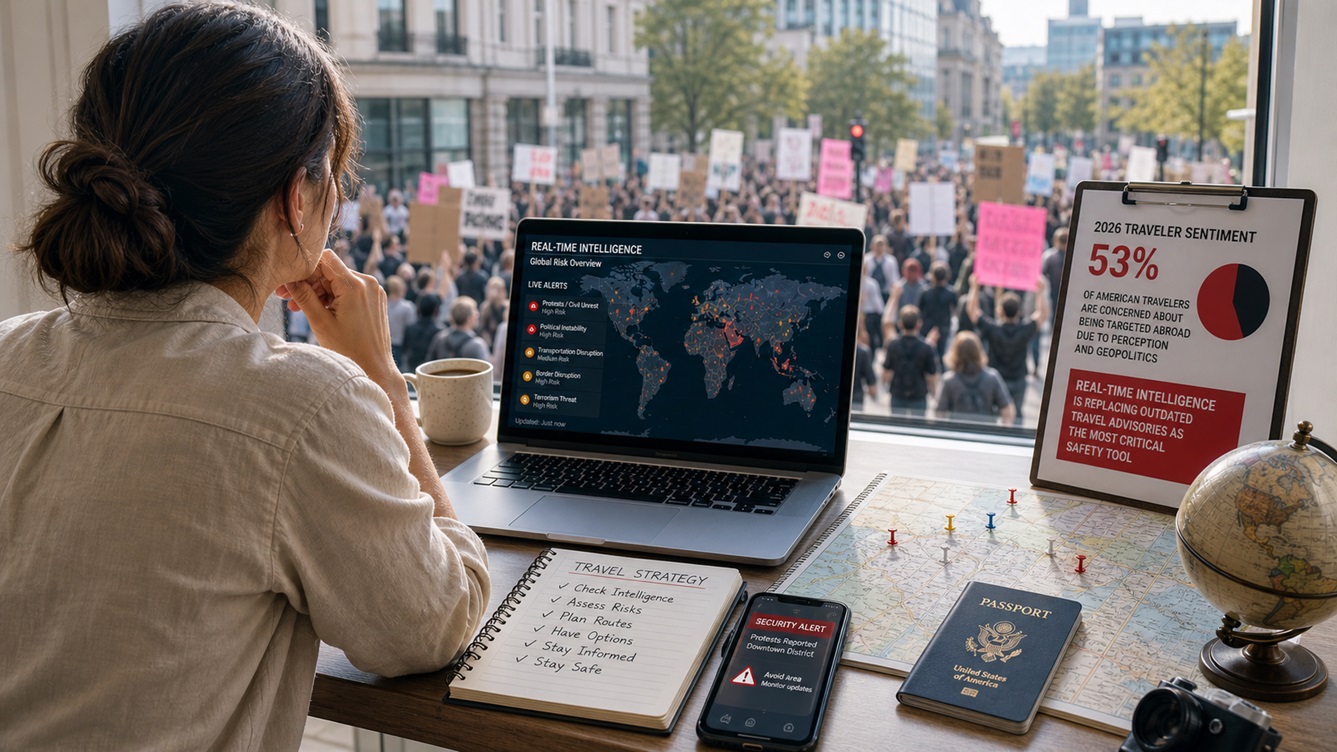
  • 53% of American travelers are concerned about being targeted abroad due to perception and geopolitics.
  • Real-time intelligence is replacing outdated travel advisories as the most critical safety tool.
  • Technology alone cannot replace preparation, awareness and professional support.
  • Demand for security-focused travel protection is rising as travelers adapt rather than retreat.


In Revenge of the Sith, the galaxy doesn’t collapse overnight. It fractures slowly. Alliances shift. Systems become contested. Travel routes once considered safe become unpredictable. By the time most citizens realize what’s happening, the environment has already changed.

That narrative feels less like science fiction and more like a framework for understanding international travel in 2026.

Today’s international travelers are not navigating hyperspace lanes, but they are moving through a world increasingly defined by political instability, regional conflict and shifting perception risk. The question is no longer whether travel is safe or unsafe. It is whether travelers understand how quickly conditions can change — and how to respond when they do.


Would You Travel During a Galactic Conflict? A Real-World Guide to Political Risk

Han Solo didn’t avoid risk. He managed it. That distinction matters.

Modern international travel is experiencing a similar shift. Travelers are not abandoning global mobility. They are recalibrating how they move through it. According to recent Global Rescue survey data, more than half of American travelers (53%) are now concerned about being targeted abroad due to anti-American sentiment. At the same time, 85% express concern about disruptions tied to global conflict, from airspace closures to sudden rerouting.

Yet nearly two-thirds are still traveling. This is not retreat. It is adaptation.

Travelers today behave less like passive tourists and more like operational planners. They are weighing risk, perception and logistics simultaneously. That evolution mirrors the kind of decision-making seen in contested Star Wars systems, where movement requires awareness, timing and contingency planning.


Galactic Conflict vs. Political Instability

In the Star Wars universe, the Galactic Civil War creates zones of control, influence and uncertainty. Some planets remain stable. Others become flashpoints. The risk is not evenly distributed, and it changes quickly. The same is true in real-world travel.

Political instability rarely affects entire countries uniformly. Instead, it concentrates in regions, cities or specific transit corridors. Border tensions can escalate without warning. Civil unrest can disrupt transportation networks overnight. Elections, economic crises or regional conflicts can shift a destination’s risk profile in days, not months.

This fragmentation is one of the most misunderstood aspects of international travel risk. Travelers often rely on broad country-level assessments, when the reality on the ground is far more nuanced. Understanding that nuance is the difference between confident travel and exposure.


Travel Advisories: The Galactic Senate of Modern Travel

If the Galactic Senate issued travel warnings during the Clone Wars, most citizens would have paid attention — but not always understood the full picture.

That dynamic closely mirrors how government-issued travel advisories function today.

For decades, travel advisories have been a foundational input in international travel planning. But in an era defined by political instability, regional conflict and rapid information cycles, their influence has intensified. According to the Global Rescue Summer 2025 Traveler Safety and Sentiment Survey, 63% of the world’s most experienced travelers say government advisories affect their destination choices to at least a moderate degree.

Safety information is no longer a background consideration. It is a primary decision driver.

Travelers are increasingly using advisories to evaluate risks tied to political unrest, natural disasters and health-related crises before departure. These official signals shape not only where travelers go, but where they choose not to go.

But advisories have limitations.

They are often broad, slow to evolve and structured at the country level, even when real conditions vary dramatically within regions. A destination flagged at a higher advisory level may still contain stable areas, while lower-risk countries can experience sudden localized disruptions.

This creates a paradox for modern travelers.

Advisories are essential, but they are not sufficient.

Safety information from official sources now plays a decisive role in travel planning, but it is only the starting point. It identifies where risk exists. It does not explain how that risk evolves or how it affects individual itineraries in real time.


Real-Time Intelligence vs. Static Advisories

One of the most critical gaps in travel safety is the reliance on outdated information.

Traditional travel advisories are static by design. They provide broad, country-level assessments that are updated periodically, often lagging behind rapidly evolving conditions on the ground. In a world shaped by political instability, civil unrest and sudden disruptions, that delay creates real exposure for international travelers.

Modern travel requires real-time intelligence.

Conditions can shift in hours, not days. Protests can emerge and escalate quickly. Airspace can close. Communications networks can be disrupted. Border crossings can tighten without warning. Travelers relying solely on pre-departure research or static advisories are making decisions based on incomplete, and sometimes obsolete, information.

In a contested galaxy, outdated intelligence isn’t just inconvenient, it’s dangerous. The same applies to international travel.

Global Rescue’s Intelligence Delivery system (GRID) represents a fundamental shift in how travelers access and act on risk information. Recognized with the 2025 Skift IDEA Award for Industry Innovation, GRID was designed to bridge the gap between static advisories and real-world conditions. It delivers targeted alerts on emerging threats including civil unrest, natural disasters, disease outbreaks, transportation disruptions and security incidents.

In 2024 alone, GRID delivered more than half a million alerts tied to nearly 10,000 global events.

More importantly, GRID integrates intelligence with action. It combines real-time alerts, GPS tracking, direct communication with operations centers and coordinated response capabilities into a single system. Travelers are not just informed, they are connected.

This changes how international travelers operate. Instead of reacting after events unfold, they can anticipate disruption, adjust routes and avoid emerging hotspots. The shift is from awareness to action.


Adaptation, Not Avoidance

Despite rising instability, international travel demand remains resilient.

More than 40% of travelers expect no change in their travel frequency, while others are making targeted adjustments — changing destinations, postponing trips or modifying itineraries. The behavior reflects a strategic mindset rather than emotional reaction.

Travelers are not abandoning the journey. They are choosing different paths through it.

This mirrors a central theme in Star Wars: movement continues even in conflict, but it requires awareness, preparation and support.

As global uncertainty increases, traveler behavior is evolving.

Security-focused travel protection is rising significantly, with a 29% increase in combined medical and security memberships in early 2026. This reflects a broader shift toward proactive risk management. Travelers want more than reimbursement after an incident. They want real-time support, intelligence and response capability.

Preparation is no longer a checklist. It is a strategy.

Travelers are recognizing that geopolitical instability is not temporary. It is an enduring condition of modern international travel. Navigating it effectively requires access to better information, stronger support systems and the ability to respond quickly when conditions change.


The Global Rescue Connection

In a world increasingly defined by instability, the difference between confidence and vulnerability often comes down to preparation and support.

A Global Rescue membership provides international travelers with access to 24/7 teams of military special operations veterans, intelligence analysts and medical professionals. Members receive real-time alerts, destination-specific intelligence and immediate guidance when conditions evolve.

With the Security Add-On, travelers gain access to crisis response capabilities designed for high-risk environments. This includes security extraction services, support during civil unrest or political instability and direct coordination with professionals trained to operate in complex global scenarios.

Equally important is integration. Medical evacuation, field rescue and security intelligence operate as a unified system. Whether facing a sudden health emergency, border closure or escalating unrest, members have a single point of contact and a coordinated response.

In a world that increasingly resembles contested systems rather than predictable destinations, that level of support is no longer optional for serious international travelers.

Because whether you are navigating a distant planet or a real-world destination, the principle remains the same: Travel is still possible. But how you prepare determines how well you move through it.

Share This:

What Does Star Wars Teach Travelers About Technology and Preparedness?

Are you too dependent on your smartphone and GPS when you travel? Learn why international travelers need backup plans when technology fails.

Article Highlights:

  • Overreliance on smartphone and GPS technology creates hidden risk for international travelers.
  • Connectivity loss during international travel can quickly escalate into safety challenges.
  • Prepared travelers build redundancy beyond digital tools.
  • Technology improves travel, but preparedness determines outcomes.
  • Global Rescue provides real-world support when technology fails.


In Star Wars, technology is everywhere. Navigation systems guide ships across galaxies. Droids manage repairs, calculate routes and keep missions on track. Even Han Solo, who prides himself on instinct, depends on the Millennium Falcon’s systems to survive.

But when those systems fail, everything changes.

Hyperdrives break. Navigation goes offline. Communication disappears. And suddenly, even the most capable characters are forced to rely on something else: preparation, awareness and adaptability.

Modern international travel follows the same pattern.

Today’s traveler carries a smartphone that acts as GPS, translator, boarding pass, payment system and emergency contact hub. It is the center of how international travelers move through the world.

But what happens when that technology fails?


Technology Dependence vs. Preparedness: What Happens When Your “Astromech Droid” Fails?

Technology has transformed travel. International travelers no longer need to study maps, memorize directions or learn key phrases before arrival. A smartphone handles navigation, translation and logistics in real time.

GPS ensures you rarely feel lost. Apps tell you where to go, how to get there and what to expect when you arrive. This creates confidence. It also creates dependence.

Many travelers now assume their smartphone will always function. That GPS will always work. That connectivity will always be available.

In reality, international travel operates across environments where technology is not guaranteed. Technology failure during travel is more common than most travelers expect.

A smartphone battery dies at the wrong moment. A device is lost or stolen. A local SIM card fails. International data plans don’t activate correctly. Public Wi-Fi is unreliable or insecure. Networks go down.

And when the smartphone fails, multiple systems fail at once. GPS disappears. Communication is cut off. Access to reservations, directions and contacts vanishes. The traveler is left without the infrastructure they have come to rely on.

For international travelers, this is not just inconvenient. It can be disorienting and, in certain situations, unsafe.


GPS Dependence and the Risk of Getting Lost

GPS is one of the most powerful tools in modern travel. It allows travelers to navigate unfamiliar cities with ease.

But it also removes the need to understand where you are.

When GPS fails, many travelers struggle to reorient themselves. They do not know street names. They have not reviewed routes. They may not even know the general direction of their destination. In major cities, this can lead to frustration. In unfamiliar or less stable environments, it can lead to real risk.

Even Han Solo, navigating asteroid fields and hostile space, understood the importance of knowing his environment beyond the instruments.


Luke Skywalker and the Value of Awareness

Luke Skywalker’s evolution as a pilot and leader reflects a different approach. He learns to operate with awareness, not just instrumentation. He adapts when systems fail. This is the mindset international travelers need.

Technology should enhance travel, not replace awareness. Prepared travelers maintain a basic understanding of their surroundings. They know where they are staying. They understand how to return if plans change. They are not entirely dependent on a smartphone to function.

Connectivity is often treated as a given, but in practice it is highly inconsistent.

International travelers regularly encounter gaps in service, whether in rural or remote destinations where infrastructure is limited, inside airports, tunnels and transit systems where signals drop, or in dense urban environments where interference disrupts connections. In other regions, unstable infrastructure can make access unreliable, and during power outages or broader network disruptions, connectivity can disappear entirely.

When connectivity drops, GPS and communication tools become unreliable or unusable. As international travel expands into lesser-known destinations and off-peak seasons, infrastructure limitations become more pronounced, increasing the importance of preparation.

Connectivity loss is not just a technical issue. It is a travel risk.


Technology Is a Tool, Not a Safety Net

There is no question that technology improves travel. Smartphones and GPS make international travel more efficient, accessible and flexible. But they are not designed to function as safety systems.

Devices depend on power. Apps depend on connectivity. Platforms depend on infrastructure. When any part of that chain breaks, the system fails. Travel safety insights consistently show that tools alone are not enough. Preparation and mindset determine whether those tools are effective.

Technology can guide you. It cannot replace preparedness.

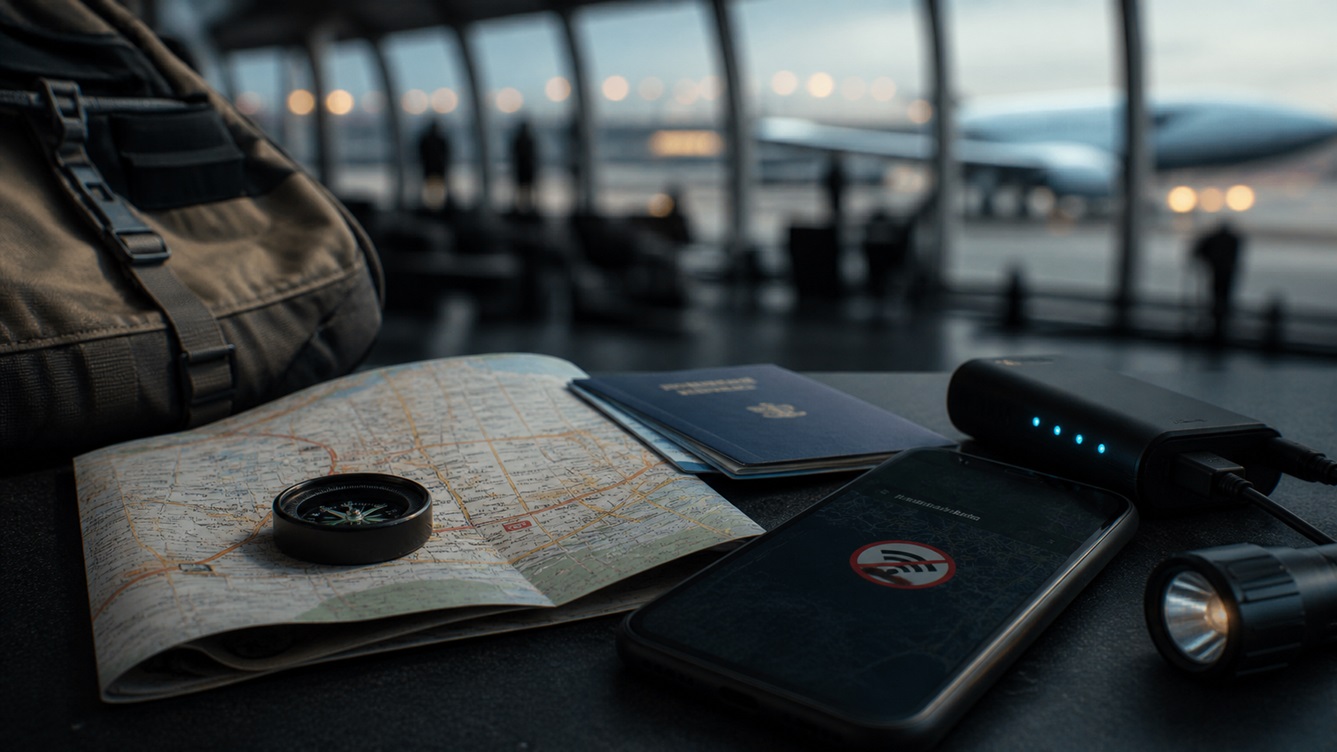
Preparedness is what separates confident travel from vulnerable travel. International travelers who plan for technology failure take simple but critical steps, such as downloading offline maps before departure and reviewing key routes, carrying written copies of hotel addresses and emergency contacts, maintaining both physical and secure digital backups of passports and travel documents, planning for power management with backup batteries and charging strategies, and developing a basic understanding of local transportation options and geography.

These actions require minimal effort but provide significant resilience. Prepared travelers can continue moving, navigating and communicating even when technology fails.


The Global Rescue Connection

International travel is expanding. Travelers are going farther, more frequently and into environments with varying levels of infrastructure, healthcare and connectivity. This increases both opportunity and exposure. The most effective travelers adapt by balancing technology with preparedness.

They use smartphones and GPS for efficiency. They build backup systems for reliability. They prepare for scenarios where technology fails. This layered approach ensures continuity. When one system fails, another supports it.

Technology plays a central role in modern travel, but it does not solve critical emergencies.

When international travelers face serious medical or security situations, especially in environments where connectivity is limited or infrastructure is inconsistent, smartphones and GPS cannot coordinate rescue or evacuation.

A Global Rescue membership provides that capability.

Members have access to field rescue from the point of illness or injury, medical evacuation to the most appropriate facility and 24/7 medical and security advisory services. This support operates independently of local connectivity, apps or device functionality.

Global Rescue also provides destination intelligence and real-time guidance, helping travelers understand risks before departure and respond effectively when conditions change.

With the Security Add-On, members gain access to evacuation support and expert advisory services during civil unrest, natural disasters or deteriorating conditions.

In Star Wars, technology may power the journey, but survival depends on preparation, awareness and the ability to adapt when systems fail. For international travelers, the same principle applies. Because when your smartphone and GPS stop working, what matters most is not the technology you lost. It’s the preparedness you built before you needed it.

May the Force be with you.