Categories:

News
Share This:

Travelers Stranded by U.S.-Israel Conflict With Iran Face Endless Flight Cancellations

Share This:

Is the Dominican Republic Safe for Travelers in 2026?

Discover the culture, hidden beaches, history and what travelers need to know before going.

Article Highlights:

  • The Dominican Republic blends African, European and Taino influences through food, music, dance and daily life.
  • Iconic destinations range from historic Santo Domingo to remote Bahía de las Águilas and resort-centric Punta Cana.
  • Tourist areas are generally safe, with strong infrastructure and dedicated tourist police.
  • Spanish is the official language, but English is widely spoken in major tourist regions.
  • Urban medical facilities are reliable, though travelers should carry insurance and evacuation coverage.


The Dominican Republic is one of the Caribbean’s most dynamic destinations, offering travelers an enticing blend of sun-soaked beaches, deep-rooted history, rhythmic music and warm hospitality. Sharing the island of Hispaniola with Haiti, this nation occupies the eastern two-thirds of the island and has evolved into a tourism powerhouse while retaining strong cultural traditions shaped by centuries of influence. From the colonial streets of Santo Domingo to the pristine sands of Bahía de las Águilas and the resort-lined shores of Punta Cana, the Dominican Republic delivers far more than a typical beach escape.


Do You Know the Importance of Taino?

Long before European contact, the island was inhabited by the Taino people, whose agricultural practices, spiritual beliefs and language shaped early Caribbean life. While the Taino population was tragically decimated during colonization, their legacy remains visible today in Dominican vocabulary, cuisine and symbolism. Words like “hamaca” (hammock) and staple ingredients such as cassava trace directly back to Taino origins.

Spanish colonization began in the late 15th century, making Santo Domingo the oldest continuously inhabited European settlement in the Americas. African influences followed through the transatlantic slave trade, forming the foundation of modern Dominican identity. Over time, these cultural streams blended into a society defined by rhythm, resilience and expression.


Is the Merengue Central to the Dominican Republic?

Music is vital to Dominican life. Merengue, the national dance and music style, emerged in the 19th century with African drum patterns, European melodies and Taino rhythms. Its fast-paced beat and lively footwork reflect the country’s celebratory spirit. Bachata, once considered music of the rural poor, evolved into an internationally recognized genre expressing romance, heartbreak and longing.

Fashion in the Dominican Republic mirrors its climate and culture, bright colors, flowing fabrics and practical designs dominate. Traditional clothing worn during festivals often features ruffles and embroidery, echoing Spanish colonial styles adapted for the tropics.

Dominican food tells the story of its people. Spanish cooking techniques, African flavors and Taino ingredients combine into hearty, comforting dishes. Mangú, made from mashed plantains, reflects African culinary traditions, while stews like sancocho blend indigenous root vegetables with European meats. La Bandera Dominicana, the everyday national meal of rice, beans, meat and salad, symbolizes balance, simplicity and nourishment.

Drinks such as rum and the herbal infusion mamajuana (a potent herbal liqueur made by soaking tree bark, herbs, spices, rum, red wine and honey) have ceremonial and social significance, while local beer brands like Presidente are staples at gatherings and celebrations.


How Is Punta Cana Different From Santo Domingo?

Punta Cana remains the Dominican Republic’s most famous destination, known for its all-inclusive resorts, turquoise waters and ease of travel. It’s ideal for first-time visitors seeking comfort, beach relaxation and organized excursions.

Santo Domingo offers a different experience altogether. The Zona Colonial, a UNESCO World Heritage Site, features cobblestone streets, centuries-old cathedrals and museums that chronicle the birth of the New World. It’s a living classroom of Caribbean history.

For travelers craving untouched beauty, Bahía de las Águilas stands apart. Located within Jaragua National Park near the southwestern coast, this beach is consistently ranked among the most beautiful in the Caribbean. With no major development, it offers tranquility, crystalline waters and sweeping desert-meets-sea landscapes.


Is the Dominican Republic Safe?

Safety is a top concern for travelers and the Dominican Republic is generally safe for tourists, particularly in established destinations like Punta Cana, Puerto Plata and Santo Domingo’s historic districts. Tourism is critical to the national economy and the government invests heavily in visitor protection through a specialized tourist police force known as Politu

Travelers should exercise increased caution due to crime, however, as advised by the US Department of State. Petty theft, pickpocketing and occasional armed robberies occur, especially outside resort areas or after dark. Visitors are encouraged to stay in well-lit areas, use reputable transportation and avoid displaying valuables.

The Dominican Republic shares a land border with Haiti, a nation currently experiencing significant political instability, economic hardship and security challenges. While these issues rarely affect mainstream tourism within the Dominican Republic, border regions can experience heightened tensions and increased crime. Travelers should avoid crossing into Haiti and steer clear of border zones unless part of an official, guided program.

The Dominican government actively manages border security and resort areas remain insulated from neighboring instability. Still, awareness and adherence to travel advisories are essential.


Language, Etiquette, Laws and Daily Life

Spanish is the official language, but English is widely spoken in tourist-facing roles. Learning a few Spanish phrases enhances interactions and is warmly appreciated. Dominicans value politeness, greetings and personal connection. A relaxed approach to time is common and schedules may be flexible.

Dress codes are casual yet respectful. Beachwear belongs on the coast, while cities and rural areas call for more conservative attire. Photography etiquette matters, always ask before photographing individuals.

Drug laws are strict and possession of illegal substances carries severe penalties. Camouflage clothing is prohibited for civilians. Driving can be chaotic, making private drivers or organized transport preferable. Cell coverage is strong in most areas and Wi-Fi is widely available, reducing the need for satellite communication unless traveling to remote regions.

Private hospitals in major cities such as Santo Domingo and Santiago provide reliable medical care, though facilities in rural areas may be limited. Travelers should carry adequate insurance, including emergency medical evacuation coverage. English-speaking medical staff are not guaranteed and upfront payment is often required.

Food and water safety also require attention. Bottled or purified water is essential and travelers should avoid raw foods, unpasteurized dairy and ice from unknown sources.


The Global Rescue Connection

The Dominican Republic offers exceptional value, diverse landscapes and cultural depth rarely matched in the Caribbean. Whether you’re seeking romance, adventure, history or relaxation, the country delivers a layered travel experience that rewards curiosity beyond the resort gates. With reasonable precautions and thoughtful planning, it remains one of the most compelling destinations for North American travelers.

Traveling to the Dominican Republic offers extraordinary rewards, but like any international destination, it also comes with variables that travelers cannot always control. Medical emergencies, serious injuries during outdoor activities, sudden civil unrest or natural disasters can escalate quickly, especially in areas where local emergency response and medical infrastructure may be limited. This is where a Global Rescue membership becomes a critical layer of protection.

Unlike traditional travel insurance, Global Rescue provides field rescue from the point of illness or injury, even in remote or hard-to-reach locations. Whether a traveler is injured while hiking in the Cordillera Central, exploring remote coastal regions near Bahía de las Águilas, or traveling outside major urban centers, Global Rescue deploys medical and rescue teams to extract members and transport them to the most appropriate medical facility, not simply the nearest one. When local hospitals cannot provide adequate care, Global Rescue coordinates medical evacuation to a vetted facility or the member’s hospital of choice.

Equally valuable is 24/7/365 access to medical advisory services. Travelers can speak directly with experienced paramedics, nurses and physicians for guidance on symptoms, treatment options and local medical resources, helping them make informed decisions without guesswork. This support is especially important in destinations where language barriers or inconsistent care standards may complicate treatment.

For travelers concerned about security risks, adding Global Rescue’s security add-on membership offers an additional safeguard. In the event of civil unrest, political instability, earthquake or potential spill-over violence from neighboring Haiti, the security add-on provides access to expert security advisors and, if necessary, coordinated extraction. Staffed by former military and special operations professionals, the security team monitors evolving threats and assists members with evacuation planning, secure movement and situational guidance when conditions deteriorate.

The Dominican Republic remains a welcoming and rewarding destination, but preparedness is essential. A Global Rescue membership ensures that no matter where you are, or what unfolds, you have a single, reliable lifeline for medical, rescue and security support, delivering peace of mind when it matters most.

Categories:

News
Share This:

How Dubai repatriation flights might work, according to experts

Categories:

Travel
Share This:

What Really Happens If You Get Sick or Injured on a Cruise Ship?

Learn how illness or injury at sea is handled, why cruise insurance falls short and how travelers stay protected.

Article Highlights:

  • Cruise travel is experiencing record growth, with passenger numbers projected to reach nearly 42 million by 2028.
  • Modern cruise ships are safer, more advanced and more comfortable, but still limited in medical capability.
  • Illness or injury at sea can require costly and complex evacuations far from shore.
  • Traditional cruise travel insurance often excludes field rescue and real-time medical coordination.
  • Specialized protection provides faster evacuation, expert medical oversight and global response.


International cruising is no longer a niche vacation option; it’s one of the fastest-growing sectors in global travel. From mega-ships operated by Royal Caribbean and Celebrity Cruises to boutique experiences offered by Viking, Virgin Voyages and Disney Cruise Line, today’s cruise ship vacations promise comfort, convenience and access to destinations once difficult to reach.

But as cruise popularity surges, so do traveler questions about health, safety and protection, especially when something goes wrong far from shore. Are cruises safe? What happens if you get sick or injured at sea? And how do you optimize traveler protection on a cruise when traditional travel insurance options fall short?

What are a traveler’s medical risks at sea, evolving ship technology and why specialized protection matters more than ever.


The Reality of Getting Sick or Injured on a Cruise Ship

Every cruise ship has a medical clinic staffed by trained professionals, but these facilities function more like urgent care centers than hospitals. They are equipped to stabilize patients, treat common illnesses and manage injuries, but not to handle complex or critical cases long-term.

“When you’re aboard a cruise ship, access to medical help for an illness or injury is limited,” notes reporting from The Points Guy. Since the pandemic, some ships have added respiratory specialists, but advanced diagnostics and surgical care remain unavailable at sea.

Serious medical emergencies require evacuation, either by diverting to the nearest port or via helicopter. Both options present challenges. Helicopter rescues are typically limited to a 175-mile radius and can cost six figures. Diverting a cruise ship is slow, as ports capable of handling large vessels are limited and ships travel at roughly 34 mph.

“Once you have disembarked at the closest port, our medical operations team coordinates with medical staff onboard, the port where you disembark, evacuation providers and the receiving facility to ensure evacuation occurs as quickly as possible,” says Dan Richards, CEO of the Global Rescue Companies.

This reality underscores why travelers searching for the best travel insurance for a cruise or trying to compare cruise travel insurance often discover that traditional policies don’t provide services for field rescues or medical transport from ship to shore to hospitals.

Many travelers assume the best travel insurance cruise policies provide comprehensive protection. In practice, most plans reimburse costs after the fact, impose strict exclusions or cap medical evacuation services far below real-world expenses. Searching for the best cruise trip insurance often reveals fine print that excludes helicopter evacuations, offshore rescues or coordination of care.

This gap becomes critical when minutes matter and logistics are complex.


The Cruise Insurance You Need Isn’t Insurance; It’s a Global Rescue Membership

The largest privately owned residential yacht in the world, The World, selected Global Rescue precisely for this reason.

When a typhoon forced the vessel to reroute near Japan, longtime resident Dr. Harris Silverman developed a serious respiratory condition while traveling through Asia. What began as throat irritation quickly escalated into a collapsed lung.

“The ship’s doctor said, ‘It’s time to call in Global Rescue,’” Silverman recalled.

From that moment, Global Rescue coordinated Silverman’s transfer off the ship, selected a top pulmonologist, arranged hospital care and provided an on-the-ground nurse to manage communication, translation and continuity of care.

“My assumption was that Global Rescue’s responsibility would be to get me from the ship to a hospital,” Silverman said. “But it was far more than that. From the moment the call was made until discharge, they were really fantastic.”


Is the Cruise Industry Trending Up or Down?

The cruise industry is trending strongly upward, experiencing record-setting demand, passenger volume and revenue. Passenger numbers reached 34.6 million in 2024, with projections of 37.7 million in 2025 and nearly 42 million passengers by 2028.

North America remains the dominant source market, posting a 13% increase in passengers in 2024 over 2023, while Millennials and Gen X now account for roughly half of new cruisers. The Caribbean continues to lead as the most popular destination, attracting 43% of cruise passengers, followed by the Mediterranean.

Cruise lines are betting big on this momentum. Global capacity is expected to grow by at least 10% between 2024 and 2028, with 56 new ships on order through 2036. Despite geopolitical tensions and economic uncertainty, cruise operators are investing heavily in larger, more efficient and more technologically advanced vessels.


Have Cruise Ships Improved, and If So, How?

Modern cruise ships are unrecognizable compared to their predecessors. Today’s vessels function as floating smart cities, combining entertainment, logistics and environmental systems at an unprecedented scale.

Technology and connectivity have advanced dramatically. Starlink satellite internet delivers high-speed Wi-Fi even in remote oceans. Wearables like Royal Caribbean’s WOWbands and app-based platforms streamline check-in, dining reservations and onboard purchases. Boarding that once took hours can now take minutes.

Environmental and safety upgrades include advanced wastewater treatment plants comparable to land-based facilities, energy-efficient stateroom systems and smarter navigation technology designed to avoid severe weather. Accessibility improvements have expanded access for travelers with mobility, hearing or visual impairments.

Entertainment has also evolved. The traditional midnight buffet has largely given way to diverse, curated culinary experiences. Cruise ships now host Broadway-caliber shows, immersive digital experiences and even onboard roller coasters.

Cruise dining has split into two distinct tiers. Specialty dining has become significantly fancier, offering high-end steakhouses, sushi bars and chef-driven concepts, often for an added fee. These premium venues frequently deliver restaurant-quality meals that rival top land-based dining.

Meanwhile, main dining room quality on many mainstream lines has become more standardized, with smaller portions and simplified menus driven by cost controls. Luxury lines and newer ships tend to maintain higher consistency, but the trend reflects a broader industry shift toward keeping base fares low while generating revenue through premium upgrades.


Are River Cruises and Small Ship Cruises Gaining Favor?

River cruises and small ship cruises are rapidly gaining popularity, especially among travelers seeking a quieter, more immersive experience. Unlike massive cruise ships, these vessels focus on destination access, personalized service and convenience.

Smaller ships can dock closer to city centers or access narrow waterways unavailable to larger vessels. Many bundle excursions, meals and beverages into one price, reducing complexity and surprise costs. Travelers drawn to sustainability, slow travel and cultural immersion increasingly prefer these curated experiences over resort-style mega-ships.


What Are the Main Traveler Fears About Cruising?

Traveler fears about cruising typically center on health, safety and isolation. Illness outbreaks like norovirus, fear of injury at sea, seasickness and catastrophic incidents often dominate concerns. Others worry about being trapped on a ship, encountering severe weather or being too far from land during an emergency.

Despite these fears, cruise ships are statistically among the safest forms of travel. Modern vessels are engineered for stability, equipped with advanced weather-tracking systems and staffed with trained medical professionals. Still, the reality of distance from advanced medical care remains a key vulnerability.


The Global Rescue Connection

A Global Rescue membership fills the most critical gaps left by traditional cruise insurance. Membership benefits include field rescue from ships and remote locations, medical evacuation to the hospital of your choice, real-time medical advisory services and security evacuation support during natural disasters or civil unrest. Protection applies regardless of location, distance from shore or complexity of extraction.

For travelers cruising internationally, whether aboard Disney Cruise Line, Viking, Virgin Voyages, Celebrity Cruises or Royal Caribbean, Global Rescue delivers something no cruise ship or insurance policy can: certainty, coordination and expert care when it matters most.

Share This:

Widespread Middle East Airspace Closures Leave International Travelers Stranded

[Lebanon, NH – March 3, 2026] — As US and Israeli combat operations against Iran continue and Tehran intensifies its retaliatory actions across the region, Global Rescue is advising international travelers to postpone travel to…

[Lebanon, NH – March 3, 2026] — As US and Israeli combat operations against Iran continue and Tehran intensifies its retaliatory actions across the region, Global Rescue is advising international travelers to postpone travel to the Middle East and urging those currently in affected countries to follow US Department of State guidance and shelter in place.
The rapidly evolving conflict has resulted in missile and drone strikes, air defense interceptions, infrastructure damage, and civilian casualties across Bahrain, Iran, Iraq, Israel, Kuwait, Lebanon, Oman, Qatar, Saudi Arabia, and the United Arab Emirates. Maritime security has also deteriorated, with major global shipping firms suspending operations in the Strait of Hormuz due to heightened risk.

“Travel to or through the Middle East right now carries elevated and unpredictable risk,” said Kent Webber, senior manager of Intelligence Services at Global Rescue and former Senior Intelligence Operations Officer in the Office of the Under Secretary of Defense for Intelligence at the United States Pentagon. “We are advising travelers to postpone non-essential travel to the region and to carefully evaluate whether their presence is mission-critical. The operating environment is fluid, and conditions can deteriorate with little or no warning.”

International Traveler Guidance

Global Rescue recommends that members and clients planning travel to the Middle East — including those transiting regional hubs en route to other destinations — consider postponing their trips until the security situation stabilizes and commercial aviation operations normalize.

“Travelers must weigh the essential nature of their trip against the real possibility of being stranded due to airspace closures, airport shutdowns, or cascading flight cancellations,” Webber said. “Even where airports remain technically open, flight schedules are severely disrupted, and onward connections may not be reliable.”

For travelers already in the region, Global Rescue strongly recommends adhering to embassy and host-nation guidance.

“Members and clients currently in affected countries should heed official instructions to shelter in place, maintain a low profile, and avoid unnecessary movement,” Webber said. “While belligerents are not expected to deliberately target civilians, the risk of collateral damage from missile, drone, and air defense activity is significant.”

Webber also emphasized the importance of preparedness.

“Travelers should ensure they have access to secure shelter, sufficient food, water, medications, and valid travel documents in the event of a sudden departure window,” he said. “When commercial options become available, those who can safely depart should consider doing so without delay.”

Widespread Airspace Closures and Airport Disruptions

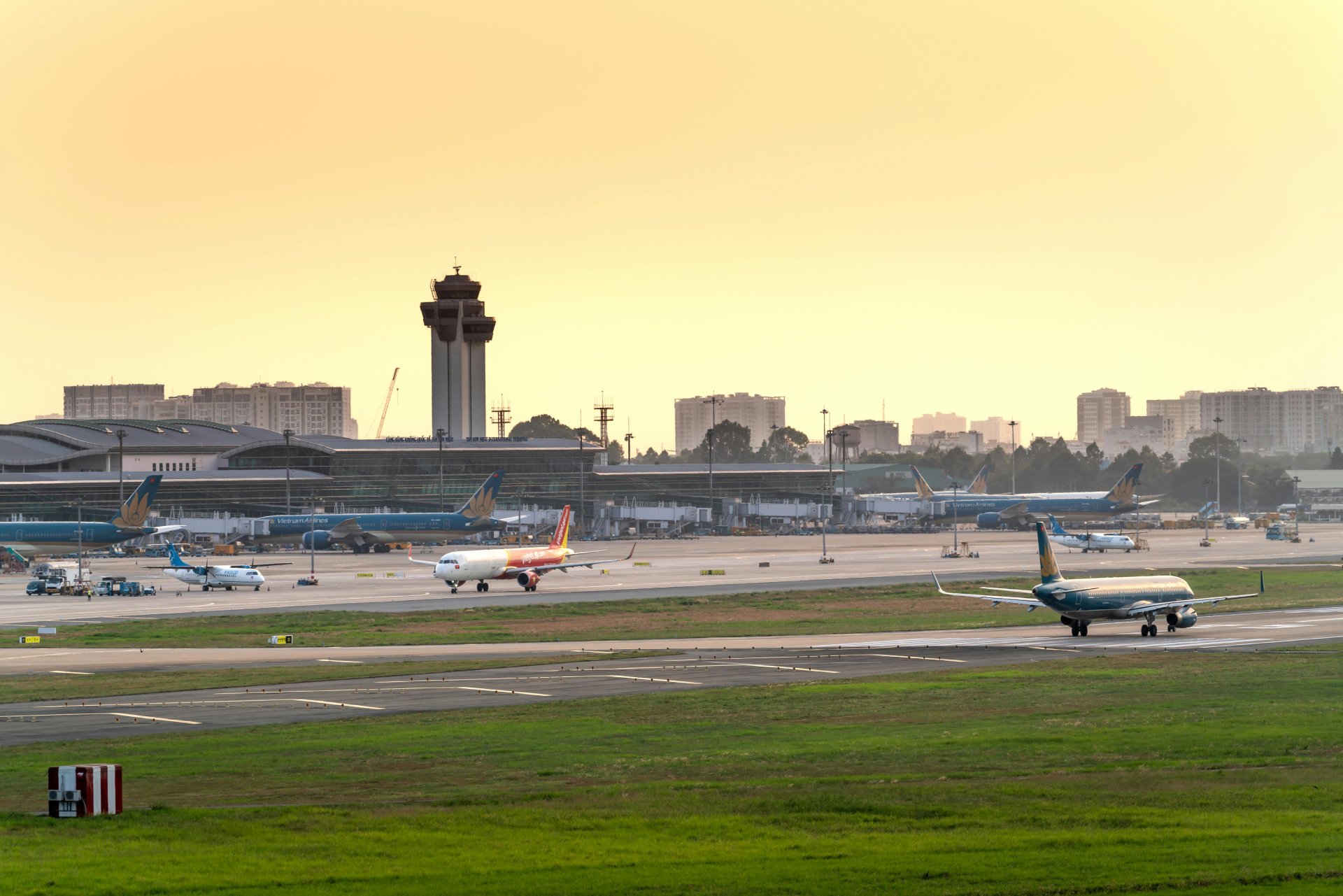
Regional airspace restrictions are severely impacting commercial aviation. Flight operations are currently suspended at major airports including:

  • Bahrain International Airport (BAH)
  • Tehran Imam Khomeini International Airport (IKA)
  • Baghdad International Airport (BGW)
  • Erbil International Airport (EIA)
  • Ben Gurion Airport (TLV)
  • Hamad International Airport (DOH)

Other key hubs, including Dubai International Airport (DXB), Zayed International Airport (AUH), Beirut Rafic Hariri International Airport (BEY), Muscat International Airport (MCT), and Amman Queen Alia International Airport (AMM), are operating on a limited or irregular basis. Kuwait International Airport (KWI) is experiencing delays, and operational status remains uncertain.

“These closures and limitations create a cascading disruption across global aviation networks, not just within the Middle East,” Webber said. “Travelers transiting the region for Europe, Asia, or Africa should anticipate rerouting, extended delays, and potential cancellations.”

Regional Volatility and Strategic Risk

The security environment remains highly volatile. Recent developments include confirmed missile and drone interceptions in Bahrain, Kuwait, Qatar, Saudi Arabia, and the UAE; ballistic missile impacts in multiple locations in Israel; renewed airstrikes in and around Tehran; strikes against Hezbollah targets in Lebanon; damage to Saudi Aramco’s Ras Tanura refinery; and the suspension of commercial maritime operations through the Strait of Hormuz.

Land border crossings in some areas remain open but are subject to abrupt closure, heightened security screening, and evolving entry restrictions. Several US embassies across the region have suspended routine consular services, and multiple diplomatic missions have directed personnel and US citizens to shelter in place.

“This is a multi-domain conflict environment involving air, missile, drone, and maritime threats,” Webber said. “The breadth of activity increases the probability of unintended escalation and incidental exposure to risk for travelers, even in locations not directly targeted.”

Global Rescue continues to monitor developments in real time and provide intelligence updates, advisory support, and operational planning assistance to members and enterprise clients worldwide.

###

For more information:

Bill McIntyre | +1 (202) 560-1195 | bmcintyre@globalrescue.com

About Global Rescue

Global Rescue is the world’s leading provider of medical, security, evacuation and travel risk management services to enterprises, governments and individuals. Founded in 2004, Global Rescue delivers integrated intelligence, advisory, field rescue, and crisis response solutions to clients operating in complex and high-risk environments worldwide.

Categories:

News
Share This:

Why cheap off-season travel is harder to find in 2026

Share This:

Global Rescue Providing Security Advisory Amid Escalating US-Israel Conflict with Iran

(Lebanon, NH — February 28, 2026) — Global Rescue, the world’s leading provider of medical, security, evacuation, and travel risk management services, is actively providing real-time advisory support for international business and leisure travelers affected…

(Lebanon, NH — February 28, 2026) — Global Rescue, the world’s leading provider of medical, security, evacuation, and travel risk management services, is actively providing real-time advisory support for international business and leisure travelers affected by the escalating conflict involving the United States, Israel, and Iran.

The conflict has triggered widespread disruption across the Middle East. Several countries — including Iran, Iraq, Israel, Jordan, Qatar, Kuwait, and the United Arab Emirates (UAE) — have closed their airspace to civilian traffic. In other locations, flight operations have ceased despite technically open airspace, stranding travelers and complicating regional mobility.

Global Rescue security operations teams are responding with intelligence monitoring, direct member advisory support and potential extraction planning. “Depending on location and threat conditions, security experts are leveraging secure ground transport and alternative routing options to relocate travelers to safer areas when feasible,” said Fernando Lopez Medina, security operations supervisor at Global Rescue and a former US Army Special Forces Green Beret.

“We are operating in a highly dynamic and dangerous environment, leveraging every available resource to reach and safeguard those impacted by the conflict,” said Dan Richards, CEO of The Global Rescue Companies, the world’s leading provider of medical, security, evacuation and travel risk management services and a member of the US Travel and Tourism Advisory Board at the US Department of Commerce. “With multiple airspace closures and rapidly shifting threat vectors, our teams are delivering real-time intelligence, operational coordination, and, where conditions permit, secure movement out of high-risk zones.”

The latest escalation follows direct exchanges of drone, missile, and aerial strikes between Israel and Iran, significantly elevating regional threat levels and increasing the risk of collateral exposure to civilian populations and international travelers. Retaliatory actions and countermeasures have created a volatile and fluid security environment with little advance warning of additional strikes.

“Our mission is to keep people out of harm’s way — safely and quickly,” Richards said. “The closure of major air corridors and the potential for further retaliatory attacks require disciplined risk assessment and operational flexibility. We are adapting continuously to evolving security conditions to protect our members.”

For travelers currently in affected areas, Global Rescue is advising sheltering in place until conditions stabilize.

“In active conflict zones where airspace is closed and retaliatory strikes remain a credible threat, the safest immediate course of action is often to shelter in place,” Medina said. “Ground evacuation options may exist depending on specific location and timing, but unnecessary movement can increase exposure to harm if additional strikes occur.”

For those with upcoming travel scheduled to the region, Global Rescue recommends postponement.

“We are advising travelers with planned itineraries to reschedule travel to the region until the security environment stabilizes,” Richards said. “We continue to monitor developments closely and will reassess extraction and movement options as conditions evolve.”

Global Rescue has activated emergency response protocols and continues 24/7 intelligence monitoring across the region. Services include continuous threat assessments, destination-specific security briefings, emergency action planning, secure communications, and coordinated evacuation when operationally viable.

Due to the sensitive nature of these operations and the inherent risks associated with active conflict zones, Global Rescue cannot disclose specific extraction details or the identities of individuals receiving assistance.

###

Contact:

Bill McIntyre at bmcintyre@globalrescue.com or +1 (202) 560-1195.

About Global Rescue

Global Rescue is the world’s leading provider of medical, security, evacuation, and travel risk management services to enterprises, governments, and individuals. Founded in 2004, Global Rescue has exclusive relationships with the Johns Hopkins Emergency Medicine Division of Special Operations and Elite Medical Group. Global Rescue has supported clients through every major global crisis over the past two decades. For more information, visit www.globalrescue.com.

Categories:

Travel
Share This:

What Are the Best and Worst Safety Gadgets for International Travelers?

Here's what actually protects your luggage, data, hotel room and life abroad.

Article Highlights:

  • Layered security tools like portable door locks, Apple AirTags for luggage and RFID-blocking wallets provide real protection without bulk.
  • Communication gear such as satellite phones, portable Wi-Fi hotspots and power banks keeps travelers connected during emergencies.
  • Cybersecurity tools including VPNs, encrypted cloud storage and strong passwords are as critical as physical locks.
  • Anti-theft bags, hidden storage devices and personal alarms deter crime and reduce opportunity.
  • Preparation, discipline and mindset amplify the effectiveness of every safety gadget.


International travel has never been more accessible or more complex. From crowded transit hubs to unfamiliar hotels and increasingly sophisticated cybercrime, travelers today face risks that go far beyond lost luggage. The right safety gadgets can dramatically reduce exposure, while the wrong ones can offer a false sense of security or even create new vulnerabilities.

The difference between smart protection and wasted packing space comes down to choosing gear that actually works in real-world travel environments. The best safety gadgets protect your belongings, secure your accommodations, preserve your digital identity and keep you connected when infrastructure fails. The worst are bulky, unreliable or illegal in certain countries, making them liabilities instead of safeguards.


What Makes a Travel Safety Gadget Worth Packing?

Effective international travel safety gadgets focus on three priorities: securing personal items, reinforcing hotel room security and ensuring communication in emergencies. Tools that integrate seamlessly into your routine, rather than demanding constant attention, offer the highest value. A portable door lock or door stop alarm quietly reinforces hotel security. Apple AirTags for luggage provide real-time tracking without user intervention. RFID-blocking wallets protect sensitive data passively, without batteries or apps.

According to a Global Rescue Traveler Sentiment and Safety Survey, one in five international travelers have lost their phone or had it stolen while abroad. That statistic alone reframes safety gadgets not as accessories, but as essential infrastructure.


The Best International Travel Safety Gadgets

The most effective safety gadgets are lightweight, discreet and multi-functional. Portable door locks, often called Add-a-Locks, fit over hotel door latches to prevent unauthorized entry, even when a key is used. Paired with a door stop alarm, which emits a piercing alert if pressure is applied, these devices create both a physical and psychological barrier.

Apple AirTags or Tile trackers have become indispensable for luggage security. Apple AirTags for luggage allow travelers to track bags in real time using the Find My network, offering accountability when airlines fall short. While they don’t prevent theft, they dramatically improve recovery odds and situational awareness.

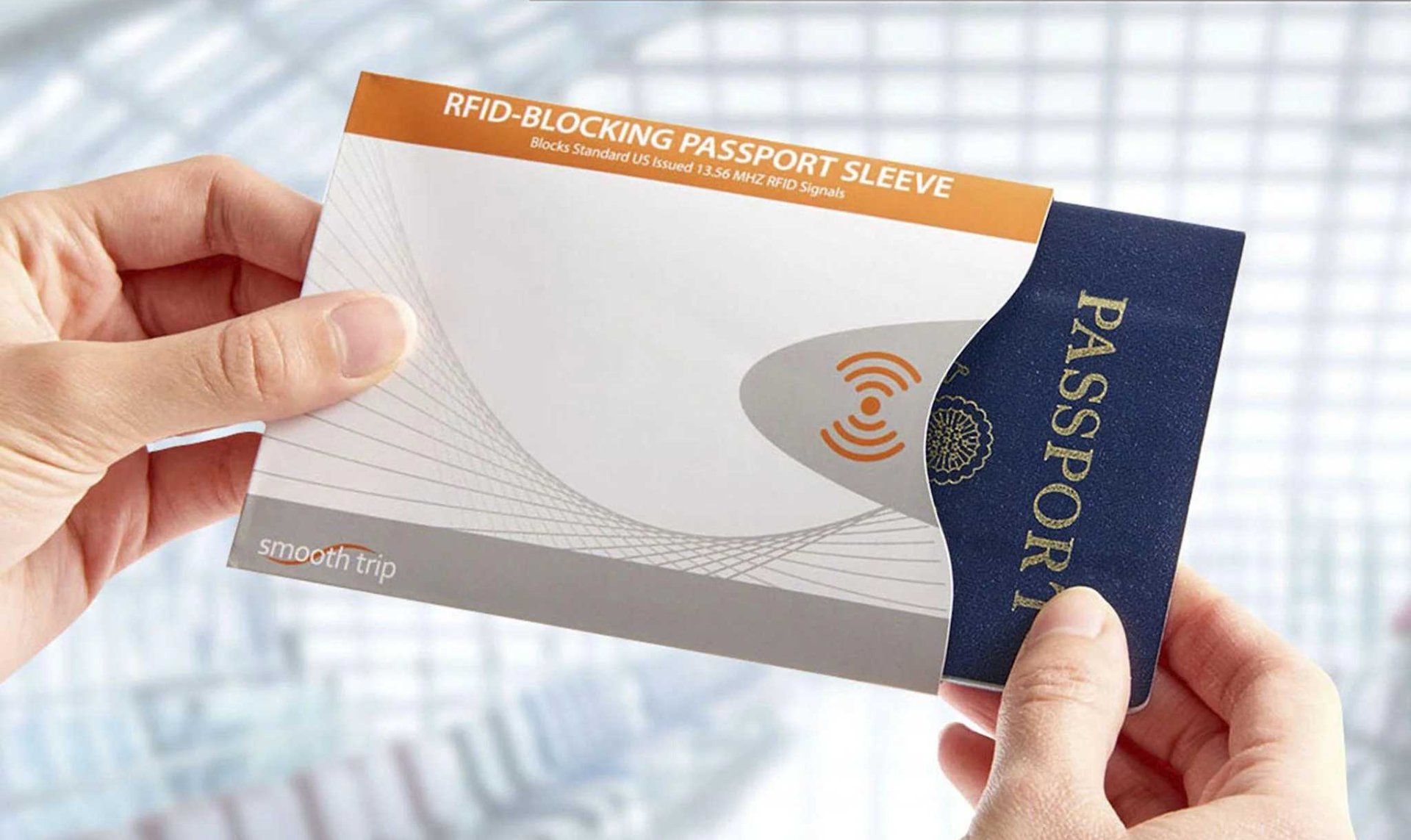
RFID-blocking wallets and RFID blocking passport holders protect travelers from electronic pickpocketing, a growing threat in crowded urban centers. These accessories block unauthorized scans of passports and credit cards, preventing data theft without requiring power or connectivity.

Personal safety alarms such as Birdie devices emit high-decibel sounds and flashing lights designed to draw attention and deter attackers. Anti-theft backpacks, often reinforced with slash-resistant materials and lockable zippers, reduce theft risk in transit hubs and public transportation.

Hidden storage tools, money belts, concealed fanny packs, scarves with hidden pockets and water bottles with secret compartments, protect cash and documents by keeping them out of sight and off easily accessed surfaces.

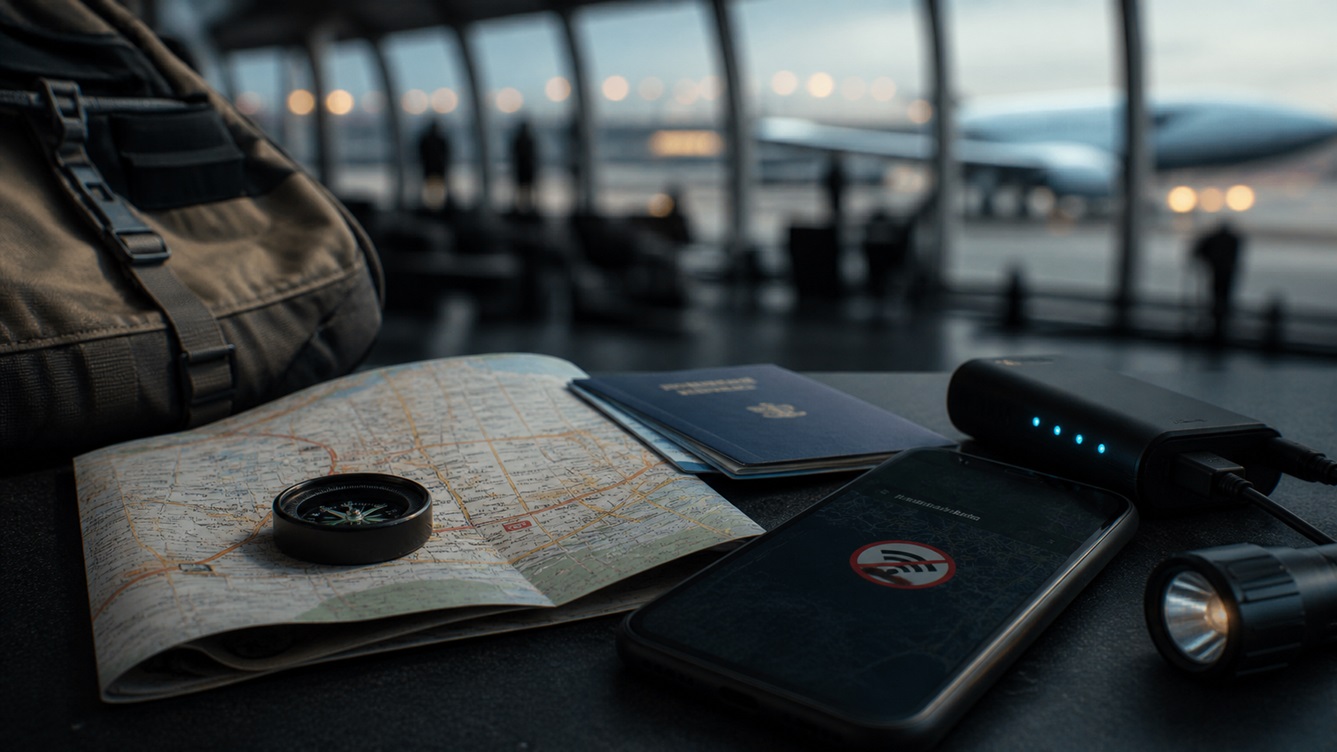
Connectivity tools matter just as much. Portable power banks ensure phones remain operational during long transit days or outages. Universal travel adapters prevent unsafe charging setups that can damage devices. For high-risk or remote destinations, satellite phones and portable Wi-Fi hotspots offer reliable communication when cellular networks fail.

Additional high-value tools include TSA-approved cable luggage locks, portable safes or wire mesh bags that secure valuables to immovable objects, slash-resistant crossbody bags, UV water purifiers like Steripen, compact first aid kits, drink cover scrunchies to prevent spiking, headlamps or compact flashlights and emergency safety whistles.

Together, these tools create layered protection that addresses theft, intrusion, health risks and communication failures.


Travel Gadgets That Sound Good, but Fall Short

Not every “safety” gadget earns its place in your bag. Overly complex smart locks that rely on unstable apps or Bluetooth connections often fail in real-world travel conditions. Cheap GPS trackers with limited global coverage create false confidence and stop functioning where travelers need them most.

Self-defense gadgets such as pepper spray or tactical weapons can be illegal in many countries and may lead to fines or detention at border crossings. Likewise, bulky personal safes that weigh down luggage or draw attention defeat their own purpose.

The rule is simple: if a gadget requires constant troubleshooting, legal research or charging to be effective, it’s likely not worth the risk.


Pre-Travel Preparation Is the Real Force Multiplier

To maximize safety in high-risk zones, preparation must be treated as a strategy rather than just a gear list. Global Rescue security experts emphasize that preparation acts as a form of camouflage; by blending into a disciplined routine, you become a harder target for external threats. This begins with robust information security: maintain encrypted digital backups of passports, visas, and evacuation plans in the cloud and on USB drives, while keeping physical copies as a fail-safe. Before departure, program local emergency numbers into your phone and keep a printed list handy. On the digital front, practice operational hygiene by patching all devices, removing sensitive data, and disabling Bluetooth and Wi-Fi auto-connect to block common entry points for hackers.

Ultimately, your equipment is only as effective as the mindset behind it. For medical contingencies, a compact first-aid kit equipped with hydration salts and stabilization tools is vital, but it serves only to bridge the gap until professional help arrives. In environments that do not forgive mistakes, gear provides the edge, but awareness and discipline provide the security. Success in the field relies on the seamless integration of your physical tools with a proactive, alert mindset—ensuring that your “edge” actually saves lives when it matters most.


What Makes a Travel Gadget an Essential When Things Go Wrong?

In a crisis, communication determines outcomes. Cellular networks are unreliable in many high-risk or remote regions. Satellite phones and SATCOM devices act as lifelines when the grid collapses. The satellite phone is a modern flare gun. When the grid fails, it cuts through the silence.

Portable Wi-Fi hotspots reduce reliance on unsecured public networks, while high-capacity power banks ensure devices don’t fail when you need them most. For travelers spending long hours in transit or visiting regions prone to outages, backup power isn’t optional, it’s survival infrastructure.

Strong passwords and multi-factor authentication are mandatory for international travel. Strong passwords are like strong perimeters, layered, reinforced and designed to keep intruders out. Avoid reusing credentials and update them before departure.

Encrypted cloud storage is a digital foxhole, your information goes in and stays protected under fire. Keeping documents off physical devices reduces loss exposure if phones or laptops are stolen.

Public Wi-Fi should always be treated as hostile. A VPN-enabled portable hotspot offers private, encrypted connectivity. A VPN is body armor for your data, invisible to you, but bulletproof against an ambush. Factory-resetting devices and installing only essential apps further limits exposure.


Business Travel and Personal Security Tools

For business travelers, discreet protection is key. Personal alarms and safety bracelets can summon attention instantly. Doorstop alarms and portable door locks add layers of security to hotel rooms where hardware may be unreliable.

Flashlights and headlamps become critical during blackouts or in poorly lit environments. Global Rescue’s Security Operations experts explain that security isn’t about paranoia, it’s about preparation, a doorstop alarm weighs ounces, but peace of mind is priceless.

Anti-theft bags, RFID-blocking passport holders, smart luggage locks, hidden money belts and portable safes all work together to deny criminals easy opportunities. The less attractive you appear as a target, the safer you become.


The Global Rescue Connection

Even the best safety gadgets have limits. When serious medical or security emergencies occur, equipment alone isn’t enough. A Global Rescue membership provides access to medical evacuation, field rescue and Destination Reports. With a Security Add-On member services include security extraction services, real-time security advisories and critical intelligence that helps travelers avoid trouble before it starts. Members gain 24/7 support from in-house medical professionals and security specialists who coordinate care and evacuation when local resources fall short.

These insights, combined with expert response capabilities, transform preparation into protection. Safety gadgets build your first line of defense. Global Rescue ensures there’s always a backup plan when the unexpected happens.

Categories:

Travel
Share This:

What’s New in International Hunting?

Explore 2026 international hunt rule changes, African wildlife quotas and Australia hunting updates.

Article Highlights:

  • International hunting travel has rebounded strongly, but premium destinations are booking years in advance.
  • Trophy import debates in the UK and EU are creating uncertainty for hunters planning future exports.
  • African wildlife quotas for elephant, leopard and rhino remain central to conservation controversy.
  • Australia hunting and Argentina have reopened with high demand and strict compliance requirements.
  • Safety, licensed outfitters and ethical meat-focused hunts are now core priorities for 2026.


International hunting in 2026 is defined by a paradox: opportunity has returned, but scrutiny has intensified. After pandemic-era shutdowns, the global hunt market has rebounded sharply. Borders are open, outfitters are operating and international flights are stable. Yet alongside this recovery is a tightening regulatory environment, increased conservation oversight and mounting political debate over trophy imports and wildlife quotas.

The result is a more complex international hunting landscape than at any point in recent memory.


Rebounding Travel and Premium Availability

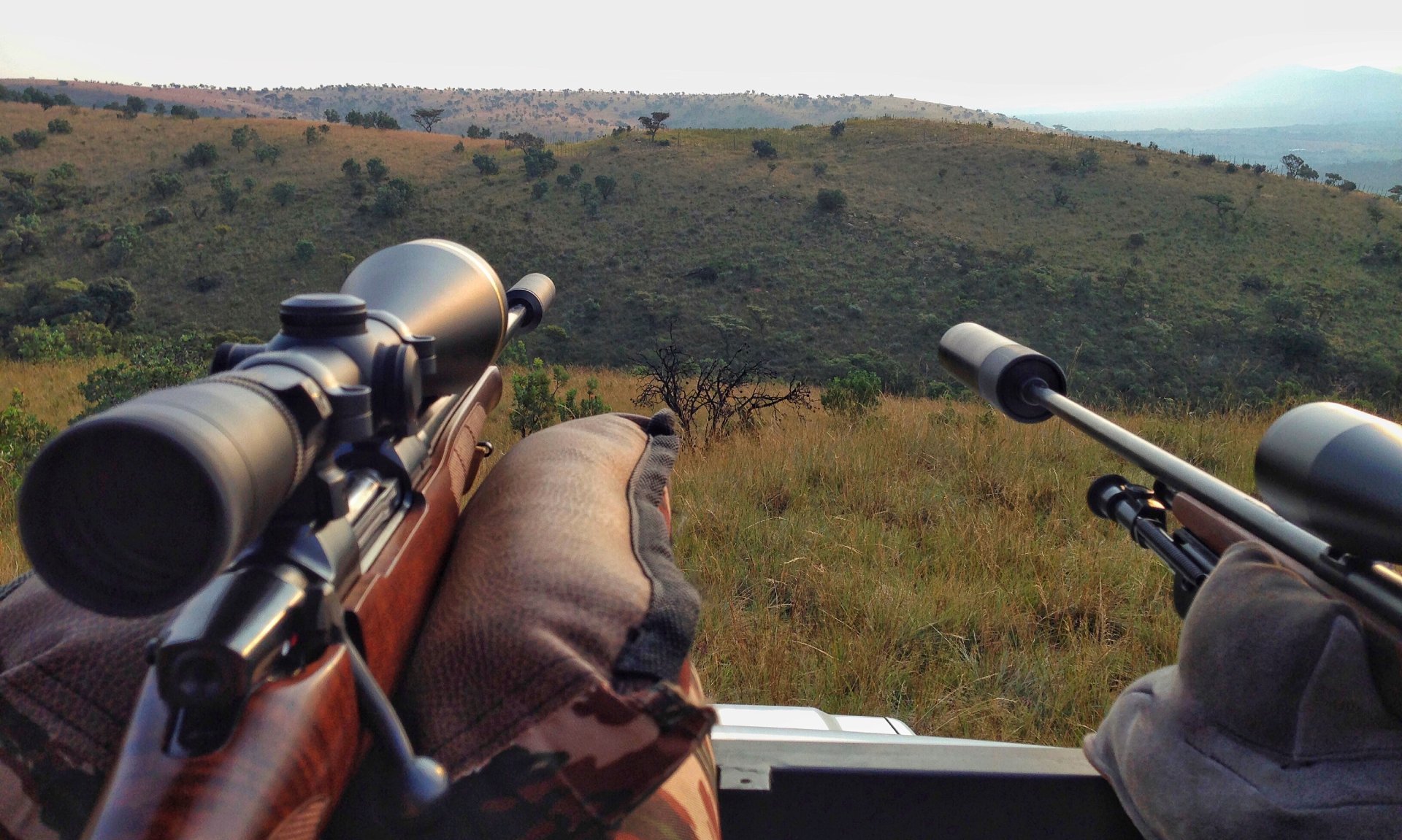
International travel for hunting has largely returned to pre-2020 levels. Argentina’s red stag and wingshooting programs are again attracting North American and European sportsmen. Australia hunting, particularly in the Northern Territory for water buffalo and banteng, has seen significant demand as biosecurity procedures stabilized and firearm import processes normalized.

Availability, however, is limited. Many established outfitters report that prime 2026 and 2027 openings are already booked.

“Hunters are planning further out than ever,” said Kelli Poole, sales manager for Global Rescue and an avid world traveling hunter who has hunted in Kyrgyzstan, Tajikistan, Mozambique, Zambia, Canada, Norway, Czech Republic and Iceland. “There’s strong demand, but there’s also uncertainty. People want to secure their hunt before regulations or political shifts affect access.”

Australia hunting remains especially attractive due to its transparent licensing systems, established infrastructure and strong regulatory clarity compared to more politically volatile regions. Still, firearm import paperwork and strict wildlife compliance rules require early preparation.


Legislative Pressure and Trophy Import Debates

While destinations reopen, Europe and the UK continue to debate trophy import bans. A high-profile UK bill attempting to prohibit imports of trophies from threatened species recently failed, but similar proposals remain active within the European Union and Germany.

These legislative efforts do not necessarily prohibit the hunt itself abroad, but they directly affect whether trophies can be legally imported home. That distinction has become a central planning consideration.

Hunters must now evaluate not only outfitter credentials and wildlife quotas, but also CITES documentation, export permits and the long-term viability of importing trophies years after the hunt occurs.

“The biggest mistake hunters can make right now is assuming today’s import rules will look the same two years from now,” Poole said. “You have to factor in political momentum, not just current law.”


Shifting African Wildlife Quotas

Africa remains central to the international hunt economy, but African wildlife management policies continue to evolve. South Africa announced new export quotas for elephant, black rhino and leopard for 2026 and 2027, reigniting debate over the role of regulated hunting in conservation finance.

Supporters argue that controlled quotas generate revenue for habitat preservation, anti-poaching enforcement and local community support. Critics contend that any expansion of hunting undermines global conservation messaging.

The International Union for Conservation of Nature’s (IUCN) reclassification of the continental African elephant from “endangered” to “vulnerable” further complicated the debate. Some conservationists view the downgrade as recognition of successful population management in certain regions. Others warn that broad classifications may obscure localized declines.

For hunters, these distinctions matter operationally. Quotas determine tag availability, pricing structures and export permissions. They also influence public perception and media coverage.


Illegal Trafficking Crackdowns and Media Scrutiny

Global enforcement efforts targeting illegal wildlife trafficking have intensified. Recent high-profile seizures, including operations in California, reflect increased cross-border coordination. Documentation errors or improper export processes can now result in severe penalties.

Simultaneously, international hunting faces amplified media attention. Reporting from countries such as Pakistan has spotlighted trophy hunting practices, often critically. Social media amplification ensures that controversial hunts can become global headlines within hours.

This environment has elevated the importance of licensed, reputable and conservation-aligned outfitters, particularly in Namibia and South Africa, where regulatory compliance standards are well established.


The Rise of Meat-Focused Hunts

Beyond trophies, a growing segment of international hunters emphasize hunting for meat. Like trends in North America, international hunts increasingly integrate community meat distribution programs.

In parts of Africa, harvested game contributes directly to village food supplies. Australia hunting programs often highlight feral species management, where harvest reduces environmental pressure while producing organic meat.

“There’s a noticeable shift toward hunts that tell a broader conservation story,” Poole said. “Hunters want to understand where the meat goes and how their dollars impact the local community.”


Technology and Specialized Gear

Technological innovation is reshaping how hunters approach rugged terrain. Lightweight expedition rifles, advanced optics, satellite communication tools and modular pack systems are increasingly standard for mountain hunts in Asia and Europe.

Asia remains open for ibex and sheep hunts in Kyrgyzstan and Tajikistan, though logistics demand high-altitude readiness and precise coordination. Europe continues to offer Spanish ibex and red deer, with ongoing discussions around aligning harvest practices with EU environmental standards.

In Greenland, authorities recently advised residents to consider hunting weapons as part of emergency preparedness, reflecting a cultural perspective where hunting remains tied to survival and resilience.

These developments illustrate how the hunt in 2026 intersects not only with sport and conservation, but also with preparedness and infrastructure realities.


Safety, Ethics and Operational Discipline

The complexity of modern international hunting places greater emphasis on safety and due diligence. Remote terrain, limited medical infrastructure and evolving legal standards create layered risk.

“Remote hunts in places like Central Asia or deep in southern Africa require more than physical preparation,” Poole said. “You’re dealing with terrain, wildlife, export rules and sometimes very limited emergency services.”

This reality underscores the need for comprehensive contingency planning.


The Global Rescue Connection

International hunting occurs in some of the most remote environments on earth. Even experienced hunters can face unpredictable medical emergencies.

While hunting deep within Cameroon’s triple canopy forest, a Global Rescue member had already faced a buffalo charge and a gorilla encounter without injury. The unexpected threat came from an elastic band that snapped under tension and struck his eye. Immediate pain and blurred vision followed.

He contacted Global Rescue. Critical-care paramedics assessed his vision remotely, using improvised methods including reading numbers from his membership card. Noting light sensitivity and abnormal eye firmness, Global Rescue consulted ophthalmologists at Johns Hopkins. The risk of permanent vision loss required urgent evacuation.

The hunting party undertook a four-hour journey to the nearest airstrip. Global Rescue secured exclusive access to the only aircraft authorized to land on the unlit grass runway. At first light, the member was flown to Douala, then transferred onward to Belgium, where a world-class ophthalmology team was prepared for his arrival.

After treatment and stabilization, he was repatriated to the United States for continued care.

A Global Rescue membership provides field rescue from the point of injury, medical evacuation to the most appropriate facility, medical advisory services and detailed destination reports outlining regional healthcare capabilities, security conditions and infrastructure realities.

In 2026, the international hunt requires more than marksmanship. It demands regulatory awareness, ethical clarity and operational preparedness. Whether pursuing ibex in Asia, plains game in Africa or feral buffalo through Australia hunting programs, modern hunters must plan for both opportunity and uncertainty.

Categories:

News
Share This:

What to Know About Travel to Mexico Right Now

Categories:

Travel
Share This:

What Do Travelers’ New Year Resolutions Reveal About the Future of International Travel?

Learn what's on travelers' minds and why safety planning matters more than ever.

Article Highlights:

  • Visiting new countries or regions is the top 2026 travel resolution, driven by a global appetite for exploration.
  • Women and non-US travelers lead interest in discovering lesser-known destinations and hidden-season travel.
  • US travelers prioritize traveling more frequently rather than focusing solely on new destinations.
  • Off-peak travel is increasingly popular but introduces new safety and infrastructure considerations.
  • Growing global mobility heightens the need for destination-specific risk awareness and preparedness.


International travelers are setting ambitious new year resolutions that reflect a renewed appetite for exploration, global mobility and meaningful travel experiences. But unlike pre-pandemic travel booms driven largely by convenience and familiarity, today’s resolutions are shaped by a more complex global environment, one that blends opportunity with heightened awareness of travel safety, infrastructure limitations and geopolitical uncertainty.

New data from the Global Rescue Winter 2026 Traveler Sentiment and Safety Survey reveals a clear picture: travelers are eager to go farther, explore more deeply and venture beyond traditional tourism corridors. At the same time, they recognize that international travel now requires more preparation, smarter decision-making and stronger safety nets than ever before.


Exploring Somewhere New Tops 2026 Travel Resolutions

Visiting a new country, destination or continent is the top travel resolution for 2026, according to the survey, signaling a strong appetite for exploration and global mobility despite ongoing uncertainty in the travel environment.

Overall, 41% of respondents say their most important 2026 travel resolution is to visit someplace new. This desire for discovery is especially pronounced among women, with 46% ranking new destinations as their top priority compared to 40% of men. The divide becomes even more striking when viewed geographically: 54% of non-US travelers prioritize visiting new destinations, compared to just 38% of US travelers.

These findings underscore a shift in how travelers define value in international travel. Rather than returning repeatedly to familiar destinations, many are seeking cultural novelty, personal growth and experiences that feel distinct from mass tourism.

“Travelers are clearly prioritizing discovery in 2026,” said Dan Richards, CEO of The Global Rescue Companies and a member of the US Travel and Tourism Advisory Board at the US Department of Commerce. “Whether it’s a first-time destination or an entirely new region, that sense of exploration comes with added complexity , and it reinforces why medical, security and evacuation preparedness remain essential.”


US Travelers Aim To Travel More Often, Not Just Farther

While global exploration dominates overall resolutions, US travelers stand apart in one important way. Rather than focusing primarily on new destinations, US respondents are more likely to prioritize increasing the frequency of travel. Twenty-one percent of US travelers say their top new year resolution is to “travel more,” compared to 15% of non-US travelers.

This difference likely reflects structural realities such as limited vacation time, long international flight distances and higher costs associated with overseas travel from the United States. For many Americans, traveling more often, whether through shorter international trips or more frequent regional travel, feels more attainable than constantly adding new countries to their itinerary.

Even increased frequency introduces cumulative risk, however. More trips mean more border crossings, more exposure to unfamiliar healthcare systems and more opportunities for disruptions ranging from weather events to labor strikes or political unrest. Travel safety planning, therefore, becomes a recurring necessity rather than a one-time consideration.


Off-Peak and Hidden-Season Travel Becomes the New Normal

Another defining trend shaping travelers’ 2026 international travel resolutions is when people choose to travel. While most respondents say they expect to travel internationally during off-peak or “hidden” seasons about the same as before, a meaningful 34% say they are more likely to do so in 2026.

Women are leading this shift, with 39% saying they are more inclined toward off-peak travel compared to 33% of men. Non-US travelers show even greater confidence in hidden-season travel, while US travelers express more hesitation: 10% of Americans say they are less likely to travel off-peak, compared to just 1% of non-US respondents.

“Hidden-season travel offers fewer crowds and often better value, but it can also mean limited infrastructure and reduced local services,” Richards said. “Travelers need to balance opportunity with risk awareness.”

Off-peak travel can affect everything from flight availability and road access to hospital staffing and emergency response times. In destinations with developing infrastructure, these seasonal fluctuations can significantly impact traveler safety and access to care.


Lesser-Known Destinations Gain Strong Preference

Destination choice further highlights how international travel is evolving in 2026. More than half of all respondents, 52%, say they prefer lesser-known international destinations with fewer crowds. Only 12% favor well-known destinations with established tourism infrastructure, while 27% report no strong preference.

Women overwhelmingly favor lesser-known destinations, with 63% selecting this option compared to 49% of men. Non-US travelers, at 55%, also show a stronger preference for emerging or less crowded destinations than US travelers, at 52%.

This trend reflects growing traveler confidence and curiosity, but it also raises important considerations around travel safety. Lesser-known destinations often lack the redundancy of transportation, healthcare and security resources found in major tourism hubs.

“Travelers are pushing beyond traditional hotspots,” Richards said. “That trend increases the importance of having rapid access to medical care, evacuation services and real-time security intelligence, especially in destinations where resources may be limited.”


Exploration in 2026 Is Paired With Risk Awareness

What distinguishes 2026 travel resolutions from those of past decades is not just ambition, but awareness. Today’s travelers understand that global mobility comes with layered risks, health, security, political and environmental. As travelers venture farther off the beaten path and into less predictable seasons, the margin for error narrows.

International travel safety is no longer just about insurance coverage or emergency contact numbers. It involves proactive intelligence, destination-specific risk assessments and the ability to respond quickly when local systems fall short. This reality is shaping how travelers plan, what services they value and which partners they trust.


The Global Rescue Connection

As travelers pursue ambitious new year resolutions in 2026, whether visiting new countries, exploring lesser-known destinations or traveling during off-peak seasons, the importance of comprehensive traveler safety support becomes clear.

A Global Rescue membership provides critical services that extend far beyond traditional travel insurance. Members gain access to medical evacuation, field rescue, security extraction and 24/7 medical and security advisory services. These capabilities are especially valuable when traveling to emerging destinations where local infrastructure may be limited or unreliable.

Equally important are Global Rescue’s Destination Reports, which offer in-depth intelligence on medical facilities, security conditions, transportation reliability and regional risks for new destinations worldwide. For travelers embracing global mobility and exploration in 2026, these insights enable smarter decisions before departure, and faster responses when conditions change.

In an era where international travel rewards curiosity but demands preparation, Global Rescue helps ensure that bold travel resolutions are matched with the confidence, protection and expertise needed to travel well.