(Lebanon, NH – May 6, 2026) Luxury and adventure travel are surging in popularity and new findings from the Global Rescue Winter 2026 Traveler Sentiment and Safety Survey show how travelers are redefining what those experiences mean today. The survey data reveal how travelers themselves define luxury and adventure travel and what they believe would meaningfully improve business travel, against the backdrop of a rapidly evolving global travel landscape.
Luxury travel is one of the fastest-growing segments of the travel industry, driven by affluent consumers prioritizing personalized, experiential journeys over traditional displays of opulence. That shift is clearly reflected in the survey data. Nearly 40% of respondents define luxury travel as upgrading every aspect of the journey, making it the most common interpretation by a wide margin. About 20% say luxury means traveling less often but exceptionally well, reinforcing a deliberate, quality-first approach to travel.
Privacy and discretion rank next at roughly 14%, while about 10% associate luxury with replacing sightseeing with exclusive access or integrating wellness without sacrificing indulgence. These findings align with broader industry trends toward deeper, more meaningful experiences, as well as growing interest in premium rail, private aviation and highly curated itineraries.
“Luxury travel is no longer about excess for its own sake,” said Dan Richards, CEO of The Global Rescue Companies and a member of the US Travel and Tourism Advisory Board at the US Department of Commerce. “Today’s luxury traveler expects seamless execution, personalization and confidence that every detail, from transportation to medical and security support, has been accounted for.”
Adventure travel is also trending upward, with strong revenue growth and continued market expansion as demand stabilizes at pre-2020 levels. About 35% of respondents say adventure travel means going somewhere truly remote, making it the leading definition overall. Roughly 17% define adventure as pushing a personal physical or mental limit, while about 16% associate it with upgrading to semi-independent adventure travel.
Men are more likely than women to define adventure in terms of remoteness, while women more often associate it with personal challenge. Travelers outside of the US (24%) are significantly more likely to define adventure as pushing personal limits, compared with roughly 16% of US-based respondents. US travelers place greater emphasis on remote destinations supported by professional infrastructure.
“Modern adventure travelers want meaningful challenge and access to extraordinary places, but not unnecessary risk,” Richards said. “They are choosing capability, preparation and contingency over bravado.”
Business travel remains in a state of transition, while generally trending upward and surpassing pre-pandemic spending levels in nominal terms. Nearly 30% of respondents say combining business travel with personal time would be the most meaningful improvement, underscoring the continued rise of bleisure travel. About a fifth of respondents (20%) want business travel optimized for productivity and efficiency. The majority (33%) say no changes in business travel are needed, suggesting a broad acceptance of current practices or travel fatigue after years of disruption.
“Business travel is still recovering, but it is also evolving,” Richards said. “Travelers want trips to be purposeful, efficient and flexible with the option to add personal value when appropriate. The emphasis is on intention, not volume.”
Taken together, the findings suggest that across luxury, adventure and business travel, travelers are prioritizing optimization, reliability and meaningful experiences. As travel markets continue to grow and normalize, expectations for preparedness, support and seamless execution are becoming central to how travelers define value.
About the Global Rescue Traveler Sentiment and Safety Survey
Global Rescue, the leading travel risk and crisis response provider, surveyed more than 1,400 current and former members between January 13 – 17, 2026. Respondents shared their attitudes, behaviors and preferences related to travel safety, technology and global mobility.
About Global Rescue
Global Rescue is the world’s leading provider of medical, security, evacuation and travel risk management services to enterprises, governments and individuals. Founded in 2004, Global Rescue maintains exclusive relationships with the Johns Hopkins Emergency Medicine Division of Special Operations and Elite Medical Group. The company has provided medical and security support during every major global crisis over the past two decades.
May 6, 2026
Article Highlights:
- Remote “Outer Rim” destinations are growing in popularity as travelers seek new and lesser-known experiences.
- Limited infrastructure in places like Patagonia, Mongolia and Antarctica increases risk and self-reliance.
- Technology like GPS and smartphones enhances travel — but cannot replace preparation.
- Medical emergencies in remote regions involve complex evacuations and delayed response times.
- Global Rescue provides field rescue, evacuation and advisory services where traditional systems fall short.
In Return of the Jedi, Luke Skywalker doesn’t hesitate when the mission takes him to Tatooine. He understands the environment, the risks and the stakes. When he walks into Jabba the Hutt’s palace to rescue Han Solo, there is no illusion of safety. It’s remote, unpredictable and unforgiving.
That cinematic moment mirrors a growing trend in modern international travel. Increasingly, international travelers are choosing destinations that feel less like Coruscant and more like the Outer Rim — remote, raw and far from the safety net of developed infrastructure.
According to the Global Rescue Winter 2026 Traveler Sentiment and Safety Survey, 41% of travelers say visiting somewhere new is their top priority, while 44% are actively seeking more remote destinations. This shift reflects a deeper cultural change. Travelers are no longer satisfied with familiar routes. They want Patagonia’s windswept isolation, Mongolia’s vast steppe and Antarctica’s extreme remoteness. They want adventure.
But like Luke on Tatooine, they are stepping into environments where preparation — not optimism — determines outcomes.
The Allure of the Outer Rim
There is a reason the Outer Rim exists in Star Wars storytelling. It represents the edge of control, where systems break down and self-reliance becomes essential.
Modern travel has its own version of this frontier. Patagonia’s terrain is defined by violent winds, glacial fields and unpredictable weather that can shift in minutes. Mongolia offers immense distances, sparse infrastructure and exposure to extreme seasonal temperatures that swing from searing heat to subzero cold. Antarctica presents the ultimate isolation — no permanent population, limited access points and conditions that can ground aircraft or ships for days.
But the Outer Rim isn’t limited to the Southern Hemisphere. Iceland’s Hornstrandir Nature Reserve is one of Europe’s most isolated wilderness areas, a 220-square-mile expanse of cliffs and fjords with no permanent residents and minimal access. Weather conditions shift rapidly, evacuation routes are limited and wildlife thrives precisely because human infrastructure does not.
In Tanzania, Mahale Mountains National Park offers a different kind of remoteness. With no roads and access limited to small aircraft or long boat transfers across Lake Tanganyika, every movement is deliberate. Dense jungle terrain, heat and isolation mean that even minor incidents can escalate quickly.
The Outer Hebrides off Scotland’s western coast present yet another variation. These islands are exposed to the full force of the Atlantic, where wind, rain and cold conditions can change rapidly. The landscape is beautiful but unforgiving, and the environment demands respect and preparation.
These destinations offer something increasingly rare: true disconnection. No crowds. No overbuilt tourism systems. No predictable safety net. That appeal is reflected in traveler preferences. More than half of travelers (52%) now favor lesser-known destinations with fewer crowds. But the tradeoff is clear. The farther you move from established tourism hubs, the more you enter an environment where local systems may not support you when something goes wrong.
Limited Infrastructure: The Reality Behind the Adventure
On Tatooine, there is no centralized authority managing safety. No emergency response system. No advanced medical facilities. Remote destinations on Earth operate in similar ways, just with fewer sandcrawlers.
Infrastructure gaps show up in multiple forms. Medical facilities may be basic or nonexistent. Transportation networks can be unreliable or weather-dependent. Communication systems are often inconsistent, especially outside major settlements. Even timing matters. The rise of off-peak and “hidden season” travel means more travelers are visiting destinations when services are reduced.
That combination — remote location plus limited infrastructure — creates a narrow margin for error. A twisted ankle in a city is an inconvenience. The same injury in the Hornstrandir cliffs, the Mahale jungle or the Antarctic ice becomes a logistical problem that may take hours — or days — to resolve.
Self-Reliance: The Core Skill of Outer Rim Travel
Remote travel requires a different mindset. It is not about efficiency or convenience. It is about resilience. Travelers entering remote environments must assume responsibility for their own safety in ways that are unnecessary in developed destinations.
That includes understanding terrain, weather patterns and transportation options. It means carrying backup plans for navigation, communication and documentation. It means preparing for delays, disruptions and the possibility that help may not arrive quickly. This level of preparation is not excessive. It is appropriate for the environment.
In Star Wars terms, this is the difference between a casual visitor and someone who understands how to operate in the Outer Rim.
When Things Go Wrong: Evacuation Complexity
The most significant difference between urban travel and remote travel is what happens when something goes wrong. In developed destinations, emergency response systems are structured and relatively fast. In remote regions, response times are longer, coordination is more complex and outcomes depend heavily on logistics.
Evacuations in these environments are rarely straightforward. A field rescue may involve improvised transport, local teams or delayed aerial extraction due to terrain or weather. From there, a traveler may need to be moved to a regional facility, then transferred again to a major hospital — sometimes across borders. Every step introduces time, risk and dependency on conditions outside the traveler’s control.
A real-world example underscores how quickly this complexity unfolds. While trekking Indonesia’s remote Mt. Tambora, experienced hiker Cheryl Gilbert suffered a severe leg injury after falling on a steep descent. With the dense jungle preventing helicopter access, a team arrived and carried her five kilometers by a makeshift stretcher to base camp, where ground transport could begin. From there, she was ultimately moved across the country — spanning thousands of miles and multiple islands — to reach appropriate medical care in Jakarta.
This type of multi-stage evacuation is not unusual in remote environments. It illustrates a critical reality: extraction is rarely immediate, rarely simple and often requires coordination across terrain, transportation modes and medical systems.
Traditional travel insurance typically does not address this operational complexity. It focuses on reimbursement rather than response, often activating only after a traveler reaches a medical facility. In remote destinations, that gap matters. Because when help is not nearby, the challenge is not just treatment — it is getting there.
The Modern Traveler: Bold, But Not Always Prepared
One of the most striking insights from recent travel data is not just where people are going, but how they are thinking about risk. Travelers are increasingly willing to embrace uncertainty. Nearly one-third are pursuing longer trips, and 27% are actively seeking riskier destinations.
This reflects confidence, but it also introduces exposure.
The modern traveler is more adventurous than ever. But adventure without preparation is not exploration — it is vulnerability. The lesson from Return of the Jedi is not just that Luke succeeds. It’s that he succeeds because he understands the environment he’s entering.
Traveling to remote destinations is not inherently dangerous. But it is fundamentally different. It requires a shift in mindset from consumption to participation. From convenience to capability. From assumption to awareness.
In these environments, the rules change. Infrastructure is limited. Technology is imperfect. Response times are longer. But the reward is equally significant. These destinations offer experiences that cannot be replicated in traditional tourism corridors. They provide perspective, scale and a sense of discovery that defines why people travel in the first place.
The key is aligning ambition with preparation. Because in the Outer Rim — whether it’s Tatooine or Antarctica — conditions don’t adjust to you. You adjust to them.
The Global Rescue Connection
Remote travel offers extraordinary rewards, but it also introduces variables that travelers cannot control. When medical emergencies, injuries or security situations occur in isolated environments, local resources may be limited, delayed or insufficient.
A Global Rescue membership addresses this gap directly.
Members have access to field rescue from the point of illness or injury, even in remote and hard-to-reach locations. Whether trekking in Patagonia, navigating the fjords of Iceland, exploring Tanzania’s remote parks or traveling in Antarctica, Global Rescue coordinates extraction using the appropriate assets — helicopters, aircraft or ground teams — based on the situation.
Medical evacuation ensures transport not just to the nearest facility, but to the most appropriate hospital capable of providing necessary care. If required, members can be repatriated to their home hospital for continuity of treatment.
Equally important are medical advisory and telehealth services, which allow travelers to consult with experienced professionals in real time, regardless of location.
For travelers venturing into the modern equivalent of the Outer Rim, this level of support transforms uncertainty into capability. Because the goal of travel is not just to explore boldly. It is to return safely.
May 5, 2026
Article Highlights:
- Political instability is reshaping international travel, forcing travelers to think like strategists, not tourists.
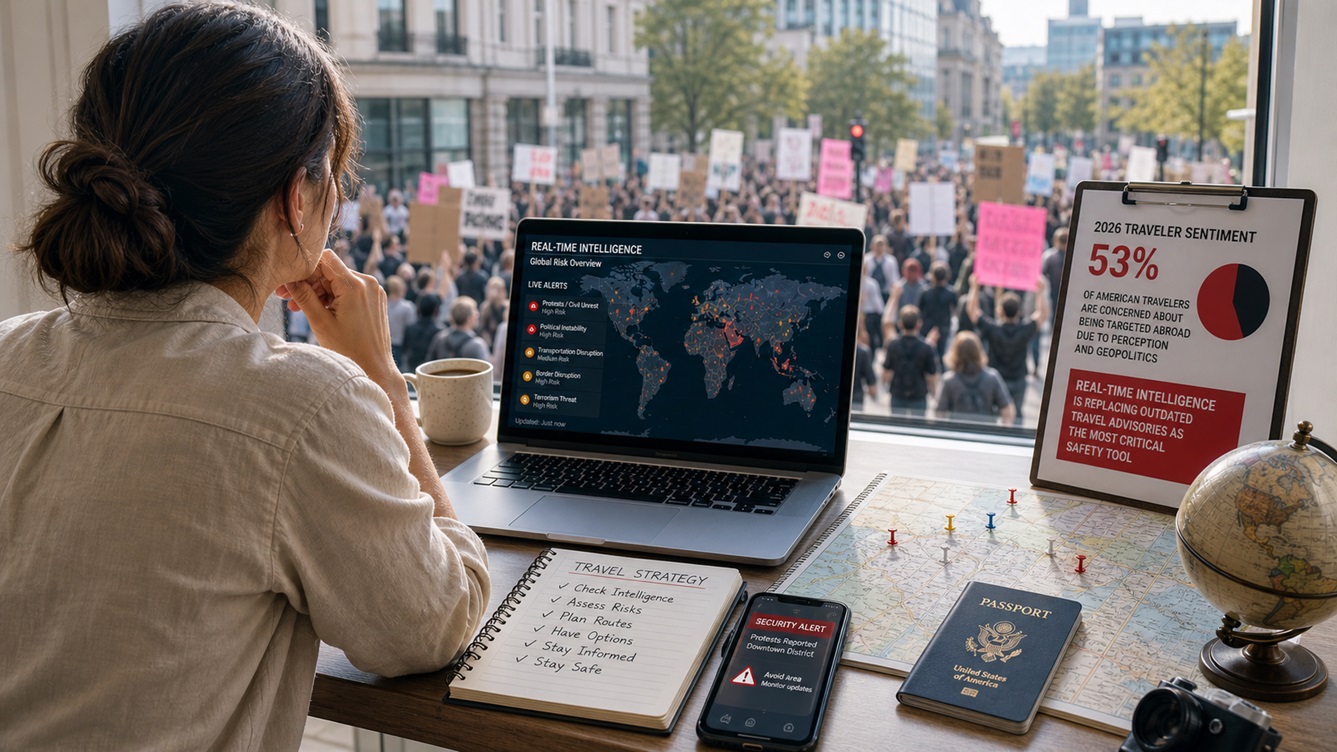
- 53% of American travelers are concerned about being targeted abroad due to perception and geopolitics.
- Real-time intelligence is replacing outdated travel advisories as the most critical safety tool.
- Technology alone cannot replace preparation, awareness and professional support.
- Demand for security-focused travel protection is rising as travelers adapt rather than retreat.
In Revenge of the Sith, the galaxy doesn’t collapse overnight. It fractures slowly. Alliances shift. Systems become contested. Travel routes once considered safe become unpredictable. By the time most citizens realize what’s happening, the environment has already changed.
That narrative feels less like science fiction and more like a framework for understanding international travel in 2026.
Today’s international travelers are not navigating hyperspace lanes, but they are moving through a world increasingly defined by political instability, regional conflict and shifting perception risk. The question is no longer whether travel is safe or unsafe. It is whether travelers understand how quickly conditions can change — and how to respond when they do.
Would You Travel During a Galactic Conflict? A Real-World Guide to Political Risk
Han Solo didn’t avoid risk. He managed it. That distinction matters.
Modern international travel is experiencing a similar shift. Travelers are not abandoning global mobility. They are recalibrating how they move through it. According to recent Global Rescue survey data, more than half of American travelers (53%) are now concerned about being targeted abroad due to anti-American sentiment. At the same time, 85% express concern about disruptions tied to global conflict, from airspace closures to sudden rerouting.
Yet nearly two-thirds are still traveling. This is not retreat. It is adaptation.
Travelers today behave less like passive tourists and more like operational planners. They are weighing risk, perception and logistics simultaneously. That evolution mirrors the kind of decision-making seen in contested Star Wars systems, where movement requires awareness, timing and contingency planning.
Galactic Conflict vs. Political Instability
In the Star Wars universe, the Galactic Civil War creates zones of control, influence and uncertainty. Some planets remain stable. Others become flashpoints. The risk is not evenly distributed, and it changes quickly. The same is true in real-world travel.
Political instability rarely affects entire countries uniformly. Instead, it concentrates in regions, cities or specific transit corridors. Border tensions can escalate without warning. Civil unrest can disrupt transportation networks overnight. Elections, economic crises or regional conflicts can shift a destination’s risk profile in days, not months.
This fragmentation is one of the most misunderstood aspects of international travel risk. Travelers often rely on broad country-level assessments, when the reality on the ground is far more nuanced. Understanding that nuance is the difference between confident travel and exposure.
Travel Advisories: The Galactic Senate of Modern Travel
If the Galactic Senate issued travel warnings during the Clone Wars, most citizens would have paid attention — but not always understood the full picture.
That dynamic closely mirrors how government-issued travel advisories function today.
For decades, travel advisories have been a foundational input in international travel planning. But in an era defined by political instability, regional conflict and rapid information cycles, their influence has intensified. According to the Global Rescue Summer 2025 Traveler Safety and Sentiment Survey, 63% of the world’s most experienced travelers say government advisories affect their destination choices to at least a moderate degree.
Safety information is no longer a background consideration. It is a primary decision driver.
Travelers are increasingly using advisories to evaluate risks tied to political unrest, natural disasters and health-related crises before departure. These official signals shape not only where travelers go, but where they choose not to go.
But advisories have limitations.
They are often broad, slow to evolve and structured at the country level, even when real conditions vary dramatically within regions. A destination flagged at a higher advisory level may still contain stable areas, while lower-risk countries can experience sudden localized disruptions.
This creates a paradox for modern travelers.
Advisories are essential, but they are not sufficient.
Safety information from official sources now plays a decisive role in travel planning, but it is only the starting point. It identifies where risk exists. It does not explain how that risk evolves or how it affects individual itineraries in real time.
Real-Time Intelligence vs. Static Advisories
One of the most critical gaps in travel safety is the reliance on outdated information.
Traditional travel advisories are static by design. They provide broad, country-level assessments that are updated periodically, often lagging behind rapidly evolving conditions on the ground. In a world shaped by political instability, civil unrest and sudden disruptions, that delay creates real exposure for international travelers.
Modern travel requires real-time intelligence.
Conditions can shift in hours, not days. Protests can emerge and escalate quickly. Airspace can close. Communications networks can be disrupted. Border crossings can tighten without warning. Travelers relying solely on pre-departure research or static advisories are making decisions based on incomplete, and sometimes obsolete, information.
In a contested galaxy, outdated intelligence isn’t just inconvenient, it’s dangerous. The same applies to international travel.
Global Rescue’s Intelligence Delivery system (GRID) represents a fundamental shift in how travelers access and act on risk information. Recognized with the 2025 Skift IDEA Award for Industry Innovation, GRID was designed to bridge the gap between static advisories and real-world conditions. It delivers targeted alerts on emerging threats including civil unrest, natural disasters, disease outbreaks, transportation disruptions and security incidents.
In 2024 alone, GRID delivered more than half a million alerts tied to nearly 10,000 global events.
More importantly, GRID integrates intelligence with action. It combines real-time alerts, GPS tracking, direct communication with operations centers and coordinated response capabilities into a single system. Travelers are not just informed, they are connected.
This changes how international travelers operate. Instead of reacting after events unfold, they can anticipate disruption, adjust routes and avoid emerging hotspots. The shift is from awareness to action.
Adaptation, Not Avoidance
Despite rising instability, international travel demand remains resilient.
More than 40% of travelers expect no change in their travel frequency, while others are making targeted adjustments — changing destinations, postponing trips or modifying itineraries. The behavior reflects a strategic mindset rather than emotional reaction.
Travelers are not abandoning the journey. They are choosing different paths through it.
This mirrors a central theme in Star Wars: movement continues even in conflict, but it requires awareness, preparation and support.
As global uncertainty increases, traveler behavior is evolving.
Security-focused travel protection is rising significantly, with a 29% increase in combined medical and security memberships in early 2026. This reflects a broader shift toward proactive risk management. Travelers want more than reimbursement after an incident. They want real-time support, intelligence and response capability.
Preparation is no longer a checklist. It is a strategy.
Travelers are recognizing that geopolitical instability is not temporary. It is an enduring condition of modern international travel. Navigating it effectively requires access to better information, stronger support systems and the ability to respond quickly when conditions change.
The Global Rescue Connection
In a world increasingly defined by instability, the difference between confidence and vulnerability often comes down to preparation and support.
A Global Rescue membership provides international travelers with access to 24/7 teams of military special operations veterans, intelligence analysts and medical professionals. Members receive real-time alerts, destination-specific intelligence and immediate guidance when conditions evolve.
With the Security Add-On, travelers gain access to crisis response capabilities designed for high-risk environments. This includes security extraction services, support during civil unrest or political instability and direct coordination with professionals trained to operate in complex global scenarios.
Equally important is integration. Medical evacuation, field rescue and security intelligence operate as a unified system. Whether facing a sudden health emergency, border closure or escalating unrest, members have a single point of contact and a coordinated response.
In a world that increasingly resembles contested systems rather than predictable destinations, that level of support is no longer optional for serious international travelers.
Because whether you are navigating a distant planet or a real-world destination, the principle remains the same: Travel is still possible. But how you prepare determines how well you move through it.
Categories:
Business TravelHealth & SafetyMay 4, 2026
Article Highlights:
- Overreliance on smartphone and GPS technology creates hidden risk for international travelers.
- Connectivity loss during international travel can quickly escalate into safety challenges.
- Prepared travelers build redundancy beyond digital tools.
- Technology improves travel, but preparedness determines outcomes.
- Global Rescue provides real-world support when technology fails.
In Star Wars, technology is everywhere. Navigation systems guide ships across galaxies. Droids manage repairs, calculate routes and keep missions on track. Even Han Solo, who prides himself on instinct, depends on the Millennium Falcon’s systems to survive.
But when those systems fail, everything changes.
Hyperdrives break. Navigation goes offline. Communication disappears. And suddenly, even the most capable characters are forced to rely on something else: preparation, awareness and adaptability.
Modern international travel follows the same pattern.
Today’s traveler carries a smartphone that acts as GPS, translator, boarding pass, payment system and emergency contact hub. It is the center of how international travelers move through the world.
But what happens when that technology fails?
Technology Dependence vs. Preparedness: What Happens When Your “Astromech Droid” Fails?
Technology has transformed travel. International travelers no longer need to study maps, memorize directions or learn key phrases before arrival. A smartphone handles navigation, translation and logistics in real time.
GPS ensures you rarely feel lost. Apps tell you where to go, how to get there and what to expect when you arrive. This creates confidence. It also creates dependence.
Many travelers now assume their smartphone will always function. That GPS will always work. That connectivity will always be available.
In reality, international travel operates across environments where technology is not guaranteed. Technology failure during travel is more common than most travelers expect.
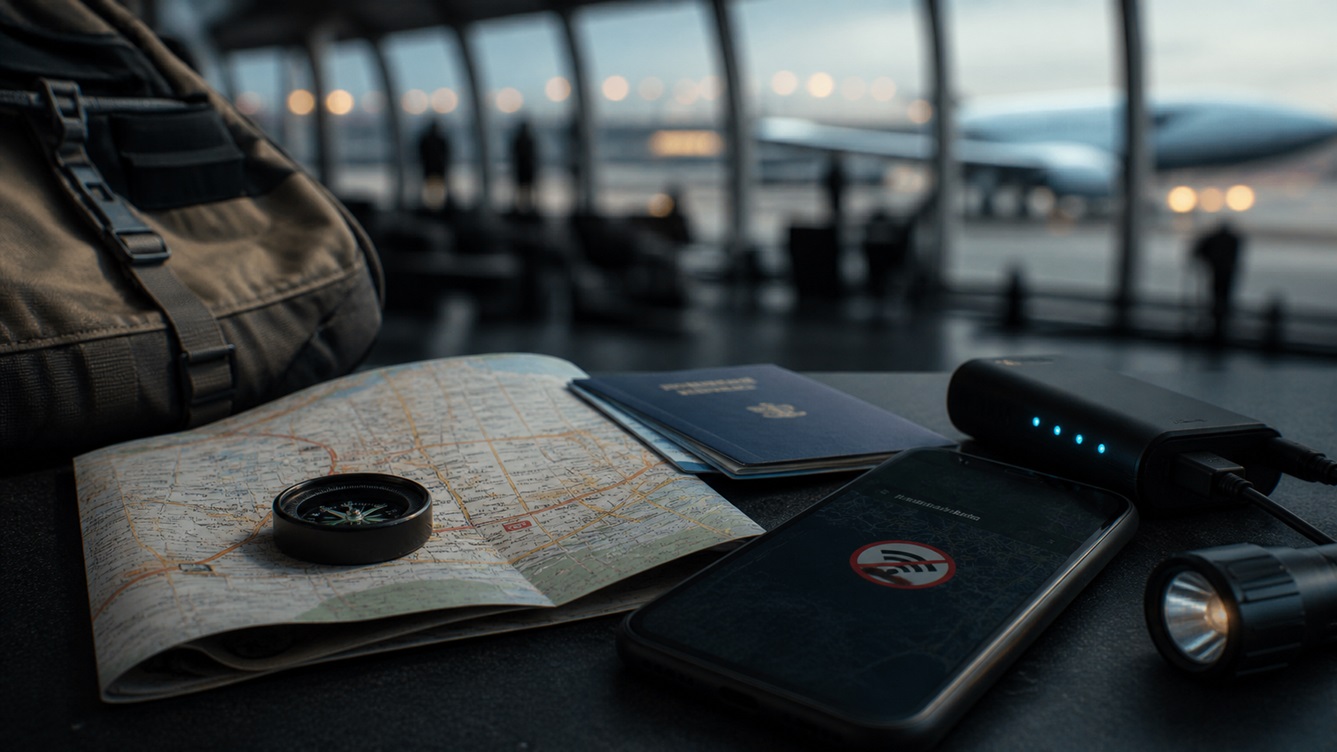
A smartphone battery dies at the wrong moment. A device is lost or stolen. A local SIM card fails. International data plans don’t activate correctly. Public Wi-Fi is unreliable or insecure. Networks go down.
And when the smartphone fails, multiple systems fail at once. GPS disappears. Communication is cut off. Access to reservations, directions and contacts vanishes. The traveler is left without the infrastructure they have come to rely on.
For international travelers, this is not just inconvenient. It can be disorienting and, in certain situations, unsafe.
GPS Dependence and the Risk of Getting Lost
GPS is one of the most powerful tools in modern travel. It allows travelers to navigate unfamiliar cities with ease.
But it also removes the need to understand where you are.
When GPS fails, many travelers struggle to reorient themselves. They do not know street names. They have not reviewed routes. They may not even know the general direction of their destination. In major cities, this can lead to frustration. In unfamiliar or less stable environments, it can lead to real risk.
Even Han Solo, navigating asteroid fields and hostile space, understood the importance of knowing his environment beyond the instruments.
Luke Skywalker and the Value of Awareness
Luke Skywalker’s evolution as a pilot and leader reflects a different approach. He learns to operate with awareness, not just instrumentation. He adapts when systems fail. This is the mindset international travelers need.
Technology should enhance travel, not replace awareness. Prepared travelers maintain a basic understanding of their surroundings. They know where they are staying. They understand how to return if plans change. They are not entirely dependent on a smartphone to function.
Connectivity is often treated as a given, but in practice it is highly inconsistent.
International travelers regularly encounter gaps in service, whether in rural or remote destinations where infrastructure is limited, inside airports, tunnels and transit systems where signals drop, or in dense urban environments where interference disrupts connections. In other regions, unstable infrastructure can make access unreliable, and during power outages or broader network disruptions, connectivity can disappear entirely.
When connectivity drops, GPS and communication tools become unreliable or unusable. As international travel expands into lesser-known destinations and off-peak seasons, infrastructure limitations become more pronounced, increasing the importance of preparation.
Connectivity loss is not just a technical issue. It is a travel risk.
Technology Is a Tool, Not a Safety Net
There is no question that technology improves travel. Smartphones and GPS make international travel more efficient, accessible and flexible. But they are not designed to function as safety systems.
Devices depend on power. Apps depend on connectivity. Platforms depend on infrastructure. When any part of that chain breaks, the system fails. Travel safety insights consistently show that tools alone are not enough. Preparation and mindset determine whether those tools are effective.
Technology can guide you. It cannot replace preparedness.
Preparedness is what separates confident travel from vulnerable travel. International travelers who plan for technology failure take simple but critical steps, such as downloading offline maps before departure and reviewing key routes, carrying written copies of hotel addresses and emergency contacts, maintaining both physical and secure digital backups of passports and travel documents, planning for power management with backup batteries and charging strategies, and developing a basic understanding of local transportation options and geography.
These actions require minimal effort but provide significant resilience. Prepared travelers can continue moving, navigating and communicating even when technology fails.
The Global Rescue Connection
International travel is expanding. Travelers are going farther, more frequently and into environments with varying levels of infrastructure, healthcare and connectivity. This increases both opportunity and exposure. The most effective travelers adapt by balancing technology with preparedness.
They use smartphones and GPS for efficiency. They build backup systems for reliability. They prepare for scenarios where technology fails. This layered approach ensures continuity. When one system fails, another supports it.
Technology plays a central role in modern travel, but it does not solve critical emergencies.
When international travelers face serious medical or security situations, especially in environments where connectivity is limited or infrastructure is inconsistent, smartphones and GPS cannot coordinate rescue or evacuation.
A Global Rescue membership provides that capability.
Members have access to field rescue from the point of illness or injury, medical evacuation to the most appropriate facility and 24/7 medical and security advisory services. This support operates independently of local connectivity, apps or device functionality.
Global Rescue also provides destination intelligence and real-time guidance, helping travelers understand risks before departure and respond effectively when conditions change.
With the Security Add-On, members gain access to evacuation support and expert advisory services during civil unrest, natural disasters or deteriorating conditions.
In Star Wars, technology may power the journey, but survival depends on preparation, awareness and the ability to adapt when systems fail. For international travelers, the same principle applies. Because when your smartphone and GPS stop working, what matters most is not the technology you lost. It’s the preparedness you built before you needed it.
May the Force be with you.
(Lebanon, N.H – May 4, 2026) – Most travelers are not discouraged by new or higher travel fees planned for 2026, but significant gaps remain in awareness of the European Union’s upcoming ETIAS entry requirement, according to the Global Rescue Winter 2026 Traveler Sentiment and Safety Survey.
ETIAS requires travelers to complete an online application and pay a €20 fee (about $22 USD) before entering Europe for short stays. It applies to citizens of visa-exempt countries (including the US, UK, Canada, and Australia) traveling to the Schengen Area, with rollout expected in late 2026.
Overall, awareness of ETIAS is mixed. Nearly three in ten travelers, 29%, say they are not at all aware of the new requirement, while a combined 52% report being moderately or very aware. Another 17% are only slightly aware.
Awareness differs notably by gender. Women report substantially higher familiarity with ETIAS than men. Forty-two% of women say they are very aware of the new requirement, compared to 26% of men. Conversely, one-third of men, 33%, say they are not at all aware, compared to 18% of women.
Geography also plays a role. Travelers based outside the US show higher awareness than their US counterparts. Thirty-two% of non-US respondents say they are very aware of ETIAS, compared to 29% of US respondents. Nearly one-quarter of non-US travelers report no awareness at all, versus 32% of US travelers.
“ETIAS is a meaningful change for visa-exempt travelers, and the lack of awareness, particularly among US travelers and men, is concerning,” said Dan Richards, CEO of The Global Rescue Companies and a member of the US Travel and Tourism Advisory Board at the US Department of Commerce. “Failure to complete the process in advance could result in denied boarding or entry delays, which can disrupt trips before they even begin.”
In contrast, travelers appear largely unfazed by new destination-specific entry and stay fees.
An overwhelming majority, 92%, say Thailand’s new 300-baht entry fee, roughly $10 USD, would not discourage them from traveling there. Only 4% say the fee would deter their travel. Responses are consistent across genders and regions, with 94% of women and 92% of men saying the fee would not prevent travel. Among non-US travelers, resistance is even lower, with 94% saying the fee would not discourage a trip.
Similarly, new overnight stay fees up to $65 per day planned for Barcelona, London and Kyoto appear unlikely to significantly impact travel decisions. Overall, 45% say the fees would not prevent them from traveling or staying in those destinations at all, while another 36% say the impact would depend on the per day fee amount but likely would not deter them. Only 15% say the fees would discourage travel or stays.
Men are slightly less sensitive to the new overnight fees than women. Forty-five% of men say the fees would not prevent travel, compared to 47% of women. US travelers appear more tolerant than non-US travelers, with 49% of US respondents saying the fees would not deter them, compared to 38% of non-US respondents. Still, even among non-US travelers, a strong majority say the fees would either not prevent travel or would only matter depending on the amount.
“Travelers are showing resilience and flexibility when it comes to reasonable fees, but administrative requirements like ETIAS are a different matter,” Richards said. “Fees may be an inconvenience, but lack of preparation can stop a trip entirely. That’s where education and planning become critical.”
About the Global Rescue Traveler Sentiment and Safety Survey
Global Rescue, the leading travel risk and crisis response provider, surveyed more than 1,400 current and former members between January 13 – 17, 2026. Respondents shared their attitudes, behaviors and preferences related to travel safety, technology and global mobility.
About Global Rescue
Global Rescue is the world’s leading provider of medical, security, evacuation and travel risk management services to enterprises, governments and individuals. Founded in 2004, Global Rescue maintains exclusive relationships with the Johns Hopkins Emergency Medicine Division of Special Operations and Elite Medical Group. The company has provided medical and security support during every major global crisis over the past two decades. For more information, visit www.globalrescue.com.
Categories:
Business TravelTravelMay 1, 2026
Article Highlights:
- Canada delivers a rare combination of luxury, adventure and business travel experiences in one destination.
- Major cities like Montreal, Toronto and Vancouver are safe, modern and globally connected hubs.
- Outdoor icons like Banff National Park and Vancouver Island offer world-class summer adventure.
- Events like the Calgary Stampede and international festivals define Canada’s summer culture.
- High-quality healthcare and infrastructure support travel, but preparation and evacuation planning remain essential.
Canada in summer is a fully realized travel experience that spans urban sophistication, wilderness immersion and global business connectivity. From June through August, the country transforms. Long daylight hours stretch into late evenings, cities spill onto patios and waterfronts and remote landscapes become accessible in ways impossible during the long winter months.
For travelers evaluating where to go next, Canada stands apart because it does not force a choice between luxury, adventure or productivity. It offers all three, often within the same itinerary.
Why Summer Is the Optimal Time To Visit Canada
Canada’s geographic scale shapes everything about travel here. As the second-largest country in the world, its climate varies dramatically, but summer is the narrow window when most of the country becomes not just accessible, but inviting.
Temperatures across southern Canada settle into a comfortable range, while northern and mountainous regions open for hiking, exploration and wildlife encounters. Extended daylight, often stretching past 9:00 PM, maximizes time outdoors, whether in cities or national parks.
Summer is also when Canada’s cultural identity becomes most visible. Festivals, outdoor dining and waterfront life define the rhythm of daily life.
For travelers seeking balance, June often offers fewer crowds with excellent weather, while July and August deliver peak warmth and the full intensity of Canada’s summer calendar.
Urban Canada: Safe, Sophisticated and Globally Connected
Canada’s major cities are central to its appeal, especially for luxury and business travelers.
Is Montreal Safe?: Montreal combines European charm with North American infrastructure. French is the dominant language, reflecting its cultural roots, but English is widely spoken in hospitality and business settings.
From a security perspective, Montreal is considered safe for travelers. Petty crime such as pickpocketing can occur in crowded areas, but violent crime affecting visitors is rare. The city’s walkability, public transit and vibrant nightlife make it one of the most accessible urban destinations in North America.
In summer, Montreal becomes a cultural capital. Events like the Just for Laughs Festival and the Montreal International Jazz Festival attract global audiences, while fine dining and boutique hotels cater to luxury travelers.
Is Toronto Safe?: Toronto is Canada’s financial and business hub, making it a natural destination for corporate travel. It offers world-class hotels, global cuisine and a skyline anchored by the CN Tower.
For travelers asking “is Toronto safe,” the answer is yes. Like any major city, it requires basic awareness, but it consistently ranks among the safest large cities in North America.
Toronto’s appeal lies in its diversity. It is one of the most multicultural cities in the world, which translates into exceptional dining, neighborhoods and cultural experiences. For business travelers, it provides seamless infrastructure, international connectivity and proximity to major corporate centers.
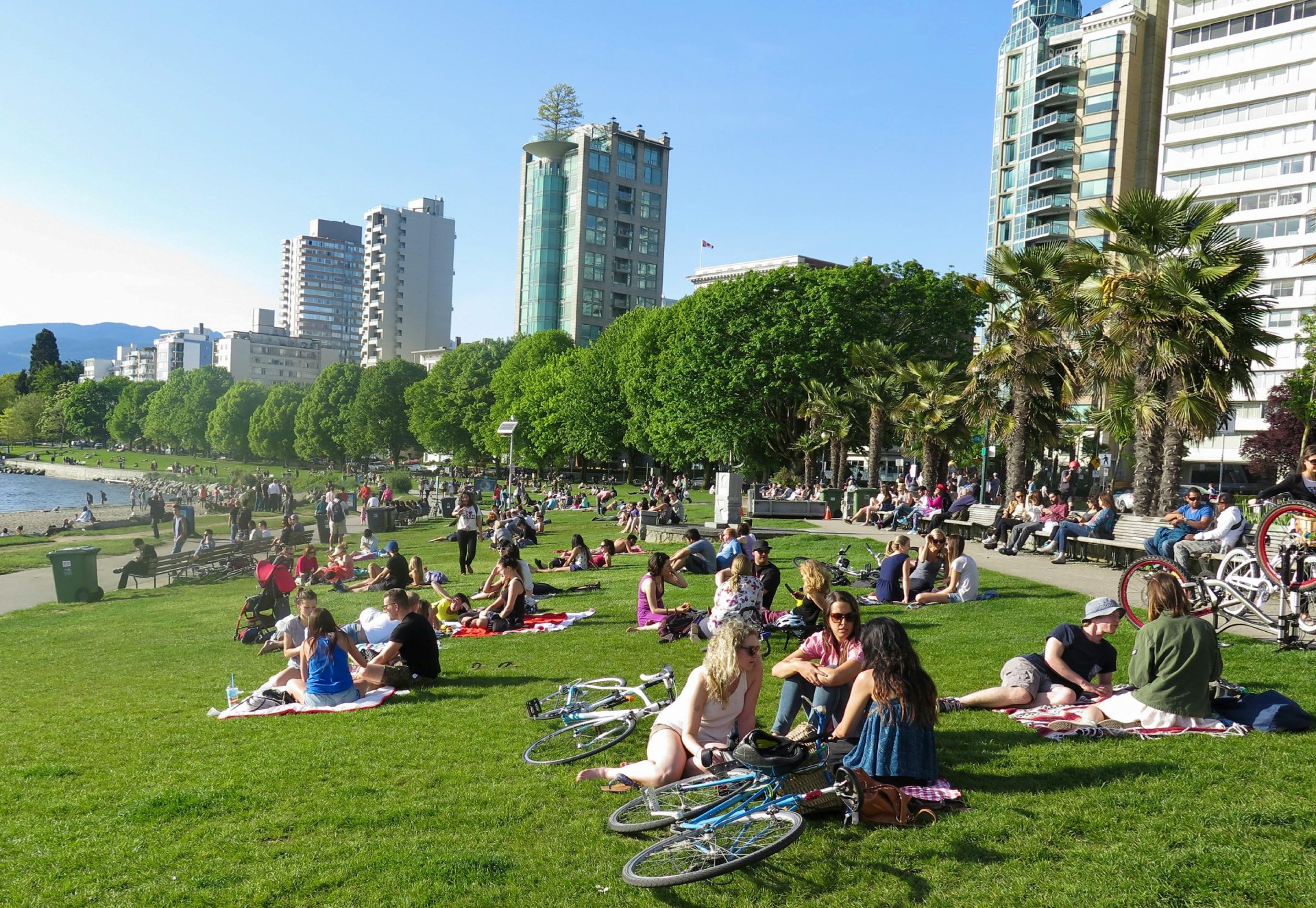
Is Vancouver Safe?: Vancouver offers a different dynamic: a city where luxury meets nature. Framed by mountains and ocean, it provides immediate access to outdoor activities without sacrificing urban comfort.
Vancouver is also considered safe, with crime largely limited to non-violent incidents in specific areas. For most travelers, it feels clean, organized and easy to navigate.
What sets Vancouver apart is its lifestyle. You can attend meetings downtown in the morning and be kayaking, hiking or dining waterfront by the afternoon.
Adventure Travel: Canada’s Defining Advantage
If cities provide the foundation, Canada’s wilderness defines its identity.
Banff National Park: The Icon of Canadian Adventure: Banff National Park is one of the most recognizable landscapes in the world. Located in the Canadian Rockies, it offers turquoise lakes, glacial valleys and alpine trails that attract both casual visitors and serious adventurers.
Summer is the ideal time to visit. Trails open, lakes thaw into vivid blue and wildlife becomes more visible.
Luxury travel is deeply integrated here. High-end lodges, guided experiences and curated excursions allow travelers to explore remote environments without sacrificing comfort.
Banff, however, also illustrates an important reality: beauty often comes with remoteness. Emergency response times can vary and terrain can be unforgiving. Preparation matters, especially for hiking, climbing or backcountry travel.
Vancouver Island: Coastal Wilderness and Refined Escape: On the west coast, Vancouver Island delivers a different kind of adventure. It combines rugged coastline, dense forests and marine wildlife with boutique accommodations and culinary sophistication.
Whale watching, kayaking and coastal hiking define the experience, while towns like Victoria offer a refined, almost British-inspired atmosphere.
Vancouver Island is also a prime example of Canada’s dual identity: remote yet accessible, wild yet comfortable.
Festivals and Cultural Energy
Canada’s summer calendar is a major driver of travel demand.
The Calgary Stampede stands out as one of the most iconic events in North America. Part rodeo, part cultural festival, it transforms Calgary into a celebration of Western heritage, drawing visitors from around the world.
Beyond Calgary, Canada Day on July 1 brings nationwide celebrations, while cities host film festivals, food events and music performances throughout the season.
These events are not just entertainment, they are an entry point into Canadian identity, blending Indigenous heritage, European influences and modern multiculturalism.
Business Travel in Canada: Efficiency Meets Experience
Canada’s infrastructure makes it one of the most efficient destinations for business travel.
Major cities are well-connected through international airports and transportation systems are reliable and modern. Hotels cater to corporate travelers with meeting spaces, connectivity and concierge-level service.
What differentiates Canada is how easily business travel can transition into leisure. A conference in Toronto can be followed by a weekend in Niagara wine country. Meetings in Vancouver can extend into a trip through the Rockies.
This “bleisure” dynamic is increasingly important in global travel trends, where productivity and experience are no longer separate.
Safety, Healthcare and Practical Considerations
Canada is widely regarded as a low-risk destination. Most visits are free of major security concerns, with petty theft being the most common issue.
Natural risks, however, vary by region. British Columbia sits in an active earthquake zone, while tornadoes can occur in central provinces during summer months. Weather conditions can shift quickly in mountainous areas.
Healthcare in Canada is high quality and meets international standards. However, non-citizens should expect to pay out of pocket for services. Emergency rooms can involve wait times and language differences may arise in French-speaking regions like Québec.
Food and water safety are generally excellent, but travelers venturing into wilderness areas should rely on purified or bottled water.
These realities reinforce a broader principle seen across international travel: infrastructure is strong, but not infallible. Even in developed destinations, preparation remains essential.
Summer is peak season, which introduces logistical considerations. Booking flights and accommodations well in advance is essential, particularly for high-demand destinations like Banff National Park or Vancouver Island.
The Global Rescue Connection
No matter how safe a destination may be, emergencies still happen, especially in a country where earthquakes, severe weather and remote mountain terrain are part of the landscape.
Canada illustrates this clearly. In urban environments, Global Rescue has assisted travelers with logistical disruptions, including helping a member replace a lost passport in Toronto. In remote regions, the stakes are higher. A member in the Yukon required coordinated medical care and transport after a serious fall from a horse. In Banff National Park, famed climber Steve House suffered a catastrophic 80-foot fall, requiring complex rescue, hospital care in Calgary and medical transport back to the United States.
Even elite athletes are not immune. Following a high-speed crash at Lake Louise, US Ski Team racer TJ Lanning required emergency airlift to Calgary and subsequent evacuation via specialized aircraft.
These cases reinforce a critical point: geography matters. Whether navigating wilderness or city centers, response coordination is everything. A Global Rescue membership ensures travelers have access to:
Field rescue from remote locations, including mountains, forests and offshore environments
Medical evacuation to the hospital of your choice, not just the nearest facility
24/7 medical advisory support from experienced professionals
Destination reports that provide intelligence on local risks, healthcare systems and infrastructure
This level of support is equally valuable in remote environments like Banff National Park or Vancouver Island and in urban centers such as Toronto, Montreal or Vancouver.
Canada in summer offers extraordinary rewards. With the right preparation, it also offers something more valuable: confidence to explore fully, whether your journey is driven by luxury, adventure or business.
Categories:
Security & IntelligenceTravelApril 30, 2026
Article Highlights:
- 65% of travelers feel safe traveling alone, but security and medical emergencies present unique challenges when you have no companion for support or decision-making assistance.
- Communication barriers during security or medical crises can be life-threatening for solo travelers who cannot advocate for themselves in foreign destinations.
- Adventure activities popular with solo travelers often fall outside standard travel insurance coverage, requiring specialized protection.
- Women traveling alone face distinct medical privacy and safety concerns in healthcare settings across different cultures.
- Comprehensive traveler protection including field rescue, medical evacuation and security extraction is essential when traveling solo to destinations with limited medical infrastructure and potential security threats.
The freedom of solo travel comes with an intoxicating sense of independence, but when that independence meets a medical emergency or security threat, solo travelers face a sobering reality: they are solely responsible for navigating risk in real time.
Dianette Wells, a 55-year-old endurance athlete and seasoned solo traveler, learned this during a hiking accident in New Zealand. “I was three hours from the nearest hospital when I fell,” she recalled. “There was no one to call for help, no one to translate my symptoms, no one to make decisions if I couldn’t.”
According to Global Rescue’s Traveler Sentiment and Safety Survey, 65% of respondents feel safe traveling alone in most destinations. But perceived safety and actual preparedness are not the same. Security risks, including crime, civil unrest, violent conflicts and infrastructure gaps, compound medical emergencies for solo travelers who lack immediate support systems.
“Solo travel is on the rise, but so is traveler vigilance,” said Dan Richards, CEO of The Global Rescue Companies. “Travelers prioritize situational awareness and taking concrete steps to protect themselves when they venture out alone.”
Situational awareness is critical, but it has limits. When a crisis unfolds, especially in unfamiliar environments, solo travelers must rely on preparation, not instinct.
Medical Emergencies and Security Risks for Solo Travelers
The most critical challenge solo travelers face during emergencies is not just the medical condition itself, but the breakdown of communication and the absence of support.
“Any type of travel can be risky,” said Global Rescue member Amanda Burrill, a former Navy lieutenant turned global adventurer, travel writer, and food connoisseur. “But, if you do your research, follow customs, and take the proper travel safety measures, you can bring down the risk level.”
Experiencing severe food poisoning and needing emergency care is a larger challenge if the hospital staff don’t speak your language, especially if you are too sick to use translation apps. It makes explaining any allergies or understanding their questions about your medical history unproductive. This communication failure becomes a security issue as well. Without the ability to advocate for yourself, you are vulnerable to misdiagnosis, improper treatment or exploitation in unfamiliar systems.
Solo travelers must also make high-stakes decisions under pressure:
- Should you accept treatment from an unfamiliar provider?
- Is evacuation necessary?
- Are you in a location where security conditions could deteriorate?
The survey underscores this tension: 52% of experienced travelers are comfortable visiting destinations with limited medical infrastructure, but 48% are not. For solo travelers, that margin is critical because there is no second opinion in the moment.
Cultural differences add another layer. Privacy norms, gender dynamics and medical protocols vary widely. For solo female travel in particular, these differences can create discomfort or even compromise personal security in clinical settings.
Adventure Travel, Insurance Gaps and Security Exposure
Solo travelers often pursue experiences that inherently carry more risk, trekking, diving, endurance events or remote exploration. These activities introduce both medical and security exposure.
Standard travel insurance frequently excludes:
- Adventure sports.
- Remote evacuations.
- Field rescue from non-urban environments.
Wells encountered this gap firsthand. “I assumed my travel insurance covered everything,” she said. “But when I needed medical evacuation from a remote marathon course, I discovered my policy excluded ‘athletic competitions.’”
This gap is not just financial, it’s operational. As highlighted in broader travel protection analysis, traditional insurance typically reimburses after the fact rather than coordinating rescue or extraction in real time. For solo travelers, that distinction is critical. Without immediate coordination, delays in care, transport and decision-making can escalate quickly.
Security-Driven Destination Decisions for Solo Travel
Safety and security increasingly dictate where solo travelers go. The Global Rescue survey found that 45% of travelers say safety “almost always” or “most of the time” influences destination choice.
Solo travelers are prioritizing:
- Countries with reliable healthcare systems.
- Destinations with strong security infrastructure.
- Regions with clear emergency response protocols.
Places like Japan, Portugal, Iceland and New Zealand consistently rank high because they combine medical reliability with stable security environments.
Even in “safe” destinations, however, risks persist. Petty crime, unpredictable natural disasters, transportation disruptions and localized instability can still impact solo travelers, particularly those moving independently without local support networks.
Solo Travel Tips: Building a Personal Security Framework
Solo travelers are not avoiding risk, they are managing it more intelligently.
The Global Rescue survey shows:
- 93% prioritize situational awareness.
- 78% adapt dress and behavior to local norms.
- 68% use vetted transportation services.
Experienced solo travelers recommend:
- Sharing real-time location and itineraries.
- Carrying redundant copies of medical and travel documents.
- Pre-identifying hospitals and emergency contacts.
- Using communication tools that function offline.
Santos emphasizes: “It’s important that someone always knows, at some point during the day, where you physically are.” Security, in this context, is not a single action. It is a layered system of preparation, communication and contingency planning.
The Global Rescue Connection
For solo travelers, the question is not whether to have protection, it’s whether that protection actively manages both medical and security risk. Standard travel insurance may reimburse expenses, but it does not solve the most critical problems solo travelers face:
- Real-time decision-making.
- Communication barriers.
- Extraction from remote or unstable environments.
A Global Rescue membership addresses these gaps directly.
Core benefits include:
- Field rescue from remote or hard-to-reach locations.
- Medical evacuation to the most appropriate hospital, not just the nearest.
- 24/7 medical advisory services for real-time guidance and decision support.
- Destination intelligence on healthcare systems and risk environments.
For solo travelers, this removes the most dangerous variable: isolation during a crisis.
The Security Add-On expands protection beyond medical scenarios into evolving global threats.
This includes:
- Security evacuation and extraction during civil unrest, political instability or natural disasters.
- Real-time security intelligence and alerts tailored to your location.
- Access to security specialists, often with military and special operations backgrounds.
- Guidance on safe movement, sheltering and exit strategies in unstable environments.
In a world where risks are increasingly unpredictable, from sudden protests to border closures or regional conflict, solo travelers are uniquely exposed. The Security Add-On ensures that even when conditions deteriorate rapidly, you are not navigating those risks alone. As global mobility increases and solo travel continues to rise, preparation becomes the defining factor between vulnerability and confidence.
A Global Rescue membership, combined with the Security Add-On, transforms solo travel from a calculated risk into a supported, manageable experience. Because when you travel alone, true security means knowing you’re never actually on your own.
(Lebanon, NH — April 30, 2026) Travelers remain hesitant about space tourism despite the successful return of NASA’s Artemis II mission, according to new data from the Global Rescue Spring 2026 Traveler Sentiment and Safety Survey.
While Artemis II marks a major milestone in reestablishing human lunar exploration and advancing plans for a sustained presence on the Moon, the survey shows most travelers are not ready to follow. Only 24% of respondents say they are very or somewhat interested in traveling to the Moon. In contrast, nearly three-quarters, 74%, report low or no interest, including 57% who say they are not interested at all.
“The Artemis II mission proves what’s possible,” said Dan Richards, CEO of The Global Rescue Companies and a member of the US Travel and Tourism Advisory Board at the US Department of Commerce. “But traveler sentiment makes clear that possibility doesn’t equal demand, at least not yet.”
Cost is a major barrier. Only about 10% would consider paying up to $250,000 for a trip, and fewer than 2% would pay $750,000 or more. At the other end of the spectrum, nearly three-quarters of travelers, 74%, say none of the proposed price points, including options exceeding $1 million, are acceptable.
Even with Artemis II’s success, travelers remain focused on risk. A majority, 56%, cite catastrophic mission failure as their primary safety concern. Being stranded ranks second at 17%, while concerns about getting sick or injured during the trip are relatively low at just under 7%.
“Space travel introduces a category of risk that most travelers have never had to evaluate,” Richards said. “The consequences are absolute, and that heavily shapes perception.”
The survey also found that women are less interested in lunar travel than men, with 62% reporting no interest at all compared with 55% of men. Non-US travelers show somewhat higher interest and slightly more pricing tolerance than US-based respondents, though overall sentiment remains cautious across all groups.
Current commercial space travel is operational but remains limited and expensive. Offerings include short suborbital flights and multi-day orbital missions, including trips to the International Space Station. Despite this progress, costs remain a major barrier, with suborbital seats priced in the hundreds of thousands and orbital missions costing several million dollars.
Artemis II represents a significant step forward in human space exploration. But the survey findings suggest consumer readiness still trails technological capability. For now, while returning to the Moon is no longer theoretical, most travelers remain content to stay Earthbound.
About the Global Rescue Traveler Sentiment and Safety Survey
Global Rescue, the leading travel risk and crisis response provider, surveyed more than 1,200 current and former members between April 7–13, 2026. Respondents shared their attitudes, behaviors and preferences related to travel safety, technology and global mobility.
About Global Rescue
Global Rescue is the world’s leading provider of medical, security, evacuation and travel risk management services to enterprises, governments and individuals. Founded in 2004, Global Rescue maintains exclusive relationships with the Johns Hopkins Emergency Medicine Division of Special Operations and Elite Medical Group. The company has provided medical and security support during every major global crisis over the past two decades.
Categories:
Security & IntelligenceTravelApril 29, 2026
Article Highlights:
- Returning after civil unrest requires security, infrastructure and medical evaluation, not just headlines.
- A destination may appear calm while transportation, hospitals and services remain disrupted.
- Travelers must distinguish between political unrest, crime risk and residual instability.
- Reliable mobility and emergency response capability define true recovery.
- A safe return depends on whether you can exit or adapt quickly if conditions change.
For international travelers deciding when to return to a destination after civil unrest, cartel shoot outs or violent conflict is not a matter of intuition. It is a structured assessment of whether the environment has become operational again.
The central mistake travelers make is equating quieter headlines with restored safety. A destination can appear calm while remaining unstable beneath the surface. Roads may still be blocked. Hospitals may be understaffed. Security forces may be stretched thin.
The correct framework is not “Has the violence stopped?” but “Have the systems that make travel viable returned?”
This distinction is fundamental to modern traveler safety. In today’s global environment—where international travel increasingly involves emerging destinations, off-peak seasons and thinner infrastructure—the margin for error is smaller than ever.
Is the Security Situation Actually Contained?
The first question is whether unrest or violence is contained, reduced and geographically limited.
Conflict rarely affects an entire country evenly. A capital city may experience protests while coastal resorts remain largely unaffected. Border regions may carry elevated tension while major tourism corridors continue operating.
This variability cuts both ways, however. A calm resort does not guarantee broader stability. Nor does a single incident define an entire nation. Travelers need to assess whether unrest is still active, whether it can flare again and whether it is confined to specific zones or capable of spreading unpredictably. They should also consider how authorities are managing the situation and whether control appears durable or temporary.
Understanding this distinction is critical. Political protests that disrupt transportation are fundamentally different from targeted violence, militia activity or anti-foreigner sentiment. Each presents a different risk profile—and a different threshold for safe return.
Has Infrastructure Returned to Normal?
Security is only one layer of risk. Infrastructure is what determines whether travel is workable.
After civil unrest or violent conflicts, transportation systems are often the last to fully recover. Airports may reopen, but that does not mean movement on the ground is reliable. Roads can remain blocked or unsafe, train schedules may be inconsistent and curfews can still limit mobility. Even when services resume, they may do so unevenly, creating gaps that are not immediately obvious to incoming travelers.
A destination cannot be considered stable if travelers cannot move predictably between airports, hotels, medical facilities and departure points. The ability to navigate the environment without disruption is what transforms a place from “open” to “operational.”
This becomes even more important in destinations that already operate with thinner infrastructure. When systems are fragile to begin with, even minor disruptions can have outsized consequences for traveler safety.
Can You Access Reliable Medical Care?
One of the most overlooked factors in post-conflict travel is medical capability.
Travelers often assume that familiarity equates to reliability, especially in destinations that feel close or tourism-oriented. In reality, medical infrastructure can vary significantly within a single country, and those variations become more pronounced after unrest.
Emergency response times may be slower. Hospitals may be operating with reduced staff or limited supplies. Access routes to care may still be compromised, particularly outside major urban centers. Even when facilities are technically open, their ability to deliver advanced care consistently can be uncertain.
The critical question is whether you can depend on timely, competent medical treatment if something goes wrong. If advanced care is not accessible within a realistic distance, or if reaching it depends on unreliable transportation, then the destination is not yet ready for a confident return.
What Kind of Risk Remains?
Not all risks disappear when unrest subsides, and not all risks affect travelers in the same way.
A destination may transition from active conflict to a more complex environment shaped by residual instability. In some cases, protests may continue at a lower intensity, disrupting transportation without directly targeting visitors. In others, opportunistic crime can increase as law enforcement resources remain stretched. Border regions may experience spillover effects from neighboring instability, while certain areas may retain a heightened sensitivity to foreigners.
Understanding what type of risk remains is essential. A traveler moving through a city with occasional demonstrations faces a very different situation than one navigating areas with unpredictable checkpoints or rising post-conflict crime.
The key is not simply whether risk exists, but how it manifests and whether it directly affects movement, access and personal safety.
Can You Recover if Something Goes Wrong?
The final and most critical factor is whether you can recover operationally if conditions deteriorate.
Many travelers focus heavily on whether they can enter a destination but fail to consider whether they can exit or adapt if circumstances change. In a post-unrest environment, this oversight can be consequential.
Recovery depends on having viable options. This includes access to reliable transportation out of the region, the ability to reroute quickly and the presence of secure pathways to airports or borders. It also requires realistic contingency planning, not just assumptions that systems will function as expected.
Traditional travel insurance may address financial loss after an incident, but it does not guarantee operational capability during one. In environments where stability is still returning, the ability to move quickly and decisively is what defines true traveler safety.
Is It Safe To Return?
A destination is ready for return when all of the following conditions are met: the unrest is no longer active in the areas you will use, transportation systems are functioning consistently, credible lodging and local services are operating normally, advanced medical care is accessible within a reasonable distance and you have a clear contingency plan if conditions change.
Anything less introduces unnecessary risk. The guiding principle is simple: Return when the destination is not just quieter, but operational again.
The Global Rescue Connection
Even when conditions appear stable, international travel after civil unrest carries inherent uncertainty. Situations can shift quickly, infrastructure can fail and local resources may not meet expectations in an emergency.
A Global Rescue membership provides a critical layer of support that bridges these gaps worldwide. Members have access to field rescue from the point of illness, injury or insecurity, ensuring that help reaches them wherever they are, not just after they reach a hospital. Medical evacuation services transport members to the hospital of their choice, rather than the nearest available facility, which can significantly impact outcomes.
Equally important is 24/7 medical advisory support. Travelers can consult with experienced medical professionals before and during their trip, gaining clarity on symptoms, treatment options and local care standards. Destination Reports provide detailed intelligence on security conditions, infrastructure reliability and medical capabilities, helping travelers make informed decisions before departure.
For those navigating higher-risk environments, the Global Rescue Security Add-On extends protection further. It includes security advisory services and, when necessary, physical extraction in situations involving civil unrest, unpredicted natural disasters, government evacuation orders or credible threats of bodily harm.
In a world where travel conditions can change rapidly, preparation is no longer optional. A Global Rescue membership ensures that wherever you go, you have the capability to respond, adapt and recover—turning uncertainty into a managed risk rather than an uncontrolled one.
Categories:
Places & PartnersTravelApril 28, 2026
Article Highlights:
- Japan in summer delivers unmatched festivals, cultural immersion and outdoor adventure despite heat and humidity.
- Hokkaido provides a cooler, more comfortable escape with luxury nature experiences and fewer crowds.
- Mount Fuji climbing season peaks in summer, offering one of Japan’s most iconic adventure experiences.
- Urban centers like Tokyo and Kyoto become intensely hot, requiring strategic planning for comfort and safety.
- Obon season creates peak travel demand, making early booking and logistics planning essential.
Japan in summer (June through August) is a study in contrasts. It is vibrant, kinetic and culturally rich, yet physically demanding. Travelers encounter dazzling festivals, world-class cuisine, pristine natural landscapes and cutting-edge urban environments, all layered with heat, humidity and seasonal weather challenges.
For luxury travelers, adventure seekers and business professionals alike, summer presents both opportunity and complexity. Understanding how to navigate this season transforms Japan from a potentially exhausting destination into one of the most rewarding travel experiences in the world.
The Japanese summer begins with tsuyu, the rainy season that typically stretches from June into mid-July. During this period, persistent rainfall, overcast skies and high humidity dominate much of the country, particularly in Tokyo and Kyoto. While not constant, the rain can be heavy and disruptive.
By late July and August, the climate shifts dramatically. Temperatures frequently exceed 90°F/32°C, with humidity levels that amplify the physical strain. Urban heat retention in cities like Tokyo and Kyoto makes conditions feel even more intense.
August also marks the beginning of typhoon season. While not every trip is affected, storms can disrupt flights, trains and regional travel plans with little notice.
This climate profile requires strategic planning. Travelers who treat Japan like a temperate summer destination often struggle. Those who adapt their itineraries, early mornings, indoor midday activities and regional diversification, unlock a far more comfortable experience.
Why Summer Still Works: Culture at Full Volume
Despite the climate challenges, summer is when Japan feels most alive.
Festival season defines the experience. Traditional matsuri take over cities and towns, with processions, music, street food and fireworks creating a uniquely immersive cultural environment. Events like Kyoto’s Gion Matsuri and nationwide fireworks festivals transform ordinary evenings into unforgettable spectacles.
The Obon holiday in mid-August is particularly significant. This period, when many Japanese return to their hometowns to honor ancestors, creates a surge in domestic travel. Trains fill, flights sell out and hotel prices rise. For travelers, Obon offers both an authentic cultural window and a logistical challenge.
Handled correctly, this is not a drawback, it is access to Japan at its most traditional and communal.
Hokkaido: Japan’s Summer Escape Valve
For those seeking relief from the heat, Hokkaido is the strategic solution.
Japan’s northernmost island operates on a different climate profile. Summers are mild, with lower humidity and cooler temperatures, making it ideal for outdoor exploration. Lavender fields in Furano, hiking trails in Daisetsuzan National Park and coastal landscapes deliver a distinctly different Japanese experience.
Luxury travelers increasingly incorporate Hokkaido into summer itineraries for precisely this reason. High-end ryokan stays, farm-to-table dining and expansive natural settings provide both comfort and exclusivity.
From a planning perspective, Hokkaido is not just an optional add-on, it is a counterbalance that makes a summer itinerary viable.
Mount Fuji: Peak Season for an Iconic Climb
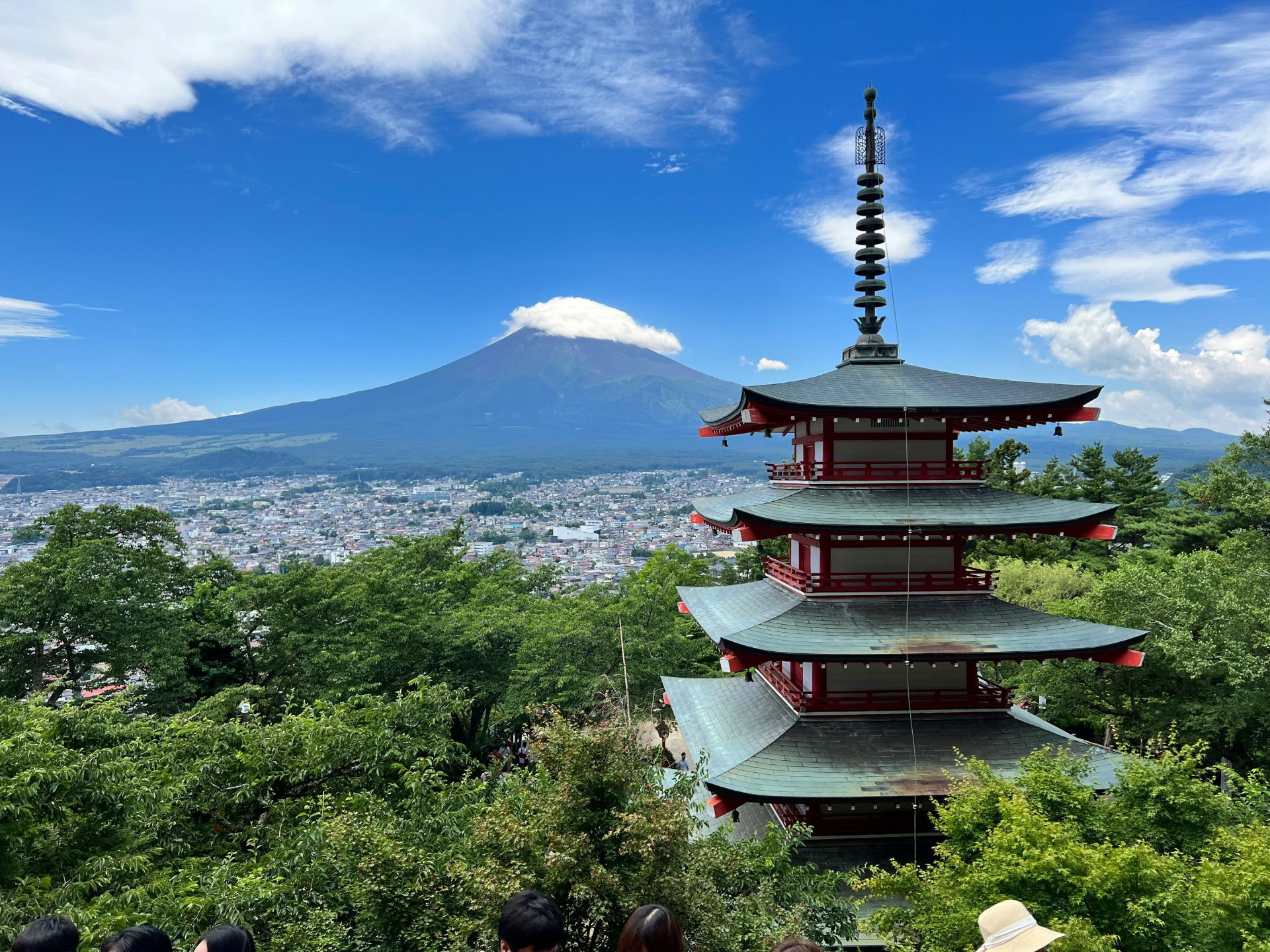
Summer is the official climbing season for Mount Fuji, typically running from early July through early September. Outside of this window, conditions are too dangerous for most travelers.
Climbing Fuji is less about technical mountaineering and more about endurance and preparation. Trails are well-marked, mountain huts provide support and thousands attempt the ascent each year.
However, the experience is not without risk. Weather conditions can change rapidly, altitude sickness is common and overcrowding during peak periods can create bottlenecks on narrow trails. Proper planning, timing, gear, hydration and pacing, is essential.
For adventure travelers, Fuji is a defining experience. For others, viewing the mountain from surrounding regions such as Hakone or the Fuji Five Lakes offers a more relaxed alternative.
Tokyo and Kyoto: Urban Energy Under Pressure
Summer in Tokyo and Kyoto demands a different mindset.
These cities remain central to any Japan itinerary, particularly for business and luxury travel, but they require adaptation. The combination of heat, humidity and dense urban environments can quickly become overwhelming.
The solution lies in structuring the day intelligently. Early mornings are ideal for sightseeing, while midday hours are better spent in museums, restaurants, shopping districts or business meetings in climate-controlled environments.
Tokyo’s infrastructure excels under pressure. Efficient public transportation, ubiquitous convenience stores and advanced urban planning help mitigate discomfort. Kyoto, while culturally unmatched, can feel more physically taxing due to its layout and traditional architecture.
Luxury accommodations play a critical role here. High-end hotels provide not just comfort, but recovery, space, cooling and service that allow travelers to recharge between excursions.
Business Travel in Summer: Efficiency Meets Environment
Japan remains one of the world’s most important business travel destinations and summer does not slow that pace.
However, business travelers must account for environmental factors that influence productivity. Heat fatigue, crowded transit systems during Obon and potential weather disruptions all impact scheduling.
The advantage lies in Japan’s reliability. Even during peak periods, transportation systems remain precise, cities remain safe and services remain consistent. Planning buffers into schedules, particularly during Obon or typhoon season, ensures continuity.
From a strategic standpoint, pairing business travel with leisure experiences, such as extending a trip to include Hokkaido or a cultural stay in Kyoto, maximizes the value of being in-region.
Safety and Risk: Low Threat, Real Considerations
Japan maintains a low overall security risk profile, with low crime rates, efficient public services and strong infrastructure. This makes it one of the safest destinations globally for travelers.
However, “low risk” does not mean “no risk.”
Petty crime, particularly in nightlife districts such as Shinjuku or Roppongi, does occur. Drink spiking and theft have been reported in certain areas. Crowded trains can also present issues, including occasional reports of harassment.
Natural hazards represent a more significant consideration. Japan sits on the Pacific Ring of Fire, making earthquakes, volcanic activity and typhoons part of the environment. These events can disrupt travel and, in rare cases, create life-threatening situations.
Outdoor activities, including hiking and climbing, introduce additional exposure. Terrain can be steep, weather unpredictable and rescue resources location-dependent.
Medical care in Japan is high quality, but access can be complicated by language barriers and upfront payment requirements for non-residents.
Prepared travelers treat Japan not just as a destination, but as an operating environment that requires awareness and planning.
Practical Travel Strategy for Summer Success
Success in Japan during summer comes down to tactical adjustments.
Geography matters. Combining urban centers with cooler regions like Hokkaido or mountainous areas balances exposure to heat.
Timing matters. Early starts and late evenings maximize comfort while avoiding peak heat hours.
Preparation matters. Lightweight clothing, hydration strategies, rain gear for tsuyu and contingency planning for typhoons all contribute to a smoother experience.
Logistics matter. Booking transportation and accommodations early, especially around Obon, prevents avoidable friction.
Most importantly, expectations matter. Japan in summer is not about ease, it is about immersion. Travelers who embrace that reality tend to find the experience far more rewarding.
The Global Rescue Connection
No matter how safe a destination may be, emergencies still happen, especially in a country where earthquakes, typhoons and remote mountain trails are part of the landscape.
Japan’s infrastructure is world-class, but when incidents occur, whether on Mount Fuji, in rural Hokkaido or in dense urban environments like Tokyo or Kyoto, the complexity of response can escalate quickly.
Consider a real case: a US traveler suffered a severe motorcycle crash in Hokkaido, resulting in multiple fractures, internal injuries and a traumatic brain bleed. After initial stabilization in regional hospitals, physicians determined advanced care was required outside Japan. Global Rescue coordinated the medical review, arranged international transport and ensured continuity of care in Taiwan, where recovery continued under appropriate specialists.
In another case, a traveler injured in Japan required coordinated transport, medical clearance and repatriation to the United States for follow-up care. These are not extreme outliers, they are representative of how quickly routine travel can become medically complex.
A Global Rescue membership addresses these realities directly. Members have access to:
- Field rescue from the point of injury or illness.
- Medical evacuation to the hospital of their choice.
- 24/7 medical advisory support from experienced professionals.
- Destination Reports that provide critical intelligence on risks, infrastructure and preparedness.
Whether navigating remote terrain near Mount Fuji or managing an incident in a major city, this level of coordination bridges the gap between local capability and global standards of care.
Japan rewards travelers with depth, precision and cultural intensity. A Global Rescue membership ensures that if something goes wrong, that same level of precision extends to your safety, care and recovery.
(Lebanon, NH – April 27, 2026) — Virtually no travelers believe international travel is safer today than it was a year ago, according to new Global Rescue survey data—a striking finding that underscores how deeply risk has become embedded in the global travel mindset.
According to the Spring 2026 Global Rescue Traveler Sentiment and Safety Survey, less than 1% of travelers say they are less or much less concerned about their personal safety when traveling internationally. At the same time, 56% report being more or much more concerned, while 42% say their level of concern has not changed, revealing a stark divide between rising anxiety and sustained unease.
“Travelers are not seeing improvement in the global risk environment,” said Dan Richards, CEO of The Global Rescue Companies. “What we’re observing is a split between those who feel conditions are worsening and those who believe risks remain persistently elevated—but almost no one sees the world as getting safer.”
That perception reflects the steady influence of global instability, including ongoing conflict in the Middle East, the prolonged Russia-Ukraine war and persistent cartel-related violence in parts of Mexico. Against this backdrop, the finding that virtually no travelers feel safer is both notable and entirely understandable.
The divide becomes more pronounced when viewed across gender lines. 61% of women report being more or much more concerned, compared to 53% of men, highlighting a higher level of risk sensitivity among female travelers. Meanwhile, men are more likely to report no change in their outlook, with 45% saying their level of concern is unchanged versus 37% of women, suggesting a greater degree of normalization among male respondents.
Geographic differences are more subtle but still revealing. Among US-based respondents, 56% say they are more or much more concerned, closely mirroring the global average, while 41% report no change. Among non-US-based respondents, concern is slightly lower but still dominant, with 52% reporting increased concern and 45% indicating no change.
Across all segments, the absence of any meaningful decline in concern stands out. The data shows that while travelers may differ on whether risks are increasing or holding steady, there is near-universal agreement that they are not diminishing.
Taken together, the findings point to a global travel environment where elevated risk is no longer episodic—it is expected. For a majority of travelers, concern is growing. For nearly everyone else, it is not improving.
“Stability in perception is not the same as confidence,” Richards said. “When nearly half of travelers say their concerns haven’t changed—and virtually none say they’ve decreased—it tells you that elevated risk has become the baseline expectation.”
About the Global Rescue Traveler Sentiment and Safety Survey
Global Rescue, the leading travel risk and crisis response provider, surveyed more than 1,200 current and former members between April 7 – 13, 2026. Respondents shared their attitudes, behaviors and preferences related to travel safety, technology and global mobility.
About Global Rescue
Global Rescue is the world’s leading provider of medical, security, evacuation and travel risk management services to enterprises, governments and individuals. Founded in 2004, Global Rescue maintains exclusive relationships with the Johns Hopkins Emergency Medicine Division of Special Operations and Elite Medical Group. The company has provided medical and security support during every major global crisis over the past two decades.