Article Highlights:

  • Remote “Outer Rim” destinations are growing in popularity as travelers seek new and lesser-known experiences.
  • Limited infrastructure in places like Patagonia, Mongolia and Antarctica increases risk and self-reliance.
  • Technology like GPS and smartphones enhances travel — but cannot replace preparation.
  • Medical emergencies in remote regions involve complex evacuations and delayed response times.
  • Global Rescue provides field rescue, evacuation and advisory services where traditional systems fall short.


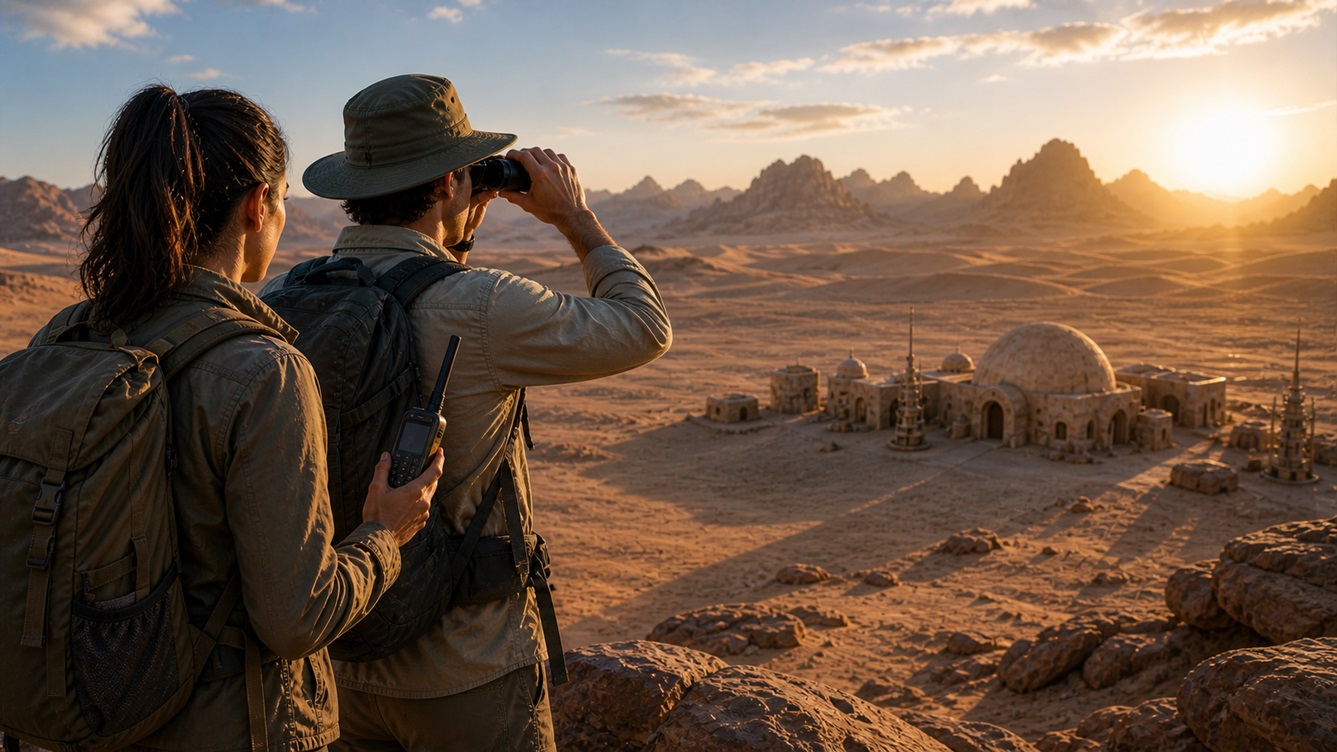
In Return of the Jedi, Luke Skywalker doesn’t hesitate when the mission takes him to Tatooine. He understands the environment, the risks and the stakes. When he walks into Jabba the Hutt’s palace to rescue Han Solo, there is no illusion of safety. It’s remote, unpredictable and unforgiving.

That cinematic moment mirrors a growing trend in modern international travel. Increasingly, international travelers are choosing destinations that feel less like Coruscant and more like the Outer Rim — remote, raw and far from the safety net of developed infrastructure.

According to the Global Rescue Winter 2026 Traveler Sentiment and Safety Survey, 41% of travelers say visiting somewhere new is their top priority, while 44% are actively seeking more remote destinations. This shift reflects a deeper cultural change. Travelers are no longer satisfied with familiar routes. They want Patagonia’s windswept isolation, Mongolia’s vast steppe and Antarctica’s extreme remoteness. They want adventure.

But like Luke on Tatooine, they are stepping into environments where preparation — not optimism — determines outcomes.


The Allure of the Outer Rim

There is a reason the Outer Rim exists in Star Wars storytelling. It represents the edge of control, where systems break down and self-reliance becomes essential.

Modern travel has its own version of this frontier. Patagonia’s terrain is defined by violent winds, glacial fields and unpredictable weather that can shift in minutes. Mongolia offers immense distances, sparse infrastructure and exposure to extreme seasonal temperatures that swing from searing heat to subzero cold. Antarctica presents the ultimate isolation — no permanent population, limited access points and conditions that can ground aircraft or ships for days.

But the Outer Rim isn’t limited to the Southern Hemisphere. Iceland’s Hornstrandir Nature Reserve is one of Europe’s most isolated wilderness areas, a 220-square-mile expanse of cliffs and fjords with no permanent residents and minimal access. Weather conditions shift rapidly, evacuation routes are limited and wildlife thrives precisely because human infrastructure does not.

In Tanzania, Mahale Mountains National Park offers a different kind of remoteness. With no roads and access limited to small aircraft or long boat transfers across Lake Tanganyika, every movement is deliberate. Dense jungle terrain, heat and isolation mean that even minor incidents can escalate quickly.

The Outer Hebrides off Scotland’s western coast present yet another variation. These islands are exposed to the full force of the Atlantic, where wind, rain and cold conditions can change rapidly. The landscape is beautiful but unforgiving, and the environment demands respect and preparation.

These destinations offer something increasingly rare: true disconnection. No crowds. No overbuilt tourism systems. No predictable safety net. That appeal is reflected in traveler preferences. More than half of travelers (52%) now favor lesser-known destinations with fewer crowds. But the tradeoff is clear. The farther you move from established tourism hubs, the more you enter an environment where local systems may not support you when something goes wrong.


Limited Infrastructure: The Reality Behind the Adventure

On Tatooine, there is no centralized authority managing safety. No emergency response system. No advanced medical facilities. Remote destinations on Earth operate in similar ways, just with fewer sandcrawlers.

Infrastructure gaps show up in multiple forms. Medical facilities may be basic or nonexistent. Transportation networks can be unreliable or weather-dependent. Communication systems are often inconsistent, especially outside major settlements. Even timing matters. The rise of off-peak and “hidden season” travel means more travelers are visiting destinations when services are reduced.

That combination — remote location plus limited infrastructure — creates a narrow margin for error. A twisted ankle in a city is an inconvenience. The same injury in the Hornstrandir cliffs, the Mahale jungle or the Antarctic ice becomes a logistical problem that may take hours — or days — to resolve.


Self-Reliance: The Core Skill of Outer Rim Travel

Remote travel requires a different mindset. It is not about efficiency or convenience. It is about resilience. Travelers entering remote environments must assume responsibility for their own safety in ways that are unnecessary in developed destinations.

That includes understanding terrain, weather patterns and transportation options. It means carrying backup plans for navigation, communication and documentation. It means preparing for delays, disruptions and the possibility that help may not arrive quickly. This level of preparation is not excessive. It is appropriate for the environment.

In Star Wars terms, this is the difference between a casual visitor and someone who understands how to operate in the Outer Rim.


When Things Go Wrong: Evacuation Complexity

The most significant difference between urban travel and remote travel is what happens when something goes wrong. In developed destinations, emergency response systems are structured and relatively fast. In remote regions, response times are longer, coordination is more complex and outcomes depend heavily on logistics.

Evacuations in these environments are rarely straightforward. A field rescue may involve improvised transport, local teams or delayed aerial extraction due to terrain or weather. From there, a traveler may need to be moved to a regional facility, then transferred again to a major hospital — sometimes across borders. Every step introduces time, risk and dependency on conditions outside the traveler’s control.

A real-world example underscores how quickly this complexity unfolds. While trekking Indonesia’s remote Mt. Tambora, experienced hiker Cheryl Gilbert suffered a severe leg injury after falling on a steep descent. With the dense jungle preventing helicopter access, a team arrived and carried her five kilometers by a makeshift stretcher to base camp, where ground transport could begin. From there, she was ultimately moved across the country — spanning thousands of miles and multiple islands — to reach appropriate medical care in Jakarta.

This type of multi-stage evacuation is not unusual in remote environments. It illustrates a critical reality: extraction is rarely immediate, rarely simple and often requires coordination across terrain, transportation modes and medical systems.

Traditional travel insurance typically does not address this operational complexity. It focuses on reimbursement rather than response, often activating only after a traveler reaches a medical facility. In remote destinations, that gap matters. Because when help is not nearby, the challenge is not just treatment — it is getting there.


The Modern Traveler: Bold, But Not Always Prepared

One of the most striking insights from recent travel data is not just where people are going, but how they are thinking about risk. Travelers are increasingly willing to embrace uncertainty. Nearly one-third are pursuing longer trips, and 27% are actively seeking riskier destinations.

This reflects confidence, but it also introduces exposure.

The modern traveler is more adventurous than ever. But adventure without preparation is not exploration — it is vulnerability. The lesson from Return of the Jedi is not just that Luke succeeds. It’s that he succeeds because he understands the environment he’s entering.

Traveling to remote destinations is not inherently dangerous. But it is fundamentally different. It requires a shift in mindset from consumption to participation. From convenience to capability. From assumption to awareness.

In these environments, the rules change. Infrastructure is limited. Technology is imperfect. Response times are longer. But the reward is equally significant. These destinations offer experiences that cannot be replicated in traditional tourism corridors. They provide perspective, scale and a sense of discovery that defines why people travel in the first place.

The key is aligning ambition with preparation. Because in the Outer Rim — whether it’s Tatooine or Antarctica — conditions don’t adjust to you. You adjust to them.


The Global Rescue Connection

Remote travel offers extraordinary rewards, but it also introduces variables that travelers cannot control. When medical emergencies, injuries or security situations occur in isolated environments, local resources may be limited, delayed or insufficient.

A Global Rescue membership addresses this gap directly.

Members have access to field rescue from the point of illness or injury, even in remote and hard-to-reach locations. Whether trekking in Patagonia, navigating the fjords of Iceland, exploring Tanzania’s remote parks or traveling in Antarctica, Global Rescue coordinates extraction using the appropriate assets — helicopters, aircraft or ground teams — based on the situation.

Medical evacuation ensures transport not just to the nearest facility, but to the most appropriate hospital capable of providing necessary care. If required, members can be repatriated to their home hospital for continuity of treatment.

Equally important are medical advisory and telehealth services, which allow travelers to consult with experienced professionals in real time, regardless of location.

For travelers venturing into the modern equivalent of the Outer Rim, this level of support transforms uncertainty into capability. Because the goal of travel is not just to explore boldly. It is to return safely.