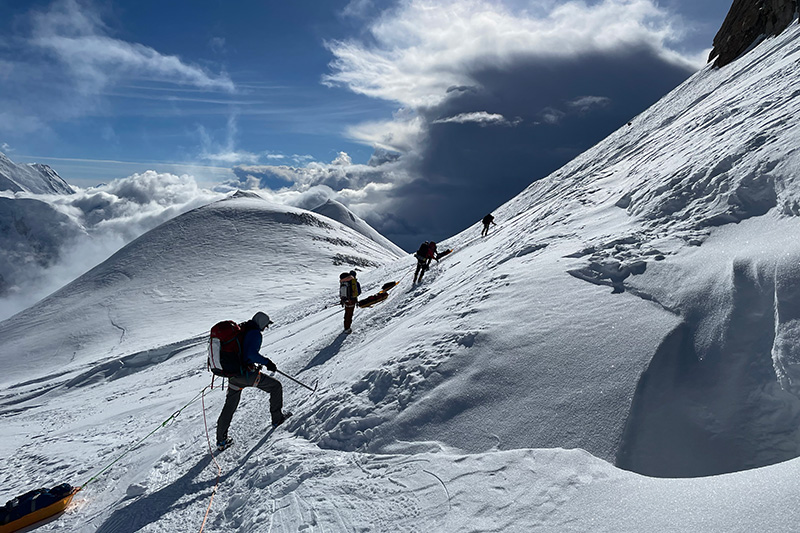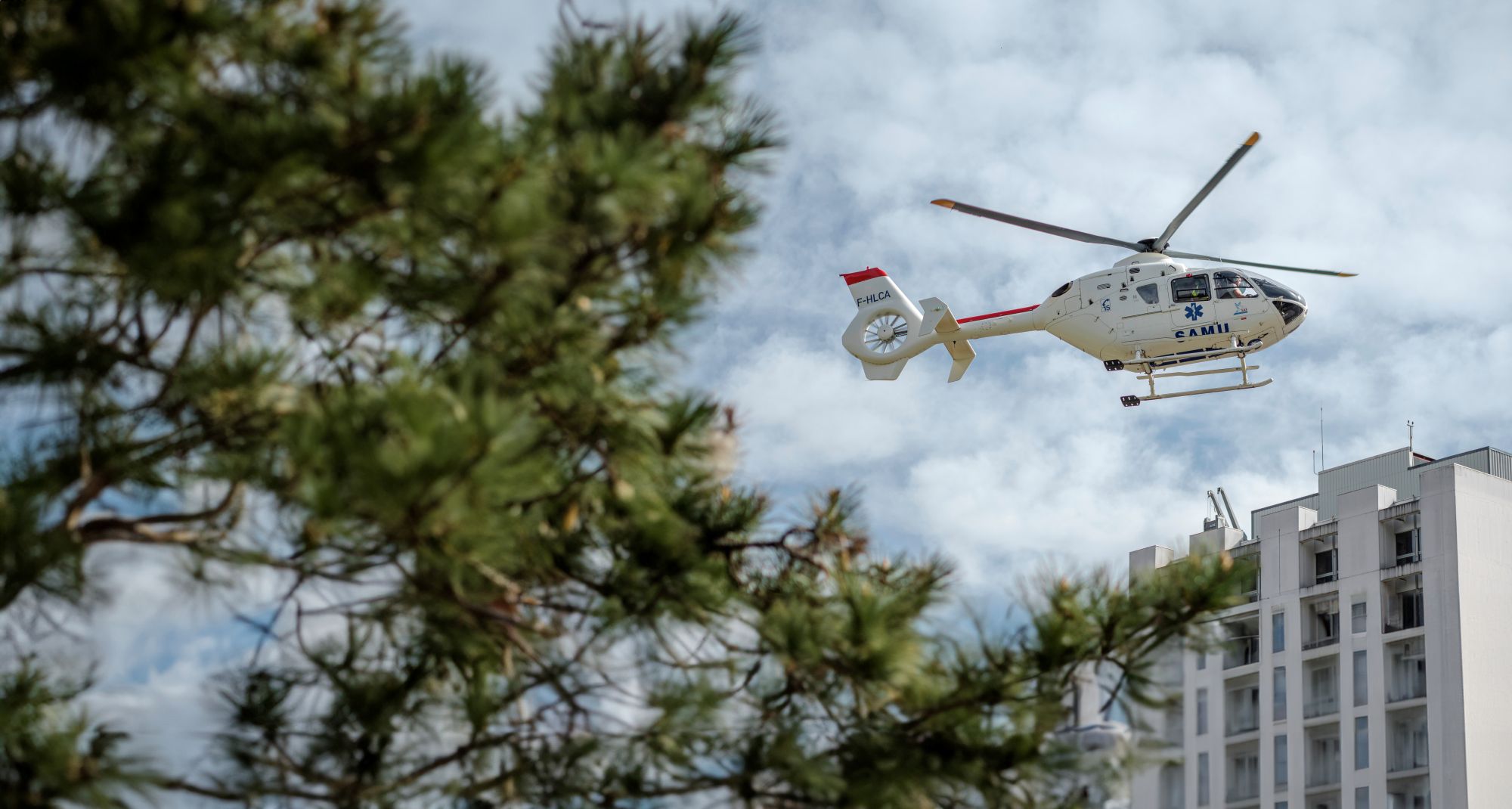
Lebanon, N.H. – February 1, 2022 – The 2022 Winter Olympics in Beijing, China will be unlike any other because of the COVID-19 threat. While the U.S. Ski & Snowboard team prepares for the celebrated international competition, Global Rescue is poised to provide emergency support in the event of illness or injury among any of the team members, as the company did during the 2006, 2010, 2014, 2016 and 2018 Winter Games. “As we have for the past five Winter Games, we have emergency action plans in place for the U.S. Ski and Snowboard team,” said Dan Richards, Global Rescue CEO.
“Chinese officials have implemented a closed-loop policy to protect against the spread of the disease. Global Rescue medical and security experts will not be allowed on-site, but members of the U.S. Ski & Snowboard team will have access to Global Rescue’s on-staff medical experts for real-time consultations with U.S.-based medical professionals who will help sort out any injuries or illnesses, including COVID-19,” Richards said.
Global Rescue has helped protect the health and safety of U.S. Ski & Snowboard members since 2006. “Global Rescue provides valuable travel protection, security and medical resource services for U.S. Ski & Snowboard athletes and staff as they travel abroad to compete on the world stage,” said Sophie Goldschmidt, President and CEO, U.S. Ski & Snowboard.
In the event of a major injury or illness — like a head injury or COVID-19 — U.S. Ski & Snowboard members will be able to supplement on-site diagnoses and treatment with Global Rescue on-staff medical experts.
“With hotline access to medical advisory and a host of other services, the Global Rescue safety net provides an additional layer of protection beyond the closed loop Chinese officials have installed. Global Rescue medical experts can assess the team member’s circumstance, provide additional medical guidance and arrange for their medical evacuation back to their home hospital of choice in the United States, if necessary,” Richards said.
Official Chinese resources will handle ground and air transports for medical evacuations. “Any emergency medical situation arising that requires outside, non-Chinese support will be handled on a case-by-case basis by international government and medical officials. It’s all quite unprecedented,” Richards said.
“U.S. Ski & Snowboard athletes, coaches and staff are introduced to Global Rescue throughout many membership area touchpoints, including information contained in membership and sport education emails and through the benefits platform at my.usskiandsnowboard.org,” said Tom Horrocks, U.S. Ski & Snowboard.
Global Rescue’s medical emergency and evacuation role during the Olympics in China is the larger focus compared to the safety and security concerns during the 2016 Winter Olympics in Sochi when threats from terrorism were looming. But both concerns require similar action.
“A threat is a threat, so there really is no difference in the need to leave a situation at a moment’s notice, whether it is an accident, medical emergency, or pandemic. Getting out quickly and efficiently is the key,” Horrocks said.
Contact Bill McIntyre at bmcintyre@globalrescue.com or 202.560.1195 (phone/text) for more information.
About Global Rescue
Global Rescue is the world’s leading provider of medical, security, evacuation and travel risk management services to enterprises, governments and individuals. Founded in 2004, Global Rescue has exclusive relationships with the Johns Hopkins Emergency Medicine Division of Special Operations and Elite Medical Group. Global Rescue provides best-in-class services that identify, monitor and respond to client medical and security crises. Global Rescue has provided medical and security support to its clients, including Fortune 500 companies, governments and academic institutions, during every globally significant crisis of the last decade. For more information, visit www.globalrescue.com.
February 1, 2022
Not every Global Rescue member needs an emergency evacuation. Some are confidently pursuing their dreams knowing they have a Global Rescue membership. Take, for example, this unlikely mountaineer from Mumbai who summited Mount Everest in 2021 after beating COVID-19 a few days before summiting. He also completed the trek using only eco-friendly means.
Harshvardhan Joshi may be one of the most talked-about mountaineers to summit Everest in 2021. Google his name and the headlines populate the proof: “25-yr-old conquers Everest, days after recovering from Covid-19,” and “Indian climber Harshvardhan Joshi claims historic ‘green summit’ of Everest.” In the last year alone, he’s delivered 17 motivational speeches, including a recent TEDx Talk about the power of grit. He even has his own Wikipedia page.
So, it’s hard to believe the soft-spoken 26-year-old native of Vasai, India (located on the outskirts of Mumbai), is also the unlikeliest of mountaineers. He’ll be the first to admit it, too.
“If you had told me at 15, 16, 17 years old that I would have done this, I wouldn’t have believed it either,” said Joshi, who goes by the nickname “Harsh.” “Back then, I hadn’t ever run a full 100 yards in my life.”
That’s what makes the story of 26-year-old Joshi — a Global Rescue member since 2019 — so fascinating. How did this IT engineer, who long preferred academia to the outdoors, become a renowned endurance athlete, having summited major peaks like Stok Kangri (6,153 meters/20,187 feet), Lobuche East (6,119 meters/20,075 feet) and, now, Mount Everest (8,848 meters/29,032 feet)? Global Rescue sat down with him to find out.
Joshi’s Journey to Mountaineering

“A lot of people who see me now, especially on social media, think I was always this outdoorsy person,” said Joshi. But, given his humble background in a lower-middle-class family, he was always more concerned with excelling in school in order to secure a solid living. At age 15 — just after he completed 10th grade — he had already started his own business, assembling and selling computers, while pursuing a degree in IT engineering.
“There were a group of doctors who became my clients, then my friends,” said Joshi. “They were also avid trekkers and, one day, took me on a hike to a nearby sanctuary.”
That first visit to the 85-square-kilometer Tungareshwar Wildlife Sanctuary — where he still regularly trains today — was what began his love affair with the outdoors. He started training and learning about wilderness survival and, after borrowing his doctor friends’ gear, completed his first Himalayan trek in 2014. By age 18, he had made it his goal to climb Everest. He wasn’t sure when it would happen; he just knew he couldn’t do it if he went for his MBA in the U.S. like he had originally planned.
“I would rather work toward climbing Everest. I knew it would teach me more about life,” he said. “I realized adventure travel is a much richer and better learning experience.”
He decided, before furthering any career plans, Everest would come first.
Mission Mount Everest Starts…Then Stalls
Over the next several years — between 2014 and 2019 — he completed nine separate month-long courses in outdoors and mountaineering, developed and committed to a rigorous training regime, honed his skills on other challenging Himalayan mountains and also worked as a mountaineering guide in Ladakh. He began fundraising and set his Everest expedition — which he named Sangharsh Mission Mount Everest (“sangharsh” translating to “challenges” in Sanskrit) — for the 2020 spring climbing season.
Unfortunately, it would be canceled on account of the pandemic.
[Related Reading:
What You Need to Know About the 2022 Climbing Season]
“For two months in lockdown, I couldn’t run or go outside,” said Joshi. “I thought, ‘Oh no, what if I have an existential crisis?’”
What helped was channeling his energy into a different goal: training for, self-organizing and completing his first triathlon. On October 10 — a date he selected because it was World Mental Health Day — he completed the 70.3-mile venture from Palghar within eight hours.
Conquering Everest Despite Another COVID Curveball
Flash-forward to spring of 2021 and Joshi’s Everest expedition was back on. But, on May 8, after a month of patiently waiting at base camp and mere hours of setting off for the summit, he tested positive for COVID-19 (confirmed by two rapid antigen tests).
“I thought ‘I cannot give up right away and go down: I am acclimated to this altitude, Katmandu is in a bad state, I have extra supplemental oxygen,” he said.
Asymptomatic and fully vaccinated, he elected to isolate in his tent for 11 days, reminding those who questioned him that he had Global Rescue, and, if he had even the smallest complication, he wouldn’t hesitate to utilize the emergency rescue.
After 10 days of isolation, he was testing negative and the emergency care unit at base camp that had been monitoring his breathing cleared him to continue his expedition. The weather window came on May 19, and, that night, he and his two high-altitude guides, Furte Sherpa and Anup Rai, set off for the summit.
His original plans were to scale Everest, then Lhotse — which would make him the first Indian to complete that traverse — but the team decided to switch the order since Everest’s neighbor would have fewer climbers. By May 21, he had reached Camp 3. This would have been where he went for Lhotse, but with the weather window closing due to a second cyclone, he had to make the tough decision to scrap Lhotse altogether and simply go for Everest.
[Related Reading:
A Mount Everest Evacuation for “The Cuban Mountaineer]
Despite 50-mile-per-hour winds, on May 22 at 9:40 p.m., the team made their way from Camp 4 to the summit. “It was very uncomfortable,” said Joshi. “It felt like we were in a blender that was on the moon.”
At 6:40 a.m. the next day, they reached the summit. While the celebration was short — only 15 minutes as the weather was worsening and Joshi was growing more sleep-deprived by the minute — he was grateful for getting his chance and making it.
“We were on a time bomb this year,” he said. “Many good people had to retreat. I’m thankful I didn’t have to.”
Scaling Mountains Sustainably to Promote Solar Power

The other feature setting Joshi’s Everest mission apart was the way in which he did it: powered completely by solar energy to bring attention to clean, renewable energy. It’s a cause he can relate to: He’s seen the effects of climate change firsthand during his time in Ladakh, as well as witnessed how many remote villages in the Himalayas lack electricity.
“Without electricity, these people lose at least 12 hours of their life a day. It deprives them of education, health care and communication, keeping them in poverty,” said Joshi.
“Solar, renewable energy can solve problems not just related to climate change but also on a socio-economic front.”
During his Everest expedition, he took three 40-watt solar panels with a battery system to power base camp; a smaller, portable system, which he hoofed up to Camp 2 (6,400 meters/21,000 feet); then, finally, he carried a solar-charged power bank until the final camp in the “death zone” at 8,000 meters.
After he reached the summit, Joshi donated the solar panels used during the expedition to local Nepalese villages that do not have electricity. He was also able to give additional donated panels to power 10 homes in some of the most remote regions of the Himalayas: Turtuk and Ladakh in India, the Makalu region in Nepal and a school in the village of Dharharwa in Bihar.
“The message I want to spread: If we can stay solar for two months in one of the most hostile environments on Earth, imagine where else we can bring this technology and what wonders it can do?”
What’s Next for the Mountaineer from Mumbai
While his Everest expedition is complete, Joshi is hardly resting on his laurels. He’s currently working on a book, studying for the GMAT, spending as much time in his local outdoors as he can and forming plans to move to the U.S., which he calls his next “Everest.” There’s also a documentary about him in the works which should premiere sometime in spring of 2022 (see the trailer here).
Of course, he’s still chasing new mountaineering goals, including promoting mountain climbing among people of color and attempting two more big Himalayan mountains in the fall of 2022 (as for which ones, he is keeping that under wraps for now).
“My long-term goal is to create awareness about safety in the mountains, making adventure sports more accessible and sustainable,” he said. “I’m happy to have come across organizations like Global Rescue who share in that same mission.”
Get a price estimate
Estimate
$0.00
Please answer all questions for estimate.
January 28, 2022
Windy Corner on Mount Denali’s West Buttress route in June of 2021. | Photo © Michael Moss, a Global Rescue 2021 Photo Contest submission
Alpha, Delta, Omicron. For more than two years, the coronavirus pandemic has disrupted international mountaineering, closing or limiting access to popular, challenging mountains worldwide. Where high-climbers were permitted to go, they faced tough COVID-19 protocols to prevent spreading the disease in the region and within their climbing group. Often, those precautions worked, but not always.
A Look Back at 2021
The pandemic climbing experience has taught a few lessons to guides and climbers alike. Lukas Furtenbach owns Furtenbach Adventures and says he shouldn`t have run expeditions on Mount Everest last spring when few people were vaccinated. “Now, with all staff and clients vaccinated I have less concerns,” he said.
Harshvardhan Joshi, a 26-year-old IT engineer and native of Vasai, India, may be one of the most talked-about mountaineers to summit Everest in 2021 because he did so a few days after recovering from COVID-19.
A month of patiently waiting at Mount Everest Base Camp and a few hours before setting off for the summit attempt, Joshi tested positive for COVID-19. He didn’t want to give up. “I am acclimated to this altitude. I have extra supplemental oxygen,” he said.
Asymptomatic and fully vaccinated, he elected to isolate in his tent for 11 days, reminding those who questioned him that he had Global Rescue, and, if he had even the smallest complication, he wouldn’t hesitate to initiate an emergency rescue. He eventually tested negative and was cleared to continue his expedition. On May 23, he reached the summit.
Looking Forward to the Upcoming Season

Mera Peak in Nepal at 6,440 meters (21,130 feet). | Photo © Santosh Khatelsal, a Global Rescue 2021 Photo Contest submission
It’s unclear what COVID-19 or its variants will mean for the upcoming spring climbing season. But experts are making predictions based on their experience and observations.
“Like most things, high-climbs in the Himalayas are still unclear,” said Dan Stretch, operations manager for Global Rescue who is regularly based in Nepal during the Mount Everest climbing seasons. “Last year Mount Everest hit record permit numbers but it happened very late. Climbing rules relating to COVID-19 were unclear and responsible expedition organizers took it upon themselves to research and follow best practices for their groups – social distancing, hygiene, vaccinations for staff,” he said.
Stretch says the COVID-19 infection numbers were high among climbers. “There aren’t any official numbers as reporting was unorganized and discouraged but there were large groups where all climbers got COVID-19,” he said.
Stretch expects much of the same for Nepal in 2022. “Responsible expedition organizers will take precautions and enforce rules to protect their climbers and the local community. Some low-cost operators will not,” he said.
Mark Gunlogson, Mountain Madness, predicts everything is a moving target due to travel restrictions and spikes in COVID-19 cases. “The only real thing to expect is to be ready for the unexpected. Where we have had climbers go on international trips we’ve had good results with our trips and people not getting COVID-19,” he said.
Gordon Janow, Alpine Ascents, agrees that climbers and trekkers should expect an everchanging set of rules and entry requirements. “We really haven’t seen much in the way of COVID-19-related evacuations this winter, so perhaps the stringent guidelines helped. I think for those whom travel is a lifestyle, they will continue to do so. Those who can sit back and push a climb like Mount Everest off another year will likely do that,” he said.
In South America, Lukas Furtenbach, Furtenback Adventures, says Aconcagua National Park will be open for a short window through mid-February but Argentina is still closed to international tourists. “Carstensz has the same situation. Mount Elbrus and Mount Kilimanjaro are open. Denali is open for U.S. citizens only. Trips are selling out so climbers are hopeful. I give it a 50% chance,” he said.
COVID-19 Protocols of Which To Be Aware

After testing positive for COVID-19 at Everest Base Camp during the 2021 spring season, Harshvardhan Joshi isolated himself in a solo tent for 11 days. | Photo courtesy of Harshvardhan Joshi
Legendary mountaineer and member of Global Rescue’s Mountain Advisory Council, Ed Viesturs, says the COVID-19 protocols are a challenge but seem to be working. “I just came off of the Antarctic continent from climbing Vinson. It’s been an interesting journey to get to Chile. It’s one of the strictest countries to allow incoming international travel. They require vaccinations plus a PCR test once you arrive,” he said.
Viesturs noted that the expedition outfitter also employed tough COVID-19 protocols. “Everyone had to add an additional 5 days of travel simply to deal with the required testing. It’s a hassle for sure, but it ensures that once here we can maintain a sort of COVID-19-free bubble,” he said.
Stretch advises climbers to vaccinate for Nepal. “It makes the entry requirements far easier. Nepal currently requires unvaccinated travelers to quarantine for 10 days on arrival, negative test and will need prior approval to travel. Vaccinated climbers can obtain a visa on arrival, along with negative test 72 hours prior to departure. Travelers need to keep a close eye on these rules because they frequently change at short notice,” he said.
Stretch predicts that 2022 will be wide open on Mount Everest. “If 2021 is anything to go by, there won’t be any limitations on group size. Expect record permits distributed with no enforced rules. Climbers should go with expedition organizers who take COVID-19 precautions seriously,” he said.
Gunlogson expects the past year’s experience will streamline things for the 2022 spring season. “Travel restrictions by host countries have generally dictated what is required and that takes the pressure off guide companies to make some hard decisions. With the increasing availability of testing kits, smaller groups, staying places where there are reduced capacity accommodations all makes it is possible to navigate the obstacles posed by COVID-19,” he said.
Janow agrees that testing is essential. “Self-tests are good for climbers to carry, and expedition operators should have them as well. These were effective for us last year when we had no clients test positive all season,” he said.
Furtenbach’s outfit has mandatory, vaccination requirements for all members and staff, plus additional PCR tests as needed.
“Climbing by its nature is socially distanced and if climbers and organizers take precautions seriously, then it can be done safely,” Stretch said.
Gunlogson advises all guide companies to have flexible cancellation policies, and climbers should have robust travel protection. “Now, more than any time I can recall, travel insurance and medical evacuation protection are essential for people to avoid losing money if their trip is disrupted due to COVID-19 or unwillingness to risk traveling,” he said.
Viesturs is keeping his eyes open. “It’ll be interesting to see what countries like Nepal, Pakistan and China require for entry this spring. Outfitters will instigate their own protocols to protect their clients as well as their business operations,” he said.
Categories:
Health & SafetyMissions & Member TestimonialsJanuary 25, 2022
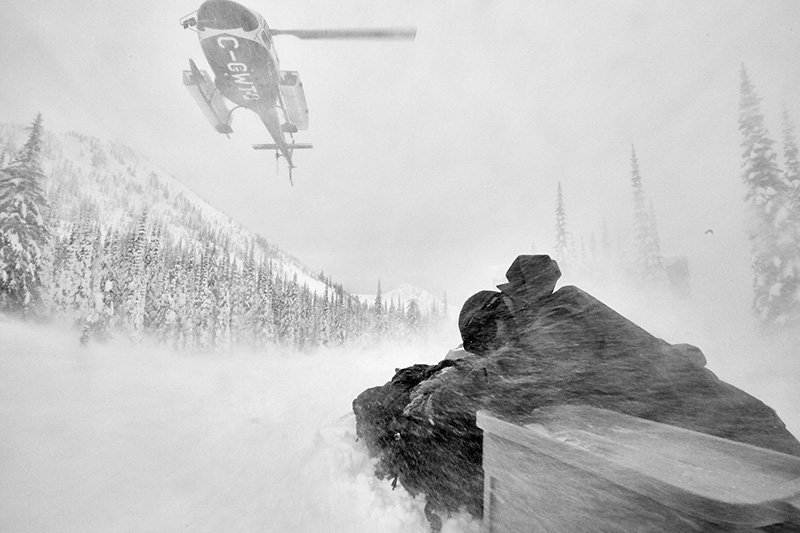
Photo © Har Rai Khalsa, a winner of the Global Rescue 2021 Photo Contest
Alpha, delta and omicron — the coronavirus variants are making news media headlines spurring new and renewed travel restrictions by governments and health authorities. Nevertheless, travel through the winter holiday months of November and December climbed compared to the year before. As COVID-19 trepidations ebb and flow, pent-up desire to travel led to more people returning to travel. Global Rescue continues to answer the service needs of travelers, including for COVID-19, here and abroad without any disruptions. In a typical one-month period, Global Rescue completes hundreds of operations in dozens of countries and principalities. Below are highlights from some of our most recent operations in various locations.
Frostbite in Mount Himlung, Nepal
Suffering from frostbite on his face and hands after being stranded above 19,685 feet/6,000 meters in a snowstorm on Mount Himlung, a Global Rescue member needed rescue from Camp 2. Unable to walk and his vision blurred from snow blindness, the Global Rescue medical operations team initiated a helicopter evacuation. The member was safely transported to a hospital in Kathmandu where he was evaluated and given care. His vision was restored with no permanent damage to his eyes. He was released from the hospital with instructions to follow up for further surgical treatment of his frostbite.
Machete Cut Hiking in Ecuador

A 43-year-old Global Rescue member was hiking in Llanganates National Park in Ecuador when he accidentally cut his right knee with a machete while clearing a path. His hiking partner performed first aid to stop the bleeding and contacted Global Rescue for help. Due to the rough terrain, there was no suitable helicopter landing site. Global Rescue medical operations arranged for a long-line rescue with a medical escort and ground transport from Llanganates National Park to Quito, Ecuador. The member was successfully evacuated and transported to a medical facility. His wound was treated and stitched closed and he is continuing his recovery from home.
Medical Evacuation From Eritrea
Suffering from thrombocytopenia — a condition in which you have a low blood platelet count — a Global Rescue member in the northeast African country of Eritrea needed medical evacuation. The member was in a local hospital with limited resources in Amara, Eritrea, where she received a blood transfusion and a colonoscopy to rule out the cause of the bleeding. After 10 days in the medical facility, her treating physician recommended she receive further care in her home country hospital of choice. The Global Rescue medical operations team arranged the member’s return flight and that of her non-medical escort’s travel. The transport was successful and the member has remained stable.
Motorcycle Mishap in Mexico
A 57-year-old Global Rescue member sustained a severe leg injury as a result of a motorcycle accident in Santa Rosalia, Baja Sur. He was transferred to a local hospital where an X-ray revealed a fracture of the distal third, left femur. The local treating physician recommended surgery and transfer to a higher level of care facility. Global Rescue medical operations doctors agreed and the member was successfully evacuated by jet to his home country hospital of choice in Austin, Texas.
Snow Blindness, Exhaustion Triggers Long Line Rescue

Ama Dablam is one of the toughest Himalayan mountains to summit, and getting sick or injured at Camp 3 requires a long-line helicopter rescue. That was the case for an exhausted 36-year-old Global Rescue member who had successfully summited the mountain but began suffering from snow blindness in the left eye and shortness of breath during her descent. Global Rescue medical operations team members initiated the successful long line helicopter rescue. The member was evaluated and treated in a nearby hospital where she was diagnosed with left eye photokeratitis.
Chest Pains on Mera Peak
Mera Peak is a mountain in the Barun sub-section of the Himalaya and, reaching 21,247 feet/6,476 meters, is considered one of the highest trekking peaks in the world. The conditions proved to be a challenge for a Global Rescue member who experienced dizziness, chest pains and shortness of breath during his summit attempt. With the help of his guide, the member descended to a lower altitude to help improve his symptoms. Despite some improvement, his oxygen saturation was dangerously low. After a night of rest, hydration, Ibuprofen and Diamox, his symptoms did not improve. The Global Rescue operations team commenced a helicopter field rescue. The member was successfully evacuated to a local hospital where he was evaluated and treated for mild high-altitude pulmonary edema (HAPE). He was subsequently discharged the same day with prescriptions for cetirizine and cough medicine.
Motorcycle Crash in Peru

A Global Rescue member lost consciousness and suffered memory loss and mild neck soreness after an accident when his motorcycle went off the roadway into a ditch in Peru. The member was transported to a local clinic for initial evaluation. Global Rescue medical operations arranged for the member to have a bedside advocate while he was in the hospital. Treating physicians recommended moving the member to a Lima, Peru medical facility with a higher level of care. The member was initially diagnosed with CVA hemorrhage and was admitted to the ICU. After a few days, his condition improved, and he was deemed fit to fly back to his home country hospital of choice.
Long Line Rescue on Ama Dablam
Experiencing severe difficulty breathing, headache and dizziness while in Camp 2, Ama Dablam in Nepal a Global Rescue member collapsed while he was receiving oxygen. Due to the steep terrain, a ground rescue was ruled out and a long line helicopter rescue was initiated by Global Rescue medical operations. The transport was successful and the member was evaluated and stabilized at a local medical facility before transport to a Kathmandu hospital with a higher level of care. The member was diagnosed with high-altitude pulmonary edema (HAPE) with pneumonitis and was admitted overnight for observation and treatment. The member remained stable overnight and was discharged the following day.
Shoulder Injury After Falling Off A Motorcycle
Falling off a motorcycle is never ideal, even if the two-wheeler is at a full stop. That’s what happened to a Global Rescue member who injured her left shoulder after rolling off a stopped motorcycle on an uneven road on Chachapoyas, Amazonas in Peru. She was taken to a medical facility where she was diagnosed with a fracture of her left humerus. Needing specialized surgical care, Global Rescue medical operations recommended evacuation to the member’s home country hospital of choice in Arizona, U.S.
Gastrointestinal Emergency in Liberia

After being hospitalized in Monrovia, Liberia due to gastrointestinal perforation and bleeding, a 64-year-old Global Rescue member needed medical evacuation for further care. Global Rescue medical operations initiated an aeromedical transport for the member to a higher level of care hospital in Paris, France, where she was admitted for further care. An endoscopy showed two bleeding ulcers which were cauterized successfully. A few days later, the member was discharged and arrived at her home in the U.S. safely.
Horseback Riding Accident in Idaho
Global Rescue medical operations responded to a member following a horseback riding accident that caused back and hip pain. The member was transported to the regional trauma center in Boise, Idaho, where he was evaluated and treated for his injuries. The member underwent surgery where the medical team placed a titanium rod in his left femur. He also sustained rib fractures and damage to his sternum. The member was certified fit-to-fly with a medical escort provided by Global Rescue and arrived safely in his home in Maryland.
Bad Ski Landing in Austria
A bad landing while skiing during a training trip in Austria led to a badly damaged knee for a Global Rescue member. An MRI at a nearby orthopedic clinic and further evaluation by Global Rescue medical doctors revealed a severely broken knee, specifically a posterior edge fracture of the dorsolateral tibial plateau and a delicate impression fracture of the lateral one femoral condyle. There were also cartilage lesions on the lateral femoral condyle and an interstitial tear of the posterior horn of the medial meniscus. With his knee in an immobilizer, the Global Rescue medical operations team recommended an upgraded flight to his home country hospital of choice to provide ample legroom to elevate his leg during the flight. The member was successfully transported to San Diego, California.
Categories:
Health & SafetyMissions & Member TestimonialsJanuary 21, 2022
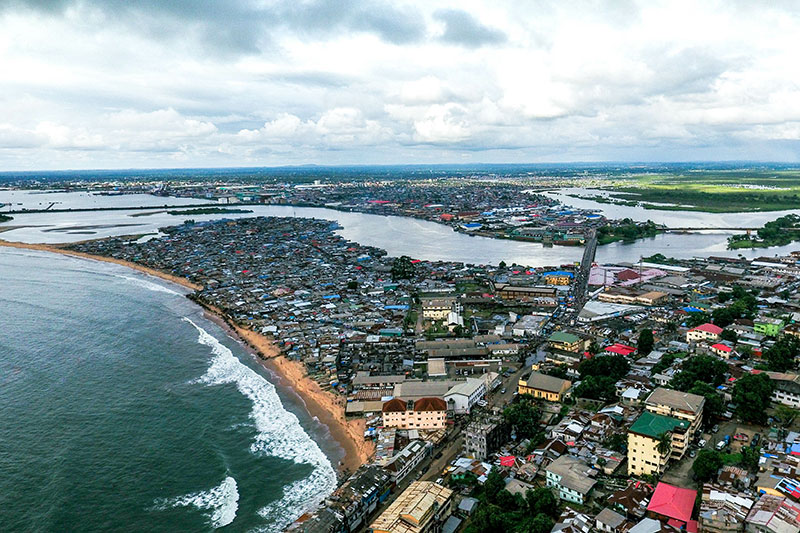
Mari Harris choked up when recalling her life-threatening medical emergency. “There was a doctor and a nurse in the jet, and they told me: ‘You don’t need to worry anymore. We’ve got your blood here; we can start the transfusion.’ I have never experienced such relief in my life,” she said, steadying her voice.
Her ordeal started with a stomachache during her most recent job posting in Liberia, Africa. But her medical condition was worse than she thought. Harris needed an airborne medical evacuation from the Liberian hospital for a hospital in Paris, France.
The memory still brings grateful tears forward. “I knew they had the resources I needed. Global Rescue was getting me the care I had hoped for.”
A Minor Ailment Turns Out to Be Major
For the past 10 years, 64-year-old Harris has worked for an NGO helping nations around the world implement security forces (essentially, they help countries train and supervise their police force). Her job has taken her to countries all over the Middle East (Lebanon and Jordan), as well as Ukraine, where she stays for months to a year at a time.
“I’m a pretty savvy traveler,” said the Kentucky native. “But no matter how prepared you are, anything can happen. And I am proof of how quick a seemingly small thing can go to a very bad thing.”
During her recent posting in Monrovia, Liberia this past fall, she started experiencing multi-day bouts of diarrhea. She assumed she ate something that didn’t agree with her.
But when she fainted in her apartment and her stool turned black and tarry, she realized it was more serious — perhaps a sign of gastrointestinal bleeding.
Concerns About Local Level of Care
Staff at a small, nearby clinic said she was bleeding internally.
“That’s not something you want to hear anywhere, but you especially don’t want to hear it when you’re in a country that is not as up-to-date or developed,” said Harris.
After a couple of days of trying to make the bleeding stop, Harris could tell her condition was worsening as she was getting weaker and was struggling to stand up. She was told she was going to be moved to a hospital, one with a bit more capabilities, to undergo a blood transfusion.
“That hospital, it was just a bad situation. Some patients were laying on the floor. The staff wasn’t wearing the proper protective clothing. They didn’t have the medicines they said I needed to be on,” she said. “I thought, ‘This is it. This is where I’m going to die.’”
Her work colleague, who had been by her side, had already made the call to Global Rescue, a membership that was provided through her company as part of its legal duty of care.
[Related Reading:
COVID-19 & Examining Your Legal Duty of Care]
“The Global Rescue medical team overseeing her case determined that surgery locally was risky given the limited resources and availability of reliable blood products for transfusion and medications,” said David Koo, associate director of medical operations at Global Rescue and a former combat medic and emergency nurse. “Despite having to navigate some flight permitting issues, we were able to quickly secure and deploy an air ambulance for Ms. Harris before she deteriorated further. Time was of the essence.”

A welcome sight for Harris: The air ambulance where she would start to receive the level of care she needed.
The next day, she was evacuated by medical jet to a higher level of care: a hospital in Paris, France, and one of Global Rescue’s nearest vetted Centers of Excellence (meaning the facility must align with a U.S. Level 1 hospital).
“It was a real hospital, it was the standard anyone would hope for,” she said. “I don’t want to talk poorly about the clinic or hospital in Liberia. Everyone was trying to be helpful, but they simply have limited resources.”
Never Alone, Always an Advocate
Her ordeal wasn’t over. While she was at a much better hospital facility and knew she would receive the care she desperately needed, she was now alone, since her work colleague remained in Liberia.
“I had lost a lot of blood, so I was in a fog and struggled to know what was going on,” she said. “This is where Global Rescue was really supportive. They called me every day, several times a day just to check in and explain what I could expect to happen next.”
“The Global Rescue medical operations expert was the only person I needed to talk to. The person who handled my case said, ‘You just need to focus on relaxing and getting better. We’ve got everything else.’ It was very reassuring.”

Harris showing signs that she was on the mend in the hospital in Paris, France.
After a few days, once she was stable, her endoscopy showed she had been suffering from two bleeding ulcers, which were both successfully clipped in surgery. Two days later, Harris was discharged and back on a commercial flight home.
“I would never tell someone not to travel or go see the world,” she said. “But you have to have a company like Global Rescue with you. You need an organization that is experienced, globally connected and knows how to work everything on the ground in order to handle an emergency like they did for me.”
Categories:
NewsJanuary 19, 2022
Categories:
Health & SafetyPlaces & PartnersTravelJanuary 18, 2022
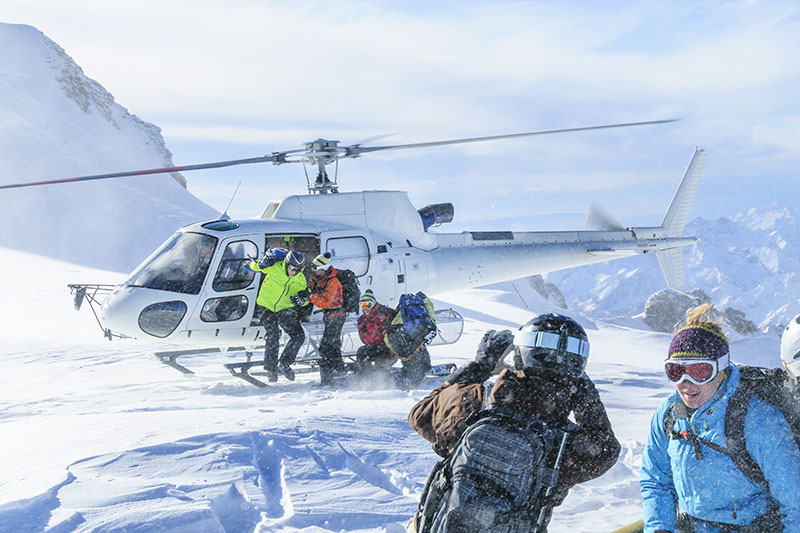
Heli-Skiing: A Skier’s Trip of a Lifetime — Is It Extreme or Safe? is part of the Global Rescue “No Restrictions” series, where we take a look at extreme sports and activities that many of our members have taken part in, or plan to. Unlike other providers, Global Rescue memberships do not exclude or restrict adventure activities, whether paragliding, cave diving, kiteboarding, sky diving, heli-skiing, BASE jumping and beyond.
Tired of long lift lines, crowded trails, and mediocre powder conditions? Perhaps heli-skiing is for you. All you need is a helicopter, a pilot and access to normally unreachable snowy mountains. Sort of.
“Helicopter skiing offers the experienced skier exclusive access to the terrain beyond the ski lifts with steeper, longer runs in often pristine powder snow conditions,” said Harding Bush, operations manager for Global Rescue and a former Navy SEAL with extensive expertise in mountain and cold weather operations. “The requirements for heli-skiing include the helicopter, the pilot and guides, advanced skiing ability, a bit of bravery, and money.”
Heli-skiing is off-trail, downhill skiing or snowboarding that is done without using a ski lift. It all started more than half a century ago when the first helicopters were employed to visit isolated areas in Alaska and Europe. Austrian-born mountaineer, Hans Gmoser, marketed the activity in Canada in 1965 by integrating housing, transportation, and guiding into one package. Since then, heli-skiing has become widely available, except in France, Austria and Germany where it is banned.
“Heli-ski operators started, and still operate, in very remote parts of Alaska’s vast mountain ranges,” said Zach Graham, an avid backcountry and frequent heli-skier and Global Rescue’s manager of partnerships. “More recently, heli-ski spots in Colorado and Utah have opened allowing more skiers access to the sport.”
How Risky is Heli-Skiing?

A heli-ski trip to Haines, Alaska | Photo © Chuck Evans, a winner of the Global Rescue 2021 Photo Contest
Heli-skiing is considered by some as an “extreme” sport. Is it? Stu Richards, a senior vice president at Global Rescue, is an avid skier who has heli-skied since the 1980s. He doesn’t consider the sport extreme:
“You have to be an experienced powder skier for heli-skiing, but you don’t have to be an expert skier. There are risks with heli-skiing that you don’t encounter with resort skiing. The helicopter must be dependable, your guide must have sound judgment, you have to make certain you’re skiing terrain that matches your skill level, and you must be prepared for the potential of natural disasters like an avalanche and sudden, dangerous weather changes.”
Global Rescue member and frequent heli-skier, Richard Jorgensen, says heli-skiing is not the extreme sport people may think. “It can be quite safe and accessible depending on what tour operator and guide you go with, and the skill level of skiers who are in your group. The heli-skiing risk factors are the same as they have been for the last five-to-10 years.”
Graham agrees. “There is more heli-skiing opportunity and accessibility but the terrain still requires a high level of skiing ability. Having an experienced guide with a reputable operator who can assess your ability and match it to the terrain you ski is a must,” he said.
Heli-skiing requires an enhanced level of safety awareness compared to resort skiing. “You need to know your skiing abilities and then adhere to the direction of the guides and helicopter crew,” Bush said. “There are hazards in the backcountry that aren’t typical at a groomed resort with ski patrols and lift-service.”
Bush says skiing ungroomed terrain can be challenging because all deep snow is not light and fluffy powder. He recommends taking extra time to discuss risk mitigation and consider using avalanche safety equipment like beacons, probes, and airbags.
“While helicopter skiing, you need to think more like a mountaineer than a skier,” he said.
Cost of Heli-Skiing

Is heli-skiing available only to the “wealthy” or has it become more affordable? “Skiing is an expensive sport and heli-skiing ain’t cheap but there are many more options today to manage the cost,” Richards said. “You can heli-ski at remote lodges for a week or more for tens of thousands of dollars and you can also heli-ski one run at a time for a couple of hundred dollars per run. If you can resort ski for a week then you can probably heli-ski for a day.”
Silverton Mountain is the only heli-operator in the continental U.S. offering single heli-ski runs for $184 per person per drop. That won’t include your lodging, or anything else. Traditional heli-skiing packages, like ones with Canadian Mountain Holidays in British Columbia, Canada, will cost about $1,300+ per day and includes room, meals. non-alcoholic beverages, certified guides and helicopter pilots.
Graham confirms that heli-skiing remains one of the most expensive ways to access backcountry ski terrain, but he notes there are alternatives. “With cat-skiing — where skiers and snowboarders ride in a multi-person cab on a snowcat machine and are taken to remote, pristine mountain areas to ski and ride — the cost is greatly reduced and bridges the gap between resort lift ticket costs and heli-skiing expenses,” he said.
But Graham admits heli-skiing is unparalleled, and the cost covers essential requirements. “The experience is unmatched. You’re paying for helicopter time, the pre-arrival avalanche mitigation work, and accommodations. It’s a bucket list item for most avid skiers,” he said.
Jorgenson says the cost to heli-ski is climbing. “It’s getting more expensive, just like everything else in the world.” But he believes heli-skiing may be more popular since the pandemic because it satisfies people’s desire for outdoor activities while physically distancing from strangers. “There may be more pent-up desire. Most places are pretty booked up if they are open,” he said.
Graham concurs but believes the allure for heli-skiing had been growing before the pandemic. “Skiers exploring the backcountry have been increasing for a while. It’s exponential growth. Heli-skiing is a part of that discovery,” he said. “Retail ski brands are seeing unprecedented demand for gear that allows for these backcountry adventures, with most of them selling out of these products for the past two consecutive years,” he added.
[Related Reading:
Navigating Travel “What Ifs” in 2022]
Heli-skiing is worldwide. “Italy and Switzerland are the main venues, but you can do it in the Spanish Pyrenees and the north of Sweden,” according to The Times of London. But the most exciting experiences are in remote locations like the Bugaboo, Selkirk and Monashee ranges of Canada, along with Chile, Argentina and New Zealand or even India and Kashmir, Russia, Georgia and far-flung corners of the former USSR, according to the report.
Popular Heli-Skiing Spots

Some of the top heli-ski areas are:
- Powder Mountain in Utah where the mountain caps lift tickets at 1,500 people per day. Skiers and snowboarders have plenty of acres to themselves.
- The Dolomites is a mountain range located in northeastern Italy and forms part of the Southern Limestone Alps. The range is home to multiple heli-ski lodges in Val Gardena, Cortina d’Ampezzo, Arabba, and more.
- Tordrillo hosts Alaska’s longest-operating heli-ski lodge. The heli-ski adventure packages are extreme ($15,000/guest), making them ideal for experienced, off-piste skiers.
- Antarctica has heli-skiing. Skiers and snowboarders fly and then sail to Antarctica. Guests choose from easy slopes to steep descents across Livingston Island and the Antarctic Peninsula.
- Golden, British Columbia is the location of a new Canadian Mountain Holidays heli-ski lodge. It’s one of CMH’s 12 different locations in British Columbia. Located less than two hours from Banff National Park, this property specializes in small-group trips, with one helicopter per six guests (in addition to two guides), ensuring private runs for all.
No Restrictions on Activities
Whether you’re heli-skiing, paragliding, BASE jumping, cave diving, or kiteboarding, remember to plan, prepare and get a Global Rescue membership for peace of mind. Unlike other providers, Global Rescue memberships do not exclude or restrict adventure activities — like heli-skiing, backcountry skiing, cat-skiing or cross-country skiing — from membership. We don’t exclude any activity whether it’s heli-skiing, paragliding, BASE jumping, cave diving, kiteboarding or anything else. It’s part of our No Restrictions approach to travel, and that includes COVID-19, too.
Categories:
Health & SafetyTravelJanuary 14, 2022
Have you ever watched a movie and thought, “Would this ever happen in real life?”
Knowing what we know at Global Rescue — the world’s leading medical, security, evacuation, travel risk and crisis management services company — we turn into armchair critics while watching emergencies play out on the big screen. Would there really be snakes on a plane? When the speed of a city bus drops below 50 MPH, would a bomb truly detonate? Is it that easy for John McClane to access a restricted area of a major metro airport?
We asked Global Rescue security, logistics and medical experts their thoughts about a few popular movies featuring an airplane emergency or an airport crisis.
Snakes on a Plane
This 2006 film featuring Samuel L. Jackson includes just about every airplane mishap possible: transport of a federal witness in danger, a dead pilot, a short-circuited air circulation system — and a wooden cargo box of venomous snakes.
In general, snakes are more afraid of you than you are of them, and they typically don’t act aggressively without provocation. But, thanks to pheromones administered by an evil villain, these snakes are looking for someone to bite.
What should you do if you’re bitten by a snake on a plane (or in a small enclosed space)? It is likely there isn’t anti-venom on hand, so experts at the Mayo Clinic suggest washing the wound with soap and water, then immobilizing the bitten area and keeping it below the level of your heart.
If there is a doctor or someone with emergency medicine training on the plane, they will monitor your vital signs, ensure your airway is unobstructed, and be prepared to treat you for anaphylaxis, nausea, vomiting and pain. Most likely you were not bit by a poisonous snake — of 3,000 snake species worldwide only about 15% are venomous.
Die Hard 2
In Die Hard 2, John McClane is waiting for his wife’s plane to land when he notices a not-so-covert Christmas package hand off in the terminal. The suspicious act kicks off a series of events — a shoot-out in a restricted area, lighting shut down on the runways and terrorists directing planes to land instead of the control tower — threatening the lives of 15,000 people in the airport and thousands of travelers on the planes in the air.
The movie was made in 1990, long before the September 11 attacks in 2001, so is it even possible for an airport or an airplane to be seized by terrorists today?
Probably not. Simple X-ray machines are now high-resolution full body scanners. You take off your shoes and extra layers of clothing, empty your pockets, and place electronics and carry-on items in a 3D-imaging X-ray machine. It’s highly unlikely a firearm would make its way into the terminal or an elderly woman could carry a working Taser onto the plane in her purse.
An NPR article notes there hasn’t been a successful attack against commercial aviation in the U.S. in the 20 years since 9/11 and “aviation security continues to evolve to address ever-changing threats, with a layered approach that involves surveillance, intelligence and technology.”
“People are very creative. The threats are very creative,” says Louis Traverzo, the Transportation Security Administration’s deputy federal security director told NPR. “It’s up to us to anticipate that.”
So could hackers really gain access to communication between aircraft and control towers and send false information to mislead pilots? Or could terrorists bring machine guns into an airport or onto a flight? Probably not, but if you are caught in an active shooter situation, Global Rescue suggests three options: run, hide or fight.

Airplane
It’s a comedy of errors in this 1980 parody film. But after watching Airplane, you’ll never order the fish as an in-flight meal. “Every passenger who had fish for dinner will become violently ill in the next half hour,” the doctor explains to the flight attendant.
Is this possible? Well, it has happened: On February 3, 1975, 197 people fell ill aboard a Japan Airlines Boeing 747 on route from Anchorage, Alaska to Copenhagen, Denmark after consuming an in-flight meal contaminated with Staphylococci. After landing, 144 people needed hospitalization, making it the largest food poisoning incident aboard a commercial airliner.
The symptoms of food poisoning aren’t exactly what Airplane’s questionable doctor describes: “It starts with a slight fever and dryness of the throat. When the virus penetrates the red blood cells, the victim becomes dizzy, begins to experience an itchy rash, then the poison goes to work on the central nervous system, severe muscle spasms followed by the inevitable drooling. At this point, the entire digestive system collapses accompanied by uncontrollable flatulence. Until finally, the poor bastard is reduced to a quivering wasted piece of jelly.”
In fact, severe illness is rare. According to the Centers for Disease Control and Prevention, food poisoning is characterized by a sudden start of nausea, vomiting and stomach cramps. Most people also have diarrhea. Symptoms usually develop within 30 minutes to 8 hours after eating or drinking an item containing Staph toxin, and last no longer than one day.
How can you survive food poisoning on a plane?
“Drink fluids — boiled water or factory-sealed bottled water — to replace lost body fluid. Even ice chips will help. Hydration is your best line of defense,” says Jeff Weinstein, medical operations supervisor at Global Rescue.
Travel + Leisure magazine suggests checking your bag (or asking your seatmate) for Pepto-Bismol and alerting the flight attendant, who can give you priority seating for the airplane bathroom.
The Terminal
Do you ever feel like you just live in an airport? Viktor Navorksi, played by Tom Hanks in the 2002 movie The Terminal, actually does. His country, taken over by a military coup, no longer exists and he is instructed to remain at a New York airport.
Sound implausible? The movie is actually based on the true story of the man who lived in the airport for 18 years after his refugee papers were stolen. He slept on the hard plastic chairs in the Charles De Gaulle airport and shaved in the public restrooms. He relied on the kindness of others for food, and possibly ate free ketchup packet and cracker sandwiches like the Viktor character.
It’s not unheard of today — a man was arrested in January 2021 after living in Chicago’s O’Hare International Airport for three months. The airport opens early and closes late, it offers food and shelter, and it is easy to blend into the crowd. If you find yourself involuntarily stranded at an airport due to weather or cancellations, Global Rescue experts offer travel tips to make your stay as comfortable as possible.
Travel Protection for Any Scenario
Almost anything can happen on the movie screen — and in real life. Stay protected with a Global Rescue travel protection membership. No matter where you go in the world, members have access to 24/7 medical and security advisory services and support.
Categories:
Health & SafetyTravelJanuary 14, 2022
Have you ever watched a movie and thought, “Would this ever happen in real life?”
Knowing what we know at Global Rescue — the world’s leading medical, security, evacuation, travel risk and crisis management services company — we turn into armchair critics while watching emergencies play out on the big screen. Would there really be snakes on a plane? When the speed of a city bus drops below 50 MPH, would a bomb truly detonate? Is it that easy for John McClane to access a restricted area of a major metro airport?
We asked Global Rescue security, logistics and medical experts their thoughts about a few popular movies featuring an airplane emergency or an airport crisis.
Snakes on a Plane
This 2006 film featuring Samuel L. Jackson includes just about every airplane mishap possible: transport of a federal witness in danger, a dead pilot, a short-circuited air circulation system — and a wooden cargo box of venomous snakes.
In general, snakes are more afraid of you than you are of them, and they typically don’t act aggressively without provocation. But, thanks to pheromones administered by an evil villain, these snakes are looking for someone to bite.
What should you do if you’re bitten by a snake on a plane (or in a small enclosed space)? It is likely there isn’t anti-venom on hand, so experts at the Mayo Clinic suggest washing the wound with soap and water, then immobilizing the bitten area and keeping it below the level of your heart.
If there is a doctor or someone with emergency medicine training on the plane, they will monitor your vital signs, ensure your airway is unobstructed, and be prepared to treat you for anaphylaxis, nausea, vomiting and pain. Most likely you were not bit by a poisonous snake — of 3,000 snake species worldwide only about 15% are venomous.
Die Hard 2
In Die Hard 2, John McClane is waiting for his wife’s plane to land when he notices a not-so-covert Christmas package handoff in the terminal. The suspicious act kicks off a series of events — a shoot-out in a restricted area, lighting shut down on the runways and terrorists directing planes to land instead of the control tower — threatening the lives of 15,000 people in the airport and thousands of travelers on the planes in the air.
The movie was made in 1990, long before the September 11 attacks in 2001, so is it even possible for an airport or an airplane to be seized by terrorists today?
Probably not. Simple X-ray machines are now high-resolution full-body scanners. You take off your shoes and extra layers of clothing, empty your pockets, and place electronics and carry-on items in a 3D-imaging X-ray machine. It’s highly unlikely a loaded Glock 7 gun would make its way into the terminal or an elderly woman could carry a working Taser onto the plane in her purse.
According to the Transportation Security Administration, unloaded firearms should be transported in a locked hard-sided container as checked baggage only. Tasers, also transported in checked luggage only, should have the lithium battery removed so it doesn’t accidentally discharge. And although John McClane says the porcelain Glock wouldn’t show up on the X-ray machine, “the bullets and the pins in the gun are metal, and would show up,” said Adam Bardwell, medical operations supervisor at Global Rescue.
An NPR article notes there hasn’t been a successful attack against commercial aviation in the U.S. in the 20 years since 9/11 and “aviation security continues to evolve to address ever-changing threats, with a layered approach that involves surveillance, intelligence and technology.”
“People are very creative. The threats are very creative,” says Louis Traverzo, the Transportation Security Administration’s deputy federal security director told NPR. “It’s up to us to anticipate that.”
So could hackers really gain access to communication between aircraft and control towers and send false information to mislead pilots? Or could terrorists bring machine guns into an airport or onto a flight? Probably not, but if you are caught in an active shooter situation, Global Rescue suggests three options: run, hide or fight.

Airplane
It’s a comedy of errors in this 1980 parody film. But after watching Airplane, you’ll never order the fish as an in-flight meal. “Every passenger who had fish for dinner will become violently ill in the next half hour,” the doctor explains to the flight attendant.
Is this possible? Well, it has happened: On February 3, 1975, 197 people fell ill aboard a Japan Airlines Boeing 747 on route from Anchorage, Alaska to Copenhagen, Denmark after consuming an in-flight meal contaminated with Staphylococci. After landing, 144 people needed hospitalization, making it the largest food poisoning incident aboard a commercial airliner.
The symptoms of food poisoning aren’t exactly what Airplane’s questionable doctor describes: “It starts with a slight fever and dryness of the throat. When the virus penetrates the red blood cells, the victim becomes dizzy, begins to experience an itchy rash, then the poison goes to work on the central nervous system, severe muscle spasms followed by the inevitable drooling. At this point, the entire digestive system collapses accompanied by uncontrollable flatulence. Until finally, the poor bastard is reduced to a quivering wasted piece of jelly.”
In fact, severe illness is rare. According to the Centers for Disease Control and Prevention, food poisoning is characterized by a sudden start of nausea, vomiting and stomach cramps. Most people also have diarrhea. Symptoms usually develop within 30 minutes to 8 hours after eating or drinking an item containing Staph toxin, and last no longer than one day.
How can you survive food poisoning on a plane?
“Drink fluids — boiled water or factory-sealed bottled water — to replace lost body fluid. Even ice chips will help. Hydration is your best line of defense,” says Jeff Weinstein, medical operations supervisor at Global Rescue.
Travel + Leisure magazine suggests checking your bag (or asking your seatmate) for Pepto-Bismol and alerting the flight attendant, who can give you priority seating for the airplane bathroom.
The Terminal
Do you ever feel like you just live in an airport? Viktor Navorksi, played by Tom Hanks in the 2002 movie The Terminal, actually does. His country, taken over by a military coup, no longer exists and he is instructed to remain at a New York airport.
Sound implausible? The movie is actually based on the true story of the man who lived in the airport for 18 years after his refugee papers were stolen. He slept on the hard plastic chairs in the Charles De Gaulle airport and shaved in the public restrooms. He relied on the kindness of others for food, and possibly ate free ketchup packet and cracker sandwiches like the Viktor character.
It’s not unheard of today — a man was arrested in January 2021 after living in Chicago’s O’Hare International Airport for three months. The airport opens early and closes late, it offers food and shelter, and it is easy to blend into the crowd. If you find yourself involuntarily stranded at an airport due to weather or cancellations, Global Rescue experts offer travel tips to make your stay as comfortable as possible.
Travel Protection for Any Scenario
Almost anything can happen on the movie screen — and in real life. Stay protected with a Global Rescue travel protection membership. No matter where you go in the world, members have access to 24/7 medical and security advisory services and support.
Categories:
NewsJanuary 12, 2022
Categories:
Health & SafetyTravelJanuary 11, 2022
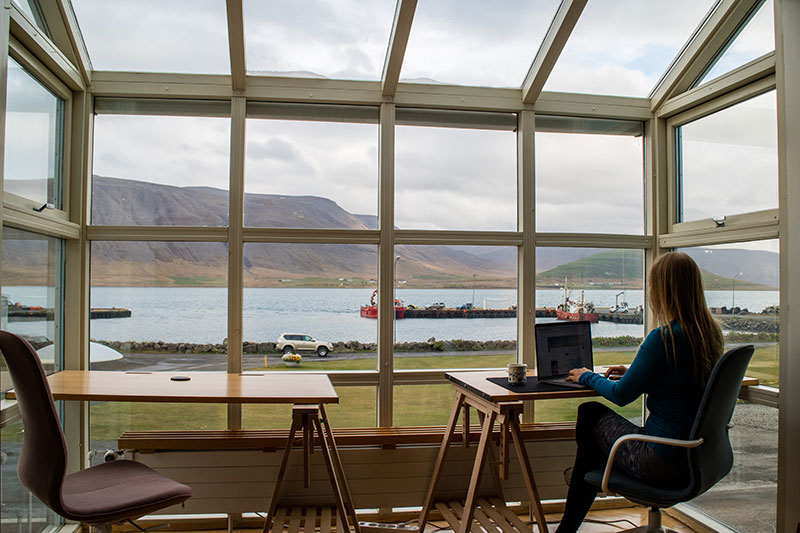
When the pandemic all but shut down the world, offices closed, restaurants and gyms were locked up, and travel came to a standstill to forestall the spread of the disease and reduce the impact on medical facilities. Everyone had to make adjustments.
One of the adjustments was the expanded opportunity to live the digital nomad life. “Before the pandemic, the term ‘virtual nomad’ applied to a privileged few who had found a way to finance perpetual travel — and seemed to do so effortlessly. But when COVID-19 forced employers to go remote, it opened up the possibility of a nomadic lifestyle to entirely new groups of people,” according to an NBC News report.
Meet Some Digital Nomads
One of those “new people” was David Koo, associate director of operations for Global Rescue based in Manila, who become a digital nomad due to the pandemic. “I had to make changes. Governments everywhere were starting to mandate work from home. I had an opportunity to relocate and returned to my home country in Singapore. After five months, my partner and I started traveling and working throughout Europe,” he said.
Another one of the “new people” is Andie Mary, a creative designer based in San Francisco, who decided to live the digital nomad life after the pandemic forced her and her fiancé to live and work in a small, one-bedroom apartment.
“We decided to take the opportunity to leave San Francisco to travel. We sold most of our belongings and bought a one-way ticket to Hawaii,” she said. Since then the couple has visited almost 50 different locations including Mexico, Spain, France, Monaco, Denmark and Puerto Rico.
For others, digital nomadism was the solution to a love of travel. Lindsay McClure Miller, co-founder of World Story Exchange, an organization that invites people to observe their place and create documentary art for global dialogue, learned about digital nomadism while backpacking the world 14 years ago.
“I had saved money and was spending it as I traveled as a backpacker. I met people who were working remotely through their computers, which allowed them to travel or live in different places while making money. I decided I wanted to live, work and travel all at the same time,” she said.
The Origin of Digital Nomadism

Digital nomads – people using technology to work remotely from anywhere in the world – are not new. Steve Roberts is the original digital nomad. He published his “technomadic” lifestyle in Popular Computing Magazine in 1984. Roberts traveled the U.S. on a recumbent bike, lived in a tent, and made a living as a freelance writer using a solar-powered laptop. He called his on-the-road lifestyle a common yearning for independence and self-determination. “It’s a universal lust…for freedom,” he said.
Boosted by the pandemic, digital nomadism was on the rise before coronavirus, and not only among freelancers, independent contractors and the self-employed. According to research, Americans self-describing as digital nomads rose by 49%, from 7.3 million in 2019 to 10.9 million in 2020. The recent surge is coming from people holding traditional office jobs. The number of digital nomads with traditional jobs rose from 3.2 million in 2019 to 6.3 million in 2020 — a 96% increase.
“Traditional jobholders now make up a majority of those pursuing this nontraditional work lifestyle,” according to the study.
James Clark, a digital nomad running a travel business, agrees. “The global pandemic that ground cities to a halt in 2020 acted as an accelerant to the digital nomad way of life. Millions of office workers who were told to work from home discovered they could work from anywhere,” he said.
The Pros And Cons
The digital nomad life is not without its challenges.
“I like the flexibility, the control and the integration of work and life. On the flip side, the instability is difficult because of the lack of feeling being grounded,” Koo said, who has visited nine different cities in five countries since leading a digital nomadic life.
“One benefit of being a digital nomad is that you can spend hours intensively at work and then take a break to enjoy things without feeling you are stuck in an office environment. But you have to be disciplined. It is easy to get lazy. You must keep to a routine, even when traveling,” he said.
McClure Miller identified two challenges for the digital nomad: the lack of community and the troublesome issues that pop up when you don’t have an address. “I miss friends and family back home,” she said.
But, she admits, the most frustrating part of being a digital nomad is the need for an address. “The government, utilities, mail services, insurances, vehicle registration, and more entities do not have a category for digital nomads. We are constantly anticipating where we will be, or could be, to validate those needs,” she said.
Koo quickly learned a successful digital nomad must be self-reliant. Researching everything — including technical capabilities, available lodging, travel requirements, health care and employer support — is imperative. “Talk to your supervisors about your plans. Stay connected and keep your promise. Nothing is worse than breaking their trust because you failed to meet a deadline or stay connected,” he said.
McClure Miller agrees, especially when it comes to health care. “There is no simple way to have health care coverage throughout the United States. It’s easy to have it for global trips, but not within the U.S.”
Dental care is difficult to arrange for digital nomads, according to Mary. “Coordinating dental appointments and seeing a doctor has been difficult. I’ve been able to do virtual doctor appointments,” she said.
Managing your health and safety as a digital nomad is different compared to vacationers, who travel for short periods, or ex-pats who are abroad in a single location for a year or more. Digital nomads may spend years abroad in multiple destinations, in many countries.
Health Care and Travel Protection

There are at least two types of health and safety protections digital nomads should consider, and both should include COVID-related services.
One is health care insurance. Your domestic health insurance plan probably does not provide coverage outside your home country, but check before you travel since a favorable answer could save you a lot of money. If you have Medicare, your coverage does not extend outside of the U.S.
“People don’t understand their health coverage,” says Kyle Bruening, CEO of Cruise Finder Inc., a travel agency in Margate, Florida.
“If you get sick or injured while traveling overseas, domestic health insurance plans likely won’t be accepted in foreign countries,” explains Allianz Partners’ Daniel Durazo in a Forbes report. “That means you’ll need to pay out of pocket for emergency medical care and transportation, which can run into the tens of thousands of dollars.”
Travel expert and freelance journalist Christopher Elliott says you can either get health coverage as part of your travel insurance policy or you can buy a stand-alone travel health policy. “Standard travel insurance will cover you abroad to the limits of liability but pay attention to the fine print. Sometimes travel insurance coverage is secondary, which means you’ll have to file a claim with your primary U.S. insurance before it kicks in. Generally, a separate medical insurance policy is primary, which means less paperwork,” he said.
The other type of protection is for travel crises and medical evacuation. If you get sick or injured anywhere in the world digital nomads need field rescue services that will come get them from the point of illness or injury, including for COVID-19, and medical evacuation if you need continued treatment or hospitalization in your home country.
[Related Reading: 6 Most Commonly Asked Questions About Our COVID-19 Services]
The Future of Work
Koo believes digital nomadism will continue to grow but he admits that human connection is still essential.
“Digital nomadism will continue to expand in a connected world but humans still have a desire for actual face-to-face interactions. Nonetheless, I also see digital nomadism being a green initiative, cutting down our carbon footprint and reducing consumption,” he said.
Miller hopes the increase in digital nomadism will lead to more solutions to meet the basic needs of this growing lifestyle.
Mary forecasts the digital nomad trend will continue if business managers trust that productivity will meet or exceed past performance. “I see it continuing to be more of a trend if employers realize that employees don’t necessarily need to sit in an office and employees realize the benefits of working remotely while traveling,” she said.