
Categories:
NewsDecember 17, 2021
Categories:
Health & SafetyTravelDecember 15, 2021
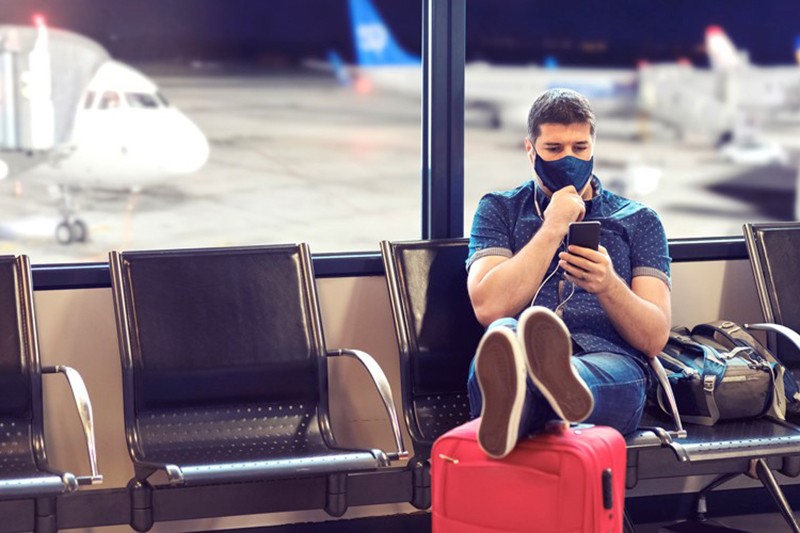
The omicron travel alerts came through fast and furious after the Thanksgiving holiday with many countries around the globe imposing entry bans, tightening border restrictions, and reinforcing social distancing measures due to the omicron variant.
If you’re planning travel and have questions about omicron, the new coronavirus variant, Global Rescue medical experts provide some background and advice.
What Is the Omicron Variant?
The World Health Organization (WHO) received a report of omicron (B.1.1.529) from South Africa on November 24 after an increase in infections. It was designated a variant of concern on November 26.
What Are Omicron Symptoms?

Delta, the predominant variant in the United States, was known for its rapid transmission, two times more contagious than other variants. Initial symptoms of the delta are cold-like: headache, sore throat, fever and runny nose.
Omicron is presenting with these symptoms: severe fatigue, headache, body aches and pain.
Overall, people have reported a wide range of symptoms with coronavirus and, in some cases, may not be able to tell the difference between COVID, allergies and the flu, according to the Centers for Disease Control and Prevention (CDC). People with these symptoms may have COVID-19:
- Fever or chills
- Cough
- Shortness of breath or difficulty breathing
- Fatigue
- Muscle or body aches
- Headache
- New loss of taste or smell
- Sore throat
- Congestion or runny nose
- Nausea or vomiting
- Diarrhea
What Is Different About Omicron?
Omicron has an unusually high number of mutations — 30 in the key spike protein, the structure the virus uses to get into the cells they attack. Scientists are concerned this might make the variant more transmissible and early data appears to support this hypothesis.
“The good news is omicron appears to be less dangerous with fewer cases of severe illness and hospitalizations. There has also only been one death reported worldwide from Omicron,” said Daniel Richards, CEO of Global Rescue. “However, many unknowns remain, including whether those who contracted COVID and recovered could be more susceptible to catching it again with this variant. The coming weeks will be telling as we learn more about how omicron behaves.”
What Precautions Should Travelers Take This Holiday Season?

Global Rescue recommends following CDC guidelines, including staying the course with mask-wearing and social distancing.
“Always practice good personal hygiene, wash your hands regularly, and use a face mask in crowded social settings and public transportation,” said Adam Bardwell, medical operations supervisor at Global Rescue.
Of course, when you are ill, remain home. “If you are sick stay home, continue to isolate, minimize contact with others, contact your doctor, wear a mask and treat your body well,” he said.
“Living a healthy lifestyle by working out frequently and eating well can aid in building up your body’s immune system and can help minimize the symptoms of a virus or other ailment,” Bardwell said.
If you are considering travel, “go about your holiday season as you see fit. Do your research and form your own opinions. Verify your sources of information and plan your holiday for what you believe is right for your family. Disinformation, fear-mongering, and corporate interests will be plentiful when sifting through the vast amount of information in regards to COVID. The risk calculus is different for every family in the world and must be tailored to fit your family’s health/cultural needs,” said Bardwell.
Should I Add COVID Self-test Kits to My Coronavirus Travel Kit?

Rapid antigen self-test kits will probably be joining you for domestic and international travel this holiday season.
“Whether you are traveling to visit family or guests are joining you for the holiday, some states, like New Hampshire, are offering free test kits for their residents this holiday season,” Bardwell said.
If you are traveling internationally, new federal rules require a negative COVID test result within 24 hours of travel to the United States. Acceptable self-tests must be an antigen or nucleic acid amplification tests, have FDA EUA approval, and include a telehealth video call supervised by an authorized proctor who will issue a report confirming the results.
These test kits are small enough to fit in hand luggage. For U.S.-bound travelers, a negative result from the Abbott BinaxNOW self-testing COVID-19 kit fulfills the U.S. government requirement for boarding a commercial aircraft.
Travel Protection Services for COVID-19
According to the fall 2021 Global Rescue survey, although travelers are less concerned about travel now than they were earlier this year, the biggest travel fear (43% of respondents) is becoming ill with COVID or being quarantined far from home.
Fortunately, Global Rescue does not make any distinctions between COVID and other infectious diseases for our services. If members have questions related to COVID or become ill from the virus while traveling, our rescue and evacuation services still apply. This has been the case since the start of the pandemic and will continue to be until the end.
In addition, Global Rescue provides members with real-time travel advice, including COVID hotspots and variant information.
“Global Rescue will continue to monitor the situation closely and support the advisory, transport and evacuation needs of our members and clients who test positive for COVID-19 as we have since the beginning of the pandemic,” said Richards.
Bookmark Global Rescue’s blog page for educational blogs and our Coronavirus Weekly Update for coronavirus travel information.
Categories:
NewsDecember 15, 2021
Categories:
Health & SafetyDecember 10, 2021
There’s no denying how complex COVID-19 has made travel. Travelers must obtain appropriate travel documentation, stay up-to-date on the latest travel bans and country risk levels and, of course, know what to do if they contract the virus while away from home.
But with the right travel risk and crisis management firm behind you, it can be done. That’s why our members rely on Global Rescue to get them the real-time travel advice, emergency rescue, medical care and urgent transport they need in case of a COVID-19 emergency requiring hospitalization.
“We can no longer travel how we used to [because of COVID-19],” said Dolly Webster, a 62-year-old Montana resident who required treatment after contracting COVID-19 during a fly fishing trip in the Bahamas in October 2021 who was evacuated by Global Rescue air ambulance to a higher level of care hospital in the U.S. “Travelers now need medical evacuation protection for any trip and not just adventure trips like mountaineering, trekking, remote fishing or anything else.”
Despite providing COVID-19 services to members since the pandemic first struck, there are still a fair number of questions about what Global Rescue does and how we do it when it comes to coronavirus or any other disease. So, we tapped our Member Services team — available 24/7/365 to take any questions from members or non-members — to provide the answers to the most commonly asked COVID-19 questions.
Does Global Rescue Offer Services Related to COVID-19?

Absolutely. Unlike other providers, we do not make any distinctions between COVID-19 and other infectious diseases with respect to our services. If members have questions related to COVID-19 or become ill from the virus while traveling, our same services still apply. This has been the case since the start of the pandemic and will continue to be until the end.
What Will Global Rescue Do if I Get COVID-19 While Traveling?
Just like any other infectious disease, Global Rescue will provide rescue and emergency transport services to the nearest medical facility, center of excellence or the member’s home hospital, depending on the member’s wishes, medical condition and government regulations.
Will You Cover Any Medical Bills Related to COVID-19?
Global Rescue is a membership organization that provides services at no additional cost to members. Services include field rescue, medical evacuation, air and ground transport and many other benefits. Global Rescue is not an insurance company. We do not have claim forms, co-pays, or deductibles. Medical bills incurred while traveling are not covered by Global Rescue.
We do, however, work alongside a reputable partner to make purchasing travel insurance in addition to your membership easy. With the right plan, accident and sickness medical coverage, including hospital accommodations and quarantine costs, are provided while traveling worldwide up to $100,000. This includes benefits for hospital services. And, yes, COVID-19 is treated the same as any other sickness under the terms of the plan.
Has Global Rescue Ever Evacuated Anyone With COVID-19?

Yes. We’ve conducted many successful operations complicated by the pandemic for various members from around the world, including getting an American Olympic gold medal snowboarder out of China when COVID-19 first broke out, a repatriation flight for a U.K. resident who had been stuck in quarantine during civil unrest in Nigeria and field rescue from Mount Everest for a mountaineer who had fallen ill and tested positive for COVID-19.
What if I’m Quarantined?
If travel is not possible because of a mandated quarantine, Global Rescue will provide medical and other advisory services, including:
- Health advice to help you make more informed decisions
- Medical and health advisory to members or their caregivers on self-care during the quarantine period
- Local/regional/governmental public health directives to advise when to seek care and testing and when to remain at home
- Hospital/clinic referral and facilitation of access, as needed
- Medical translation services to improve communication with medical providers and facilities
- Medical advisory and review of care
- Assistance in locating and acquiring medications and/or medical supplies
- Coordination and transmission of medical records to facilitate ongoing care with other medical providers or facilities
- Coordination with your country’s embassy
What if I Need a COVID-19 Test?

Think you’ve come in contact with the virus while traveling? Or simply need a test to return home? Global Rescue routinely refers our members to recognized COVID-19 testing facilities worldwide.
Categories:
NewsDecember 10, 2021
Categories:
Health & SafetyTravelDecember 6, 2021
Your travel kit includes hand sanitizer, extra face masks and disinfectant wipes. With new coronavirus variants like omicron, should it include an over-the-counter COVID self-test kit as well?
Last year, COVID testing was only available at health care facilities, hospitals or dedicated testing locations. There was usually a long line before the test and a long wait for the result after the test.
Companies developed rapid virus tests in April 2021, some needing to be mailed to a lab and some able to provide results at home, and a second wave of tests hit the market in October for those worried about the delta variant. By November, The Centers for Disease Control and Prevention (CDC) started recommending COVID-19 self-collection or self-test kits (also called home COVID tests or at-home COVID tests).
“These self-collection kits and tests are available in pharmacies and retail stores. Some require a prescription. The Food and Drug Administration provides information on which self-tests are authorized for use,” writes the CDC.
Today’s self-collection kits and self-tests are used for the detection of current infection.
“COVID self-test kits are useful if you’re going somewhere remote with limited access to testing,” said Daniel Stretch, operations manager at Global Rescue. “You could save yourself an unnecessary end of trip or help prevent the spread in remote communities. Kits are small and light enough to fit into your travel kit and, at $10 to $40 per kit, should be considered for anyone traveling to areas where alternative testing is unavailable or slow to obtain results.”
When should travelers use these self-testing kits? And how accurate are they? Stretch answers traveler questions about COVID self-test kits.
[Related Reading: The COVID-19 Travel Bag]
What Is a COVID Self-test?
Over-the-counter COVID-19 testing kits are basically do-it-yourself COVID-19 tests. Buy a kit, read and follow the instructions, take a sample and get the results. The results may be determined at home for most of the products available in the market.
What Kinds of COVID Self-tests Are Available?
There are two kinds of over-the-counter testing: molecular (also known as PCR tests) and antigen (also referred to as lateral flow test).
The molecular test typically involves a nasal swab or saliva sample, while the antigen test uses a sample obtained from a nasal or throat swab.
The antigen test result is determined in 15 minutes or less and results are read from the test kit, which is why they are usually called a rapid test. A molecular test, on the other hand, requires a laboratory to process the sample and analyze the result.
Do Self COVID Tests Work?

A study by Dr. Jacqueline Dinnes reviewed 64 COVID rapid diagnostic tests and found molecular tests — generally employed by commercial labs — are more accurate. Molecular tests search for the virus’ genetic material over multiple testing cycles, which magnifies what’s in the swab sample, requiring a much smaller viral load for detection.
Antigen tests are the basis for most at-home screening, but the FDA has also authorized two at-home options — made by Lucira Health and Cue Health — that use processes similar to a molecular test. These FDA-authorized COVID-19 kits are effective and retesting is not usually required.
What if My Self-test Kit Isn’t FDA-approved?
While antigen tests are believed to deliver accurate positive results, false positives can still happen. A false-positive is when somebody tested positive but, in actuality, that person doesn’t have COVID-19.
Most antigen testing kits in the market suggest serial testing. The packets usually contain two sets that should be done a few days after the first to confirm the results. A recent study on serial testing in the Journal of Infectious Diseases found using self-testing kits every three days boosts accuracy. With FDA-approved tests, using a test during the first week of symptoms then testing three days later will provide 85% accuracy.
If you are symptomatic or there are any questions about the results, contact your health care provider to verify the self-test with a molecular test.
When Should You Use an At-home COVID Test?
You should test if you exhibit symptoms or are known to have exposure to somebody with suspected or confirmed COVID-19 with or without COVID vaccination history. You should consult with your health care provider if you have a history of COVID-19 infection and recovered within the past 90 days.
Are the Results Accepted for Travel?

The rules and regulations vary for international air travelers. The United Kingdom now uses home test kits as part of their country entry requirements.
For U.S.-bound travelers, some self-testing COVID-19 kits could fulfill the requirement that air passengers show a negative COVID-19 test before boarding. You should preferably choose the self-testing COVID-19 kit that has a video component, whether it is a molecular or antigen test, because it is conducted under a telemedicine administrator.
According to the CDC, you can use a self-test meeting the following criteria for international travel:
- The test must be a SARS-CoV-2 viral test (nucleic acid amplification test or antigen test) with Emergency Use Authorization from the FDA.
- The testing procedure must include a telehealth service affiliated with the manufacturer of the test that provides real-time supervision remotely through an audio and video connection. Some FDA-authorized self-tests with a telehealth service may require a prescription.
- The telehealth provider must confirm your identity, observe the sample collection and testing procedures, confirm the test result, and issue a report.
- Airlines and other aircraft operators must be able to review and confirm your identity and the test result details. You must also be able to present the documentation of test results to U.S. officials at the port of entry and to local/state health departments if requested.
Are COVID Self-test Kits Covered by Insurance?
If your health care provider prescribes a self-testing kit or orders a kit for you, then it may be covered by your insurance. It is recommended to check with your insurer first.
Can I Purchase a Self-testing Kit?
A handful of rapid at-home tests are available without a prescription, including the Abbott BinaxNOW (currently the only one that meets CDC’s required supervised telehealth component for entry to the U.S. from abroad), the Ellume Covid-19 Home Test and the Quidel QuickVue At-Home Covid-19 Test.
If you can bring a kit with you internationally, travelers should purchase government-approved kits from a reputable supplier. Take note of how to store them during travel to maintain accuracy.
Responsible expedition providers in places like Nepal are carrying tests. Check with your expedition provider before purchasing your own.
Categories:
Health & SafetyMissions & Member TestimonialsDecember 3, 2021
COVID-19 fears are subsiding and travelers are significantly less concerned about taking domestic or international trips. Since the pandemic started a year a half ago, nearly 86% of travelers have taken domestic trips and 42% have traveled internationally. Between April and October, there has been a 74% jump in people taking domestic trips and an enormous 207% increase in individuals traveling internationally.
As COVID-19 fears subside and traveler confidence surges, people are returning to travel and Global Rescue is answering the service needs of travelers here and abroad without any disruptions. In a typical 30-day period, Global Rescue executes hundreds of operations in dozens of countries and principalities. Below are highlights from some of our most recent operations in various locations.
COVID-19 Medical Evacuation from The Bahamas
A Montana resident was on the final day of her fly fishing trip on the tiny island of Great Inagua in The Bahamas when a required COVID-19 test returned a positive result. The island’s small clinic was not capable of providing the level of medical care needed. “This was a field rescue, and the member needed a level of hospital care not available on the island, so we arranged an immediate air ambulance transport to a hospital capable of rendering the member with needed medical care,” said Jeff Weinstein, Global Rescue medical operations supervisor. “We knew we had to get the member out as soon as possible.” The member was transported to a hospital in Miami and immediately admitted, examined and began receiving monoclonal antibody treatment. Weeks later, the member is back home and nearly fully recovered.
Blown Away in Argentina

A strong wind gust at high elevation (11,000 feet/3,352 meters) in the Valle de las Lagrimas, Mendoza, Argentina blew an expedition tent over, crashing into a member. Badly injured, an immediate helicopter medical evacuation was ordered. The member was transported to the nearest hospital capable of delivering the needed level of medical care. Upon arrival, an examination and imaging were conducted, confirming the member sustained a fractured left clavicle and a closed pneumothorax, a life-threatening injury that traps air and dangerously compresses the lungs and heart. The member was treated and recovered.
Helicopter Rescue from Mount Everest, Nepal
A father and daughter were trekking in the Himalayas, when the 20-year-old daughter showed increasing signs of acute mountain sickness while at Mount Everest Base Camp (17,024 feet/5,180 meters). The father contacted Global Rescue and reported his daughter was extremely weak with a low oxygen saturation level despite taking twice-daily doses of acetazolamide, a medication used to treat altitude illness. Global Rescue medical operations ordered a helicopter field rescue after assessing the situation. The team confirmed the member was experiencing multiple signs of altitude sickness, including severe headache, vomiting, body weakness, lethargy and dizziness at an elevation of 17,024 feet/5,180 meters. The member was successfully transported to the closest hospital capable of providing the required medical care, where she was evaluated, admitted and treated for acute mountain sickness, high altitude pulmonary edema, acute respiratory tract infection and dehydration. The member was discharged and deemed fit to fly following 24 hours of stable condition.
Slip and Fall in Switzerland

When a member tripped and fell face-first on rocks during an excursion in Locarno, Switzerland, she suffered a severe injury to her jaw. Fortunately, she and her husband would be able to return to their home country for follow-up care on a commercial flight in business class. But government-required COVID-19 tests for both members came back positive. Global Rescue identified and transported the couple to a local hospital capable of supporting COVID-19-positive patients. The medical facility also had a staff maxillofacial surgeon — a specialist who treats injuries of the mouth, teeth, jaws and face. Luckily, surgery was not needed for the injured jaw and the couple elected to complete their recoveries with self-managed care.
International Medical Layover in the United States
A Florida-based member was on his way home from Tanzania, when he began having respiratory difficulties an hour into a flight from Johannesburg, South Africa. The flight landed in Newark, New Jersey, where the 65-year-old member was scheduled to board a connecting flight to his home in Florida. Due to his condition, he was taken to a nearby hospital where he was diagnosed with pneumonia secondary to complications with rhinovirus and admitted to the intensive care unit. Several days later, the treating physician deemed the member fit to fly home provided he received oxygen and had a medical escort. Global Rescue deployed a medic to facilitate the member’s safe return home. The member is recovering at home and following up with his physician.
Dangerous Stairs in Dubrovnik, Croatia

A member fell down several stairs while on vacation in Dubrovnik, Croatia. Medical staff at a local hospital treated her and identified multiple fractures to her arm. The treating physician discharged her with a scheduled follow-up re-evaluation to determine whether a surgical intervention was needed. Lacking confidence in their assessment, the member asked Global Rescue to weigh in. Based on all the available information, medical reports and severity of the injury, Global Rescue medical doctors recommended expedited commercial air transport for the member in a business class seat. Global Rescue operations team provided a new set of business class tickets for the member as well as ground transport from the Pittsburg airport to the member’s home where she would follow up with her physician.
Shortness of Breath While Trekking in Nepal
Trekking at higher elevations can lead to high-altitude illnesses. Unfortunately, for a member from Texas who was trekking in Chekhung, Nepal (18,209 feet/5,550 meters), the upper elevation led to shortness of breath, coughing and chest pains. The member developed high-altitude illness conditions during an attempt to summit Imja Tse/Island Peak (20,305 feet/6,189 meters). Trekking guides decided to take the member back to camp after her condition worsened. Despite the lower altitude and rest, the member’s condition did not improve. Her heart rate was elevated and her oxygen saturation had dropped dangerously to 72%. Global Rescue was notified and an immediate helicopter field rescue was ordered. The member was transported to the nearest medical facility capable of dispensing the necessary level of medical care, where she was admitted and treated for acute mountain sickness and Type 2 diabetes mellitus acidosis. She was discharged the next day and continued her recovery at her hotel followed by a follow-up appointment before her flight home.
Categories:
NewsDecember 3, 2021
Categories:
NewsDecember 1, 2021
Categories:
Health & SafetyTravelNovember 30, 2021
The autumn season is nature’s fireworks show bursting from tree limbs scattered along hillsides, mountains, streams and roadways. Blood red sugar maple leaves pulse in the wind, glowing against black limbs. Plump, round quaking aspen tree leaves shudder at the slightest puff as they turn from glazed buttery blonde to succulent papaya orange.
Watching the leaves turn brilliant colors during the fall is a time-honored outdoor experience. But there are a few dangerous elements to outdoor post-fall activity.
Three Fall and Post-Fall Dangers
Fall and winter bring earlier sunsets, blinding trail paths sooner and making your “on-the-trail” time shorter — unless you’re prepared for nighttime conditions.
Autumn also brings an uptick in the aggressive nature of a few stinging insects. If you’re not careful, then you could find yourself on the wrong end of an attack – and what you think is the right thing to do may be the worst plan of all.
Finally, when those leaves disembark from their rooted hosts and gracefully flutter to the ground, the ocular delight show quickly ends and turns your trekking route into a hiking hazard.
Leaves Are Slippery. It’s Why We Call It “Fall”

Leaves on the ground hide rocks, roots, pits — and they are slippery, especially when wet. Hiking enthusiast and author Aislinn Sarnacki admits when she falls it is usually when she’s descending mountains, and not climbing up.
“I think a lot of factors play into that: tired legs, a faster pace, downhill momentum plus gravity. And I don’t think I’m the only one. I’ve witnessed a few hiking buddies fall on their butt, and it always seems to be while heading downhill.”
John “Jed” Williamson agrees. He’s a member of the Global Rescue Mountain Advisory Council and has been collecting data on climbing and trekking accidents in North America for 40 years.
“Wet leaves are slippery — even without rocks underneath. They also hide sticks that you might catch with a boot at ankle height – and could cause you to trip easily. Mud and wet ground are seasonal hazards, too,” he said.
Legendary mountaineer and member of Global Rescue Mountain Advisory Council, Ed Viesturs, agrees. “Be aware of hidden risks such as iced-over rocks which could cause you to lose your footing.”
[Related Reading:
How To Stay Safe In A Blizzard]
When the trail is covered with leaves, the best course of action is to tread carefully. The pile of leaves in your path could be shrouding an unburied stone, hiding a wayward tree root, or covering a small hole — each of which could trip you up and cause an injury. If there has been recent rainfall then all leaves on your path will increase the chance of slipping. Wearing appropriate hiking footwear with good ankle support can mitigate the risk of ankle injury from hidden obstacles.
“If you have ambulatory difficulty, or are walking after a rain fall, the use of trekking or hiking poles can increase your stability providing you with four points of contact on the ground and not just two. If the worst-case scenario happens, they can be used as splints to support a fractured leg,” said Jeff Weinstein, a medical operations supervisor at Global Rescue with 16 years of combined experience in emergency and disaster response, critical care paramedicine, and emergency management.
“Adjustable trekking poles are a good idea. Running shoes are a bad idea for wet, slippery conditions. I prefer hiking boots that come above the ankle,” Williamson said.
Sarnacki agrees. “Hiking poles and walking sticks are helpful for maintaining balance. I do suggest hiking poles to anyone who has free hands. When you use them, it’s like having four legs rather than two.”
Don’t Bug the Pests

Yellowjackets become more aggressive this time of the year. Yellowjackets, bald-faced hornets and paper wasps are much more active during the fall season because hive development is completed and colonies are at their maximum size, leading to increased activity in and outside their homes, according to Joe Boggs, an entomologist with Ohio State University’s Buckeye Yard and Garden Online.
“The populations are very high. Their behavior is only bad late in the season,” he said, noting that, stings aside, these insects are beneficial because they eat plant pests.
Yellowjacket stingers are not barbed, making them capable of repeatedly pricking their victim without killing themselves. Honey bees have barbed stingers. After the sting, the honey bee tries to pull out the stinger and ends up rupturing its lower abdomen and dying.
Weinstein says the risk is anaphylaxis or a deadly allergic reaction to a bee or wasp sting. “It is rare, but some people are extra sensitive to stings. If you know you are at risk for anaphylaxis from a sting you should be carrying your prescribed epinephrine auto-injector with you anytime you go into the outdoors during spring, summer, or fall,” he said.
Weinstein recommends hikers throw a bottle of Benadryl into their bag when hiking. “If you get stung and start to become itchy or have some hives appear you can take some and mitigate your body’s histamine response, he said.
The best way to prevent unpleasant encounters with social wasps, such as yellow jackets, is to avoid them, according to Marcia Anderson, EPA’s Center of Expertise for School Integrated Pest Management.
Anderson advises avoiding wearing bright colors and sweet-smelling shampoos, lotions, perfumes and soaps that attract yellowjackets. “Avoid swatting and squashing yellowjackets because it is counterproductive. When a yellowjacket is squashed, a chemical (pheromone) is released that attracts and incites nearby yellowjackets,” she added.
The Dark Trail

If it’s late fall or winter then it’s getting darker sooner and that means less daylight to reach your endpoint, faster temperature drops, increased likelihood of getting lost and a higher probability of stumbling over unseen objects on the path. “Darkness comes earlier, so plan your trip accordingly, and bring a few extra items just for safety-a headlamp, extra clothing, food, and water,” Viesturs said.
When you’re not prepared, hiking after dark can be frightening, according to Jason Stevenson, author of The Complete Idiot’s Guide to Backpacking and Hiking. “If humans were meant to be nocturnal, we’d have huge eyes like lemurs and echolocation like bats,” he said.
Adapting your outdoor climbing, trekking and hiking for the fall season is essential for safety and ensuring a good time. Basic tactics include modifying your outings to match the shorter day, improving your lighting resources, and including extra layers for temperature drops.
“Fall and winter weather can still be deadly if you become lost or have to spend a night in the elements. If you are going remote make sure you have the appropriate gear and equipment to navigate, call for help, and survive the cold if needed,” Weinstein said.
Viesturs routinely underscores the importance of strictly sticking to your turnaround times — the time you set to go back before you set out to summit a mountain. “Abide by an early turnaround time. The summit is never the goal, rather the goal is to get home safely,” he said.
Weinstein’s emergency rescue experience is compelling. “Most people who I’ve treated for exposure to the elements and hypothermia did not expect to become lost, and did not prepare to be. In most cases, if they had the means to obtain water, call for help, and stay warm they would have been in a much better condition when we found them. Don’t become a victim. Prepare,” he said.
Stevenson agrees that getting caught after dark is more often the result of poor planning than bad luck. “Can you start a nine-mile summit attempt at 2:00 p.m. and finish before sunset? Maybe you could in Alaska in June when the sun never sets, but not in New Hampshire in November — even if your trail name is Flash Gordon,” he said.
Average hiker speed is between 1 and 2 miles per hour, especially when you include rest breaks. Plan your trail mileage accordingly, and then add an hour of safety margin. When the sun goes down, things get dark fast, especially under a tree canopy. If you are hiking in the afternoon or close to sundown, make sure you plan a get home time.
“Verify what time the sun sets on the day you are hiking, and determine how many miles into the wilderness you are. Make sure you plan for enough time to get back to your vehicle before the sun sets and it gets cold. Make sure you have enough light sources and gear in case you don’t get back by sunset, or you become lost,” Weinstein said.
Williamson suggests adding a few things to your pack. “Headlamp, extra layers, energy bars, micro-spikes and, if alone, filing a plan with someone in case they need to organize a rescue.”
Weinstein recommends including spare, dry socks. “Much rain falls during autumn, and the ground stays wet under the leaves. If you are going remote during the fall, make sure you bring spare socks to keep your feet dry, as well as weatherproof outerwear. Prolonged exposure to rain or wet environments can induce life-threatening hypothermia quickly and without much warning,” he said.
Adding a headlamp to your backpack is an easy fix, keeps your hands free and weighs about as much as a deck of cards. A headlamp serves two important purposes. First, it helps you stay on the trail, spot hidden rocks, roots and changes in the trail surface. A headlamp will help prevent you from missing a guiding blaze or junction. Next, if you are lost and search parties are looking for you, a headlamp can be used to signal help.
Relying on your smartphone flashlight in darkness is unwise. The estimated 50 lumens of light from a smartphone is not nearly as strong as a 350-1000 lumen headlamp. Holding onto your smartphone means you give up the use of one hand, risking stability and recovery potential on the trail. Finally, you burn through battery life faster using the smartphone flashlight, draining the smartphone completely and losing your communication capability.
Weinstein recommends you have more than one source of light.
“When I go remote, I have a headlamp, a handheld flashlight in my pocket, another in my bag, and extra batteries in case they are needed,” he said.
Run time on your flashlight is important to know.
“Flashlights may market a run time of 24, 48, 72hrs+, but this is normally on the lowest lumen setting providing minimal light. I recommend turning on your light to the max brightness setting and timing how long it lasts. Pack enough batteries to provide light for multiple nights. Lights can fail, don’t get stuck in the dark,” Weinstein said.
Prepare and Protect Yourself for Fall Fun
The autumn and post-fall season is a wonderful time to explore the outdoors. The weather is cooler than the dog days of summer. There are few crowds on the trails. Wildlife is much more active as they prepare for the winter. Take advantage of this time of year by planning your excursions around the shorter days and preparing with the right attitude, appropriate gear and a Global Rescue membership.
Global Rescue medical and evacuation services recently expanded its membership services to include within 100 miles of home — as well as everything beyond 100 miles. No matter where you are this season, a travel protection services membership will ensure you and your loved ones are ill or injured and are unable to get to safety on your own.