
Categories:

Press Release
Share This:

Global Rescue and The Auto Club Group Introduce “Beyond The Road” An Exclusive Service for…

Cancun, Mexico – April 28, 2021 – One of AAA’s largest clubs, The Auto Club Group (ACG), and Global Rescue, the pioneer of travel risk, crisis response, field rescue and medical evacuation, are introducing Beyond…

Cancun, Mexico – April 28, 2021 – One of AAA’s largest clubs, The Auto Club Group (ACG), and Global Rescue, the pioneer of travel risk, crisis response, field rescue and medical evacuation, are introducing Beyond The RoadSM, a service providing travelers the peace of mind to explore. While Global Rescue services are available to the general public, special rates are now available for ACG’s 14 million AAA Members throughout 14 states, the province of Quebec and two U.S. territories.

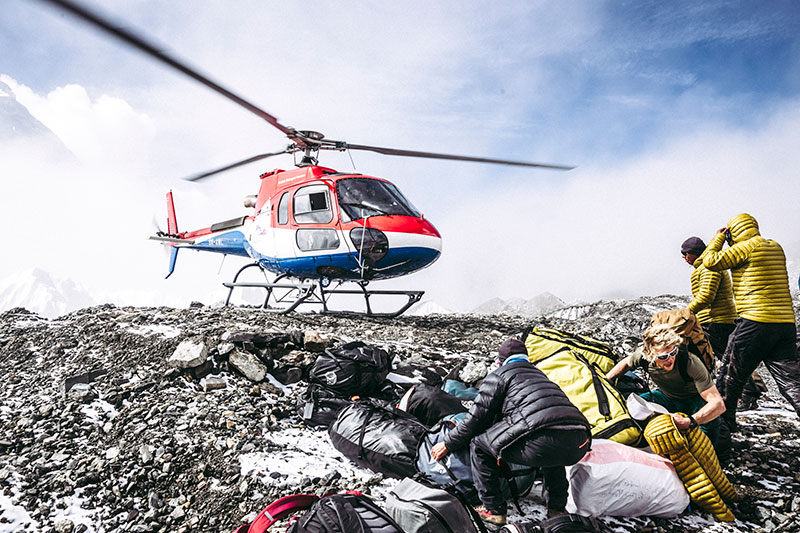
Domestic travel is rebounding strongly, with outdoor activity in the U.S. and Canada reaching new levels of popularity. The AAA membership follows you when you’re on the road. Beyond the Road complements the AAA – The Auto Club Group Membership by offering world-class emergency protection with field rescue, medical consultations and access to virtual doctor appointments, so you can roam with confidence anywhere in the contiguous United States and Canada, knowing that help will come to you.

“Beyond The Road supports you in the continental U.S. and Canada from the point of illness or injury to your choice of care facility anytime you’re away from home,” said Dan Richards, CEO of Global Rescue who also serves on the U.S. Travel and Tourism Advisory Board at the U.S. Department of Commerce and is a Global Member of the World Travel and Tourism Council (WTTC). “If you need advice while traveling, get sick or injured and are unable to get to medical treatment on your own, Global Rescue is there for you, near home or far away.”

Beyond The Road services include:  

  • Emergency field rescue from the point of illness or injury to the nearest care facility and then home. 
  • If you’re hospitalized 100+ miles from home and further hospital care is required, we provide medical evacuation to your home hospital of choice. 
  • 24/7/365 access to medical advisory services from nurses and paramedics trained to respond to any medical situation. 
  • Direct traveler assistance to help with local health care systems, visa and passport issues, translation, legal locators and real-time event alerts. 
  • Telehealth access 24/7/365 for real-time consultations and treatment (additional fees apply). 
  •  

“When COVID-19 grounded us at home, people turned to outside activities and travel in North America for a change of scenery and to refresh themselves in the great outdoors – and this trend continues,” said Debbie Haas, Vice President of Travel for AAA – The Auto Club Group, which is a member of the World Travel and Tourism Council.

“People are continuing to take road trips to the trails, the waterways, the mountains and elsewhere to hike, camp or ride bikes in the wilderness,” Haas continued. “The Beyond The Road pilot program is there for you if you are sick or injured and need advice or assistance. We are excited about this partnership with Global Rescue and plan to expand the program as the year progresses.” 

Participation is available to all U.S. and Canadian residents. Members of AAA – The Auto Club Group are eligible to receive a $50 discount on Individual one-year memberships for $159 and family memberships (up to six dependents age 26 or younger) for $289. 

The above offer only applies to AAA-The Auto Club Group members in Colorado, Florida, Georgia, Iowa, Michigan, Nebraska, North Carolina, North Dakota, South Carolina, Tennessee, Wisconsin; portions of Illinois, Indiana, and Minnesota; Puerto Rico, the Virgin Islands and Quebec, Canada.

To learn more, visit GlobalRescue.com/BeyondTheRoad, call 617-210-8171, or email beyondtheroad@globalrescue.com.

About AAA – The Auto Club Group 

The Auto Club Group (ACG) is the second largest AAA club in North America with more than 14 million members across 14 U.S. states, the province of Quebec and two U.S. territories. ACG and its affiliates provide members with roadside assistance, insurance products, banking and financial services, travel offerings and more. ACG belongs to the national AAA federation with more than 62 million members in the United States and Canada. AAA’s mission is to protect and advance freedom of mobility and improve traffic safety. For more information, get the AAA Mobile app, visit AAA.com, and follow us on Facebook, Twitter and LinkedIn.


About Global Rescue

Global Rescue is the world’s leading provider of medical, security, evacuation and travel risk management services to enterprises, governments and individuals. Founded in 2004, Global Rescue has exclusive relationships with the Johns Hopkins Emergency Medicine Division of Special Operations and Elite Medical Group. Global Rescue provides best-in-class services that identify, monitor and respond to client medical and security crises. Global Rescue has provided medical and security support to its clients, including Fortune 500 companies, governments and academic institutions, during every globally significant crisis of the last decade. For more information, visit www.globalrescue.com.


©2021 Global Rescue LLC. All rights reserved. GLOBAL RESCUE, TOTALCARE, BEYOND THE ROAD and related logos and indicia are service marks of Global Rescue LLC. All Rights Reserved.

Conditions, limitations and exclusions may apply. See Global Rescue’s Beyond The Road Member Services Agreement for full details.

†Global Rescue LLC provides technical and administrative services to Elite Medical Group, P.C. (“Elite Medical”), a professional corporation owned by licensed physicians that employs or contracts with physicians licensed to practice medicine where medical services are provided. Elite Medical physicians provide all medical care accessed via the Totalcare telehealth service and all associated fees are established and collected by Elite Medical. Elite Medical reserves the right to deny care for potential or actual misuse of their services.


Categories:

Press Release
Share This:

Traveler Confidence Rises, Covid-19 Fears Subside

Travelers embrace fast, on-site testing; oppose centralized vaccine data collection Lebanon, NH – April 26, 2021 – Fear of COVID-19 infection or quarantine as a primary concern among travelers plunged 37% while their confidence to…

Travelers embrace fast, on-site testing; oppose centralized vaccine data collection

Lebanon, NH – April 26, 2021 – Fear of COVID-19 infection or quarantine as a primary concern among travelers plunged 37% while their confidence to travel has grown significantly since the pandemic was declared more than a year ago, according to the results of Global Rescue’s Traveler Sentiment and Safety Survey. 78% of respondents are “much less” or “less” concerned about travel safety in 2021 compared to 2020, with 22% answering they are “more” or “much more” concerned.

“Travelers are twice as likely to plan international trips within the next six months as they were in September 2020,” said Dan Richards, CEO of Global Rescue, the leading travel risk, crisis management and response company. “Nearly three-quarters of surveyed travelers have already taken a domestic trip or are planning to take one before July,” he added.

As traveler confidence grows, Richards is encouraging government health officials to develop capabilities to identify, detect and respond to COVID-19 and emerging pathogenic threats. “By leveraging improvements in technology, including tools that detect active infection of COVID-19 and emerging diseases on exhaled breath, we can effectively recover from, and prevent, disease spread while boosting and protecting the travel and hospitality industry,” said Richards, who also serves on the U.S. Travel and Tourism Advisory Board at the U.S. Department of Commerce.

The overwhelming majority of respondents (91%) would submit to fast, on-site COVID-19 testing to check for coronavirus before travel, and 80% said they would pay for the test depending on cost.

Surveyed travelers are closely split in their support for (46%) or against (42%) using vaccine certifications for domestic travel. Approval shifts decisively regarding international trips with 70% of respondents favoring the use of vaccine certificates.

Travelers revealed strong preferences to control their own vaccination and testing data rather than entrusting centralized organizations. 45% of respondents want their proof-of-vaccination and COVID-19 testing results to be maintained by the individual, and presented as necessary. Another 16% do not want the data collected at all.

“Government officials must take a leadership role in recommending secure technology standards where users, rather than centralized organizations, store and control data used for vaccine, previous infection and testing verification for COVID-19 and future disease outbreaks,” Richards said.

The pandemic is leading travelers to modify their trip plans in a number of ways. A majority of travelers (54%) indicated they would avoid crowded destination and places with insufficient medical facilities (22%) as the leading reasons preventing them from visiting an area.

Respondents said the most important travel protection service today is medical evacuation from the point of illness or injury (49%) followed by Cancel For Any Reason trip insurance to protect against financial loss from last minute trip cancellation or disruption (21%).


Contact Bill McIntyre at bmcintyre@globalrescue.com or 202.560.1195 (phone/text) for more information.


About the Global Rescue Traveler Survey 

Global Rescue, a leading travel risk and crisis response provider, conducted a survey of more than 1,700 of its current and former members between Apr. 21-26, 2021. The respondents revealed a range of preferences for travel expectations, behaviors and safety concern in anticipation of a return to leisure and business trips domestically and internationally. 


About Global Rescue

Global Rescue is the world’s leading provider of medical, security, evacuation and travel risk management services to enterprises, governments and individuals. Founded in 2004, Global Rescue has exclusive relationships with the Johns Hopkins Emergency Medicine Division of Special Operations and Elite Medical Group. Global Rescue provides best-in-class services that identify, monitor and respond to client medical and security crises. Global Rescue has provided medical and security support to its clients, including Fortune 500 companies, governments and academic institutions, during every globally significant crisis of the last decade. For more information, visit www.globalrescue.com.


Categories:

News
Share This:

Study Shows Traveler Confidence Growing in 2021

Share This:

Tips for Planning Travel with Peace of Mind

Smart travelers plan for known travel safety risks: weather, health and coronavirus. It’s impossible to plan for the unknown, but a Global Rescue membership will provide peace of mind in the event of any travel…

Global Rescue, the pioneer of worldwide field rescue, has seen it all: dramatic evacuations, strange injuries and unusual accidents that defy logic. From getting scratched by a lemur in Madagascar to being attacked by a giraffe in Zimbabwe to sheltering from brush fires in Australia, we’ve responded to medical and security emergency calls from members on their travels across the globe.

It’s almost impossible to plan for the unknown. That’s when a Global Rescue membership is essential for peace of mind.

Smart travelers already plan for known travel safety risks.

“Most of the time, the conditions we treat are preventable,” said Jeff Weinstein, medical operations supervisor at Global Rescue. “Do your research and take the appropriate steps — such as acclimatization, taking the appropriate medication, consulting your doctor about vaccination requirements — before your trip.”

The known travel safety risks are the easiest to prep for: travel advisories, weather forecasts, potential health concerns, coronavirus testing and COVID-19 documentation.

Travel Advisories

The government issues travel advisories to inform citizens of safety concerns in different countries. This is the information Global Rescue primarily relies on for its destination reports.

“A number of governments publish travel advisories to alert their citizens of potential hazards to travelers and expatriates in various parts of the world. For Americans, the United States Department of State publishes travel advisories online,” said Kent Webber, senior manager of Intelligence Products and Services at Global Rescue.

“Global Rescue reviews travel advisories from the U.S., the United Kingdom, Canada, Australia and other countries to form a comprehensive view of the hazards and risks members may encounter during their travels.”

Travel advisories cover a range of topics including health, terrorism, violence, crime, civil unrest and weather. Formats vary from government to government.

“The Department of State uses a tiered advisory system with four levels: exercise normal precautions, exercise increased caution, reconsider travel and do not travel. The levels may apply to an entire country or regions within a country,” Webber said.

A travel advisory doesn’t mean you have to cancel your trip, but it does warrant a closer look at your destination.

“For most governments, travel advisories are intended as advice to inform travel decisions. They may advise of an approaching storm, a natural disaster, a coup, a military conflict, an uptick in crime or any number of unexpected events,” Webber said.

Keep in mind travel advisories can change quickly and may apply for a limited period of time or longer.

“Each potential traveler should perform their own decision calculus and decide whether the risk and potential hazards are outweighed by the urgency of their travel needs,” Webber said. “Global Rescue seeks to inform members of risks, but in the end, each member must decide for themselves.”

Weather Forecasts and Natural Disasters

Whether traveling for business or leisure, checking the weather is usually a first step for travelers. Is it going to be sunny for my beach vacation? Will there be snow for my ski weekend? Should I pack an umbrella and a raincoat if showers are forecast during my business trip?

Keep in mind meteorological seasons — hurricane season, rainy season etc. — can overlap astronomical seasons: winter, spring, summer and fall. In the United States, a season might be designated as fall. In India, fall might include monsoon or rainy season.

Avoiding particular seasons will provide peace of mind during travel. But some natural disasters — such as volcanic eruptions, earthquakes and other geologic processes — are not tied to a season. You can plan a trip around typhoon season in China, which runs May to November, but earthquakes can happen at any time.

“While earthquakes aren’t necessarily predictable, there are areas where they are more likely to occur,” said Harding Bush, associate manager of operations at Global Rescue. “When you combine poor infrastructure in those locations— places like Nepal, Haiti, India — it increases the risk.”

Plan to reschedule a trip if the area has been affected by a natural disaster. Talk to local experts to see if it is realistic to travel there and there are no risks for injury.

“Is the food and water safe? Is the infrastructure strained?” Bush said. “If you visit too early, you’ll be in the way of reconstruction efforts. Consider evacuation services as well.”

Bush suggests reviewing travel insurance to see if cancellations or adjustments due to natural disasters, specifically predictable and unpredictable, are covered.

“The ash from volcanoes can shut down air travel for an extended period of time. A volcano erupted in Iceland that shut down most of the air traffic in and out of Europe for weeks. Volcanoes may not be predictable but the levels of activity are known.”

Your Health

If you are visibly ill, there’s a good chance the airline won’t let you board the plane.

Not all illnesses are visible; many, like high blood pressure or an ear infection, lurk just below the surface.

Schedule a pre-travel health consultation before traveling. Discuss any health concerns with your primary health care provider to mitigate the risk of illness while away from home.

There are some instances where it just makes sense to postpone travel. The CDC recommends not traveling by plane if you have recently had surgery or any type of heart attack or stroke.

“If the doctor says you should not fly, then you should not fly,” Weinstein said.

Travelers with chronic illnesses, like asthma or arthritis, should plan for contingencies by packing enough medication for the trip as well copies of the original prescription. Reader’s Digest also suggests considering the location of health care facilities in your destination, diseases endemic to the destination and checking on the limitations of your health insurance.

Coronavirus Testing and Documentation

Testing is required for most international travel — but do you know which test is needed?

There are four types of diagnostic tests for COVID-19: polymerase chain reaction (PCR) tests, loop mediated isothermal (LAMP tests), antibody tests and antigen tests.

“PCR tests, LAMP tests and antigen tests detect which person has an active infection while an antibody test determines if there was a past infection,” said Roi Baligod, RN, AEMT, senior specialist in the operations department at Global Rescue.

The CDC recommends PCR, LAMP or antigen tests, but there’s no standard test for travel. The airline may ask for a PCR test and the destination country could request two tests: one before you fly and one after you arrive.

“There is a whole process and approach to testing,” Weinstein said. “Some countries, like the United States, will take antigen tests and PCR tests, some, like the United Kingdom, will only take a PCR or LAMP test. Antigen testing has become much more readily available and widely accepted for entering many countries.”

PCR tests, done in a high-tech lab, usually take 24 hours or more for results. Antigen tests have a rapid turnaround time, usually 15 minutes. With either test, there’s still the chance of a false negative or a false positive.

“Negative results of antibody tests could be a ‘false negative’ if taken too early before the body can produce the antibody in response to COVID-19,” Baligod said.

Travelers with a negative test result, false or otherwise, should be certain to obtain medical services to pay for quarantine if ordered by authorities. Travelers will also need to have documentation of any and all testing — and, in some cases, vaccination — in order to travel. Make triplicate copies: carry one copy on your person, store one in your luggage or carry on and leave one with a reliable person back home.

Travel Safety for Any Situation

How do you prepare for the unknown travel risks? A travel protection membership can provide peace of mind for any situation.

  • Travel Assistance. Whether it’s finding a health care provider or a lost passport, Global Rescue travel assistance can help with unexpected issues. Global Rescue can also provide referrals to legal representation in more than 160 countries. 
  • Destination Reports and Event Alerts. Let Global Rescue review the travel advisories for you. Set alerts for health, weather and security events worldwide and important information such as entry requirements, COVID-19 travel status and restrictions, detailed security assessments and required immunizations.
  • Security Membership. Our teams of military special operations veterans are available to provide advisory, consultation and evacuation services for events like natural disasters, terror attacks and civil unrest when you are in danger.

Global Rescue has been a leader and pioneer in the travel protection services industry since 2004. We provide the finest integrated medical, security, travel risk and crisis management services available anywhere, delivered by our teams of critical care paramedics, physicians, nurses and military special operations veterans. Click here to learn more. 

Categories:

News
Share This:

To fuel industry recovery, travelers need a confidence boost, WTTC speakers say

Share This:

The Next Big Thing in Travel Safety

For all its negatives, the pandemic has had its positives. Science and technology developments are improving travel safety by leaps and bounds. Global Rescue tracks some of the innovations helping travelers take a safe trip.

In 1918 the influenza pandemic infected an estimated 500 million people worldwide. The virus was identified in 1933 and a vaccine was licensed for human use in the U.S. three decades later in 1945. Polio was identified in 1840 in a medical report, but the vaccine wasn’t developed until the 1950s. Until 2020, the fastest vaccine developed, for the mumps, was the result of four years of research and testing.

Vaccine development typically takes 10 to 15 years but medical urgency and worldwide need combined with pharmaceutical advances and blank check funding changed all that in 2020. The coronavirus spread quickly across borders, countries and oceans. Lockdown measures were not enough to contain its infectivity. On March 30, the U.S. Department of Health & Human Services started a program coined “Operation Warp Speed” to expedite a COVID-19 vaccine.

By mid-summer, Moderna and Pfizer published data on early phase clinical trials. In December, both vaccines were authorized for emergency use by the U.S. Food and Drug Administration (FDA). The speed of scientific advancement — less than a year — was a triumph for the global health care community.

Vaccine development is one positive outcome from the pandemic and there have been many others. Even educational initiatives — mask usage, hand washing and social distancing — have reduced the severity of the 2020 flu season and are paving the way for safer travel.

“There has been enormous conjecture about the future of travel,” said Daniel Richards, CEO of Global Rescue. “There is no question we are entering a new normal. How do we predict and mitigate these kinds of events in the future? With science and technology.”

Here are a few of the innovations Global Rescue experts are following.

Breathalyzers and 3D Swabs

No one enjoys the feeling of a swab in their nasal cavities — or the anxiety while waiting 24 to 72 hours for the results of a PCR test.

With time of the essence, researchers went to work on new technology solutions to increase travel safety.

Researchers at Indiana University developed a breath testing device similar to a breathalyzer, which tests blood alcohol levels, to identify the scent in breath altered by COVID-19. Train travelers in Indonesia tested the GeNose breathalyzer, developed by the University of Gadjah Mada. Just by breathing in a bag, travelers will have a positive or negative reading within two minutes.

A Texas-based company, in collaboration with Texas A&M University and the U.S. Air Force, developed a device called Worlds Protect. Students around campus use a disposable straw to blow into the machine, which resembles a kiosk and have results in less than a minute. Researchers at the University of Pittsburg are turning a marijuana breathalyzer into a coronavirus breathalyzer.

Some research has made it out of the lab to complete initial trials and gain the approval of the FDA. Ohio State recently received FDA approval for two innovations: a new recipe for the viral transport media, a critical sterile solution needed to transport testing swabs, and 3D printed testing swabs, which are faster to produce than the traditional swabs. Both address the critical shortage of test kit components.

It will take time for any new technology to gain mass market acceptance.

“We are seeing a lag by governments and large organizations behind science and technology,” said Richards, who serves on the U.S. Travel and Tourism Advisory Board at the U.S. Department of Commerce. “We need to figure out how to get these organizations to catch up and realize the new reality, which is a good one with travel rebounding in a v-like manner. Hopefully we can influence them to open up more quickly.”

Digital Health Passports

Traveling during a coronavirus pandemic requires several pieces of paper: a passport, any vaccination cards for international travel to specific countries, prescription copies and now, documentation with coronavirus test results.

Richards, told The Washington Post testing and vaccination information could soon be stored electronically.

Organizations and corporations are developing technology to make international travel easier: a trackable, verifiable and portable system that could keep pace with a vaccine rollout expected to cover the entire world’s population by 2024.  From the IATA Travel Pass sponsored by the International Air Transport Association to VeriFLY’s mobile app, trials of new systems are underway.

“How individual health information is tracked, stored or shared potentially creates issues with data privacy, control and civil liberties,” Richards said. “Creating a system that meets the necessary security requirements, respects individual’s privacy rights and works with low-tech paper options is going to be challenging.”

Coronavirus Control Centers

When jet hijackings became a worldwide threat, airport security was stepped up, making luggage screening and metal detectors commonplace. Likewise, COVID-19 has triggered a worldwide need to identify and prevent infectious disease spread, making travel ports — like airports, rail stations, cruise ship terminals and border crossings — ideal locations for testing. In January 2020, three major airports, San Francisco (SFO), New York (JFK) and Los Angeles (LAX), implemented enhanced health screenings to detect ill travelers traveling to the United States on direct or connecting flights from Wuhan, China.

Alaska instituted arrival screening for visitors in June 2020. It was the first U.S. state to do so. At the Juneau International Airport, the testing site is located on the airport’s lower level near baggage claim. At the Ted Stevens Anchorage International Airport, the 24/7 testing site is next to baggage claim carousel 3.

In October, United Airlines was the first airline to roll out a new COVID-19 testing program for passengers traveling to Hawaii from San Francisco International Airport.

The concept has been piecemeal, but the precedent for a new travel process — coronavirus control centers in major airports across the globe — is there. New products, like faster tests, will give way to new processes such as testing at transportation hubs.

“Transportation hubs equipped with continuous flow air testers, breathalyzers and response facilities may become common,” said Richards.

Travel Protection Services

Travel insurance was a booming industry before the pandemic. Americans spent nearly $4 billion on travel insurance in 2018, according to a 2019 US Travel Insurance Association study.

Underwritten by large insurance companies and regulated by state agencies, travel insurance typically insures the financial investment of a trip, covering such things as the cost of lost baggage and canceled flights, according to the U.S. Department of State. It may or may not cover costs of medical attention you may need while abroad — and it often didn’t provide coverage for coronavirus.

“If you didn’t have a crisis and travel risk management plan before, you need one now,” Richards said.

Travel protection memberships offer more than financial compensation for cancelled or interrupted flights. Members are able to access services like medical evacuation, security extraction, travel intelligence and 24/7/365 advisory services. And during the pandemic, Global Rescue’s travel protection services are vital:

  • Advisory Services. If members need testing for COVID-19 before taking a flight, they can call Global Rescue to find the nearest and most appropriate health care facility.
  • Case Management. If a life-threating illness or injury occurs, Global Rescue’s medical team can help with case management, translation services or advisory services.
  • Medical Transport. Our operations team will handle the logistics of getting a member home safely. If the emergency medical situation includes COVID-19, all aspects of ground and air evacuation are in compliance with CDC regulations.

Click here to learn more.

Categories:

Health & SafetyTravel
Share This:

How To Travel Safely During COVID

Can you travel safely during COVID? Global Rescue experts have advice on everything from travel advisories to destination restrictions.  

Since January 2020 when COVID-19 was identified in Wuhan, China, Global Rescue has fielded thousands of calls about traveling during the coronavirus outbreak.

COVID-19 is a new coronavirus that has not been previously identified in humans. While it’s true the annual flu kills more people, albeit at much lower rate, scientists, physicians and travelers are familiar with the highs and lows of a flu season.

With COVID-19, there are still a lot of unknowns — and this is what worries travelers.

The Global Rescue Difference

“Are there any recommendations for travel to Taiwan as a stopover during a trip to India? Do you know what is happening on the ground there?”

“I am looking to fly through Hong Kong and wanted to make sure it is currently safe to do so?”

“Do you have specific reports on the virus yet? We are traveling to Vietnam.”

Here’s advice from Global Rescue experts for travel safety in a coronavirus world.

1. Evaluate options

As long as you follow reputable hygiene and social distancing precautions, the odds are in your favor that you will not contract coronavirus. If you do contract coronavirus, the odds are in your favor that you will survive.

Questions you need to ask yourself before travel:

  • Are you aware that borders can close without notice?
  • Would you be okay with recovery in a foreign hospital?
  • Do you understand the protocol to prove you are contagion free may not be well understood in your location?
  • If you are not able to return home by air travel, are there other transportation options? 
  • Do you realize your family will not be able to visit you?

2. Assess your health

A pre-travel health consult is always recommended before traveling. COVID-19 is widely reported as more dangerous for seniors and people with a history of health conditions. Travelers with these characteristics should think think about their increased risk and ask a doctor for advice before a trip abroad.

According to China’s National Health Commission (NHC), 80% of coronavirus fatalities occurred in people over the age of 60 and 75% had an underlying disease.

While the Centers for Disease Control and Prevention (CDC) notes there’s still a lot to learn, current information does suggest older people and those with severe chronic health conditions, such as heart disease, lung disease and diabetes, are at higher risk of developing more serious illness from COVID-19.

3. Research your destination

The Global Rescue intelligence team is closely monitoring the outbreak, regularly updating a daily coronavirus report. The detailed report contains the latest information on restrictions and flight status updates, along with outbreak locations and data, signs and symptoms and advice for travelers. Members may also access real-time alerts for travel warnings through the My Global Rescue mobile app.

“As fewer and fewer countries remain coronavirus-free, travelers should gather information about the extent of the outbreak in their intended destination and make a decision consistent with the severity of the situation,” says Dan Richards, Global Rescue CEO.

4. Follow travel advisories

Be sure to do thorough pre-travel research for international travel. Start by visiting the U.S. Department of State website to check for any travel advisories for your intended destination.

The Department of State issues its travel advisories in four levels. When a country is listed as a “Level 4,” the Department of State advises U.S. citizens to avoid traveling to the destination or to leave as soon as it is safe to do so.

Be aware of varying levels. While the Department of State issues an overall travel advisory level for a country, levels of advice may vary for specific locations or areas within a country. For example, you might find the country you’re going to is listed as a Level 2 – Exercise Increased Caution, but a particular area of your destination might be listed as a Level 3 – Reconsider Travel.

Also consider any travel health notices for your destination, which are issued by the CDC to inform travelers and clinicians about current health issues.

5. Plan for restrictions

Global Rescue recommends travelers carefully review all coronavirus control policies for their destination before departure. Defer travel if there is a chance of being quarantined due to coronavirus.

Every traveler should be aware that restrictions — like mandatory quarantines or entry denials — can be imposed without warning.

Individual countries can also impose travel restrictions without warning. Borders may close without notice.

“Travel uncertainty will continue for at least a few weeks,” Richards said. “Travelers should plan for restrictions, cancellations and involuntary quarantines for an uncertain length of time.”

6. Practice safe hygiene

Dr. Carmen Dolea, Head International Health Regulations Secretariat of the World Health Organization, recommends etiquette similar to the flu or any respiratory infection. Dolea’s recommendations include screenings, testing and washing your hands often.

Other health and safety experts suggest social distancing, avoiding contact with sick people, working from home and self-quarantining to help reduce virus exposure.

7. Prepare for new guidelines

In countries with ongoing transmission of COVID-19, plan for an entry or exit screening. Screenings include taking a temperature, checking for symptoms (like a cough) and possibly a questionnaire to collect history of exposure or contact information.

Now some countries require documentation of a negative test result and/or proof of vaccination. Other countries are considering digital health passports. Do your research on the paperwork needed before travel. 

8. Get travel protection services

At the end of many articles with information about COVID-19, you’ll typically find a recommendation to add travel insurance.

IMG Signature Travel InsuranceSM is the perfect add-on to a Global Rescue membership, providing coverage against a variety of unexpected expenses.

Global Rescue TotalCareSM members have access to a team of medical experts for real-time video consultations and treatment, without leaving home. Doctors are board-certified and licensed in 48 states.

Share This:

COVID-19 Documentation Education

Travel during coronavirus is all about documentation: passport, vaccinations, health insurance and travel protection memberships. Global Rescue experts share suggestions to help you prepare paperwork for travel.

Traveling? Be prepared for paperwork.

A Global Rescue member traveling to Costa Rica requested proof of her Global Rescue membership and her travel insurance policy before her trip. The letter needed to be in English and Spanish and specifically address the three questions the Costa Rican government requires: the validity of the travel insurance policy during the dates of visit, coverage for medical expenses and coverage for quarantine lodging while in Costa Rica.

Another Global Rescue member was denied boarding a flight to the Turks and Caicos Islands because the dates on their travel protection membership and IMG travel insurance policy were incorrect.

Covid-Services_web-page2

“Travelling in the COVID era is a minefield,” the member wrote. “The dates per se are fine, but the specific form required by Turks and Caicos must reference specific benefits — and that we won’t become a burden on the state.”   

“Having the correct travel documentation right now is critical: passport, vaccinations, health insurance, even travel insurance. There is no question that we are entering a new normal,” said Daniel Richards, Global Rescue CEO.

Paper Chase

If you are boarding a flight to the United States, you will need to show a paper or electronic copy of your negative test result to the airline. Once you arrive at your destination, public health officials might request to see it as well.

It’s not the same for every airline — Australian airline Qantas plans to ask passengers to provide proof they’ve had a COVID-19 vaccination if they want to fly into or out of the country — and requirements vary for every country. Greece is currently allowing tourists with a negative COVID-19 PCR test to visit starting May 17. Other countries, like Cyprus, currently say travelers who can provide proof of vaccination upon arrival will no longer have to present a negative COVID-19 PCR test or be subject to quarantine.

“COVID is treacherous, but equally onerous is the paper chase required by other countries to enter,” said a Global Rescue member. “PCR tests, insurance(s), special (extensive) authorization applications — one application was 11 pages long. The form is submitted online for clearance and authorization is either granted or denied. No authorization to enter, no travel.” 

The lack of uniformity is also an opportunity for dodgy behavior.

“I know one person who travelled roundtrip between Switzerland and Thailand through Amsterdam flying a major airline on a faked COVID-19 test photoshopped using his friend’s legitimate test result. The same person tried this scam entering Spain recently and it didn’t work. There is a lack of uniformity in the methods used at international borders to verify test certificates,” said Roger Hyde of Dulabab Journeys, a U.S.-based travel company and a Global Rescue Safe Travel Partner.

Vaccine or Testing?

In January, Iceland started providing vaccine certificates to citizens to help them avoid border restrictions. The country will also recognize vaccine passports from other countries, allowing visitors to skip testing or quarantine rules if they show proof of full COVID-19 inoculation. But not every country will require proof of vaccination for entry. Testing and quarantines may continue to be the norm as the vaccine continues to roll out worldwide.

Either way, proof of testing or vaccination is currently a paper system.

According to the CDC, airlines require a negative test result for international arrivals to the U.S. with “sufficient personally identifiable information on the test result to ensure a match with the person’s passport or other travel information. This could include but is not limited to name, date or birth, age, passport number, etc.”

Countries in Latin America, Asia and Africa require a yellow fever vaccine and immunized travelers carry the Yellow Card, a paper certification of vaccination issued by national health agencies and enforced by The World Health Organization. U.S. COVID-19 vaccine recipients have something similar: a small white card called a COVID-19 vaccination record card with the vaccine received, the date received and the location you received it.

But Daniel Richards, CEO of Global Rescue, told The Washington Post he thinks all testing and vaccination information will soon be stored electronically.

Companies and countries are developing what travelers will eventually need: a trackable, verifiable and portable system that could keep pace with a vaccine rollout expected to cover the entire world’s population by 2024. 

The CommonPass, a way to digitally document health status while traveling, is currently in trial. International Air Transport Association (IATA) offers the IATA Travel Pass, a digital platform to validate and authenticate all country regulations regarding COVID-19 passenger travel requirements. Delta and American Airlines are using a mobile app called VeriFLY that works like a health passport, allowing international visitors to the U.S. to verify they’ve tested negative for COVID-19.

The move to digital doesn’t eliminate concerns.

“There are issues with individual and civil liberties with tracking health information,” Richards said. “There are also bad actors around the world who might want to get access to that information. Creating a system that meets the necessary security requirements while respecting individual’s rights is going to be challenging.”

What to Do in the Meantime

While the technology is being developed and tested, here are some steps to keep you on the road and in the skies.

  • Check with your destination country and take the required COVID-19 test at a certified lab in due time before traveling.
  • Check your health insurance and see if it covers costs when you are abroad. If not, sign up for international health care coverage in case you need to cover medical expenses while abroad.
  • Investigate travel protection memberships in case you get ill or injured while traveling and need transport to a hospital. Not every membership covers COVID-19 so be sure to ask.
  • Have all of your travel information in one place: vaccinations, coronavirus test results, proof of health insurance, proof of travel protection services, passport, driver’s license, etc.
  • Passengers whose documents are in a language other than English should check with their airline or aircraft operator before travel.
  • Get documentation translated, if necessary.
  • Make triplicate copies: carry one copy on your person, store one in your luggage or carry on and leave one with a reliable person back home.

Global Rescue provides members with advisory and transport services in connection with COVID-19 in the same manner as any other infectious condition. So long as it is safe for both the member and the transport team and there are no rules or regulations either in the member’s location or the destination prohibiting it, Global Rescue will provide transport services to members. Click here to learn more.

Categories:

News
Share This:

How lockdowns, quarantines and COVID testing will change summer travel in 2021

Categories:

Press Release
Share This:

LUX Life Magazine Names Global Rescue  “Best Travel Risk Management Solutions Organization – USA” 

Lebanon, NH – April 6, 2021 – LUX Life Magazine, a U.K.-based premium lifestyle publication, named Global Rescue winner of the “Best Travel Risk Management Solutions Organization – USA” in the magazine’s 5th annual Travel…

Lebanon, NH – April 6, 2021 – LUX Life Magazine, a U.K.-based premium lifestyle publication, named Global Rescue winner of the “Best Travel Risk Management Solutions Organization – USA” in the magazine’s 5th annual Travel & Tourism Awards. 

“Global Rescue is the only vertically integrated travel risk management solution, taking up a duty of care for all, from private members such as individuals and their families, government employees and enterprise corporate clients,” said Michael Pusey, Editor at LUX Life Magazine.  

The annual LUX Life Travel & Tourism Awards are conferred to nominees who demonstrate expertise within their field, dedication to customer service and a commitment to promoting excellence.  

“Global Rescue provides its consumer, enterprise, and government clients with unparalleled resources to address the increasingly challenging and complex world we live in,” said Dan Richards, CEO of Global Rescue, member of the U.S. Travel and Tourism Advisory Board at the U.S. Department of Commerce and a Global Member of the World Travel and Tourism Council.  

Global Rescue’s pioneering methods and model have secured its reputation as the most forward-thinking services of its kind.  

“The company provides the most up to date services available both in terms of the technology it uses and the training of its personnel, delivered by teams of critical care medical experts and military special operations veterans,” Pusey said. 

Global Rescue has been offering medical evacuation throughout the pandemic in response to the COVID-19 crisis.  

“It recognized the outbreak early, immediately sending out worldwide alerts to its members, repatriating hundreds of individuals and providing updates to the public, the press and to business leaders. Global Rescue responded to the pandemic by eliminating the more-than-100-mile rule that it previously held, providing support for its members venturing out around their private abodes,” Pusey said. 

“Global Rescue handles high intensity and complex situations as well as the smaller tasks during travel such as advice on a destination or what to do if a passport is stolen,” he said. 

About the LUX Life Magazine Travel & Tourism Awards 

The LUX Life Magazine (circ. 238,000/2,000,000 annual page views) Travel & Tourism Awards cover all travel and tourism markets including: travel agencies and services, food and beverages providers, lodging and accommodations management, transportation, entertainment and tours. The 2021 Travel & Tourism Awards are judged purely on a merit following in-house research and analysis of online and public domain information as well as any materials supplied by nominees.  

About Global Rescue

Global Rescue is the world’s leading provider of medical, security, evacuation and travel risk management services to enterprises, governments and individuals. Founded in 2004, Global Rescue has exclusive relationships with the Johns Hopkins Emergency Medicine Division of Special Operations and Elite Medical Group. Global Rescue provides best-in-class services that identify, monitor and respond to client medical and security crises. Global Rescue has provided medical and security support to its clients, including Fortune 500 companies, governments and academic institutions, during every globally significant crisis of the last decade. For more information, visit www.globalrescue.com.


Share This:

Travel with Your Own Protection Team

There’s a team of experts behind every Global Rescue membership. It’s like having a doctor, paramedic, logistics expert, translator, intelligence analyst and security advisor on speed dial when you travel. 

You’re not alone when you board that plane, train or ship. Your Global Rescue membership is backed by 16 years of travel crisis experience. Global Rescue members travel with a virtual team of experts: a doctor, a paramedic, a translator, a logistics expert, an intelligence analyst and a security advisor.

More Than a Card

Behind every membership, there are Global Rescue professionals ready to help you travel better and safer — before, during and after a trip.

Global Rescue operations centers are staffed by experienced physicians, nurses, paramedics and military special operations veterans. Team members have experience with hazardous environments, peacekeeping operations, Himalayan expeditions, protection services as well as wilderness skills, crisis response training and medical evacuations.

It’s like having your own protective detail on standby, prepared to help when you need medical or security advice or a field rescue.

That protection is tailored to member needs and available for a spectrum of travel issues: lost passports to broken bones to sudden coronavirus lockdowns.

You may not need the entire team at once, but they are there, at the ready, for Global Rescue members.

Whether you are traveling with family or traveling on business, here’s how each Global Rescue expert can help during your trip.

Intelligence Analyst

Global Rescue has a team of intelligence experts researching travel destinations and tracking possible risks 24/7. Your Global Rescue membership gives you access to a wealth of data — through the app, online or with one phone call — to help you plan your travel.

Even after you’ve researched and selected your destination, Global Rescue keeps travel risk information at your fingertips. You can set up real-time alerts to keep you apprised of any health or safety issues while you are on your trip.

“To keep travelers prepared and informed, the Global Rescue intelligence team publishes detailed reports, real-time alerts and analyses on more than 217 countries and principalities,” said Melanie Goldberg, senior intelligence analyst at Global Rescue. “This means members always have the latest information on conditions and potential threats around the globe.” 

security-tea

Translator

It can be frightening to lose a passport or visit a doctor in a country where you don’t speak the language. Global Rescue members can call operations 24/7/365 for translation help. Our experts set up a conference call with the member and an interpreter or translators fluent in more than 160 languages.

When registered nurse Linda Quinn was on a month-long trip in Europe, she called Global Rescue to help her communicate with medical providers.

“For kind of an everyday thing you could handle easily at home, I was so impressed how helpful Global Rescue was when you’re in a country where there is a language barrier,” Quinn said.

Paramedic

It might be what you pictured when you signed up for a Global Rescue membership: a helicopter bringing a paramedic to your remote location and providing a field rescue from the point of illness or injury. This is what Global Rescue is known for: worldwide field rescue, medical evacuation to a home hospital and a paramedic by your side every step of the way.

Not every call results in a helicopter rescue. Sometimes you just need to ask a question about a symptom, get a recommendation for the best and nearest health care facility or have someone review the medical advice you received in a foreign country. A membership can have your back in many different ways.

Doctor

If you have a TotalCare membership, you’ll be able to request an urgent care consultation at any time. Your request is answered by an in-house Global Rescue operations team member and then you will be placed into a live video conference with a board certified, licensed doctor from Elite Medical Group (EMG).

visit-doctor-before-travel

Logistics Expert

The analytical and methodical side of your brain may not be functioning at full capacity when you are ill, injured or scared. That’s when a Global Rescue membership can help. Our in-house operations teams have organized, planned and executed thousands of successful missions.

“When I became unwell on my recent expedition and required evacuation from base camp, Global Rescue worked seamlessly with my expedition company to arrange everything,” said Global Rescue member Sophie Turner, who called Global Rescue while climbing Aconcagua. “As the patient and client, I did not feel any stress or concern over my well-being as everything was coordinated very quickly and smoothly. I felt extremely well supported by Global Rescue.”

It’s one of the benefits of having experienced military veterans on the other end of the phone. The operations team maps out Plan A, but also has a Plan B, C and D prepared in case the bridge is closed, the airport is shut down or major thoroughfares are gridlocked. When you’re ill or injured, Global Rescue can worry about the “what ifs” of your travel.

Security Advisor

Access to a crisis management team comes with each membership. If there’s a natural disaster, terror attack or civil unrest, one call, email or in-app message will put you in touch with Global Rescue’s operations personnel. You can be confident that the team, with years of military special operations expertise, will provide the best advice for your situation from identifying the safest shelter or the best path for an extraction.

This service is available for individual members as well as enterprise clients. Harding Bush, associate manager of operations at Global Rescue, shares an example. As part of Global Rescue’s consulting service, he provided a proactive threat/vulnerability assessment for a large call center in Texas.

“The company had an alternative site in case of an emergency, like a hurricane, but hadn’t developed a realistic plan,” he said. “They were unable to answer questions like how do you get people there? If they work from home, what happens when the power goes out? Then how do you get everyone back to work after the hurricane? How do you re-establish the business?”

Whether you’re traveling close to home or overseas, you’ll have peace of mind that every trip will be a safer trip with a Global Rescue membership.