Categories:
Health & SafetyTravelApril 22, 2022

What is duty of care and how does it play a role in this new work-from-anywhere world?
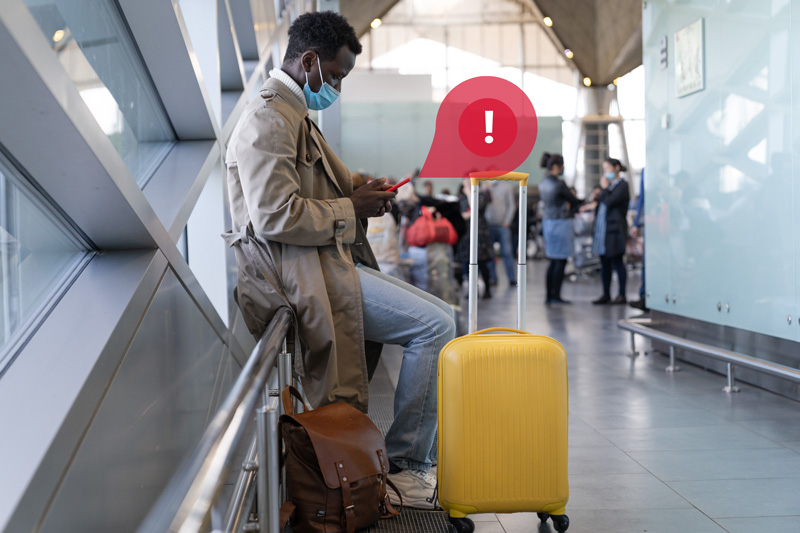
The pandemic has changed the business workforce for the near future. Increasing digital nomadism and more location-independent workers are driving focused attention among business leaders and their duty of care requirements.
Employment attorney Nicola Comelli agrees. “As an employer, managing digital nomads can be a compliance minefield,” he said.
What is the duty of care definition? According to Jeffrey Ment, managing partner of The Ment Law Group, P.C., in Hartford, Connecticut, “duty of care means an organization has a legal obligation to take reasonable care of its traveling employees, students, faculty and so on. Duty of care means acting reasonably as a prudent person or company should act under the circumstances. What might be reasonable for travel to Miami, might not be the same reasonable for travel to Dubai.”
Popularity of the Digital Nomad Practice

The “work-from-anywhere” model isn’t new, it was on the rise before 2019. But the pandemic boosted its participants. According to a study by the Harvard Business Review, Americans self-describing as digital nomads rose by 49%, from 7.3 million in 2019 to 10.9 million in 2020.
The recent surge is coming from people who once held traditional office jobs. “Traditional jobholders now make up a majority of those pursuing this nontraditional work lifestyle,” according to the study.
Changes in the workforce mean duty of care must evolve, too. “Duty of care today is different than it was three years ago when we weren’t thinking about COVID,” Ment said. “Today, duty of care encompasses COVID-related things like planning for procuring testing kits if you’re going to have testing kits made available to your employees in another country because they’re not able to get a testing center, or there isn’t one. Duty of care evolves with the times.”
“The pandemic has demonstrated productive work can be done from almost anywhere and that is leading to people taking advantage of that circumstance,” said Dan Richards, CEO of Global Rescue. “The prospect of working from anywhere under more flexible attendance policies is going to give many staffers the ability to live and work in places they couldn’t before.”
Digital Nomadism & Duty of Care
Digital nomadism doesn’t change an employer’s duty of care obligations, but it certainly raises awareness among C-suite executives, senior management teams, HR professionals, union leaders, government agencies and employees to examine the rigor of their organization’s current duty of care capabilities.
Employers are responsible for complying with local employment laws. If you have staff working in another country then you may be bound by foreign employment laws – including payroll tax payments, social security contributions, holiday allowances, overtime pay, maximum working hours and more. Failure to comply could result in fines or legal action.
“Your duty of care for a diverse array of travelers – like digital nomads and bleisure travelers – must provide what they need,” Ment said.
Work visas and permits can be cumbersome. Digital nomads often rely on tourist visas to enter a foreign country since that documentation is easier to obtain than a work permit. But that could be against the law depending on the duration of your stay. Forty-one countries, including Portugal, Greece and Thailand, have introduced “digital nomad visas” to remove that bureaucratic gap.
These “digital nomad visas” give workers “the legal right to work remotely while residing away from their country of permanent residence,” said Ward Williams, an associate editor with Investopedia.
Richards agrees but points out metropolitan areas may not benefit. “This will be good for the economies of many semi-rural communities, but it could be troublesome for cities.”
Managers must be aware of their employees’ locations. While the staff member is responsible for getting permission to work in a foreign country, it is up to company leadership for the business to comply with the laws of the host country.
Employer Responsibility in This “Work From Anywhere” World

One of the biggest management challenges in this evolving environment will be the ability for company leaders to update and meet their duty of care requirements to protect their employees whether they are office-bound, location-independent, or on business travel.
Company leaders like CEOs, chief security officers, travel managers and human resources directors are accountable for the development and oversight of policies, programs and logistics that protect traveling staff, whether they are office-bound or not.
“They carry a duty of care responsibility to their people, to take care of them and avoid exposing them to any unnecessary or undue risk,” Richards said. “Managing the duty of care responsibilities for a remote workforce will be a new challenge as unprecedented numbers of employees log in from the beach, mountains and other places where they’ve chosen to live,” he said.
Ment agrees. “The old plans aren’t good enough anymore. They’re rusty and they need to be dusted off and refreshed.”
Global Rescue can help you sort through the seven elements of a duty of care policy, including:
- Who are the company directors or officers responsible for fulfilling the organization’s duty of care?
- Does the policy include a risk assessment that includes the organization’s travel risk profile?
- Is there a risk management plan?
- Does the policy include a crisis response plan?
- What is the education or training program for employees and travel risk management providers?
- Is there a tracking method or technology capable of monitoring and assessing incidents?
- Does the program include a post-travel feedback mechanism to help refine risk management and crisis response plans?
“It is essential that an organization’s leadership learn the laws, regulations, standards and prevailing practices of countries where their employees are visiting as digital nomads,” Ment said. “Doing so can insulate the organization from multi-million dollar judgments and significant harm to the organization’s reputation and brand.”
April 19, 2022
All Photos © Cat Vinton
Chris Brown, an explorer with the goal of reaching all seven Poles of Inaccessibility, hired Global Rescue security and operation experts to guide his Africa trip.
Chris Brown, an inveterate explorer and adventurer from the United Kingdom, knew about the Seven Summits Challenge, where people set a goal to climb the highest mountain on each of the seven continents.
But the idea wasn’t for him.
Instead, he turned the concept into his version of the Seven Summits: The Seven Poles of Inaccessibility.
“A Pole of Inaccessibility is the location in a geographical area that is the furthest away from all its borders,” writes Brown on his blog, Poles of Inaccessibility. “The borders could be physical, such as the sea, or political, such as a state boundary.”
There is one pole on each of the five largest land masses on Earth (North America, South America, Africa, Eurasia and Australia) and the two frozen poles (Northern and Southern).
Brown’s goal is to become the first person to visit all seven.
“I’m an explorer at heart,” Brown said. “I would have loved to have lived years ago when countries were being discovered or years in the future when we might be exploring planets. For now, I make do with the corners of the Earth that may not have been visited by many people. It’s not so much about the actual remoteness but the journey getting there and the people I meet along the way.”
Expedition to Africa
Brown’s first successful attempt was the North American Pole of Inaccessibility on land belonging to the Oglala Sioux Tribe in South Dakota. An attempt at the Antarctic Pole of Inaccessibility was thwarted by a series of mechanical faults and four enormous Antarctic hurricanes.
His next bid: African Pole of Inaccessibility.
“At first sight, the trip didn’t seem too difficult. I’d take a regular flight to the capital, Bangui, hire a car, and drive Route National Number 2 to the township of Obo,” Brown said. “I’d overnight at a hotel and, the next day, drive a track shown on Google maps to a location close to the pole, then travel through the jungle to the pole. Of course, I’d need local help for the last part, but it all seemed so possible.”
Research quickly proved this pole was located not only in the hardest part of the continent to reach, but close to one of Africa’s more politically contentious border intersections: the tripoint meeting of the Central African Republic (CAR), the Democratic Republic of the Congo and South Sudan.

“The entire region is best described as unstable. Travel in and around CAR is dangerous. Several governments advise against all travel in the country, with the exception of the airport at Bangui and the city center for only essential travel,” Brown said.
Global Rescue’s destination reports summarize the challenges: Sudan’s borders are militarized and violence breaks out regularly. The Lord’s Resistance Army (LRA) is active near the border with Uganda and violence between tribal groups is common. The Democratic Republic of the Congo is affected by political instability and high rates of crime. Violent militias control areas in the eastern region. In the CAR, sectarian tensions often escalate into violence. Armed bandits pose a threat, which is compounded by a weak and corrupt police force.
Risk Mitigation from Start to Finish
Brown, the owner and director of an internet marketing business, decided to hire some security experts for his trip.
Fortunately, he was already a Global Rescue member. Brown knew Global Rescue offered customized security and travel risk solutions.
“I dropped an email to Global Rescue and received a reply within hours: ‘Call me.’ That I did and explained briefly I wanted to get to a specific location near a small town in CAR called Obo,” Brown said. “It turned out the guy I’d reached at Global Rescue had actually ‘worked’ in Obo.”
Global Rescue’s in-house operation center is staffed by experienced nurses, paramedics and military special forces veterans, including former Green Berets, Navy SEALs, Army Rangers and Defense Intelligence Agency personnel. Brown happened to get a Global Rescue security expert who is a veteran of the United States Army Special Forces and had experience with the LRA.
After Brown’s initial intake call, the team got to work on a feasibility study. Global Rescue looked at the trip from all aspects: aviation assets, country clearances, COVID restrictions, terrain and weather analysis, and logistical analysis.
Brown was briefed throughout the planning process, offering input and signing off on the proposed course of action.
“It’s a highly individualized project I’ve set for myself, and I only know of two other people who are trying to visit all of the poles,” Brown said. “If anyone is daft enough, I’d strongly suggest they work with experts like Global Rescue who have hands-on experience in the exact region.”
Planning Around Civil Unrest and COVID-19

It’s not an easy task to plan a trip to an area with a host of risks from terrain (a triple-canopy rainforest) to temperature (38 Celsius/100 Fahrenheit with high humidity) to transmission (Zika virus, Dengue Fever, Ebola and COVID-19) to target (unmarked and more than 1,100 miles from the nearest coast).
With medical and security teams staffed and led by experienced special operations veterans, Global Rescue excels at complicated travel plans. The operations team developed a five-phase plan with a timeline, key actions and contingency plans for each phase.
“The Global Rescue Security Team planned and led the entire operation,” said Harding Bush, manager of operations at Global Rescue. “The intelligence and medical teams also provided support during the planning process and backside support throughout the operation. It was a turnkey operation for the client.”
The result: a 40-page PowerPoint that looks at every detail of the trip — down to the minute. Say, for example, the team meets with civil unrest in Bangui. “The team will shelter in place and assess the situation to determine whether to continue or abort,” Bush said
What if the team meets up with hostile forces on the ground in Obo? Team will move 5 km away from the area and make communication with the air crew to determine the next action.
COVID-19 restrictions also shaped the trip.
“Our original planned route took us through Morocco into CAR, but COVID restrictions and quarantines would have hindered our travel, increased our travel time significantly, and ultimately increased our exposure for something to go wrong,” Bush said.
The issue with the new plan: all flights over CAR territory require government permission and have to originate in Bangui.
“We needed a government facilitator. Global Rescue’s contacts in the region were at the base of the whole operation. Without them, none of it would have happened,” Brown said.
Mission Accomplished
The result? Two Global Rescue operations and logistics experts flew from the U.S. to the U.K. to meet Brown and mission photographer Cat Vinton in London.
The next stop was Bangui, but “the original commercial flight itinerary out of London into Bangui (via Air France) was rescheduled,” Bush said. “We had a buffer planned in to our travel timeline that would have allowed us to take the rescheduled flight and still attain mission success, but decided to book another itinerary (through Kenya Air) to save the buffer in case we needed it later.”
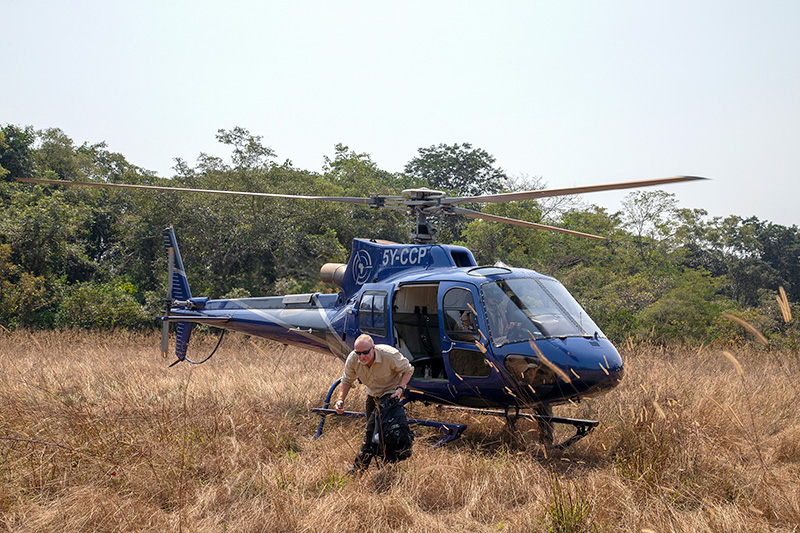
The next day, the group took a two-hour chartered aircraft from Bangui Airport to the dirt airfield in Obo, meeting up with the Forces Armées Centrafricaines (FACA) security detail, four soldiers from the local armed forces. A second chartered flight, this time on a helicopter, delivered the team in two stages to the designated site.
Once there, “we had to pick our way through fairly dense jungle with the helicopter hovering above our position, out of small arms fire range, in case of emergency,” Brown said. “High temperatures and high humidity combined with a total lack of air movement under the canopy made this the hardest section of the trip. The pace was unrelenting with time constraints on both the helicopter fuel and a night curfew for returning to Bangui.”
The trip to the African Pole of Inaccessibility was a success. The team pinned down the exact point (5°39.0’N, 26°10.2’E), took photographs and an earth sample.
Bring Global Rescue with You

Outside of one flight being rescheduled, the expedition went according to plan.
“There isn’t much we would have done differently. Maybe if the COVID-19 conditions were different we would have taken a more direct route to get in and out of CAR, but it worked out fine with Kenya Air,” Bush said.
Is the quest to reach the Poles of Inaccessibility suitable for the average traveler?
“In CAR and many other African countries, the situation can go sideways in an instant,” Bush said. “With proper planning, risk mitigation and experienced personnel leading the expedition the average traveler would have a great experience.”
Brown’s quest continues. He cancelled an attempt at the Northern Pole of Inaccessibility in April 2022 because of the war between Russia and Ukraine, but, as soon as possible, he’ll arrange an expedition to the Australian Point of Inaccessibility in the remote outback of Australia.
“Why don’t you visit a PIA with Global Rescue?” Brown said. “It’s far more interesting than just visiting the usual attractions.”
If you’re planning an expedition in a remote or dangerous destination, Global Rescue provides unparalleled travel risk, crisis management and staffing solutions to individuals, businesses, NGOs, academic institutions and governments worldwide. Since 2004, Global Rescue has set the industry standard for emergency action plan consulting and medical and security staffing solutions. Let our highly experienced team help you in an increasingly complex and dangerous travel world.
Travelers plan to spend more time and money on trips to make up for lost travel
Lebanon, N.H. – April 18, 2022 – Travelers want a pandemic-related policy requirement for negative COVID test before returning to the U.S. from abroad eliminated, according to the world’s most experienced travelers responding to the Global Rescue Spring 2022 Traveler Safety and Sentiment Survey.
A third of travelers (32%) say the U.S. government should immediately eliminate for everyone the requirement for a negative COVID test for fully vaccinated inbound international travelers to the U.S. while nearly an equal amount (34%) say the requirement should be removed for U.S. citizens but not non-citizens.
“Unfortunately, many of today’s governmental rules are not medically indicated. We’re hopeful that changes soon,” said Dan Richards, CEO of Global Rescue, the world’s leading provider of medical, security, evacuation and travel risk management services and a member of the U.S. Travel and Tourism Advisory Board at the U.S. Department of Commerce.
The overwhelming majority of travelers (84%) are less or much less concerned about travel today compared to the beginning of the pandemic. But 15% of survey-takers report producing a negative COVID-19 test to meet U.S. re-entry requirements is their main travel concern behind being stranded away from home after testing positive for COVID-19.
According to the survey, many travelers believe they no longer need pandemic protocols, including masking and physical distancing. Almost half of the respondents (42%) say there are no pandemic-related behaviors they plan to continue unless required. A third (33%) of respondents disagree and say they plan to continue masking despite easing of mask requirements.
“Travelers want to travel now more than ever. One–out–of four travelers (27%) will spend more time or more money – or both – on trips to make up for curtailed travel due to the pandemic. They’re going to get their travel revenge once governments allow them to move with fewer or no restrictions,” Richards said.
About the Global Rescue Traveler Sentiment and Safety Survey
Global Rescue, the leading travel risk and crisis response provider, conducted a survey of more than 1,200 of its current and former members between April 5 and 9, 2022. The respondents exposed a significant range in travel confidence and international travel activity as well as preferences for international travel policies.
Contact Bill McIntyre at bmcintyre@globalrescue.com or 202.560.1195 (phone/text) for more information.
About Global Rescue
Global Rescue is the world’s leading provider of medical, security, evacuation and travel risk management services to enterprises, governments and individuals. Founded in 2004, Global Rescue has exclusive relationships with the Johns Hopkins Emergency Medicine Division of Special Operations and Elite Medical Group. Global Rescue provides best-in-class services that identify, monitor and respond to client medical and security crises. Global Rescue has provided medical and security support to its clients, including Fortune 500 companies, governments and academic institutions, during every globally significant crisis of the last two decades. For more information, visit www.globalrescue.com.
Categories:
NewsApril 16, 2022
Categories:
Health & SafetySecurity & IntelligenceApril 14, 2022
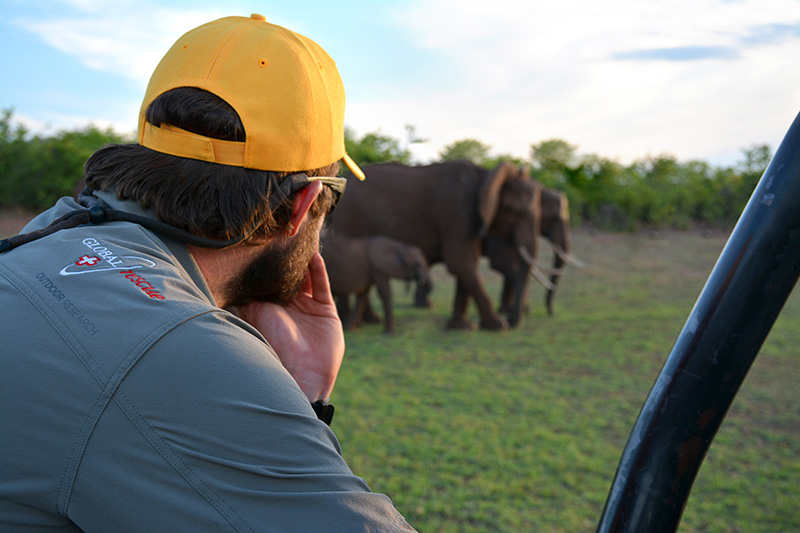
Global Rescue may be best known for medical evacuation, but it’s far from the only service we offer our traveling members. Here’s what else you need to know.
“I had no clue how expansive the operation and services of Global Rescue were,” said Joe Betar, executive director of the Houston Safari Club Foundation, during a February 2022 “Hunting Matters” podcast where he interviewed Harding Bush, operations manager at Global Rescue.
Betar was under the impression that Global Rescue only specializes in emergency medical evacuation from remote corners of the world. And that’s not his fault. Because of the unique (and sometimes extreme) medical evacuations heavily covered in the media for adventure-travel types — think mountaineers seeking to bag their next big summit to paragliders, cave divers, heli-skiers, hunters and anglers — it’s natural to assume that’s what we do exclusively.
But there’s a lot more to Global Rescue than dramatic helicopter rescues. From enterprise travel risk management, information and destination intelligence and emergency evacuation to general advisory services, Global Rescue’s services are broad, comprehensive and essential.
What does Global Rescue do and how might it apply to your unique travel situation? How are our operations centers structured, and who’s answering the phone when a member calls? Here’s an overview.
Not Just Reactive, But Proactive Services

Global Rescue may be better known for our reactive services, meaning, when a member experiences a serious emergency during travel, they contact us to get the life-saving help they need. Depending on the level of severity, the situation may require an evacuation or extraction of the individual.
There are two types of emergency reactive situations:
- Medical Emergency: When a member becomes severely injured or sick (including COVID-19), they contact our medical operations team to get the care and transport they need. “It could be from the side of a mountain to the nearest clinic or medical facility, where they will be evaluated, stabilized and we determine what follow-on care is required,” Bush said. “Then, if additional hospitalization is required, we get them all the way home.” If necessary, Global Rescue will also deploy a paramedic, nurse or physician bedside to help oversee the care provided and coordinate an evacuation.
- Security Emergency: If a member encounters an unforeseen natural disaster, civil unrest or armed conflict and cannot evacuate on their own, our security operations team helps you get home — or to a safe location and then home. Our security services are available as an upgraded membership.
“That’s the reactive part of what we do — meaning an incident happens, you call us and we help you get out of trouble,” said Bush, who served 20 years in the U.S. Special Operations forces and 12 years in international and corporate travel security. “But we don’t want you to get into trouble in the first place, so that’s why we also have all the non-emergency advisory and support services for both before and during your travel. This is the proactive part of what we do.”
There are two types of non-emergency proactive services:
- Prior to Travel: Global Rescue’s intelligence team maintains detailed destination reports for 215 countries and principalities, which members can access through the My Global Rescue app, to assist with their research prior to traveling. Our upgraded security memberships also include security advisory prior to travel. “Give us a call, and we can have a direct discussion,” Bush said. “You might be surprised to learn satellite phones are illegal in India. If you bring one, you could be arrested or fined.”
- During Travel: What if you’re traveling and you simply have a medical question? “You might develop a rash, but it’s not something you necessarily want to go to an emergency room for in a place like Botswana,” Bush said. Contact us anytime — 24/7/365 — and get medical advice and support you know you can trust. Global Rescue can also help locate coronavirus-capable hospitals and testing facilities.
We also offer advisory services related to general travel questions: visa and passport issues, translation, legal locators and real-time security events that may unfold during your trip.
Who’s on the Line When You Call

No matter your situation — emergency or not, medical or security — you call just one number and one number only: +1 617-459-4200. This is the number you should program into your cell or satellite phone (you can also contact us via the My Global Rescue app). It’s also a good idea to have this number written down (it’s located on your Global Rescue membership card) in case your phone dies or breaks.
Your call will always be answered by an on-staff employee, specifically one of our Member Services associates, which include former 911 operators, customer support analysts, dispatchers and more. Member services personnel will ask a few questions to transfer you to the appropriate contact in one of the following operations departments:
- Medical Operations: In the case of a medical emergency or question, you speak directly with a registered critical care paramedic, all of whom are overseen by our team of medical directors. We also work with board-certified physicians, clinicians and specialists from Elite Medical Group and the Johns Hopkins Emergency Medicine Division of Special Operations.
“Our doctors specialize in all sorts of things: emergency medicine, high-altitude medicine, infectious disease and more,” Bush added. Whatever your issue, we have a doctor with the appropriate medical specialty.
- Security Operations: In the case of a security emergency or question, you’ll speak directly to a team that is made up of veterans of the military special forces community, including former Navy SEALS, Green Berets, Pararescuemen, Army Rangers and Intel Officers.
Not only does the team’s background include military experience in every major conflict from Desert Storm to the Syrian civil war, but they have enterprise-level security experience. “This is very, very important to understand the needs of our corporate clients and consumer members,” Bush said.
Our member services team and integrated medical and security operations are all based in-house in Global Rescue’s international operations centers. That means there is no call center — you speak with a real medical or security expert immediately to get the care or answers you need.
Have More Questions About Our Membership?
Fire away: That’s what our member services team is trained for. We’re available 24/7/365 to take specific pointed questions related to anything — our COVID-19 services, how we differ from our competitors, what is field rescue, how our membership differs from travel insurance.
Get a price estimate
Estimate
$0.00
Please answer all questions for estimate.
Categories:
Health & SafetyPlaces & PartnersTravelApril 12, 2022

New research from Google has revealed that meaningful travel with a rise in celebrating “life moments” (milestone birthdays, anniversaries, retirements, etc.) is one of the key travel trends in 2022. We take a look at the trend with commentary from our Safe Travel Partners.
Many major life moments related to the relationship of Shane Jones and his wife Barbara Haight have been celebrated by a trip to Prague.
“We first went there as friends years ago, and it’s where we fell in love,” said the founder of Worldwide Adventure Guides, a North Carolina-based adventure travel company he and Haight founded in 2015. “So, on a subsequent trip, it’s where I proposed to her.” In 2008, it’s where they had their wedding and where they’ve celebrated every landmark anniversary since (including one for the “seven-year itch” that 42 friends attended).
“Life moment” travel — the act of celebrating or marking a major achievement or life change with travel — is hardly new. Jones and Haight are proof of that. So are the countless number of honeymoons taken since the late 1800s.
What is new is people are going to be planning more of these trips in 2022, according to new Google research. What exactly is the point of life moment travel, and why is it on the rise?
Why Life Moment Travel?

Photo © Har Rai Khalsa, a winner of the Global Rescue 2021 Photo Contest
Kalon Surf, a luxury surf resort set on Costa Rica’s Osa Peninsula, where the Pacific Coast meets the rainforest, has always been a popular place for guests celebrating life achievements. They’ve been visited by guests celebrating a career change, have organized 30-year wedding anniversaries with the whole extended family in tow and have been the site of milestone birthdays as well as retirement travel. Recently, they even hosted one famous individual who was celebrating the end of some judicial procedures.
[Related Reading:
10 Post-Pandemic Destinations We’re Dreaming About]
“When you combine a vacation with a big achievement, you’re locking the memory of that achievement in, rather than just letting it go by,” said Kjeld Schigt, Kalon’s owner and director. “That’s important for people. I had to learn that myself. I had to learn to celebrate achievements. I think doing it in trips like this is an excellent way because it is about paying tribute to whatever you’re celebrating and giving it the right space and memory to do so.”
Why on the Rise?

Photo courtesy of Ubuntu Travel
According to that Google study, more than half (56%) of Americans are likely to participate in a life moment such as a wedding, a move or a new job at some point in the next two years. Of that same group, 78% are considering travel related to those moments.
And you can bet it’s associated revenge travel — pent-up demand to travel freely again (or as freely as can be under COVID restrictions).
“Milestone celebrations have always been a big part of our business, but we’re seeing many guests inquiring about adventures that have been on their bucket lists for quite some time,” said Jenna Chase, director of operations for Ubuntu Travel, a travel agency specializing in luxury, bespoke African safari tours. “After many lockdowns and years of isolation, we’ve found guests are eager to start creating memories and conquering their travel bucket lists.”
[Related Reading:
7 Off-Beat Bucket List Trips]
Kalon Surf’s Schigt agrees.
“Because of COVID, people kind of woke up and said ‘Life is short, anything can happen, so why wait?’” he said. “Enjoy those moments as much as you can. Take those experiences, and no one can ever take them away from you. They continue to be a memory, they continue to live on.
Safe Travel Partners and Life Moment Travel

Photo © Avi Sion, a Global Rescue 2021 Photo Contest submission
Jones and Haight don’t just plan their own regular life moment trips to Prague. They also plan travel for others through their company, Worldwide Adventure Guides, which specializes in trips to destinations like Kilimanjaro, Everest Base Camp, Ecuador and Machu Picchu, where the duo has developed close connections with the community over the last 30 years.
“Anytime anyone wants to go on an adventure is great,” said Jones. “But it really means something special to me when they let us know it’s for a big birthday or a retirement. It’s something they’re going to remember for the rest of their lives, so I have to admit, it puts a little pressure on us. But if we can make it all the more special, the better.”
Chase of Ubuntu Travel admits it’s just as exciting for their team as it is for their clients.
“We had the pleasure of assisting a few surprise engagement proposals recently — one happened just a few months ago that was very exciting,” she said. While the woman reached out to plan the trip, the soon-to-be fiancé followed up behind the scenes to work with the family-run travel company for a surprise sunset safari proposal.
“I remember going into the office the day he was doing it, and we were all abuzz waiting for him to send pictures,” she said. “It brought so much joy to our day. Celebrating these milestones can be just as memorable for us. We love seeing the experience through others’ eyes.”
April 8, 2022
Every day on our social media platforms, Global Rescue posts a number of events that may affect your travel. What is this information, where does it come from, and how do you use it? Global Rescue intelligence experts explain the importance of travel alerts.
Have you seen travel alerts on Global Rescue’s social media platforms? Every day, Global Rescue posts a number of events — from transportation strikes to earthquakes to COVID-19 restrictions — that may affect travel. Here’s a sampling:
Travel Alert: A magnitude 7.3 earthquake struck off the coast of Fukushima. The epicenter of the quake was located 66 kilometers (41 miles) east-northeast of Namie and 96 kilometers (60 miles) southeast of Sendai. A tsunami warning has been issued. Avoid the affected area and expect possible disruption to travel and essential services.
Travel Alert: In Finland, 25,000 nurses affiliated with Union of Health and Social Care Services and Finnish Union of Practical Nurses are participating in a nationwide strike. The work stoppage is expected to impact services in several hospital districts. Continue to monitor local media for up-to-date information.
What is this information, where does it come from, and how do you use it? Global Rescue intelligence experts explain the importance of travel alerts.
Travel Alerts, Defined
Travel alerts, also called event reports, aim “to inform members of incidents in their area of travel that could affect their trip, cause an inconvenience, put them at risk of physical harm, or could potentially leave them stranded,” said Kent Webber, senior manager of Intelligence Products & Services at Global Rescue.
Travel alerts are issued for incidents of:
- Violence (terrorism, shootings, clashes, etc.)
- Environmental events (earthquakes, floods, mudslides, storms, etc.)
- Health issues (COVID restrictions, disease outbreaks, etc.)
- Infrastructure events (bridge collapses, large scale power/internet outages, fires, building collapses, airport issues, etc.)
- Civil unrest (strikes, protests, demonstrations, etc.)
“Events must meet specific threshold criteria, for example, we don’t report on earthquakes under 6.0 or earthquakes occurring in the middle of the ocean that do not impact travelers,” Webber said. “There are always exceptions – if an earthquake under 6.0 causes massive destruction, death, injuries or tsunamis, we will issue an alert.”
Travel alerts are compiled by Global Rescue’s in-house Intelligence team.
“We run a virtual 24/7/365 ‘Intelligence Watch’ that combs the internet for information relevant to travelers. How and where we get our information is proprietary,” Webber said. “Although we are all generalists, we have team members with regional expertise: Middle East, Eastern Europe, Latin America and Asia.”
Where to Find Travel Alerts

In addition to travel alerts, the Global Rescue Intelligence Team publishes destination reports. Destination reports provide information for 215 countries and principalities, including an overall risk assessment and detailed evaluations of health and security risks, general information about the country, and emergency contacts.
Global Rescue members are able to access more information on the destination reports than what is provided by the abbreviated travel alerts on social media. To find travel alerts, members should click on destination reports, select the continent on the left and the country on the right. An overview appears at the top of the page.
Alerts are listed in the middle column, and members can read the summary or click on “full story” to read the entire report.
In the right column, a map with flashing circles (green: low risk, yellow: moderate risk, orange: high risk, red: extreme risk) provides a visual location of events countrywide.
“We typically publish 30 to 40 travel alerts in a 24-hour period,” Webber said. “Some alerts are continually updated. For example, one day in March, we published six reports (one initial, five updates) on the earthquake in Japan in addition to our other travel alerts.”
All members may access destination reports by logging into the membership portal or the My Global Rescue app.
“Pre-Travel” Preparation and “During Travel” Awareness

Say you’re traveling to Finland and you learn nurses will be on strike nationwide for an undetermined period of time. What does this have to do with you?
If you’re traveling with a health risk, this strike might be a matter of life and death if you can’t afford a delay in care. If you’re planning an outdoor activity — like trying Finland’s newest extreme sport called ice karting, driving go-karts with studded tires on iced-over circuits — you may also want to consider the nursing strike.
“Members can use the information as part of trip planning, as a way to structure activities during travel (avoid places where demonstrations are occurring), seek guidance during an emergency, or respond appropriately to an incident to avoid inconvenience or harm,” Webber said.
Global Rescue event travel alerts also provide extra detail and guidance to help you make your travel decisions.
“Our reports provide analysis: Is this common or unique? Why is this happening? What can we expect in the short term? What is being done about it?” Webber said. “Our intelligence experts also offer mitigation advice, such as ‘avoid a certain area’ or ‘comply with instructions from local first responders’.”
Alerts, Notices and Advisories
Other government agencies also publish alerts. The Centers for Disease Control and Prevention (CDC) issues travel health notices about current issues impacting travelers’ health in destinations around the world. The U.S. Department of State posts travel advisories online and provides free service, the Smart Traveler Enrollment Program (STEP), allowing U.S. citizens traveling or living abroad to receive the latest security updates from the nearest U.S. embassy or consulate.
“STEP’s security alerts tend to be more general (criminal activity likely to spike over the holidays) or higher-level events, such as a recommendation that all U.S. persons exit a given country due to a given occurrence,” Webber said.
Compared to state department travel alerts, Global Rescue offers a more personalized approach to travel planning and during-travel awareness.
“We seek to report on levels and types of incidents in a more specific, tailored manner to provide our members with useful information that can improve their travel experiences by keeping them informed and able to make appropriate decisions,” Webber said.
The Global Rescue Advantage

Consumer members log in to the member portal and view travel alerts on a destination report. Enterprise members receive travel alerts via email by setting up their preferences in GRID, an online intelligence system for businesses and nonprofits. When employees are traveling, risk managers or HR managers can “tailor the alerts they receive according to location, type of incident and severity, so they get the information they most need to see,” Webber said.
Not a member? Global Rescue posts abbreviated travel alerts on Facebook, Twitter and LinkedIn two or three times daily and, this spring, on our Travel Information Center. The Travel Information Center is the ultimate hub of resources — health, security, weather, to name a few — to serve as a one-stop travel information source. It will also host a Risk Map, with risk ratings related to civil unrest, terrorism, crimes, diseases and more.
Categories:
NewsApril 6, 2022
Categories:
NewsApril 5, 2022
Categories:
Health & SafetySecurity & IntelligenceTravelApril 5, 2022

If you look like a tourist when traveling, then you could be making yourself out to be an all-too-easy target. Here are five surefire ways to reduce the risk of being pinpointed by scammers, pickpockets or thieves.
What makes travel so exciting — the chance to immerse yourself in a wonderful, yet unfamiliar, new place — is also what can make us so vulnerable.
“Criminals like confused, distracted and inattentive targets,” said Harding Bush, manager of security operations at Global Rescue.
Show even the briefest flash of vulnerability — i.e., fumbling with your bags, being glued to your phone — and you might as well have a lit-up sign with the word “tourist” pointed down at your head. In fact, statistics show it takes around seven seconds for a criminal to select their target. You read that right: just seven seconds.
“Criminals may also dismiss or move on to an easier target just as quickly, meaning that looking aware is critical,” added Bush, who served 20 years in the U.S. Special Operations forces and 12 years in international and corporate travel security. “By being aware of what makes a criminal pick their target, you can reduce the risk of them pinpointing you. It’s knowing how to not look like a tourist.”
Here are five essential tips from Bush to present yourself as a difficult target.
1. Be Unpredictable

Do not have an established, predictable pattern. “Being predictable makes you an easier target,” said Bush. “The criminal will have the advantage of knowing where you will be and when you may be most vulnerable, increasing their advantage.”
Being unpredictable on vacation is easier than when traveling for business. When you are on business, you can adjust your movements around set times. You may have to be at the office or in a meeting at a specific time, which is out of your control, but how you get to the office and what you do along the way is something you can adjust to create more unpredictability.
2. Recognize Unusual or Suspicious Behavior
This is an essential part of practicing situational awareness. (What is situational awareness? Check out our blog “How to Be Your Own Security Team.”) Nearly every sort of crime requires surveillance, which is when criminals observe potential victims for characteristics that make an easy target. People’s attire, body language and behavior should be consistent with where they are and what they are doing. If you can recognize the surveillance, you can avoid it.
For example, uniformed building maintenance crew should not appear lost in their own building. A bike messenger should not get out of a taxi and a jogger shouldn’t stretch on a street corner for 30 minutes. Although these examples do not necessarily indicate surveillance, they require a second or extended look.
And if you do see something suspicious, always remember to say something. “We all have a responsibility to report suspicious incidents to help prevent terrorist or criminal activity,” said Bush.
[Related Reading: Suspicious Activity?
See Something, Say Something — And Exactly What to Say]
3. No Fumbling. Ever.

“Don’t fumble around with your bags or documents, especially in crowded areas with many travelers, like airports, train stations and city centers,” said Bush. “It makes you look confused and inattentive.”
For example, be prepared with the appropriate documents or information when approaching a ticket counter, flight schedule board or hotel desk. If you want to buy a coffee or give a tip, have the equivalent of a few dollars — in local money — in your pocket, so you don’t have to go fishing around in your wallet (and accidentally flaunt your wealth, too).
4. Don’t Unknowingly Give Away Information
Again, any intel or information a thief can easily glean only aids with their surveillance. Make sure any luggage tags with your name or address aren’t exposed and be wary of company logos on clothing or luggage. Make sure to limit discussion with your travel partners that could be overheard and provide insight for targeting, times, places, etc. Also, be cautious of people asking for specific information without having a real apparent need for that information.
5. Carry Yourself With Confidence

Never walk too slowly, shuffle along, or look aimless — these are markers of uncertainty, indicating you are out of your element. Rather, Bush says to walk with “purpose and confidence:” Your back straight and with a smooth stride. Criminals will instantly think not to mess with you.
For reference, this NBC article goes into even greater detail, illustrating exactly how you should walk — and how you shouldn’t.
Global Rescue as an Emergency Backstop
Nobody wants to imagine an emergency abroad. Maredith Richardson certainly didn’t plan for it when her passport was stolen by a purse snatcher in Paris. But because she had Global Rescue, she was able to have it replaced in mere days (our services include streamlining the process to replace a lost or stolen passport or visa), whereas standard government processing is estimated to take up to six weeks. That’s just one of the perks of a Global Rescue membership.
Categories:
Health & SafetyMissions & Member TestimonialsApril 1, 2022
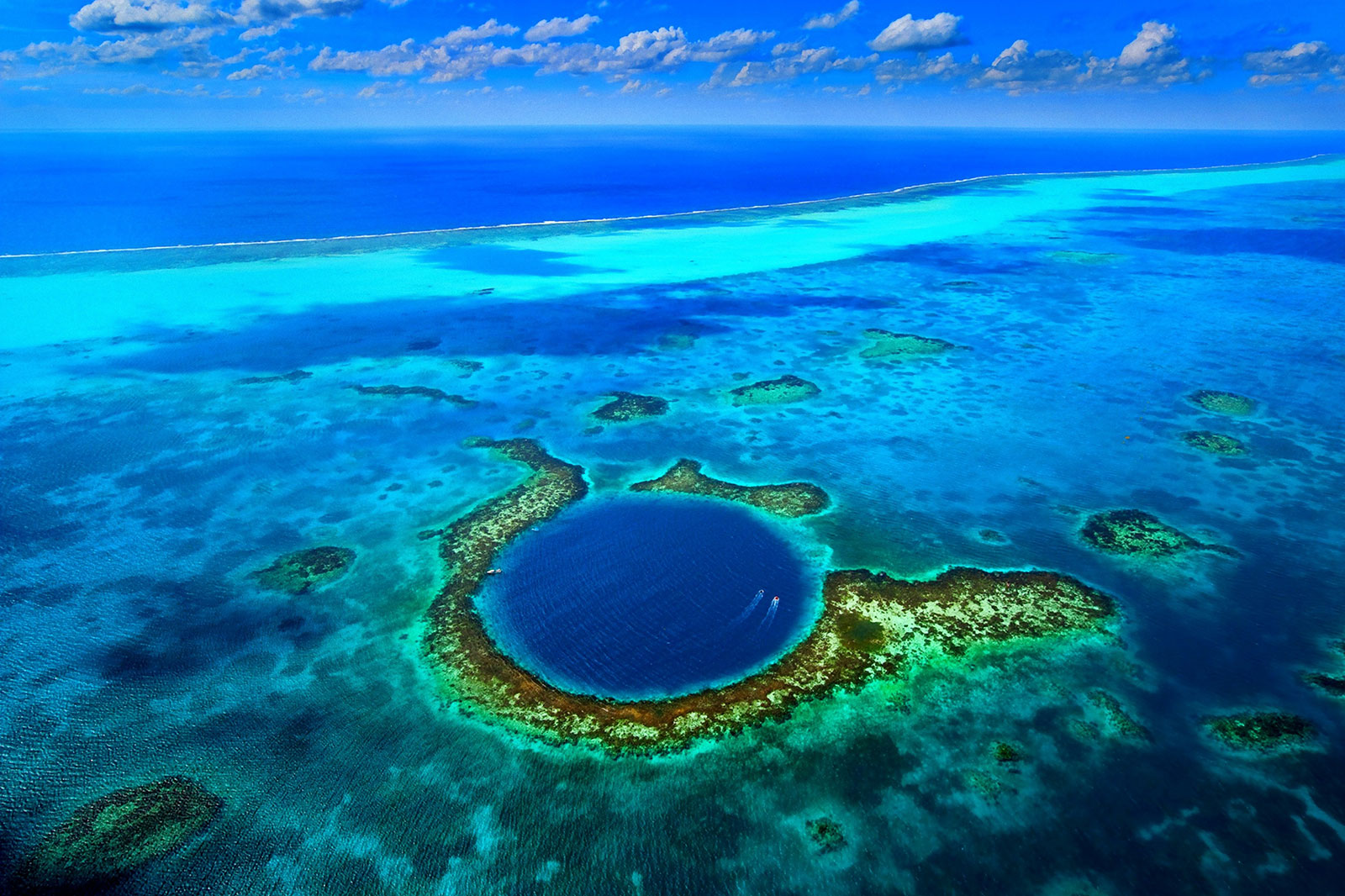
When a member developed the skin bends — a version of the decompression sickness known as “the bends” — during a diving trip to Belize, Global Rescue medical operations moved quickly to get her the medical evacuation she needed. Here’s her adventure travel story from start to finish.
Scuba diving opens the undersea world to certified divers and Belize is one of the most sought-after destinations for an underwater adventure. When Texas resident Kristin Stanford and her husband visited Belize, they planned several dives in the Turneffe Atoll.
Stanford was scuba-certified three years ago and made successful dives in The Grenadines and Cancun, Mexico.
“We chartered with reputable dive operators in both cases and had our divemasters to guide our dives,” she said.
Diving With Sharks
Stanford was eager and anxious about her trip to Belize.
The atoll’s western side features shallow reefs perfect for novices and casual divers, according to Dive the World. The southern and eastern regions of the atoll are suited for seasoned divers and highlight shipwrecks, drop-offs and channels. It is home to an amazing range of sea turtles, manatees, crocodiles, sharks and rays making it a priority destination for veteran scuba divers.
“We had read that the shark population was on the rise as the fishing of sharks had been banned in the last couple of years. I was nervous but excited at the same time,” she said.
The couple dove four different sites including; Permits Paradise, Three Amigos, Bull Dog and Lefty’s Ledge. The duo saw interesting and beautiful aquatic life, such as the Green Turtle, Spotted Eagle Ray, Reef Shark, Porcupine Puffer Cubera Snapper, Banded Coral Shrimps, Garden Eels, a large school of Yellow Tail Snapper, Spiney Lobster, Rainbow Parrot Fish, Spotted Moray Eels and Channel Clinging Crabs.
Things Gradually Go Wrong
On Stanford’s first dive she had trouble with a brand-new buoyancy control device (BCD) — a vest-like device that lets you adjust your floatation allowing you to remain on the surface comfortably, kneel or stand on the bottom or drift along effortlessly mid-water, observing the scenery.
“I had trouble with maintaining buoyancy. I was unable to complete the three-minute safety stop before popping up to the surface. I did not feel any effects at the time and indicated to the boat captain that I felt fine,” she said.
[Related Reading:
Best Cave Diving Trips and Safety Tips]
Stanford went on a second dive without trouble. When the dive was finished, she and her husband returned to the resort. Unfortunately, within an hour, Stanford experienced severe itching and a burning sensation on her abdomen and the left side of her stomach. Later, a dull, aching pain started on the outsides of her thighs.
“I chalked it up to knocking about with a dive tank on my back and getting in and out of the boat in moving currents,” she said.
“I had put a seasickness patch behind my ear that morning. My husband and I attributed most of my condition to an allergic reaction to that patch. So, I removed it and continued with my day.”
The next morning, Stanford felt well enough to go on the two dives scheduled for that day. She didn’t experience any new symptoms. However, once she returned to the resort, the divemaster and resort manager visited her and asked about her condition.
“The divemaster had concerns about my dive experiences and my well-being. I explained the burning sensation in my abdomen and showed them the rash on my side,” she said.

Stanford saw their reaction and knew something wasn’t right.
“I had never heard of skin bends before and did not know that it was a sign of decompression sickness. That is when things kicked into gear, and we called Global Rescue,” she said.
Skin bends — cutis marmorata — show up as a rash that spreads irregularly and deepens in color to become mottled, cyanotic patches. Global Rescue medical operations moved quickly. Following a consultation with the treating physician, Global Rescue ordered a medical evacuation rescue flight to transport Stanford to a medical appropriate facility with a hyperbaric chamber and specialist doctor in San Pedro, Belize.
Treating the bends is not easy. Elevation changes alter the pressure on your body and dangerously aggravate decompression sickness. “If I had not gone that very night, we would have also had to delay our departure for home due to the length of time one must have between final treatment and flying commercial above 1,000 feet,” she said.
Glad to Have Global Rescue
Stanford knew she had no time to waste once the treating team confirmed decompression sickness. “It is a scary thought of what more could have happened with my condition if I had delayed treatment much longer. Bends can present itself neurologically if gone untreated,” she said.
Stanford underwent decompression treatment and fully recovered before returning home.
Stanford has been a Global Rescue member since 2019. “My husband read about Global Rescue in The Wall Street Journal. He had taken a trip to Thailand the year before, where he became certified to scuba dive. He thought it would be a great idea to have this type of protection for medical emergencies,” she said.
The couple was impressed with the quick and professional response by Global Rescue.
“The good communication with Global Rescue assured me they were on top of managing the operation and my treatment,” she said.
Fully recovered, Stanford says when her experience inevitably comes up in conversation with her friends and family, she would vouch for Global Rescue membership without hesitation. “We would recommend Global Rescue to travelers. Global Rescue has repeatedly checked on my well-being after returning home from Belize. Great and caring service which is much appreciated,” she said.
Whether you’re open water scuba diving, snorkeling or free diving remember to plan, prepare and get a Global Rescue membership. Unlike other providers, Global Rescue memberships do not exclude or restrict adventure activities — like cave diving, open water scuba diving, snorkeling or free diving — from membership. We don’t exclude any activity whether it’s skydiving, BASE jumping, heli-skiing or anything else. It’s part of our No Restrictions approach to travel, and that includes COVID-19, too.