
Categories:

Health & SafetyTravel
Share This:

Long Stay Vacations Gain Popularity During the Pandemic

With mandatory quarantines for travelers, it's harder to plan for a quick weekend trips. With many employees working from home, long stay vacations are gaining popularity. Take a look at some advice from our experts if…

Has the coronavirus pandemic has turned your family into digital nomads? Work from home and remote learning means your family isn’t locked into one location for the duration of the pandemic. So why not change your view?

Long stay vacations have gained popularity during the coronavirus pandemic and some families are opting to move the work desk to new locations: out of the city and steps away from a tropical coastline or mountain hiking trail.

What Is A Long Stay Vacation?

Long stay vacations, also called extended stay vacations, range anywhere from 18 days to several months, but usually average 28 days.

This type of getaway has always been popular with travelers who want to immerse themselves in local culture, but coronavirus pandemic protocols have increased the allure. If you need to quarantine after arrival, a weekend trip is no longer a possibility and a long-stay vacation gives you time to comply.

Long stay vacations are different than long-term travel, which is buying a one-way ticket to a destination and staying for anywhere from three months to a year. Younger travelers are more likely to select this type of travel as it gives them the freedom and the time to chase good weather, attend memorable events and explore new cultures across several countries.

Offers and Extended Visas

Homeowners renting second homes saw the trend first, with usually hard-to-rent remote properties going quickly in early June. The demand continued past Labor Day, as brokers in New York ran out of rentals when the pandemic upended summer vacation plans.

The Real Deal New York Real Estate News reported the average duration of stay increased 20% between May and September in the Hamptons.

Hotels and resorts came on board soon after, offering work-from-home packages, like Viva Las Office promotions at two MGM Resorts, the Bellagio and Aria, located on the Las Vegas strip.

Hyatt offers a Work and Learn from Paradise package on four Caribbean properties. Marriott has a Work Stay and Play package to entice families to take an extended stay at a lower rate at the Element-Basalt resort in Aspen, Colorado.

In turn, countries are offering extended visas. France offers a long stay visa for those wanting to stay for three months to a year. If you want to stay in Germany for more than 90 days, you need to apply for a residence visa.

Every country has different requirements and sometimes even a different name for the visa — working holiday visa in Australia and temporary resident visa in Mexico — so be sure to do your research. VisaHQ.com provides a round up for a number of countries. Before selecting your destination, cross-check entry restrictions, border closings and flight bans to be sure you can secure one of these visas either in advance or on arrival.

Long Stay Benefits

A day in the office, then a few steps away to enjoy an evening on the golf course. Or, instead of eating lunch inside at a desk, enjoy it on a deck overlooking the ocean.

Not sold on a long stay vacation yet? Here are a few more advantages:

  • Hotels add a bit of luxury with daily linens, turn down service and room service, but an extended stay at a hotel can get expensive. Extended stay discounts can offer the same sense of luxury for about 3 to 5% less.
  • A weekend stay affords enough time to see the area’s highlights: a museum, a restaurant or two, perhaps a few landmarks. A long-stay vacation provides the chance to really get to know the area. You’ll meet the locals, become part of the community and see more than just the tourist spots.
  • If you’re a family with a couple of kids, perhaps a few friends and maybe a grandparent or two, a hotel suite may not have enough space for everyone. You can rent a house during a long stay vacation to provide more space, including furnished rooms, a full kitchen and appliances.
  • Families in particular will enjoy the additional space and flexibility of a long stay rental. Fully equipped kitchens mean you can cook meals instead of dining out, and furnished rooms provide options for work/study areas.
  • Like many hotels, utilities are included and maintenance issues are not your concern.

Where to Look?

Start with online options, but don’t hesitate to contact someone with boots-on-the-ground in your desired destination, like a local realtor who might offer long term rentals in the area.

  • Vacation Rentals By Owner (Vrbo) began in 1995 by pairing homeowners with families looking for places to stay. You can choose between houses, condos, cabins and cottages, select by location and find the experience you are looking for: nature, beach, romantic or retreats, to name a few.
  • Vacasa is an international vacation rental management company based in Portland, Oregon. It provides property management services for more than 25,000 vacation rentals in 31 U.S. states and 17 countries.
  • Airbnb is a global travel community with locations available in 191-plus countries. Through the Frontline Stays program, the company offered essential health care workers places to stay throughout the pandemic, meaning they have solid COVID-19 protocols in place.
  • Trip Advisor offers vacation rentals — cabins, condos and beach houses — in more than 200 countries.

Advice from Global Rescue

Treat a long stay vacation as you would any other vacation: do your pre-travel research, call your doctor for a travel health consultation, make copies of all your important paperwork, check travel advisories and coronavirus quarantine protocols. Global Rescue also recommends:

  • Keeping your eye on coronavirus hotspot areas. You’ve already done your research and selected a location with few COVID-19 cases. But if you’re planning on staying for a while, sign up for coronavirus alerts on your phone or do a daily check to see what’s happening in your area with Global Rescue’s free Coronavirus Update, delivered directly to your inbox on weekdays.
  • Signing up for a travel services membership. When you book your long-term rental, sign up with Global Rescue at the same time. If a medical emergency happens when you are 100 miles away from home, you’ll have access to medical advisory services as well as evacuation services.
  • Checking the area for nearby health care resources. Larger hotels may have a doctor on call, but you may not have immediate access to health care services at a long-stay rental. With a Global Rescue’s TotalCare membership, you get immediate access to a team of medical experts for real-time video consultations and treatment – plus all the services of a travel membership

Categories:

Health & SafetyTravel
Share This:

Will it be safe to fly this Thanksgiving?

Although road trips will most likely remain the dominant mode of travel, families with relatives spread out across the United States will turn to the skies. Is it safe to do so during a coronavirus…

Labor Day 2020 travel hit new pandemic peaks, according to the U.S. Travel Association. Road travel was only 5.1% lower than last year and air travel attained its highest number since the start of the pandemic, with TSA screenings reaching 969,000.

Increased Labor Day travel is a positive indicator for holiday travel. Families are looking for ways to escape the four walls of their home, take a break from remote learning and work from home schedules and spend time with loved ones.

Bookings for Thanksgiving, already the busiest travel weekend of the year, are up 38% from spring and summer bookings, according to Guesty, a short-term rental property management platform.

Although road trips will most likely remain the dominant mode of travel, families with relatives spread out across the United States will turn to the skies, leaving many to ask: Will it be safe to fly this Thanksgiving?

What Travelers Want

Travelers are used to wearing masks, using hand sanitizer and staying six feet apart. They’ve adapted to screening and testing protocols, both before and after arrival.

Now travelers have their own requirements. According to a survey by Virtuoso, 66% of travelers are willing to fly — but they want the middle seat open. And 73% would pay extra for a ticket if it meant the middle seat was empty.

MIT Professor Arnold Barnett, in a July study in peer review, found leaving the middle seat open is, in fact, safer. He calculated the odds of contracting COVID-19 at 1-4,300 if you take a two-hour flight and sit in a sold-out economy section. The odds drop 44%, to 1-7,700, if you take the same flight with the middle seat empty.

Holiday Travel Checklist

As airlines adjust and adapt during the pandemic, there are plenty of ways travelers can mitigate their risk this holiday season. Global Rescue experts recommend asking and answering the following nine questions before any trip.

1. Is everyone healthy?

Schedule time to talk to family members to check on everyone’s health. Be honest about any pre-existing conditions that might put a loved one at risk. Consider the ages and health risks of all family members.

“Check everyone’s temperature and ask how they are feeling. If anyone is running a temperature or feeling off, it would be a good idea to schedule a COVID-19 test prior to departure,” said Jeffrey Weinstein, Medical Operations Supervisor at Global Rescue. “By all means, please do not travel if you have any symptoms of illness whatsoever.”

2. Be prepared to take a test.

Airlines have been rolling out COVID-19 testing options prior to boarding.

United Air requires all passengers take a COVID-19 rapid test on the San Francisco/Hawaii route starting on Oct. 15. You can take the test on the day of the flight ($250 right at the airport) or mail in a test ($80).

JetBlue announced a similar at-home testing option, giving its travelers their results within 72 hours. The test, priced at $143, includes a video conference call to supervise the collection process.

If the pandemic turns into a twindemic with the flu season, you can expect many more airlines to request testing.

“While this is a great measure, some people are hesitant to rely on it because it is new and they aren’t sure what to expect,” said Kimberly Franke, a travel specialist with Kanna Travel Services, a full-service travel agency in Bozeman, Montana. “In an ideal world, airlines would have plenty of testing and staff to do the testing so passengers aren’t stressed out prior to boarding, however, it is a great option for those last-minute travelers who like to fly by the seat of their pants.” 

3. Is it a good time to travel?

Airports can be a busy place around the holidays, particularly the Wednesday before Thanksgiving. Keep in mind many colleges have changed their schedules, ending the semester before Thanksgiving, so college students returning the home might crowd the airports, bus and train stations. If you can, pick a low-traffic time to travel, such as the Monday before or Thursday morning.

4. Is the destination safe?

The Centers for Disease Control and Prevention (CDC) recommends family and friends “should consider the number and rate of COVID-19 cases in their community and in the community where they plan to celebrate.” Global Rescue offers a free Coronavirus Report which details state-specific restrictions, outbreak locations and travel recommendations.

5. Is it okay to have a gathering?

A survey by Morning Consult found 53% of consumers will hold a family holiday get-together during the pandemic, but 74% note it will be a smaller gathering than usual.

Part of the reason for smaller celebrations is to mitigate risk of contagion, but it is also due to local restrictions or regulations for gathering limits. Many states have guidance for the number of people for indoor versus outdoor gatherings.

6. Can you minimize risk?

Instead of eating indoors, could the meal be held outdoors? If you are eating indoors, is it possible to increase ventilation? According to the Environmental Protection Agency, ensuring proper ventilation with outside air can help “reduce the concentration of airborne contaminants, including viruses, indoors.”

Other ways to minimize risk include: measuring the indoor space and inviting only enough to fit safely with social distancing, limiting the duration of the gathering, inviting only local family members and bringing supplies like extra masks and hand sanitizer.

7. Can everyone agree to boundaries before the event?

If you can’t cancel or postpone the holiday gathering, make sure family members are on the same page with coronavirus precautions. Everyone can decide the level of strictness needed. Boundary examples include quarantining as much as possible two weeks before the trip or testing negative before any travel.

“If individuals are going to be spending time with their distant families during the holidays, the wearing of masks and proper social distancing will likely be impractical,” Weinstein said. “Make sure you discuss the risks and hear out everyone’s opinions on what boundaries and safety practices should be implemented. Be prepared to make special accommodations for those at high risk who may be uncomfortable with unprotected exposures.”

8. Do you have travel protection services?

When you plan your route or book your flight, sign up for a Global Rescue travel services membership at the same time. You’ll be able to research domestic and international entry requirements, COVID-19 travel status and restrictions and detailed health and security assessments. If a medical emergency happens when you are 100 miles away from home, you’ll have access to medical advisory services as well as evacuation services.

9. Will you need to quarantine?

Many U.S. states have some level of quarantine rules for travelers or residents returning from other states. But rules vary widely and change with the COVID-19 numbers.

Alaska, New York, New Jersey and Connecticut are among those who currently require 14-day quarantines for travelers from states with relatively high COVID-19 infection rates, but these requirements are constantly changing, often without notice. Before you travel, check Global Rescue’s Coronavirus Update for the latest information.

Whether you are a planner or a last-minute traveler, travel services memberships provide the baseline of security and safety today’s travelers need. Knowing you and your family have medical and security advisory services at the ready provides peace of mind before, during and after Thanksgiving travel.

Categories:

Health & Safety
Share This:

Reimagining Halloween During a Pandemic

How do you celebrate the holidays during a pandemic? With Halloween on the horizon, Global Rescue offers alternative options, safety tips and travel advice to families.

Perhaps you are trick or treating at home this year. Or maybe you’ve relocated, changing the city view from your New York condo for a fall foliage landscape at your second home in New England.

Make sure you know the coronavirus protocols for both homes. You don’t want your Halloween to turn into a Quarantine-o-ween.

Travel Safe

If you are trick or treating at home, you are aware of the coronavirus protocols in your town.

If you’re traveling, perhaps from Los Angeles or San Francisco to Lake Tahoe or New York City or Philadelphia to the Poconos for a seasonal rental, check for any coronavirus-related restrictions before you get on the road.

Research out-of-state hot spots on your route, health care options and coronavirus testing facilities at your destination. Most quarantines for state-to-state travel range from seven to 10 days, so you’ll want to factor quarantine time before any Halloween plans.

You may not have immediate access to health care services at a long-stay rental and should be prepared with a Global Rescue travel services membership or access to telehealth services.

Planning for the Holidays

Easter didn’t get cancelled this April, despite coronavirus restrictions. Local communities reimagined it with the Easter Bunny making deliveries doorstep to doorstep as children waved happily, and safely, from their living room windows. Fourth of July fireworks didn’t fare as well— 80% of community fireworks displays were cancelled for fear of social distancing nightmares, according to The New York Times — but locals rallied and offered displays viewable from home.

Halloween will undergo a similar transformation as the coronavirus pandemic continues. Families are already flooding social media with creative ideas and town and city officials are offering guidelines based on national CDC recommendations.

The goal is to provide safer alternatives to super spreading events. Many harvest fairs or pumpkin festivals have been cancelled, such as the annual Keene Pumpkin Festival in New Hampshire. Instead of blocking off downtown to feature a world record number of lit jack-o-lanterns, festival organizers are asking residents to display jack-o-lanterns in front of homes and businesses instead.

Californians sounded the alarm when the Los Angeles Department of Public Health banned trick or treating, then later revised their statement. The city of Antigo in Wisconsin, population 7,819, did cancel trick or treating, but replaced it with a drive-in movie event and socially distanced costume contest. The Colorado Department of Public Health and Environment took the opportunity to remind residents of the standing COVID-19 guidelines for holidays and celebrations: wear masks, gather in groups of 10 or less; gather outside; and stay six feet apart.

Towns like Salem, Massachusetts and Sleepy Hollow, New York — who rely on tourism dollars every Halloween — have cancelled events or require advance tickets to keep attendance low.

Evaluate The Risks

After seven months of lockdown, many families are hoping Halloween, which falls on a Saturday this year, will add some joy to an uncertain time. The Harris Poll, on behalf of National Confectioners Association, found 74% of young parents say Halloween is more important than ever this year.

A Party City survey shows 96% of parents plan to celebrate Halloween in 2020, with 70% seeking alternatives to traditional trick-or-treating.

“It is an outdoor event. And it’s an event where a lot of masks are already worn,” said Michelle Buck, Hershey’s chief executive on the company’s second-quarter earnings call in July. “There’s no evidence of the virus being passed through packaging or food, so we feel pretty good based on what we’re seeing so far from consumer feedback.” 

As the date gets closer, trick-or-treating will likely be a community- or state-based judgment call. It will also be up to parents, who may decide a child with a complex medical history or compromised immune system should skip the festivities. If there is any question of illness, speak with a health care professional before any Halloween event or activity. Parents need to worry about the health and safety of their children as well as the people handing out the candy.

Other health and safety suggestions:

  • Before you go to a Halloween event, consider the risks and whether you feel comfortable taking them. Good Housekeeping suggests reviewing CDC transmission risk categories for events: virtual only gatherings have the lowest risk and large, in-person events with people traveling to attend are the highest risk.
  • Ask the event (or event organizer) what COVID-19 safety measures will be in place.
  • Wear a mask while outside of your home. Many costumes include masks but, if they don’t, find a way to add one to the ensemble. Real Simple recommends doubling up on masks, because the ones included with a costume aren’t designed to deflect droplets.
  • Practice social distancing with your kids before the event. Encourage them to wait their turn, keep toys and costumes away from others, and use hand sanitizer after any contact.
  • Stay with household members as much as possible. Staying in your own community, neighborhood or family “bubble” will reduce the risk of spread.
  • Limit your number of trick-or-treat visits, and stick to visiting households of people you know and trust.
  • Wait until you get home to enjoy your candy. That way you can remove your costume and thoroughly wash your hands with soap and hot water before eating.

Categories:

Health & Safety
Share This:

Restarting Your Business Travel Program

COVID-19 has shut down much of the travel industry, but Global Rescue’s travel risk management solutions are helping get organizations safely back on the road. 

Video conferencing has filled the gap left by decreased business travel, but nothing beats face-to-face interaction. A study by the U.S. Travel Association found for every dollar invested in business travel, companies realize $12.50 in incremental revenue.

Between April and September, a Global Rescue survey found respondents cancelled business travel. With new health and safety protocols and screening in place, along with increased access to COVID-19 testing, business travel is back on the table.

In a September survey from the Global Business Travel Association, nearly 50% of companies reported they are considering plans to resume international travel in the near future, but haven’t set definite plans just yet. However, 34% reported they expect to resume domestic travel within the next two to three months.

In response to marketplace demand and the coronavirus impact on business travel, Global Rescue’s customized End-to-End COVID-19 Solution is helping to get businesses back on the road.

Creating Business Travel Coronavirus Protocols

Businesses went from pandemic/no travel to eased restrictions/limited travel. Human resources, legal and finance departments — in conjunction with the risk management team and CEO — updated standard operating procedures (SOPs), emergency action plans (EAPs) and disaster recovery plans to include coronavirus.

Some industries are more reliant on travel than others, so it’s okay if your business hasn’t transitioned from video conferences to business travel yet.  

It’s also acceptable if your company needs help updating plans in place or writing new ones. SOPs, EAPs, business continuity plans and disaster recovery plans are all part of the risk management consulting services Global Rescue provides to businesses, nonprofit organizations and educational institutions.

When U.S. Ski & Snowboard, the national governing body for Olympic skiing and snowboarding, was preparing for domestic ski camps in the Pacific Northwest, they called on Global Rescue. The Global Rescue operations team compiled a list of medical facilities for each camp location, ensuring athletes had access to local health care services during the coronavirus pandemic.

When your company is ready — and your employees are willing — to travel, here are a few of the top considerations from the security and intelligence experts at Global Rescue.

Determine if Travel Is Essential

Employers are obligated under the Occupational Safety and Health Act (OSHA) to provide a workplace free of known safety and health hazards. Workers have a right to refuse work they consider to be dangerous under certain circumstances, like travel to destinations at risk for the coronavirus.

According to the Society of Human Resource Management, essential business travel should be limited to those situations where “business cannot reasonably be conducted without face-to-face interaction or visits to specific locations.”

If travel is necessary, as it might be for a government employee or health care worker, start by asking the employee their preferences. Tolerance levels, health histories and family situations are different for each person. Offer alternatives such as video conferences and group chats.

At Credit Acceptance Corporation in Michigan, employees who didn’t want to travel, or whose jobs were impossible without travel, were remapped to different roles.

“No one lost their job and employees were happy to move to a different department to help out,” said Ken Booth, chief financial officer, in a webinar on Great Places to Work.

Have a Protocol in Place

Start by reviewing OSHA and CDC guidelines.

If a trip is planned, review restrictions of travel destinations, choose alternative options for transportation (driving instead of flying for a short trip) and hire safety-focused vendors (rental agencies, airlines, shuttles and hotels).

Have a contingency plan in place and make sure insurance is up to date. The National Law Review notes, “employers may want to consult insurance brokers to ensure that all insurance protections needed in this environment, including travel insurance, workers’ compensation and general liability, are covered.”

Provide Personal Protective Equipment

OSHA requires employers offer a work environment that promotes hygiene and the tools to keep their areas clean: disinfectant, paper towels, soaps, tissues and no-touch trash cans.

It also mandates companies provide employees with safety-oriented protections, such as a face mask, gloves and hand sanitizer. Walmart started supplying masks to their employees working in stores and distribution centers in April. This also applies to employees who are traveling on business — make sure your company’s travelers are well equipped with the protective necessities.

You may want to check state law. In California, companies are required to reimburse employees for personal protective equipment expenditures.

Communicate with Employees

Educate employees on the new business travel protocols and make sure they know the resources available, such as acccess to travel risk and crisis management services.

An article in Insurance Business UK magazine notes 24% of UK business travelers are aware their employers offer medical and security assistance services — but do not know what is included. Only 15% of these travelers know how to use their 24/7 medical and security assistance support.

Acccess to travel risk and crisis management services, like those offered by Global Rescue, will keep employees safe while traveling for the company. Employees can access emergency medical assistance, worldwide field rescue from point of injury or illness and global telehealth access.

Andrew Tilker of Global Wildlife Conservation called Global Rescue for advice on an upcoming trip from Berlin, Germany to Lyon, France.

“The information that I received helped me make a more informed decision regarding whether to take the trip or not,” Tilken said. “I have decided to go.”

Manage the Traveler Journey

Enterprises, nonprofit organization, NGOs and educational institutions are using the Global Rescue Intelligence Delivery System (GRIDSM), a proprietary system designed to manage every aspect of the traveler journey and provide real-time situational awareness to all stakeholders.

Designated parties — such as a risk manager or security admin — can access:

  • Travel advisories and pre-trip threat assessments keep traveling employees prepared and informed
  • Real-time event alerts keep you aware of worldwide health and safety threats
  • Monitoring and management of all travelers and logistics until travelers are home
  • Traveler contact information, travel history and COVID-19 screening, testing and treatment results
  • If applicable, data can be shared with industry stakeholders, relevant levels of local, state or federal governments and other required organizations

Establish After-Travel Procedures

There should be a check-in process with a manager or the human resources department when travel is completed. Employees might want to schedule a health assessment with their doctor, or plan to work from home for 14 days. Larger companies, like Amazon and U.S. Steel, have on-site testing facilities for employees.

Develop A Complete Solution

The reality of the coronavirus pandemic is that businesses, companies and organizations of all sizes have never faced such uncertainty. While there are guidelines from governing institutions, much of what would be considered “best practice” is largely unknown as the pandemic continues to evolve.

When developing any new procedure or protocol, it’s best to start with planning — identifying what it is your trying to achieve and then working backward. Are you looking to get traveling employees back on the road or back into the office?

It’s where Global Rescue’s End-to-End COVID-19 solution begins. Our medical and security experts identify your exact needs to help you develop a custom solution.

Whether you’ve already started the planning process or you’re just beginning, Global Rescue in-house experts can help you develop, improve or evolve your existing protocols with integrated screening, testing and risk mitigation strategies designed to meet the unique needs of your population.

No screening and tracking plan is complete without a response component. Global Rescue is the leading provider in travel risk, response and crisis management. All COVID-19 case management services are supported through GRID.

Click here to contact a member of our enterprise team to learn more.

Categories:

News
Share This:

Jamaica to charge travel insurance fee amid coronavirus pandemic

Share This:

Global Tourism Resilience Centre launches Jamaica Cares

Jamaica Cares is a ground-breaking traveler protection and emergency services program set to launch next month.

KINGSTON, JAMAICA, October 26, 2020 – Jamaica Cares is a ground-breaking traveler protection and emergency services program set to launch next month. Jamaica Cares provides visitors access to first-of-its kind traveler protection and emergency medical and crisis response services for events up to and including natural disasters. The traveler protection and services program is a partnership coordinated and administered by the Global Tourism Resilience Crisis Management Centre, with support from the Global Travel and Tourism Resilience Council, Global Rescue, and leading international and national insurance companies.

For $40 USD, Jamaica Cares provides visitors access to compulsory traveler protection and emergency medical services, including:

  • Case management, transport logistics, field rescue, evacuation, and repatriation for medical emergencies, including COVID-19 and other crises up to and including natural disasters
  • International health coverage up to $100,000 USD for visitors traveling to and from Jamaica
  • On-island health coverage up to $50,000 USD

“Jamaica Cares delivers an unmet need in the travel industry by providing primary medical coverage and medical evacuation services. Jamaica Cares is a comprehensive, mandatory program to increase traveler protection from the time they leave home until returning. The traveler knows they’re protected, and they know other travelers are, too. That’s what’s needed to give confidence to travelers when they are ready to travel,” said Hon. Edmund Bartlett, Co-chairman, Global Tourism Resilience and Crisis Management Centre.

“Jamaica is the first country to facilitate a partnership for a comprehensive pandemic safety response program. Visitors to Jamaica are better prepared and protected because of the cooperative arrangement coordinated via the Global Tourism Resilience Crisis Management Centre with a leading travel crisis management provider and two travel health insurance firms,” said Dr. Taleb Rifai, Former Secretary General of the UNWTO and Co-Chair of the Centre and the Global Travel and Tourism Resilience Council.

“We have to protect both our visitors and the people of Jamaica,” said Professor Lloyd Waller, the Executive Director of the Global Tourism Resilience and Crisis Management Centre.

The compulsory fee will be included as part of the Travel Authorization application, triggering automatic participation in the Jamaica Cares program. Participation is mandatory for all non-Jamaican passport holders.

Traveler attitudes consistently show a powerful willingness to pay for increased safety protections during travel. An international traveler sentiment survey, conducted by Price Waterhouse Coopers, revealed safety is paramount in making travel decisions for which consumers are willing to pay. A Global Rescue survey of more than 2,200 frequent travelers found they agreed by wide margins (90+%) they would feel safer if they – and all travelers – had services and protections for medical emergencies, including COVID-19, and door-to-door emergent coverage.

“If an emergency medical situation arises, including COVID-19, Global Rescue will support Jamaican authorities in executing established emergency action plans including: access to case management, transport logistics, evacuation and repatriation for any medical emergency, including COVID-19, and monitoring from diagnosis through repatriation,” said Dan Richards, CEO Global Rescue.

Gloria Guevara, WTTC President & CEO, said: “I would like to congratulate all those involved in the implementation of the Jamaica Cares program, which will no doubt help to restore traveler confidence and aid the recovery of the Travel & Tourism sector.”

-##-

About Global Tourism Resilience Crisis Management Centre

The Global Tourism Resilience Crisis Management Centre serves the worldwide travel industry, facilitating planning and preparation for crisis response, recovery and resilience issues. The Resilience Council is a network and forum for governments and businesses, bringing the public and private sectors together for the development of sustainable frameworks to enable business growth. For more information click here. Contact: Prof. Lloyd Waller, Executive Director, lloyd.waller@gmail.com.

About the Global Travel and Tourism Resilience Council

The Global Travel and Tourism Resilience Council serves the worldwide travel industry, facilitating planning and preparation for crisis response, recovery and resilience issues. For more information click here. Contact: Laurie Myers +1 949 742-9648 or email by email at info@resiliencecouncil.com.

About Global Rescue

Global Rescue is the world’s leading provider of medical, security, evacuation and travel risk management services. Founded in 2004, Global Rescue has exclusive relationships with the Johns Hopkins Emergency Medicine Division of Special Operations and Elite Medical Group. Global Rescue provides best-in-class services that identify, monitor and respond to client medical and security crises. Contact Global Rescue member services at memberservices@globalrescue.com or +1 617.459.4200.

Categories:

News
Share This:

Jamaica Cares Travel Insurance to Launch in November

Categories:

Press Release
Share This:

Global Tourism Resilience Centre launches Jamaica Cares: A Ground-Breaking Traveler Protection Program

KINGSTON, JAMAICA, October 26, 2020 –Jamaica Cares is a ground-breaking traveler protection and emergency services program set to launch next month. Jamaica Cares provides visitors access to first-of-its kind traveler protection and emergency medical and…

KINGSTON, JAMAICA, October 26, 2020 –Jamaica Cares is a ground-breaking traveler protection and emergency services program set to launch next month. Jamaica Cares provides visitors access to first-of-its kind traveler protection and emergency medical and crisis response services for events up to and including natural disasters. The traveler protection and services program is a partnership coordinated and administered by the Global Tourism Resilience Crisis Management Centre, with support from the Global Travel and Tourism Resilience Council, Global Rescue, and leading international and national insurance companies.

For $40 USD, Jamaica Cares provides visitors access to compulsory traveler protection and emergency medical services, including:

  • Case management, transport logistics, field rescue, evacuation, and repatriation for medical emergencies, including COVID-19 and other crises up to and including natural disasters
  • International health coverage up to $100,000 USD for visitors traveling to and from Jamaica
  • On-island health coverage up to $50,000 USD

“Jamaica Cares delivers an unmet need in the travel industry by providing primary medical coverage and medical evacuation services. Jamaica Cares is a comprehensive, mandatory program to increase traveler protection from the time they leave home until returning. The traveler knows they’re protected, and they know other travelers are, too. That’s what’s needed to give confidence to travelers when they are ready to travel,” said Hon. Edmund Bartlett, Co-chairman, Global Tourism Resilience and Crisis Management Centre.

“Jamaica is the first country to facilitate a partnership for a comprehensive pandemic safety response program. Visitors to Jamaica are better prepared and protected because of the cooperative arrangement coordinated via the Global Tourism Resilience Crisis Management Centre with a leading travel crisis management provider and two travel health insurance firms,” said Dr. Taleb Rifai, Former Secretary General of the UNWTO and Co-Chair of the Centre and the Global Travel and Tourism Resilience Council.

“We have to protect both our visitors and the people of Jamaica,” said Professor Lloyd Waller, the Executive Director of the Global Tourism Resilience and Crisis Management Centre.

The compulsory fee will be included as part of the Travel Authorization application, triggering automatic participation in the Jamaica Cares program. Participation is mandatory for all non-Jamaican passport holders.

Traveler attitudes consistently show a powerful willingness to pay for increased safety protections during travel. An international traveler sentiment survey, conducted by Price Waterhouse Coopers, revealed safety is paramount in making travel decisions for which consumers are willing to pay. A Global Rescue survey of more than 2,200 frequent travelers found they agreed by wide margins (90+%) they would feel safer if they – and all travelers – had services and protections for medical emergencies, including COVID-19, and door-to-door emergent coverage.

“If an emergency medical situation arises, including COVID-19, Global Rescue will support Jamaican authorities in executing established emergency action plans including: access to case management, transport logistics, evacuation and repatriation for any medical emergency, including COVID-19, and monitoring from diagnosis through repatriation,” said Dan Richards, CEO Global Rescue.

Gloria Guevara, WTTC President & CEO, said: “I would like to congratulate all those involved in the implementation of the Jamaica Cares program, which will no doubt help to restore traveler confidence and aid the recovery of the Travel & Tourism sector.”


About Global Tourism Resilience Crisis Management Centre

The Global Tourism Resilience Crisis Management Centre serves the worldwide travel industry, facilitating planning and preparation for crisis response, recovery and resilience issues. The Resilience Council is a network and forum for governments and businesses, bringing the public and private sectors together for the development of sustainable frameworks to enable business growth. For more information click here.
Contact: Prof. Lloyd Waller, Executive Director, lloyd.waller@gmail.com.

About the Global Travel and Tourism Resilience Council

The Global Travel and Tourism Resilience Council serves the worldwide travel industry, facilitating planning and preparation for crisis response, recovery and resilience issues. For more information click here.
Contact: Laurie Myers +1 949.742.9648 or email: info@resiliencecouncil.com.

About Global Rescue

Global Rescue is the world’s leading provider of medical, security, evacuation and travel risk management services. Founded in 2004, Global Rescue has exclusive relationships with the Johns Hopkins Emergency Medicine Division of Special Operations and Elite Medical Group. Global Rescue provides best-in-class services that identify, monitor and respond to client medical and security crises. For more information, click here.
Contact: Bill McIntyre at bmcintyre@globalrescue.com or +1 202.560.1195.


Categories:

Health & SafetyTravel
Share This:

Staying in Touch and Backcountry Emergency Communication

Regardless of your trip destination, travel duration or travel companions, your safety is always enhanced when you have the ability to communicate with emergency providers or inform family or friends of changes to your plan.  

Traveling near or far? Going with friends, family or solo? Heading into the backcountry? Regardless of your trip destination, duration or travel companions, you should always have the ability to stay in touch, especially in case of an emergency.

One-way vs. Two-way Communication

Before mobile phones, WiFi and emergency satellite phones, staying safe in the wilderness or even on a short hike in the state park meant letting someone know where you were going, who you were going with, when you would return and what to do if you didn’t return at the expected time.

Today, the most reliable way to get help after becoming ill or suffering an injury in the backcountry, or any other remote locations, is through two-way communication. Ensuring this capability requires planning.

Ask yourself the following questions before any trip:

  • Is there reliable cell service where I am going?
  • What emergency resources are available and how will I contact them?
  • What would a rescue entail if I became injured where I plan to go?

No Cell Service

What should you do if you have an emergency and do not have a working two-way communication device? What will you do if you have phone service, but your battery died because you were busy snapping selfies, live streaming your hike on social media and running a GPS navigational-based trail map application, instead of using a real map?

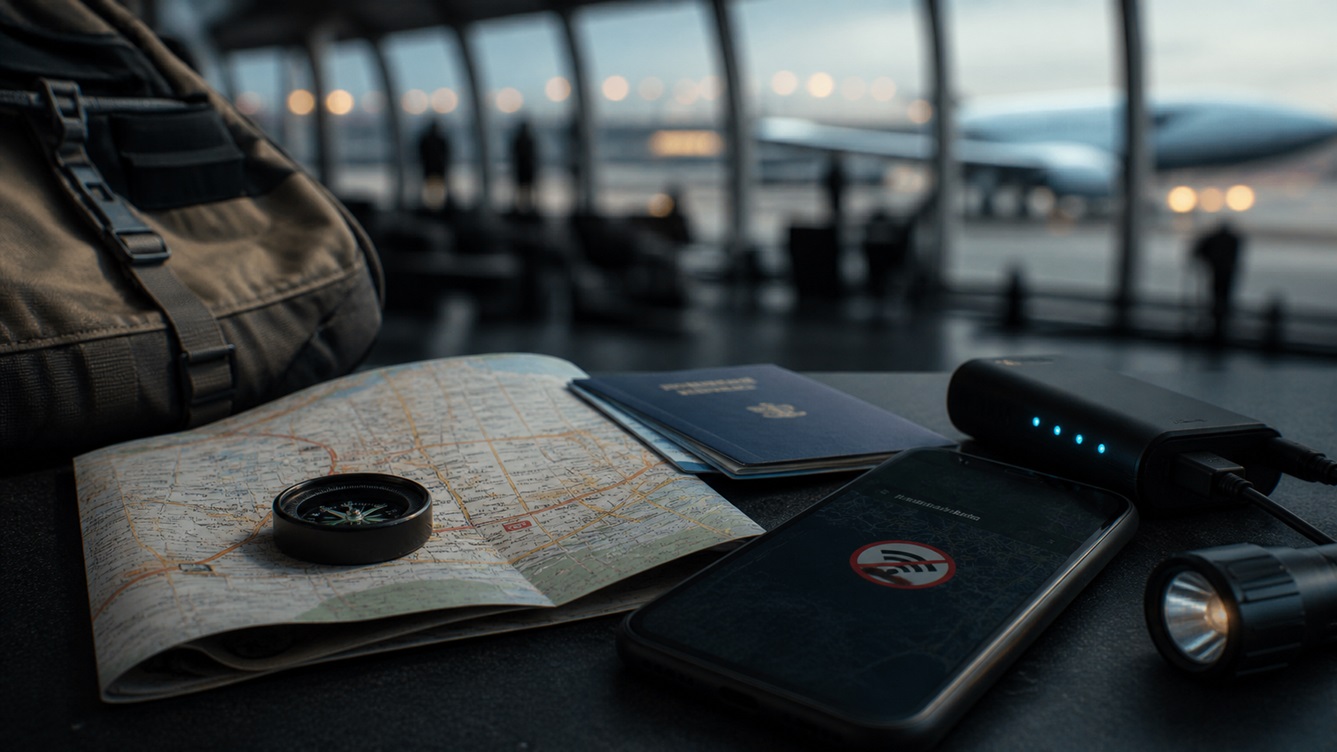
Maybe you brought an extra power pack and you have the right cables – but perhaps not.

What if your phone fell out of your pocket and you heard a splash when you were filling your water bottle at the stream?

When you do not have two-way communication capability or your devices have failed, you must resort to more primitive, but often effective, emergency and one-way communication methods.

These emergency signals can include:

  • Yelling for help
  • Sending someone in your group or a passerby for help
  • Blowing a whistle
  • Firing off an emergency flare
  • Safely building a signal fire
  • Using a signal mirror

There are alternatives. If cell service is not available, there are various satellite communications devices available that don’t rely on cell tech. These include satellite tracking and messaging devices where you can send a 160-character text messages or emails to anyone. You can also activate an SOS feature notifying an emergency coordination center of your location and emergency.

There are also several personal locator beacons (PLB) for personal use available. A PLB is a one-way emergency signaling device that only sends a distress signal, like a whistle or a flare.

With two-way satellite communication devices, you can provide additional important information for rescue services. Two-way satellite communication allows the rescue service to ask you specific questions to help them assemble the right resources to get to you.

Smartphones in the Backcountry

Ensure your phone works where you are going. Make sure you have an extra power pack, batteries or charging capability. Keep it as fully charged as possible.

If you choose to use navigation, fitness, weather or communication apps, be aware of your battery life. A navigation app does not replace the need to know how to use a map and compass. Protect your phone and all other electronics from moisture and impact.

Satellite Messaging and Tracking Devices

When you need two-way communication capability and your cell phone will not work, a satellite messaging device is your next best choice.

These devices use communication satellites to send an email, SMS or SOS message. They also usually have a tracking feature, where the recipient back home – or rescue service – can track your trip progress on the interfacing device web page.

Satellite Communication Devices

There are several available devices. The Garmin InReach and the SPOT X devices have been around the longest, followed by the Bivy Stick and Zoleo devices. These devices are easier to use, manage and carry than a satellite phone. They are also significantly less expensive, between $300 and $500 versus $1,500 and up for a satellite phone.

Standalone or Paired

Some satellite messaging devices have internal keyboards or messaging capability and some devices must pair with a smart phone to maintain two-way communications.

For the more extreme adventures, the devices with standalone messaging capability are best because you won’t have your messaging device and your smartphone running simultaneously.

The Garmin InReach Explorer and SE have standalone messaging capability, as does the SPOT X device.

The Bivy Stick and Zoleo devices must be paired through Bluetooth with a smartphone for two-way satellite communications capability. The smartphone does not require cell service for this – it is working via the satellites through the messaging device.

It is important to understand that you cannot communicate with your phone when paired with these devices. The phone is just the keyboard and information screen – the device is doing the communicating.

SMS and Email

When you send a message, SMS or email, the recipient receives a text or email and a link. When opened, a map graphic shows your location on the map, coordinates and a message of up to 160 characters. The recipient can answer directly to the text message or respond through the linked website.

Harding Bush, Global Rescue security operations manager, prefers messages from these devices rather than voice communication on a satellite phone since much of the potential for human error is eliminated.

“If somebody calls with a satellite phone and cannot provide coordinates, it’s difficult to get an accurate location. There could also be voice quality issues. We often have to share the information with various rescue services and when it’s in an email message, the original content is guaranteed to remain consistent,” he said.

Tracking Feature

These devices also have a tracking feature where you can send a message and the recipient will receive a link that can track the progress of your trip. Many corporate users of these devices use this feature to track the location of remote workers.

Everywhere Communications is a company that has taken this to the next level. They provide corporations and organizations with specially adapted Garmin InReach devices that can be tracked and communicated to through an organizational web-based hub. The devices and the hub maintain sophisticated encryption and users can jump between mobile and satellite coverage as available or required.

SOS

The satellite communication devices also have SOS activation buttons. When the SOS button is activated on the InReach, Zoleo and SPOT X devices, an emergency service coordination center receives the message. The coordination center will notify the appropriate emergency resources. Global Rescue members often reconfigure their devices to contact Global Rescue directly.

It is important to remember that Global Rescue must have two-way communication with members to active rescue services.

When the SOS button is activated on a Bivy Stick device, Global Rescue receives the emergency notification directly.

Just as you store essential contact information in your smartphone, the same information should be stored in the satellite messaging devices – especially for the models with standalone messaging capability.

In addition to the cost of the device, there are various service subscription plans. Plans are usually monthly and vary in price according to expected message and tracking feature use.

Satellite Phones

Satellite phones are the next level up in communication capabilities. Just like the messaging devices, satellite phones require a clear view of the sky.

Satellite phones are more practical for a user who needs voice communications in remote areas.

Tour operators and guides, remote workers, non-government organizations, scientists or other researchers may have a communications requirement beyond just a 160-character text or email. A larger group of travelers may have one or two satellite phones and several messaging devices.

Many satellite phones also have SMS, email and SOS capability. They don’t, however, always provide recipient location coordinates during voice communications.

The most important aspect of using a satellite phone (or even the devices) is understanding the dialing instructions. There are specific steps:

  • Extend and rotate the antenna
  • Wait for the connection and dial

“An emergency is not the time to learn how to use a satellite phone,” Bush said.

If you are using a satellite phone in an emergency, there is a good chance you may be scared or injured. This may affect the quality of your message.

It is always a good idea to think about what you need to say before you make the call and write down the most important information. Also, always be prepared to write down any information you receive from the recipient.

Several companies rent satellite phones. If you have a trip where you may have requirements to make voice communications, renting a satellite phone may be a less costly answer.

Where Are Satellite Phones Illegal?

In some countries, satellite communication devices and phones are illegal because satellite communications circumvent the national communications system and they cannot be monitored.

If you are found having a satellite phone or messaging device in these countries, you may be arrested and put in jail. These countries include India, China, Iran, Cuba, Nigeria, Bangladesh, Myanmar, Chad, Sudan and North Korea.

There are other countries where permitting is required. Some countries only ban foreigners from having satellite communications. Be sure to check before you travel.

“We always recommend that if you’re traveling, especially to remote locations where cellular service is not absolutely guaranteed, to pack a satellite phone or messaging device and extra batteries,” Bush said. “If you’re concerned enough about your travel communications to buy one of these devices, then you also need a Global Rescue membership.”

Categories:

Health & SafetyTravel
Share This:

How Travel Sentiment Has Changed

How have traveler perceptions changed over the course of the pandemic? We asked and our members answered. Find out what’s the same, what’s different and what to expect from the latest results of our September…

It’s been more than six months of coronavirus education, adjustments, precautions and a rollercoaster of emotions. What we thought “then” and what we think “now” has shifted, too, especially among business and leisure travelers.

By comparing the results of three Global Rescue member surveys, conducted in February, April and September, we uncovered how traveler’s perceptions and plans have changed and how they have stayed the same.


What’s Different


Expect more travel in 2021, not 2020.

The big change in traveler sentiment came from respondent’s expectations about when they plan to make their first trip of more than 100 miles from home.

In April, 85% of survey respondents said they would travel more than 100 miles from home by the end of 2020. Only 13% said their next expected trip wouldn’t be until 2021.

Several months later, the September survey — released a few days before worldwide COVID-19-related deaths surpassed one million — revealed a dip. Specifically, only 60% of respondents planned to travel more than 100 miles from home by the end of the calendar year and 40% didn’t expect to travel that far until 2021.

As the pandemic matured, traveler expectations for upcoming trips diminished as international border closings were extended and news outlets reported COVID-19 case spikes.


What’s The Same


Travelers are willing to take ground-breaking measures to hit the road again.

Traveler willingness to take unprecedented steps to travel and feel safe stayed strong.

In April, more than 90% of survey respondents made it clear they were willing to be screened, tested and have their travel history tracked in order to travel. 

In September, traveler support for ground-breaking pandemic protections and services persisted. For example, 88% of respondents said they want governments or organizations to systematize COVID-19 health and safety programs that include testing, quarantine accommodations, repatriation and trip insurance.

More than 90% of survey-takers want mandatory medical/security safeguards for themselves and all travelers, too. More than 60% of them are willing to pay $50 to $100 or more for that kind of protection.

Family visits will be first.

In April and September, initial trips once survey participants start traveling again will be family vacations, leisure trips to visit friends or destination getaways.

Travel concerns, threats and worries are unchanged.

According to the survey completed in February — more than a month before coronavirus was declared a pandemic — respondents ranked “health/medical issues” as the greatest threat while traveling, followed by crime and terrorism. Respondents to the September survey listed identical concerns and ranked them in the same order.

Travelers cancelled their travel plans.

In April, more than 42% of respondents reported they were forced to cancel their travel plans; 16% said they voluntarily abandoned trips while 27% postponed their trips.

In September, travelers were more specific about the personal and professional opportunities they lost due to the pandemic:

  • 64% gave up a bucket list/adventure trip
  • 53% missed out on a family vacation
  • 32% relinquished a business trip
  • 28% surrendered a couples getaway
  • 21% skipped an anniversary, wedding, honeymoon or birthday trip

Travelers will travel again.

Even at the beginning of the pandemic, travelers were making plans. According to the April survey, 41% expected to make their next trip by July or earlier, 36% planned their initial trip sometime between August and October and 77% expected to make a trip by the end of October.

In September, survey respondents were specifically planning their 2021 travel: 52% were looking at international locations, 35% were considering remote destinations and 40% were planning longer trips or considering an extra trip.

“Travel is part of a human’s genetic makeup. From pilgrimages to grand tours to solo travels, we’ve been exploring, seeing, experiencing, and learning new things since the dawn of time,” said Michael Holmes, director of marketing at Global Rescue. “Coronavirus temporarily slowed adventure, leisure and business travel, but it will return when people feel safe and secure.”

About the Global Rescue Traveler Survey

Global Rescue is the world’s leading provider of medical, security, evacuation and travel risk management services to enterprises, governments and individuals. The February survey was based on 2,400 responses collected from Global Rescue members between January 22-28, 2020. The April survey is based on 1,300 responses collected from Global Rescue members on April 23-24, 2020. The September survey is based on 2,210 responses collected from Global Rescue members between Sept. 15-19, 2020.

Categories:

Health & SafetyTravel
Share This:

Satellite Phones: The basics

If you’re planning an adventure to any place with questionable cell phone coverage, Global Rescue offers a primer on satellite phones — and why you might need one. 

In today’s fast-paced world, cellular phones have become a primary means of communication. According to GSMA, a mobile operator association, 66.5% of the world’s population owns a mobile device. The technology has advanced rapidly and now 5 billion people carry smartphones full of apps you did not even know you needed.

But a cell phone isn’t the same as a satellite phone, which is recommended for travel to off-the-grid and remote locations. If you’re planning an adventure to any place with questionable cell phone coverage, Global Rescue offers a primer on satellite phones — and why you might need one.

The Global Rescue Difference_v2

How do cell phones work?

Cell phones operate off of cellular towers. Your cell phone bounces its signal to the closest tower, which then relays the signal onward. As you travel away from urban areas or into hilly or mountainous terrain, there are fewer and fewer towers and the cellular signal disappears.

How do you communicate when you are in an area with no cellular towers or where the terrain inhibits your connection to these towers? Satellite phones.

How do satellite phones work?

Satellite phones, or sat phones, are mobile two-way communication devices using satellites orbiting the Earth to receive and transmit data. Satellite constellations — a group of communication satellites working together as a system — are either configured as High Earth Orbit or Low Earth Orbit (LEO).

High Earth Orbit satellites are large satellites that maintain a high altitude (around 22,000 miles) orbit and follow the Earth as it spins. This means they are always centered along the Equator and generally remain in a constant location in the sky.

Satellite constellations in LEO form an intersecting web of satellites orbiting around the poles and the equator, allowing for constant communication across the globe. LEO satellites offer a significantly lower orbit, around 900 miles. They are much smaller and lighter when compared to their High Earth Orbit counterparts, and there are more of them in orbit. This means that at any one time you will have line-of-sight to at least two or three satellites, giving you more reliable coverage if you are in a polar or mountainous region.

It’s more difficult to maintain a connection with a High Earth Orbit satellite because the user has to locate the satellite. In a LEO system, the satellites locate the user.

But, because of their size, High Earth Orbit satellites can handle more data and are better suited to sending documents and e-mails.

What is a satellite messenger?

Satellite messengers are devices able to send text messages using the same satellite constellation as satellite phones. There are several types on the market including purpose-built messengers with mapping software and other essential features, like an SOS function, SMS capability, breadcrumb tracking and social media connectivity.

How much does a satellite phone cost?

You can expect to spend in the range of $1,500 to $2,000 on a sat phone, depending on your particular needs. Pricing structure for airtime varies with each manufacturer, but a safe estimate is around $2 per minute, plus a monthly service fee. This is significantly lower than roaming charges offered through some cellular networks.

If you don’t travel often, many vendors rent sat phones for about $75 per week plus airtime. We recommend using a satellite phone retailer since the provider is the company with the satellite system: Iridium, Globalstar and Inmarsat. They will help you choose a device and plan suitable to your communications needs.

Where are satellite phones illegal?

Satellite phone use is restricted and in some cases illegal, in a number of countries. Do your own research regarding the legality of satellite communication devices in your destination country. This includes phones and messaging devices.

Who needs a satellite phone?

These days almost anyone can benefit from owning a sat phone. Are you a mountain climber or trekker who routinely travels far up in the mountains in small groups? Do you fish in exotic locales, such as isolated beaches or clear high-mountain lakes? Does the thrill of an African safari stir something deep and primal within you?

Even for those who do not typically travel abroad, our own backyards are ripe with places where there is little to no cellular coverage.  Anyone who likes to be prepared should know that cellular networks will be the first to crash or become overloaded in an emergency or disaster situation while satellite networks will be much more reliable. No matter your pleasure or purpose, satellite phones are a reliable communication alternative.

And, if you ever need a medical or security evacuation, you will need a sat phone for two-way communication, which Global Rescue strongly recommends to members. Click here to learn more about Global Rescue travel memberships.

Share This:

Llama Trauma in the Wind River Range

After an unexpected fall left her with a broken wrist during a backpacking trip in Wyoming's Wind River Range, Global Rescue member Mary Kelly needed help. Find out how we helped her safely get the…

The Wind River Range in Wyoming is a popular destination, attracting trekkers to the remote wilderness and its beautiful exposed granite in the higher elevations. Mary Kelly, who splits her time between Austin, Texas and Boulder, Colorado, recently embarked on a seven-day backpacking trip in the Wind River Range and ended up doing two things she hadn’t done before.

The first novelty was using llamas during the trek.

“A friend of ours suggested we use llamas to carry the loads. I’ve never had any experience with llamas before. We were each responsible for our llama during the trek,” she said.

Kelly and her group covered 10 miles the first day and about the same mileage on the second day.

That’s when the second thing she’d never done before happened.

It was the end of the day and Kelly’s group was within 200 yards of the campsite. There were tight stony paths leading to the campsite. Kelly was walking with her llama behind her. Unfortunately, that llama was one of the unruly ones.

“There were a couple of rock steps on the trail, which was narrow and didn’t have any room on the sides to step off. I started up the steps, leading the llama. That’s when the 400-pound llama carrying another 75 pounds of gear jumped up the rocks and hit me full force, knocking me over. I landed on my wrist,” she said.

Kelly knew her injury was serious.

“I pretty much knew I wasn’t fine but I was hoping it was just a sprain. We climbed up to the camp without any problem.”

She wasn’t too worried about her injury since the group had been preparing well in advance.

“We were serious about the trip. Our group had been working on our list of what to take and how to prepare for some time.”

There was an ENT doctor with the group and he was certain Kelly’s wrist was broken.

“I’d never had a broken bone before. He put a rubber splint on my arm and we made a sling out of t-shirt. Then our trip leader used a satellite-connected two-way communication device to contact Global Rescue and they responded immediately.”

Help was coming.

“My husband thought they would send out a ranger with a horse to ride out. I told him, ‘There’s no way I’m riding a horse. I don’t ride horses. It’s going to hurt. I’m going to walk.’”

Nightfall was coming quickly with the skies darkening.

“About 30 to 45 minutes later we heard a helicopter circling overhead. We wondered out loud, “Who’s that for?”

It was for Kelly.

“The helicopter was a pleasant surprise.”

The helicopter pilot identified a landing site about a mile away from the camp and two rescue workers hiked to Kelly and the group.

“They were fantastic. They asked if I could walk and I said ‘Yes.’ I didn’t actually feel that bad, probably because of the adrenaline. We made our way to the helicopter to fly out.”

When she arrived at the Lander hospital it wasn’t too crowded and she saw all the extra precautions due to the pandemic.

“I was quickly taken into an examination room where I was assessed. The ER doc reset the wrist and gave me some pain blockers. I ended up staying the night in the hospital and left the next day.”

Reflecting on her experience, Kelly felt incredibly lucky but also glad she and her group were prepared with the InReach, the splint and the Global Rescue protection.

“I’m glad I purchased the protection. Wind River Range is pretty remote. There’s not an easy out. It would have been a 20-mile walk out which would have been risky since I could have fallen again and had a more serious injury.”

She was impressed at how seamlessly everything worked.

“I feel like everything functioned so well. Everyone was so responsive. I know [Global Rescue medical operations experts] called often during the hospital stay and followed up afterward. It was much appreciated.”

Kelly’s experience convinced her to include Global Rescue membership for trips and recommend it to others.

“Do not hesitate to do it. It’s completely worth the price of purchase. You might not need it but for peace of mind it’s worth it. And, if you do need it, it works! So, it’s an easy decision — don’t even debate it.”

Kelly’s other “lesson learned” is to skip the llama trauma in future trips.

“I think I’ll go back to carrying my own load next time.”